

9 Best Tips For Deli-Worthy Italian Subs At Home
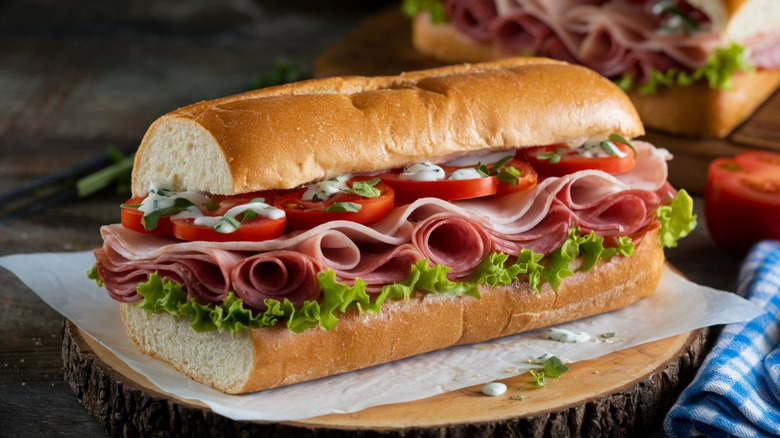
Few sandwiches have the same level of street cred as the Italian. And we're not talking melty, marinara sauce-adorned Italian sandwiches stuffed with veal or chicken Parmesan or meatballs; we're talking about the cold, deli meat- and veggie-stuffed sandwiches that have graced beach totes, Subway franchises, and top-notch Italian delis since what seems like the dawn of time. This sandwich, which is assembled on a white roll and stuffed with an assortment of Italian cold cuts, cheese, lettuce, tomato, pickles, and vinaigrette dressing, was believed to have been created in the early 1900s by Italian-Americans looking for satisfying, hearty lunches. The name varies; some parts of the country lovingly call them "hoagies," while others call them "heroes," and those truly in-the-know call them "grinders." Regardless of the regional vernacular, the "Italian" part stuck and it's what distinguishes it from other sandwiches.
It's easy enough to find an Italian on a Subway menu (though its version barely cracked the top of our ranking of Subway sandwiches) or at one of the best Italian delis in the U.S., but the approachable ingredient list and relatively simple preparation make this a sandwich you can just as easily make at home ... with a couple of tips from the pros, of course. We spoke to Alex Donley, the 5th generation owner of Gioia's Deli in St. Louis, Missouri, and Anthony Scotto, co-owner of the Pelato Restaurants in Tennessee and South Carolina, to get some must-know insight about tackling the Italian at home.
1. Choose the right kind of bread
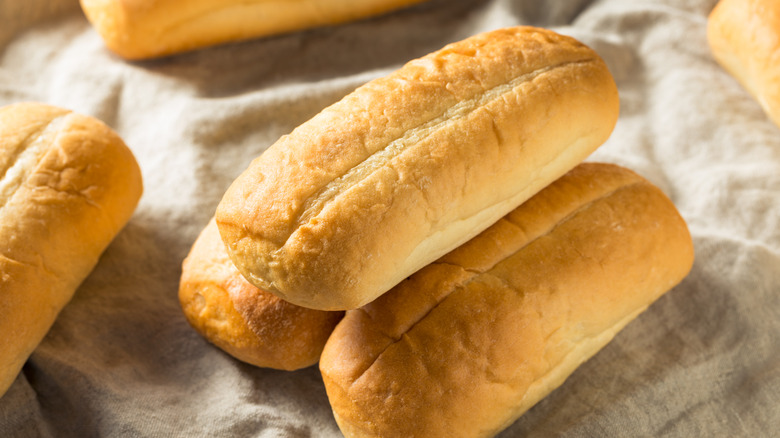
If you are a sandwich lover, you know that the bread plays just as important a "roll" (pun intended) in your masterpiece as the fillings. Not only is it what supports the fillings, but it also adds a bite and flavor of its own to the sandwich. And when it comes to the Italian sub, only certain kinds of bread will do. "The best bread for an Italian sub is a 24-inch French or Italian baguette," says Alex Donley of Gioia's Deli. "The goal is to make sure the outer crust has a nice crunch to it while the middle of the bread is light and airy." It's important to aim for these types of bread, rather than one that has a thicker crust or flavorful sprinkle on top, because it can detract from the fillings. You should never have to gnaw on an Italian sandwich like you would a ciabatta or a crusty boule, but you also shouldn't have to worry about it disintegrating as you would with cheap store-bought white bread (which our taster ranked from worst to best).
Anthony Scotto, of the Pelato Restaurants, meanwhile, recommends a sesame-seeded twisted loaf for Italian subs, noting that his restaurants always utilize a seeded Italian-style bread for them. "The toasted sesame seeds [adds] that irresistible background flavor to every sandwich without being too [overpowering]," he says. Texture is also important; when it comes to structural integrity, Donley recommends buying bread packed in paper, rather than plastic, presumably because plastic locks in the moisture and condensation (especially for freshly baked bread), which can make it soggy.
2. Always use fresh, ripe tomatoes
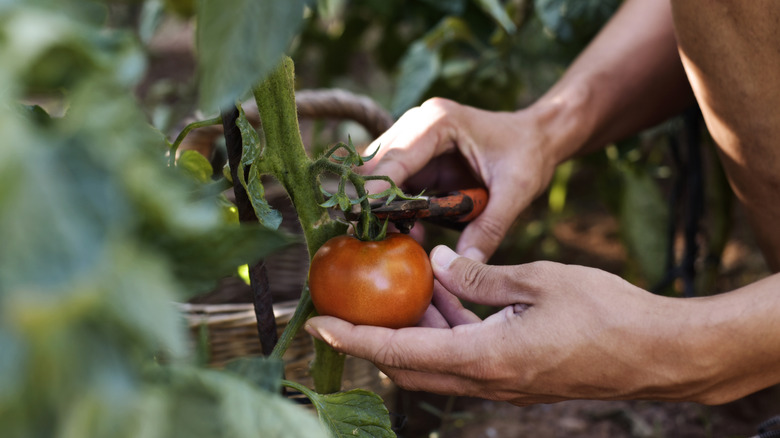
As anyone who has tried to make a pesto Caprese panini in the dead of winter knows, there is nothing worse than a bland tomato. In fact, there is a case to steer clear of any dishes requiring fresh tomatoes during the off-season, as they lack the brightness of a fresh, in-season flavor of vine-ripened perfection.
"We are constantly tasting our tomatoes and changing them around to ensure that we have a tomato that adds to the dish instead of just being filler," says Anthony Scotto. He recommends trying different types of tomatoes to find the best one, noting that he opts for heirloom or beefsteak in-season. Alex Donley, meanwhile, prefers Roma tomatoes for Italian subs.
If you can't find sought-after heirloom varieties like the Cherokee Purple for your sandwich, you can employ some methods to try and intensify the bland ones you do have. Try boosting the flavor of your tomatoes by adding a pinch of baking soda or salt. Ideally, they should stand on their own in your sandwich and offer both moisture and flavor. They'll do you no good if they are bland.
3. Grate fresh lettuce for your sandwich
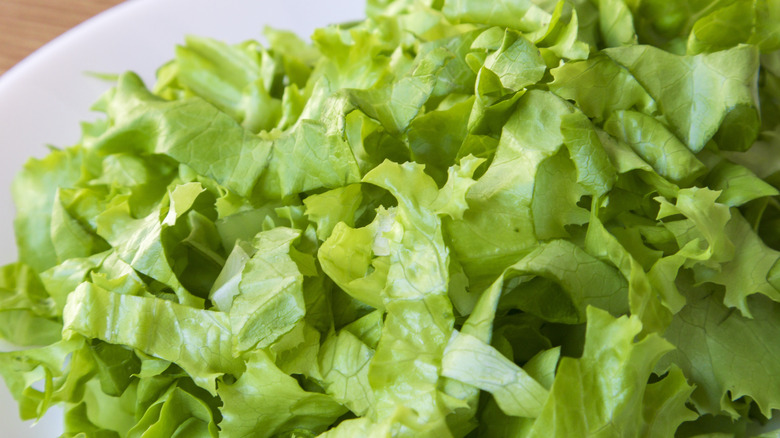
On many sandwiches, lettuce is a take-it-or-leave it topping. However, it plays a vital role in the Italian sub, offering both a crunchy texture and sponge for the dressing and seasonings. As such, it's imperative that you treat this ingredient with respect and prepare it just as intentionally as you would any other sandwich component.
"This is a major textural element to the sandwich and is totally up to the individual," says Anthony Scotto. Both he and Alex Donley shred their lettuce for these sandwiches. Scotto says that this method prevents it from overtaking the rest of the components. Shredding lettuce also makes it a better conduit for the flavors of the sandwich. "The finer the shred the more surface area on the lettuce you have to absorb the condiments and topping of the sandwich," says Alex Donley.
The freshness of your lettuce is also very important. "Lettuce is a flavor enhancer and adds a nice crunch so the fresher the lettuce the better," Donley says. "Try to stay away from the bagged pre-shredded lettuce — it's never as crisp as it needs to be."
4. Buy dime-sliced meat
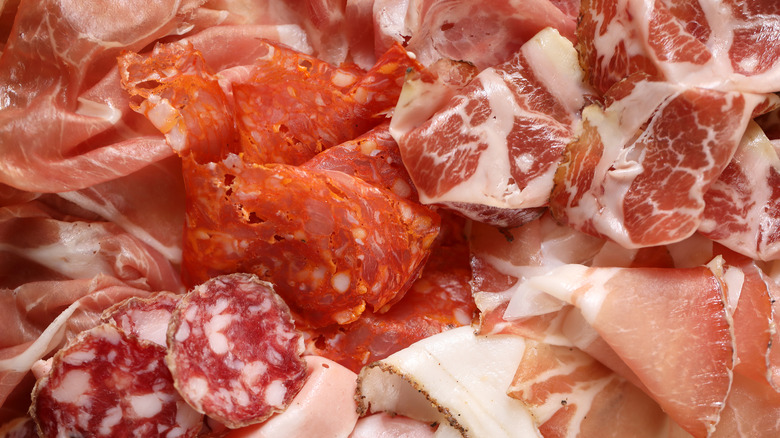
If you haven't realized it yet, size matters when it comes to making the ultimate Italian sub. Unlike other sandwiches, there are multiple deli meats that go on an Italian sub, and you want to have a good representation of all of those flavors in every bite. This is why Alex Donley suggests buying dime-sliced meat. He says that this is a must for cured meats, noting that the name comes from it being as thick as a dime. "There is nothing worse than biting into a sandwich where the meat is sliced too thick," he says. If your meat is too thick, you won't get the proper distribution of veggies to meat, whereas if it is sliced too thinly, it'll become fragile and wholly lost in the sandwich. "[The] last thing you want is to bite into a sandwich for the first time and pull out half of the meat in it because it is way too thick," says Anthony Scotto.
You can ask for this sized slice at a deli counter. Ordering from the counter, rather than grabbing a package from the refrigerated aisle, allows you to check the size of the cut (and try a sample) before bringing it home.
5. Diversify your meat selection
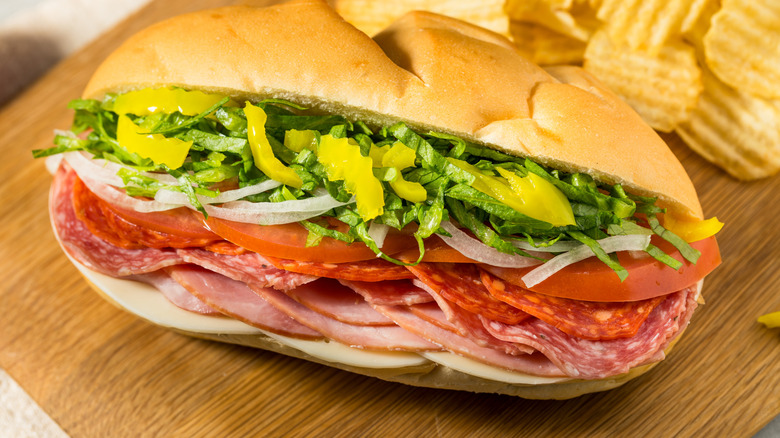
As we mentioned, the Italian is unlike other subs because of the diversity of meat that it contains. Anthony Scotto says that Italian sandwiches usually contain at least three meats and a cheese; he opts for salami, mortadella, and prosciutto (or Italian ham). Prosciutto can be pricey, which makes it an uncommon addition to Italian subs, but its one that Scotto says people should use on them more often.
"Given the cost, many subs do not have prosciutto in them. Or if they do, it is generally not aged or imported and is more similar to salty ham," he says. "I think people are willing to splurge a little on great quality meats in their sandwich." He recommends pairing them with provolone piccante (in lieu of traditional provolone). "The age and distinct flavors to the cheese adds something to the sub," he says.
Meanwhile, Alex Donley recommends a similar array of meats. "Mortadella has an amazingly rich flavor profile and is the perfect accompaniment to more bold cured meats like a spicy capicola, pepperoni and Soppressata," he says. Pepperoni might surprise you, as more people associate it with pizzas than with sub sandwiches. However, this is one bias that you may want to get past. "Pepperoni is a perfect sandwich topping, especially if you plan to toast the sandwich," Donley says.
6. Strain pickled toppings before adding them to your sandwich
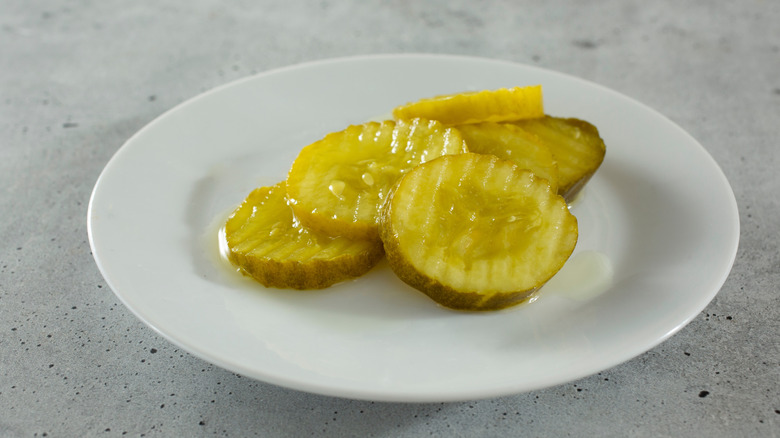
Pickles deserve a spot on your Italian sub, too. These ingredients offer an acidic tang, helping to brighten the sandwich and balance the flavor of the salty meat and rich cheese. However, it's not just pickled cucumbers that deserve a spot on your Italian. "When I make a sandwich at home I use thin slices of red onions that I pickle overnight in white vinegar, water, and sugar. Very simple, but the sugar in the red onion makes for a perfect Italian sandwich topping," says Alex Donley.
Another type of pickle that deserves a spot on your Italian, according to Anthony Scotto, is the pepperoncini. He shreds them with iceberg lettuce, tomatoes, and red onions to make them easier to eat. Other variations will also use hoagie spread, which is a chopped version of pickled peppers that is easy to swipe on a side of the bread before assembling the rest of the components.
Regardless of the pickle you choose, be sure to drain as much of the juice off of it as possible before adding it to your sandwich, per Donley. He also suggests that for a topping like giardiniera, which he loves adding to an Italian, it's best to strain out the oil and create a spicy mayonnaise with it; that way, you're not wasting all that delicious pickling liquid.
7. Don't overdress your veggies
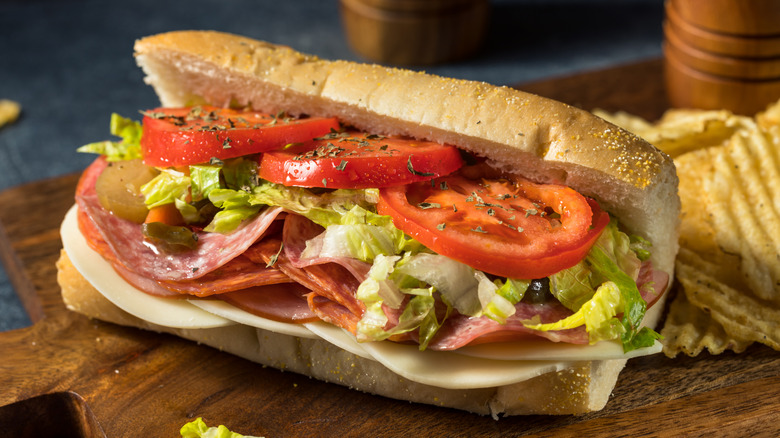
Excess moisture is the enemy of a good Italian sub. As such, you'll want to avoid dousing your sandwich in dressing, as it can make the bread soggy and reduce the structural integrity of it (read: You'll get more on your lap than you will in your mouth). The easiest way to avoid this? Don't overdress your sandwich. "I say 1.5 ounces [max] of dressing for a [9-inch] sandwich is perfect. Think: A shot glass," says Alex Donley. He prefers to create a dressing with a St. Louis-style sweet vinaigrette and Boar's Head spicy mustard. "The key is to take your shredded lettuce and mix the condiments into the lettuce in a bowl like a salad and then top the lettuce on the sandwich," he says. That way, the lettuce can soak up all that dressing, rather than the bread.
Anthony Scotto agrees with this method. "We always toss the veggies in the dressing prior to putting it on the bread — especially when it is not being eaten immediately. If you put the dressing on the bread you run the risk of a soggy salad," he says. He also recommends expressing caution with how much dressing you add to your sandwich, as it's always easier to add more. "I always go lower on the amount at first — can always add more over the top while eating or the next time you make one," he says.
8. Crisp the bread before assembling your sandwich
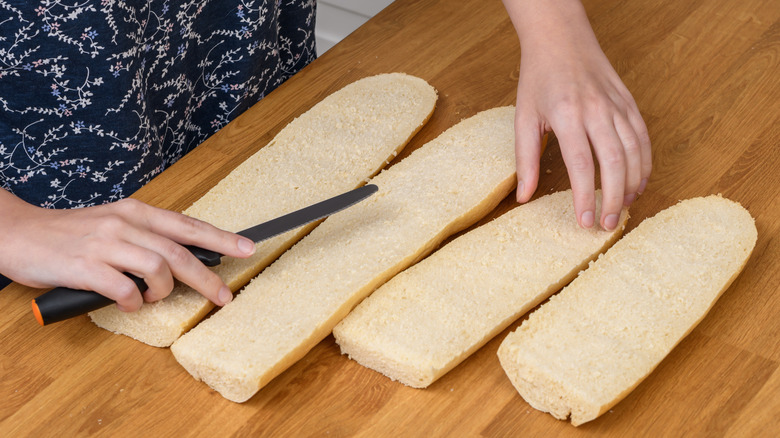
One of the most important things that you can do when assembling your Italian sub at home is toasting it. It might seem like this is just something that the Sandwich Artists do at Subway to buy time, but here, it does have a big impact on the texture. "Toasting the bread a bit goes a long way," Anthony Scotto says.
There are some people that will just toast the bread for an Italian sub by adding a bit of butter or oil and popping it in the oven, in a cast iron skillet, or on a panini press. This is one of Alex Donley's favorite ways to personalize the sandwich. "Just throw the bread in a preheated oven for a minute or two and it will crisp up the outside and put a little steam in the interior making it soft in the middle," he says.
There are also folks who go the extra mile and toast the whole sandwich, sans the vegetables. This will melt the provolone (or whatever cheese you add) and offer a better textural contrast with the fresh, crunchy lettuce and tomato, which should be added to the sandwich after it's been removed from the oven. Some folks argue that this sandwich should never be toasted, though this is up to personal preference, and it doesn't need to be in the oven for that long to have an impact on its overall texture.
9. Don't neglect the seasonings
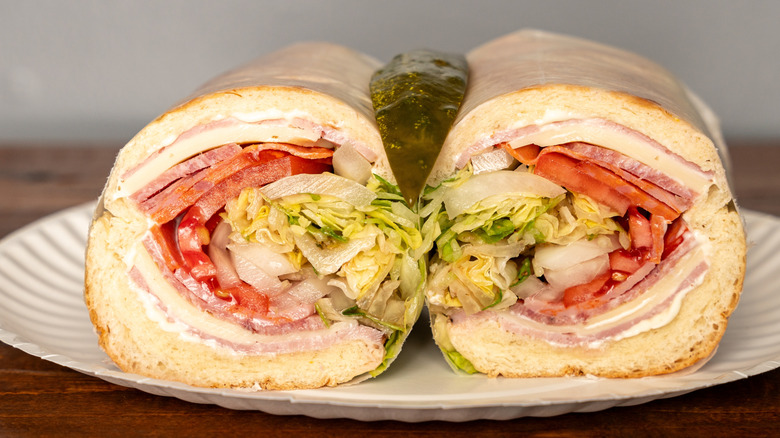
One of the biggest things that you can do for your Italian sandwich is one of the smallest. We're talking small as salt grains here. A good Italian sub is seasoned, and our experts shared some of their top tips for seasoning it to perfection.
Alex Donley prefers to add sea salt and pepper to the tomatoes before adding them to the sandwich. This tip, which can also be used for flavor-packed bruschetta, will draw out some of the moisture in the tomatoes and intensify their flavor. You don't need to add a ton of salt, either; the salty, cured meats will do most of the legwork here. "I don't overdo it on seasoning because with the right bread and Italian cured meats, you don't need to add [any more] seasoning," says Alex Donley.
Anthony Scotto, meanwhile, hits his Italian sub with two flavors that are common in Italian cooking: traditional oregano and Italian seasonings. "You also pick up flavors from the ingredients depending on which cold cuts and pepperoncini mixture you use," he says. You can add a shake of these seasonings to the dressing you toss your veggies in to ensure that each bite is filled with the perfect amount to complements it.