

6 Tips For Ordering At Your Grocery Store Deli Counter Like A Pro

The grocery store is a place that is both seemingly easy to navigate and one that is also rarely explored to its fullest potential. And this isn't a phenomenon that occurs in only a few sections of the store, either. If you go to the grocery store's bakery at the wrong time, for example, you could be setting yourself up for less-than-fresh pastries and breads. And if you're making major mistakes in the meat aisle, you could be missing out on some deeply underrated cuts. The deli section is, perhaps, the most overlooked part of the entire store, simply because shoppers don't know how to maximize their experience at it.
That's where we come in. We wanted to get the scoop on some of the most important things that shoppers need to know when visiting the deli section at their local grocery store. So, we spoke to the people who know delis well: Mario Hupfeld, food safety expert and co-founder and CTO of NEMIS Technologies, and Elizabeth Ward, vice president of marketing at Boar's Head. They shared their top tips for getting the most out of your deli experience, as well as the most important things that shoppers need to know about when visiting this part of the store.
1. Ask about the thickness of the slices
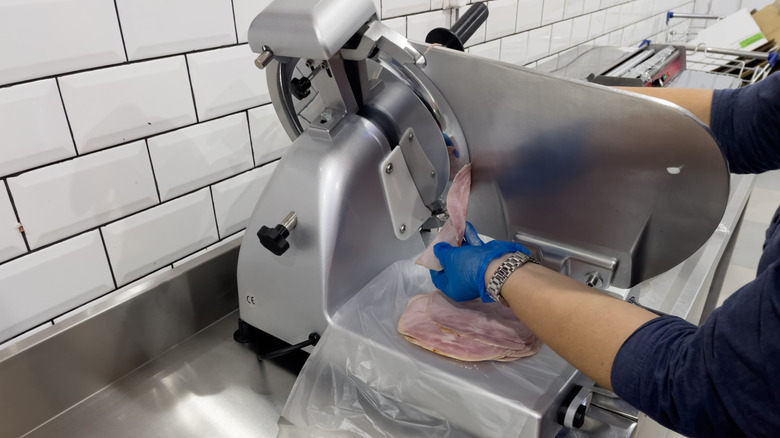
One of the benefits of ordering at the deli counter, rather than buying pre-packaged meat from the refrigerator aisle or elsewhere in the store, is getting your meat cut to order. Elizabeth Ward offers some examples for different cuts that Boar's Head will make to order: "shaved" meat for things like cheesesteaks; "very thin" for the salty, cured meats on charcuterie boards; "thin" for deli sandwiches; "sandwich cut," a heartier slice, best for items like chicken breast; and "dinner cut" for items like ham steaks or chopped deli salads. While she says that these sizes may be printed on the counter at some delis, this may not be the case for all delis, which is why it's best to ask for the size you need. "After ordering, don't hesitate to ask to see the first slice to confirm it hits the mark," Ward says.
Moreover, if you have a recipe in mind and are unsure of which thickness is best, you can also ask the staff for their recommendation. This will allow you to get the perfect cut and also forge a relationship between yourself and the staff.
2. Don't be afraid to ask for samples
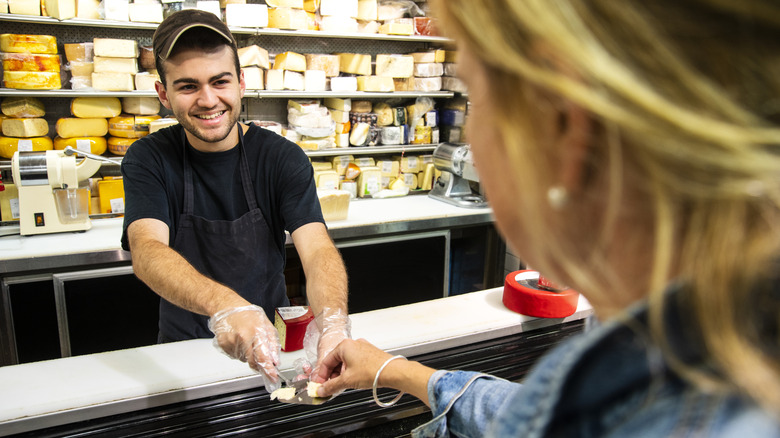
We have very fond memories of visiting our local deli as a kid, peering over the counter and watching the staff members carefully slice Genoa salami, ham, and American cheese, waiting to see how long it would take for them to notice us and hand over an obligatory slice of cheese (it was never long at all, of course). At delis, sampling is just part of the sensory experience. "It's one of the most interactive and delicious parts of the entire deli experience," says Elizabeth Ward. Not only are you able to see if you like the taste of the product, but you can also assess its thinness a little more closely.
However, there are some important etiquette things that shoppers should know when they go in to sample. For one, this is not a buffet. When a staff member slices a sample for you so you can assess the thickness, that's a courtesy, not an invitation for you to ask to sample everything in the deli case. This is especially true if the deli is busy and staff members have other customers to attend to. There is also something to be said about folks who ask for samples but don't end up buying anything at the deli, as it can be seen as impolite or like you're cheating the system. In short, be courteous, and mind your p's and q's when you're downing that slice of American.
3. Consider quantity when deciding whether or not to purchase deli items
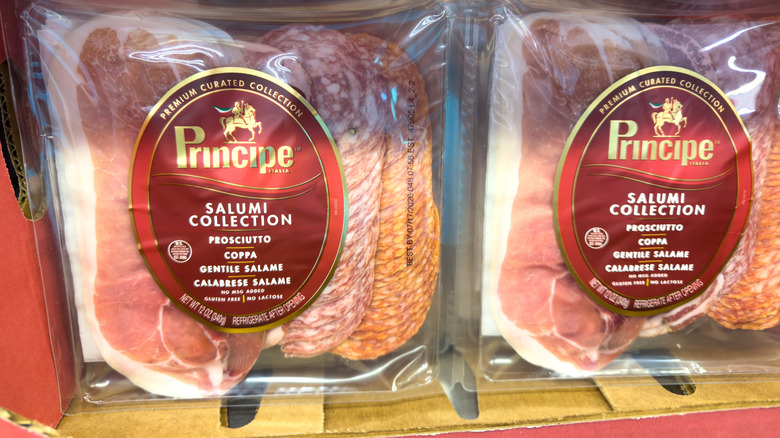
There are two options that many folks face when shopping at the deli. Do you stand in line and wait for your ticket to be called, or do you cut your losses, grab a pack of pre-packaged deli meat and cheese, and make your way to self-checkout? Per our experts, both of these options have their merits. "From a food safety perspective, even if it's freshly sliced, it doesn't automatically mean it's safer or higher in quality than pre-packaged. And that's because the pre-packaged products are often sliced and sealed in a controlled facility with fewer handling steps before they reach the consumer," says Mario Hupfeld. But shoppers looking for a specific or custom size might need to pay the counter a visit.
Your choice might depend on how much product you need to buy, too. "One of the most practical benefits of the service deli is complete control over quantity. You aren't locked into pre-packaged weights; you can order anything from a single slice to several pounds," says Elizabeth Ward. Hupfeld agrees. "If you only need a small amount, then freshly sliced makes sense since there will likely be less waste. But if you care more about convenience or want a longer unopened shelf life, then even the pre-packaged products are a perfectly reasonable choice." In short, weigh (pin intended) your options before deciding whether to go for a pre-packaged bag of ham or a freshly sliced one.
4. Place your catering order in advance
No one likes doing things last minute, including grocery store staff. In the same way you wouldn't order a custom birthday cake for a 100-plus-person-party the night before, you also shouldn't expect deli staff to cater to you if you call them at the eleventh hour, practically begging for a deli platter that'll feed 50 people.
It's not like you need to order a few weeks in advance, either. "For party trays or standard platters, providing at least 24 hours' notice is ideal — especially when planning around weekends and major holidays," says Elizabeth Ward. "Some specialty items or large custom orders might require a bit more lead time, so it's always smart to check in with your local deli counter or use their online ordering platform as early as possible." If you need something last minute for a celebration, you may want to pay a wholesale store, like Costco (which has one of the best in-store delis out there) a visit. While its large catering platters need to be ordered in advance, you may still be able to pick up pre-sliced sandwich components (like deli meats, which one of our tasters tried) in bulk and do the assembly yourself.
5. Visit at the right time to avoid crowds
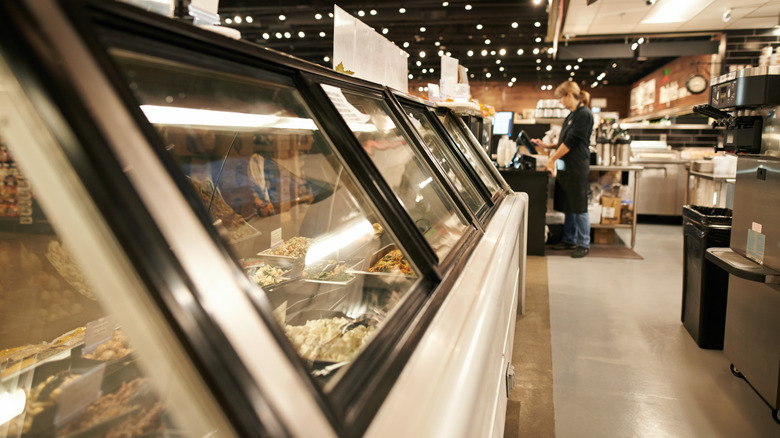
Since items at the deli are all sliced to order, you can be standing in line for a matter of minutes on a good day, or what seems like years on a bad one. Grocery staff will do their best to make it through the queue, but there are just some days when it feels like everyone and their mother had a craving for Colby Jack.
The better solution is to visit your grocery store deli counter at the "right time." "If you are looking for the swiftest, most seamless experience, weekday mornings tend to be the quietest windows at the counter," says Elizabeth Ward. There will be some variation here based on the store. For example, the absolute worst day of the week to shop at Walmart is the middle of the day on Saturday, whereas the middle of the day during the week (in addition to weekends) seems to be the worst time for Costco customers. If you can't visit your local deli counter right smack in the middle of the day, you may want to opt for a later time — just keep in mind that deli counters may close earlier than the rest of the grocery store.
6. Ask staff for pairing and product recommendations
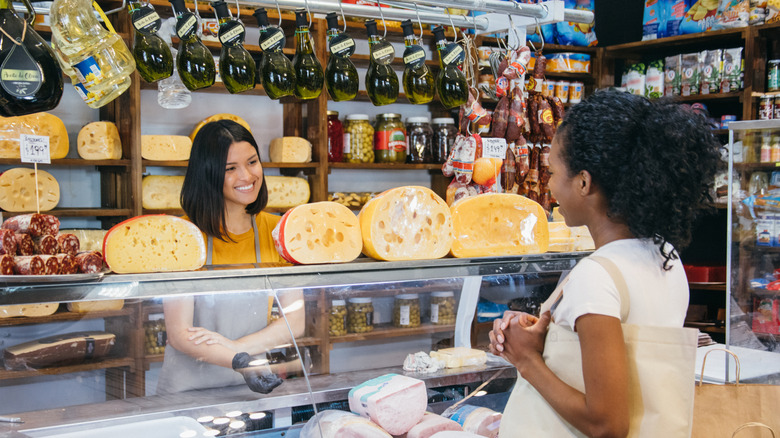
We firmly believe that we, as a society, have depersonalized the entire grocery shopping experience as much as possible. If you've ever shopped with headphones in to avoid making small talk with people in the grocery aisles or waited in line for self-checkout despite there being tons of open registers with real people manning them, you know this to be the case. However, grocery staff have a ton of helpful insight, and that especially is beneficial when you're unsure of which deli meats you want to add to your Italian subs or what the difference between cured and uncured ham is. You just have to initiate that interaction so you can unlock all of that knowledge.
We asked Elizabeth Ward about special requests that deli workers are happy to accommodate but customers rarely ask for, to which she says, "The best underutilized request is simply asking for a pairing recommendation!" She points out that deli associates are the folks who are working with and handling meat and cheese throughout their shift, which implies that they know a lot about them. "They have amazing firsthand knowledge and love helping customers build the perfect sandwich combination," she says. So the next time you're looking for advice, grab a ticket, ring the service bell, and ask for a sample along with your pairing query (or any other deli-associated questions you may have) — that's what the staff are there for!