

The 9 Most Iconic Southern Desserts Of All Time
After moving from the Northeast to Lynchburg, Virginia, then Charlotte, North Carolina, and finally to my current home in Asheville, North Carolina, I'd consider myself extremely well-versed in all things sweet beyond the Mason-Dixon Line. Throughout that period — a whopping 16 years — I've identified and written about the best the South has to offer. And, to round it out, I've worked for a bean-to-bar craft chocolate company for the last eight years, sampling chocolate, cookies, and baked goods along the way.
When it comes to desserts, boy, does the South deliver. There's never an eatery, diner, hole-in-the-wall, potluck, church dinner, barbecue, or get-together without its share of fruit-laden pies, decadent multi-tier cakes, breathtaking trifles, or classic southern puddings. People are happy to share their family recipes for what they consider the best, and, having enjoyed these tasty treats, here's a little insider info about the most iconic southern desserts.
1. Banana Pudding
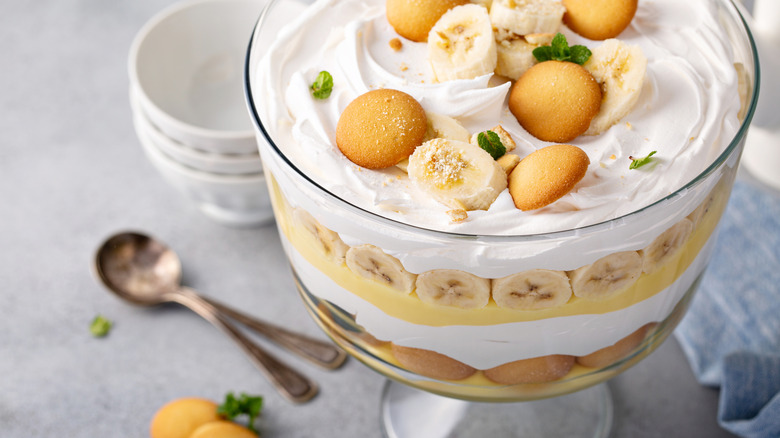
Vanilla pudding, classic Nilla wafers, fresh sliced bananas, and heaps of freshly whipped cream make banana pudding the king of desserts at picnics, parties, and get-togethers in the South. There is hardly ever a family gathering without Auntie's or Grandma's classic southern banana pudding gracing the table. It's easy enough to throw together, too, making it an approachable — and delicious — dessert. Plus, the ability to up the ante by adding booze, fancy cookies, and even strawberries makes it delightful, too.
But banana pudding's association with the American South is murky. In 1888, Good Housekeeping published the first known recipe for the dessert, capitalizing on the popularity of bananas at the time. The recipe used sponge cake instead of vanilla wafers, but otherwise was the same as today's dish. In the 1930s, a newspaper published a recipe titled "Southern Banana Pudding" and others seemed to follow suit — attributing the recipe to below the Mason-Dixon, without much reason as to why. The swap for cookies was happening gradually, but got a boost thanks to Nabisco printing a recipe for banana pudding on the side of its Nilla Wafers box around 1940. Regardless, the dish got a firm foothold and has been associated with the South ever since.
2. Red Velvet Cake
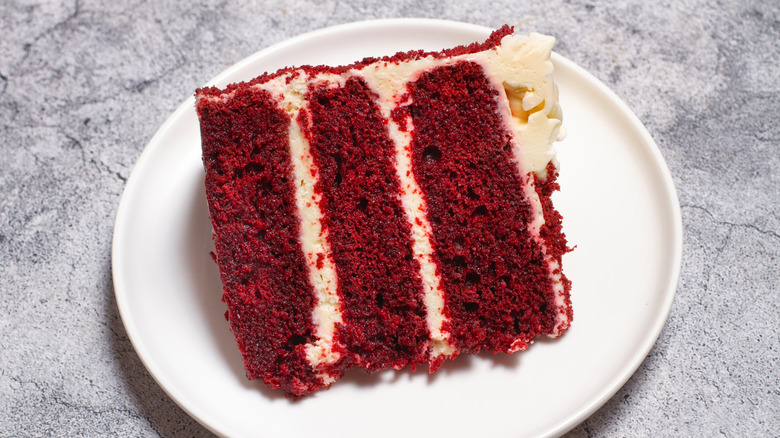
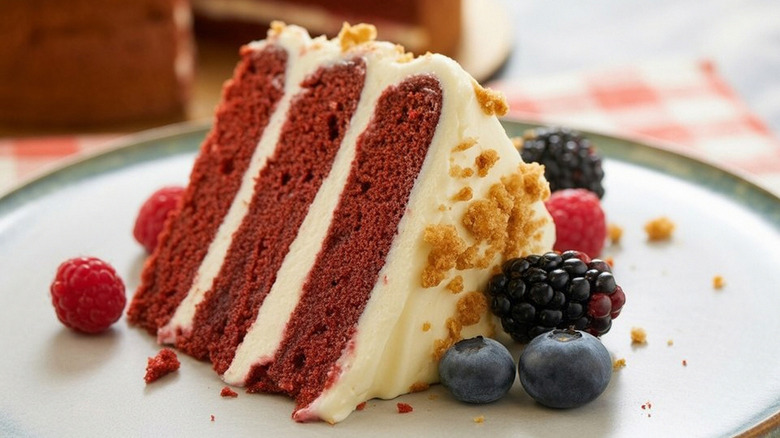
Striking red cake, piled high with not-too-sweet cream cheese frosting, is all you need for a delicious red velvet cake. Red Velvet Cake is synonymous with hearing "y'all" and "bless your heart" these days. The dessert has a bit of a complicated past, from its mixed mentality to the ingredients that gave red velvet cake its color before food dyes. The cake itself, which seems to have been born from Victorian era diners' love for a soft-crumbed cake, appears to be a mashup of early devil's food cake and velvet cakes.
After gaining popularity across the country, the cake took on distinct flavors in different regions. In the South, folks used buttermilk, giving the cake its distinct tang. When paired with the time's raw cocoa powder (which is now roasted before being ground to powder), the cake took on a very specific texture and taste. That raw cocoa powder also brought a high acid content, lending the cake its reddish-brown hue; it was not originally a bright red cake. On its head, the cake wasn't very sexy. It pulled from the stuff in the back of the fridge that you needed to do something with if you weren't going to toss it out. Recipe writers of the time weren't going to harp on that fact so, instead, they leaned into the red, striking appeal of the cake. A little creative journalism took the cake from reddish to bright red, and recipes began adding food coloring to the mix.
3. Pecan Pie
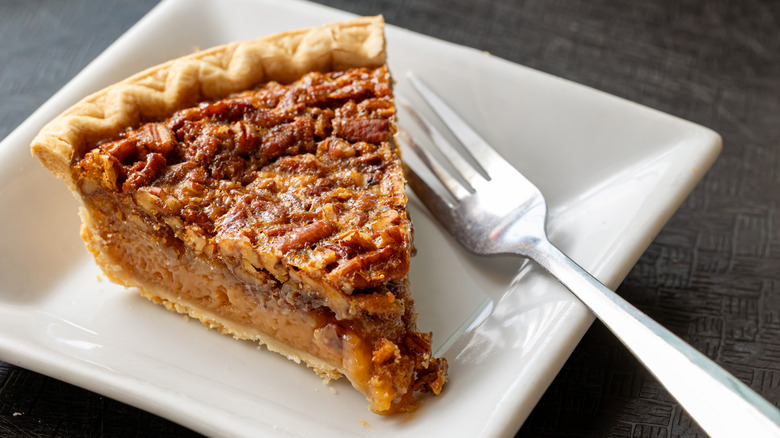
Though variations abound, the go-to recipe for pecan pie these days relies heavily on corn syrup (although Duff Goldman swears by golden syrup) and involves making a mixture with eggs, sugar, and butter, folding in chopped pecans, then baking. You can, of course, give your pecan pie a luscious, pudding-like texture by adding chocolate, but that isn't quite as classic.
As it turns out, the original recipe isn't that far off from what most people enjoy today. Using cane syrup instead of corn syrup, we can likely trace the foundations of what we now know as pecan pie back to Slidell, Louisiana, in as early as 1900. Cane syrup was more widely accessible at the time as Karo-branded corn syrup hadn't quite hit the shelves yet, but in just a few decades, that would change.
While various recipes were published here and there, the real breakthrough for pecan pie came from a Karo corn syrup ad that ran in a Texas newspaper in April 1941. Though the use of syrups had changed slightly, the overall outcome remained very much the same. As a result, the flavor profile of a brown sugar, caramel-y pie with the richness of pecans cemented itself in the southern dessert lexicon.
4. Hummingbird Cake
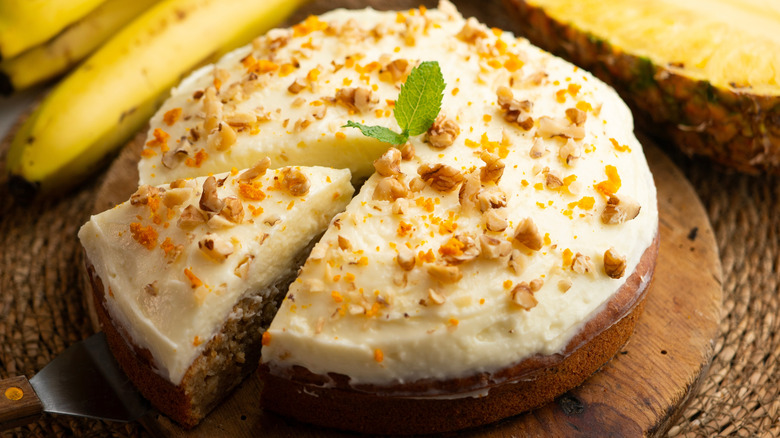
My first taste of hummingbird cake was when I was living in Charlotte, North Carolina, and a birthday party at work saw the arrival of a two-tiered cake, covered in frosting and dotted with nuts. The combination of the banana and pineapple-laden cake with tangy cream cheese frosting and toasted pecans was a sugar overload that I wasn't mad about. It sat somewhere between carrot cake, banana bread, and coconut cake — rich, sweet, and delicious.
The first recipe for hummingbird cake was printed in Southern Living in 1978 — a submission from a reader named Eva Wiggins from Greensboro, North Carolina. She might have cobbled together her recipe a la inspiration from carrot cakes and a "doctor bird cake" recipe distributed on Jamaican Airlines flights in the 1960s. Hummingbirds, the airline's mascot, were referred to as "doctor birds" on the island, and the recipe used overripe mashed banana, pineapple, coconut flavoring, and vegetable oil. No matter how she managed it, Eva Wiggins' recipe spread through the South and is still popular today.
5. Black Bottom Pie
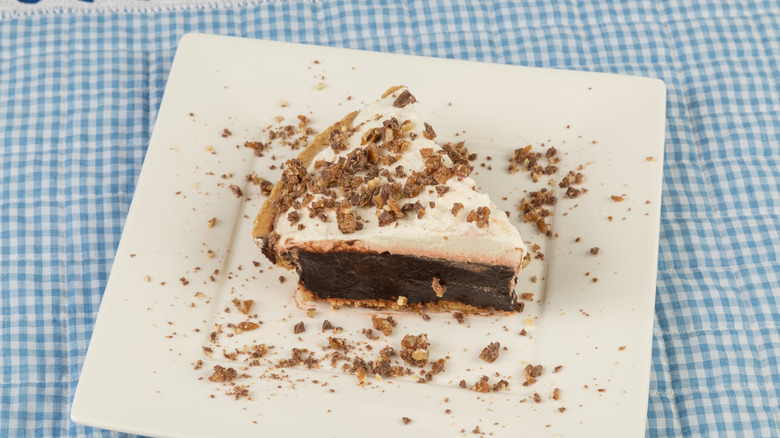
Named for the deep, black muck of the Mississippi River, black bottom pie is a southern sweet staple dating back to the 1940s. There are many variations, and the dark bottom can be anything from pudding to mousse to ganache, but the deep brown color has to remain the same — ya know, for mud reasons. Working in the chocolate business, I'm honestly pretty surprised I haven't seen more black bottom pies, but I can bring that up at our next pastry meeting.
Black bottom pie is credited to Monroe Boston Strause, who unveiled the recipe in his book, "Pie Marches On" in 1939 — though the recipe had been floating around the Los Angeles area years prior. Strause – "the pie king" – began with a graham cracker crust (which is also credited to him), then a chocolate base somewhere between a thick custard and a ganache folded into a meringue, followed by a third layer — an "eggnog custard" flavored with rum or brandy. According to the recipe, bakers were advised to finish the pie with a pile of fresh whipped cream and copious amounts of chocolate shavings. Well, you don't have to tell us twice.
6. Peach Cobbler
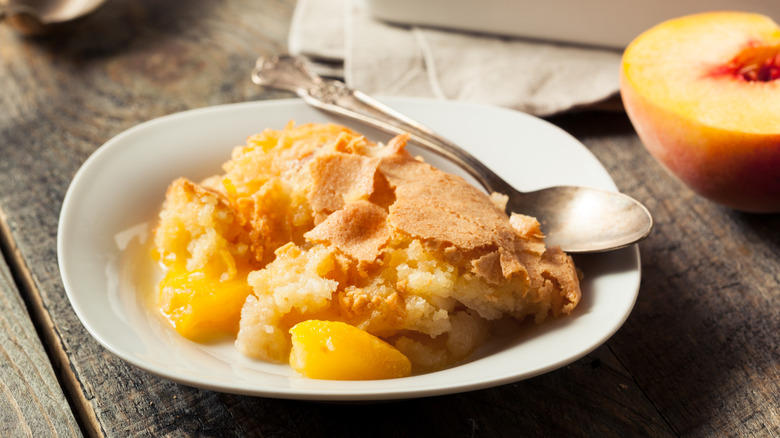
In the summertime, ripe, juicy peaches — and the accompanying juice running down your arms and face — are a harbinger of the season. Those same fruits are at home in a simple, mouthwatering peach cobbler. In fact, I can't think of a barbecue or meat-and-three joint down here in the South that doesn't offer a gooey, sweet, and none-too-pretty peach cobbler on its menu. And it's always worth getting.
A true cobbler is a distinct baked good — different than a crisp or a crumble. It's believed that cobblers date back to the early American colonies, where hearth cooking was the norm (and pies were pretty difficult to make over an open fire). The setup is simple: ripe, frozen, or canned peaches are placed in, ideally, a cast iron skillet, then topped with a simple dough — akin to that of a pie crust, shortcrust, or even pastry dough (though it differs from cook to cook).
Between colonists and enslaved cooks, recipes for peach cobbler were likely passed by word of mouth — long before cookbooks. But the first recognized printed recipe was Lettice Bryan's, which was included in "The Kentucky Housewife" in 1839. After prepping clingstone peaches, the recipe advises making a paste, which is placed on the bottom and top of the peaches — basically, a pie sans sides. The peaches bubble away, getting soft while the pastry cooks.
7. Buttermilk Pie
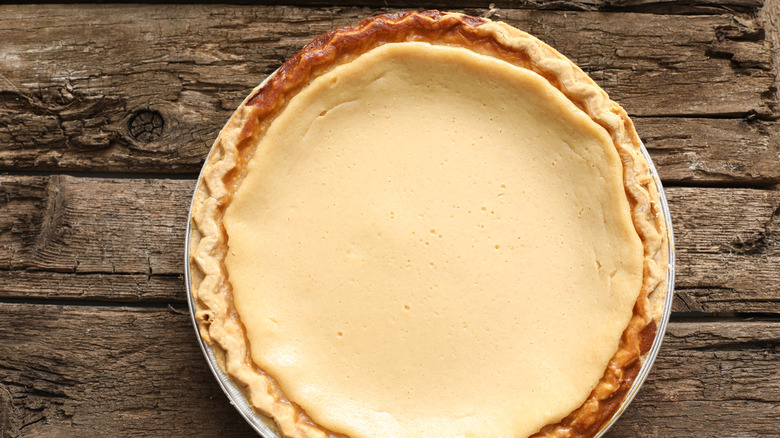
A welcome addition to dessert menus now, buttermilk pie has its roots in desperate times calling for desperate desserts. For the unfamiliar (and there are likely many, as this dessert isn't seen much outside the South, I've found), the pie consists of a mixture of white sugar, buttermilk (obviously), butter, eggs, flour, and flavoring (which is usually up to the baker), baked in a pie crust until it sets into something like a gelatin-meets-custard. Not to be confused with chess pie, which adds cornmeal to the mixture, or vinegar pies, which add lemon juice or vinegar for a bigger punch.
The pie was born out of a need for an easy dessert with what was on hand likely during leaner times. No fruit necessary. The recipe is included in a bevy of African American cookbooks from the turn of the century — and is an easily accessible dessert. The taste is something akin to a cooked, traditional vanilla custard — smooth, not too sweet, with just a teeny bit of tang.
8. Coconut Cake
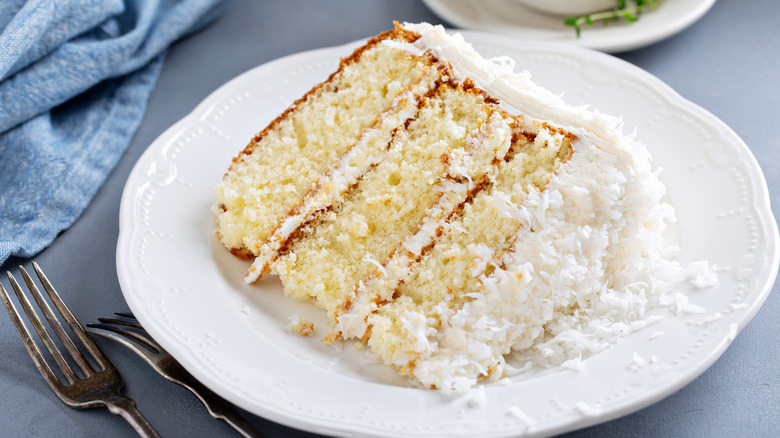
A pillowy, multi-tiered, ivory and white coconut cake is a striking dessert dotting many a southern eatery menu. The cake itself isn't an easy feat, either. A light and airy sponge, flavored with coconut, is used to sandwich creamy coconut filling. The cake is usually at least two to three tiers, and covered entirely with a whipped cream icing (though I've seen cream cheese and meringue, too), then patted all over with shredded, sweetened coconut. It's decadent, sweet, rich, somehow cooling, and incredible with a cup of strong black coffee.
Coconut cake's history is deeply entwined with that of enslaved people in the American South who were tasked with cracking, hulling, grating, roasting, and sweetening coconut for this confection. Most likely, they were able to pull from their passed-on knowledge of the tropical crop. Several cookbooks in the late 1800s included the recipe, including two by formerly enslaved women. Most recipes at that time included hand-beaten egg whites for lift, hand-grating coconut, and a whole lot of work. It's one of those cakes you can tackle if you have all afternoon — or even up to three days – but there are plenty of restaurants in the South that have a killer slice to try, too, if you're short on time.
9. Sweet Potato Pie
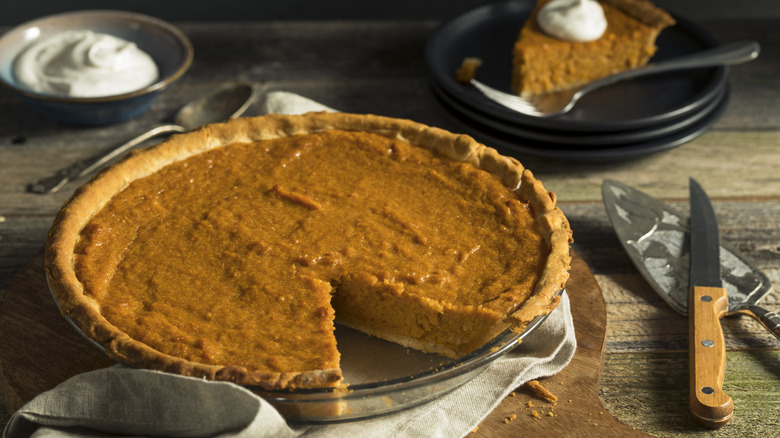
Creamy, rich, smooth, and perfectly spiced sweet potato pie graces many tables around Thanksgiving, but its roots go deeper and beyond turkey day, to the antebellum South and the enslaved African Americans who grew this crop. For the uninitiated, sweet potato pie is extremely similar in flavor and texture to pumpkin pie. A classic pie crust is filled with a mixture of beaten eggs, cooked and mashed sweet potatoes, evaporated milk, and warming spices like cinnamon and nutmeg. The pie is cooked until the center has the consistency of a smooth custard.
The sweet potato was being utilized in sweet pies for royalty as far back as the 16th century in Europe. In America, sweet potatoes were cultivated by Native Americans, and, according to Bill Neal, author of "Biscuits, Spoonbread, and Sweet Potato Pie," it's widely believed that enslaved Africans began to turn to the spud, as it was interchangeable with yams that were common in Africa and the Caribbean. Eventually, the sweet potatoes made their way into desserts, often topped with marshmallows, and so, pie followed. The 1839 cookbook, "Kentucky Housewife" by Lettice Bryan, featured a recipe for sweet potato pie, and other recipes began to pop up in books and magazines, cementing sweet potato pie's place as a standby and iconic southern dessert.