

7 Cooking Ingredients That Are Banned In The US
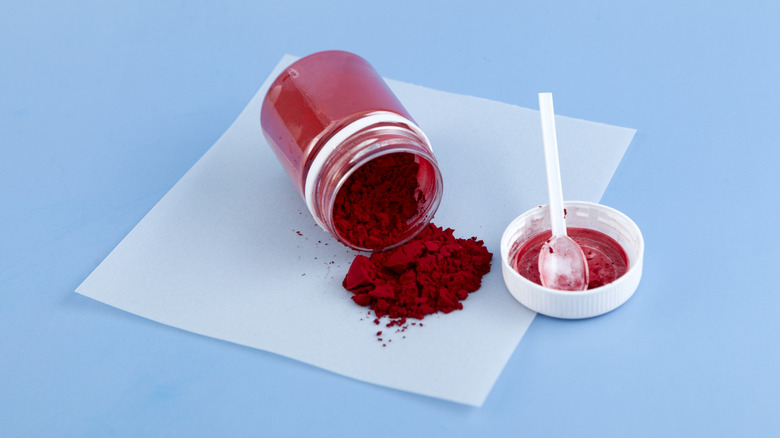
There are plenty of facts people believed about food years ago that have since been debunked. And as science progresses, we continue to learn more about the food we consume, which occasionally means finding out that ingredients we used to think were healthy actually aren't, at all. That said, unhealthy is one thing — downright unsafe and dangerous is another. This is the case with the food ingredients on this list, many of which were very common in recipes long ago.
However, this is where it gets a little convoluted. Some of the ingredients on this list are straight up banned in the U.S. as food ingredients no matter what, while others are banned when combined with another ingredient. Others are banned as a food ingredient but exist in non-food items (which is disconcerting in its own right, let's face it). Regardless, we're all better off without these ingredients in our food — period. Here are seven cooking ingredients banned in the U.S.
1. Artificial trans fats
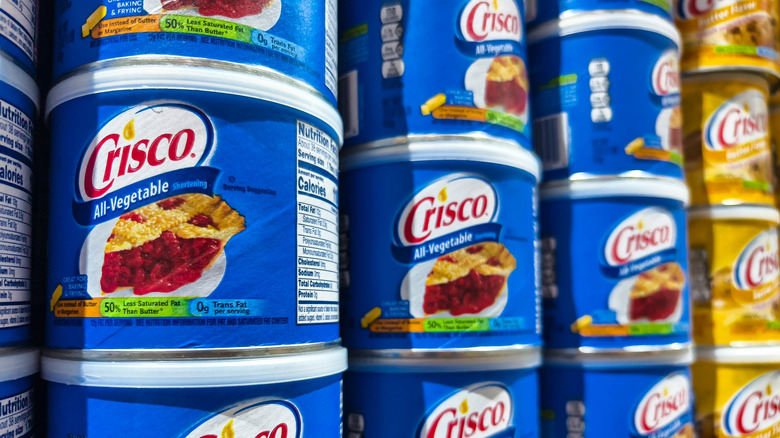
As of 2018, artificial trans fats were officially banned in the U.S. because they were linked to cholesterol and heart disease. This comes three years after the Food and Drug Administration (FDA) first ruled they were unsafe to eat -– and, boy, had we been eating them for awhile as a society – since 1911, to be exact. Over the many decades, Americans consumed artificial trans fats mostly in the form of partially hydrogenated vegetable oil. This was a staple in processed foods and also widely used at restaurants.
They were particularly popular in foods in the 1970s, and even though clinical studies continued to test them, people still doubted that artificial trans fats had any negative effects. In reports as early as the 1990s, studies started to show that artificial trans fats contributed to heart disease and high cholesterol. Throughout the 2000s, debates and studies continued to rage on. Crisco, a popular brand of vegetable shortening, changed its formula in 2007 to eliminate trans fats. And finally in June of 2018, the national ban was made official.
2. Red dye No. 2
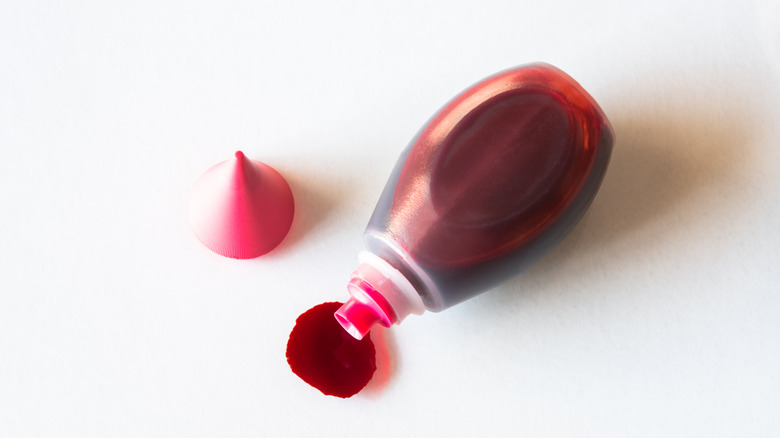
In 2025 the FDA announced it would finally be placing a national ban on a food dye known as Red No. 3. Food manufacturers were given until January 2027 to get it out of their products (some of whom might start replacing it with Red Dye No. 40, which has its own problems). However, another red dye was banned back in 1976 — that would be Red No. 2, a popular synthetic food dye made from petroleum products.
In 1969, this particular dye was connected to a growing number of tumors in tested rats. This made people nervous, as Red No. 2 was the most commonly used food dye. And while many people saw this as a big public overreaction, by 1976, it was gone. Sure, it'd be replaced by (also bad) red dyes in the future, but, hey, this just shows that we humans are still learning our lessons. Red No. 2 is still used in textiles.
3. Safrole
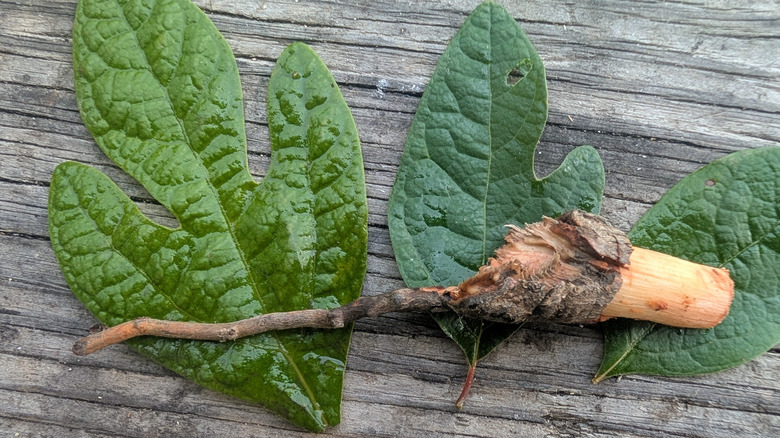
The actual reason you can't buy real root beer anymore has everything to do with this ingredient: safrole, or sassafras oil. Traditional root beer used to be made with sassafras that contained the compound, which is what gave the drink its spicy, singular taste. That changed in the 1960s, however, when studies began to show that it was a carcinogen possibly linked to liver damage (and some cancers) in lab tests with rats. This led the FDA to put a ban on sassafras and safrole oil in 1958 that went into effect in 1960.
The ban is very specific: It applies to sassafras bark, oil, and safrole not being allowed as a food additive. Today, root beer is made with various flavorings to mimic that original taste, sometimes using a safrole-free sassafras extract (which is not banned). Sassafras oil and bark is, however, still allowed in non-food products. It's used to make certain perfumes, essential oils, and soap.
4. Tonka beans
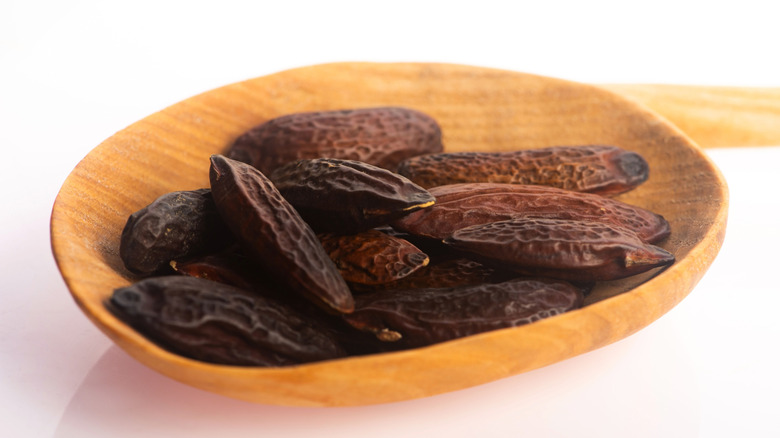
In a situation similar to sassafras, tonka beans aren't completely illegal in the U.S. — the ingredient can still be found in cosmetics and perfumes. However, the FDA did ban it as a food additive in 1954. Specifically, this ban is due to a compound in tonka beans called coumarin, which is linked to liver damage if eaten in high doses.
Foods in the U.S. can still have coumarin as an ingredient, but it needs to be naturally occurring rather than added in. In other words, you can't add shavings from a tonka bean into your dessert. Plus, the amount of coumarin that naturally occurs in foods is usually a very small amount and not dangerous. Ground cinnamon, for example, contains naturally occurring coumarin, as do strawberries, apricots, and cherries.
5. Livestock lungs
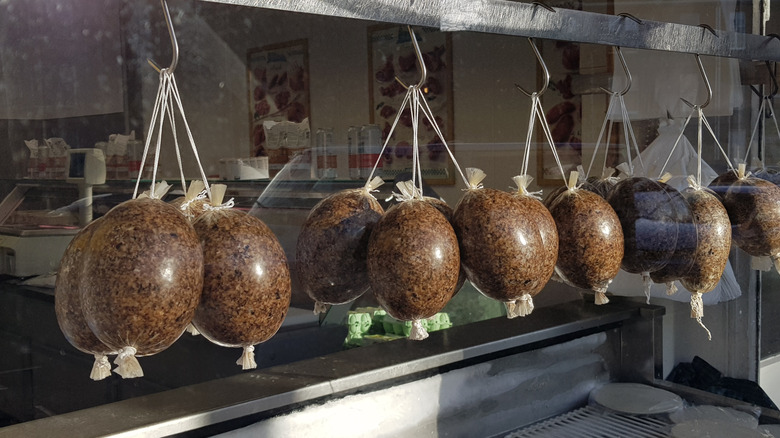
In 1971, livestock lungs (from any species) were banned in the U.S. as a food. Humans are not allowed to eat it due to a pretty simple reason — during slaughter, the lungs of an animal can be compromised with dangerous bacteria from fluids and other parts of the body entering the lungs. Unlike other parts of an animal, lungs can't be cleaned efficiently due to their squishy, sponge-like texture. So, there isn't really a way to make sure the meat could be consumed safely.
This means that traditional Scottish haggis cannot be made (or imported) to the U.S., as it is usually made with sheep lungs. However, lung-free haggis is allowed in the U.S. — you can make it yourself or bring it from Scotland, as they make a lung-free version just for the American market. Certain pet foods can still contain livestock lungs, though, should you have a pet that enjoys this very specific dietary ingredient.
6. Rhodamine B
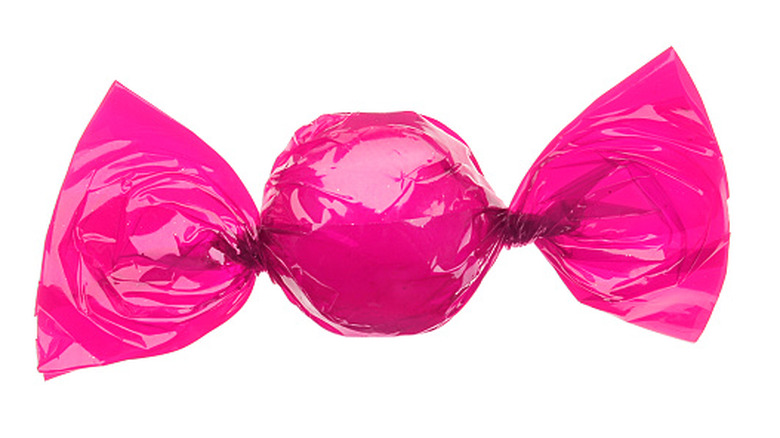
Rhodamine B is a synthetic dye used in textiles, leather, and paper — not food. It has never been legal as a food coloring in the U.S., but this hasn't stopped some food vendors from sneaking it into foods to turn them bright pink. It's been detected in candies, drinks, sauces, and chili powders despite having no acceptable daily intake levels for humans. This could be due to the fact that it's much cheaper than permitted food dyes, making it a very unsafe way to cut costs.
The biggest problem -– of many bad problems — is that Rhodamine B is a toxic Group 3 carcinogen linked to cancer. It can also cause liver and kidney damage as well as oxidative stress and cellular damage, which can lead to tissue damage. Basically, this substance has no business being ingested into the human body as it wreaks havoc. And there's no bright pink dessert on earth that justifies its use.
7. Borax
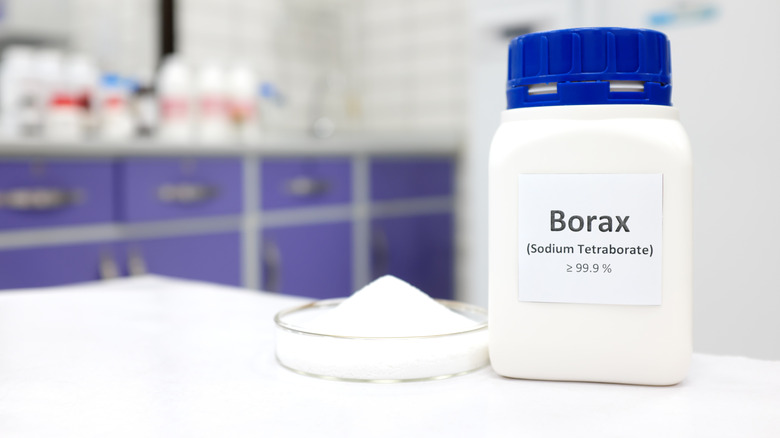
Borax has been around for centuries and has so many convenient uses. It can be used in laundry boosters, pest control, cosmetics, and household cleaners. It's even used in industrial processes, including glass manufacturing. It's not a food additive, though — but this wasn't always the case. Borax was once used as a food preservative.
This was until Dr. Harvey Wiley and a group of volunteers called "The Poison Squad" studied and tested various food additives in 1902. The Poison Squad consisted of 12 men described as the best and brightest, each of whom made a promise to only eat chemical-laced foods in the name of testing their safety. They ate borax-laced meals, which led to them getting sick. This eventually led to the Pure Food and Drug Act of1906, and borax was eventually banned in food. And thank goodness, as it's a reproductive toxin that can cause fertility problems as well as nausea, vomiting, and headaches.