

10 Things To Know Before Visiting A Brewery For The First Time
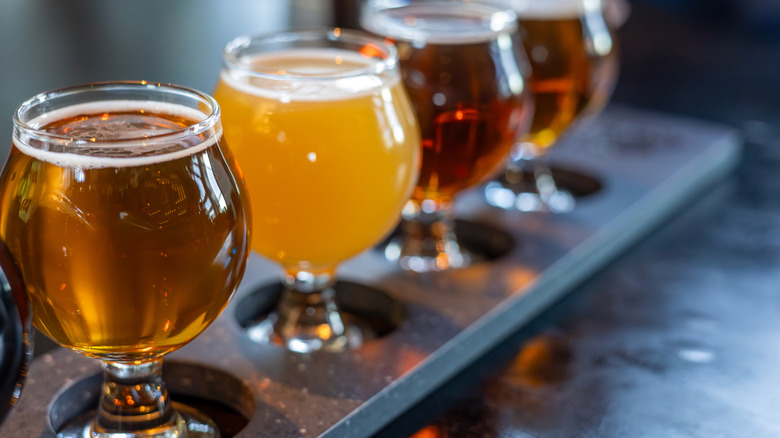
Hanging out, celebrating, or just soaking in a lovely day — we head to the brewery. Offering suds of a superb pedigree gives these watering holes an alluring edge, where innovation and ingenuity come together. Even if you're not in Asheville, North Carolina or Portland, Oregon (among the many American cities beer lovers should know), you're likely in proximity to an establishment awaiting your business. "Working in breweries tends to be a passion job," said Dylan Mazurkiewicz of Lakefront Brewery, an institution in Milwaukee, Wisconsin. "A lot of people are in it for the love of the culture/community that comes with it."
Visiting a brewery for the first time can be an energizing experience. But if you're used to crushing tall boys at the local dive bar or draft house — where, in short, you're sampling varieties actually aged on-site — is a totally different ballgame. Are there things to keep in mind, tips to help your excursion remain a blast, not a drag? We wanted to get some direct intel, which is why we tapped a lot of folks steeped in the trade. These experts were asked about many topics — tasting etiquette, dress conventions — and shared their opinions that compose the helpful pointers seen below. Don't let misconceptions cloud your judgments; here's what first-timers should know.
1. You don't have to be a beer expert
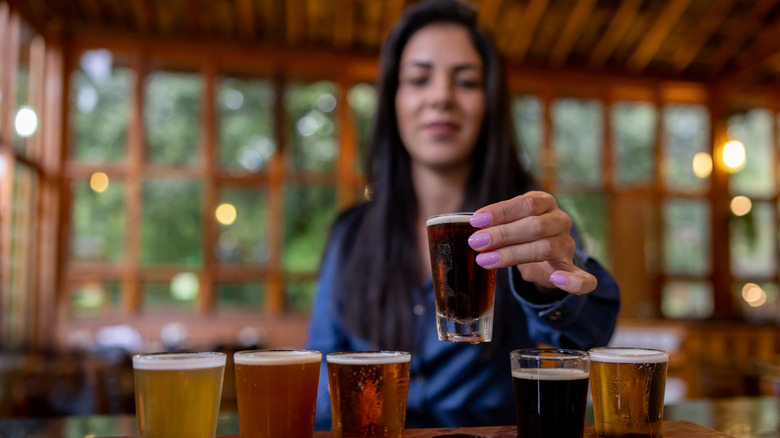
Because beer drinkers can be opinionated, some guests think you need encyclopedic knowledge of its history to visit a brewery for the first time. This is a pretty common position to hold, though as numerous bartenders told us, it just doesn't reflect reality. "So many people are apologetic that they don't know more about beer. Don't be! We're here to help people discover, or rediscover, their love of beer," said Emily Wallace, who's the Hospitality Director at Allagash Brewing Company in Portland, Maine.
Another bartender who debunked this notion was Dylan Mazurkiewicz. During the interview with Chowhound, he spoke at length about the joy in serving all drinkers, regardless of background. "We want to encourage anyone to ask questions and try multiple things, that's what the taproom staff are here for," he said. Learning, soaking in the fantastic brews — this should be the ultimate goal, not justifying your presence.
Geeking out over botanical beer is certainly fine, but confessing ignorance to the fundamentals of sours versus gose beers won't get you turned away. If anything, the only requirement you'll need to prepare for is flashing your government ID. See this for what it really is: a cliched myth you can politely disregard while sipping to your heart's content.
2. The ambiance is casual
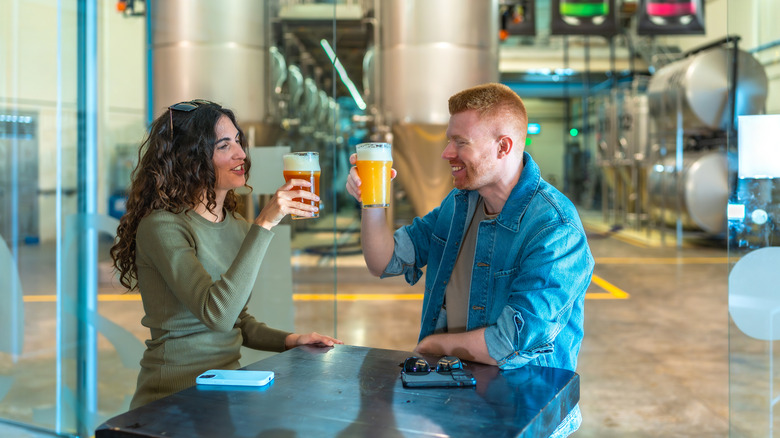
So much of why we enjoy ourselves at microbreweries is the ambiance. Look around, and you'll catch people in jeans and t-shirts, strolling on the patio with friends or children, ideally lounging around the patio on a sunny day. These are casual places to relax, and staff want you to feel at ease. "Customers sometimes come in, see the expansiveness of the brewery and assume a certain level of formality," commented Justin Cox, founder and CEO of Atlas Brew Works, an acclaimed brewery in Washington, DC. "While we do take our craft very seriously, we certainly don't take ourselves very seriously."
Treat it more like a picnic outing than a sit-down restaurant, and dress comfortably. Drafthouse environments aren't buttoned-up or stuffy, and tottering around in kitten heels could disrupt what's otherwise a laidback hang. That way, you'll have more freedom to mingle and explore the taproom in all of its boozy glory. In the words of Nirvana, "come as you are" and hop on a stool.
3. Visit during off hours
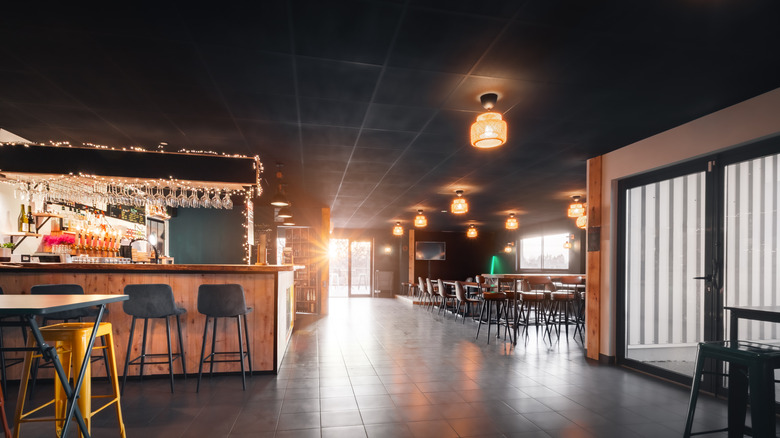
Plotting an excursion to the neighborhood tap-house might include a few logistics. For example, is there a "best" time for newcomers to make the trip? We like chatting with bartenders as much as the next person, but surveying our experts, it seems peak hours are better avoided when you need more assistance. "If you want a guided tour of our taplist, we're happy to offer it – just not during the rush!" said Lane Fearing, the co-founder of Roaring Table Brewery in Lake Zurich, Illinois.
Relaxing with a crisp lager is one thing, but some visitors might seek out more one-on-one interaction with the staff — a scenario that isn't always possible on a Friday night or in the thick of happy hour. Getting a bartender's undivided attention is doable, with proper planning, however. Wait to swing by when it's less hectic. That way, you'll get the help you need — and relish whatever's poured for you — while giving staff much-needed breathing room. "Come during slower windows—often early afternoon, or early in the week—when our co-workers have more time to talk through options and make recommendations," said Brendan McGivney, a brewer at Colorado-based Odell Brewing.
Downtime will look a little different, depending on where you go. But by being mindful, everyone wins; hashing out beer and cheese pairings will be fun, not forced.
4. Bartenders are your guide
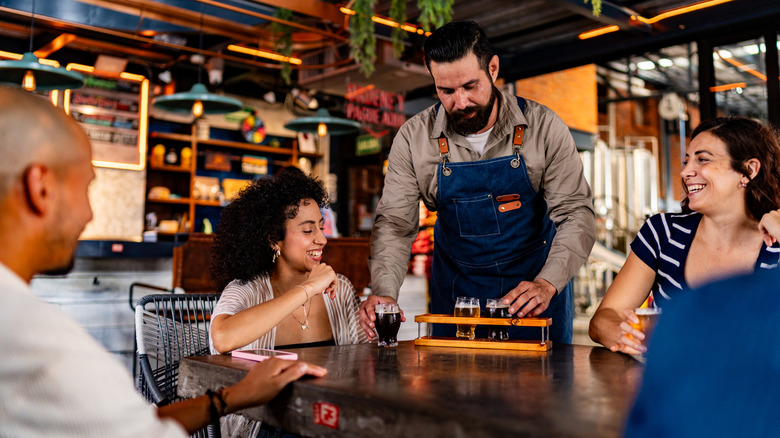
Wondering where to begin your trek into the sudsy drink? Don't be shy. Feel free to interact with the brewer during your visit. Unlike purchasing cold ones from a gas station or supermarket, folks behind the counter hope to assist you with any questions or quibbles on your mind. Staff are not inconvenienced if you ask them about hop-forward pours, say, or need beer suggestions for the cider drinkers in your camp. "Remember, everyone here LOVES to talk about beer! Just tell your beertender what you normally like to drink, and we're happy to guide you," said Brendan McGivney.
Soliciting recommendations for your first time visiting a brewery might feel awkward. If you need reassurance, allow our pros to come to the rescue. "What should I get?" is one inquiry that Nick Meyer, founder of Eckhart Beer Co. in Brooklyn, revealed to be music to his ears. "This is often considered an annoying question, but to us it says you've got an open mind and you trust that you're in good hands (which you are)," he said.
Requesting a drink that's liked by the staff in particular is a great strategy too, and certainly makes the bartenders feel a little warm and fuzzy, per Lane Fearing. "Customers who trust me enough to choose a beer for them that I'm digging at the moment make me smile!"
5. Sample beer before you buy it
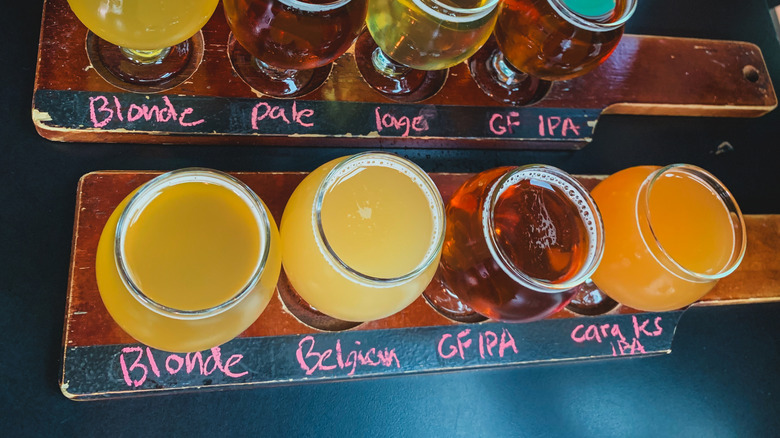
Hazy, wheat-y, hoppy, imperial. When we're faced with so much variety, at best, selecting your drink feels like a game. Request a sample. Testing out a sip before committing to the whole pint can not only help you narrow down your decisions, but it's also a better value on the tab."If you're curious about any beer or beverage, just ask, we'd love to pour you a taster," said Brendan McGivney.
More often than not, tap rooms in town offer chances to build the ultimate beer flight. Here, guests can relish an assortment of four smaller glasses, or can even let the staff do the work of assembling the lineup for them. Justin Cox vouched for this if your strategy is to broaden your palate. "We highly encourage experimentation, and flights are an excellent way to start," vouched Justin Cox.
Don't exploit this generosity, however. Those complimentary tasters can add up eventually, and being a good guest means not pushing it too much. Kindly hold back after two samples. If you still want to sip a little bit of everything, going the flight route is only logical, as according to Nick Meyer, "A 4-ounce pour is a minimal commitment, and you get 4 chances to find something you like."
6. Growlers and six-packs are takeout-only
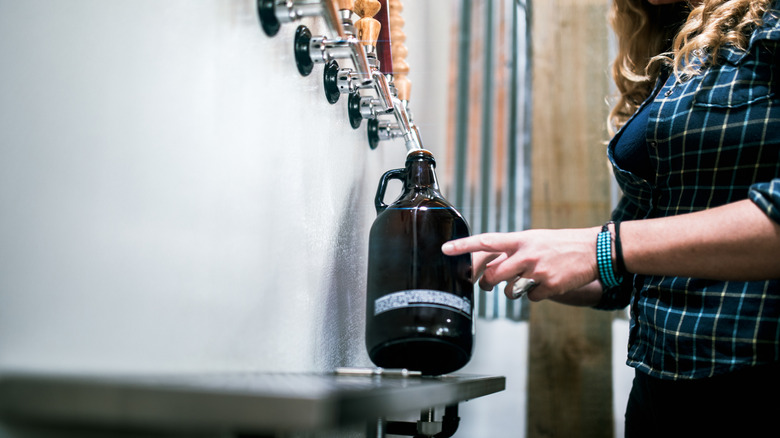
Breweries don't just pour beer from a nozzle. In fact, many facilities sell six-packs or those massive glass growlers bartenders can fill (and refill) with your favorite pint of ale. Schlepping a jug of suds around the premises sounds like a blast, but beware: this goes against common etiquette, explained Brian Kulbacki, the founder of Departed Soles Brewing Company in Jersey City. "Packaged beer and growlers are to-go, not a way to grab four or six drinks and tuck away out of sight at a different rate than draft pours!"
With a style you frequently drink, purchasing your beer in bigger containers has its perks. For one, there's sustainability. A vessel you can reuse any time to replenish your foamy beverage will save on waste compared to an aluminum can, which is done after one use. And for two, larger jugs are a much better bang for your buck, considering they can hold a half-gallon of liquid (64 ounces). Getting the equivalent of five cans is a steal, yes, though chugging it in the drink hall would probably get frowned upon, don't you think?
Certainly, no brewery is going to deter customers from purchasing special bottles if they like. It brings in extra income while making great souvenirs during the trip. Still, first-time visitors should quaff from the tap if they're staying — save the growler for later.
7. Don't expect the same tap list every time
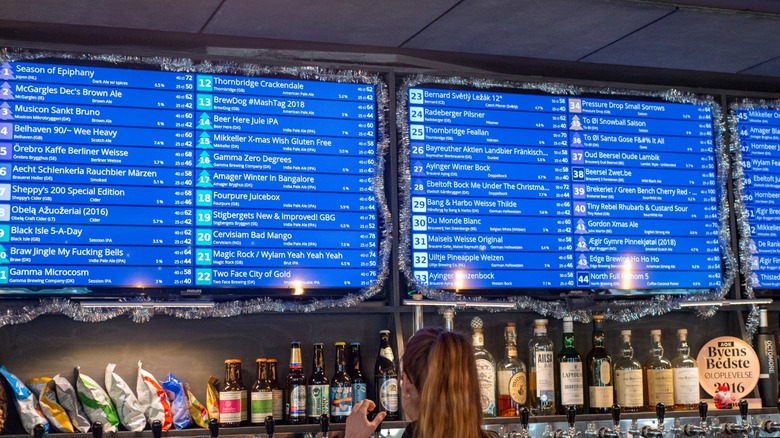
With experienced micro-brewers, part of why they love the job is getting to create a batch of something exciting. Breweries are essentially (boozy) laboratories, mixing hops, fruits, or seasonal ingredients in funky new combinations — in other words, the fundamental differences between craft beer and commercial drafts. So if you're hitting up a brand-new beer bar, preparing for tweaks in the rotation would be wise, noted Emily Wallace. "We intentionally vary our lineup to accommodate a range of styles and flavor profiles."
Admittedly, it is understandable that newcomers might feel frustrated by constant swaps. Predictability is good for dipping one's toes in, and subbing one draft in for another could catch visitors off guard if they're seeking a pint they're used to. At the same time, shaking up what's on tap can pleasantly surprise you.
For instance, maybe there's no blonde ales on the menu one day, or you end up with a milk stout that didn't totally wow you. When we spoke with Brian Kulbacki, he noted how important it is to not let a one-off experience negatively color your view. His advice? "If you don't like something on draft today, ask how often they change their menu, and give them another shot," he said.
8. Keep tabs on events and tours

In many ways, beer is just the tip of the proverbial pint for the modern microbrewery. Mom-and-pop businesses maintain busy itineraries, and what drinkers might not realize is how many fun events are usually happening on a weekly, if not daily, basis. Lean into the goings-ons by keeping tabs on the calendar — a watch party for awards shows or Thursday trivia nights provides regular revenue for the tap room, on top of giving patrons a "town square" to mingle and fraternize.
Engaging with extracurriculars definitely invites patrons to acquaint themselves with the community, which is a strong aspect of brewery culture. If you're seeking a deeper-dive into what makes them tick, however, experts will wholeheartedly advise attending a tour. "It is a great time to learn more about the brewery and our processes," according to Brendan McGivney, whose operation Odell Brewing hosts behind-the-scenes junkets once a week. Hallmarks of the best brewery tours tend to feature a lot of first-hand action. Signing up, visitors observe the facility and its grounds, test and savor a range of brews on tap (often at different stages of production), and even pocket a commemorative drinking glass or discount code they can use while on-site.
9. Breweries cater to different audiences
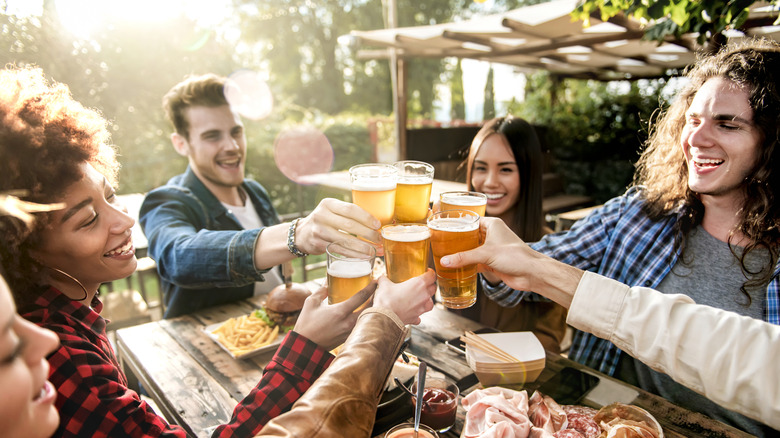
Beer halls cater to beer — and people who drink it. "Breweries are, by and large, adult-focused," explained Brian Kulbacki. He added that, to have a great first-time visit, understanding what audience your destination is catering to is crucial. "If you're going to bring children or pets, make sure you are conscientious and respectful of the brewery's rules and other guests' experiences."
In some situations, this might mean hiring a babysitter if it's a child-free brewery, or leaving your pup with a trusted pal. Serving up awesome food could be one spot's specialty, but if another brewery only has pretzels for munching, head somewhere else for the grub. Safety was another consideration Kulbacki brought up, because let's face it: they're rowdy and high-energy, which doesn't always mix with toddlers.
Tap rooms, of course, are jovial spaces, inviting us to kick back and feel a little buzz. And nowadays, it's hard to find a brewpub that doesn't foster the sort of neighborhood feel where all ages are invited — Allagash, Emily Wallace's spot, being a prime example. Keeping the vibes good, Kulbacki reiterated, is golden. "We want everyone to have a safe, enjoyable time, and all it takes is one to upset a crowd and turn a good day into a bad one."
10. Broaden your horizons
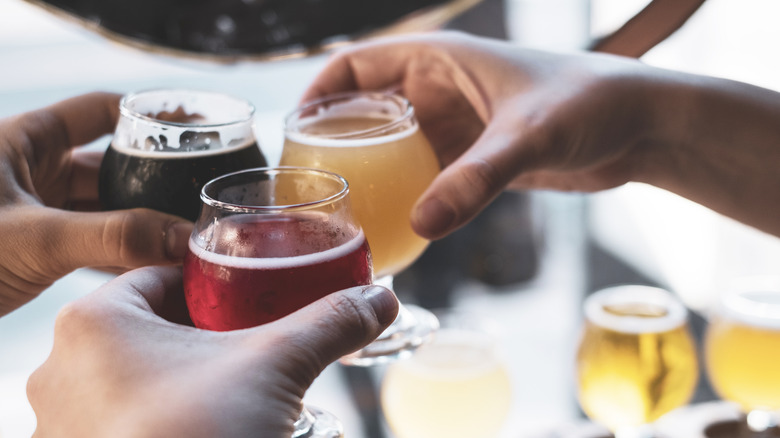
Straying from your regular wheat ale? It sounds daunting. But now's the time to try that peanut butter and jelly porter if your interest is piqued. Going in blind can be an excellent opportunity for discovering different kinds of beers, and experts gently nudge visitors to branch out at the patio. "Come to a brewery to explore new flavors and get outside of your comfort zone," Lane Fearing said. "Asking for the closest thing to your favorite light beer is kinda missing the point."
Mind you, this piece of advice isn't intended to gate-keep or act holier-than-thou. There are a rainbow of characteristics in craft beer to consider, from malty and smoky, sour and spicy. Microbreweries like showing off techniques that lead to this wealth of tasting notes, and it makes quite the bonanza for the palate. To squander the moment on another IPA you can easily chug elsewhere wouldn't fit the spirit of what microbreweries are all about. Certainly, Dylan Mazurkiewicz wants patrons to feel comfortable, but again, embrace novelty — "come in expecting to try something new, with an adventurous mindset!"
It can be rewarding, taking chances on a pint you assumed you wouldn't like — both for guests and staff too. "We especially enjoy it when a guest leaves our taproom having widened their beer horizons," Nick Meyer said, so for a round of suds, ditch your usual order. Trust us.