

10 Mistakes Everyone Makes With Chicken Pot Pie
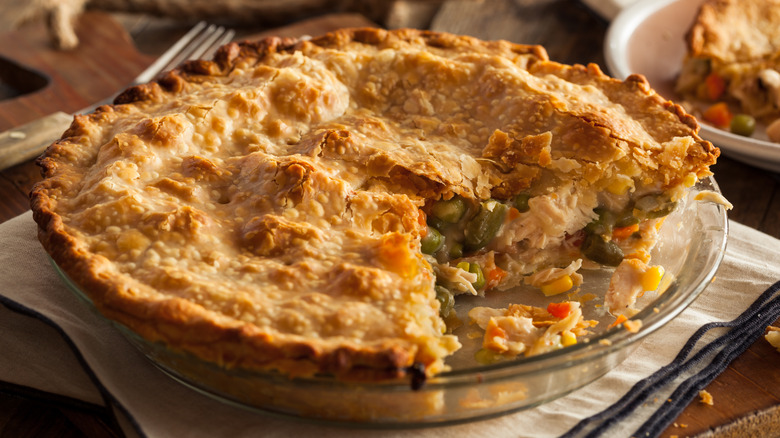
Chicken pot pie is the quintessential winter dish. There's something about the combination of hearty chicken, a well-made, flaky, and buttery crust, and decadent gravy peppered with vegetables that warms both the body and the soul. Sure, you can visit a grocery store and pick up a premade or frozen option (Costco makes a pretty good one, if we do say so ourselves), but the simplicity of chicken pot pie offers a lot of room for experimenting — not to mention it's pretty satisfying to put a beautifully baked rendition of one on the table, nod, and say "Yep — I made that!"
Despite its simplicity and taste, there are many mistakes that you can make with chicken pot pie that negatively impact its texture and satisfyingness. To help you know which mistakes to avoid, we got some insight from a pro: Joanne Gallagher, recipe developer at Inspired Taste. Gallagher shared her favorite chicken pot pie recipe with us, as well as some of the potential pitfalls that home cooks may be making with this timeless dish.
1. Mistake: Using the wrong cut of chicken
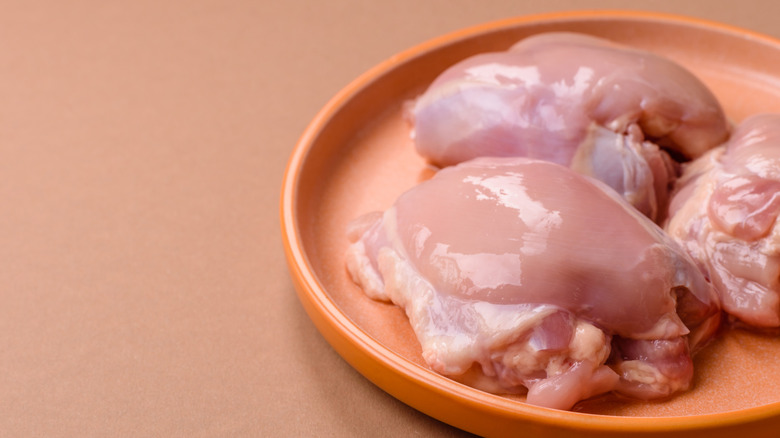
Chicken is a pretty important part of the aptly named chicken pot pie. There are many different parts of the bird that you can use for your recipe, but it usually comes down to one important choice: white meat or dark meat? Per recipe developer Joanne Gallagher, the answer should always be the latter. "Boneless, skinless chicken thighs are the sweet spot. They stay juicy and tender even after a long bake," she says. While some recipes may call for chicken breasts or white meat chicken generally, if you're after a succulent, juicy bite, you may want to avoid using them. Gallagher cautions that chicken breasts, while still a viable option, can dry out, meaning you'll need to pay extra attention to them to avoid overcooking and pushing them past the point of no return.
"The worst choice is a lean, pre-cooked chicken, which tends to shred into chalky bits once it hits the oven," Gallagher says, claiming that higher-fat options give you the flavor and moisture that you're craving. After all, this is an indulgent dish, packed with tasty gravy and wrapped up in pie crust, so be sure not to skimp on the fat when it comes to the protein as well.
2. Mistake: Not thickening your gravy ahead of time
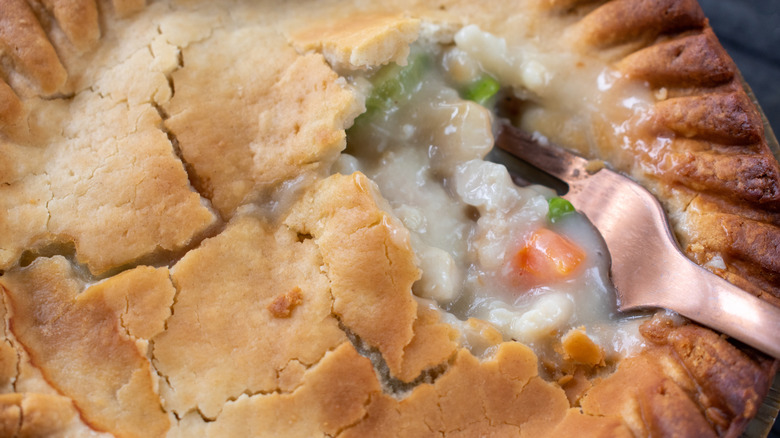
One of the best parts of diving into a chicken pot pie is getting the contrast of crispy, buttery crust and soft, creamy gravy. The keyword here is "creamy," as a sauce that's too watery or wet can ruin even the most resilient of pie crusts. When we asked Joanne Gallagher why many pot pies end up soupy or watery, she pointed to the gravy. "Most of the time, the filling wasn't cooked long enough before baking. The gravy needs to fully thicken on the stovetop so it can hold its shape in the oven," she says.
You don't need to cook your gravy on the stovetop for that long before adding it to your crust. Once it's simmering gently on the stovetop and pulls away from the bottom of the pot when you stir it, you'll know that it's good to go. "A thicker-than-you-think filling is your friend," Gallagher says.
3. Mistake: Skipping the spices
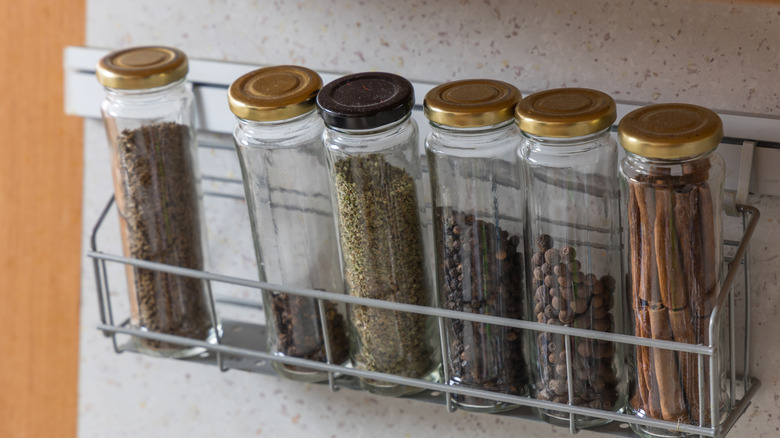
The last thing you want is for your chicken pot pie to be flavorless and sad. Luckily, there are a number of spices that you can employ to give your pie an edge. Chief among them, per Joanne Gallagher, is sage. "It instantly makes the pie smell warm and savory. A small pinch goes a long way, adding earthy depth without taking over the gravy," she says, recommending pairing it with salt to elevate those gentle, woodsy flavors.
Other seasonings you might want to consider adding to your chicken pot pie include thyme and rosemary, which offer that same delightfully woody flavor. You can add them directly to the pie filling, or for something even more creative, consider adding a pinch of them to your pie crust. They will work very well with your butter and fat of choice and release a beautifully complex and fragrant aroma into your kitchen as the pie crust bakes. If you plan on adding them to your filling, though, try toasting them ahead of time to release more aromatic compounds and make their flavor sharper.
4. Mistake: Overworking the dough
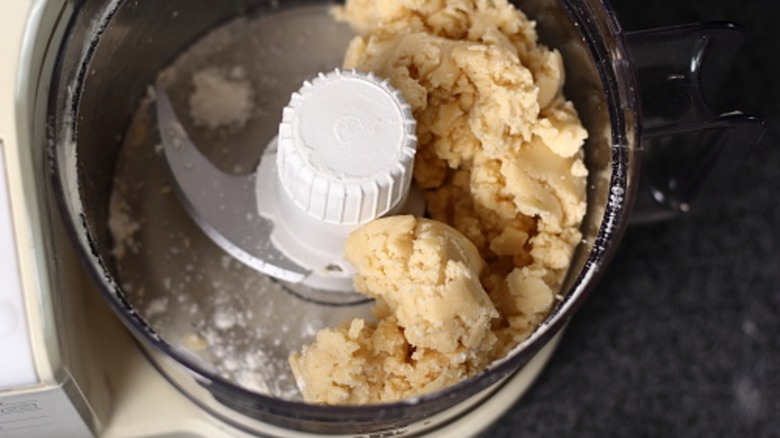
A lot of the mistakes that you may be making with pie crust revolve around what we personally think is the hardest part of this recipe: making the pie dough. Pie dough can be a sensitive Sally, and since it forms the base of your recipe, messing it up can lead to problems down the line. The last thing you want is for your crust to rip, come out hard, or just ruin the eating experience altogether.
One of the biggest crust-related mistakes, per Joanne Gallagher, is overworking the dough. "When the butter gets too warm or the dough is kneaded like bread, the crust turns tough instead of flaky," she says. This is because when you work the flour and water, you're activating the gluten. A little bit of gluten is alright, as it gives the pie dough its shape, but working it until it resembles shoe leather will prevent you from getting the flaky layers that your crust deserves.
"You want visible bits of butter and a light touch. A few dry spots are okay; they'll come together as it rests," Gallagher says. One of our top tips to prevent overworking pie crust is to use a food processor to mix the fat and the flour, then add water and work it with your hands only until it comes together in a ball. You could potentially also overwork it when you roll out the dough, so be sure only to stretch it enough to fit in your baking vessel.
5. Mistake: Not pre-cooking the vegetables ahead of time
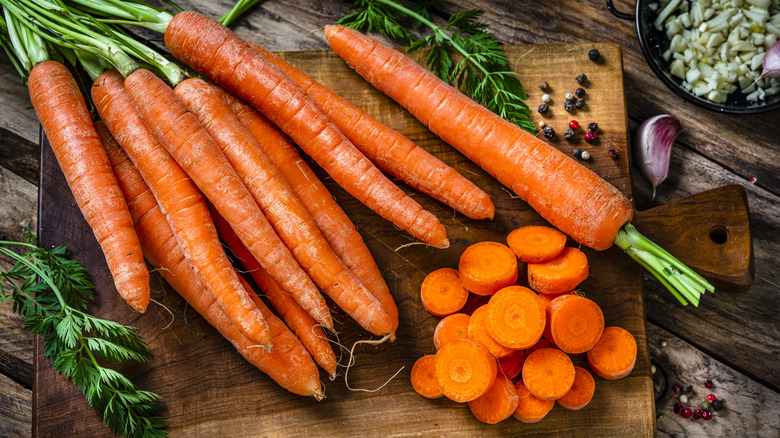
Make no mistake, chicken pot pie is not a time-saver of a meal (if you want that, try a frozen store-bought pie instead). One of the most time-consuming steps is getting all of those veggies perfectly cooked before they're baked with the rest of the ingredients — and it's a non-negotiable. The reason for par-cooking your veggies beforehand is two-fold. "Raw vegetables ... release water as they cook, which can thin things out fast," says Joanne Gallagher. If you put your raw, high-moisture veggies, including carrots, celery, onions, and more, in the pie without par-cooking them first, you could end up with a wet pie filling and a soggy bottom.
Another reason you'll want to follow Gallagher's advice and saute the veggies in a skillet before assembling your pie is to help the veggies cook at the same rate. Potatoes and carrots, common additions to chicken pot pie filling, are hard and crunchy. Although your pie is in the oven for a fair amount of time, these hard veggies may not soften enough, rendering your pie filling inconsistent and hard. Taking the time to cook these veggies beforehand will pay off in the long run. "This keeps the filling creamy rather than watery and ensures everything stays tender," says Gallagher.
6. Mistake: Forgetting to chill the crust

Chill, rest, preheat: Arguably three of the most skipped-over instructions in recipe descriptions everywhere. However, neglecting to chill the pie crust ahead of time is one of the cardinal sins of pie-making, whether it's a savory or a sweet recipe. "Chilling the crust for chicken pot pie is absolutely worth it, especially if you want a flaky, crisp top instead of something soft or greasy," Joanne Gallagher says.
The reason for this is simple: Pie crust is just a combination of fat, water, and flour. Putting your crust in the fridge for a little bit before rolling it out will allow the gluten to slacken, ensuring your pie crust stays tender. It will also help the fat solidify, helping to give you those signature flaky layers. "Keeping the pastry cold helps the butter stay firm, which creates those beautiful layers as it bakes," Gallagher says. She keeps her crust chilled until the filling is ready to bake, and we've personally found that using a double chilling approach — both after the pie crust comes together and after rolling it out — is helpful. Plus, resting your pie crust is also an excellent way to combat pie shrinkage.
7. Mistake: Foregoing the egg wash
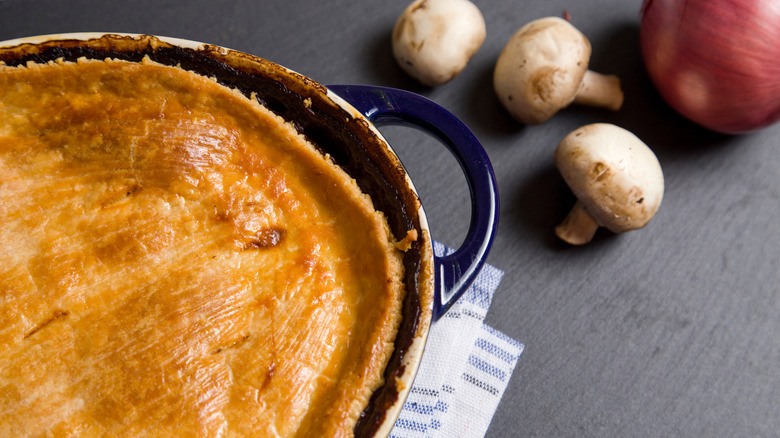
Have you ever wondered why the recipe photos for pies look like they just finished a two-week vacation somewhere warm and sunny, while yours looks like it's the color of freshly fallen snow? It could be because you are forgetting to add a wash to the top of your pie before baking it. "An egg wash helps the crust brown evenly and look beautifully glossy," says Joanne Gallagher.
The right type of wash will depend on your recipe and the finish you're after. Gallagher says she prefers using a whole egg, but notes that you can pick the one you enjoy the most. "Egg yolk gives a deeper color, while cream adds softness," she says. For extra shine, you can add a splash of milk to your egg wash, or use just the yolks for a golden-brown, show-stopping hue. You could even add a sprinkle of flaky salt to the top for color and extra flavor, though if you go this route, you may just want to add less salt to the filling to prevent overseasoning it.
8. Mistake: Overlooking store-bought crusts
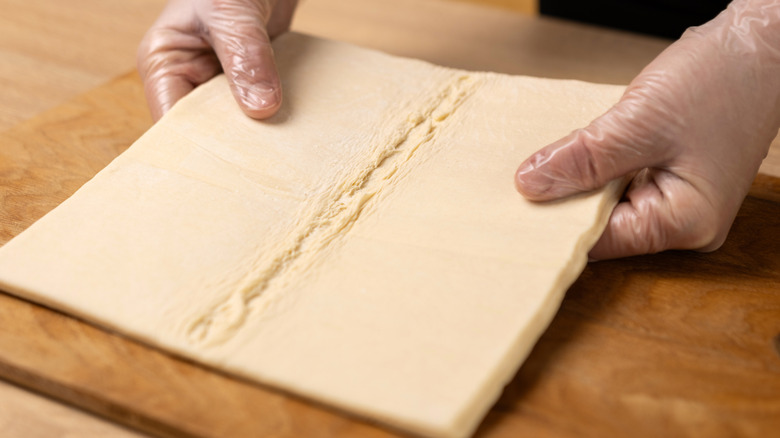
Store-bought pie crusts get a lot of flak, but there are some instances in which they are actually preferable to homemade ones. If you're in a bit of a time crunch and don't want to spend the time bringing together, resting, and preparing a crust from scratch, you can instead grab one of these frozen or refrigerated varieties, thaw it, then add your cooked filling to it and enjoy. It saves you a ton of time and aggravation, and using one means you can put all of your effort into crafting the tastiest possible filling.
One instance where store-bought is always preferable to homemade is if you're making a chicken pot pie with puff pastry. Puff pastry is made with layers of laminated dough, which is a pain to make at home (especially if you're a beginner). When Joanne Gallagher makes her chicken pot pie with it, she likes to use Dufour's pastry, thaw it in the fridge the night before, and keep it chilled until the filling is ready to bake.
You can also use other store-bought replacements for classic pie crust for this recipe, including Cheddar Bay Biscuit Mix. It'll give you more of a cobbler-like take on chicken pot pie, but it's delicious nonetheless. To make this variation, prepare the mix as directed, then spoon it on top of your cooked filling before baking it.
9. Mistake: Cooking it in the wrong pan
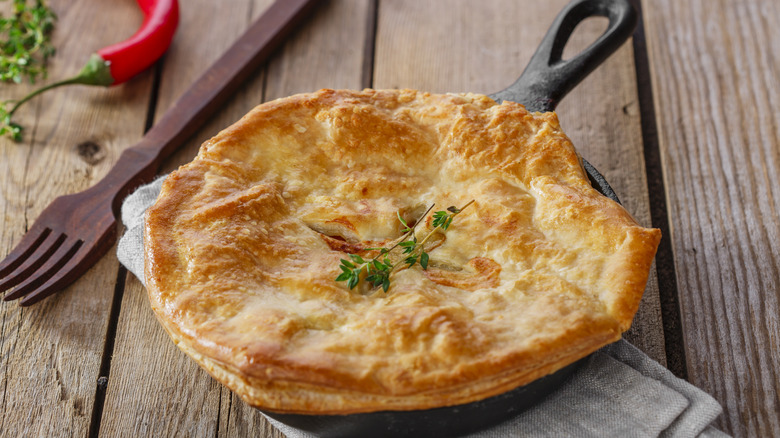
Imagine this: You're reading your chicken pot pie recipe and notice that it calls for baking it in a cast-iron skillet. You only have a glass or ceramic pie pans and ponder, "Well, what difference could it make?" Well, a big difference, it seems.
Joanne Gallagher explains that glass or metal pans aren't ideal for making chicken pot pie because they don't heat up quickly. In order to prevent a soggy bottom, you want that bottom pastry to crisp up fast, rather than coming to temperature slowly and allowing moisture to creep down into the bottom crust. As such, a recipe that is made in a cast-iron skillet — which is known for its ability to heat up fast and retain its temperature — isn't going to have the same instructions as one made in a different vessel.
When we asked Gallagher what the best pan to bake this recipe in was, her answer was simple: "Stick with heavy-duty pieces you know can handle the heat." Enameled cast iron (like Dutch ovens or baking dishes) is excellent for making chicken pot pie for a crowd. Plus, for a single-layer pie, you can cook the filling in the vessel, then just add your crust before popping it into the oven (since it's already preheated). The aforementioned cast-iron skillets are also excellent choices as well, as you can serve directly from them.
10. Mistake: Not storing and reheating it correctly
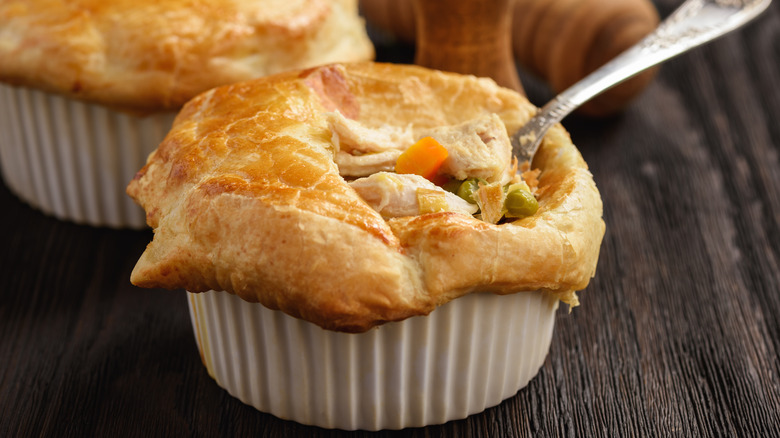
We hate to break it to you, but chicken pot pie isn't going to taste the same on day two, three, and so on. However, that doesn't mean you can't take steps to preserve its texture and ensure it stays as fresh as possible. Joanne Gallagher recommends first letting the pie cool completely (presumably to reduce the risk of condensation and prevent the crust from going soggy) before refrigerating it for up to three days. Another option, if you want to have chicken pot pie at a later date, is to freeze the whole pie. "Freezing a fully baked pie can dull the crust, but it's fine in a pinch," Gallagher says.
You'll also need to take due care when reheating your pot pies. Gallagher recommends sticking it in the oven at 350 degrees Fahrenheit until it's warmed through — which usually takes around 20 minutes. However, she did offer a shortcut: "If you're in a rush, remove the crust and toast it in the oven until it's nice and crisp," she says. The microwave is an option she wouldn't recommend, as it can zap the moisture out of the crust. However, she does suggest reheating the filling separately, then adding the crust back on — kind of like a deconstructed (but still tasty) take on this classic dish.