

4 Costco Deli Meats To Buy, 3 To Always Avoid
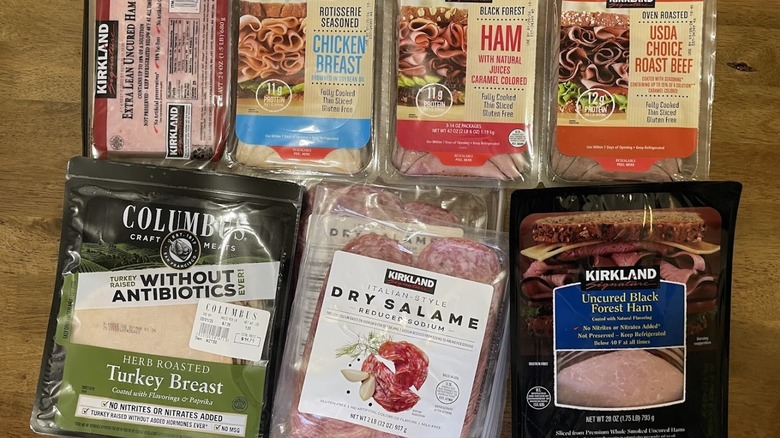
Regardless of the similarity in their appearance, not all cold cuts are created equal. It's an important maxim to take with you when shopping in the deli aisle in Costco's premade foods section. Buying your turkey, ham, roast beef, or salami in bulk is a commitment all its own, so it's important to know the good stuff from the not so good stuff. To help make your Costco run a bit easier, I took a stroll through my local Costco's deli for a taste test.
I was looking for deli meat that could be a veritable lunchtime workhorse for a shopper — something that would be good on a sandwich, but also something that could be easily incorporated into other dishes. With these characteristics in mind, I made my decisions based on the product's flavor, texture, versatility, and price point. The following selections are all about bang for your buck, but also longevity. Deli meat is supposed to be consumed within a week or so of opening the package, so that stuff has to make its way onto more than just your lunch menu.
After my experience and taste testing, I've assembled a list of Costco deli meats that are definitely worth consideration, along with a few that should be avoided. I tried each sample on its own, and then did as much as I could to work the product into other meals. All in all, there are some great options at Costco, and here are my overall picks.
Buy: Kirkland Variety Pack Black Forest Ham
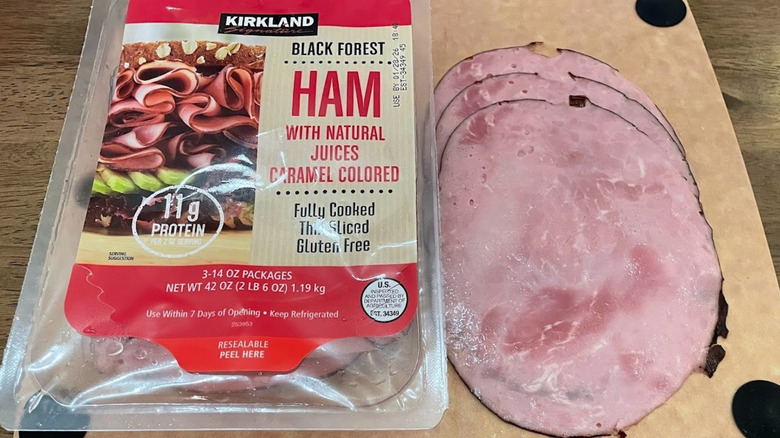
The Kirkland Signature Variety Packed Meat comes with packages of ham, chicken, and roast beef — my assessment of the latter two is forthcoming. Though you do get a good variety in this package, the ham is the best of the bunch. It's sliced thin, but not so thin I would call it shaved, which makes it great for stacking on sandwiches. It's been cured with corn sugar, so there is a bit of added sweetness here, but I like that in a ham. Texturally, this stuff is right on the money. Ham can sometimes be a bit more fibrous than other deli meats, but the Kirkland Variety Pack ham is nice and tender. The sugary cure on this ham means it's great on a griddle with some scrambled eggs as it caramelizes into a tasty breakfast protein.
The Kirkland Variety Pack was $14.99 at my local Costco, and each individual package is 14 ounces. That means you get just over 2 pounds of deli meat when you pick this item up. It's not a bad price for that much deli meat, especially considering the variety. Even if you're not feeding a small army, you can make this product last a bit longer by tackling one package at a time.
Avoid: Kirkland Variety Pack Chicken
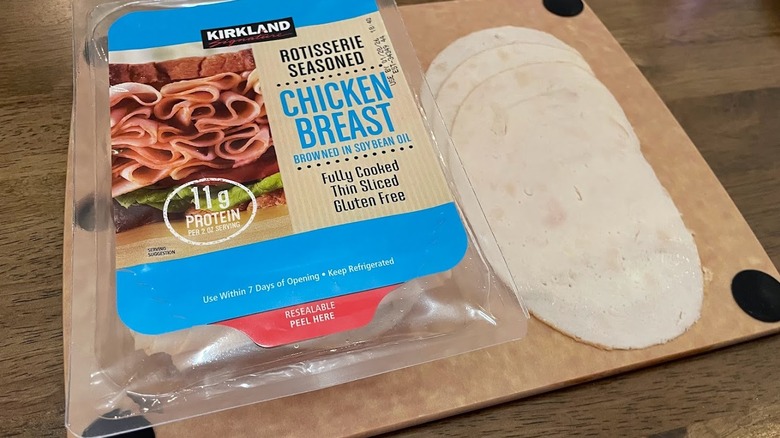
Every group of friends has at least one member that no one really likes. In the case of the Kirkland Variety Pack, that friend is the rotisserie seasoned chicken. Part of my negative assessment of this deli meat comes from my own biases — I've never really liked chicken as cold cuts. All biases aside, however, I can't in good conscience recommend this deli meat. If the Costco staff wouldn't throw you out and revoke your membership, I'd suggest removing it from the variety pack and leaving it at the store.
The main problem with this chicken is that it doesn't really taste like anything. Outside of a vague soybean kind of essence that comes from the soybean oil used to brown the protein, there's very little going on here, flavor-wise. You know you're in bad shape when the chicken doesn't even taste like chicken. There's nothing wrong with the chicken on a textural level, however — it pulls apart nicely and doesn't have any egregious pockets of gristle or fat.
Outside of maybe slicing this protein into strips and tossing them in a salad for some extra protein, there isn't much versatility to this product. I found that the best way to use it was to layer it between the ham and roast beef to give a sandwich a bit of extra color and heft. On its own, there's not much going on here.
Buy: Kirkland Variety Pack Roast Beef
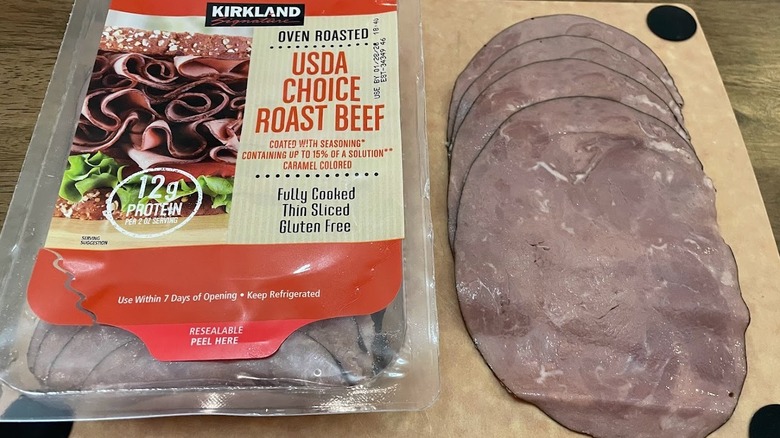
Much like deli chicken, I've never been particularly fond of deli roast beef. The Kirkland roast beef changed that bias in me however — I really liked this product. It's perhaps at its best when used on hot sandwiches like French dips or even a grilled cheese with some sharp cheddar cheese, but it's tasty cold as well. On cold sandwiches, this protein works well as a flavor enhancer — it tastes great when combined with a few slices of the Kirkland ham. Deli roast beef tends to have an over-saturation of liquid smoke flavor, which is not totally lost on this product, but it's not so intense that it becomes unpalatable.
Texturally, this was one of the best iterations of deli roast beef that I've ever had. It's just as tender as the ham and doesn't have any rubbery or fatty segments. It pulls apart nicely and works just as it should on a sandwich. It's not the most versatile ingredient in your fridge, but I could see throwing some roast beef strips into a salad or adding slices to a quesadilla for some added protein and flavor.
Avoid: Columbus Herb Roasted Turkey Breast
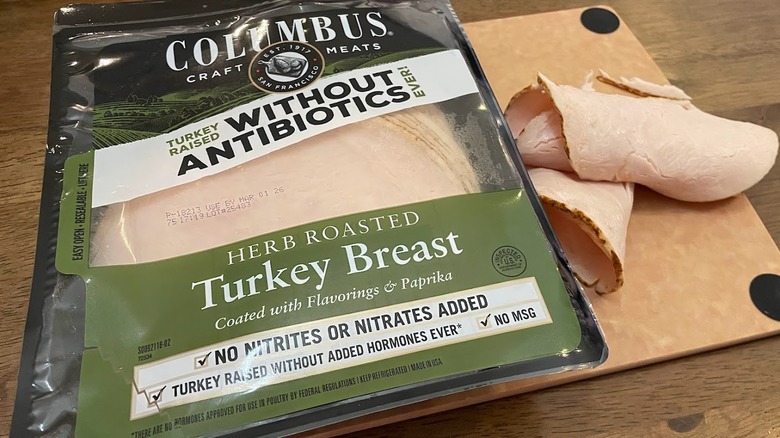
Poultry didn't have a great showing on this taste test, which is a shame because turkey is usually my go-to sandwich meat. Though this product isn't a complete failure, it should be avoided because of its shortcomings in the flavor department. Good deli turkey isn't hard to make taste good, but at the same time, turkey itself is a fairly bland protein. I was initially sold on the "herb-roasted" aspect of this product, but each bite found me searching frantically for some flavor — any flavor — to hold on to.
It's a shame that this turkey didn't deliver on the flavor, because texturally it's pretty close to the turkey leftovers from Thanksgiving. I didn't love how this texture made each slice of turkey fragment into giblets when trying to make a sandwich, but it makes for a pretty nice chew. Speaking of giblets, dicing a few slices of this up and tossing them into your favorite gravy isn't a bad way to use up any leftovers you may have. This decision was one of the toughest since the product does have some good things going for it. In the end, I thought that the turkey's price point was a bit much for what you were getting — you can get the whole Kirkland Variety Pack for the same price, which is overall a better value.
Buy: Kirkland Extra Lean Ham
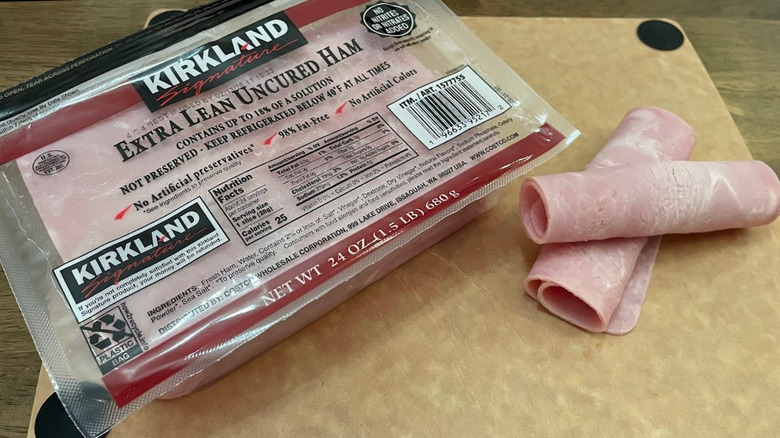
Usually I believe the words "extra lean" and "ham" don't belong in the same zip code, but this product ended up being my silver medalist. For starters, it's just ham, water, a bit of sugar, and a dash of seasoning, like salt and celery powder. It was slightly saltier than the Kirkland Variety Pack Ham, which may come from the fact that it's sliced a little thicker. The Kirkland Extra Lean Ham is the one that comes closest to my own personal approximation of what a good ham tastes like.
It's a bona fide all star on a sandwich — even when combined with another meat like the roast beef or salami, its flavor continues to come through. The ham's thicker cut doesn't detract from its texture either. One of the benefits of being extra lean is that it lacks the pockets of fat that come from other varieties of ham, which means it's just tender cold cut goodness with every bite.
This also happened to be my favorite deli meat to incorporate into other dishes. It's got the flavor and thickness to run point as a breakfast protein on its own, but it works particularly well as the ham component of eggs benedict. The same would work for fried rice or roasted Brussels sprouts, if you happen to be out of bacon.
Avoid: Kirkland Signature Uncured Black Forest Ham
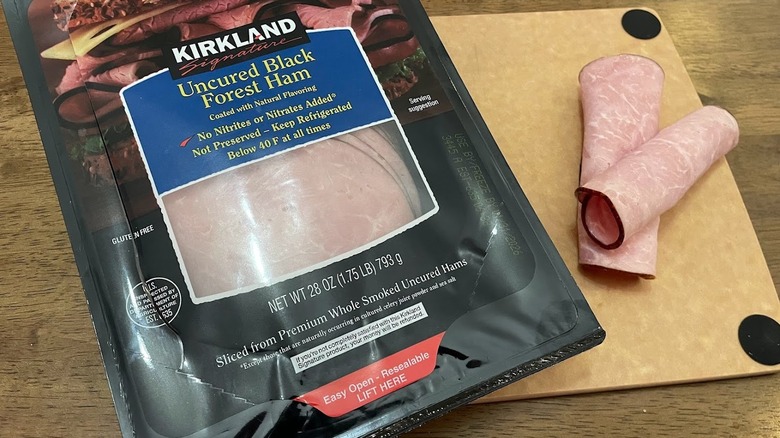
While the Kirkland Signature uncured black forest ham isn't an objectively bad product, Kirkland's other hams are just far superior. The main issue with this product lies within its labeling — when I think of a black forest ham, I am hoping for the classic smoky flavor notes that make this protein stand out on a sandwich. Instead, this product offers a series of muted flavors that don't offer much of an impact.
This ham also had the most unpleasant texture of the products I tried. Instead of each slice being tender and fairly free of excess fat, this stuff was fairly gristly all the way through. I know that all of these meats are processed in one way or another, but this was the product that really felt and tasted like it was simply churned out of a machine. Given the fact that this product is the same price as the far superior Kirkland Extra Lean Ham — which comes with twice as much meat, I might add — this brand of ham is the biggest skip of the bunch.
Buy: Kirkland Dry Salame
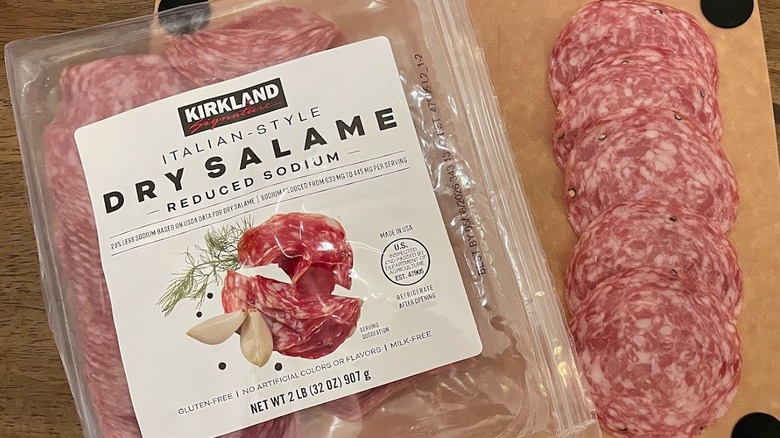
Of all the deli meats I sampled for this review, the Kirkland Dry Salame has gotten the most mileage. Not only does it work well on a sandwich, but wrapping slices of the peppered meat around cheese and fruit to throwing them in salads makes for some fantastic flavor combos. It's also not a bad centerpiece on a quick charcuterie board with whatever other munchies you have on hand. It's really the balance of flavor and texture that has made this product such a must-have in the kitchen.
While it's not the best salami I've ever had, the Kirkland brand is completely serviceable. You get that rich, smoky flavor plus a great buttery texture with each slice. It's also one of the best-priced items that I tried. It's not as economic as the individual hams on the list, but my Costco was selling it for around $12, which gets you 4 pounds of salami. I didn't think that was too shabby for something that tastes as good as it does.
Methodology
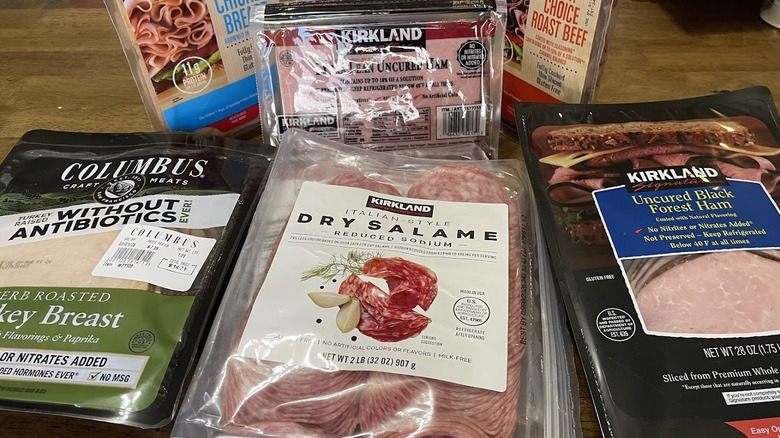
My methodology for this ranking was based on the product's flavor, texture, price, and versatility. Flavor inevitably trumps most other categories in my estimation — if something tastes so good that I want to go back for more, I can usually get around the cost component. Of course, some textures are so rough that they can ruin a good flavor, which is why texture was also an important factor.
Since I was shopping at Costco, getting a good bang for my buck was a deciding factor in my recommendation of each product. As I learned in this ranking, just because something is more expensive doesn't necessarily mean it's better. Finally, I tried to experiment a bit with the versatility of each product. I sampled all of them on sandwiches, but also tried to use them in other ways that would make sense around the kitchen.