

10 Types Of Blue Cheese, Explained
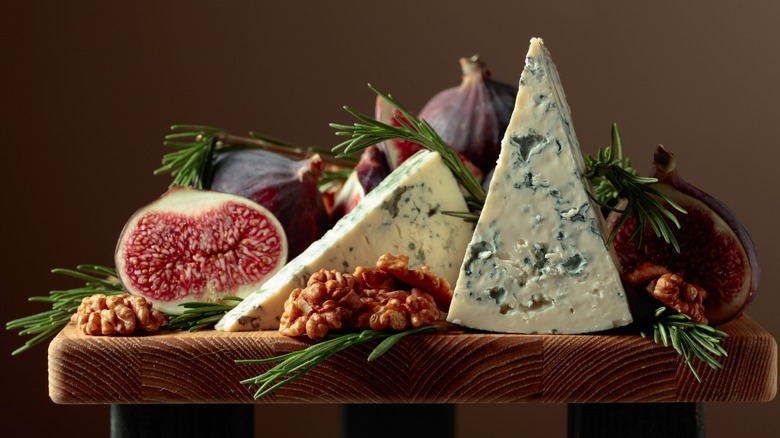
Here's a PSA from your friendly neighborhood cheesemonger: please don't call the health department to report your cheese shop is selling moldy blue cheese. While I would like to say I'm joking, that has happened to me. As a full-time cheesemonger and Certified Cheese Professional, I'm here to tell you that blue cheese is absolutely filled with molds ... and that's 100% okay and safe to eat.
The basics of blue cheese production are simple, but they might not be what many cheese consumers expect. Contrary to popular belief, cheese wheels aren't injected with molds. Instead, early on in the cheesemaking process, either the milk in the vat or the loose curds once separated from the whey are inoculated with mold (primarily strains of Penicillium, such as Penicillium roqueforti and Penicillium glaucum). After the curds are formed into wheels, they are then pierced with needles. As they age, the newly formed air channels allow oxygen to enter, which the molds feed on, triggering a live reaction that visually appears as greenish-blue veining.
Just like the colorful array of blues, greens, and everything in between, there is a vast assortment of different blue cheese styles. With my help and expertise, I'll give you a quick rundown of some of the more popular blue cheeses. Once you review my list and pick your favorites, you can graduate to other culinary adventures and learn how to use blue cheese in unexpected ways, from cookies to cocktails. Embrace the stink, my funky friends, and read on.
1. Roquefort
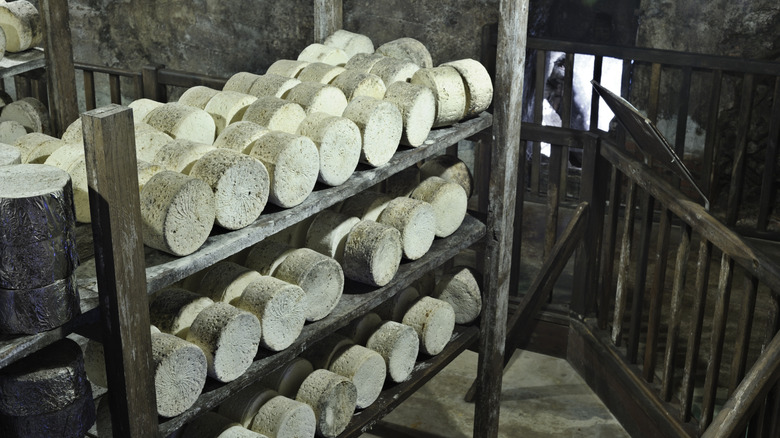
Roquefort, a French sheep's milk blue, is known for its plentiful spores, wet paste, and peppery, piquant bite. It's excellent crumbled on bright greens with fresh pears, dressed in Ina Garten's lemon vinaigrette. Exclusively made in Roquefort-sur-Soulzon since the early 15th century, it was the first cheese to receive France's historically significant AOC (Appellation d'Origine Contrôlée) protection in 1925. AOC, often synonymous with the EU's PDO, is a French certification that ensures stringent regulations for a food item's production methods, ingredients, and place of origin.
For Roquefort, there are quite a few standards to diligently obey. For example, the cheese must be made with raw whole milk from the Lacaune sheep breed that must graze seasonally in open meadows. The wheels must be aged in cool, underground limestone cellars. Natural ventilation from rock faults, or "fleurines," maintains the perfect humidity for Penicillium roqueforti to thrive with minimal human intervention.
2. Stilton
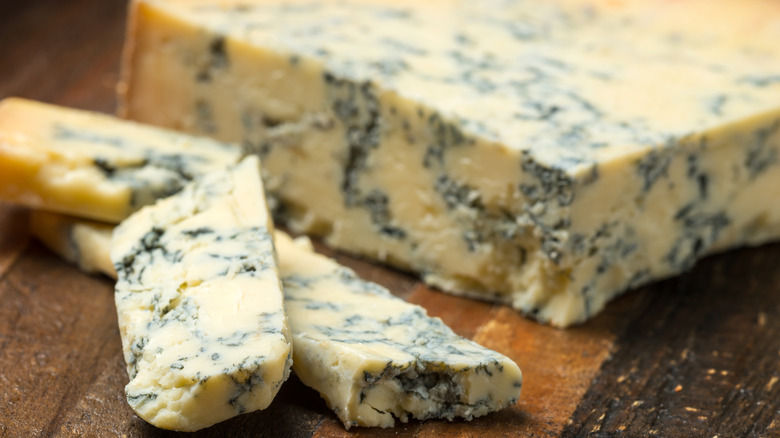
Blue Stilton is an English blue cheese with a PDO designation made with pasteurized cow's milk, and must be exclusively produced in the counties of Derbyshire, Nottinghamshire, and Leicestershire. I often describe this style as being moody, mature, and mysterious — and less acidic and abrasive than other choices. It's a generally milder blue cheese with sweet, nutty notes, and has a naturally developed rind and a very dense, fudgy texture that crumbles cleanly. If you want an adventurous tasting experience, serve it with dark chocolate for a unique cheese pairing.
A popular variation of Blue Stilton is White Stilton, another PDO-designated selection, which achieves its name from a pure white paste without any veining. This is because it is made without the Penicillium roqueforti mold, and is only aged for four weeks. Because of its lightly tangy flavor, the base often includes fruit like dried blueberries, dried cranberries, dried mangoes, or candied lemon peel.
Stichelton is a cheese worth noting here as well. Paying homage to the original historic production of Stilton prior to it obtaining a PDO status in 1996, with strict guidelines for pasteurized milk, Stichelton is made with raw cow's milk. Another interesting variant is Shropshire Blue. Essentially an orange-colored Stilton produced with pasteurized cow's milk, Shropshire Blue is a colorful choice tinted with annatto seed, a natural food coloring that not only provides a subtle savory flavor, but also slightly softens the cheese's texture.
3. Gorgonzola
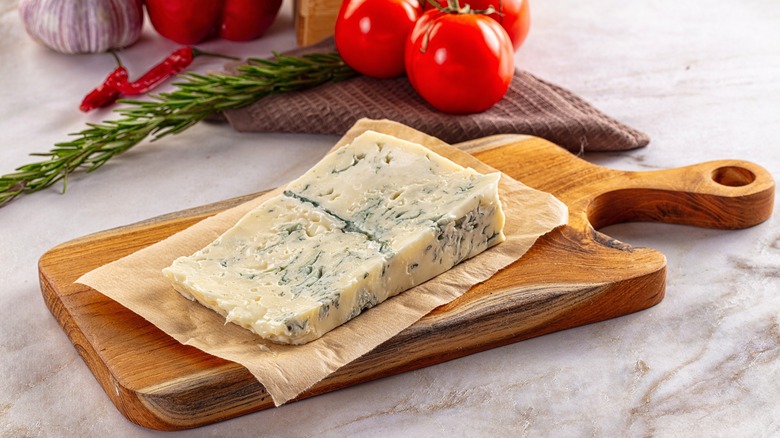
Gorgonzola is a pasteurized Italian blue cheese offered in a few varieties, such as Gorgonzola Dolce, Gorgonzola Piccante, and Gorgonzola Cremificato. There are wheels with a PDO protection, but this style is also available in generic formats. Those that are PDO-certified must be produced in the Italian regions of Lombardy and Piedmont. Gorgonzola Dolce PDO is aged between 50 and 150 days, and has a sweet, yeasty flavor and a smooth, meltable paste. As you can guess from its name, Gorgonzola Cremificato PDO is a sub-style of Gorgonzola Dolce with a super-creamy, pudding-like consistency, achieved by gentle handling of the curds and a shorter maturity time. You can actually serve this cheese dolloped in scoops like ice cream!
Gorgonzola Piccante PDO must be aged between 80 and 270 days. Because of its longer maturation period, Gorgonzola Piccante PDO is firmer, with a punchier, meatier bite. While I prefer the younger selection for its ability to seamlessly melt into silky cream sauces, the aged version would be excellent as the filling in buffalo chicken meatballs. Interested in learning even more?
4. Cabrales
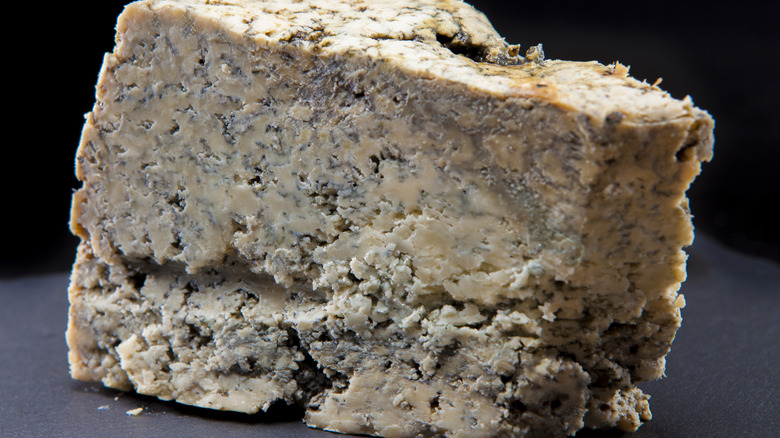
A PDO-protected Spanish cheese, Cabrales must be produced in dairies located in specific districts of Asturias, a region in northern Spain, using milk from the local cattle that graze there seasonally. Cabrales has undergone updates to modernize and streamline its production; while the cheese was originally made with a non-specific mix of goat, sheep, and/or cow's milk, the current popular style is typically made with only raw cow's milk. The cheese wheels were also traditionally wrapped in sycamore leaves to retain moisture and add flavor, but they are now more commonly sold wrapped in a protective layer of foil.
The wheels are aged in caves for a few months, often between two to six months. During this time, the wheels develop a rich, smooth texture studded with crystallized amino acids for a textural bite. Cabrales will have a tangy boldness, demanding a sweeter counterbalance to serve with it. In addition to Spanish dessert wines like sherry, fruits with a concentrated level of sugar, like dried fruits or jams, will also be ideal pairing companions.
5. Bleu D'Auvergne
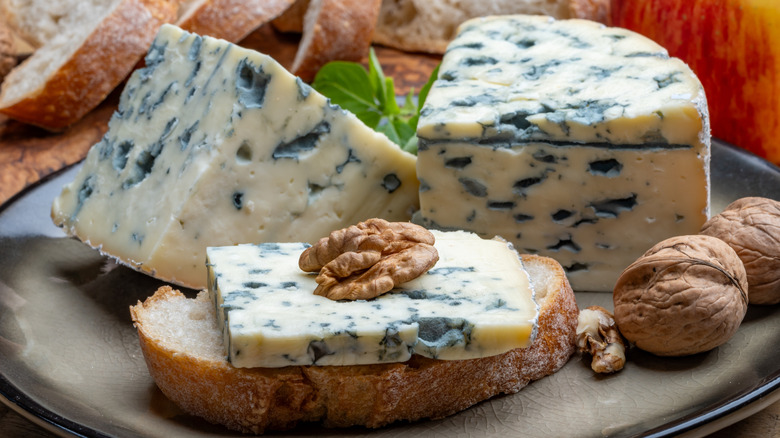
Are you not in the mood for something as strong as Roquefort, but still want to explore French blue cheeses? This milder, more balanced option is my top suggestion: Bleu D'Auvergne is a French pasteurized or raw cow's milk cheese with AOC-protected versions as well as generic options. Produced in the Auvergne region of France, the cows graze on lush, fertile land formed by now-dormant volcanoes.
It's smooth and buttery, with a hint of spice and minerals that play, rather than punch, your palate. The cheese is just as perfect on a post-dinner cheese board served with a generous drizzle of honey and some juicy red grapes as it is slathered on top of a sizzling burger with sautéed mushrooms. If the dessert route is where you're heading, be sure to pick up a bottle of Sauternes along the way. This French sweet dessert wine is the best imbibing accompaniment to a fine finale of your very French evening.
6. Danablu
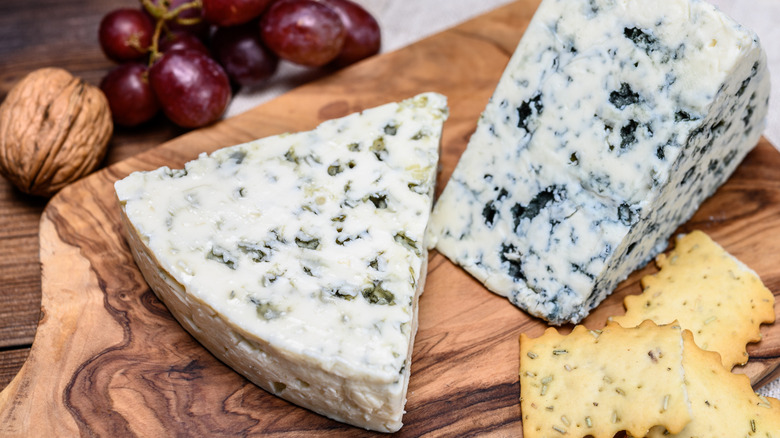
Danablu, or Danish, blue cheese is a popular blue cheese from Denmark made from pasteurized cow's milk. Created early in the 20th century to rival the taste of French Roquefort, Danablu holds a PGI (Protected Geographic Indicator) designation. While not as stringent as a PDO designation, a PGI indicates that a specific quality of a product is directly connected to its geographic location.
I often describe this selection to customers as the quintessential blue cheese, the best version of a stereotype there could be. Danablu is a mild product with a bright, lemony taste and creamy — yet still firm — consistency that crumbles well. Zippy and zingy, this is the type of cheese that deserves to be used in a delectably chunky blue cheese dressing, mixed with crunchy romaine lettuce, grape tomatoes, and shredded carrots. But I'm also a fan of keeping it simple and nibbling on a wedge of Danablu with some crackers.
7. Cambozola
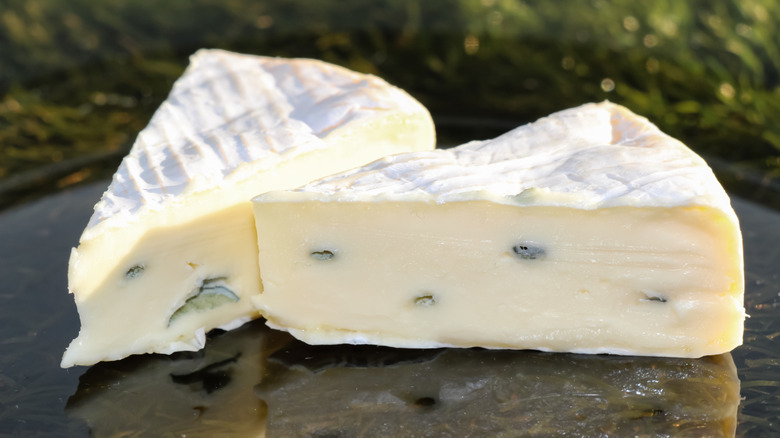
Cambozola (a spiffy portmanteau that blends together "Camembert" and "Gorgonzola") is a German soft-ripened cheese introduced in 1980 with a rich, buttery base studded with blue mold. I like recommending this unique choice for anyone who enjoys the creaminess of soft-ripened cheeses and wants to explore fun variations, but without enduring the excessively strong, punchy effect of a traditional blue cheese. As Chowhound noted when reviewing Trader Joe's cheeses, this option is a smart choice as a "starter blue," as you won't need to fully commit to an abrasive blue cheese. Cambozola is smooth and luxurious and will not overwhelm the palate.
It's currently available in two different maturation levels: Cambozola Classic and Cambozola Black Label. Cambozola Classic is the original style, with a milky, pudgy paste, a velvety white edible rind, and a very mild blue cheese mold. Cambozola Black Label is aged for a longer period of time at colder temperatures, developing a more robust flavor and slightly stiffer texture. Due to its different strain of mold, Cambozola Black Label develops a powdery gray rind.
8. Cashel Blue
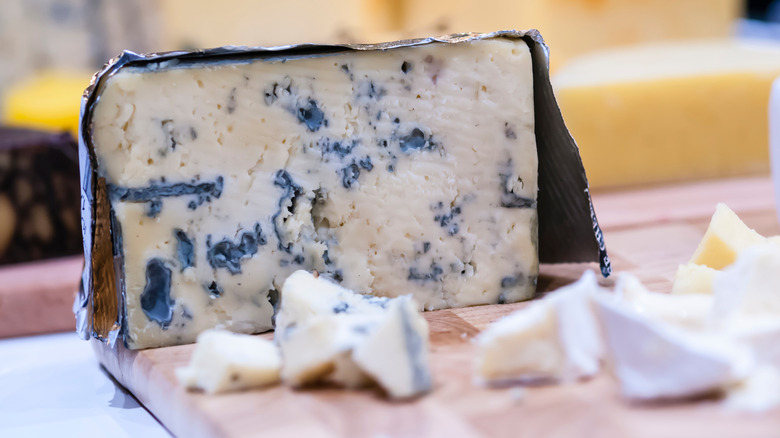
Cashel Blue is the very first farmstead blue cheese made in Ireland. Developed in the 1980s by husband-and-wife duo Jane and Louis Grubb, Cashel Blue is a trademarked title and is still made by hand at the same location now. The family's farm and creamery follow high-quality standards for the production of their cheeses, which all starts with the milk. The pasteurized cow's milk is produced from grass-fed Friesian cattle raised directly on the 200-acre farm located in Ireland's County Tipperary. Cashel Blue is aged as young as six weeks and as long as six months. It develops a rich and unctuous texture, balanced by an enjoyable tang. As it continues to age, Cashel Blue increases in robust saltiness and develops a firmer texture. Call me corny, but an Irish blue cheese like Cashel Blue would pair brilliantly with a hearty drink of the same ilk: so go for a pint of Guinness. The stout's creamy frothiness will cut through the cheese's higher acidity level without clashing.
9. Valdeon
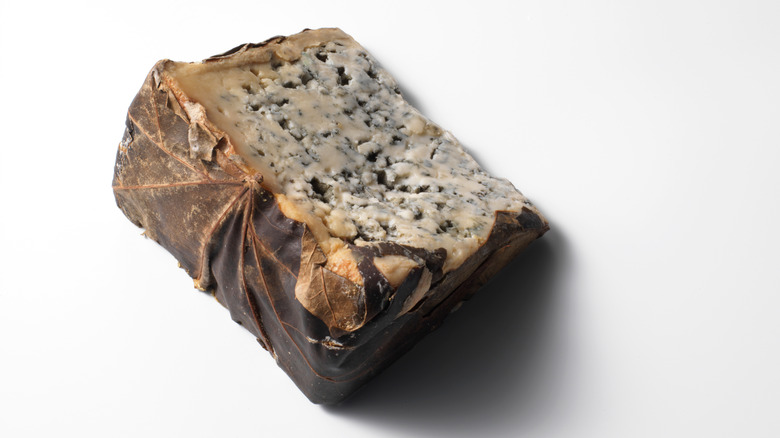
Valdeon is a bright and peppery Spanish blue cheese that's often confused with Cabrales. Valdeon shares similar characteristics to its Spanish cousin, but also has many differences. Like Cabrales, Valdeon was also originally wrapped in sycamore leaves, but modern FDA-regulated wheels must be wrapped in foil. Valdeon is produced in a different area of Spain, in the country's Castile-León region. It is slightly milder and has a higher moisture content, with a tangy blend of pasteurized cow's milk and goat's milk. Depending on the availability and seasonality of the milk, the proportions of the two milks can vary, which will then directly influence the taste and texture of the cheese. More goat's milk will develop a cheese with a tangier taste and slightly softer texture, while more cow's milk will develop a cheese with a milder taste and firmer paste.
10. All-American A-Listers
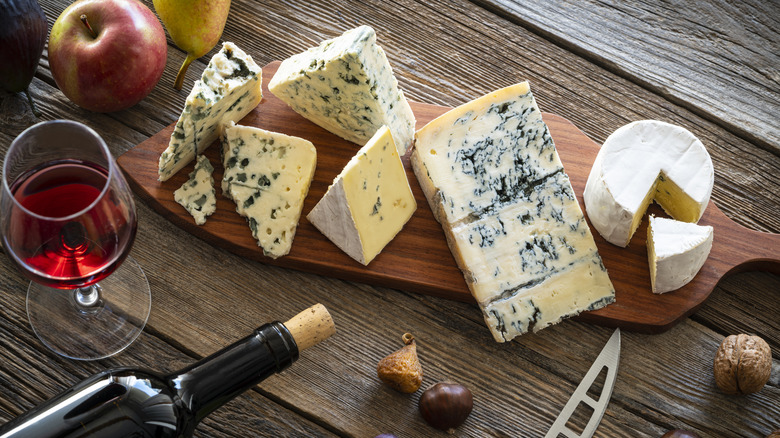
Even though the United States is still a fairly recent addition to the cheesemaking industry, we have released some noteworthy front-runners in the blue cheese category worth mentioning in this list. Many American artisanal blue cheeses are bold and unbridled originals that have rightfully secured their spots in the cheese world at large, with a steady focus on quality, seasonality, and locality. Here are some of my top favorites:
Maytag Blue is a popular option from Iowa, made with cow's milk and aged in caves built at the creamery. Bayley Hazen Blue is a raw cow's milk cheese from Jasper Hill Farm in Vermont, a modern (and smaller) interpretation of Stilton. Rogue River Blue from Oregon's Rogue Creamery is a world-renowned, hyper-seasonal organic blue cheese, crowned in 2019 as the World's Best Cheese. It's cave-aged, and hand-wrapped in Syrah grape leaves soaked in pear spirits. These are only some among the many American blue cheese all-stars; the next time you're shopping for cheese, say hello to your local cheesemonger and ask them what their top pick is.