

10 Mistakes Everyone Makes When Cooking Ribeye Steaks At Home
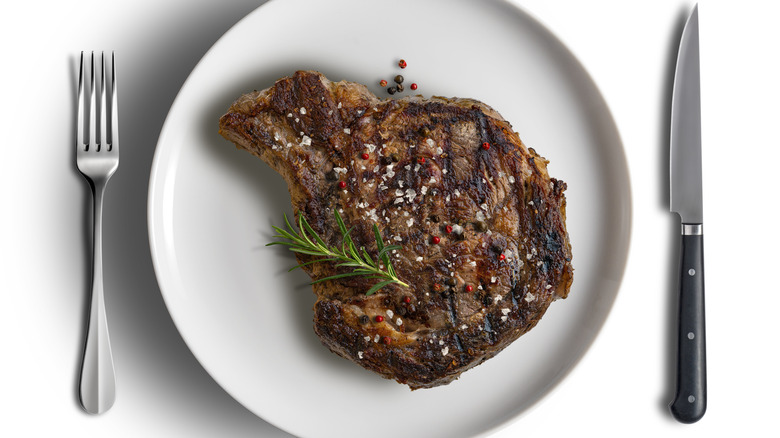
Ribeye is one of the most popular cuts of steak — and for good reason. It's juicy, full of flavor, and is, frankly, really hard to dislike. But despite its popularity in steakhouses and among home chefs and meat enthusiasts, there are some tricky bends that folks may come across when they try to cook it themselves. These pitfalls, which can occur every step of the way, from the moment the steak is purchased to the time it hits your table, can do this beautiful cut a disservice and make you wish that you just went out for that steak dinner after all.
But fear not; we got some expert input from Craig Couper, culinary director at Michael Jordan's Steak House in Chicago, on some of the most common mistakes you can make with ribeye and how to ensure your cut comes out as juicy and flavorful as possible. Whether you're a die-hard ribeye enthusiast or looking to experiment with higher-end cuts of steak, you can certainly learn a thing or two and make a better ribeye going forward.
1. Not considering the thickness of your steak
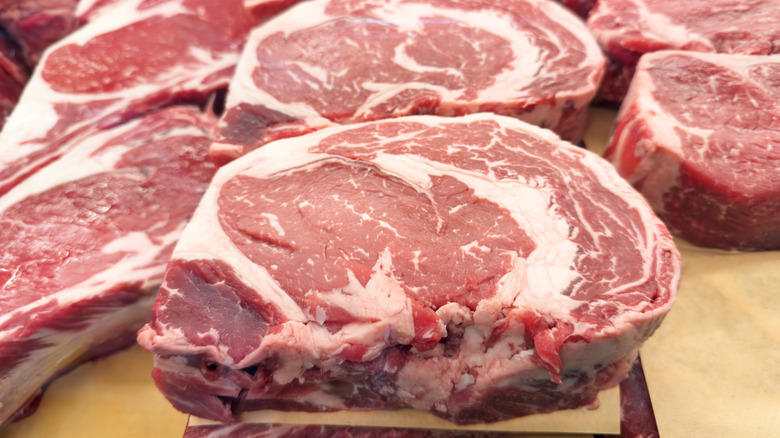
Correctly cooking a ribeye requires you to employ a cradle-to-grave approach. Even if you can cook the steak itself perfectly, it's all a wash if your steak isn't the right thickness in the first place. Craig Couper explained that one of the most common mistakes home cooks make when choosing a ribeye at the butcher counter is not considering the cut's thickness. "A steak really needs to be at least an inch [thick] to achieve the proper sear and a rare or medium-rare temperature," he said. Thickness is an especially important consideration because many of the steaks in the grocery store only have their weights listed, not their thicknesses.
Now, we doubt that anyone is visiting the butcher counter with a measuring tape in hand and noting the dimensions of each Cryovaced steak. However, if you can get a general estimate of each cut — shooting for between an inch and an inch and a half — you'll be in good shape. It's also worth noting that bone-in ribeyes tend to run larger than boneless ones, and cowboy steaks (a subset of ribeyes) can measure up to 3 inches in width. If you are noticing that the precut ribeyes at your grocery store are looking rather skimpy, pay the meat counter a visit and see if they can cut one for you.
2. Thinking bone-in and boneless ribeye are the same
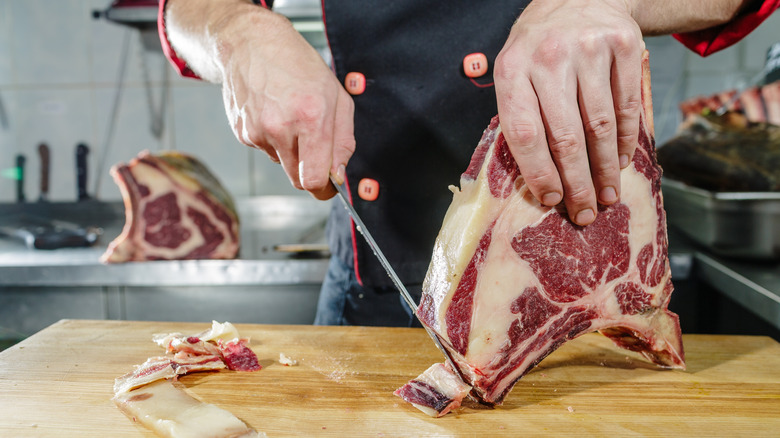
To bone or not to bone, that is the question. While this is up to your personal preference, treating the two the same would be a major mistake. Boneless ribeyes, on one hand, are touted favorites for many home cooks, as they are simple to prepare, and even though that bone isn't there, they still have all the fat and flavor that you could want from a ribeye. Bone-in ribeyes, on the other hand, are a hearty cut that can be cooked to different degrees depending on your guest's preferences; folks who like a piece that's more well-done may want something farther away from the bone, while folks who prefer a little more chew and moisture will want to opt for something closer. Ultimately, your choice between bone-in and boneless is going to depend on your cooking experience and what kind of mouthfeel you want.
Rest assured that regardless of what you pick, you will still get a great flavor. Craig Couper explains that one of the most common misconceptions is that bone-in ribeyes are inherently more flavorful than boneless ones. Rather, the bone can alter the meat's texture and juiciness. "The bone will insulate [and] prevent overcooking near the bone, resulting in juicier meat," he said. Perhaps we just conflate the superior flavor of bone-in ribeyes with a better cook and a more succulent mouthfeel.
3. Using complicated seasonings
We are of the belief that a good steak should stand for itself, especially when it comes to something like a ribeye. Marinating this juicy cut of steak is a mistake that can ruin its flavor, as the acidic ingredients in it can cause the meat to break down, soften, and turn mushy.
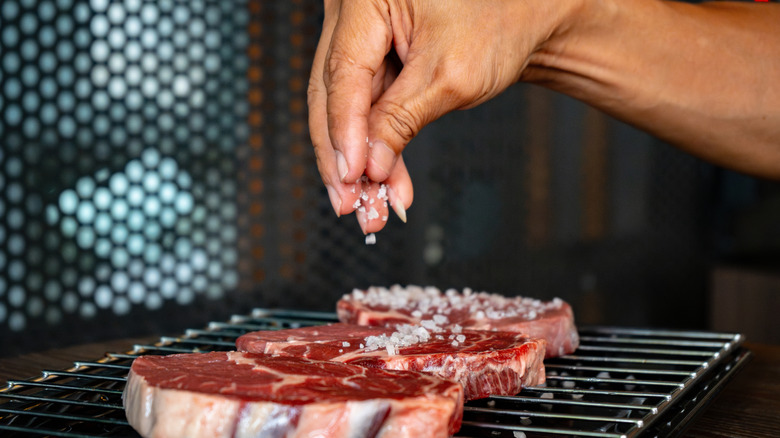
Rather, Craig Couper is of the mindset that simple is better when it comes to ribeyes. "Spice rubs and marinade can be great, but fresh ground black pepper and kosher salt always pair well with high-quality beef," he said. He prefers to season all sides of the steak before cooking and opts to season his cut on a rack to prevent the salt from caking. If you're planning to venture beyond just salt and pepper, the good news is that there are many store-bought steak seasonings that you can buy, or consider whipping up your own. Montreal-style steak seasoning, for one, offers a complex blend of peppercorns, aromatics like onion and garlic, and warming paprika that would be a great fit for a grilled ribeye.
4. Leaving too much fat on
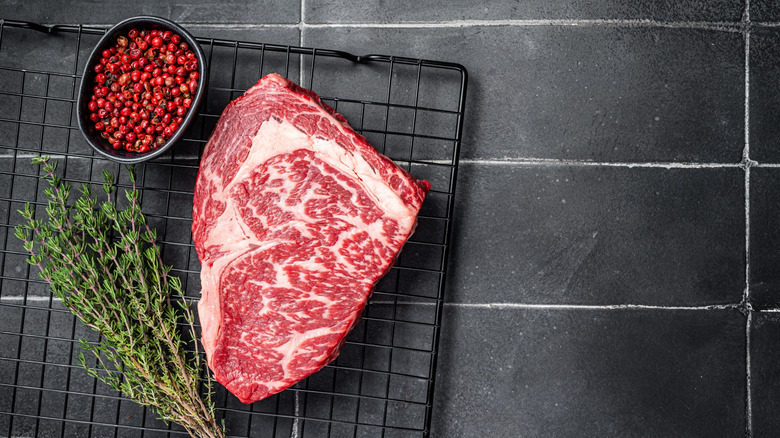
Fat equals flavor; it's a universal expression within the culinary world. But too much fat could actually do your ribeye harm. "Leaving too much extra muscular fat can lead to [flare-ups] that give steaks an acrid flavor," said Craig Couper. He recommends no more than a ¼-inch external fat cap on a ribeye. You can remove some of this cap yourself before cooking or render the fat cap in a pan before cooking the rest of the steak.
Not only should you pay attention to the external fat cap on your ribeye, but also the internal marbling of the cut. For this, you'll want to check the beef grade before buying it. Prime-graded beef has the most amount of marbling out of all of the grades, ensuring a super tender texture and better flavor. Choice grade is a step below that and offers a decent amount of marbling and juiciness, though not nearly as much as a Prime grade. If you are vying for a budget-friendly option, Choice is usually a safe bet. If you are looking to splurge, you may want to try to get your hands on a Wagyu beef ribeye, which has an impressive amount of intermuscular fat and is commonly described as "buttery" on the palate.
5. Forgetting to dry your steak before you cook it
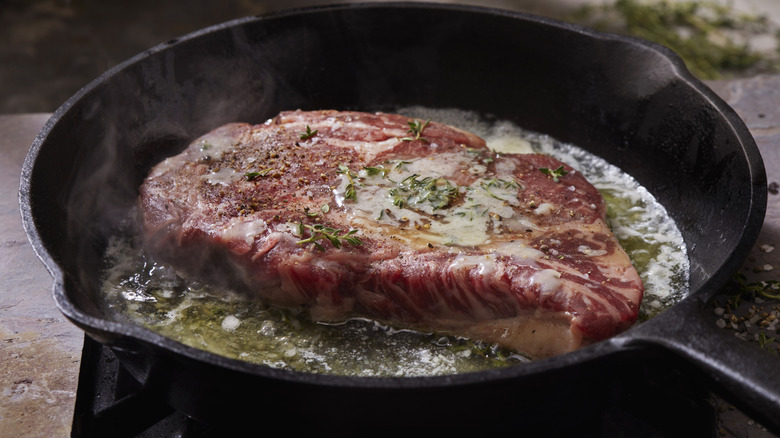
One of the most common methods for cooking ribeye is to sear it in a pan. Not only is this an easy-to-implement cooking method, but doing so will lock in moisture and create a delicious crust on the exterior of the cut. However, one easy mistake can ruin the perfect sear: leaving too much moisture on the steak.
Craig Couper claims that the most overlooked step in getting a deep, even sear on a ribeye is drying all of that moisture off first. This is particularly important if you salt your steak beforehand. The salt will pull moisture from the steak to the surface; after no time at all, you'll see little beads of water forming. When the steak hits the hot skillet, all of that heat is going to go into the water rather than into developing that all-important crust. You can either wait for that moisture to reabsorb back into the ribeye as the salt starts to break down the muscle fibers and essentially tenderizes the steak, or you can dry it with a paper towel to pull out that surface-level moisture before searing.
6. Using the wrong cooking method
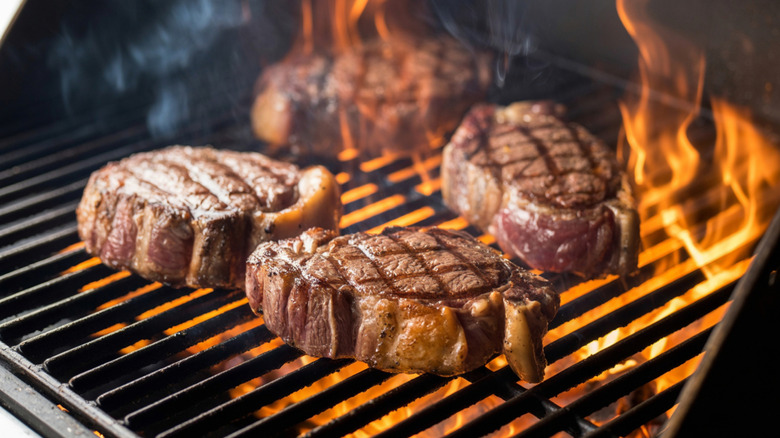
Ribeye is such a beautiful cut of steak; the last thing you want to do is ruin it by using the wrong cooking method. Craig Couper cautions against using poaching or other wet cooking methods to cook ribeye. As we mentioned earlier, moisture is the enemy of getting a good crust on the exterior of this cut. If you're looking for a type of steak to slow braise or stew, you're better off choosing a tougher cut of beef instead of the comparatively fragile ribeye.
"My two preferred ways to cook ribeye steaks at home are shallow frying in a cast iron pan with rendered beef fat or outside on a grill using lump charcoal," said Couper. The former method will give you a great sear on the exterior of the steak, while the latter will give you an excellent charred flavor that really elevates the natural flavor of the steak. Another popular method to try is the reverse sear, which essentially means cooking the steak at a low temperature before searing. It locks in moisture yet still gives you the perfect textural contrast on the steak's exterior. If you have the time, you may also want to try sous vide, which will slowly cook the steak, preventing moisture loss and keeping it tender. If you use this method, just be sure to give it (you guessed it) a good sear before serving.
7. Not using a thermometer to check for doneness
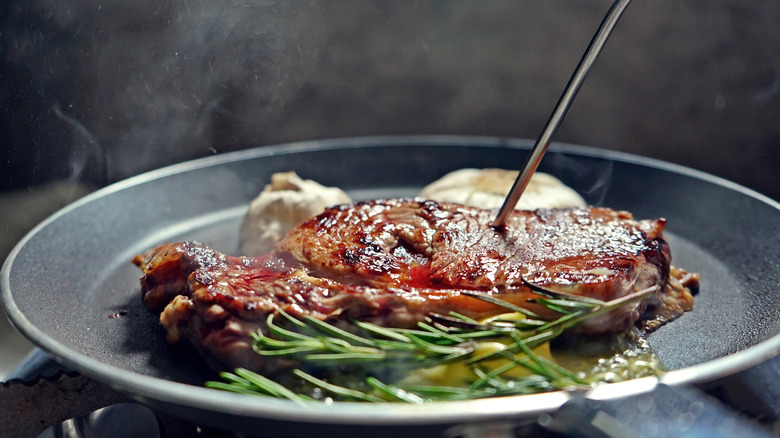
Being able to determine when your steak is done cooking by feel can take years of experience, which is why turning to a meat thermometer may be your best bet. "I recommend using a digital thermometer to check the temperature to ensure that a steak is cooked enough," said Craig Couper. This relatively inexpensive kitchen tool is an essential, as it allows you to determine when to pull the steak off the heat to ensure the perfect level of doneness. Time isn't always an accurate way to determine doneness, as factors like the temperature of the pan or grill, thickness of the meat, and the starting temperature of the meat can alter how long it needs to cook. When you use a thermometer, you'll get a more accurate assessment of how much longer your cut needs.
Couper broke down the essential temperatures home cooks need to remember for ribeye: rare between 120 and 125 degrees Fahrenheit, medium-rare between 130 and 135 degrees Fahrenheit, medium between 140 and 145 degrees Fahrenheit, medium-well between 150 and 155 degrees Fahrenheit, and well-done above 160 degrees Fahrenheit. It's important to remember that your steak will continue to cook as it rests; these are just the internal temperature thresholds to help you determine when to pull it off the heat.
8. Cutting into the ribeye immediately after cooking
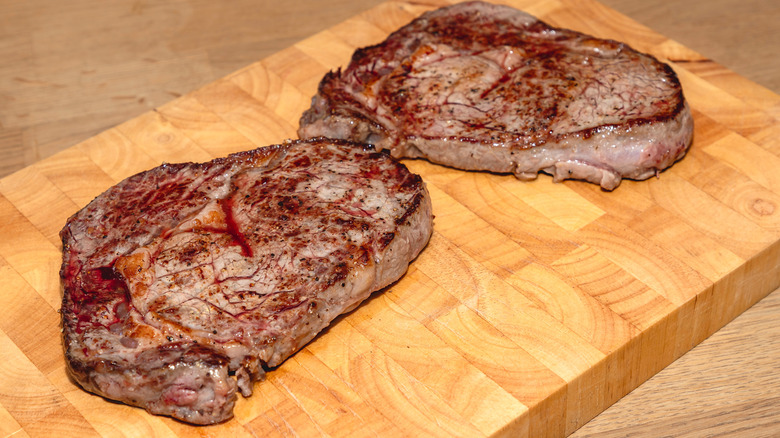
You've selected, seasoned, and seared your ribeye to perfection — all that's left to do is dive in, right? Wrong. If you neglect to rest your steak, you could be chowing down on one that's not quite cooked through or is not at its juiciest. This is because when a steak rests, all of that juice is redistributed throughout the muscle, which both ensures the proper texture and helps the interior of the steak finish cooking. "A steak an inch thick should be rested on a rack for two to three minutes before serving," said Craig Couper. "This allows the juices to settle throughout the steak and avoid bleeding out."
That said, it's also important to avoid the most common mistake people make when resting a seared steak: wrapping it tightly in foil. This little blanket traps moisture, which can cause the crust to soften and become spongy instead of crisp. Instead, lightly tent your steak or forego the covering altogether.
9. Pairing it incorrectly
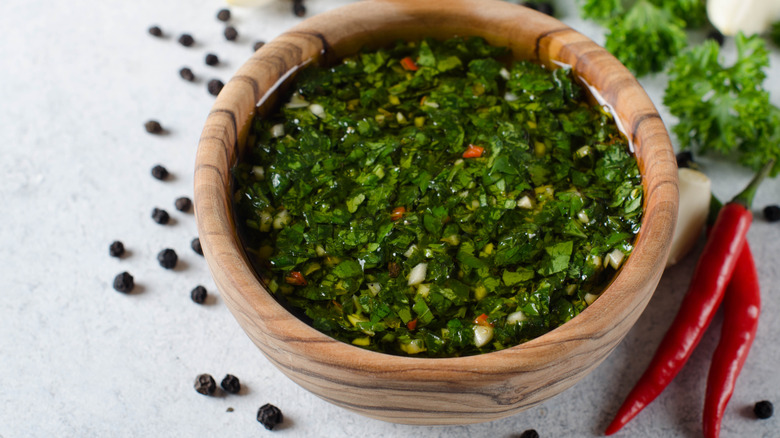
A beautiful, well-cooked ribeye should be able to stand on its own. That said, pairing it with the wrong sauces and sides could be doing its natural flavor and texture a disservice. When it comes to sauces, avoid ones that overpower its naturally beefy flavor, like heavily sweetened ketchup, barbecue sauce, or even a tangy, Worcestershire-infused A1 sauce. "Ribeye [is complemented] best by [high-acid] sauces like vinegar reductions or herbaceous options like [chimichurri]," Craig Couper said. How great would a fresh-off-the-grill ribeye be with a topping of herby, bright chimichurri, flavored with piquant and bright chiles?
You should also avoid pairing overpowering or heavy sides with your ribeye. "Ribeye[s] pair well with butter potato purées, grilled vegetables, like asparagus, and roasted mushrooms," said Couper. These sides naturally have very organic, vegetable-forward flavors that allow the cut to shine, while still offering some savoriness and umami. Mac and cheese, for example, is a little too heavy for ribeye, as is a plate of loaded sweet potatoes.
10. Only eating ribeye as a steak
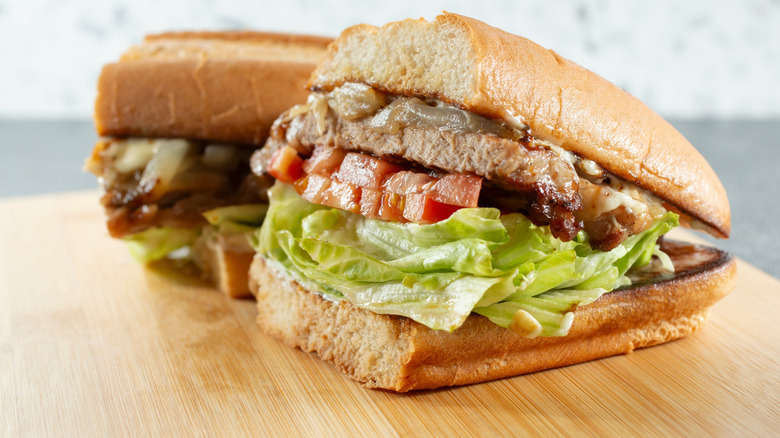
When people think "ribeye," the usual go-to is a hefty, dense, and massive cut of steak. However, like other cuts, ribeye can be repurposed for many recipes besides just conventional steak. Craig Couper explained that ribeye can be reheated in the oven a second time, and a whole ribeye roast can be sliced thin and repurposed for sandwiches. The savory, juicy cut is perfect for pairing with rich cheeses, like Gouda, on a sandwich, alongside grilled veggies and mushrooms for texture. You can also tuck your leftover ribeye into a quesadilla, pair it with grilled onions and peppers for sizzling fajitas, or even cut it up into small pieces and add it to your homemade pizza to give it a meaty upgrade.
The key to repurposing ribeye for other recipes is to not pair it with ingredients that hide it. It shines in steak tacos when paired with simple toppings, like bright pico de gallo (which offers juiciness and acidity), a green sauce, and potentially creamy guacamole. Don't try to dull its sparkle — find new ways to add even more shimmer to it.