

17 Greek Foods Everyone Should Try Once
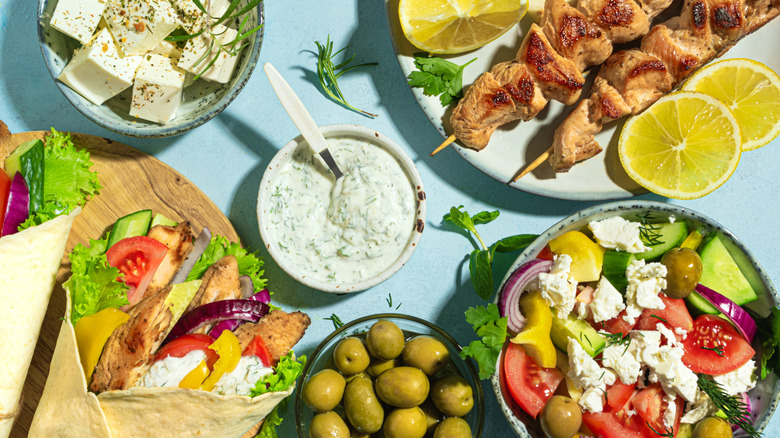
The Mediterranean diet has long been revered for its health benefits. Since Ancel Keys released a study in the late 1950s discussing the impressive heart-health of Greece and Southern Italy, thousands of health-conscious Americans have adopted the diet. Far more than the health benefits, though, Greek food is just plain delicious. Fresh, bright ingredients complement salty cheeses and flaky pastries. An abundance of spices, herbs, and citrus makes every dish interesting.
One of the first real restaurants (besides the local Mexican spot) I ever ate at as a kid was Greek, and the meal and menu were so exciting that they sparked my love for food. I later went on to work in a Greek restaurant in the Seattle area, learning all the insider tips and techniques that make the cuisine so enticing.
Whether you're compiling a list of dishes to order on your next trip to the country, trying to expand your repertoire of home-cooked meals, or just looking to read about some mouth-wateringly delicious food, this list of 17 Greek foods everyone should try at least once is a great starting point for diving into a world-renowned cuisine.
1. Moussaka
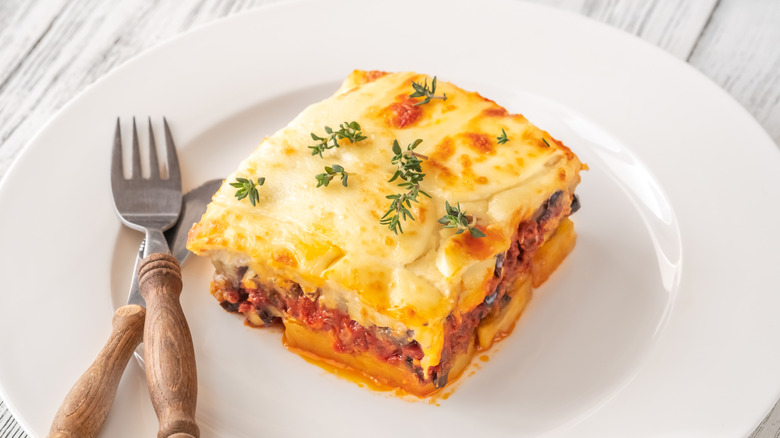
Since Garfield (and probably even before then), lasagna has become a popular dish for when you want to load up on carbs and cheese. Moussaka, along with the later-mentioned pastitsio, is basically the Greek equivalent of lasagna — with a few key differences. There are no noodles in this; instead, eggplants and sometimes potatoes are sliced thin, rubbed with olive oil and salt, slightly grilled, and layered into the bottom of a dish.
A meat sauce typically made with ground beef (but you can also use lamb) is cooked down with spices, onions, and tomato into a rich meat sauce. I have met the occasional family that swears their secret to extra-good lasagna is putting a little cinnamon into the tomato sauce. If a bit of pizzazz is what you're looking for in a dish, moussaka's got a lot of it.
The meat sauce is layered on top of the perfectly soft eggplants, awaiting the top layer — a thick, luxurious béchamel sauce combined with a bit of shredded kefalotyri cheese. Once the whole thing has set, it's sliced into thick squares, ready to be eaten. The creaminess of the sauce, the richness of the meat, and the slightly sweet, umami-rich eggplants all work together in harmony.
2. Tzatziki
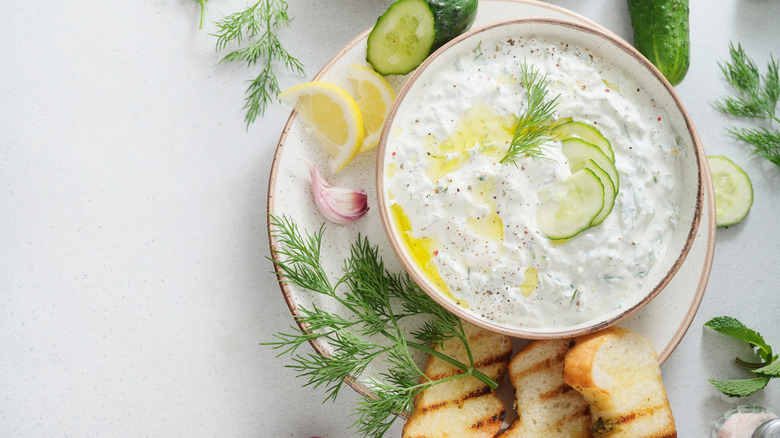
Of all the Greek foods on this list, tzatziki is likely one of the most familiar. It may be just a sauce, but its simplicity and refreshing flavor make it an essential component to many great dishes. Plus, it's fantastic on its own just with a side of pita. The primary ingredient is yogurt. You can use any plain yogurt you have, but Greek yogurt is the best choice because the liquid whey has already been strained out, making it much thicker than traditional yogurt.
You'll start by grating your cucumbers. Whether you peel them is up to you; for smaller Persian cucumbers, the skin is much thinner, and the flesh is more flavorful, so peeling isn't really necessary. You'll then salt and strain them, squeezing out the excess liquid before mixing them into the yogurt. This is an essential step so that your final sauce isn't ultra-watery. Finally, you'll mix them together with lemon juice and olive oil, and season with freshly pressed garlic, salt, and fresh herbs like dill and mint.
Altogether, it's pretty simple — as some of the best foods are. As long as the ingredients are in proportion, this is the perfect sauce to pair with countless dishes, and can be used in many creative ways in the kitchen.
3. Dolmathes
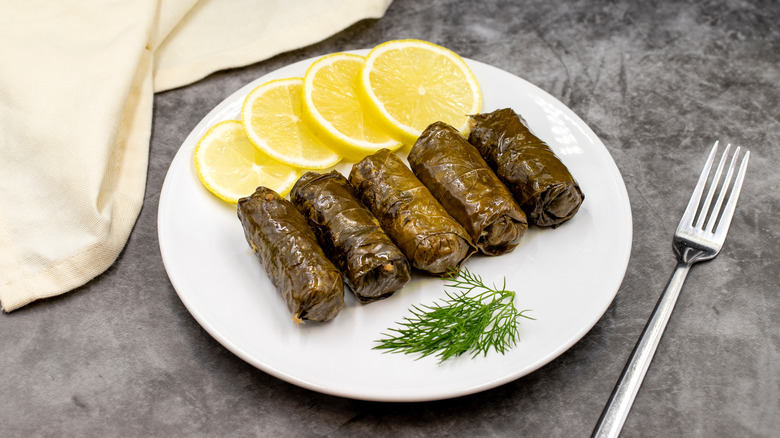
Dolmades (also called dolmas and the Greek plural, dolmathes) are small, stuffed grape leaves. They are typically either vegetarian, stuffed with a seasoned mixture of rice, herbs, and sometimes pine nuts, or served stuffed with meat. This is probably one of the most accessible Greek foods on this list, as you can often find the vegetarian version pre-rolled and canned in most grocery stores (even Trader Joe's has their own version).
The beauty of Greek food, and really Mediterranean food as a whole, is making the simplest of dishes taste incredible. Even the vegetarian dolmas, which are essentially just a rice stuffing, have incredible flavor. Dill, mint, and lemon juice add tangy flavor to the grape leaves, making these a delicious snack.
The meat version is a combination of ground beef, rice, onion, olive oil, and herbs, rolled into grape leaves and then steamed. They are a bit less common, but equally as wonderful.
4. Souvlakis
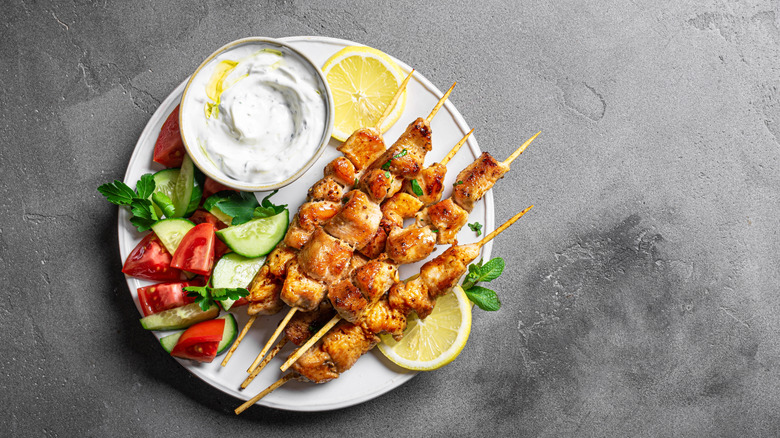
Souvlakis, which means "small skewers," are kebabs of meat that have been marinated for a good amount of time. Most commonly, you'll find chicken, lamb, or beef, but you may also come across vegetarian skewers loaded up with onions, mushrooms, and eggplant, or seafood versions that use calamari, octopus, or shrimp.
The thing that really distinguishes them is the marinade's distinctly Greek flavor profile. Lemon juice, oregano, olive oil, and perhaps a little garlic or honey to round everything out. The resulting flavor is fresh, bright, and healthy — all the things that make Mediterranean food so widely appealing.
If you're ordering at a restaurant, you're likely to get three freshly grilled skewers, accompanied by a side of rice pilaf and perhaps a Greek salad with a nice crumble of tangy feta cheese on top. It's a classic Greek food and a beautiful, well-rounded meal.
5. Tirokafteri
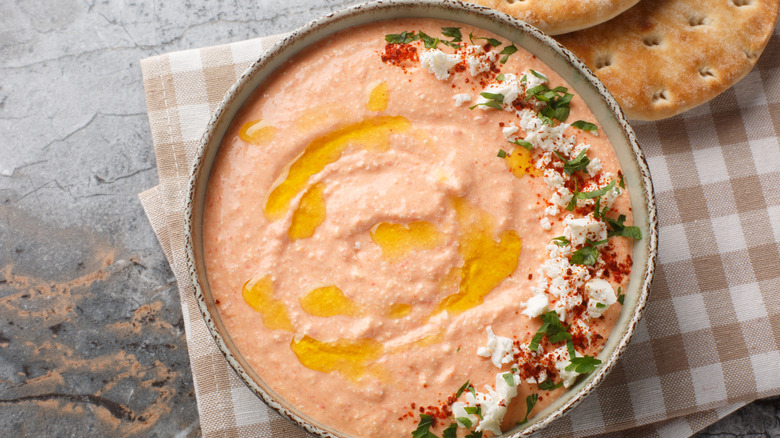
When ordering in a Greek restaurant, there's often a sampler platter of sauces served with pita bread, which is a bit different than naan. The much-loved (and nowadays quite common) hummus is almost always one of the options, along with tzatziki. The third option is the much less common — but no less delicious — tirokafteri.
It's a bit spicy, chunky with feta, salty, and rich. The perfect contrast to the light and refreshing tzatziki, tirokafteri is made with whipped feta cheese, Greek yogurt, hot peppers like jalapeños or a serrano, garlic, red wine vinegar, and seasonings like paprika and oregano. It is one of my favorite dips, a perfect combination of rich feta flavors and a spiciness that cuts through them.
It's not hard at all to whip this one up at home; just combine the ingredients in a food processor so the peppers blend into the cheese. Next time you're snacking on some pita, be sure to give this accompaniment a try.
6. Pastitsio
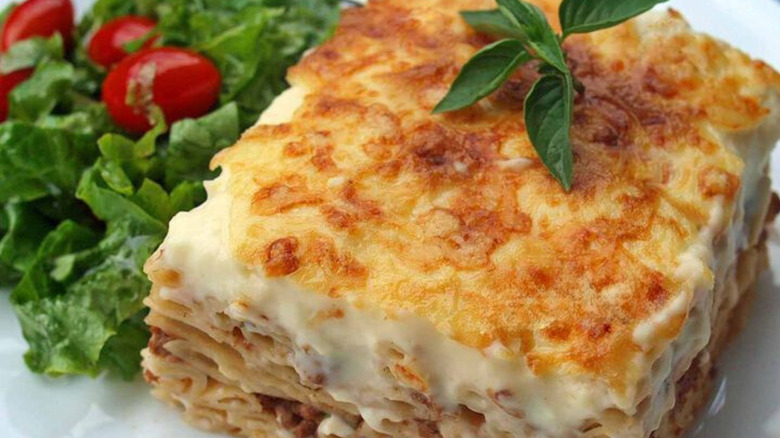
I previously described moussaka as the Greek version of lasagna, and pastitsio is equally similar. Whereas moussaka uses strips of eggplant and potatoes to make layers (it would almost be gluten-free if it weren't for the flour in the béchamel), pastitsio actually uses pasta, just in a more rounded noodle form.
Just like in moussaka, you'll make a tomato-and-spice-laden meat sauce as the base. Pre-cooked bucatini or penne are typically used as the middle layer, their hollow centers preventing the dish from becoming overly dense. It's then topped with the same creamy béchamel sauce that makes both pastitsio and moussaka so craveable. It may have a little less cheese and tomato compared to lasagna, but it is no less delicious.
This is a common dish on any Greek restaurant menu, but making it fresh might be the more appealing option. After all, it's not challenging to execute (just make sure you stir your béchamel constantly to prevent clumping), and fresh out of the oven is the best way to eat it.
7. Tiropita and spanakopita
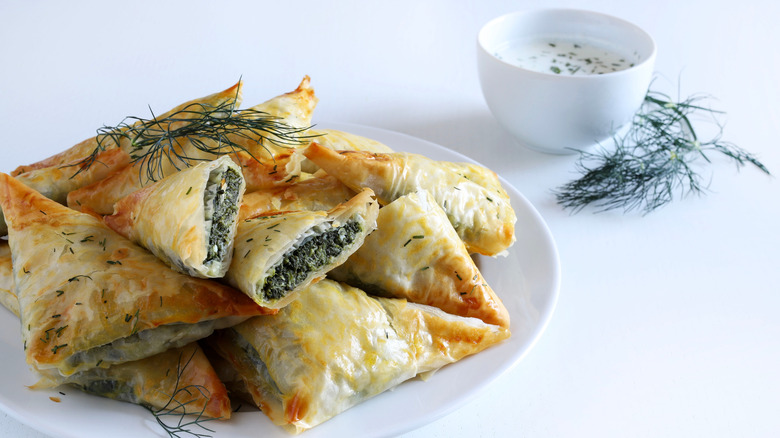
Every culture has some version of dough stuffed with fillings of cheese, potatoes, meat, or other delicious ingredients. The Greek version appears a bit more complex to the eye, and the resulting pastry is everything butter-enthusiasts crave: flaky, crispy, and fatty. Tiropita and spanakopita have a multi-layered crunch, followed by a garlic-rich, ultra-creamy, oozing center.
Spanakopita is the most commonly known of the two; its spinach-and-feta filling is easy to recognize and easy to justify as healthy — several tablespoons of butter and cheese are canceled out by the presence of spinach, right? Tiropita is lesser known, but equally as wonderful. It's essentially a more cheese-loaded version of spanakopita, nixing the spinach in favor of a variety of salty Greek cheeses.
Neither of these pastries is as challenging to make as you might think. All they require is several layers of phyllo dough, carefully brushed with melted butter to soften the dough and prevent cracking, a bit of filling, and proper folding technique — with a little practice, you'll have it perfected. Of course, if you'd rather skip the steps, you can find tiropita and spanakopita in just about any Greek restaurant.
8. Kolokithokeftedes
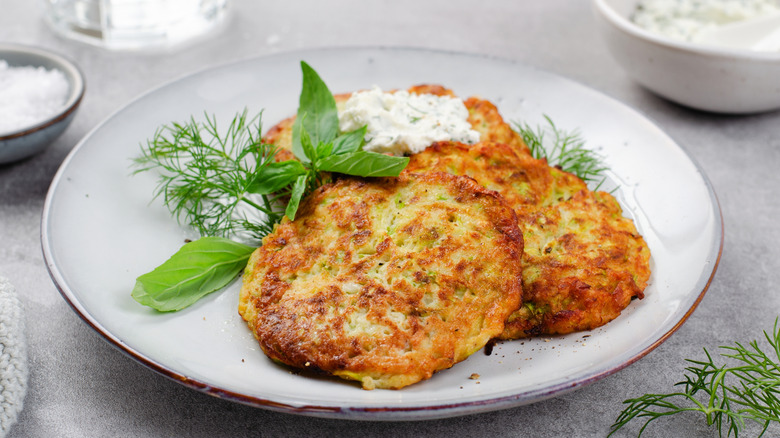
Kolokithokeftedes are fritters made with freshly grated zucchini. Think of them almost like a crab cake (with zucchini replacing the crab) in how the batter is mixed and then fried. The zucchini is combined with onion, dill, mint, and chives to give it a herby, aromatic flavor so representative of Greek cooking. Feta is used both as a binder and as a salty, umami-loaded flavoring, and flour and eggs are added to bring everything together.
Cheesy, flavorful, and decently healthy (for a fried food), these fritters are the perfect appetizer to order at a restaurant or to easily whip up at home for a dinner party snack. If you're ordering out, they'll likely be paired with a dipping sauce like hummus or tzatziki. If you make them at home, a fresh tzatziki or a spicier tirokafteri to scoop onto each bite will be the perfect accompaniment to these fresh, crispy treats.
9. Keftedes
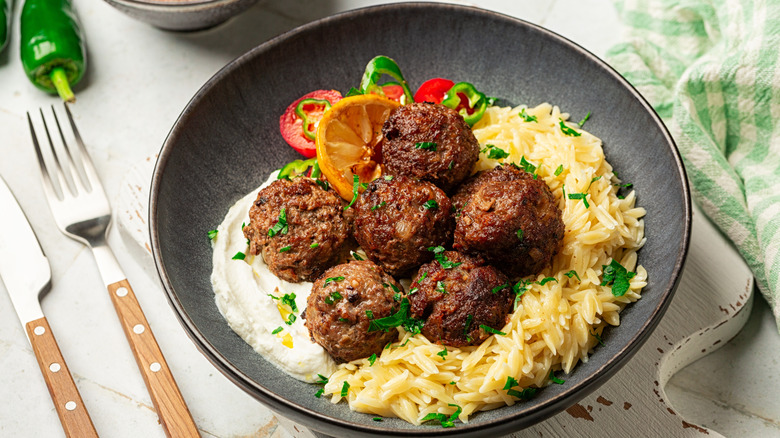
Keftedes are basically Greek meatballs made with lamb. An abundance of spices like cumin, coriander, the ever-present oregano, cinnamon, and nutmeg are used to give them their signature flavor.
Once you have the seasoning blend for the meatballs nailed down (cooking a single taste-tester before the whole batch will ensure you've got just the right flavor), you'll want to make sure the texture is just right. A lot of different countries have their version of a meatball — mixing ground leftover meat scraps with spices and binders just makes sense. In the Greek version, egg, along with stale bread that's been soaked in water or milk to soften it, is thoroughly mixed into the 'dough' to hold everything together. This creates a texture that's a little bouncier and softer than plain meat.
The final product is rolled into medium-sized balls and sometimes dusted with flour before being fried, creating a crisp exterior and a juicy, flavor-packed center.
10. Gyros
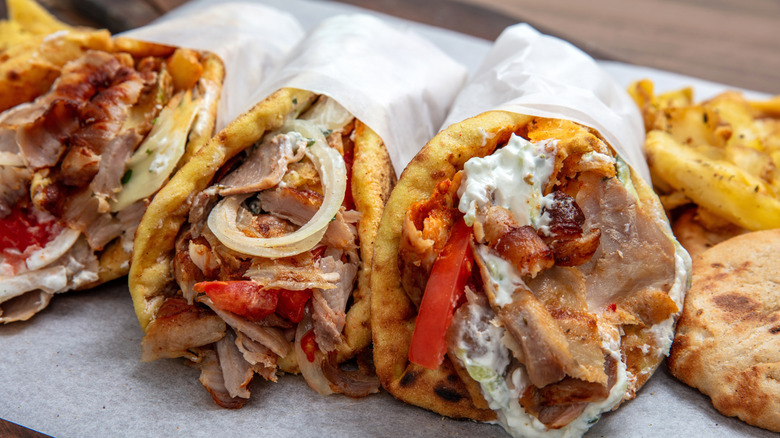
Pronounced 'yee-roh', this Greek food is probably the most common and widely known, but its resemblance to shawarma and Turkish döner kebab can be a bit confusing. While the gyro is a Greek adaptation, the history of the dish is really more Turkish in origin.
The common denominator between the three wraps is the meat, which is shaped into a cone and placed on a rotating spit where the edges can be cooked to order and shaved away as they crisp. Typically a combination of lamb and beef, the meat is made extra-flavorful with generous portions of spices and onions.
Eventually, Turkish immigrants brought the technique to Greece, where the recipe was modified to create a more Greek flavor, and the wrap itself was dressed with tzatziki, sometimes feta, tomatoes, cucumbers, and even French fries on occasion. It's fantastic as a street food, a hearty lunch, or as a fun thing to make at home — although the store-bought strips of gyro meat really don't compare to when it's freshly shaved off the spit.
11. Loukoumades

If you've never made fresh donuts at home, loukoumades are just that. They're shaped into small balls and dropped into hot oil — essentially donut holes made with a fresh, yeasty dough. A fresh donut is unparalleled — the fun shapes and elaborate frostings you can purchase at stores may be attractive, but a good donut is all about the dough. If it's not fresh, it just won't have that same slightly sour, yeasty aroma.
The dough for loukoumades is pretty easy to make. Like bread dough, you'll have to patiently wait for it to rise before frying your delicious golden donut balls.
Once fried, loukoumades are topped with honey, cinnamon, chopped walnuts, or a simple chocolate or strawberry sauce. If you're looking for them in a restaurant, you might be more likely to find them on a brunch menu rather than a dessert menu.
12. Gigantes Plaki
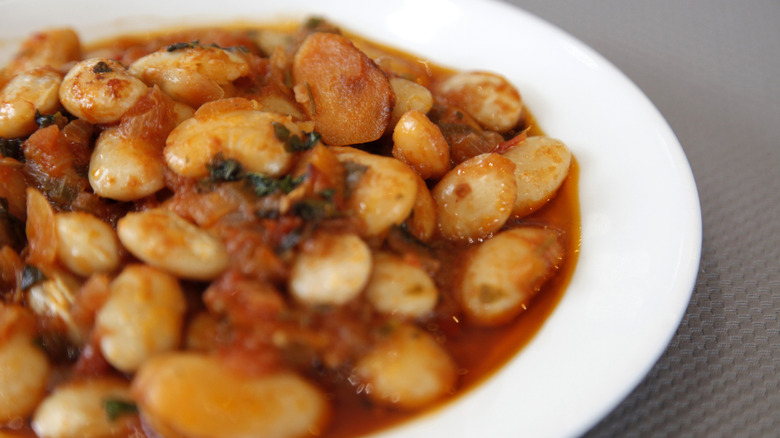
A common appetizer in many Greek restaurants, gigantes plaki is a dish of giant white beans baked with tomato sauce. Something about the size of the beans makes this dish seem so appealing. They have such a great bite, almost creamy texture, and earthy flavor. When combined with a naturally acidic and sweet tomato sauce, everything works in harmony.
You can typically find these beans canned, although you can always cook them from dry if you love a more al dente cook. The sauce is all about building flavors — cooking minced onion until translucent, browning the garlic, toasting the tomato paste and spices (add chili powder if you like some kick) and finishing with quality canned or freshly diced tomatoes. You can always deglaze with ouzo or a Greek wine, as well, to take your sauce to another level.
13. Pastourmadopita
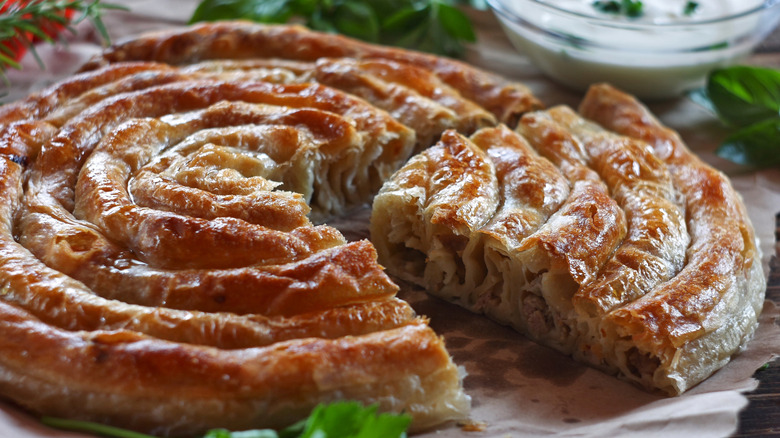
Pastourma, also called basturma, is one of the many variations of sausages around the world. It's a rich, cured beef that goes great on sandwiches or snacked on with cheese and accoutrements. In pastourmadopita, like spanakopita, the dried meat is baked into a savory pie with layers of butter and phyllo dough.
This pie is made with Greek cheeses like kasseri or kefolatyri, tomatoes, peppers, and oregano, all folded into a shell of crispy phyllo dough. The ingredients are layered into a dish and baked until the edges are golden brown and crispy. The cheese melts in the middle and the oil from the sausage combines with the juices of the tomatoes and peppers to make a hearty combination of flavors. It's not challenging to make at home and is a great dish to serve as a side for your dinner party, but is also a fantastic thing to order out.
14. Saganaki
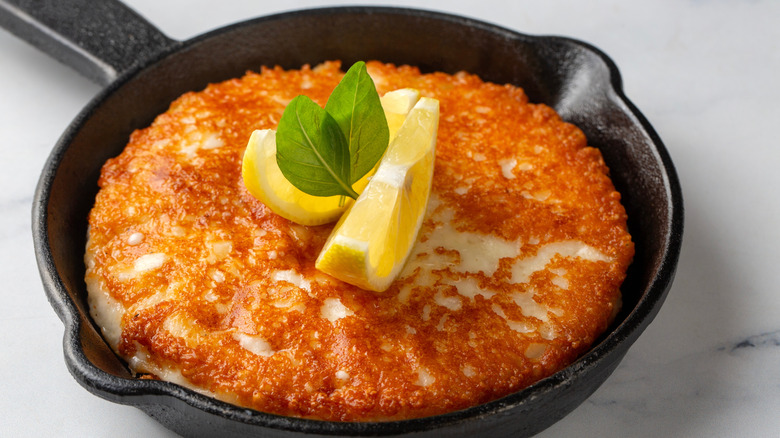
If you're ordering Greek food at a restaurant, this is a fantastic dish to keep an eye out for. You can make it at home, but it requires some flambéing, which can be a bit risky to attempt in a home kitchen.
Ingredients-wise, it's simple: a Greek cheese like halloumi, kefalotyri, or graviera; flour to dust the cheese; olive oil for frying; and ouzo (an anise-flavored Greek liquor) for flambéing. The cheese is dusted with flour and fried to delicious crispy perfection on the edges.
At the restaurant I worked in, we would remove some of the excess olive oil from the pan and transfer the small cast iron skillet it's fried in to a wooden carrying tray where it would be transported to the dining room and flambéd tableside, the flames shooting up to the ceiling as everyone yells, "Opa!" A very fun event to witness, but one that requires a careful measurement of ouzo, lest the flame get out of control.
15. Galaktoboureko

At the Greek restaurant I worked in, my non-Greek coworkers fondly referred to the glaktoboureko as the "galactic burrito." It's a traditional Greek dessert made with a semolina custard set in between layers of flaky phyllo dough. Like the other Greek desserts on this list, the flaky dough is softened with a sweet sugar syrup.
The result is creamy, crunchy, syrupy, and buttery. A delicious combination of textures and flavors that can be customized by using aromatics in the final syrup. Unlike baklava, it's not a very common dessert, which would make it all the more interesting to serve to guests in your home. As long as you're comfortable making a custard, it's not too challenging a dish, and there's room for creativity when it comes to adding flavors and making it your own.
16. Kataifi roll
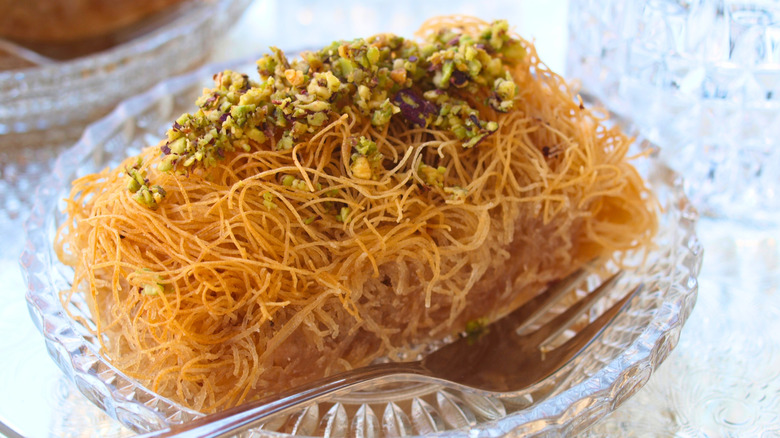
The kataifi roll is irresistibly appealing just from how it looks. Beautiful golden strands of flaky dough surrounding a syrupy, nutty center. Made with the crispy strips of kataifi dough you may recognize as an essential ingredient in Dubai chocolate filling, it's stuffed with a nut-and-spice mixture similar to the one used in baklava, drizzled with butter, and finished with aromatic sugar syrup.
It is similar to baklava, but while the butter-rich layers of baklava can be a bit dense as the syrup soaks into the bottom, the use of kataifi dough in this dessert makes it light and airy with a fantastic crunchy texture from all those individual strips.
17. Baklava
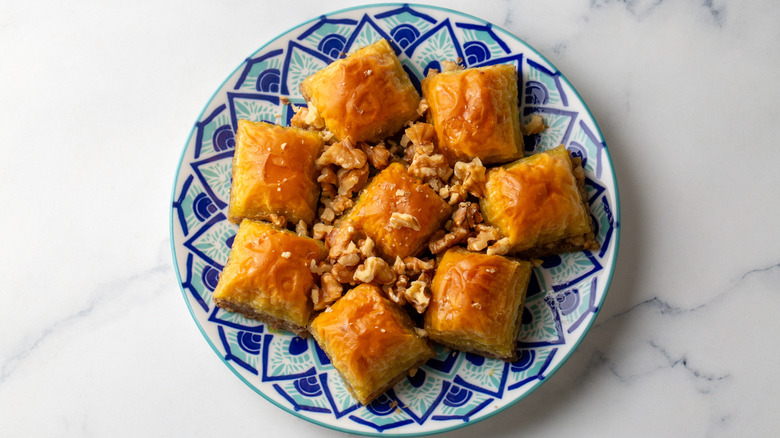
Baklava is a renowned dessert. It seems as though the lore around it supposes that it's difficult to make, and while it is perhaps time-consuming (although no more than baking and frosting a cake), it doesn't require a lot of skill. If you're looking to try out a recipe, just read carefully and perhaps watch a YouTube video to understand each step.
Just like with spanakopita or pastourmadopita, layer after layer of paper-thin phyllo dough are layered into a dish with a generous brushing of butter in between. A filling of chopped walnuts and spices goes in the middle, followed by several more layers of phyllo dough. After baking, when the top and edges are deliciously crisp, a syrup of rose or orange blossom water is poured into all the cracks, softening the sharp edges and soaking into every layer. Sweet, nutty, and spiced, it's the perfect dessert to enjoy with a cup of strong, black coffee.