

10 Indian Sandwiches That Should Be On Every Foodie's Bucket List
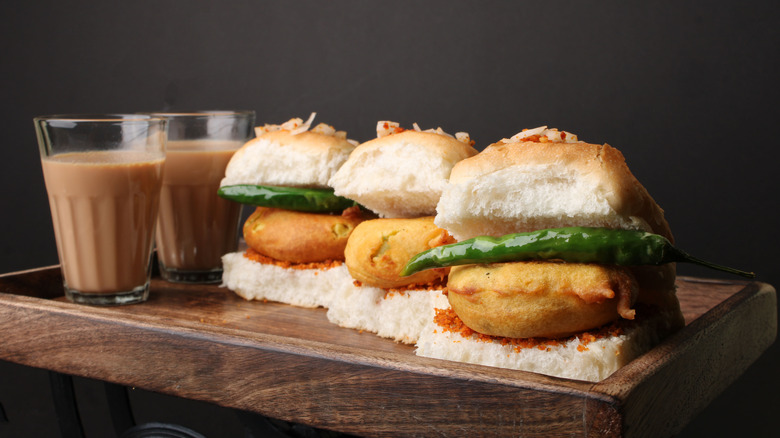
Travel through India, and you'll find an incredibly diverse array of cuisines. For example, in the north, you'll find plenty of rich curries served with naan bread, while in the south, you're more likely to find seafood-centric dishes, lentil stews, and dosas. However, if there's one thing you can depend on finding no matter where you are in the country, it's sandwiches. These handheld snacks pop up all over the place, and, like Indian cuisine, they're incredibly varied and often unique to their regions.
The story of Indian sandwiches began when the Portuguese introduced bread sometime after their arrival in the 15th century. Called pav or pao, the fluffy bun-like bread is now a common element of many Indian sandwiches. Later, the British introduced sliced white bread, and that opened the door to many new creations. The beauty of sandwiches is that you can stuff them with pretty much anything you have on hand, so, of course, local ingredients made it into the mix, along with some Western-style fillers.
Today, you can find countless sandwich styles in India, but some have become fan favorites because they're ultra-comforting and flavorful. Think fluffy buns filled with crispy deep-fried potato patties and vibrant chutneys, toasty bread slathered with creamy yogurt-coated veggies, or wraps stuffed with succulent meats. If you're planning a trip or looking for some inspiration to level up your sandwich game, these Indian sandwiches should be on every foodie's bucket list.
1. Vada pav
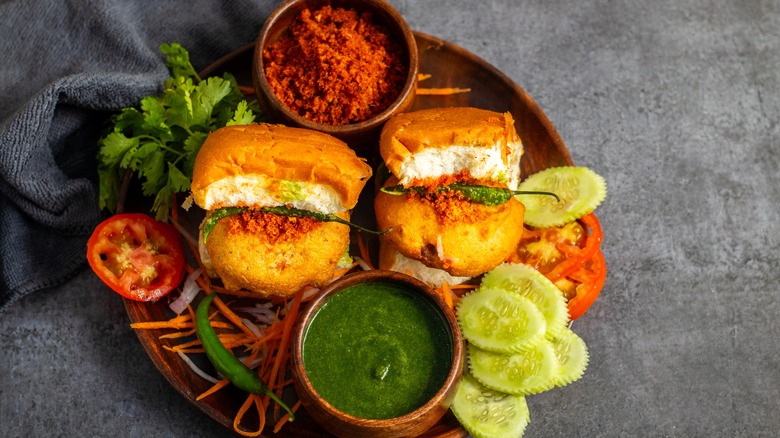
If you're in Mumbai and craving a bite to eat, do as the locals do and make your way to a vada pav stall. You'll find them virtually everywhere, and they're easy to recognize by their bubbling vats of hot oil and wafting aromas of deep-fried potatoes. The vada pav is one of India's most iconic street foods, beloved by people from all walks of life for its comforting mix of crispy fried potato patty, fiery chutney, and soft, pillowy bun. According to the BBC, two million of the sandwiches are sold across Mumbai every day.
Legend has it that the vada pav was created in the 1960s by a street food vendor named Ashok Vaidya, who sold vada outside the Dadar train station. Vada are typically spheres of mashed potatoes or lentils, breaded and deep-fried. One day, Vaidya decided to try stuffing his vada into pav bread along with some chutney, and the dish was an instant hit. Now, countless imitators are serving up similar versions, as well as some who put interesting twists on the dish.
A classic vada pav features starchy mashed potatoes mixed with herbs and spices like cumin, curry leaves, and chile powder. The potato mixture is formed into a ball, coated in chickpea flour, then deep-fried until crispy, and sandwiched in a soft pav bun with chile-cilantro chutney. Optional add-ins include garlic chutney and fried green chiles. The result is a sandwich that's both soft and crispy, as well as spicy and satisfying.
2. Kathi rolls
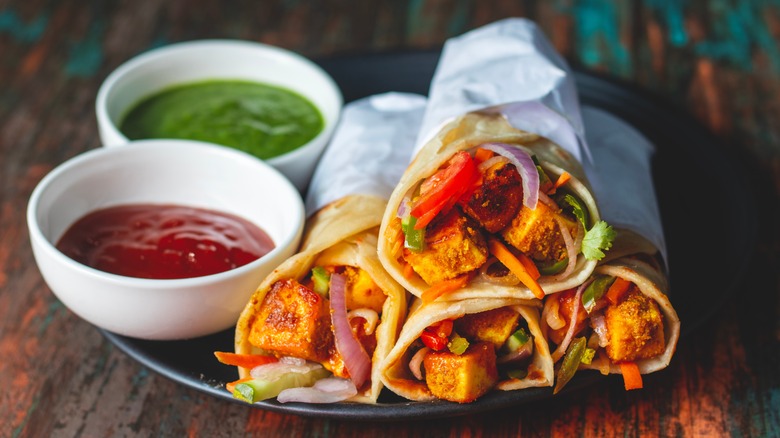
Wraps are the perfect meal when you're on the go and need something easy to transport and eat. Kathi rolls are India's answer to wraps. They consist of flatbread like paratha, topped with meats, veggies, or cheese, and rolled up into a nice, neat package. They're often wrapped in paper, making it easy to tuck them away for later or to bite right into them while sitting, standing, or even walking. They're popular across India and come in a wide variety of flavors.
Kathi rolls originated in Kolkata (formerly Calcutta) in the early 20th century. In 1932, Sheikh Hasan Reza opened Nizam's Restaurant in the New Market, where he sold kebabs and paratha. The story goes that many of his clientele loved the food, but didn't like getting their hands dirty, so Reza's solution was to roll the kebabs in paratha and wrap everything in paper. The rolls were later named after the bamboo sticks called kathi (or kati) used to skewer the meat.
Nizam's is still in business today, serving up the same mutton and chicken kathi rolls it has always, even using the same pan they were cooked on since inception. If you want to emulate them at home, you can simply pile grilled meat and onions onto paratha bread, add a squeeze of lime, and roll it up. Then again, you can get creative and incorporate ingredients like curried meats, paneer, grilled veggies, or fluffy scrambled eggs into your kathi rolls.
3. Bombay sandwich
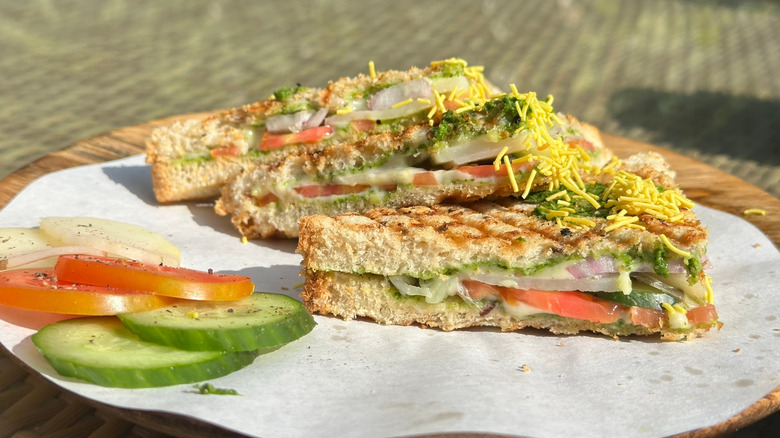
Vada pav may be Mumbai's most famous street food, but the Bombay sandwich is pretty close behind. It's easy to see the appeal — it's cheap, tasty, and nutritious, making it a top choice for hungry workers or students who want something quick to fuel up on. Every sandwichwala puts their own spin on the dish, but a classic version almost always includes white bread filled with sliced boiled potatoes, raw veggies, and a healthy smear of chutney. More often than not, the sandwich is toasted until the outside is crispy.
There are no records indicating who created the first Bombay sandwich, but most historians agree it was likely created in the 1960s, when a surge of workers arrived in Mumbai from other parts of India to work in textile mills. The sandwich probably came about as a way to provide the workers with affordable and convenient sustenance. Today, you can find Bombay sandwiches everywhere, from street food stands to fancy restaurants and home kitchens.
The Bombay sandwich seems simple enough, but it actually has some key aspects. For one, the bread should be plain white, generously buttered, and slathered with tangy green chutney. Boiled, sliced potatoes are also a must, along with veggies like onions, tomatoes, and cucumber sliced thin. Some people also use colorful add-ins like beet root and avocado, although they're not considered classic. Finally, the sandwich should be grilled over an open flame; if that's not possible, you can use a panini press.
4. Bread pakora
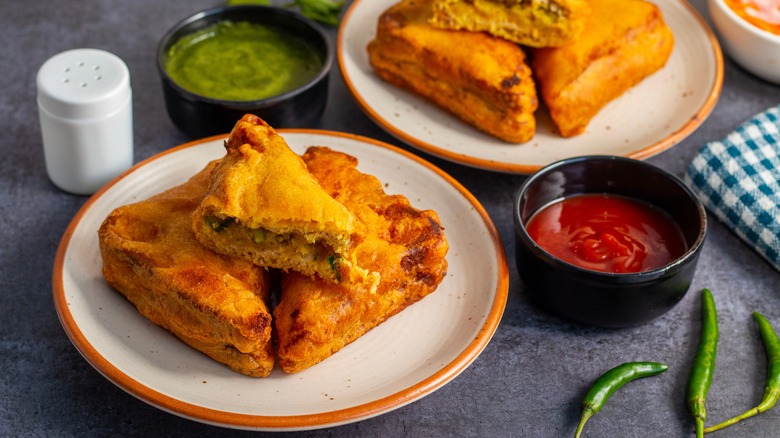
If you like your sandwich with a bit of crunch, a bread pakora won't disappoint. Pakoras are crispy fritters popular across India and are often made with battered and fried vegetables, though you can also find versions made with meat, seafood, and cheese. As the name suggests, bread pakoras are made with bread. They can be as simple as a slice of white bread that's battered and deep-fried, although many people whip them up sandwich-style with tasty fillings in between the bread.
Pakoras have been around in India since at least the 11th century. Still, the bread pakora is a more modern creation that came about after the British introduced factory-produced, sliced white bread. Some say the dish originated in North India, where the snack is still common today. If you're in South India, you'll find similar versions called bread bajji. Regardless of what they're called, many agree that these deep-fried sandwiches are simply delicious and scream comfort food.
One of the most common types of bread pakora features spiced mashed potatoes as a filling. The potatoes can be jazzed up with key spices common in Indian dishes, such as turmeric, red chili powder, and garam masala. The mixture is spread onto the bread, then the sandwich is often cut into quarters, dipped in a flavorful chickpea-flour batter (also seasoned with spices), and deep-fried until golden and crispy on the outside. Popular condiments include ketchup, mayo, and chutney on the side for drizzling or dunking.
5. Kutchi dabeli
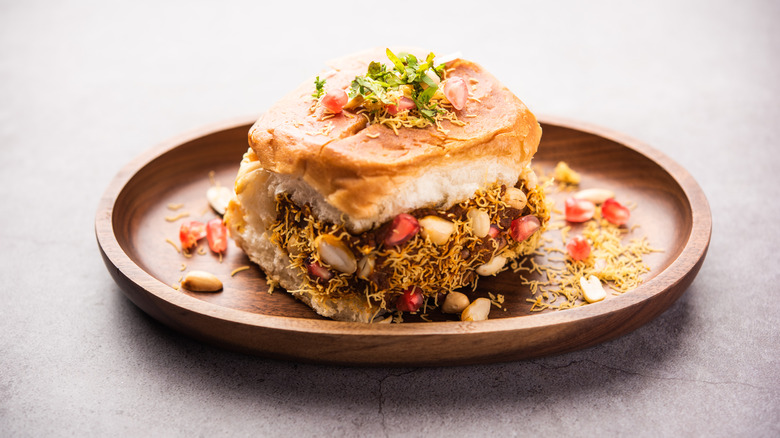
Several Indian sandwiches feature potatoes as the main filler, but few are as varied in texture and taste as the Kutchi dabeli. You get a soft, fluffy bun spread with a creamy, spiced potato paste, and sweet and spicy chutneys. Crunchy peanuts, chopped onions, pomegranate seeds, and cilantro also go into the mix. Finally, the sandwich is griddled until hot and toasty, then dipped in crunchy sev (dried chickpea-flour noodles). Bite into it, and you'll get an array of different flavors and mouthfeels.
The inventor of the Kutchi dabeli was a street vendor named Keshavji Gabha Chudasma, who owned a shop in the town of Mandvi in the Kutch region of Gujarat state. He created the sandwich sometime in the 1960s, and it was named after its birthplace and the method of making it (dabeli means "pressed down"). The sandwich eventually spread to other parts of India, and today it's popular in its home state and urban centers like Mumbai.
To make Kutchi debali, you'll need dabeli masala, which is a spice mix typically consisting of ingredients like cumin, red chili powder, coriander seeds, cloves, black pepper, and cinnamon. That gets mixed into the potatoes, which should be finely mashed. A soft pav bun is also key, as are sweet tamarind chutney and spicy red chutney. Then you have your crunchy condiments that can be layered in for extra pizazz. And, of course, the sandwich should be pressed down on a hot griddle or pan before serving.
6. Kalari kulcha
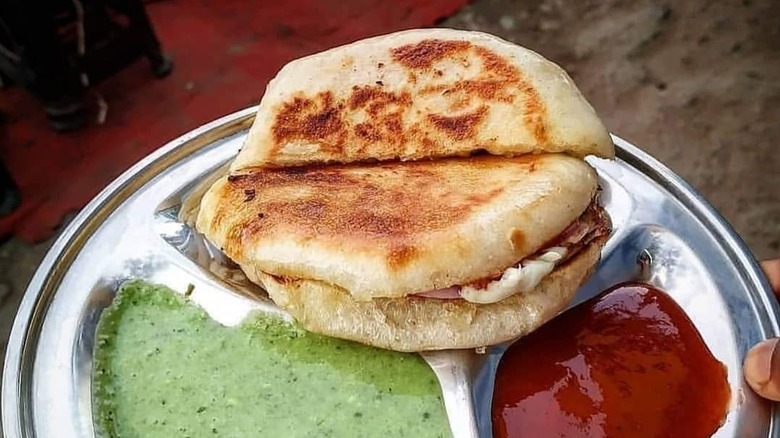
Travel to the city of Jammu, which is tucked away in the union territory of Jammu and Kashmir in the far north of India, and you'll find a unique version of a grilled cheese sandwich called a kalari kulcha (also sometimes called kaladi kulcha). It features a toasted flatbread stuffed with kalari cheese that's been fried until golden on the outside and gooey inside. Many vendors also add onions and serve the sandwich with spicy chutney.
You'd be hard-pressed to find kalari cheese outside of the Jammu and Kashmir region, although that may change as more foodies are switching on to its tasty properties. Semi-nomadic tribes in the region have been making the cheese for generations, and it typically consists of full-fat cow or buffalo milk that's heated, stirred, and coagulated with whey called matthar. The consistency is similar to mozzarella in that it's stretchy, but it also has a firm texture. When seared, it gets crispy on the outside and soft on the inside, making it perfect for popping into a sandwich.
One of the key steps to making a kalari kulcha is to sautée the cheese in a pan until it gets browned on both sides and melted in the middle. If you don't have access to kalari cheese, halloumi and paneer are both great cheeses for grilling, although you won't get the same melty character. If you're after that gooey texture, consider stuffing your flatbread with mozzarella, then grilling the whole sandwich until it's piping hot and the cheese has melted.
7. Dahi sandwich
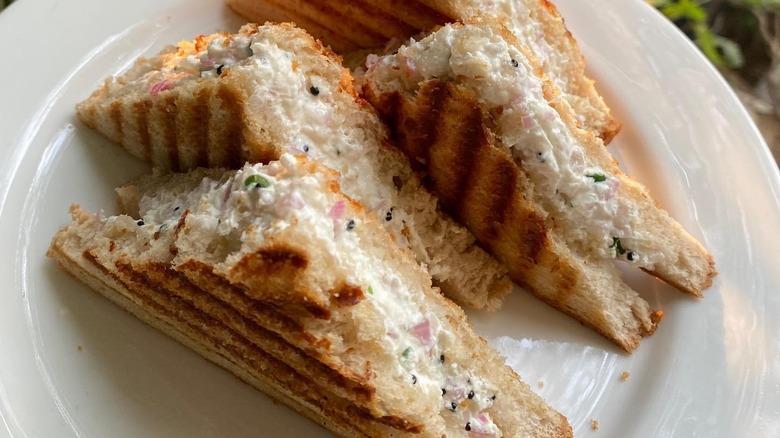
Looking for a sandwich that's easy to whip up at home with items you probably already have in your refrigerator and pantry? The dahi sandwich features bread that's filled with crunchy vegetables tossed in a creamy dressing and seasoned with spices. It's named after one of the main ingredients — dahi, which is essentially a thick yogurt that's also called curd in India. It has a slightly tangy taste that adds brightness to the sandwich. The dahi also gets a flavor boost from additions like chopped coriander leaves, curry leaves, and chili flakes.
One of the great things about the dahi sandwich is its customization. You can chop up your favorite vegetables and fresh herbs, add a dash or two of whatever spices you have on hand, and add proteins like meat, eggs, or seafood to transform it into something along the lines of an upgraded tuna, chicken, or egg salad sandwich. You can toast your bread or leave it as is, and you can even add cheese to turn it into a melt.
For an interesting twist on the dahi sandwich, rava toast (aka sooji toast) uses many of the same ingredients but with different preparation and presentation. Basically, you mix your chopped veggies and spices with yogurt and semolina, then slather it onto bread. The bread goes into a hot buttered or oiled pan with the filling side down, and it's cooked until the topping turns golden, then flipped to toast the other side of the bread.
8. Paneer tikka sandwich
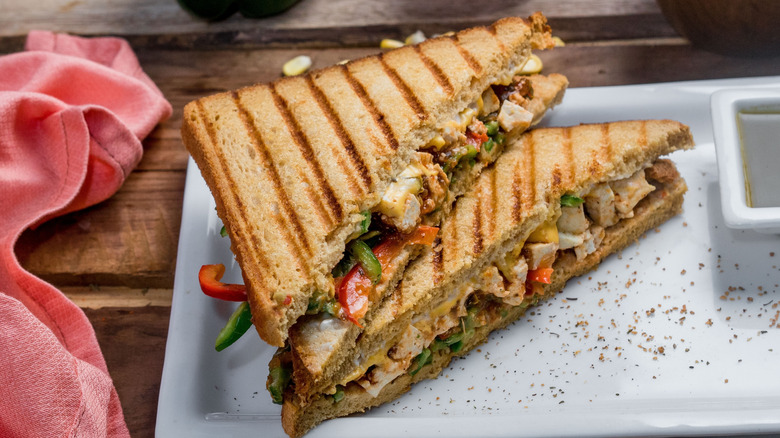
Paneer cheese is popular across India for its mild flavor, soft texture, and non-melting properties. Historians believe it was initially introduced to North India by Persian and Afghan rulers in the 16th century. Others say the Portuguese may have introduced the practice of using acids, such as lemon juice, to curdle milk and make cheese. Either way, it's become the star ingredient in many dishes, like the crave-worthy paneer tikka sandwich.
The word tikka technically means "chunks," and it refers to a cooking style in which pieces of meat or cheese are marinated in yogurt and spices, then cooked in a tandoor oven. With the paneer tikka sandwich, you get cubes of paneer cheese cooked until smoky and charred, then stuffed between slices of bread with sauces like chutney and crunchy veggies, and toasted until golden. This is another sandwich where you can get creative with your fillings and condiments.
Need some inspiration to take your paneer tikka sandwich to the next level? We highly recommend trying Chowhound's paneer panini with tikka masala jam. It features paneer cheese, mixed with yogurt, herbs, and spices, then chilled to let the flavors meld. The tikka masala jam is made by simmering tomatoes, chiles, and spices until they form a thick paste. To construct the sandwich, simply spread paneer filling on one piece of bread and the jam on another, slap them together, and put the sandwich in a panini press for a toasty grilled cheese-like sandwich with an Indian twist.
9. Bun Nippat Masala
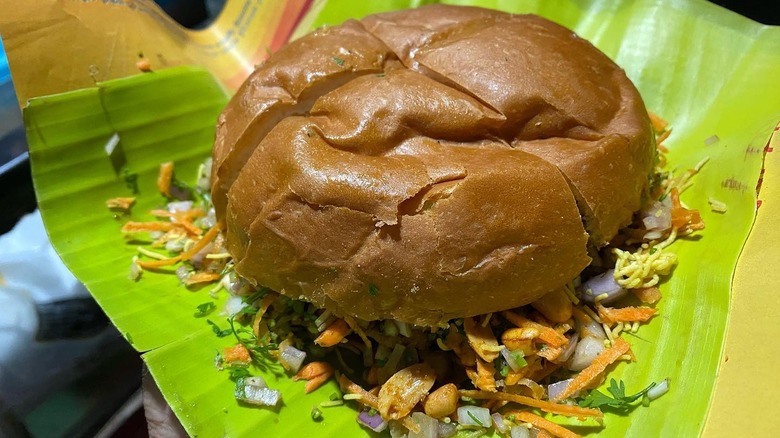
It's hard to talk about Indian street foods without mentioning chaat. These are a variety of snacks that typically include a starchy base, a zingy spice mix, and something crunchy, like fried chickpeas or deep-fried sev noodles; chutneys are also often included. The bun nippat masala is a popular chaat from Bengaluru that combines all those elements and more inside a soft, squishy bun.
A lot is going on with the bun nippat masala, also sometimes called bun nippatu or bun nippat chaat. To start, you cut a soft bun in half and spread green chutney and a sweet chutney like tamarind or date on either side. Then you add nippat, which are deep-fried rice crackers, and top them with grated carrot, chopped onions, coriander leaves, roasted peanuts, and a sprinkling of chaat masala spice mix. Put it together, and you have a sandwich that's pillowy, crunchy, sweet, spicy, and fresh all at once.
There are several variations of bun nippat masala, so don't be afraid to add or remove ingredients as you see fit and play around with different preparations. For example, some people add sliced cheese to the sandwich and toast it in a pan with butter. Others add more crunchy bits, like congress kedlekai, a crunchy snack mix featuring spiced peanuts with fried curry leaves. You can also stuff your sandwich with extra veggies like sliced tomatoes or cucumbers.
10. Choris pao
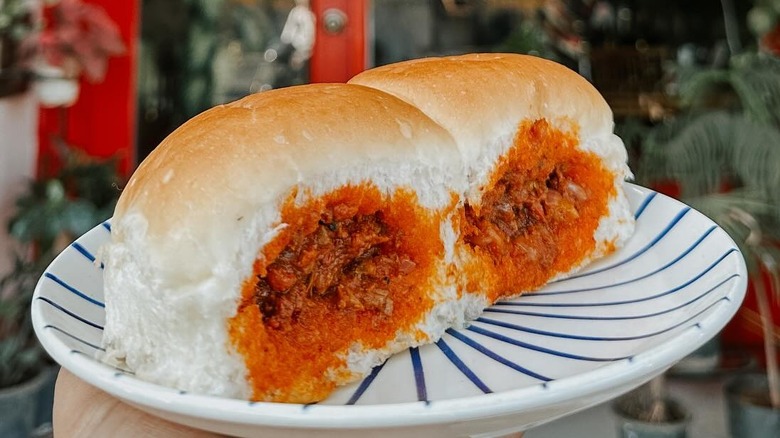
The Portuguese were the first Europeans to have a significant presence in India, leaving a lasting legacy in the cuisine. As mentioned, they introduced bread and staples from other parts of the world, such as potatoes, tomatoes, and chiles. Today, those culinary influences are most evident in Goa, a city on India's western coast that was ruled by the Portuguese from 1510 to 1961. One of the most popular street foods in Goa is choris pao, a flavorful sandwich featuring chorizo-style sausage in a soft bun.
Choris pao can be found all over Goa, from street stalls to cafes and restaurants. It seems pretty basic with just a pao bun stuffed with savory choris (sausage), but there's actually a lot of work that goes into the dish. Goan choris are like chorizo in that they're made with fatty pork and spices, but they also go heavy on the chiles and incorporate plenty of tangy toddy vinegar, which is made from fermented coconut palm sap. The sausages are also sun-dried and sometimes smoked for days.
If you want to make choris pao at home, you can opt for either Spanish or Mexican chorizo. Spanish chorizo is cured and smoked like Goan choris, while Mexican chorizo is raw and often spicier than its Spanish counterpart. Just separate the sausage from the casing and crumble it into a hot pan along with a splash of vinegar. Cook the sausage until browned (and cooked through in the case of fresh Mexican chorizo), then pile it into a soft bun.