

9 Old School Diner Foods We'd Love To Bring Back
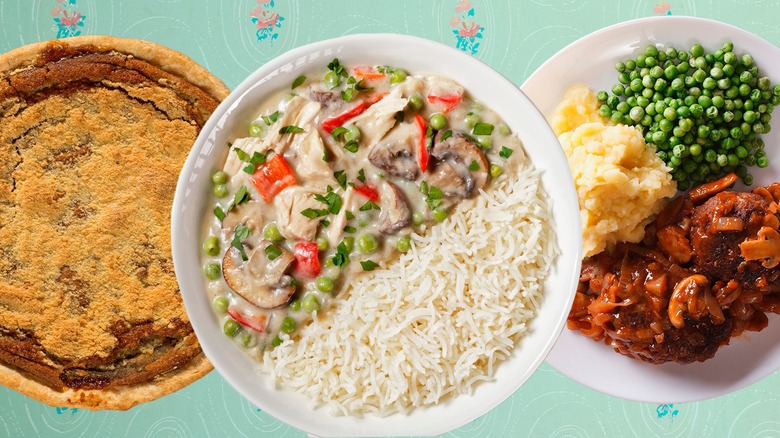
When you think of a diner, you most likely envision a scrappy art-deco inspired hole-in-the-wall eatery. Diners actually first started as horse-drawn carriages (what food truck culture mimics today) in the late 19th Century. You can see these humble roots on display in establishments like The Haven Brothers in Providence, Rhode Island. Of course, the culture around diners has shifted dramatically over the last century. Arguably, the biggest changes can be seen in the typical diner menu. A good meal at a diner will consist of a lot of flavor, ease of creation, and convenience of the food. You wouldn't order a mushroom risotto at your local greasy spoon, but you could order a Reuben sandwich.
Over the course of the decades, you must expect changes to what dishes are available. Whether due to rationing, overhead costs, or people simply becoming bored with something, ingredients will fall in and out of favor. While a cultural shift is unlikely to happen overnight, diners will obviously follow trends in order to better serve their customers. Despite that there are some dishes that are no longer popular for one reason or another that deserve another chance on the menu.
1. Salisbury steak
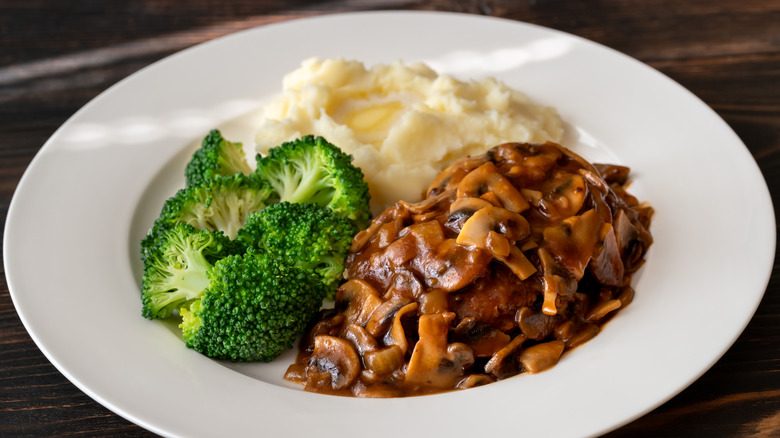
Salisbury steak is one of those dishes that had a meteoric rise and fall in popular culture. Once an easy-to-make and widely available dish that would have been shocking to leave off a menu, it has since become a frozen ready-made meal offering in the frozen foods section. You would be hard-pressed to find a modern diner that offers this meal. Despite how easy it is to make a classic Salisbury Steak it seems destined to remain a relic of the past.
From its humble origins as a 'health food' during the American Civil War, Salisbury steak had its major heyday in the mid-to-late 1940s due to its ease of preparation and the wide availability of its ingredients. If you've never had a well-made Salisbury steak, you should. It's very much like a loosely made hamburger patty with a scrumptious gravy and grilled mushrooms and onions. It is satisfying, filling, and just a little bit messy. All things diner food should be.
2. Chicken à la King
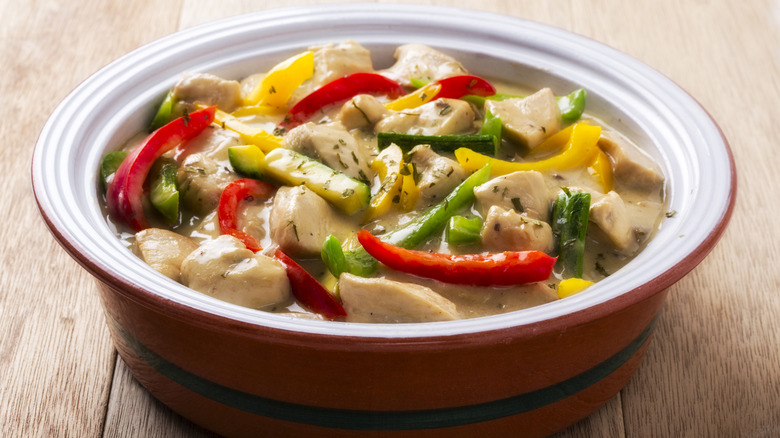
Meat, sauce, and carbohydrates seem to be the building blocks of a good lunch. Hamburgers have the patty, condiments, and bun; spaghetti and meatballs have two of the three right in the name; and Salisbury steak has the meat mixed with breadcrumbs and doused in gravy. Chicken à la King follows this basic diagram to the letter. It's simply chicken, a flavorful sauce, and either noodles or toast — depending on the diner.
This buttery feel-good favorite of the 1950s and 60s was all the rage for decades. It has a deceptively simple wine sauce and looks far fancier than it actually is. You may not be able to find it on many menus but for years it was New York City's hottest dish. Diners flocked to put this dish on the menu thanks to its presentation and subtle simplicity. While the exact origins of this dish have been contested, the fact remains that It is a warm, hearty dish that fills bellies and leaves you feeling just a little bit fancy.
3. Ham steak and pineapple
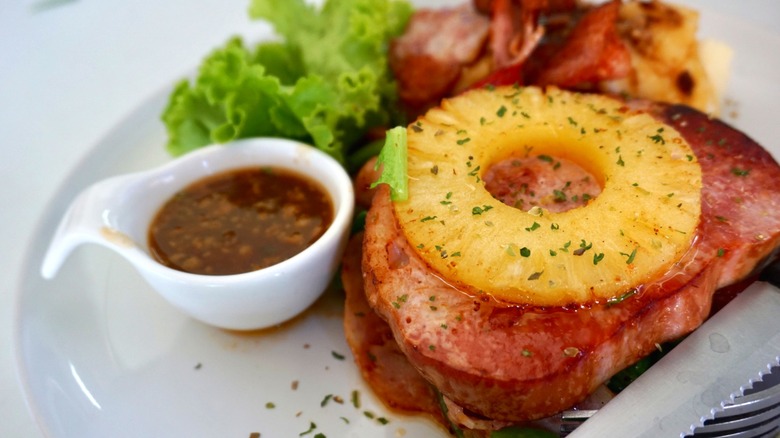
Ham and pineapple have a long history as a pair. These days, the combo may be best known for the controversial Hawaiian Pizza. Pineapples have been a worldwide phenomenon since being brought back to Spain by Christopher Columbus. The exact moment that someone decided to put ham and pineapple together is lost to time. Some claim it was first paired by James Dole, a pineapple plantation owner in Hawaii, while others claim the duo came about in West Germany where Toast Hawaii was made in an effort to bring American culture to post World War II Germany. Thanks to the modern convenience of pineapple and ham, the demand for this dish fell off as it became easier to make it at home.
Whatever way they became intertwined, ham and pineapple go together. For many years it was a surprisingly easy meal for a diner to put together, and a nice colorful dish to display on their menus. Canned pineapple rings would be slotted into cuts made into the whole ham steak and cooked that way. This allowed the juices of the pineapple to marinade and tenderize the meat leaving the ham steak buttery and full of flavor. As an added bonus the diner was able to feed several patrons off of just one ham steak and two cans of pineapple rings, which allowed them to make more money with less overhead. It's simple, it's tasty, and it's delicious.
4. Fried Spam sandwich
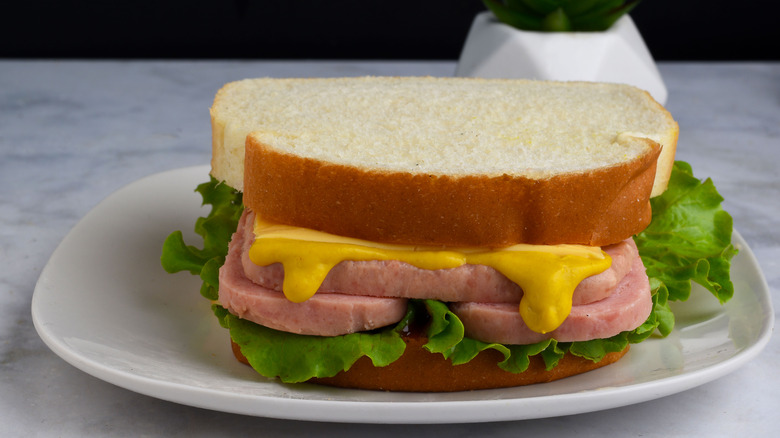
Spam has an interesting history in the culture of food. It was created during the canned food craze of the 1930s and then used as part of military rations in World War II. Because it was shipped to soldiers in Hawaii, Spam became a staple ingredient on the island. Now, despite it being created in Minnesota, Spam is a cultural culinary cornerstone of Hawaii. Back during its heyday, Spam was an easy to use sandwich filler for diners from Maine to California.
While you can still find Spam sandwiches practically everywhere in Hawaii, these quick-to-make and filling meals aren't offered at most diners anymore. You would have been hard-pressed to find a diner without Spam somewhere on their menu between the 1940s and 1960s. If you're interested in recreating the experience at home, there is a wide variety of recipes available online. Though it seems no one is able to agree on exactly what went into a fried Spam sandwich. Everything is up for debate from what condiment best pairs with Spam, to what else should be layered between the bread. A dish with this much variety absolutely belongs on diner menus. It's quick to make, easy to personalize, and quite filling.
5. Fried bologna sandwich
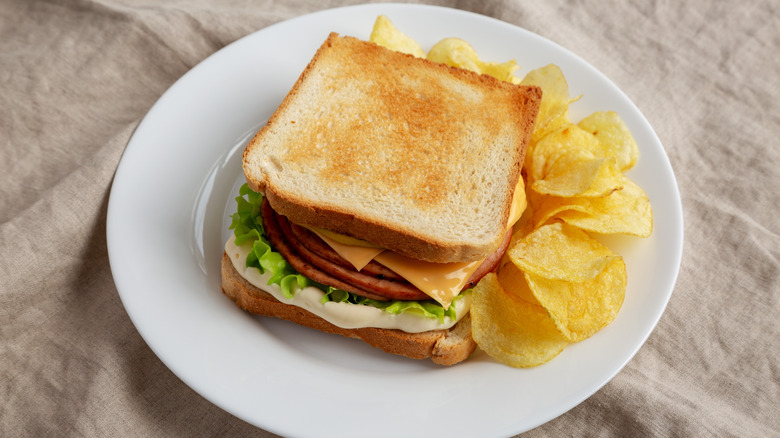
You might be wondering what the difference is between bologna and Spam. While both are pink processed meats, they have wildly different flavor profiles and textures. While bologna is a bit salty, it does not have the same density of flavor, nor underlying sweetness, that Spam does. This lends itself nicely to a tasty fried sandwich. The bologna we're discussing today is not the sausage variety; it is the pre-sliced deli kind that you can buy in large, inexpensive quantities off the shelf at any grocery store.
Sometimes written as 'baloney' due to its pronunciation, bologna got its start in the 1920s and quickly became a darling in American households. It is still a powerhouse in the South, and you can still pick up fried bologna sandwiches in some select diners in Arkansas. Frying the bologna mutes the sometimes overwhelming processed meat flavor and brings out all the good, warm, salty notes of the meat. Whether grilled, barbecued, or fried in a skillet, you can't go wrong with a couple slices of bologna with white bread, mustard, mayonnaise, and your cheese of choice. Like other southern staples, such as chicken and waffles, these delicious sandwiches deserve another chance on menus across the nation.
6. Meat pie
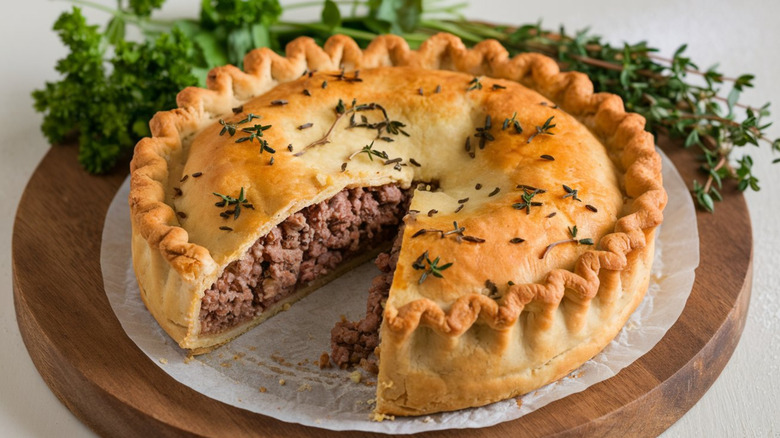
Any self-respecting diner in America will have a wide selection of pies available for purchase. It's a cultural touchstone from one coast to another. A diner will have pie. This has been true for about as long as diners lost their wheels and put down roots. However, back then, the pies these early diners offered weren't always sweet. If you were to conjure an image of a meat pie, you'd probably envision a tourtière. The French Canadian delicacy is in the traditional pie shape, covered in crust, and filled with meat. While that image isn't far from the truth, the tradition of American meat pies is theorized to have been introduced by Native Americans and has since morphed into dishes like empanadas.
A tourtière is limited to one flavor and blend of meats, while classic diner pies were filled with everything from mystery meat and meatloaf to good old fashioned chicken pot pie. In recent years, the art of the meat pie has slipped out of the public's eye in America. One of the main reasons meat pies aren't on offer anymore is that their main consumers were laborers on the go, who wanted a meal as filling as a home-cooked dinner, but as portable as a sandwich. Now that labor jobs without lunch breaks are fewer, the demand has lessened. While you can still find a chicken pot pie in most diners if you look for anything fancier than that you'll end up disappointed.
7. Shoofly pie
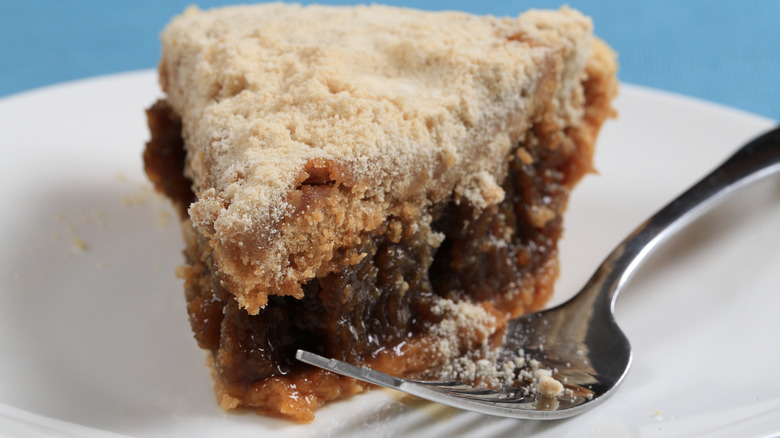
While sweet dessert pies are still all the rage in American diners, the inevitable march of time will shuffle some once popular flavors to the side. One of these classic pies was the Shoofly pie. So named because it's supposed to be so sweet you'll have to 'shoo flies away from it'. While you can still find this Pennsylvania Dutch pie in parts of Pennsylvania, its reach beyond has since waned. It is still considered an important part of bake sales, church sales, and farmers markets across The Keystone State.
Thought to be originally created as a centennial celebration of America by Germans fleeing the Thirty Year War, this molasses-forward pie has endured a following due to its shelf-stability and extremely sweet flavor. In both wet and dry bottom varieties, this molasses and crumble pie is still a favorite among Amish communities all across the North American continent. Considering the popularity of pecan pie, a pie with similar molasses-y origins, there is a definitive audience for it.
8. Chicken croquettes
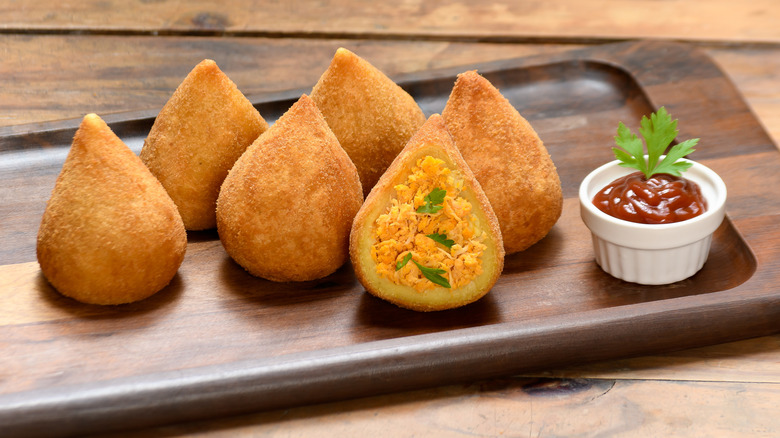
Croquettes are a deceptively simple dish to make. Deep-fried balls of breading, meat, veggies, and any number of binding agents that come out with a crispy, crunchy exterior and a soft, warm interior. They were first invented as a way to use leftovers creatively. Like chicken nuggets, chicken croquettes use a blend of ingredients and frying to really pack a lot of flavor into a small space.
Croquettes were always more popular in eras of scarcity. You could purchase quite a lot of food for very little money by ordering a croquette. They're practically an entire meal stuffed into one dish. With the wide availability of other comfort foods like chicken tenders, fries, and burgers, the humble croquette simply wasn't catching anyone's eye and was quietly retired from diner menus. However, croquettes found a new audience through Spanish street vendors. This surely indicates there's a potential market for them in restaurants. A quick refresh of a classic recipe and these croquettes would be flying out the door.
9. Casseroles
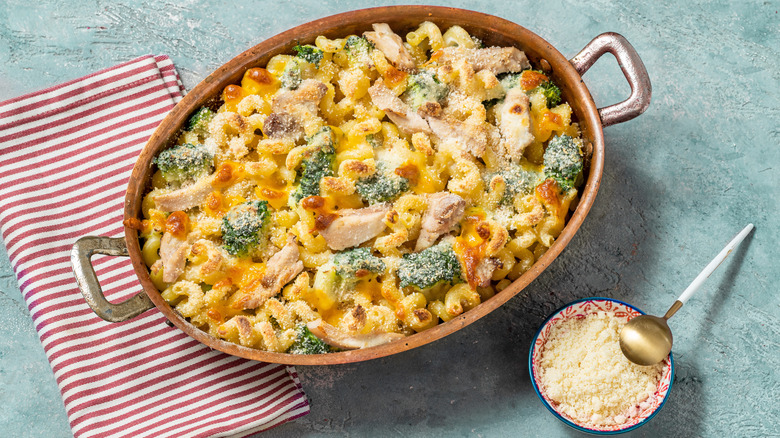
The only thing more American than apple pie has to be a casserole. Everyone's grandmother made their own kind. You'll find potlucks, family dinners, and buffets are still chock-a-block full of these creamy noodle based meals. With such a versatile meal concept you can make a casserole to fit any number of flavor preferences. A vegetarian might enjoy a carrot casserole, while those with meat on the mind could tackle any number of meat casseroles with ease. Tuna or chicken casseroles have long been the standard, but there are even things like cheeseburger or taco casseroles for your consideration.
Casseroles were once the darling of diners. They are simple pan dishes that freeze easily, and reheat well. This allowed diners to make a lot of product, and serve as needed, rather than having to make everything fresh-to-order. Casseroles are still popular at home, but their convenience now outweighs their desirability. When people eat out they're not always looking for something they can make themselves, so slowly the casserole slipped from diner menus. It's more than time for casseroles to make a comeback. Not only does the versatility of a casserole make for an easy 'meal of the day' but we're in an era where casserole on the menu will play perfectly on someone's nostalgia.