

Proofing Vs Fermenting Dough: What's The Difference?
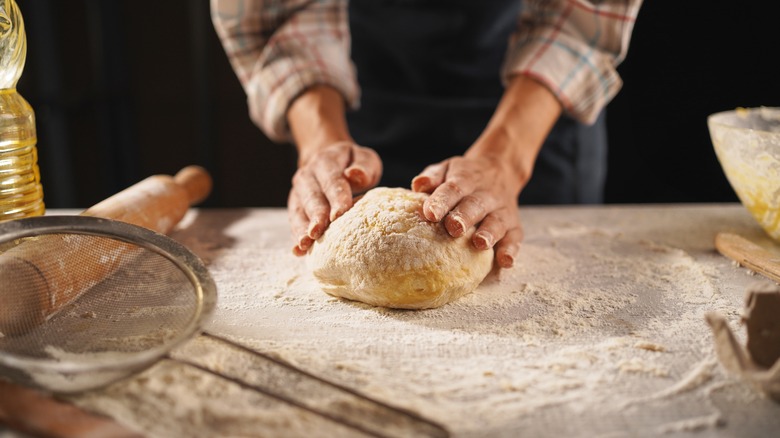
Baking bread is a labor of love, and whether you picked up the craft during the 2020 lockdown or have been an avid, lifelong baker, it's likely guaranteed that you've got friends and family members who are thankful for your passion for baking, gladly feasting on the fruits of your efforts. What they might not know is the intricate chemistry that underlies the successful outcome of your freshly baked bread. Two essential steps form the foundation of the dough before baking: the proofing stage and the fermentation period. But what exactly is proofing or fermentation, and what role does each play in impacting the final result?
Put simply, fermentation is an anaerobic process, which means it does not require oxygen to occur, wherein the yeast consumes the sugar and starches in the dough mixture and breaks them down into simpler substances like carbon dioxide, ethanol, and other flavor-imparting compounds. The carbon dioxide is responsible for the dough rising, while the alcohol and other compounds impact the aromas and flavors of the bread. Fermentation is the key to a flavorful loaf of sourdough bread.
Proofing, on the other hand, is the final dough rise stage once shaped into a loaf. It is reportedly the hardest step to get right when baking bread because it's important to achieve the ideal amount of gas in the gluten network so as to not break the dough. Ultimately, you can think of fermentation as the initial rise of the entire dough, while proofing is the final rise of the individual loaves once they've been shaped into your desired structure. Both rises entail the same chemical reactions, and at times, you may notice that the terms "fermentation" and "proofing" are used interchangeably.
Tips for proper fermentation and proofing
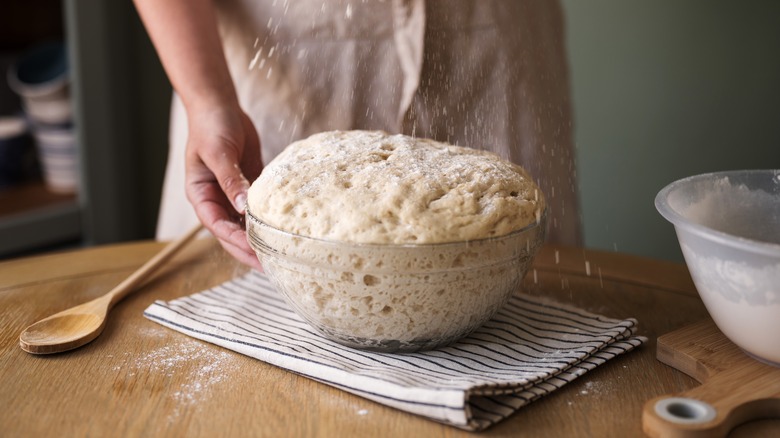
Both fermentation and proofing are crucial for a delicious loaf of bread that features a fluffy and airy texture while infusing your kitchen with the aromas of an artisanal bakery. Messing up either of these steps falls within the list of mistakes to avoid when baking bread. For starters, when the bread dough is under-fermented, you will end up with a smaller loaf that is dense, gummy, and lacks that desirable browning of the crust. Evidently, patience is a virtue not only for no-knead breads, as you need to allow sufficient time for the fermentation to facilitate the optimum dough rise, and if you're looking for an improved flavor, take a tip from Julia Child's book by making a pre-ferment mixture.
When it comes to proofing, most of the released carbon dioxide is from the final proofing stage, and when over-proofed, the pressure from the gas causes the gluten structure of the dough to break down. This yields a deflated dough that won't rise when baked and can leave an unpleasant, overly sour taste. To ensure that the dough is sufficiently proofed, give it a gentle poke and wait to see if the indentation springs back. If your finger mark remains, your dough is ready for the oven.
Location also matters when proofing the dough. Yeast works its peak magic between 75 and 78 degrees Fahrenheit, and the best spot in your home kitchen is to let the dough rise in the oven with the light on and the oven itself turned off. Another shortcut for proofing your dough is to reach for the multi-faceted air fryer. Just be cautious not to overproof the dough, and if you accidentally do, there are some instances when it can be fixed.