

10 Easy Mezcal Cocktails You Can Make At Home
We may receive a commission on purchases made from links.
Mezcal is having a major moment right now, and for good reason. Like tequila, this Mexican spirit is made from agave. However, there are some key differences between tequila and mezcal. For one, the agave piñas for mezcal are typically roasted instead of steamed, which often gives the spirit a smoky flavor. In addition, mezcal can be made from any type of agave plant, while tequila can only be made from Blue Weber agave. This makes mezcal incredibly diverse and perfect for a wide range of cocktails.
Purists might tell you that the correct way to drink mezcal is straight up, maybe with a slice of orange and some sal de gusano (worm salt) or a beer chaser. However, mixologists around the world have been experimenting with it in everything from strong, spirit-forward drinks to light, citrusy refreshers. Its smoky character makes it a great fit for both modern creations and clever takes on classics. But you don't need to be a professional bartender to create bar-worthy mezcal cocktails. In many cases, all it takes is a few simple ingredients.
If you've been holding onto that bottle of mezcal in your liquor cabinet and wondering what to do with it, these easy recipes will show you just how versatile and delicious it can be. Some are variations of classic cocktails where you simply swap one of the spirits out for mezcal, while others are fresh recipes designed to complement the mezcal and let its true flavors really shine. Without further ado, let's get shaking.
1. Mezcalita
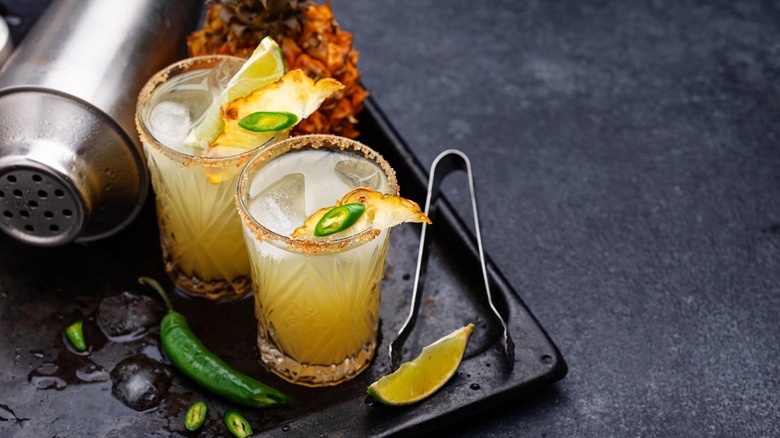
If you're a fan of margaritas, then the mezcalita will be right up your alley. It's essentially all of the same ingredients, but with mezcal instead of tequila. If you're going for a classic version, you can add mezcal, lime juice, orange liqueur, and some agave syrup into a cocktail shaker with ice, give it a few good shakes, then pour it into a glass with a salt or Tajín rim. You get the same fresh flavors as a margarita, but with smokiness for extra depth.
Some bartenders add a secret ingredient to their mezcalitas to give it a sweet and spicy kick. Ancho Reyes is a chile liqueur that's produced in Pueblo, Mexico, and it pairs beautifully with the herbaceous notes of mezcal. There are two types of Ancho Reyes: the original made with sun-dried ancho chiles and the Verde made with fire-roasted poblano chiles. For mezcalitas, you can replace the orange liqueur with either type of Ancho Reyes or use both for more complexity.
Once you've nailed the basics, it's fun to play around with flavors. Just as margaritas come in endless varieties beyond lime, mezcalitas are just as adaptable. You can go tropical by swapping the lime juice for pineapple, guava, or mango juice. If you like creamy cocktails, consider shaking or blending in some coconut milk or avocado. You can also take inspiration from Mexican aguas frescas and use hibiscus water or prickly pear juice.
2. Mezcal Manhattan
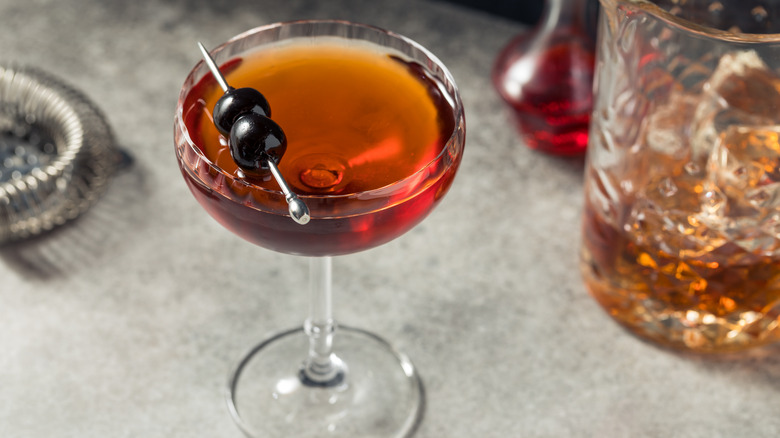
Because mezcal tends to have a strong flavor profile that goes big on earthiness, spice, and smoke, it's often a great stand-in for whiskey in cocktails. One example where this works particularly well is with the Manhattan, which typically includes whiskey, sweet vermouth, and bitters. The mezcal offers deep smoky flavors that play off the rich sweetness of the vermouth and the warmth of bitters.
The Manhattan is one of those cocktails with an interesting origin story. It was likely created in the mid to late 1800s, although no one is sure exactly where. Some say it was created for Winston Churchill's mother at the Manhattan Club in New York City. However, historians have pointed out that's pretty unlikely, considering Lady Randolph Churchill was in the U.K. at the time. Those who have dug deeper believe it may have been invented by a man named George Black at his bar called the Manhattan Inn.
If you're planning to modernize the Manhattan with mezcal, many people suggest using a full-bodied mezcal that can stand up to the bold flavors of the sweet vermouth. As with many spirit-centric cocktails, it's all about finding balance so that no single ingredient overpowers the others. You can also experiment with different flavors of bitters. Orange bitters pair well with the agave notes in the mezcal, and cherry bitters can be a nice touch, especially if you're using the classic cherry garnish.
3. Mezcal sour
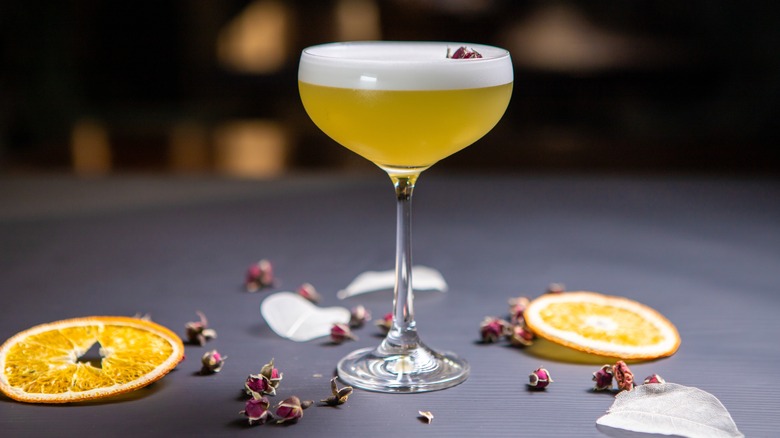
The mezcal sour puts a modern spin on one of the oldest cocktail formulas, a style that first evolved from the citrusy punches British sailors drank on long voyages. Spirits traveled well on ships because they didn't spoil, and sailors would often add lime juice to them to help stave off scurvy. By the 1800s, people were also adding sweeteners like sugar and ice to their spirit and citrus juice mixes. The first recipe for a sour cocktail appeared in Jerry Thomas' mixology book from 1862 called "The Bartender's Guide."
Sour cocktails typically follow a simple format: a spirit, citrus juice, and a sweetener like sugar or simple syrup. Everything gets shaken with ice and strained into a cocktail glass. Many recipes also call for egg whites, which may sound strange. However, when the egg whites are vigorously shaken with the other ingredients, they add body and a beautiful velvety frothiness to the drink. For an ultra-easy mezcal sour, simply shake up some mezcal with lemon or lime juice and simple syrup, then strain it into a rocks glass.
4. Oaxaca old fashioned
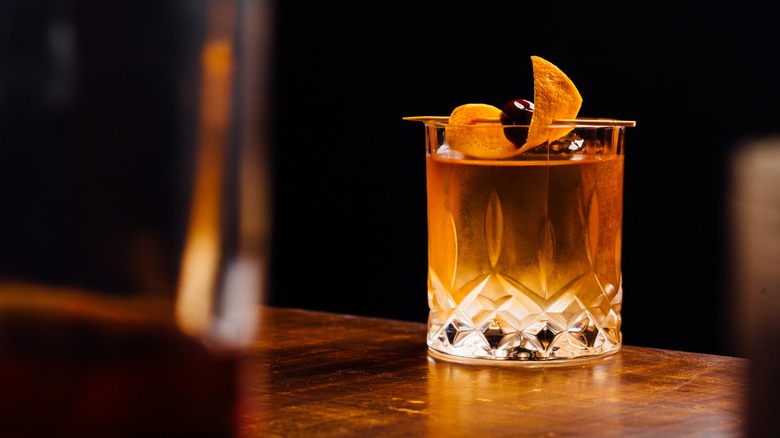
As the name suggests, the old fashioned is another cocktail that has a lengthy history. It's unknown exactly when it was created, but we do know that by the 1700s, Americans were making whiskey cocktails mixed with sugar and bitters. The drinks were often served straight up, although that changed when ice became more readily available. Today, old fashioned cocktails are typically made with rye, whiskey, or bourbon. Or, in the case of the Oaxaca old fashioned, mezcal.
Unlike the classic old fashioned, the Oaxacan old fashioned has an easily traceable origin. In 2007, a bartender named Phil Ward concocted the drink at a bar called Death & Co. in New York City. His recipe included an ounce and a half of reposado tequila, half an ounce of mezcal, a splash of agave syrup, and a few dashes of Angostura bitters. He named it in honor of the state of Oaxaca in Mexico, where the majority of mezcal comes from.
There are a few different ways to create this mezcal cocktail. You can simply pour everything in a glass with some ice and stir to combine, or you can shake it with ice and strain it into a glass. And if you want to make your old fashioned even better, you can muddle some orange peel and cherries in a cocktail shaker, then add your other ingredients, shake with ice, and strain. The fruit will add extra sweetness and bright flavors to the earthy mezcal and herbaceous bitters.
5. Mexican mezcal firing squad
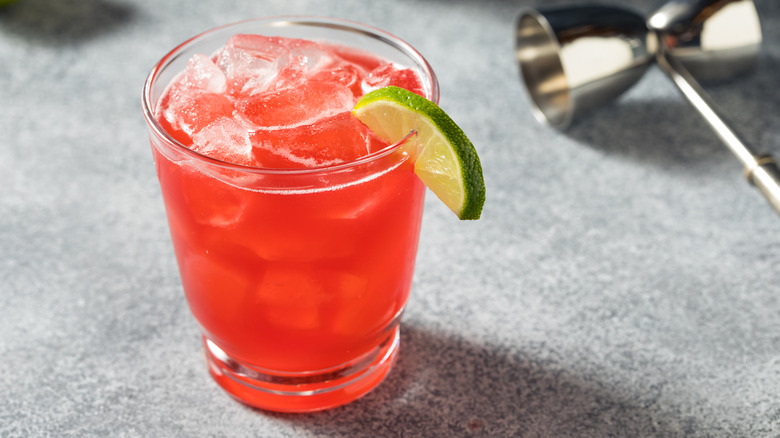
Although mezcal and tequila are made with different types of agave, they do have some similarities when it comes to taste, including vegetal and mineral notes and hints of spice. With that in mind, it makes sense that mezcal often works well in popular tequila cocktails. If you're looking for something a bit different than a mezcalita or a Ranch Water with mezcal subbed in, consider whipping up a Mexican mezcal firing squad.
The first mention of the Mexican firing squad comes from the 1939 book "The Gentleman's Companion" by Charles H. Baker. During Prohibition, Baker traveled the world in search of exotic drinks, and the book tells stories of his adventures along with recipes for the cocktails he came across. Apparently, he discovered the Mexican firing squad at La Cucaracha Cocktail Club in Mexico, and he and his companion imbibed so many that they "almost became wrecked upon."
The classic version of this fruity drink includes 2 ounces of tequila, although you can swap that out for mezcal. Pour your mezcal into a cocktail shaker with ice and add ¾ ounce each of lime juice and grenadine and a few dashes of bitters. Shake everything well, then strain it into a glass with more ice and garnish it with slices of orange and pineapple and a cherry. The earthy mezcal provides a nice balance to the tartness of the lime juice and the sweetness of the grenadine.
6. Smoky negroni
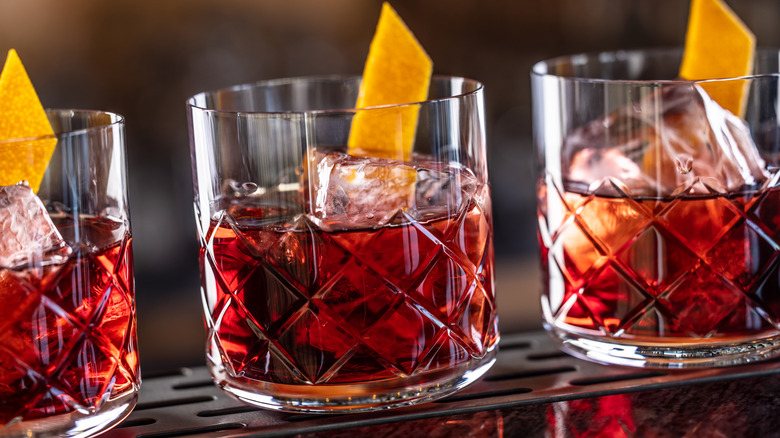
With just three ingredients (gin, sweet vermouth, and Campari), the Negroni is simple to make, but offers layers of complex flavors. There are a few competing stories for how it came to be. One states that a nobleman named Count Camillo Negroni created it at a bar in Florence in 1919 when he asked a bartender to make him an Americano cocktail with gin instead of soda water. Another says a French general named Pascal Olivier Comte de Negroni concocted it while he was stationed in Africa.
Regardless of how or when the Negroni was created, it's gone on to become one of the best selling cocktails in the world. There are countless variations of the Negroni you can try, one of which includes smoky mezcal instead of gin. This version works particularly well because mezcal has enough body and flavor to match the bitter citrus and spice flavors in the Campari and it helps cut through the sweetness of the vermouth.
Making a smoky Negroni couldn't be easier, as it follows the same equal-parts formula as the original. Just stir together 1 ounce each of mezcal, Campari, and sweet vermouth over ice, then strain into a rocks glass. Garnish with an orange peel to highlight the drink's bright citrus notes, or even flame the peel if you want a little extra flair. The result is a smoky, bittersweet cocktail that feels sophisticated but is easy enough to whip up anytime at home.
7. Naked and famous
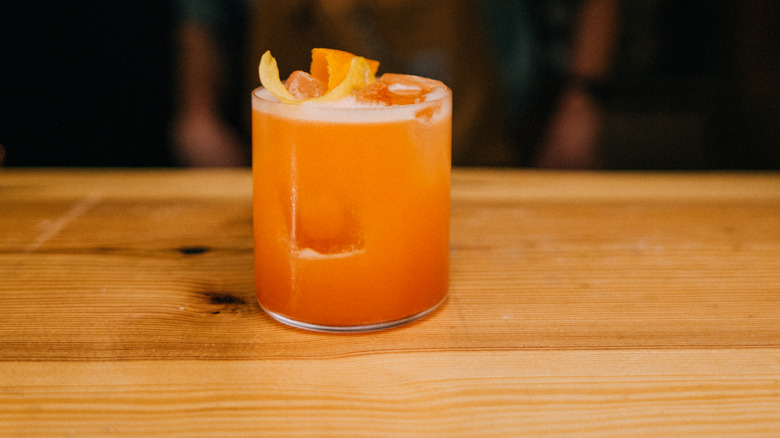
Since its inception around 2011, the naked and famous cocktail has gone on to become wildly popular at bars across the United States and a must-know drink for any bartender who specializes in agave spirits and cocktails. In fact, it earned the No. 3 spot on Difford's Top 100 Cocktails for 2024, beating out classics like the margarita, Manhattan, and espresso martini. That's a testament to just how tasty the cocktail is and how much mezcal is really taking off.
Bartender Joaquín Simó created the naked and famous while working at Death & Co. in New York City. He was playing off two riffs: the herbal complexity of the Last Word and the citrus-led brightness of the Paper Plane. What makes his version unique is the use of mezcal. The recipe calls for equal parts mezcal, yellow chartreuse, Aperol, and fresh lime juice, all shaken and served in a coupe glass with a citrus garnish like a lime wedge or twist.
What makes the naked and famous stand out is how each ingredient holds its own without overpowering the others. The mezcal brings a smoky backbone, the yellow chartreuse adds herbal sweetness, the Aperol provides slightly bitter citrusy notes, and the lime juice keeps it bright and refreshing. It looks and tastes balanced and elegant, but it's easy to execute, making it the perfect cocktail to make when you want to impress guests with minimal fuss.
8. Espresso mezcal martini
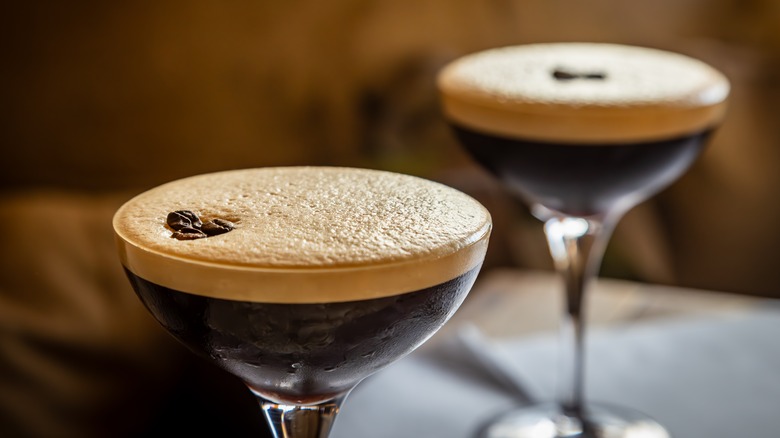
What do you order when you're craving a cocktail, but also flagging a bit in the energy department? For many people, the answer is an espresso martini. Legend has it that a bartender named Dick Bradsell created it at a London bar in the 1980s after a fashion model asked for a drink that would simultaneously give her a buzz and an energy boost. It typically consists of vodka, coffee liqueur, and espresso, but mezcal makes for a great stand-in for the vodka.
There are a few reasons why mezcal works so well in espresso martinis. For one, both coffee and mezcal have roasted characters and fruity, floral notes with a touch of earthiness. In addition, agave and coffee are both grown in Mexico, so they share some of the same terroir. Pair the two with Kahlúa, which is also a Mexican product, and you have a drink that pays homage to the country's rich beverage heritage.
The easiest way to make a mezcal espresso martini is to shake equal parts mezcal, coffee liqueur, and espresso with lots of ice, then strain it into a martini glass. You can also add a dash or two of chocolate or coffee bitters if you want to level up the cocktail a bit. For an interesting twist, consider making a modified carajillo with equal parts mezcal, Licor 43 (a sweet, citrusy-herbal liqueur from Spain), and coffee. Both espresso martinis and carajillos are typically garnished with coffee beans.
9. Mezcal mule
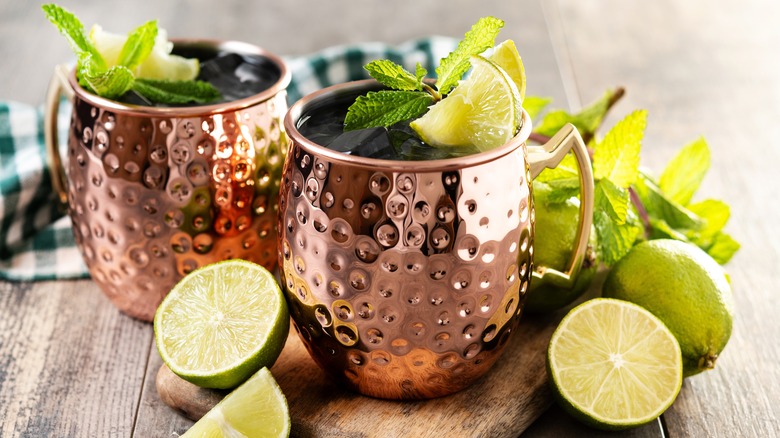
Part of what made the Moscow mule so popular in the mid-20th century was its refreshing flavor, and the clever use of copper mugs, which gave it a look as distinctive as its taste. Most historians believe the cocktail was created in the early 1940s as a way to promote ginger beer and Russian vodka, although there is some dispute over whether it was created in New York City or Los Angeles. Over the years, several bartenders have put creative spins on it, including making mezcal the base spirit.
Jim Meehan is credited with creating the first mezcal mule at PDT bar in New York City. He wanted to take the freshness of a classic mule, but also add flavors that were common in mezcal's homeland of Oaxaca, so he combined mezcal, ginger beer, lime juice, passionfruit purée, agave nectar, and muddled cucumber. He garnished the drink with cucumber, candied ginger, and a dash of chile powder.
While Meehan's mezcal mule is a little more elaborate than the original three-ingredient Moscow mule, there's no reason you can't scale yours back a bit. A simple mix of mezcal, ginger beer, and lime juice will still be refreshing and let the flavors of the mezcal really shine. You don't need the requisite copper cup, although it is a nice touch. Fun fact: The reason why mules are served in copper mugs is that they keep the cocktail cooler for longer.
10. Smoky Paloma
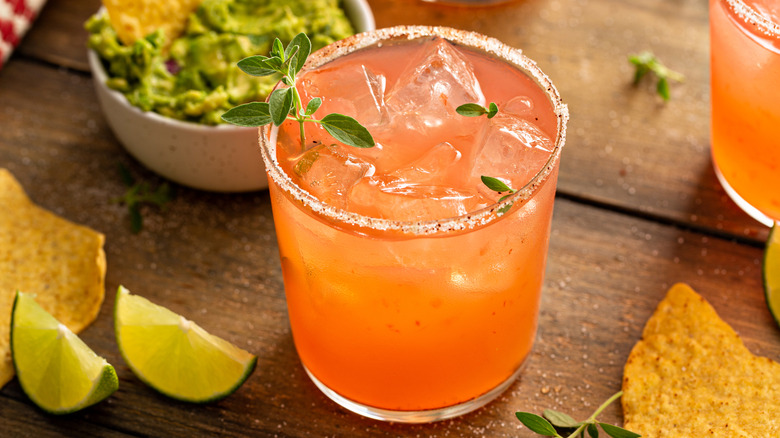
The Paloma is right up there with the margarita as one of Mexico's most-loved cocktails. It's easy to make with just a few ingredients, including tequila, lime juice, salt, and grapefruit soda. It's unclear where or when the drink was born, but some speculate that it may have been around the 1950s when Squirt grapefruit soda made its way from the States to Mexico. The fizzy, citrusy soda is a great match for the fresh agave flavors of both tequila and mezcal.
Most people start their Palomas by rimming a glass with salt. Tajín is also a nice touch, as it adds a bit more color and also a hit of spice. From there, you can simply fill the glass with ice, add a shot or two of mezcal, and top the rest with grapefruit soda. If you can't find grapefruit soda, grapefruit juice and soda water work just as well.
If you love Palomas, the cantarito is another fizzy Mexican cocktail that also tastes great with mezcal instead of tequila. Originating in the state of Jalisco, the cocktail is named after the clay jug it's served in. The ingredients are similar in that the jug is often rimmed with salt or Tajín and it includes tequila and grapefruit soda, although cantaritos can also be made with orange juice, lime juice, and grapefruit juice.