

8 Vegetables You Should Never Buy Frozen, According To Chefs
Keeping your freezer well-stocked with frozen vegetables feels like the ultimate hack for creating healthier meals at home. For starters, they're convenient since they come washed and pre-chopped so you can save plenty of precious prep time. Plus, the longer shelf life can save you from wasting money on veggies that have gone bad in the crisper drawer.
Frozen vegetables also measure up nutrition-wise. Before freezing, veggies are generally picked at their peak of ripeness, nutritional value, color, and flavor. They're still highly nutritious and really convenient, says Jackie Newgent, RDN, Los Angeles-based plant-forward chef and culinary nutritionist.
That said, not all frozen vegetables are created equal – some can be tasty post-freeze while others tend to turn to mush. "Just consider how you plan to use them and adjust for their change in texture, appearance, or flavor," says Newgent. Often, that means skipping the thawing step and tossing them in oil and then straight into the oven or air fryer. To help you navigate the frozen veggie aisle, here are the top vegetables that chefs say you should never buy frozen.
1. Bell peppers
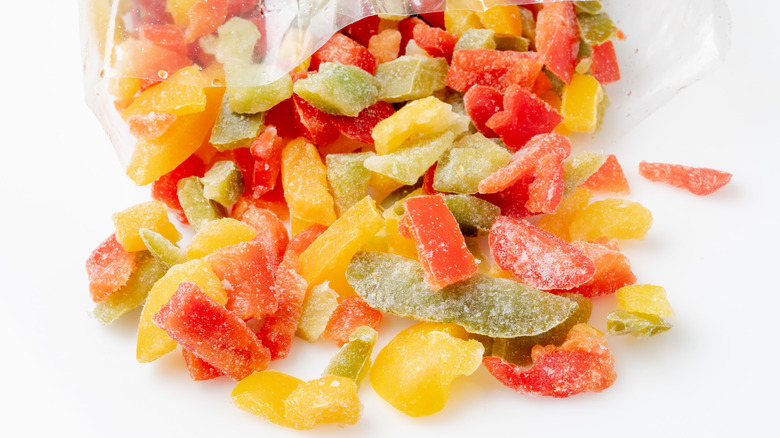
Bell peppers are a dinner workhorse since they can be roasted or charred, stewed in sauce, diced into a colorful stir fry, or even stuffed with rice and meat. They also add visual appeal, enhancing dishes with a pop of red, orange, green, or yellow color. The only problem is that they can be a pain to prep with their bulky core and sticky seeds, hence why frozen bell peppers can be so appealing. But not so fast, frozen bell peppers may be one frozen veggie you want to skip. "They have a high water content," says Jackie Newgent. "Bell peppers' cell structure breaks down, causing a mushy texture while losing its full fresh flavor after thawing."
However, that doesn't mean that frozen bell peppers aren't redeemable. Newgent suggests giving them a quick saute over medium-high heat straight from their frozen state. You can also stir them into dishes where their softer texture works well, like in scrambled eggs, soups, or pilaf. "A touch of red wine vinegar (or a little lime juice) can liven up the flavor of the peppers," Newgent adds.
2. Asparagus
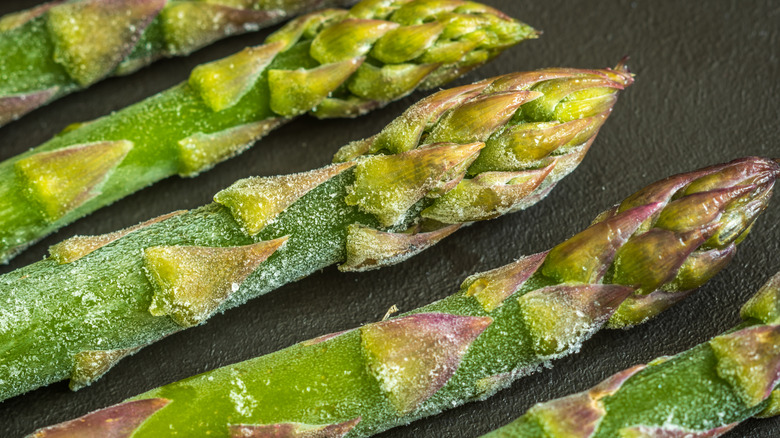
Fresh asparagus season is relatively short, just March through June. While it may be tempting to buy a few extra bunches of asparagus to freeze them for later, sadly, this vegetable is one that our chefs said to skip. "It has a high water content and delicate structure," says Jackie Newgent. That high water content spells trouble for this spring vegetable. "Asparagus loses its firm bite, resulting in a soft, mushy texture after thawing," she adds.
If you do wind up with some frozen asparagus, you can still use it — but may need to adjust your cooking technique. Rather than roasting asparagus from frozen like you might with other veggies, a quick saute in a preheated pan might be the best way to cook this delicate vegetable and prevent it from going mushy. Newgent suggests that frozen asparagus can also be cooked and then blended into soups or sauces, where preserving the structure isn't a concern. Adding a squirt of lemon juice can also balance the taste, per Newgent.
3. Mushrooms
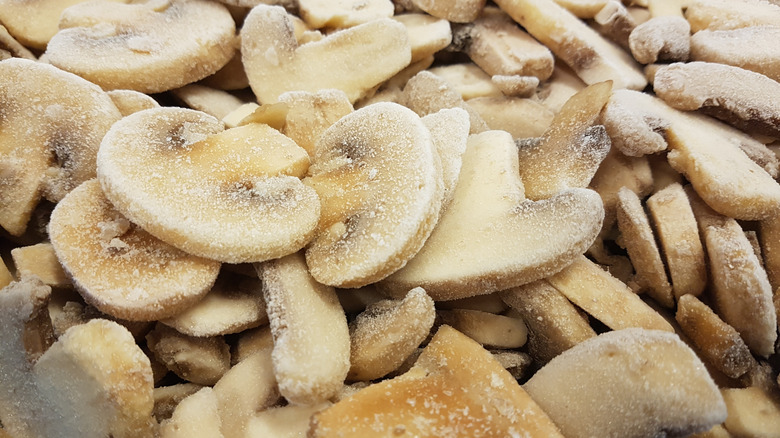
Mushrooms are an incredibly versatile vegetable. Their umami-rich flavor and meaty texture make them a stand-in for meat in vegan and vegetarian dishes, but they can also enhance the flavor of meat-based dishes like beef stroganoff. Since mushrooms are such a ubiquitous ingredient, it may seem like a great time-saver to pick up a bag of frozen ones, as cleaning them can be a chore. Unfortunately, mushrooms don't fare well after a trip to the freezer, per Sylvia Fountaine, Professional Chef, Recipe Developer, and Acclaimed Food Blogger at Feasting at Home, because they too have a high water content. So as the water inside the mushroom freezes, it expands and breaks down the cell walls, which can cause that dreaded soft, mushy texture.
However, there are cases when you can utilize frozen mushrooms in recipes if you happen to have some in your freezer. Use them in recipes where maintaining the texture isn't as important, like gravy, soup, pasta sauce, or blended with ground meat in burgers. Another tip is to skip the thawing step and use frozen mushrooms straight from the freezer. When they thaw, they release a lot of moisture and get mushy when cooked.
4. Leafy greens
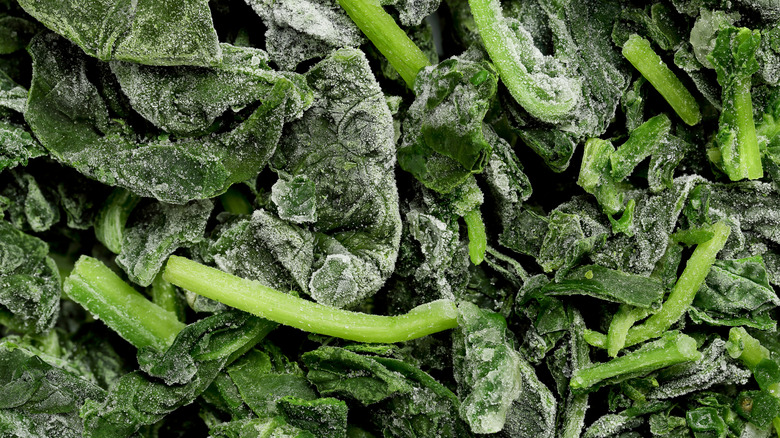
OK, this one may be controversial because some people love having their freezer stocked with a variety of frozen leafy greens like spinach, kale, chard, or collard greens. For starters, they have a much longer shelf life when frozen so you don't have to worry about tossing yet another bag of slimy greens. They're also a great way to add color and boost some of the good-for-you nutrients in a dish. However, there's no denying that the flavor and texture of those leafy greens change considerably after freezing.
Part of the reason that frozen greens are so much different from fresh is that they need to be blanched before freezing. This extra step denatures the enzymes that cause greens like spinach to wilt and produces unpleasant tastes and odors, but also changes the texture of the greens. Unlike many of the other frozen vegetables on this list, you do want to thaw your frozen greens before adding them to a recipe. This allows them to release the excess water, which you can squeeze out so you don't overcook them trying to cook off the water in the finished dish.
5. Onions
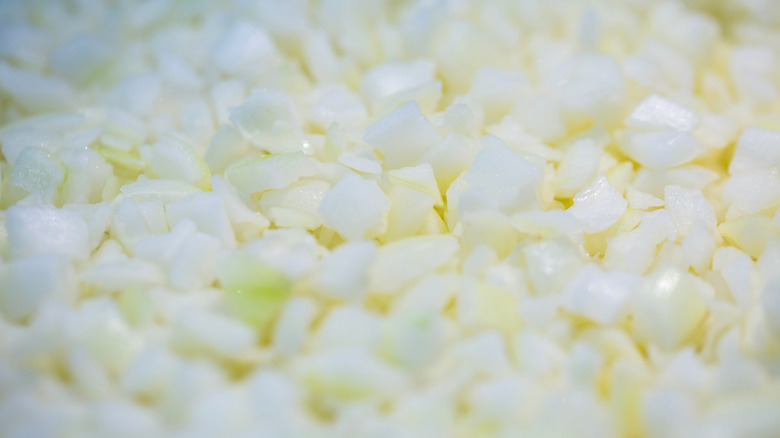
If you're making dinner at home, there's a high probability that you are going to have to chop an onion. This dreaded task can go a little quicker with a sharp chef's knife and the proper technique, but nearly every home cook has shed a tear or two over chopped onions. For those who feel like they cannot bring themselves to chop yet another onion — you might succumb to the siren call of chopped frozen onions. Sure, buying frozen chopped onions seems like a great way to save yourself the trouble of cutting yet another raw onion, but there are some drawbacks.
For starters, onions are well-known for their intense flavor, but a lot of that gets lost when frozen. Another drawback is that frozen onions lose their crunch, which makes using them in place of raw onions in recipes a no-go. Finally, the extra moisture in frozen onions means it's very hard to get them to caramelize anymore. Of course, like all the veggies on this list, there's a time and place to reach for the frozen option. Frozen onions do come in handy when you are making lots of soups, stews, stir-frys, or chili.
6. Cauliflower
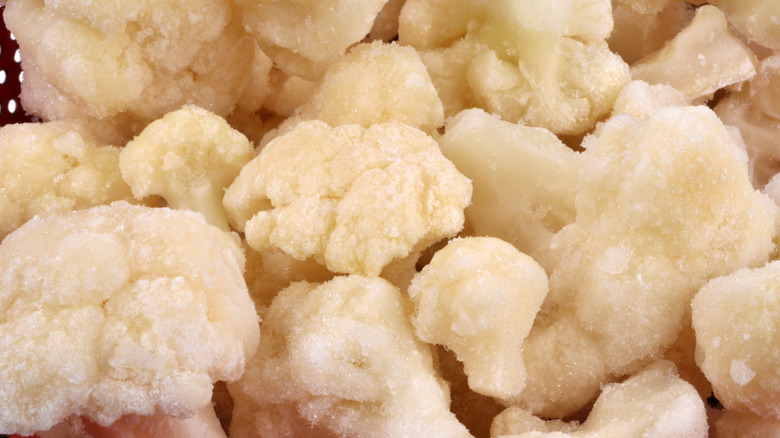
Since broccoli is such a great frozen vegetable option, you might assume that cauliflower is too – but that's not the case, according to one of our chefs. "It has a surprisingly delicate structure," says Jackie Newgent, which is easily damaged during freezing. That means that cauliflower loses its al dente bite or snap and becomes limp, soggy, and sort of rubbery after thawing, she adds.
While it is harder to get a crisp exterior on frozen cauliflower, it's not impossible. You just have to use the right technique. Newgent says that the best way to cook cauliflower from frozen is to toss it with extra-virgin olive oil and sea salt and roast in a very hot oven from its frozen state for quick caramelization. For extra flavor, make sure to use herbs and spices liberally. Frozen cauliflower can also be handy to have on hand for sauces (like this lightened-up cheese sauce) where maintaining the structure isn't important.
7. Eggplant
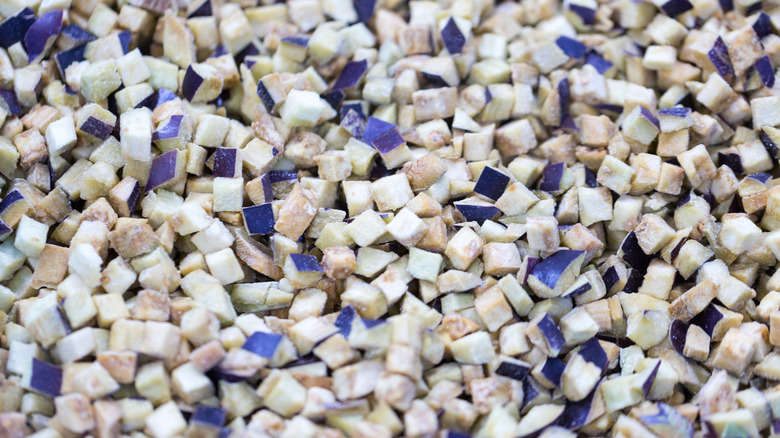
When you think of vegetables with a high water content, eggplant is likely not top of mind. However, this purple-hued veggie is 93% water — that's why many eggplant recipes call for that salting step to help draw out the extra moisture for crispier cooked eggplant. Of course, that water can also make frozen eggplant mushy which is why it's one that Sylvia Fountaine suggests you skip it. Most eggplant that is bound for the freezer is pre-cooked since the extra cooking step removes some of that moisture for firmer eggplant post-thaw.
The best strategy for avoiding soggy frozen eggplant is to pop the frozen pieces straight into the oven or your dish rather than thawing. This can be a handy hack for making eggplant parmesan, since you can use frozen eggplant slices straight from the freezer. Freezing eggplant in cubes or pureeing before freezing can also be handy for some recipes.
8. Zucchini
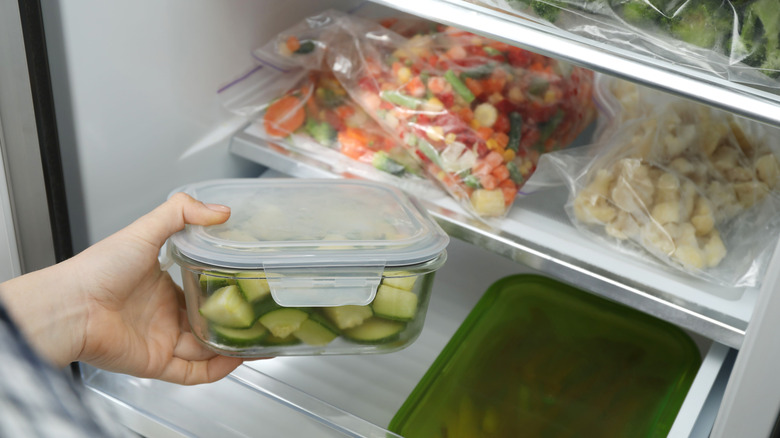
For those who have made zucchini bread before, you may already know that zucchini is a vegetable that has a high water content. That's why most recipes have you squeeze some of the excess water out before adding it to your batter. As previously mentioned, vegetables that have a high water content (95% water for zucchini) don't always freeze very well. All that water sets it up for structure changes when thawed. However, depending on the usage, some people love having frozen zucchini on hand.
The best approach for cooking frozen zucchini slices, if you've got them, is to skip the thawing step because that's when they tend to get mushy. For example, Sylvia Fountaine says to consider adding them to a blended soup where texture doesn't matter as much. In addition to soups, frozen zucchini lends itself well to smoothies (when frozen in chunks) and breads (when shredded) as well.