

9 Useless Gardening Products You Should Honestly Avoid Buying According To Experts
Gardening can be a year-round activity these days thanks to whimsical home gardens. No matter how convenient a year-round garden can be, there is a mad dash come spring as people attempt to cultivate their outdoor flora. Whether they're cultivating flowers, veggies, or even incredible, edible flowers, there is a whole swath of advice available online for those who wish to exercise their green thumb. You should be wary of those offering one-size-fits-all advice and those who are marketing tools that wind up never leaving your shed.
To help us navigate the murky waters of garden essentials, we reached out to Pam Arnold, the owner and operator of a 10-time Best of Rhode Island award-winning flower shop, Flowers by Bert & Peg. While Pam has first-hand knowledge from her years running the store, her husband, David Arnold, is a certifiable gardening expert. David has a degree in horticulture, spearheaded the greenhouse program for a New England-based flower distributor, and ran their greenhouse and live plants department for almost 40 years before he retired.
Pam's advice for the start of gardening season is, "It's better to spend a little bit of extra money at the beginning of the season than to have to keep replacing things because you went cheap to begin with." David's advice speaks to the simplicity of getting a garden started: "You don't need much more than a place to grow, and then a hoe, a rake, and a shovel."
1. Plastic tools
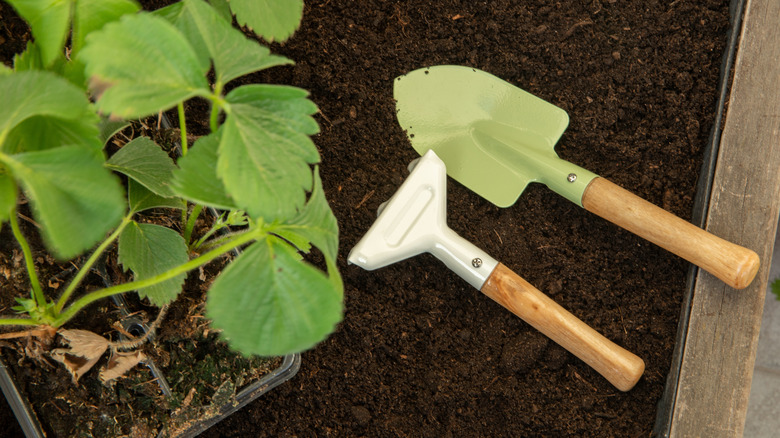
When grabbing the essential tools like rakes, shovels, and hoes, it can be very tempting to aim for the cheapest product. You could recycle items like a dishwashing detergent bottle for a customized watering bottle, for example, but when it comes to buying, the cheapest choices are usually made from plastic — from tool heads to bodies to handles. As durability is one of the most important qualities when it comes to your gardening products, Pam Arnold dismissed the idea of plastic hand tools immediately. Gardening can put stress on tools, whether the stress comes from rocky soil, rapidly changing temperatures, varying moisture levels, or exposure to the elements.
David Arnold clarified the point, noting, "It's got to be sturdy and durable, and something that's not going to break after five minutes of use." It's easy to imagine that grabbing disposable tools each year is the way to go, but a reliable and long-lasting tool only needs to be bought once. David recommended the brands Ames and Fiskars for reliable gardening equipment, as well as for any future pruning and maintenance of your garden.
2. Topsoil
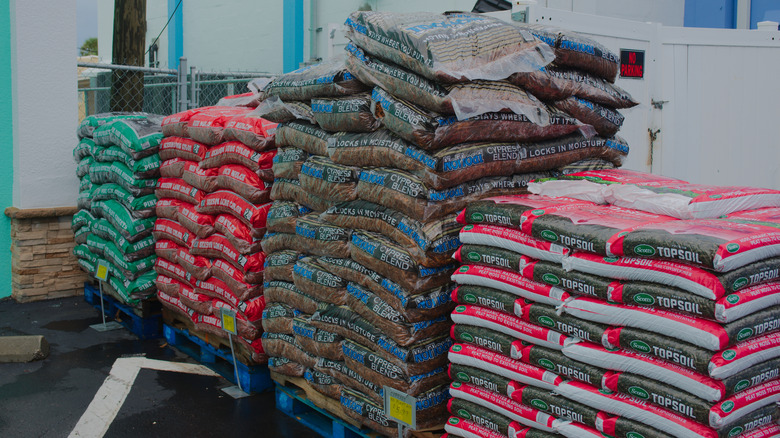
If you've found very little growing success, even after following some tips for picking the best spot for your garden, you may be tempted by the extra soils and mulches used for indoor plants. Hold off on over-purchasing, however. David Arnold explained that one of the biggest annual wastes of money he witnessed each year was people buying bags of topsoil. Unless you're potting plants, there's little reason to buy soil to go on top of what already exists. He stressed that with or without additional topsoil, gardening is "more than just sticking a plant in the ground and squirting some water on it. There is a certain amount of care [required]." A garden is an investment of time and attention — adding a bunch of expensive topsoil will not make your garden any less likely to fail due to inattention.
If you have rocky soil or limited yard space and need to use potted plants, Pam Arnold cautions, "Go with trusted names rather than a company you've never heard of before. Miracle-Gro does beautiful fertilizer. Buying soil at an inexpensive big box store like Job Lot or Walmart, usually there's some type of issue, like a bug egg in the soil."
3. Gardening stool with storage
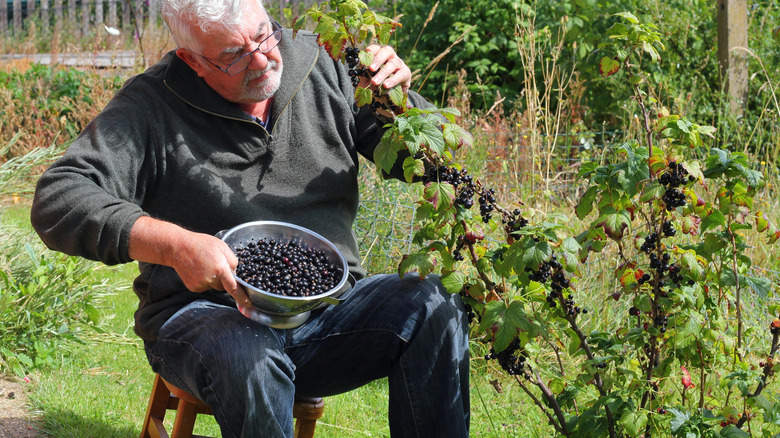
Gardening is labor-intensive. As you tend to your garden, you'll be kneeling, bending, squatting, sitting, pulling, and lifting, which can make it tempting to shop for something that alleviates some of the physical stress. Pam Arnold advises, "Well, you don't need a stool with the little storage thing underneath it that holds all your tools and then you sit down on it."
Even with your stool holding all the tools, you will still have to move around your garden. Pulling weeds and planting seeds is not made much easier by the presence of a stool, as you've added something you'll need to move from one place to the next. The benefits of sitting back on something that's not the ground are far outweighed by the deficits of the extra weight the stool will bring. If you're concerned about kneeling or sitting on the ground you could simply repurpose a yoga mat and if you need to carry around more than one tool at a time a simple tool belt is the easiest solution. Both are lightweight and far more mobility-friendly than a stool and storage combination.
4. Garden weasel cultivators
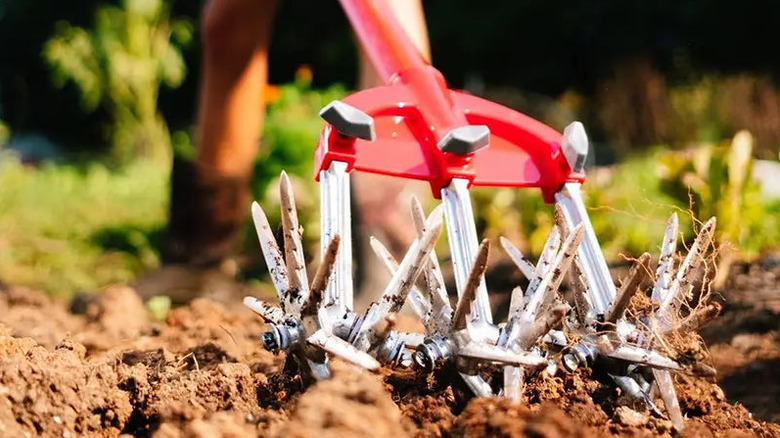
When we asked David Arnold about any tools he could think of that were unnecessary, he described a Garden Weasel Cultivator and Tiller, a long stick with a forked head that has rolling spiked wheels on the bottom. He explained, "You can do that all by hand. That's what I use the hoe for, or the rake."
Garden Weasel is a brand that offers various tools and equipment for the garden. While its hand tools and edgers seem appropriate for any garden, the cultivator selection is another story. A rake, a hoe, or a shovel can replicate every cultivator head the brand offers. Garden Weasel's cheapest cultivator is a $35 core aerator, a tool that makes holes in your garden or lawn, but you could achieve the same results in the same amount of time using just the tip of a shovel. The brand's most expensive cultivators, priced at $50 each, appear to be functionally identical to the cheapest.
5. Hand bulb planter
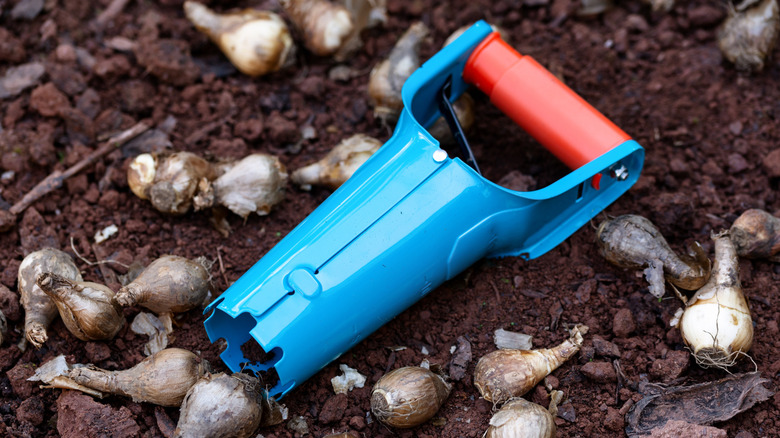
Hand bulb planters are advertised as convenient ways to plant anything that grows from a bulb accurately. Unless you're planting bulbous veggie scraps, it may seem tempting to reach for an item that claims to save you a bit of shoveling or a bit of hoeing. Bulbs are different from seeds and need to be buried a little deeper in the ground. Because of that, you might find yourself reaching for one of these tools to assist you.
Putting aside the issue of the breakable plastic that the hand bulb planters are made out of, this gadget falls into a category of hyper-specialized tools whose effects can be easily replicated by basic gardening supplies. Pam Arnold echoed her husband's point about the basic tools you need, though she added that a spade is useful as well. "You don't need to go buy a million different tools because [they're] new," Pam pointed out. Before buying any gadgets or specialized items, you should stop and ask yourself if the function can be fulfilled by the tools you already have at home; a hand bulb planter is essentially just two spades with a hinge.
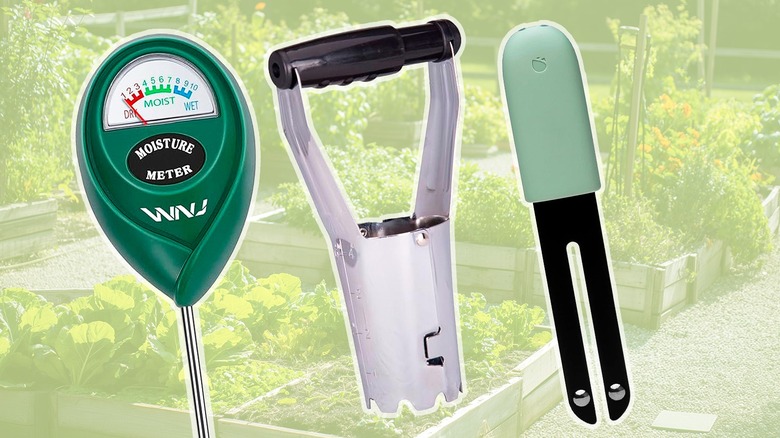
6. Soil moisture monitor
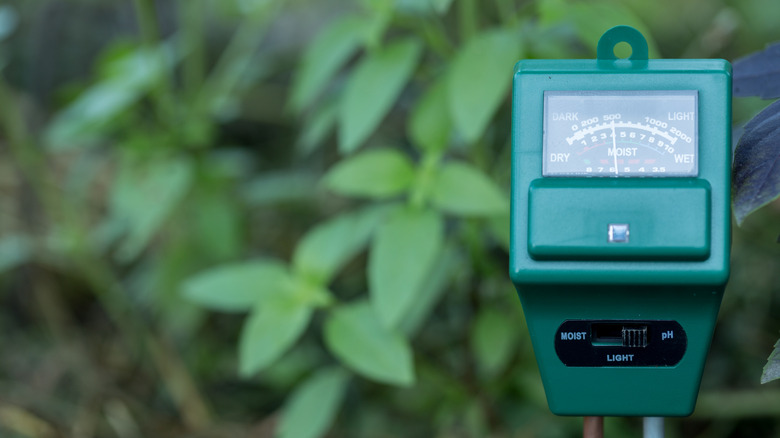
While discussing unnecessary tools, Pam Arnold was adamant that there's no reason to buy a moisture monitor for an outdoor garden. She advised, "Stick your finger in [the soil]. If it's dry, then add water until it's damp. If you're gardening outside instead of in [...] the house, Mother Nature usually knows best. So she'll know when to water your plants. Sometimes, if we're in a drought, you have to help her along a little bit."
A moisture monitor can be tempting if you don't know how often to water your garden, but at the end of the day, it's ultimately unnecessary. Even if you're doing indoor gardening, simply give the soil a gentle poke to check if it needs more water. Knowing what kind of greenery you're growing and learning how to read your plants will also help. A plant that is wilting and yellow with dry soil needs more water, but if it has that appearance and the soil is damp, it is being overwatered. Like all living things, plants require a balance of care.
7. Weasel Weedpopper
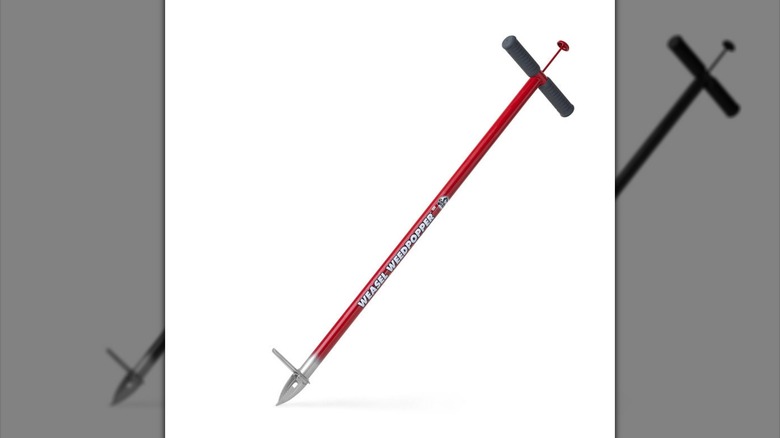
Good news, weed haters. Garden Weasel has you covered. Who wouldn't want to shell out $25 to $50 for a tool specifically designed to snatch those weeds right out of the ground? Well, anyone with a spade, really. When discussing unnecessary tools, Pam Arnold specifically mentioned this item from the Garden Weasel line. She echoed her earlier point about not needing to buy something just because it's new and improved when people have been doing the job just fine for hundreds of years with ordinary gardening tools.
Weeding can be one of the more labor-intensive parts of gardening, and it's sensible to make one's life a little easier by buying a specific tool to help with the task. However, a Weasel Weedpopper is essentially a long stick with tines at the end, designed to grab weeds. You could do the same job with a litter-collecting pole, or you can utilize the same spade and rake you've been using in your garden all along. If you're averse to getting your hands and knees dirty, you should look into some natural weed killers.
8. Tin spades and shovels
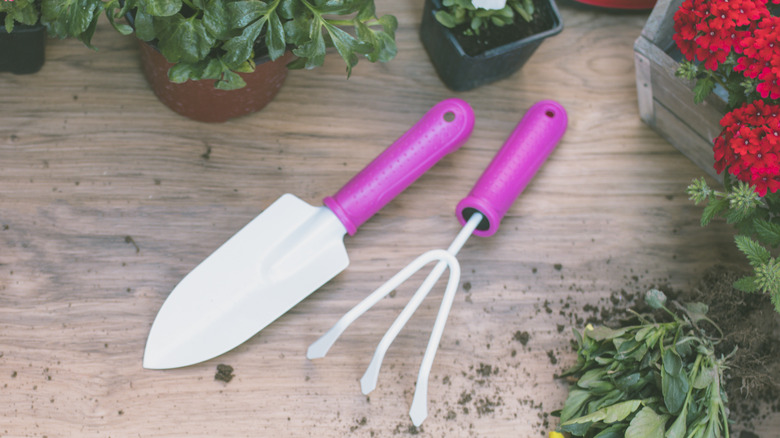
We all want to avoid weak tools. They break easily, scratch, and lack durability, making them unable to handle the various pressures of gardening life. Both our experts agreed that you should look for metal or fiberglass tool heads; David Arnold feels that wooden handles are the best. Pam Arnold cautions that for metal tools, "It would depend on the type of metal because obviously something that's tin isn't going to be as durable as something that's steel." She agrees with David that wood handles are the superior choice.
Tin is a relatively cheap metal that is useful in a variety of ways. However, for gardening, it simply isn't up to snuff — especially when it comes to any of the digging implements. Tin is suitable for a rake and possibly a hoe, but it's not recommended for spades and shovels. Unless tin is mixed with another kind of metal, it will be soft and easily damaged, so digging into the ground will put it under a lot of pressure and render it useless after the first few minutes. There is also the concern of toxic metal leaching. While tin is considered generally safe for humans, it can be hazardous for animals, so it's best to keep your tin above the ground.
9. Bluetooth plant monitors
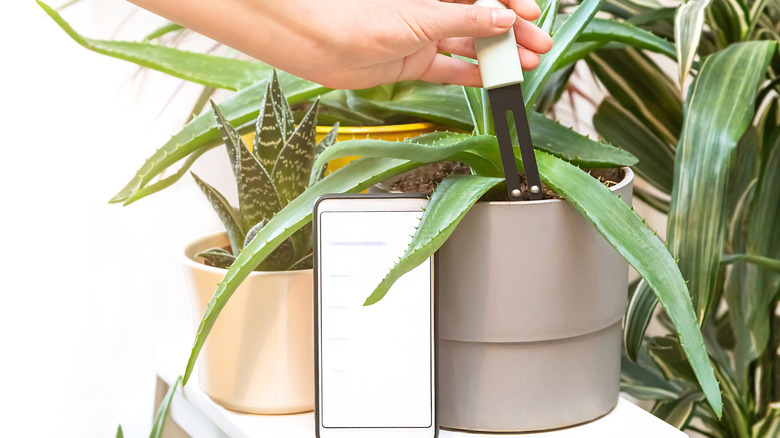
It's recommended that you get your soil tested about every three to six years, or whenever you're having a difficult time growing something. Rather than doing an at-home test with a Bluetooth monitor, soil testing is best left to the experts. Run by the U.S. Department of Agriculture, the Cooperative Extension Service works with local universities to provide gardening-specific tools and services across the nation. David Arnold strongly recommends, "If you want to get a soil test, you take it to the Extension."
David notes that your soil doesn't change overnight, so once you've used a Bluetooth monitor, it might serve no purpose for another few years — and that's if the reading it captures is correct (most can't guarantee 100% accuracy). Sending a sample to your local Extension may take a little bit more time, but you will receive the benefit of expertise as well as advice on how to improve your soil going forward. Whether you're good to go or need to cover your lawn in coffee grounds, you'll have the best information available.