

The Complete Guide To Cooking With Quinoa
We may receive a commission on purchases made from links.
Chances are, you know quinoa is good for you. If you haven't already cooked with it, you've probably at least side-eyed it at the grocery store. If you have, you might be wondering how to make it taste a little more interesting, use it in more varied fashion, or convince your family to eat it ... and you wouldn't be alone. The good news? Quinoa is incredibly versatile: it's great in trail mix, an excellent addition to veggie burgers, and a foundational ingredient in the healthiest protein patties you'll ever eat.
"Technically, it's a seed, but it's used like a whole grain, and often confused for one," says Marissa Stevens, recipe developer and founder of Pinch and Swirl. "The Incas cultivated it in the Andes, and it still grows well at high elevations in South America." Indeed, adds Gwen Wolken, also a recipe creator and founder of A Sweet Thyme, it's been in use for 5,000 years, and the Inca people referred to it as "mother of all grains." While, as stated, it's not a grain, it cooks and tastes a lot like rice or couscous, Wolken says, only with more protein.
If you want to incorporate this healthy superfood into your weekly routine, though, there are a few things you should know about it. Not just what it is and what it tastes like, but also the best ways to cook, eat, and store it. Ready to know everything there is to know about fluffy, nutty, tender, delicious, protein-rich quinoa? Let's dig in.
What is quinoa?
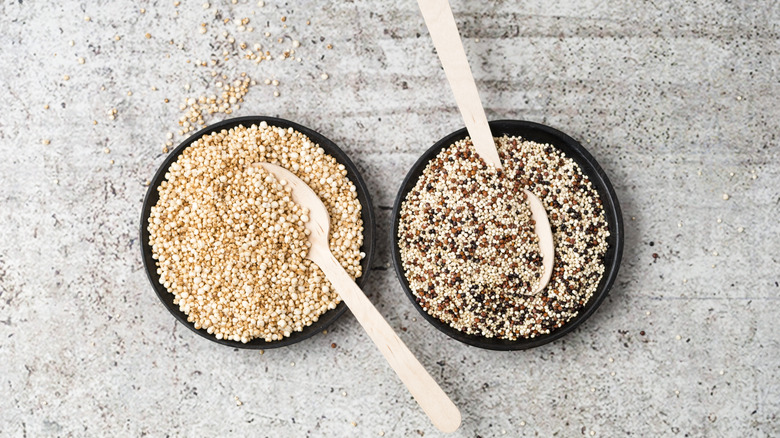
"Quinoa (Chenopodium quinoa) is a seed that behaves like a grain," Marissa Stevens says. It's technically classed as a pseudocereal. "It's part of the goosefoot family, related to things like beets, spinach, and yes, tumbleweeds." Part of the appeal, she says, is that it feels old and new at the same time. Plus, it's really good for you. "It's a plant-based staple that happens to be packed with protein, fiber, and versatility," Stevens says. It also contains iron and magnesium, as well as all nine essential amino acids, because it is a complete protein.
This helps explain why people have been eating it for thousands of years," says Nicole Hunn, recipe expert and chef at Gluten Free on a Shoestring. "It was a staple food for the Inca civilization long before it ever made its way into modern kitchens. Today it's popular all over the world, but it's always been valued as a nourishing, dependable food." It's also naturally gluten-free. "That makes it a really smart option for anyone who wants more plant-based protein in their diet without giving up texture or flavor," she says.
The flavor and texture of quinoa
Again, if you've never tried quinoa, you're probably a bit suspicious. It is a hippie health food after all, and hippies aren't known for their palates (says the person raised by a crunchy Berkeley-educated mom who thought carob was an acceptable food to feed one's children). If you've only tried it plain, you're likely not getting the most out of its exceptional versatility, which pairs well with both sweet and savory flavors.
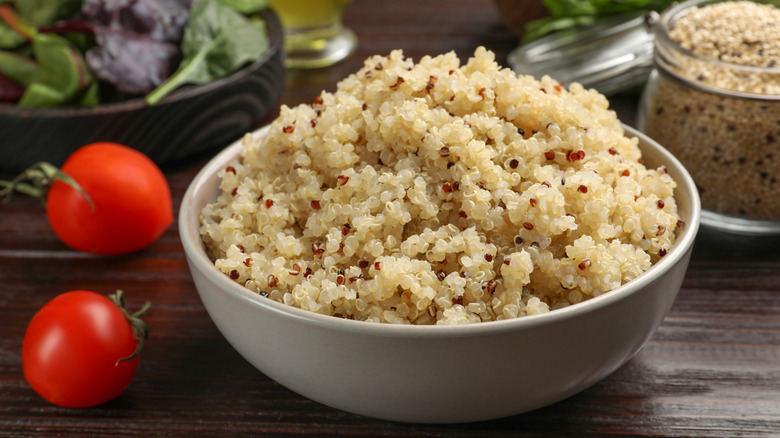
That said, quinoa has a distinct taste all its own. "Quinoa is delightfully mild and a bit nutty, with the texture depending on the variety," says Joanne Gallagher, recipe creator and co-founder of Inspired Taste. Marissa Stevens describes it as grassy, fluffy, and chewy all at once. The seeds hold their shape when cooked, much like rice does, the only difference being that the seeds release a little white curl with cooking. This is totally normal and edible, so don't worry about it.
Common varieties of quinoa
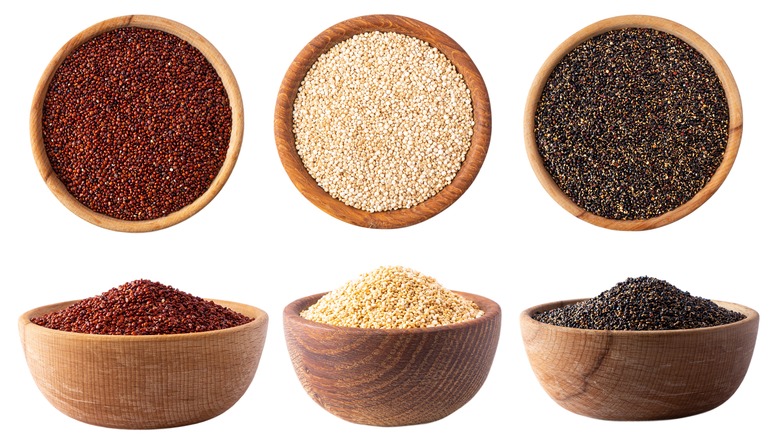
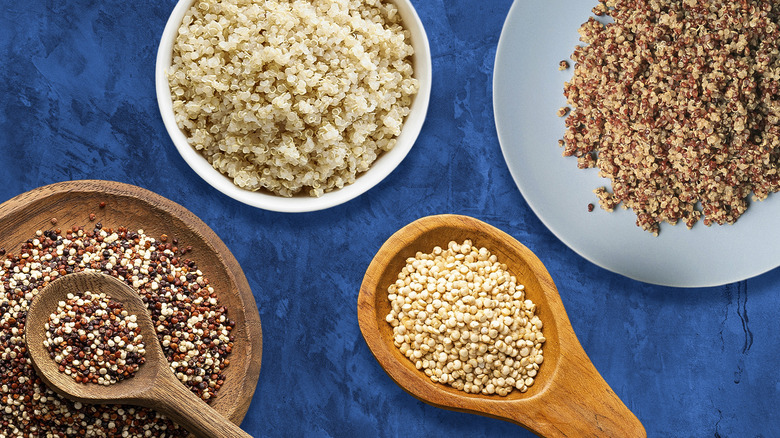
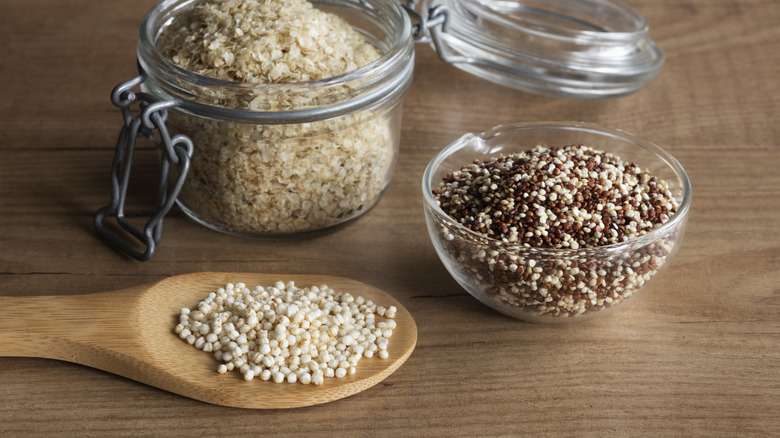
There are three basic varieties of quinoa: white, red, and black. There's also a blend of all three, such as the Royal Organic Tri-Color Quinoa. (You can also buy each type separately, like Terrasoul Superfoods Organic White Quinoa or Royal Organic Black Quinoa.) Each type brings subtle differences in flavor and texture.
"White is the softest and fluffs up the most; it's the easiest to love with a relatively neutral flavor and the fact that it's the quickest to cook," Marissa Stevens says. "Red has a heartier texture and slightly earthier flavor, and black is the most robust and chewy." Black also has earthy flavors to it and is usually considered the strongest flavor. Stevens keeps a mix of quinoa types on hand, because each works better in different situations: "I use white for quick meals and breakfast bowls, red or black when I want more texture or visual contrast. The tricolor blend is great when I want a little variety in the same dish."
More specifically, Nicole Hunn says, you should use white quinoa when you need the mildest and fluffiest result, red when you want something that really holds its shape, and black when you want dramatic color, texture, and crunch. "I often use white for everyday cooking and red or black when I want more texture in salads or bowls," she shares. Whichever color you choose, though, you can count on quinoa for a few reliable characteristics: soaking up dressings, pairing well with a variety of flavors, and mingling well with herbs, Joanne Gallagher says.
Available forms of quinoa
Aside from colors, there are a few other ways to distinguish different types of quinoa. The main one is rinsed — also called pre-rinsed or pre-washed — versus unrinsed. "Quinoa naturally has a coating called saponin that can make it taste bitter," Hunn says. "When I'm shopping for quinoa, I look for brands that pre-rinse it." That removes the coating, which will leave your quinoa tasting nutty, earthy, and grassy ... soapy flavors need not apply.
The good news, Joanne Gallagher says, is that most brands these days are pre-rinsed, so you shouldn't need to look that hard. However, if you do notice bitterness in the finished result, it doesn't hurt to rinse your quinoa. Personally, I've been burned one too many times, so now I always pour my quinoa into a strainer and give it a good going over with cold water. (If you don't like wasting water, place a large bowl underneath the sieve and use it to water your garden plants.) A Bellemain Stainless Steel Colander or Kafoor Large Fine Mesh Strainer will both do the trick.
You can also find quinoa already cooked and packaged, either in the refrigerated or frozen sections of the store. However, it's so easy to make — and these products can be so unsatisfying — that it's better to stick with the dry seeds and cook them yourself.
How to choose the best product at the store or online
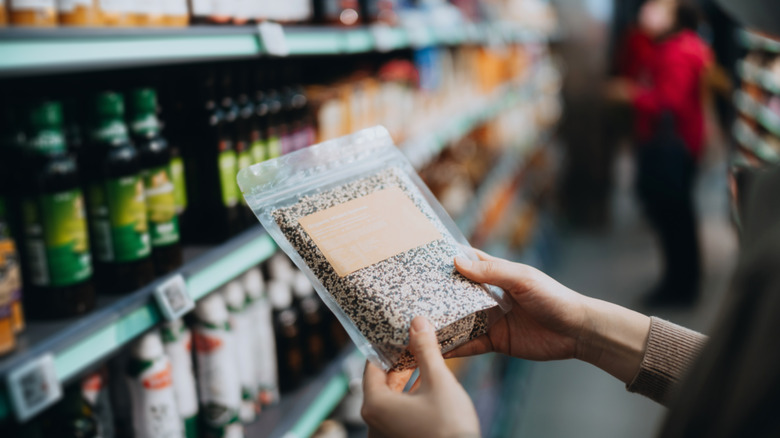
Given all the choices available to you, what's the best approach to buying quinoa at the store? The experts offer a few pieces of advice. First, check for a label that says it's pre-rinsed. If you can't find one, it's still fine to buy, but definitely rinse it at home.
Second, make sure the packaging is sealed tightly. Quinoa, like other grains, can go bad if it's not stored properly. Signs that quinoa is no longer good include a rancid smell, stickiness, clumping, or discoloration. (Also bugs or weevils, but one assumes that needs no explanation.) Check for all of these if you're buying it in bulk. "Make sure it smells fresh and clean, not musty," Gwen Wolken says. You should also look at the size of the grain. "Bigger, more uniform seeds usually mean fluffier, better-cooked results," Joanne Gallagher says. "Trust your senses and use up quinoa within a year for the best flavor."
You should also consider buying organic or fair-trade quinoa. "It helps support sustainable farming practices in the regions where it's grown," Nicole Hunn says.
The best ways to cook quinoa
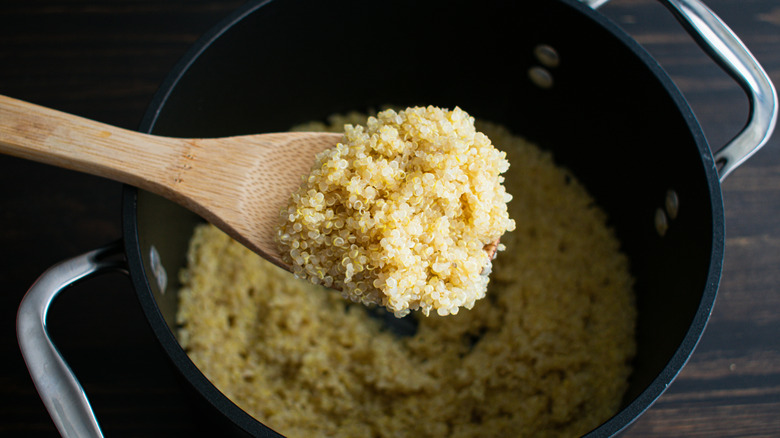
You can cook quinoa in the rice cooker and indeed use it as a rice substitute. As such, it's a perfect ingredient for meal prepping. "Quinoa is forgiving, but how you cook it definitely affects the final texture and flavor," Marissa Stevens says. If you want to make a basic pot of quinoa, you only need a liquid and the quinoa itself. "The typical ratio is one part quinoa to two parts liquid, but I often slightly scale back the liquid to a scant two parts (closer to 1¾) to keep the texture light and avoid any sogginess," she says. She typically uses water, but she concedes that she loves the flavor of quinoa. If you'd rather cover it up, cook it in broth with lots of seasonings.
"If I want an extra flavor boost, I'll toast the quinoa first," she adds. "If it's been pre-rinsed and dried, I'll toast it dry in a hot pan. If it's freshly rinsed and still damp, I just add it straight to a large skillet and stir with a whisk as it steams and starts to pop. As the moisture cooks off, the grains turn golden and take on a warm, nutty aroma." She then cooks it to the recipe's specifications, where it will perform as otherwise, but with an extra bold and nutty flavor. Good pans for toasting include cast-iron basics, such as either the Lodge 12-Inch Pre-Seasoned Cast Iron Skillet or Lodge 10.25-Inch Pre-Seasoned Cast Iron Frying Pan. Since quinoa keeps well, she likes to make a big batch and store it in the refrigerator for meals all week long.
Savory uses for quinoa
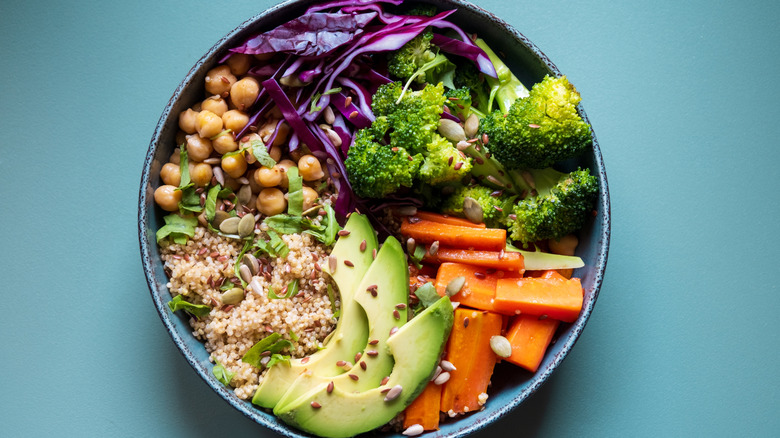
Quinoa is the perfect grain replacement for a variety of meals, from bowls to salads to burgers. "The easiest way to use quinoa is in a salad," Gwen Wolken says. Her favorites include an arugula quinoa salad with roasted zucchini, a beet and quinoa salad with goat cheese, and a quinoa and lemon vinaigrette salad. It's also a good accompaniment to other proteins, she says. "I have toasted quinoa and added it to the top of fish to give it some crunch."
This pseudocereal is also excellent as a base. "I use quinoa as the base for bowls more than anything, often with roasted vegetables and tahini dressing, other times with beans, greens, and salsa," Marissa Stevens says. She also loves to swap out traditional grains in favor of quinoa, using it as a replacement for bulgar in tabbouleh or forming it into little fried patties. Nicole Hunn loves quinoa as an ingredient in veggie burgers as well.
And if you've got leftover quinoa to use up, you can put it to any number of uses. "Try using leftover cooked quinoa to thicken veggie soups, stuff peppers, or toss into a chilled salad for your next picnic," Joanne Gallagher says.
Sweet uses for quinoa
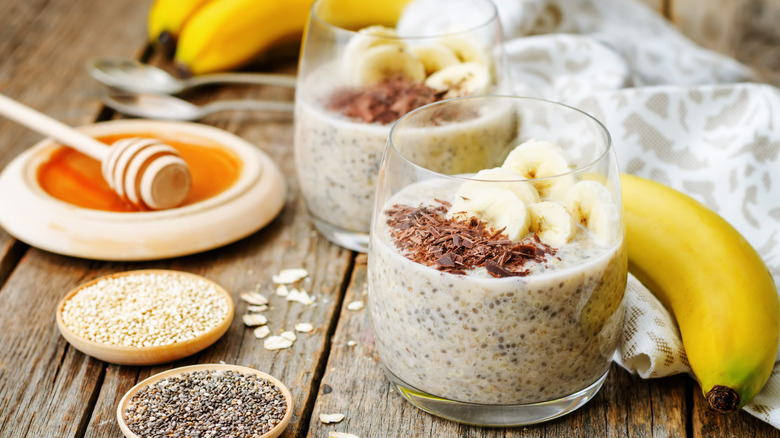
Quinoa is a great dessert ingredient, a superfood that pairs well with chocolate as well as other sweet flavors. "I love quinoa because it's so versatile, and I think people don't take advantage of that enough," Nicole Hunn says. "Most of the time it's used as a side dish or in salads, but it can go way beyond that." Hunn loves it best in her gluten-free quinoa chocolate cake. "It is one of my favorite ways to show how it can add structure and moisture to a dessert without anyone realizing it's there."
Gwen Wolken likes it in place of rice in rice pudding, and also toasts it to top chocolate bark for some extra crunch. That's hardly the extent of its potential, however. Online sources use it in everything from no-bake cookies to protein balls to pudding and parfait.
Wolken also loves it in porridge for breakfast. "Add warm milk, cinnamon, a touch of maple syrup, and berries," she instructs. Marissa Stevens has her own take, adding chopped nuts and honey. In her opinion, the result is even better than oatmeal.
Storing quinoa to last
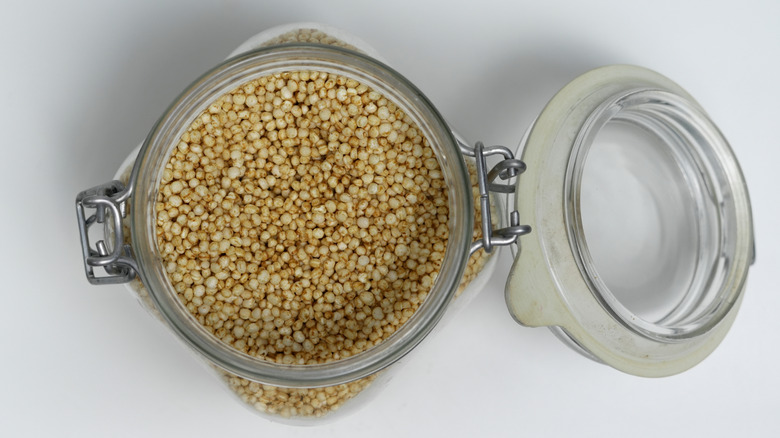
If you want quinoa to last, you've got to store it right. It's quite shelf-stable before cooking, and will last for months or years on the shelf, depending on the product. It's sometimes hard to tell if quinoa is spoiled, but you can look for signs such as mold or clumping for clues.
To keep it good as long as possible on the shelf, there are a few rules to follow. "Keep dry quinoa in an airtight container in a cool, dark pantry," Gwen Wolken says. According to some experts, it should last up to a year, while others suggest it could last two years. Make sure to keep it away from moisture as well. "Just like with other pantry staples, smell before using; it should always smell fresh and nutty, never musty or oily," Joanne Gallagher says. If you buy it in bulk, Nicole Hunn adds, make sure to transfer it to sealed jars or bins rather than keeping it in the plastic bag, which helps keep it fresh and keeps pests away from it. Amazon Basics Tritan Plastic Food Storage Containers and Rubbermaid Brilliance Glass Food Storage Containers are both highly reviewed options.
Once cooked, quinoa should go right into the refrigerator. "Quinoa will last for up to five days in the fridge, which makes it easy to cook extra and use it in different meals throughout the week," Hunn says. Marissa Stevens makes sure to cool it completely before putting it in the fridge. "You can also freeze it in portions for up to three months," she adds.
Nutritional information and health benefits
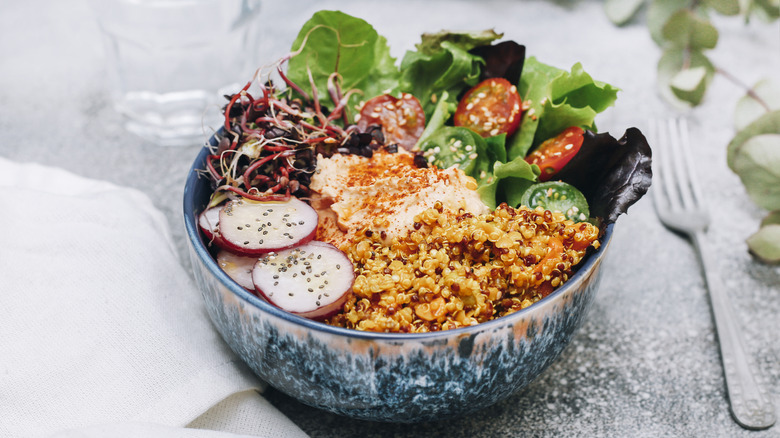
Being a seed, quinoa is naturally high in many vitamins and nutrients, but it brings tons of other benefits to the table as well. "Quinoa is naturally gluten-free, and every seed is packed with protein, fiber, and minerals like magnesium and iron, making it a nutritious powerhouse for both plant-based and omnivore diets," Joanne Gallagher says. This range of benefits is not only good for you, it helps to make you feel full and satisfied after a meal, she says.
That it's a complete protein — i.e., it contains every amino acid that our bodies can't make by themselves and that we have to get via our food — is also a fact worth another look-see. "That's rare in the plant world, which is why you typically have to combine different plants in a single meal to cover all the amino acids," Marissa Stevens explains. "No mystery why it's a sweetheart of plant-based eating!"
As if that's not enough, quinoa has shown its mettle in a variety of health studies. It provides a number of B vitamins that can bolster your metabolism and keep your nervous system happy. Plus, it contains lots of fiber, which is associated with reduced chances of obesity, diabetes, and heart disease. It can also help fight heart disease and cancer.