

11 Unique Pumpkin Dishes From Around The World
When fall rolls around, pumpkin suddenly pops up everywhere. You can find it baked into pies and bread and roasted as a cozy side dish. It even appears in beverages like seasonal pumpkin beers and pumpkin spice lattes. Native to the Americas, pumpkins are some of the oldest cultivated plants. Evidence shows that indigenous people in Mexico were likely eating pumpkins, or at least their seeds, as far back as 10,000 B.C. When Europeans arrived in the Americas and became acquainted with the hardy fruit, they transported it across the globe.
Travel around the world today, and you'll find numerous pumpkin varieties that are great for cooking with and many international takes on pumpkin dishes that go beyond pies and seasonal drinks. In some spots, pumpkin or squash is simmered with spices until tender and infused with bold flavors. In other places, it's simply steamed with a few basic ingredients to really let the pumpkin flavor shine. It can also be used as a vessel to hold thick broths or stews. Pumpkin can be used in a wide range of sweet and savory recipes, including spicy curries, soups, and custards. If you're curious to see just how versatile this tasty orange fruit can be, here are 11 unique pumpkin dishes from around the world that are worth trying.
1. Camarão na moranga (Brazil)
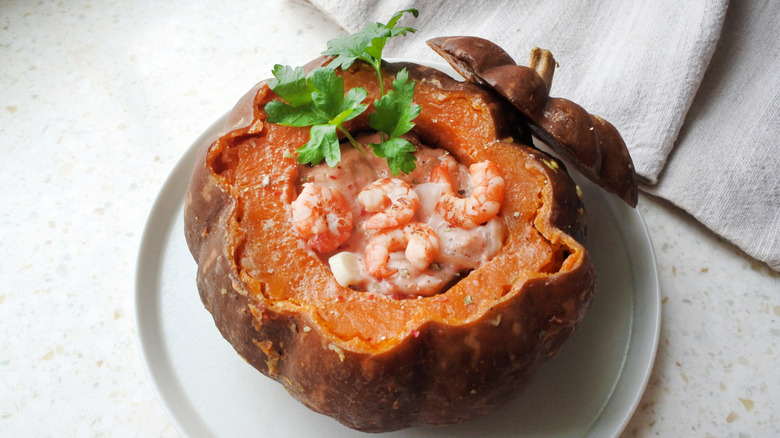
Creamy, comforting, and visually impressive, camarão na moranga is a Brazilian dish that features a roasted pumpkin filled with shrimp stew. It's often served for special occasions like Christmas, but it can be eaten at any time of year. The shrimp is typically stewed with ingredients like tomatoes, onions, garlic, fish stock, and cream or coconut milk. The slight sweetness of the shrimp and the pumpkin flesh blend beautifully with the savory and creamy elements.
Camarão na moranga is unique in itself, and it also comes with a fun backstory. Legend has it that Japanese prisoners at a penitentiary on the north coast of São Paulo planted pumpkins on the prison grounds so they could use the seeds as medicine. Locals took notice and started purchasing the pumpkins. One day, while a trader was transporting pumpkins, one escaped and rolled into the sea. The story goes that it re-emerged a few days later in front of a restaurant, and it was full of shrimp, which inspired the chef to create the dish.
Today, camarão na moranga is usually prepared with a pumpkin called moranga in Brazil. It's a round, pale-orange or pink pumpkin that sometimes has green stripes, and it has sweet, tender flesh. Kabocha, Cinderella pumpkins, and sugar pumpkins also work well. The pumpkin is usually hollowed out and roasted, then filled with the stew. It makes for a great centerpiece for the table, although you can also make individual portions using smaller squash.
2. Tortelli di zucca (Italy)
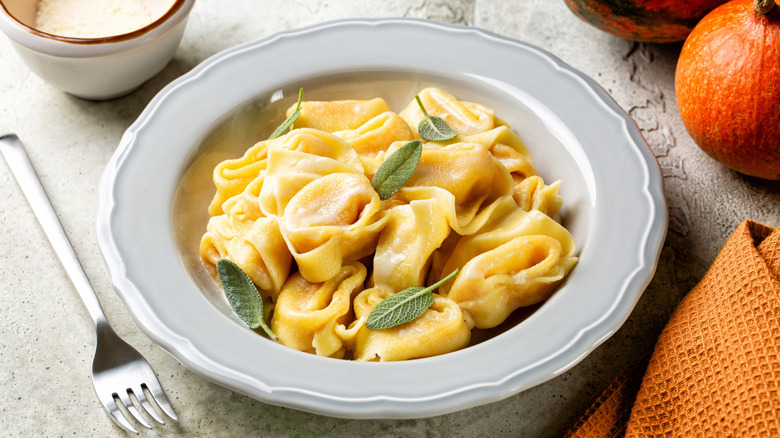
Pumpkins first arrived in Italy during the Renaissance period, and they became particularly popular in Northern Italy, where the fertile soil provided the perfect growing conditions. Chefs for the wealthy and peasants alike began to incorporate pumpkin into a wide variety of dishes, including pasta. One dish that's particularly popular in the Lombardy region is tortelli di zucca. It has its roots in the city of Mantova, and it features little parcels of pasta stuffed with seasoned pumpkin flesh.
There are several variations of tortelli di zucca, but most feature zucca mantovana, a pale greyish-green pumpkin that has thick flesh. The pumpkin flesh is typically roasted and puréed with ingredients like sautéed garlic, nutmeg, and hard Italian cheese like Grana Padano or Parmesan. The filling is wrapped in fresh egg pasta and formed into hat-like shapes or squares called tortelli, which are similar to ravioli.
One classic version of tortelli di zucca includes crushed amaretti biscuits and an apple preserve called mostarda in the pumpkin filling. Other versions include ricotta for extra creaminess. Many will tell you that the best sauce for pumpkin ravioli (aka tortelli) is a brown butter sage sauce because it adds savory notes to counterbalance the sweetness of the filling. However, you can also add acidity and extra sweetness with a drizzle of balsamic vinegar reduction, or make the dish extra hearty with a meaty ragu sauce.
3. Calabaza en tacha (Mexico)
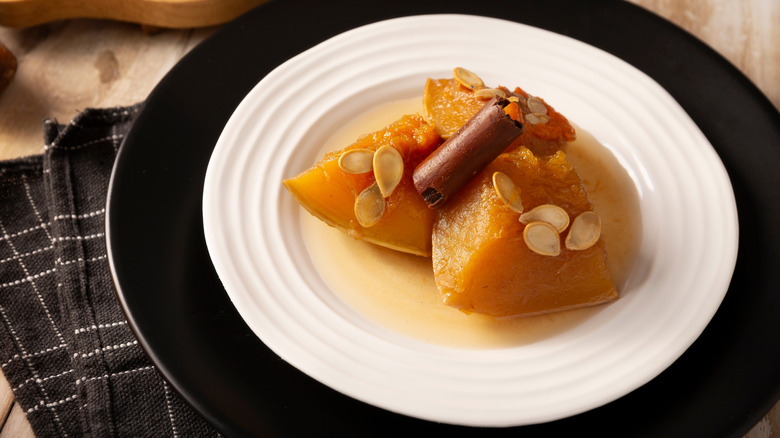
If you happen to be in Mexico around Día de Muertos (Day of the Dead), you may come across calabaza en tacha. The sweet candied pumpkin is often eaten during the festivities and left on family altars. It can also be a breakfast dish, an afternoon snack, or a dessert. It's relatively easy to make with just a few ingredients, and offers a mix of textures and flavors with its soft braised pumpkin flesh and sugary cinnamon-infused glaze.
Traditionally, calabaza en tacha was made by cooking pumpkin in large copper pots called tachos, hence its name. The pots were first used to boil down cane sugar juice into piloncillo, which is raw cane sugar. The "calabaza" (pumpkin) was added to the leftover residue and cooked until soft and coated in the sweet syrup. Today, calabaza en tacha is among several classic Mexican desserts that everyone should try at least once.
The type of pumpkin commonly used for calabaza en tacha is the calabaza de Castilla. Also called Musquee de Provence or Fairytale squash, it has a hard rind and meaty, orange flesh. The hard rind is key because it holds up to the braising process. The pumpkin is often cut into pieces and simmered with water, piloncillo, and cinnamon sticks. Some people also add orange juice or guava. Once tender, the slices are served with the syrup and sometimes a splash of milk.
4. Kaddu ki sabzi (India)
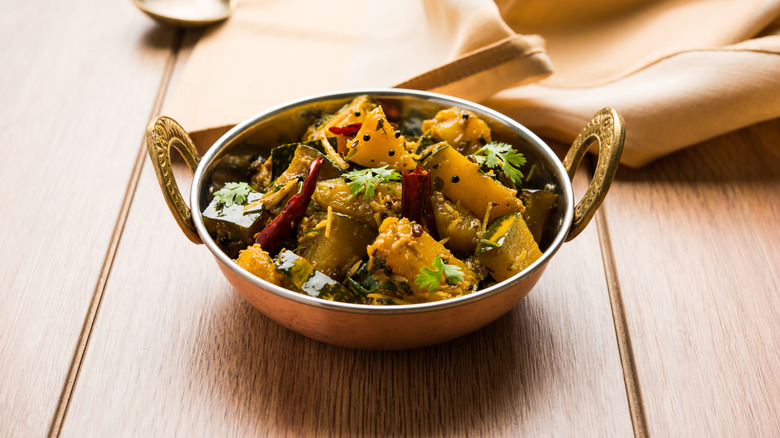
In many parts of Northern India, pumpkin is turned into kaddu ki sabzi, a spiced curry that's popular during Hindu festivals and fasting days because it's both satisfying and vegetarian. Kaddu means "pumpkin" and sabzi means "curry," and styles vary throughout the region. At its core, though, the dish usually consists of peeled, cubed pumpkin sautéed with key spices used in Indian cuisine like cumin, turmeric, chili powder, and garam masala. Other additions can include onions, garlic, ginger, and tomatoes.
Some recipes for kaddu ki sabzi suggest making a dry curry by cooking the pumpkin and spices in oil over low heat until the pumpkin becomes fragrant and tender, but not mushy. The result is a spicy vegetarian curry that's rich and hearty. Others call for sweet and sour ingredients like mango powder and jaggery (an unrefined sugar made from palm sap or cane sugar). No matter the variation, it's usually enjoyed with poori, chapati, or rice to soak up the spices.
The great thing about kaddu ki sabzi is that there's no one definitive recipe, so you can have fun experimenting with different ingredients. You try different types of pumpkin, like kabocha, or various types of squash. You can amp up the heat with fresh or dried chiles or temper the spices with sweet chunks of fresh mango. You can also garnish the dish with fresh herbs like cilantro.
5. Locro de zapallo (Peru)
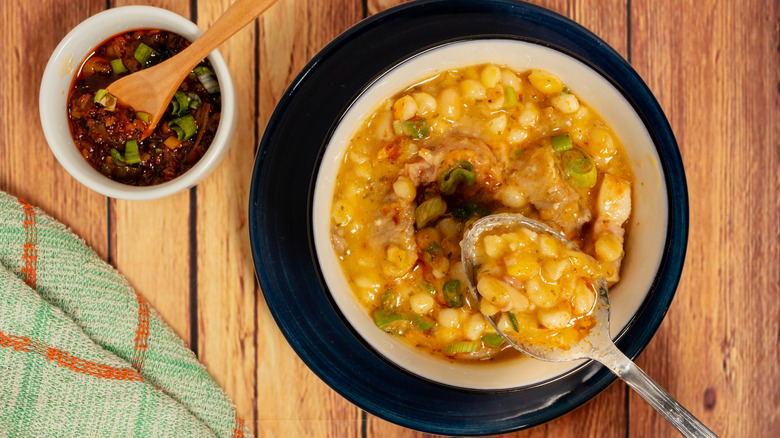
Many South American countries make versions of locro, which is essentially a stew. In Peru, locro de zapallo is a local favorite thanks to its hearty mix of pumpkin, squash, and local vegetables and herbs. It dates back to pre-Hispanic times, but it's been adapted over the centuries to include some ingredients that were introduced by the Spanish. That being said, many will tell you that the dish still offers a true taste of the Andes.
Locro de zapallo is typically made with zapallo or calabaza squash, which are similar to butternut squash. The squash is peeled, cubed, and cooked with onions, garlic, potatoes, corn kernels, peas, and broad beans. It gets its distinctive Peruvian flavors from ají amarillo (spicy yellow chiles) and a herb called huacatay that's also known as black mint. Many people also add milk to thicken the stew and top it with cubes of mild cheese like queso fresco.
Although locro de zapallo is traditionally vegetarian, it's still a hearty and filling stew thanks to the mix of starches, beans, and cheese, which add plenty of protein. It's commonly served with rice on the side and often finished with a fried egg on top for extra richness. If you want to make it even more substantial, you can take notes from other styles of locro in the region and add seafood like shrimp, or meats like lamb, chicken, or pork.
6. Sang khya lapov (Cambodia)
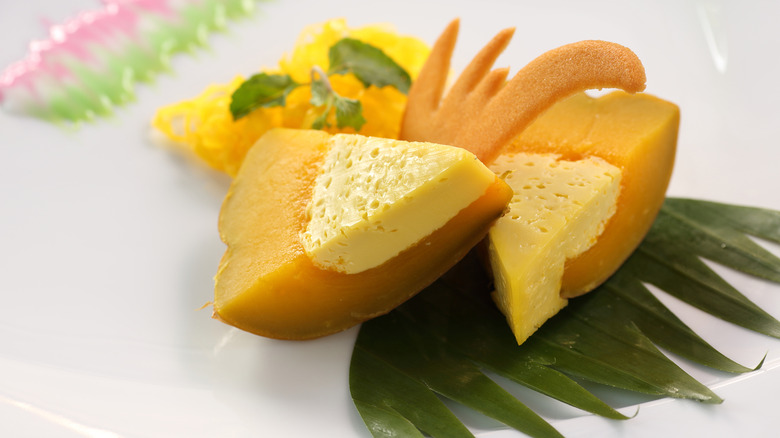
When it comes to Southeast Asian cuisine, countries like Thailand and Vietnam often get a lot of hype, but what many people don't know is that neighboring Cambodia has an equally rich and diverse food scene. Among the Cambodian dishes that everyone should try is a sweet and creamy pumpkin dessert called sang khya lapov. The dish is unique in that the pumpkin doubles as both the cooking vessel and the serving dish, giving the dessert a striking appearance.
Sang khya lapov looks elaborate, but it's not actually that difficult to make. It starts with a simple custard made from sugar, egg yolks, coconut milk, and salt. Everything gets mixed together and strained to make it extra smooth, then it's poured into a hollowed-out pumpkin with all the seeds and stringy bits removed. As the pumpkin steams, the flesh softens and infuses flavor into the custard, which firms up to a fluffy consistency.
What also makes this custard interesting is that it's served by cutting slices of the pumpkin like you would a cake. The slices are served in the skin, which makes it easy to scoop out the custard along with pieces of the sweet pumpkin flesh. The beautiful presentation makes it a favorite for holidays and festivals, and a hot seller at restaurants and cafes. It's also adaptable, as you can opt for a large pumpkin to feed a crowd or smaller pumpkins or squash for individual servings.
7. Miyan taushe (Nigeria)
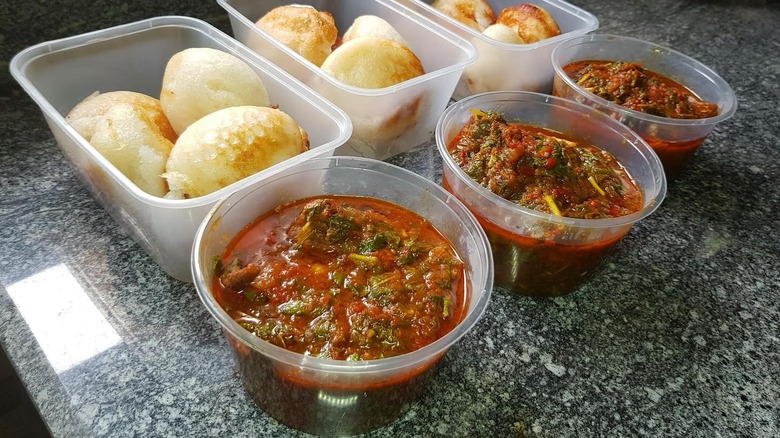
Pumpkin shows up in Nigerian cooking too, most notably in miyan taushe, a rich and hearty stew that originated with the Hausa people in the north of the country. It goes big on flavors and textures with an array of ingredients like meat, groundnuts, leafy green vegetables, and spices. It can be thick and hearty like a stick-to-your-ribs stew or thin like a soup, and the ingredients can vary slightly depending on who's cooking it.
A typical recipe for miyan taushe starts by braising goat meat (although beef and mutton can also be used) with onions and garlic, then adding peeled and cubed pumpkin with water and simmering it until the pumpkin is tender. The pumpkin is removed, mashed, and returned to the pot with ground peanuts or peanut butter, spicy red chiles, red bell pepper, chopped tomatoes, spinach, and ground, dried crayfish.
Like many stews around the world, miyan taushe is often eaten with something starchy on the side to help mop up the flavorful sauce. One of the most common sides is tuwo shinkafa, which are rice balls made by cooking rice until it's soft and molding it. Other sides could include dough balls called fufu made with pounded cassava, corn flour, or yams. These types of sides are often called "swallows" because the idea is you rip off a piece, use it to scoop up soup or stew, and swallow it without chewing much.
8. Kabocha no nimono (Japan)
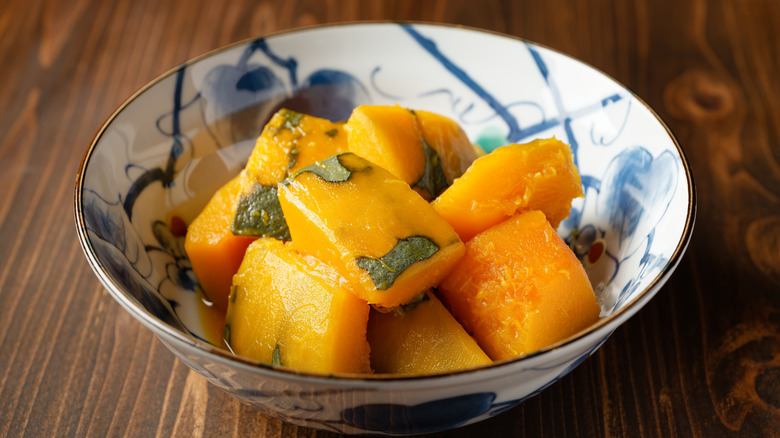
Japan has a long history of cooking with pumpkins that dates back to the mid-1500s. That's when the Portuguese washed up on Japanese shores and established trade partnerships. One of the items they introduced to the country was a winter squash that they brought by way of Cambodia. The Japanese called the squash kabocha, based on the Portuguese word for Cambodia, "Camboja." Kabocha is still used today in a variety of Japanese dishes, including kabocha no nimono, which translates to "simmered kabocha."
Also called Japanese pumpkin, kabocha is a winter squash with tough green skin and bright orange flesh that is slightly denser and sweeter than the orange pumpkins you typically find in North America. It's perfect for roasting, steaming, and simmering. Simple but elegant, kabocha no nimono features kabocha that is cooked gently with a few ingredients to enhance the natural sweetness of the squash.
Most kabocha no nimono recipes start with simmering pieces of kabocha in dashi, which is a broth made with water and umami-boosting ingredients like bonito flakes and seaweed. Once the kabocha has softened slightly, you add sake, sugar, soy sauce, and salt to the mix. The trick is to cook the kabocha until tender, then let it sit for about half an hour so that it can absorb the flavors of the broth. The squash can be served cool, at room temperature, or heated up, depending on your preference.
9. Canh bí đỏ nấu thịt băm (Vietnam)
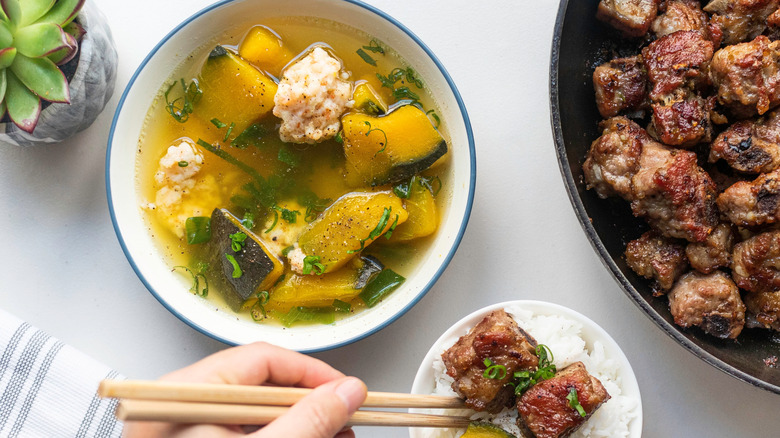
In Vietnamese cooking, pumpkin often appears in a variety of recipes, from porridges to grilled meat dishes and desserts. One dish that you often see served at Vietnamese tables is canh bí đỏ nấu thịt băm. Don't let the long name fool you — the dish is actually pretty straightforward and easy to make. It translates to "pumpkin soup with ground pork," and besides a few aromatics and seasonings, that's pretty much what it consists of.
Canh bí đỏ nấu thịt băm is typically made with kabocha squash that's peeled and cut into cubes. If you can't find kabocha, regular orange pumpkin or butternut squash will work too. The next step is to sautée ground pork with garlic and perhaps some shallots. Once the meat is browned, the kabocha goes in along with some water or stock, and everything is simmered until the squash is tender.
Because this pumpkin and pork soup is meant to be a light side dish with just a simple, clear broth, there's no need to amp it up with a lot of strong flavors. However, some people like to add fish sauce and a bit of sugar to bring some complexity. Garnishes can include sliced green onions or chopped cilantro. And, if you want to enjoy it like many Vietnamese do, a side of rice is an absolute must.
10. Pampoenkoekies (South Africa)
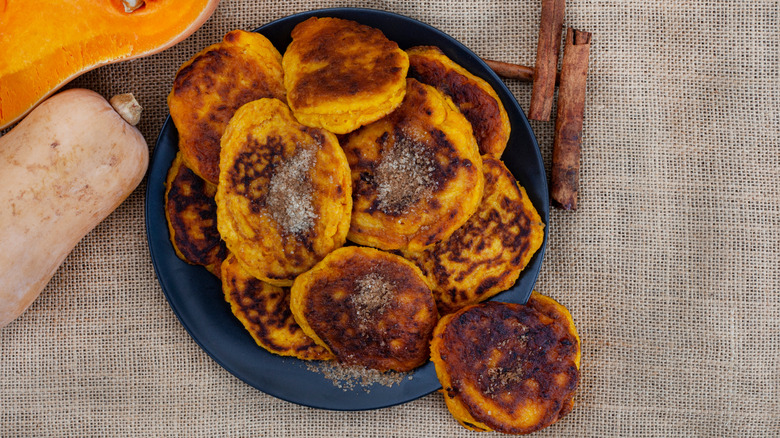
Tired of the same old pumpkin pie that's served at so many Thanksgiving feasts? If you want to branch out with a different pumpkin dessert that's just as crave-worthy, consider making South African pampoenkoekies. The name translates to "pumpkin cookies," but they're more like pumpkin fritters or donuts, as they're made with a pumpkin-infused batter that's fried until golden, crispy on the outside, and light and fluffy on the inside.
Family recipes vary, but pampoenkoekies typically feature mashed pumpkin or pumpkin purée (butternut squash works well too) mixed into a batter made with flour, baking powder, sugar, eggs, and milk. Some people go with just a basic batter, and others add classic pumpkin spice ingredients like cinnamon, nutmeg, and allspice. From there, you just drop spoonfuls of the batter into hot oil to create fritters.
Pampoenkoekies are often served as a dessert with toppings like cinnamon sugar, icing sugar, or a sticky caramel sauce. You can also try them as a fall-themed breakfast dish with some butter or maple syrup. Some South Africans also eat them as a side dish with a main meal to help sop up sauces. It may sound odd to have a sweet side, but as many folks in the American South know, it can work surprisingly well. Think sweet potato casserole or candied yams with a savory roast.
11. Gang ped faktong (Thailand)
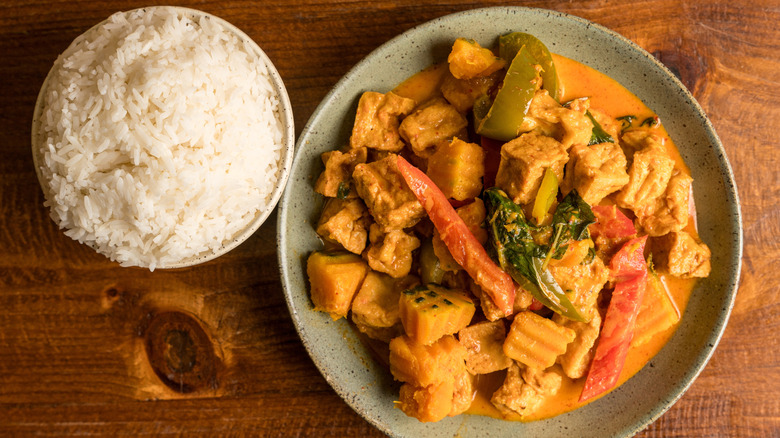
Thailand is also no stranger to pumpkin dishes. Take, for example, pad faktong, which is a homey pumpkin and egg stir-fry that many Thai people grew up with. However, if you want a dish that really brings those core Thai flavors of sweet, spicy, salty, and umami all together, gang ped faktong is the way to go. Gang (sometimes spelled "gaeng") means "curry," ped means "spicy," and faktong is the Thai word for "pumpkin."
The basis of nearly every Thai curry is a spice mix or paste made with aromatic ingredients. For red curry paste, that mix typically includes cilantro, cumin, ginger, lemongrass, and fiery red chiles. For pumpkin red curry, the spice paste gets fried in a wok or pan with coconut milk and sometimes fish sauce. Then, the pumpkin goes in with some water and is simmered until tender. The dish is typically served with rice on the side.
Curries are pretty adaptable, so many cooks play around with different ingredients for their pumpkin red curries. For example, you can add proteins like sliced chicken, shrimp, or pork. If you want to stick to a vegetarian version but want more substance, you can add veggies like red bell peppers, baby corn, or green beans. Additional seasonings can include kaffir lime leaves, sliced fresh chiles, and Thai basil. Don't be afraid to adjust until you get that perfect balance of sweet, spicy, and savory.