

McDonaldland: The Rise, Fall, And Resurgence Of McDonald's Nostalgic Characters
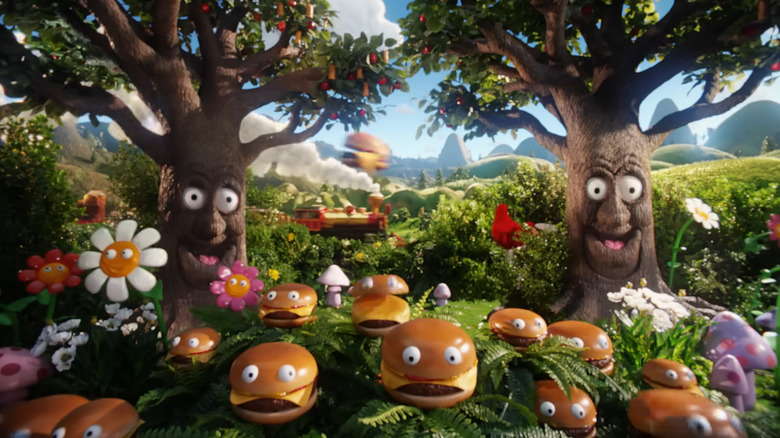
Imagine a world where hamburgers grow in patches, french fries sprout in a thatch, and apple pies can be plucked from trees. Oh – and there's also a volcano that spouts milkshakes. That's the landscape of McDonaldland, a magical world where Ronald McDonald and his friends embark on wacky adventures. Created in the early 1970s, the fictional world was a defining part of McDonald's identity all the way through to the early 2000s, when it started to fade into the background. Just recently, McDonaldland came back into the limelight, and fans are absolutely thrilled.
If you were a kid during the 1970s or anytime up to the 1990s, you probably remember climbing into a giant hamburger head jail at a McDonald's Playland or collecting McNugget Buddies toys in McDonald's Happy Meals. Even if McDonaldland was before your time, there's a good chance you're familiar with some of its iconic characters like Grimace, the Hamburglar, and Birdie the Early Bird. But have you ever wondered how McDonaldland came to be and why it went away?
Like the best stories, McDonaldland has had its rise, its fall — and now its grand return. To dig deeper into how this world evolved, and to finally get some answers to lingering questions (like what exactly is Grimace, anyway?), we spoke with McDonald's official archivist, Mike Bullington, who knows the history of McDonaldland inside and out. He shared a closer look at some of the artifacts and stories that shaped the magical land behind the Golden Arches.
The birth of McDonaldland
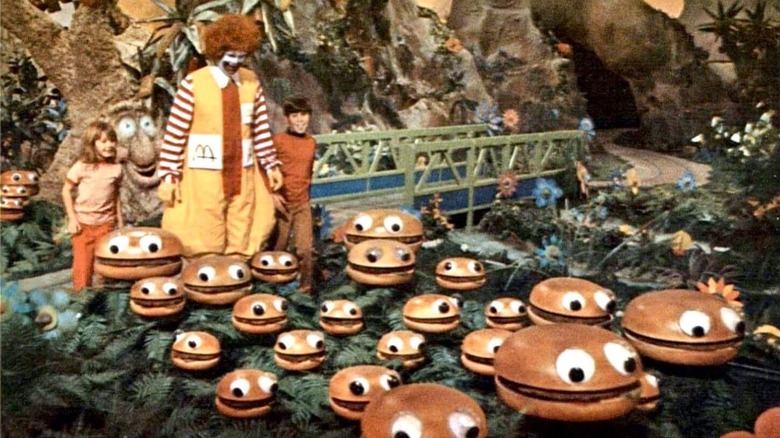
You can't talk about McDonaldland without first talking about Ronald McDonald. The "hamburger-happy" clown first appeared in a series of McDonald's television ads in 1963. The ads featured radio personality Willard Scott (who had previously played Bozo the clown) wearing a McDonald's cup for a nose and a belt that held hamburgers, fries, and a milkshake. Over the next several years, Ronald McDonald's image evolved until finally arriving at the signature curly red hair, painted face, and colorful costume that we know today.
In the early 1970s, ad agency Needham, Harper & Steers pitched McDonald's an idea for an ad campaign that would appeal to younger audiences. They suggested creating a fantastical world similar to the one on the popular kids show H.R. Pufnstuf, created by Sid and Marty Krofft. The agency even approached the Kroffts about creating the set and characters for the McDonald's ads, but later reneged on the deal. The McDonaldland campaign went ahead, and in 1971, the first commercial launched.
The first McDonaldland ad depicted Ronald McDonald leading two children through a psychedelic world of grinning apple pie trees, hamburger-headed characters called Big Mac and McCheese, milkshake volcanoes, and patches where hamburgers and french fries grew in the wild. There was also a catchy tune that outlined what you could find in McDonaldland. The journey ends with Ronald and the children sitting down for a meal at a McDonald's restaurant.
Meet the original cast
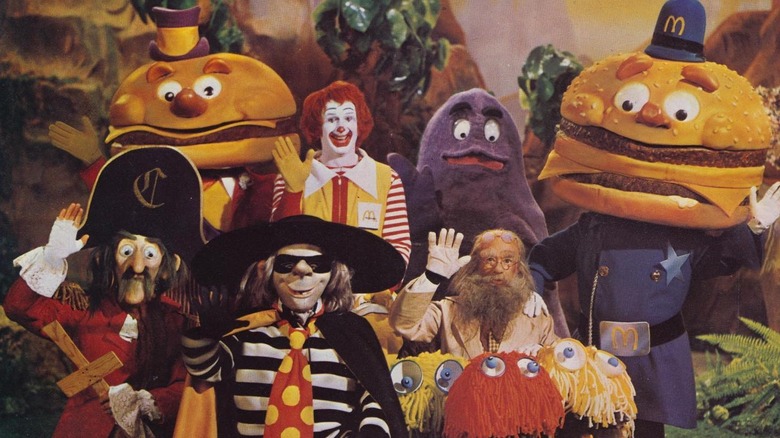
Of course, it wouldn't make sense for Ronald McDonald to inhabit a world all by himself, so Needham, Harper & Steers created a slew of characters for him to interact with. Some were designed to be "good guys", while others were more nefarious types who were always getting up to mischief. The early ads often showcased Ronald and his friends encountering the "bad guys" and foiling their escapades; actors in costumes and puppets played the characters.
The McDonaldland Specification Manual from the 1970s depicts eight core characters, including Ronald McDonald. The Hamburglar is a thief who persistently tries to steal McDonald's hamburgers. Captain Crook loves Filet-O-Fish sandwiches, and Grimace has a penchant for milkshakes. Mayor McCheese officiates, police officer Big Mac keeps law and order, and the Professor is an eccentric inventor. Then there are the Gobblins, which were later renamed the Fry Guys, Fry Kids, and Fry Friends.
Each McDonaldland character has its own personality, and several have catch phrases. For example, in the early days, the Hamburglar often uttered unintelligible gibberish except for the words "robble, robble." The Gobblins (aka Fry Friends) are fun-loving bunches of french fries that warn people to "keep your eyes on your fries." Grimace often starts sentences with "duh." The characters' quirky traits and sayings made them a big hit with kids and adults alike, and cemented their place in pop culture.
What even is Grimace?
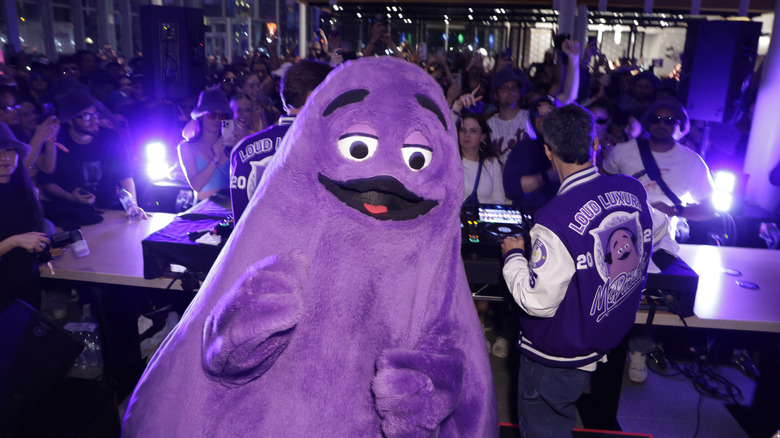
Grimace is one of the most beloved McDonaldland characters and also one of the most intriguing. Mike Bullington told Chowhound, "The OG Grimace from 1971, he was originally known as the "Evil Grimace" and he had four arms ... one for each shake flavor: strawberry, chocolate, vanilla, and then our fourth flavor like the Shamrock Shake." Evil didn't exactly fit with Grimace's adorable, fuzzy purple look, so he later became a friendly, affectionate character with just two arms.
There has been plenty of speculation about what exactly Grimace is. Some say that he's supposed to be a drop of milkshake, the embodiment of a milkshake, or even a taste bud. Bullington set the record straight for us. He said, "We have specification manuals that talk about the characters all the way back [to 1971], and there is no reference at all that Grimace is a taste bud or a drop of shake. He is just Grimace."
While Grimace's species may be somewhat of a mystery, we do know quite a lot about his family tree. In 1975, McDonald's introduced Uncle O'Grimacey, who came to McDonaldland from Ireland to share his Shamrock Shakes for St. Patrick's Day. We also know from the video series "The Wacky Adventures of Ronald McDonald" that Grimace's ancestors come from a place called Grimace Island and that he has a grandmother named Winky and a great-grandmother named Jimmy.
The glow-up of Grimace and friends
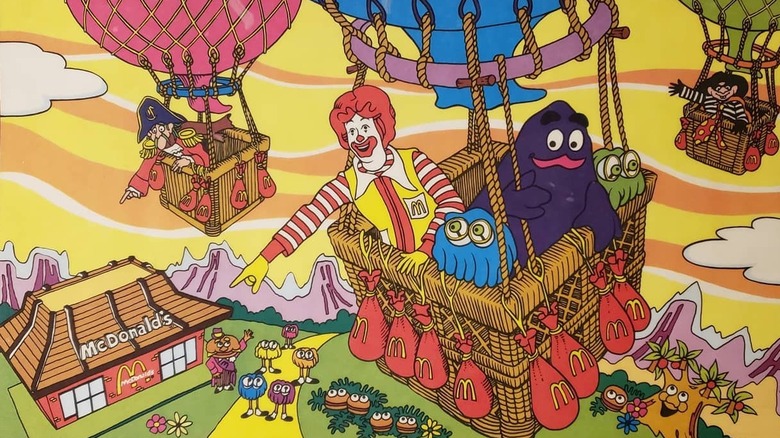
If you watch some of the earlier McDonaldland ads, some of the characters look drastically different from what they do today. As mentioned, Grimace was originally an evil purple monster with four arms, although that version didn't last long. As Mike Bullington explained to us, there was one arm for each flavor of shake at the time ("strawberry, chocolate, vanilla, and then our fourth flavor, like Shamrock"). "From what I understand, at least that's the legend, it was difficult for the character to hold all four cups during some of the spots. So again, the characters evolved, and now he's two-armed Grimace." The practical fix also came with a personality shift, and Grimace became Ronald's goofy sidekick.
The Hamburglar also underwent a major makeover. In the early 1970s, he was a scruffy, troll-like figure called the Lone Jogger. He wore a hat, mask, and a cape that he would flash open to reveal a shirt emblazoned with the words "Lone Jogger." In later ads, he transformed into the Hamburglar, a ghoulish character with stringy grey hair, a pallid complexion, and a sharp, pointy nose. Perhaps it was all a bit too creepy because in 1985, the Hamburglar transformed once again, this time into a child-like figure with a round, cartoonish face and red hair.
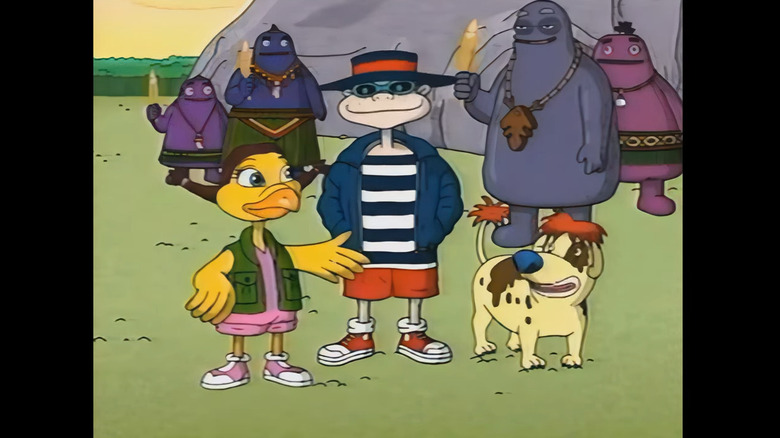
Even well into the late 1990s, the characters were still evolving. In the animated video series "The Wacky Adventures of Ronald McDonald," Ronald and his friends were given a sleek, cartoonish makeover that gave them a more modern feel. The animation style was strikingly similar to "Rugrats," another hit cartoon of that era, which makes sense since both were produced by Klasky Csupo.
The mysterious disappearance of Mayor McCheese
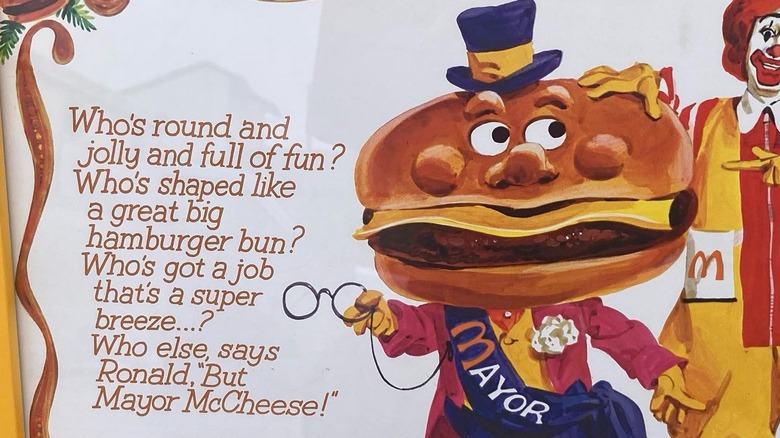
Mayor McCheese was one of the OG McDonaldland characters who appeared in the very first television commercial alongside Officer Big Mac. He's instantly recognizable for his huge cheeseburger head that's topped with a top hat and his official-looking sash. He made several appearances throughout the 1970s, but by the 1980s, it seemed his tenure might be over. The truth is, the mayor was involved in some McDonald's legal troubles.
After Needham, Harper & Steers had asked Sid and Marty Krofft to collaborate on the creation of McDonaldland, the ad agency went back on the offer, telling the creative duo that the deal had been cancelled. However, when McDonaldland launched in 1971, the Kroffts were shocked to see just how similar it looked to the magical land on their show, H.R. Pufnstuf. The similarities were hard to ignore — both had mayors with a large round head, talking trees, and whimsical characters. The Kroffts subsequently sued McDonald's.
Mayor McCheese played a significant role in the legal proceedings. McDonald's tried to argue that Mayor Pufnstuf wore different colors and had a cummerband with a medal that said "mayor," while Mayor McCheese wore a sash that said "mayor." In 1977, the court ultimately ruled in the Kroffts' favor, and McDonald's was ordered to pay damages. Not long after that, Mayor McCheese slowly faded out of the picture, relegated to the background along with other characters like Captain Crook and the Professor.
The evolution of McDonaldland
By the 1980s, big changes were happening in McDonaldland. For one, some characters were phased out. Mayor McCheese, Officer Big Mac, Captain Crook, and the Professor all took a back seat so that the main characters of Ronald McDonald, Hamburglar, Grimace, and the Fry Guys could shine. That being said, you could still find Officer Big Mac in the form of playground equipment at the chain's iconic McDonaldland Playlands (later rebranded as PlayPlaces).
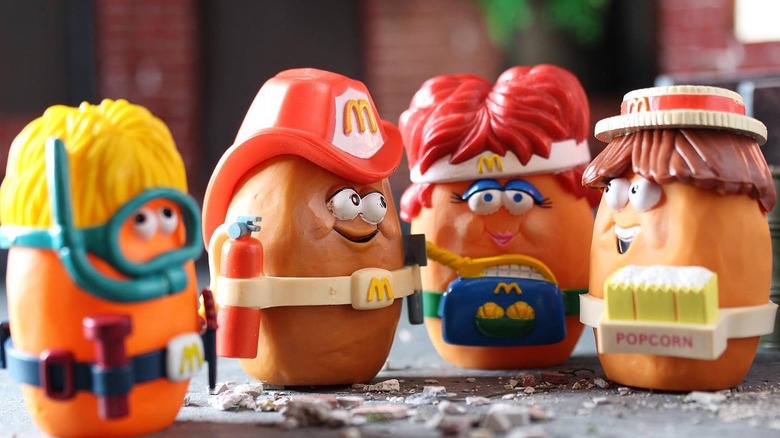
While some McDonaldland characters all but disappeared in the 1980s, new characters were also being added to the world. The first female character, Birdie the Early Bird, made her first appearance in 1980 to promote the McDonald's breakfast menu. In 1985, the Fry Girls were added to the crew and joined the Fry Guys to become the Fry Kids. The McNugget Buddies appeared in ads in the late 1980s to promote Chicken McNuggets, and they later became Happy Meal toys with interchangeable outfits.
During the 1980s and 1990s, the McDonaldland characters also began to appear outside of just McDonald's restaurants and television ads. "McDonaldland Fun Times" was a free magazine for kids that ran from 1979 to 1990 and featured the McDonaldland characters in colorful games. There was also an animated film called "The Adventures of Ronald McDonald: McDonaldland Treasure Island" that came out in 1990. The video series "The Wacky Adventures of Ronald McDonald" ran from 1998 to 2003 and introduced Sundae, Ronald McDonald's dog. There was even a Nintendo game called M.C. Kids that came out in 1992.
When the magic started to fade
From the 1970s through the 1990s, McDonaldland earned millions of fans, both young and old. However, by the dawn of the new millennium, public perceptions about fast food were beginning to change. In 2002, McDonald's was sued by two teenagers who claimed the chain's food contributed to their obesity. The suit was thrown out, but it highlighted growing concerns about fast food chains marketing unhealthy food to children.
McDonald's also came under fire for safety issues concerning its Playland equipment, specifically the Big Mac Climber. For those who don't remember (or never saw one), the Big Mac Climber was a Big Mac head that you could enter through a column in the back and climb up into the head chamber, which had bars on it like a jail. In 1999, McDonald's agreed to pay $4 million in damages for failing to report to the U.S. Consumer Product Safety Commission (CPSC) that over 400 children were injured on the Big Mac Climber in the 1970s and 1980s.
At the same time, kids' tastes were changing. By the late 1990s and early 2000s, television channels like Nickelodeon and Cartoon Network were dominating kids' entertainment, while video games and the internet were quickly becoming bigger draws than fast-food mascots. Against that backdrop, McDonaldland began to feel a little dated. The colorful fantasy world that had captured imaginations for decades was losing ground to new forms of entertainment, and slowly but surely, it started to fade from the spotlight.
McDonaldland goes underground
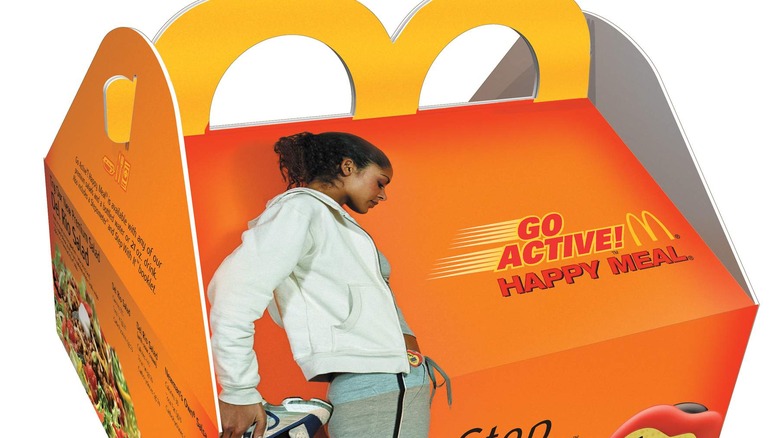
In response to changing attitudes about nutrition and marketing to kids, McDonald's began scaling back the presence of McDonaldland in the early 2000s. The characters started disappearing from ads, packaging, Happy Meals, and PlayPlace decor. Ronald McDonald remained the chain's figurehead, but his role shifted. He became less wacky and took on the title of "Chief Happiness Officer," spreading cheer and supporting good causes like the Ronald McDonald House Charities.
In 2003, McDonald's launched the "i'm lovin' it" campaign, which marked a major shift in branding. Instead of leaning on fantasy characters, the ads focused on real people, catchy music, and a lifestyle message that resonated with adults as much as kids. The following year, the chain introduced the "Go Active!" campaign, complete with adult Happy Meals that included salads, water, and a step counter. The message was clear: McDonald's was aiming to rebrand itself as a modern, health-conscious company, and the whimsical world of McDonaldland no longer fit that vision.
That's not to say that the McDonaldland characters went completely off the radar, though. In 2015, the Hamburglar appeared in a television ad, but as a svelte man wearing an eye mask, trench coat, and red leather gloves. Grimace has popped up several times over the years, including an appearance at the 2020 Macy's Day Parade. In 2023, McDonald's celebrated the fuzzy purple character's 52nd birthday with a special Grimace Birthday Meal that included a limited-edition milkshake.
The grand return of McDonaldland
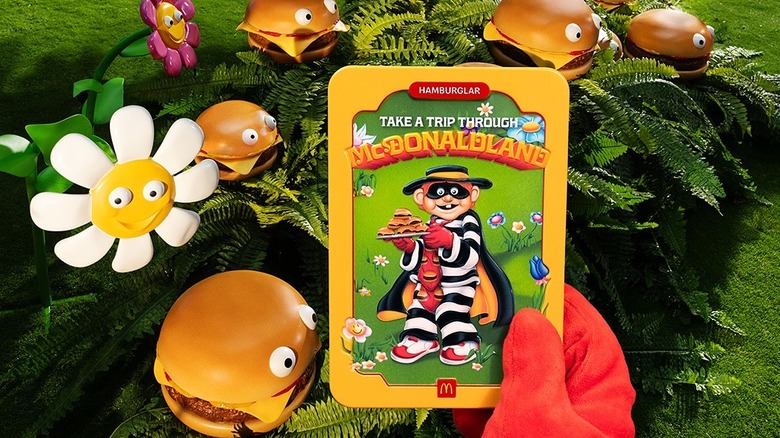
In August 2025, McDonald's officially brought McDonaldland back in all its magical glory with the launch of the McDonaldland Meal. The meal includes your choice of a Quarter Pounder with cheese or a 10-piece Chicken McNuggets with fries and a limited-edition Mt. McDonaldland Shake. Each meal also comes with a collectible tin featuring either Ronald McDonald, Grimace, Birdie, Hamburglar, Mayor McCheese, or the Fry Friends. There are tons of goodies inside the tins, like stickers, postcards, and a code that allows you to explore all areas of McDonaldland.com.
Mike Bullington was an integral part of bringing McDonaldland back to the forefront and ensuring it stayed true to its roots. "When the team decided to present McDonaldland to the leadership, I put together a presentation all about the history and heritage of McDonaldland," he said. "As it was being developed, the agency came to the archives to make sure that it was holding core to the DNA of the characters and McDonaldland to make sure that we had that smooth line of nostalgia all the way through."
Longtime fans will find plenty of memories packed into the tins and meals, but McDonaldland's return isn't just about looking back. Alongside the classic characters, fans can now explore new lore on the McDonaldland site, step into the world through Fortnite, or even unlock interactive Snapchat lenses tied to the collectibles. As Bullington reminded us, people grew up with these characters, noting, "It's a magical land, so to be transported back there just to take a little break from everyday, maybe think of a memory from the past — you know, while you were at McDonald's. Yeah, it's kind of cool."
What does the future hold for McDonaldland?
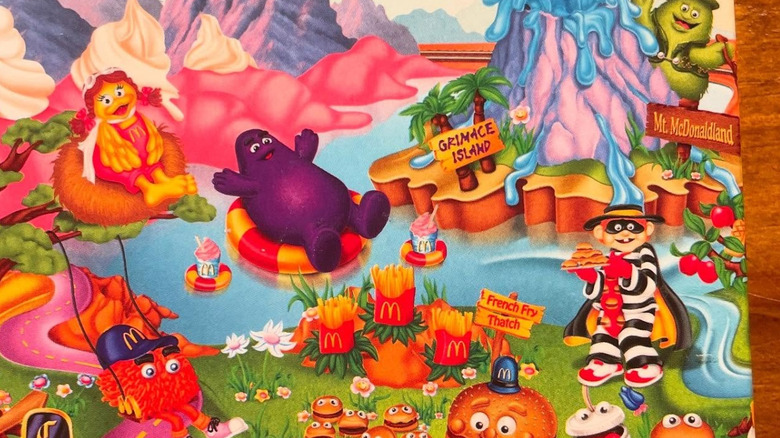
The new McDonaldland Meal is already creating a huge buzz with all types of folks, including those who see it as a much-welcome blast from the past and younger people who are just getting to know the characters. As for what's next, Bullington hinted that the cast of McDonaldland could grow. "If you think of your community that you live in right now, people move in and out, right?" he explained. "Characters come and go ... So, I think perhaps there would be some characters added."
When it comes to future events, Bullington kept things under wraps. "The way I need to answer your question is like I tell my wife and kids: I'm working on something really cool, but I can't tell you about it, so stay tuned." For now, he's beyond happy that Hamburglar, Grimace, and the rest of the gang are back in the spotlight. "I'm just so glad that we brought back McDonaldland for our fans, you know, just for that nostalgia."