

10 Mistakes You're Making With Fresh Corn
We may receive a commission on purchases made from links.
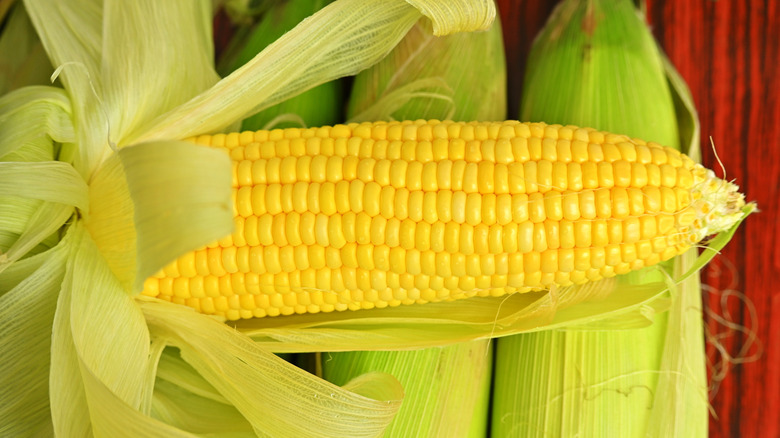
Nothing says "summer" like corn. On the cob, in soup, street-food-style ... you name it. "In-season corn, especially when it's freshly picked, still has all that natural sweetness and moisture," says Marissa Stevens, recipe creator and founder of Pinch and Swirl. "It's crisp, juicy, and just tastes more alive than what you get the rest of the year."
David Leite, James Beard Award-winning food writer and founder of Leite's Culinaria, agrees. "When corn is at its peak (ideally within 24 hours after picking), it's sweet, crisp, and bursting with flavor. That combination of sugar and snap is something you just can't replicate out of season. For me, it's deeply nostalgic and satisfying." Plus, he says, its seasonality is what makes it special. "I love that you have to wait a whole year for corn season to roll around again." That, he says, is part of the pleasure.
Plus, says Ken Tobby, food scientist and founder of Organic Solace, fresh corn is highly versatile. Roast it, boil it, grill it, or eat it raw from the cob; it's all good. "It isn't just about its taste, though," he adds. "It is about the experience — its smell on the grill as well as the joy of enjoying something straight from a nearby farm." That said, is fresh corn really necessary? Well, pretty much, because the substitutes (frozen, canned, pre-made creamed corn) are so much less appealing, explains Jon Buck, chef at Table 301 Hospitality. "If corn isn't in season, I typically just cook another dish and wait until next year," he says. In addition to buying out-of-season corn, here are 10 mistakes to stop making today.
1. Mistake: Buying pre-shucked fresh corn
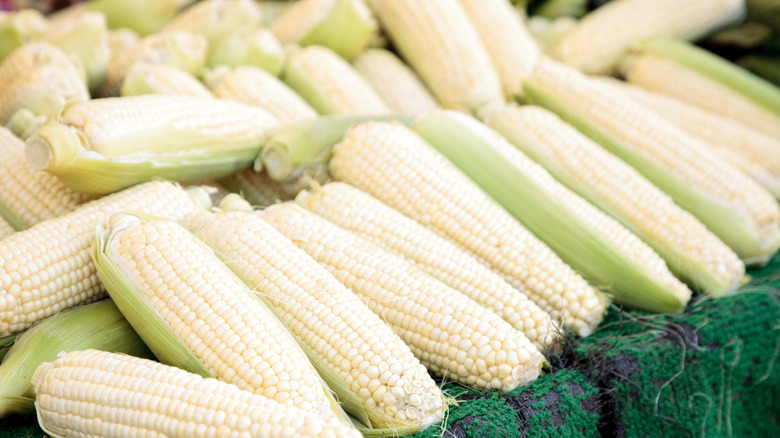
Mistake numero uno is definitely buying corn pre-shucked. "Corn loses sweetness quickly once it's shucked," Marissa Stevens says. "Leaving the husk on helps retain moisture and slows down the sugar-to-starch conversion." If pre-shucked corn is your only option, she says, you should make every effort to use it the same day.
Indeed, says Joanne Gallagher, recipe creator and co-founder of Inspired Taste, you should try and eat it within a few hours, when the kernels are crisp, juicy, and bursting with summery flavor. Buying local corn is an even better way to ensure its freshness, plus it does something positive for your community. And that's not all: "Fresh corn often has better nutrient content, including vitamins like C and several B vitamins, making it both delicious and nutritious."
Neither should you shuck it too early, even if you buy it in the husk. "Husks keep corn moist and sweet," explains Jennifer Pallian, registered dietitian and founder of Foodess. "Removing them too soon dulls flavor." As soon as it's shucked, Ken Tobby says, the natural barrier is gone. The kernels begin to dry out, the bright sugars convert to bland starches, and you get that unpleasant chew.
If you want to preserve summer corn for later use, make sure to cut the kernels off the cob and freeze them as soon as you get it home, Gallagher adds. And don't be lazy when choosing it, either. "When picking out corn, look for bright green, tightly wrapped husks, plump and moist-looking kernels, and avoid any with dried or browned silks as signs of aging," Gallagher advises.
2. Mistake: Not using corn right away
Yes, the experts agree you should use corn within a day if it's already shucked. But you know what? You should use it the same day anyway. There's some serious science behind this. "Sweet corn varieties have a high concentration of natural sugars (mostly sucrose) right after harvest," Jennifer Pallian explains. "These sugars begin converting to starch as soon as the ear is picked, which is why fresher corn tastes sweeter."
It's not just flavor you have to worry about, she says; it's also the crispy pop that we associate with fresh corn, which comes from turgor pressure, the outward force exerted by the fluid in plant cells. Those pressurized, water-filled cells, held firm by pectin and cellulose in the cell walls, are what keep the kernels firm and unwilted, Pallian explains. The whole structure begins to degrade as soon as the corn leaves the stalk. Once this happens, you can't save the product. "Even well-cooked corn tastes bland and chewy," she says. Ken Tobby agrees that time is against you. "Every hour the corn stays at room temperature, a significant part of its natural sugars turns to starch, compromising its texture and sweetness," he says.
That's not to say you can't keep corn good for a while; you just have to know how. Refrigeration is the easiest tactic. "If you're cooking for a crowd or prepping ahead," Marissa Stevens adds, "you can par-cook it in batches and finish it on the grill just before serving." Lastly, if your corn is a bit on the aged side, you can revive it with a simple two-ingredient upgrade: sugar and lemon.
3. Mistake: Insisting on leaving corn on the cob
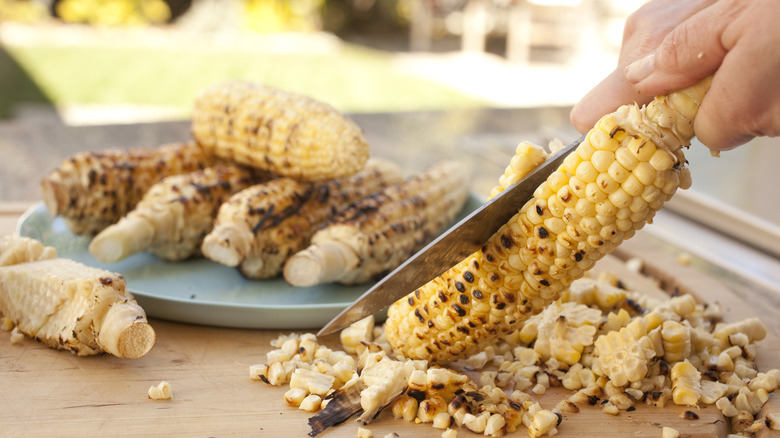
Cutting kernels off the cob opens up many possibilities. Marissa Stevens suggests a variety of options: "Tossing raw kernels into salads and classic dishes where corn is the star, like corn maque choux; folding them along with diced jalapeños into cornbread batter; or sautéing them briefly with butter and shallot." You can also sauté it, add it to salads, fold it into batters, or puree it for soup, says David Leite.
Luckily, this is easier than you think. "My favorite way to remove corn from the cob is by using a serrated knife and two differently sized bowls," says Theo Friedman, Associate Director of Projects for The Culinary Edge. "This is the most common way restaurant chefs do it." First, he says, invert a smaller bowl inside a larger bowl on a table or counter. Set the bowls on a dish towel so your setup doesn't slip, and use non-breakable items. (This set of Yihong 7 Piece Metal Mixing Bowls with Lids would be a good choice, for instance.)
"Place the corn cob on the smaller bowl, and rotate it with one hand as you 'shave' off the corn with your serrated knife," Friedman continues. The Mercer Culinary 10-Inch Wide Wavy Edge Bread Knife is one possibility if you're in the market for a good tool. "The kernels will fall off the cob and collect into the larger bowl." Bada-bing, bada-boom. Once she cuts the kernels off, Stevens takes the back of her knife and runs it down the cob, applying pressure to remove the sweet corn milk, which she then adds to her dishes.
4. Mistake: Overcooking, undercooking, or cooking corn unevenly
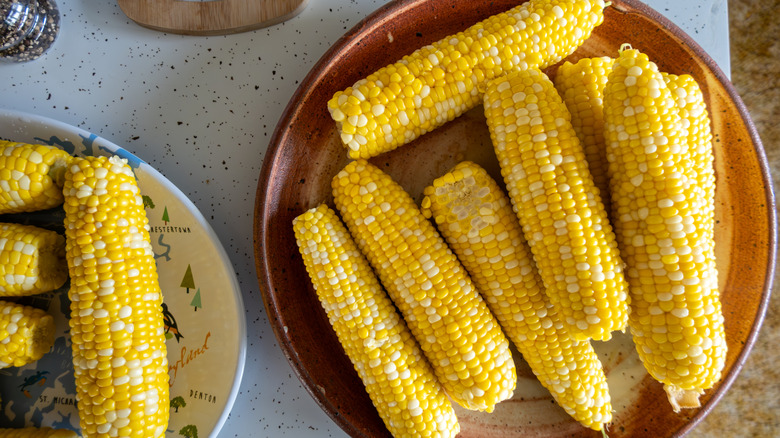
Overcooking corn on the cob is a surprisingly common problem, and it's a subject on which the experts have a great deal to say. "Overcooking corn breaks down the cell walls and causes all those natural sugars to convert into starch, which gives the corn a mealy, chewy texture and almost savory flavor," David Leite says. "The longer it cooks, the more it loses its sweetness and that signature pop. What you end up with is dull, dry, and tragically disappointing."
It's not just sugar-to-starch conversion, either. "The starches in the corn start to gelatinize with heat," Ken Tobby says. "Heat causes the starches to excessively swell, burst, and leach out, leading to a grainy or gummy texture." Each second you overcook the corn speeds up the conversion and gelatinization processes. Moisture is also a factor. "The longer you cook it, the more moisture escapes from the kernels, leaving your corn dry and less juicy," Theo Friedman says. This can happen even in a pot of boiling water, so don't kid yourself.
Then you've got flavor loss. "Volatile compounds and natural sugars break down with prolonged heat," Jennifer Pallian says. "Prolonged boiling or steaming can drive off aroma compounds and degrade some delicate flavor molecules." Uneven cooking, such as forgetting to flip your corn while grilling or crowding the boiling pot, can lead to inconsistent taste and texture as well. And while it's true that you can cook your corn in the microwave, time is no less a factor. The truth is, Leite says, corn only needs a few minutes to cook, whether you're boiling, grilling, or steaming.
5. Mistake: Boiling it as your exclusive preparation method
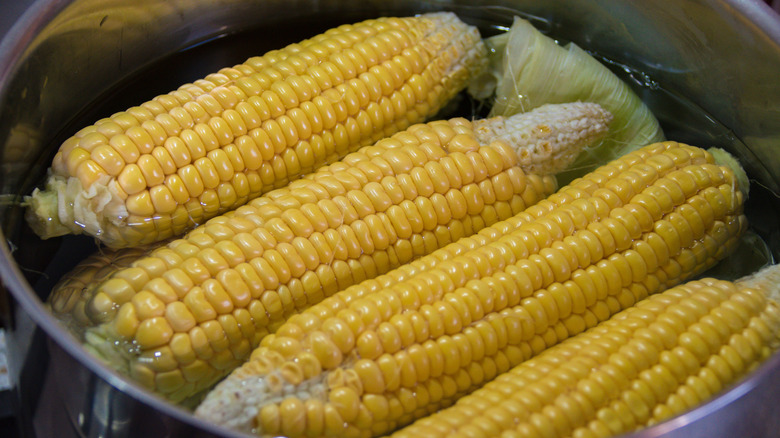
While boiling is a great method, it's not the only one. "Grilling, roasting, or even microwaving corn in the husk all help concentrate flavor," Marissa Stevens says. "Roasting in particular caramelizes the natural sugars and adds a toasty depth that boiling just can't deliver." Joanne Gallagher also loves grilling and roasting for their smoky, charred complexity and new flavor dimensions that you simply don't get from other approaches. "You can also steam or sauté corn for tender, vibrant kernels that keep their snap," she says.
If you're ready to branch out, start with grilling. There are some surprisingly simple hacks to keep corn fresh and delicious, and it doesn't take that long to grill it to perfection. Should you even consider wrapping your corn in bacon before grilling it? I mean ... yeah, obviously. Life is short; anything that can be wrapped in bacon should be.
That's not to say boiling corn can't work out well, however. "The best way to boil corn is to bring a pot of water to a boil," David Leite instructs. "Turn off the heat, slip in the ears, and let them sit, covered, for 5 minutes. I've been using this method for decades, and it has never disappointed." Don't salt the water too early, for one thing. "Salt can toughen pericarp (the outer skin of the kernels) and increase flavor leaching," Jennifer Pallian explains. You should also make sure not to crowd the pot, which lowers the water temperature, extends cooking time, and risks overcooked kernels. "If making a large amount, do several rounds to keep water at a boil."
6. Mistake: Always shucking corn before grilling it
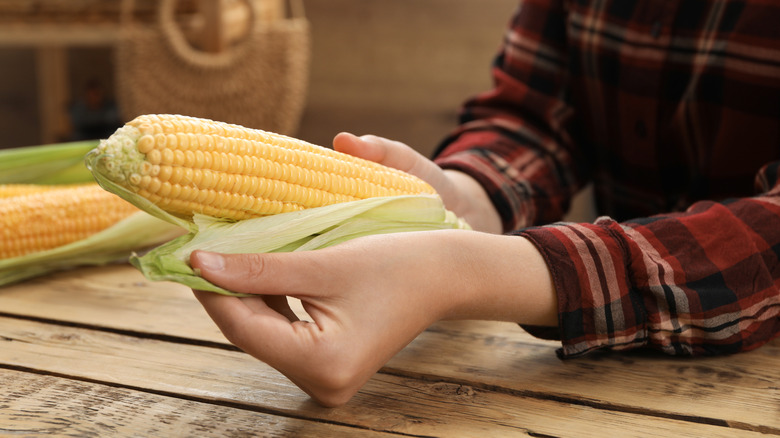
If you're going to grill corn, consider leaving the husk on. "Grilling corn in the husk helps trap steam and keeps the kernels juicy while still giving you that light char and delicate smoky flavor," Marissa Stevens says. "Once it's cooked, the husk and silk come off easily, too." And let's not lie: Nobody hates to hear that, right? (Says the person who offloads this chore onto her children every single time.)
The wonderful thing about grilling is that the high, dry heat caramelizes some sugars on the surface, adding a nutty-sweet depth, Jennifer Pallian explains. This still happens, even if you keep the corn cob securely wrapped up. Plus, the smoke infiltrates the husks and concentrates inside, while simultaneously locking in the moisture, Joanne Gallagher says. You're basically steaming the corn, which you can also do inside on the stove, but you're getting that peerless grill flavor going at the same time.
On the other hand, if you plunk a shucked ear of corn right on the grill, you may end up cooking it less evenly or even drying it out. Goodbye, delicious pop and crunch.
7. Mistake: Cooling it under water
Although it might seem like a natural step to cool your corn under water when you take it off the stove, resist the urge. "Plunging corn into cold water might stop the cooking, but it also washes away flavor and turns the kernels watery," Marissa Stevens explains. "Let it rest on a towel or rack instead; cooling it gently helps preserve the texture and taste." Make sure your towel is nice and clean and free of lint, then place the corn on a plate once it has drained and cooled, but before it loses its heat.
You can also put it right on the plate and let it come to room temperature, Theo Friedman says. But whatever you do, once you pull it from the boiling pot, don't let another speck of water touch it. Otherwise, you lose that bright, fresh, salty sweetness from the water, which represents a loss of flavor for which seasonings cannot make up.
There's only one exception to this rule, and that's when you're preparing it for further use, Jennifer Pallian says. "Plunge into ice water if prepping for later," she says. "This halts cooking and preserves texture." For instance, if you're going to throw it in a salad or salsa, this is a good step to take. Ditto if you want to freeze corn kernels and want them to come back out crispy and fresh-tasting.
8. Mistake: Never eating it raw
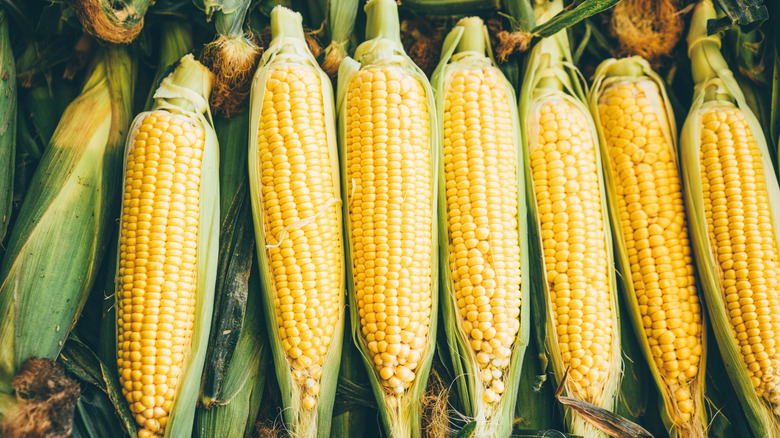
"One vital thing most people usually overlook regarding fresh corn is how flavorful and versatile it can be raw," Ken Tobby says. "When it's fresh, the corn's kernels are juicy, tender, and pleasant enough to eat straight off their cobs, no cooking needed." Uncooked, he says, it brings more nutrients and a higher level of natural sweetness to the table. "Raw corn usually adds a bright, crisp pop to grain bowls, salsas, and salads," he says.
Personally, raw is one of my favorite ways to eat corn. Right after my husband and I got married, I was given a cookbook from Williams Sonoma, with a tomato corn salad recipe that I've grown to cherish and have committed to memory: halved cherry tomatoes, fresh corn sliced off the cob, and gently chopped fresh dill, mixed together with salt and a simple balsamic vinaigrette. It doesn't require specific measurements and is absolute heaven.
Joanne Gallagher thinks that raw is a great way to go as well. "It's divisive because people don't believe us when we say raw corn is okay to eat!" she says, assuring readers that there's nothing iffy about raw corn. However, if you're not sure about it, Gallagher advises using grilling corn kernels in your recipes instead.
If you're feeling really uncreative but still want that fresh corn goodness, go ahead and eat it right off the cob. "For three torturous summers, I worked on a farm, and one of my favorite jobs was picking corn," David Leite says. "There was nothing like grabbing an ear off the stalk, shucking it, and eating it warm from the sun!"
9. Mistake: Not exploring a variety of seasonings
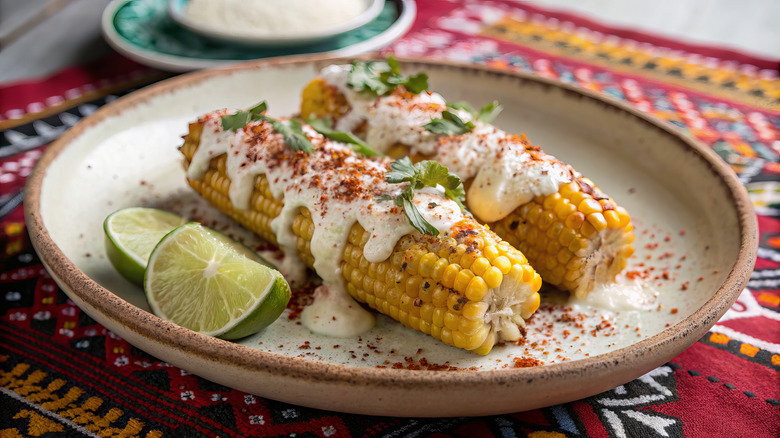
You should definitely expand your repertoire of favorite toppings. "I love to make elote," Marissa Stevens says. This Mexican street corn traditionally combines seasonings with cheese and lime for a satisfying snack. She also loves seasonings such as miso butter, smoked paprika, za'atar, or vinegary dressing.
"Corn can handle bolder flavors," David Leite agrees. Among his favorites are lime juice, chili powder, or fresh herbs. Try Badia Smoked Paprika or Tajín Clásico Mexican Seasoning for a classic, easy kick. "I also love making a flavored butter to rub on the corn," Theo Friedman says. "Try some chopped up chipotle peppers, salt, and cilantro, mixed into butter, then spread on the corn."
It's also a wonderful ingredient in more complex dishes. "Mixing it into creamy dishes like corn chowder makes it luxurious and satisfying," Joanne Gallagher says. You can also enjoy corn on the cob the Trinidadian way, with peppers and green onions, coconut milk, and Caribbean green seasoning. If you want to experiment with this flavor profile, try Walkerswood Traditional Jamaican All Purpose Mix and Blenda Green Seasoning. Frogmore Stew, or low country boil, is another delicious option, Jon Buck says, a perfect pairing of shrimp and corn that feeds tons of people at once. Succotash is another favorite, he says, with caramelized corn, onions, and garlic.
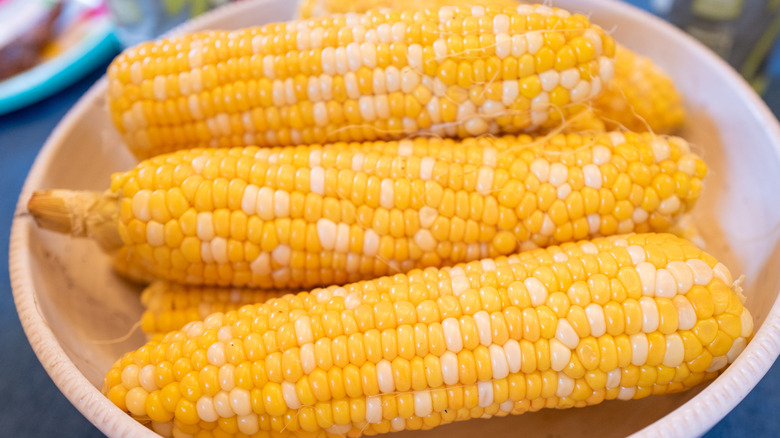
Don't confine yourself to savory, either. "Corn's natural sugars work beautifully in desserts," Leite says: corn pudding, ice cream, even baked into cakes. Here's one last flavor tip, courtesy of Stevens: "If you have the option, look for bi-color corn. In my experience, it's consistently the sweetest."
10. Mistake: Tossing the corn cobs
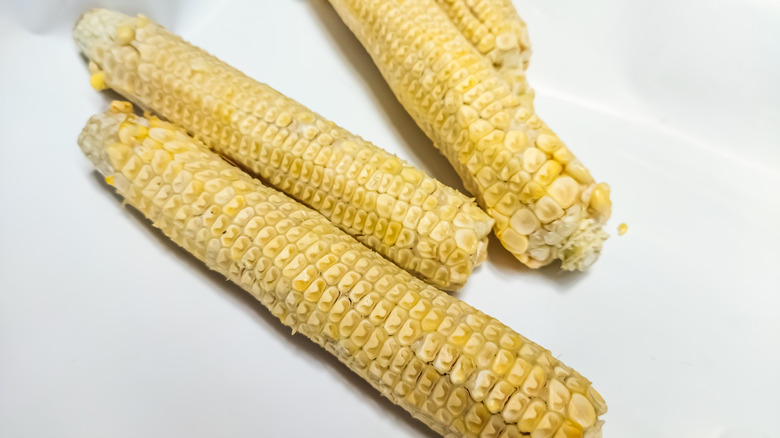
Those corn cobs? They're not just for the compost or the pigs; they may just be the missing ingredient in your summer and fall cooking. Don't toss them out. "Just simmer them to prepare a subtly sweet corn that is ideal for soups, chowders, or risottos," Ken Tobby says. "This is a good way to minimize waste and extract all the flavor from the corn." Marissa Stevens agrees that corn stock is an inimitable and delicious ingredient of which you should take advantage. Her recipe? "Add them to a pot with water, onion, and a few peppercorns, simmer for one hour, then strain," she instructs. "It freezes well, too."
Of course, each chef has their own favorite way to do it. "I typically like onion, garlic, bay leaves, thyme, and peppercorns in mine," John Buck says. Another method, courtesy of Theo Friedman is an overnight soak in milk inside the fridge. "The next day, I'll make a chowder with potatoes, carrots, more fresh corn, and seafood using the corn-infused milk base from the cobs." Corn stock is especially delicious in corn chowder, David Leite concurs. Just make sure you've got a big ol' pot on hand, such as this Homichef 16 Quart Large Stock Pot, and you're golden. You should also make sure to use your stock quickly. "The high starch and sugar content of corn lends itself to souring or fermentation quickly," Buck says. "Hence its use in corn liquor or ethanol production."
Don't limit yourself to soups, though. Corn cobs, believe it or not, make good natural skewers for grilling if you roast them in the oven.