

10 Easiest Fruits To Grow In A Small Garden
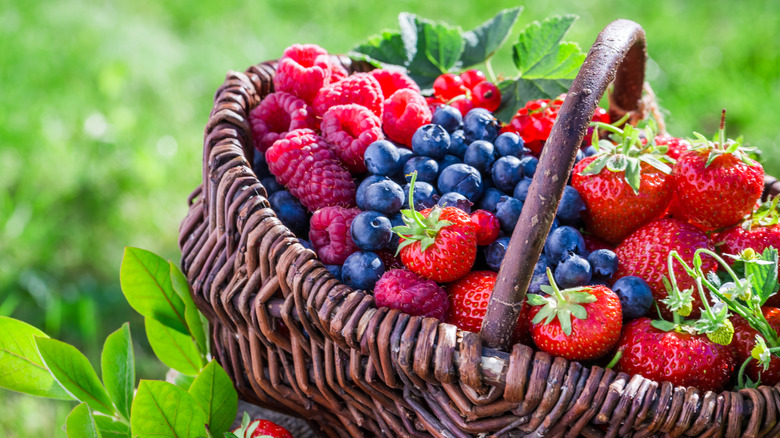
Everyone loves fresh fruit. Across time and space, humans have prized sweet things that grow on trees, vines, and shrubs. The same is true of us home gardeners; even if we don't have to range far and wide to bring home a basket of berries, we still love fresh-picked seasonal produce. You don't have to be a caveman to enjoy that, right?
The good news is, tending fruits in the home garden isn't that difficult. "Even if you're a city dweller through-and-through, you can try your hand at gardening," says Anastasia Borisevich, plant expert at Plantum. "As long as you've got plenty of natural light, some available space, and time to spare, it's entirely possible to grow edible plants." Challenges come with all gardens, points out Brianna Cordova, gardening tutor at Superprof, but that doesn't mean they're not rewarding: "It's all doable, but it takes planning." This is doubly true if you identify the easiest fruits to grow upfront.
Now, it is important to distinguish between the easiest fruits to grow in a garden and the best fruits to grow. Some, such as strawberries, grow readily and don't take much effort when preparing your garden for vacation. However, you may find that they don't produce enough fruit for the amount of space they take up or need diligent covering if you have a squirrel problem. But they're still easy, and this gardener's experience has been that the amount of fun they offer is worth it. Just keep in mind that these easy fruits can have their downsides, and it's up to you to balance the pros and cons. With that in mind, fruit ho!
1. Strawberries
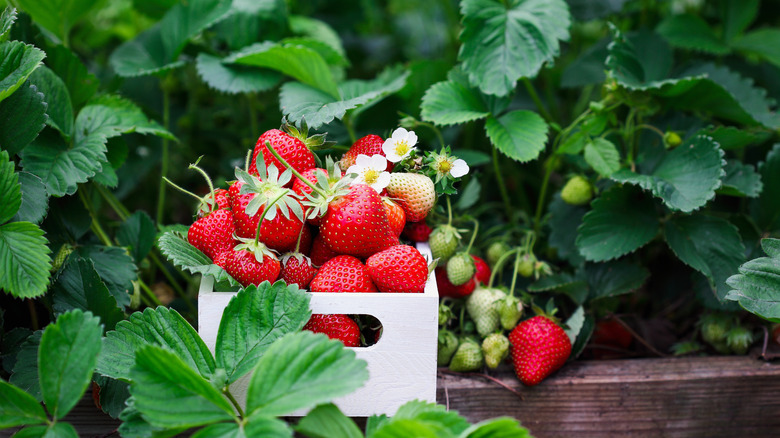
Strawberries (Fragaria x ananassa) are one of the easiest fruits to grow in a small garden. "In fact, you don't even need a garden to grow them," says Lindsey Chastain, homesteader and avid gardener at The Waddle and Cluck. "They thrive in pots on the porch or balcony too. I even grew strawberries in gutters hung on a fence."
Because strawberries have shallow root systems, you can also plant them in hanging pots, planters, or raised garden beds. They even work well in stackable planters, Brianna Cordova adds. Plus, they are well-suited to companion planting, or growing closely with other garden species, such as onions. This increases their favorability as a choice for smaller spaces.
The only things you need to watch out for with strawberries are sunlight, good soil, and water. They need 1 to 2 inches of water a week while they're fruiting, Anastasia Borisevich says. Lastly, prepare yourself for the fact that they take a minute to get going. "Strawberries are what I like to call sophomore plants," Chastain says. "They will do okay in year one, but really take off in year two. Just give them some sun and keep the soil moist." As long as you meet these needs, she says, you'll have a great crop in a couple of years.
2. Blueberries
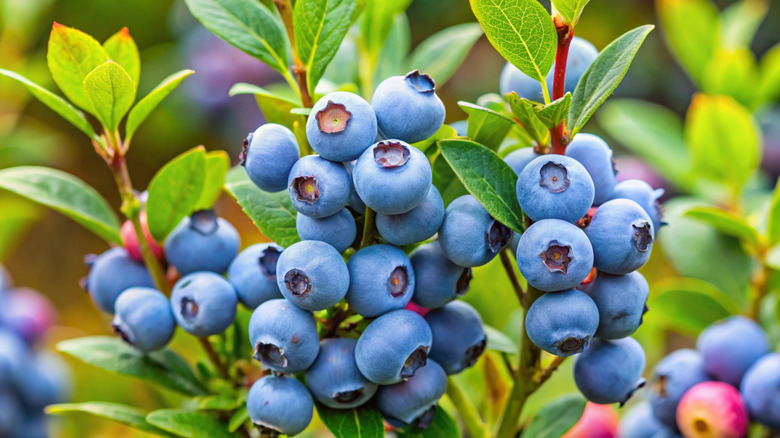
Those beautiful, round, purple-to-blue fruits that you see in the supermarket are, unlike strawberries, true berries of the Vaccinium genus. They're also easy to grow in your own yard. While there are differences between sunken and raised-bed gardening, blueberries can grow in both: right in the ground or in a container filled with soil. "Blueberries do really well in containers as long as you give them acidic soil and consistent water," Brianna Cordova explains. "They're pretty low-maintenance once they're settled in, and the flowers are really pretty too. They actually add a nice touch to small patios or balconies."
Blueberries do need a few things to thrive, however. "You'll want at least two different varieties so they can pollinate each other," Cordova says. Also, if you're not sure if your soil is right for blueberries, test: They need acidity to thrive, Lindsey Chastain says, along with good drainage. But as long as they've got that, she says, they do even better in pots than they do in the ground. You can check soil components to determine your drainage needs using this easy mason jar hack.
3. Raspberries
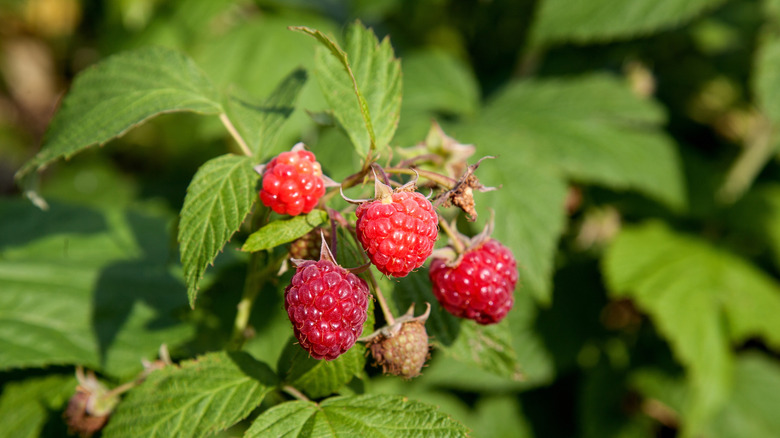
Like their supermarket cousins, strawberries, raspberries aren't true berries. Ditto blackberries, which are arguably as delicious, but are a nightmare to control in the garden. While raspberries (Rubus spp.) can be enthusiastic spreaders, they're much easier to stake up and control than their more vicious brethren, blackberries.
Plus, they're patient, easygoing, and a good choice space-wise, since they grow upward. "If you need to grow along a fence that doesn't get full sun all day, try raspberries," Lindsey Chastain says. "The fence with some wire will hold them up nicely, and they tolerate the shade." Although you can grow raspberries in pots, they're not the best for containers. They're hardy if containers are all you have, Chastain says, but they have a deep root system that prefers to go right in the ground.
If you're really working with space constraints, that's okay. "Raspberries can get a little wild in the ground, but there are compact varieties that work great in containers," Brianna Cordova says. "They'll need a little support, like a trellis or some bamboo stakes, but they're surprisingly easy to grow." She loves their cheerful return every year. "It feels like they just do their thing as long as you give them sun and water."
There are a few caveats. Chastain advises you protect fruit with bird netting as they start to grow. Also, remember that raspberries require good fertilization, but there are many kitchen ingredients that you can use to fertilize your garden for free, such as coffee grounds. And while they want consistently moist soil and can tolerate lots of rain, don't overwater your plant — an inch a week will do.
4. Grapes
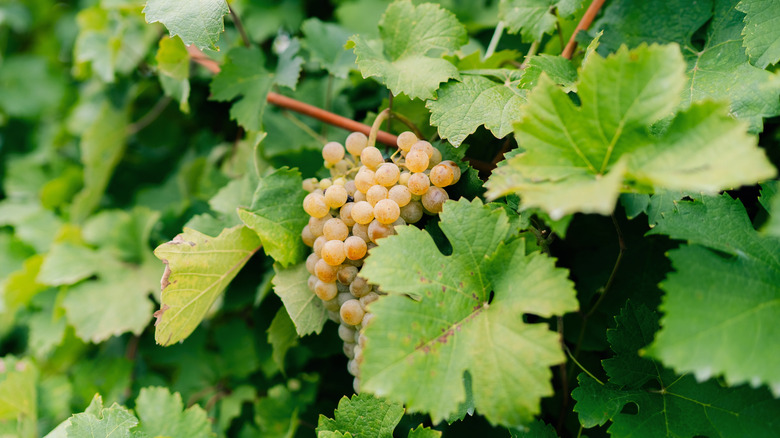
Grapes (Vitis vinifera) are a childhood favorite, and one of the loveliest sights in summer, growing along a fence or up a trellis. Turns out, it is easy enough to grow grapes, but you have to pay attention to their needs if you want to produce yummy fruit. For one thing, you need to pick cultivars that are suited to the region in which they will be grown. Because grapes are bred across the world, in many different climates, not all types are suitable for all places — a home by the sea will call for a different variety than a mountain house.
The secret to getting good grapes is to maintain exacting growing practices. Full sunlight and adequate water are both important. Place vines 6 feet apart from one another so nobody gets crowded. Most importantly, make sure you prune each year in the spring, before you see new leaf buds. Get a book or look up instructions online that tell you which steps to take when, from planting to pruning, shoot removal to tying new growth, and so on. Viticulture, or the practice of growing grapes, stretches back as far as 8,000 years. It's safe to say that in that time, humans have learned a few tricks that are worth following in your own garden.
And although grapevines are easy enough fruits to grow in a garden, you still need to watch for pests. For instance, ants can be a red flag because they spread aphids around. Other pests run the gamut from borers to moths, weevils to mealybugs, and chipmunks to squirrels. Watch carefully and use these hacks to remove pests where necessary.
5. Figs
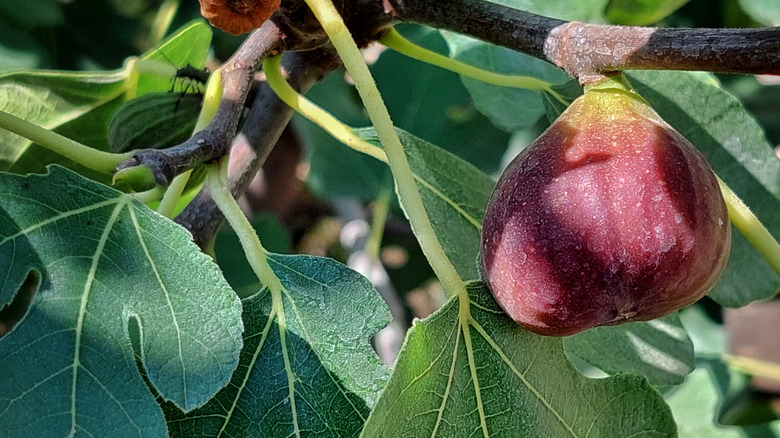
We've mostly avoided fruit trees on this list because they can really get out of hand unless you spend your life pruning or espaliering them. However, figs (Ficus spp.) tend to be pretty genteel, coming in dwarf varieties and tolerating pruning. Indeed, you can prune them harshly and they'll still come back year after year with a will.
"Figs might sound fancy, but they're super chill to grow, especially in pots," Brianna Cordova says. "They actually prefer their roots a little cramped, which makes them perfect for container gardening." She advises varieties such as Petite Negra, which will give you fresh figs in a limited amount of space. "Just give them sun and warmth, and they'll reward you."
Of course, you don't have to grow figs in pots. They're also easy fruits to grow in a garden right in the ground, assuming you amend the soil properly and pay attention to sun and water requirements. Remember that although many types of figs are cold-tolerant, they hail from tropical and subtropical climates, so you have to protect them in the winter. (This writer could share many a story of wrapping fig trees up in snowstorms, such as the Famous Flying Wool Blanket Incident of 2023. The less said about that, the better.) Point being: They survive, but they may need TLC.
6. Huckleberries
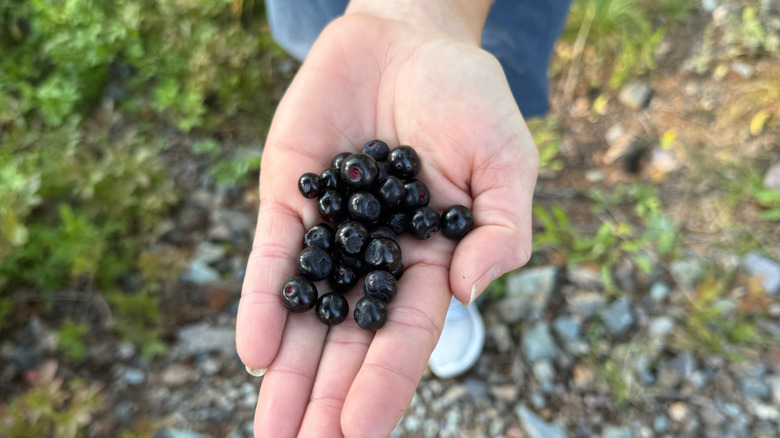
As of this writing, I've just returned from Montana, where huckleberries are A Really Big Deal. Seriously, I've never seen so many huckleberry products in one place: huckleberry tea, huckleberry taffy, huckleberry licorice, huckleberry popcorn, huckleberry fudge, huckleberry soda ... and on and on. I can safely say that not all of these are worth eating — licorice, yes; fudge, hard no — but it's still a delicious flavor that's worth harvesting straight from your own backyard.
In the same genus as blueberries (Vaccinium), they're native to North America and grow well in many temperate gardens. If you can successfully grow blueberries, chances are good you're close to the USDA zone range and general requirements of huckleberries as well. In general, they're easy fruits to grow in a garden.
You can take steps to get a better harvest, though. "The trickiest part of a small garden is pollination," Lindsey Chastain says. In other words, how do the flowers get fertilized so that they set fruit? The good news with huckleberries is that they self-pollinate, which means you will get fruit even if you only grow one bush. Even so, you can expect better berry production if you plant more than one bush and they pollinate one another.
7. Currants
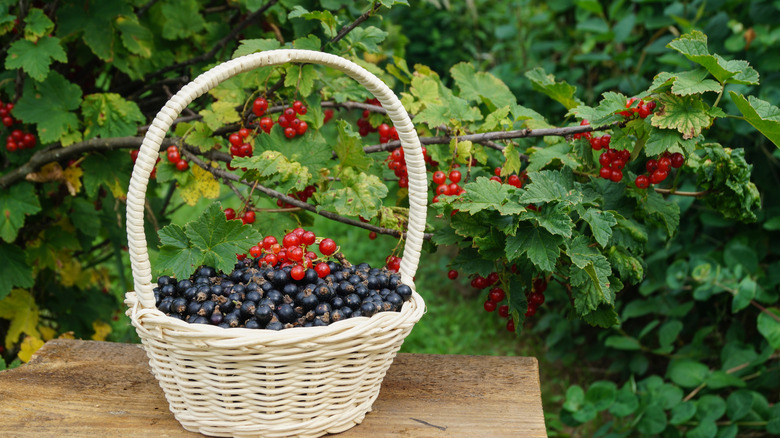
Although they probably don't jump to mind immediately when you think of homegrown produce, currants (Ribes spp.) are another of the easiest fruits to grow in a garden. Pretty shrubs that grow to between 3 and 7 feet, these ¼-inch berries are a classic in desserts, ranging from purple-black to red to white. "The berries are versatile, used in jams, jellies, juices, liqueurs, wines, and even candies," Anastasia Borisevich says.
And they really are easy, according to Brianna Cordova. "Currants are underrated in my opinion," she says. "They don't mind a bit of shade, they're compact, and the berries are super versatile for cooking or freezing. If you're tight on space or don't get full sun all day, currants are definitely worth trying."
While they're growing in June, you'll want to make sure you keep the soil consistently moist, Borisevich says. "Think of them as little sponges, always eager for a sip, particularly when those precious buds are plumping up and the plant is putting on a growth show," she says. Don't waterlog them, though. Make sure they have good sunlight, ideally some shelter from harsh winds, and acidic, loamy soil. Live in a cold climate? Don't worry; currants can withstand temperatures down to -31 degrees Fahrenheit, she says.
8. Lemons
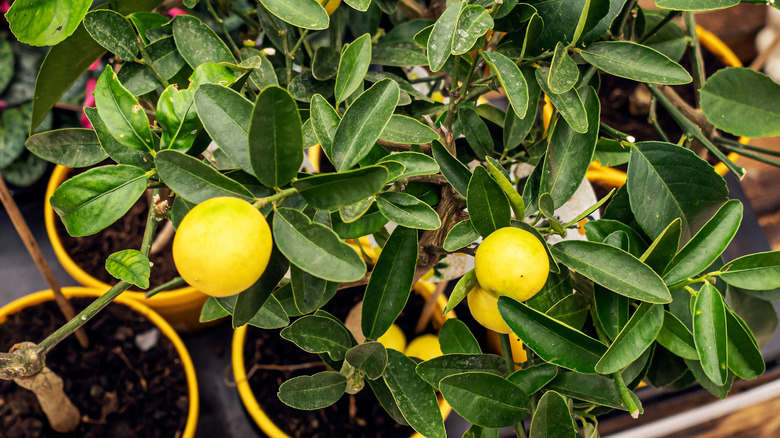
Who doesn't love lemons? The good news is, they're an easy fruit to grow, as long as you know what you're doing. The main thing is that lemons (Citrus × limon), like figs, are well-behaved if you buy dwarf trees. "Dwarf lemon trees are so much fun!" Brianna Cordova gushes. "You can grow them in a big pot, and they'll give you fragrant blooms and actual fruit, sometimes even indoors if you get enough light." She recommends Meyer lemons in particular. "They make a small space smell amazing, and they're just a really cheerful plant to have around."
Lindsey Chastain agrees that these are a great choice if you live in USDA zones 7 and above. "Homegrown lemons taste so much better than store-bought," she says. "The trees are relatively small and produce a good amount of fruit. Just be prepared to bring the plant indoors in the winter if it gets too cold." On the upside then your fruits are even closer for teas, dressings, and desserts.
In terms of general care, these evergreen shrubs need regular watering when first planted (at least twice a week), but can be reduced to only once a week when they get established. Full sunlight is a must, Anastasia Borisevich says because lemons are native to tropical and subtropical areas where cold is a rarity. Slightly acidic soil with good drainage is what your lemons want, and remember to avoid drafts if you have to bring them inside over the winter.
9. Rhubarb
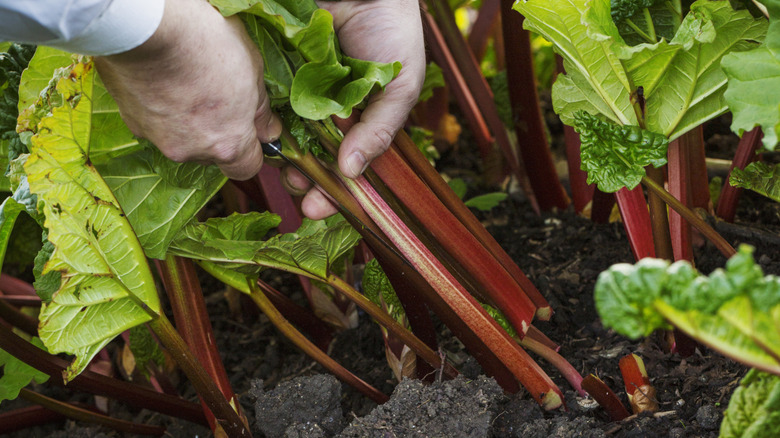
Rhubarb (Rheum x hybridium) is an interesting one because it doesn't look at all like other common fruits to grow in a garden. Rather, it is considered by the USDA to be a fruit "in use," meaning that most people use it for sweet applications such as pie, jam, and sauce, and it therefore gets honorary inclusion. However, it is the tangy red stems — growing at the base of big, dark, shiny, green leaves — that gardeners and homesteaders use to make those foods.
As it turns out, rhubarb is quite space-effective. "In a small garden, anything that grows upward can double your growing area without crowding the floor," Brianna Cordova says. Rhubarb definitely does this, and while it takes a while to get established, it produces reliably every year once you have a good colony growing. Even more appealing, it pops up early in springtime, when the berries and tree fruits haven't yet made a peep.
The only factor to note with rhubarb, however, is that it can be toxic if you eat the leaves. While the stems don't produce enough oxalic acid to poison you, the leaves can, so you should never eat them and should always carefully trim any green parts off before putting stems to use.
10. Gooseberries
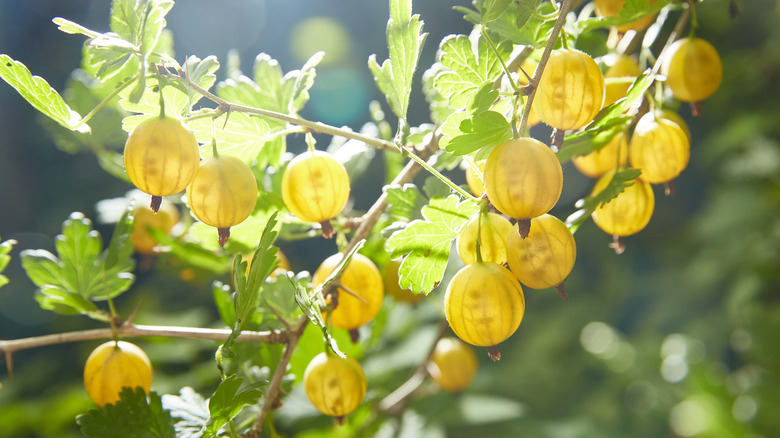
Ever seen those small, globe-shaped, striped fruits at the store or farmers market in summer and wondered what they were? The answer is gooseberries. The gooseberry grows as a thorny shrub up to 5 feet tall, Anastasia Borisevich explains, producing half-inch berries in green, yellow, or purple. "Gooseberries are eaten fresh or used in jams, jellies, preserves, compotes, and candies," she says, adding that the plant is naturalized across many parts of the Northern Hemisphere. They are among the easiest fruits to grow in a garden as long as you tend them well.
While not finicky, per se, gooseberries do have specific needs. The first is watering. "Think Goldilocks and the Three Bears: not too much, not too little, but just right," Borisevich says. "Overwatering is a no-no, leading to soggy roots and unhappy berries." As long as you keep water away from the leaves and water well, you'll be fine. "Pay extra attention during the crucial growth spurts of May (new shoots!), June (fruit formation!), and October (preparing for winter's slumber)," she says.
They also need good light, shelter from the wind, and fertile, well-drained soil, like most fruits. The best news for northern gardeners? "They're practically superheroes when it comes to cold, tolerating temperatures as low as -40 degrees Fahrenheit," Borisevich explains. "Talk about a winter wonderland warrior!"