

10 Spicy Burger Toppings Guaranteed To Set Your Mouth On Fire
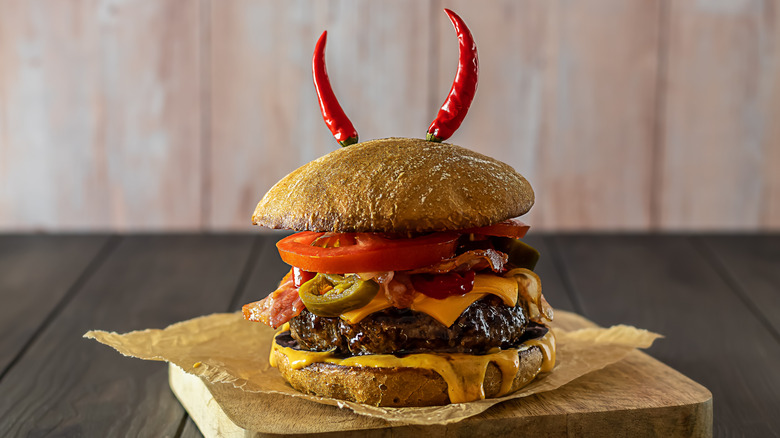
Looking to give your burger a hit of heat, but bored of the same old splash of hot sauce and sliced jalapeños? There are plenty of fiery burger toppings that will kick your taste buds into high gear. And we're not talking just a slight warming of the tongue — we mean ingredients that will seriously crank up the spice levels and have you running for a glass of milk, or the next best thing.
The majority of spicy foods get their heat level from capsaicin, which is found in peppers. The Scoville scale measures the heat levels of peppers in Scoville heat units (SHUs). Bell peppers are at the bottom with 0 SHUs, while Pepper X is at the top of the scale with an eye-watering 2.693 million SHUs. Allyl isothiocyanate is another compound that creates a burning sensation, found in foods like mustard, wasabi, and horseradish. Slap some ingredients containing these potent compounds on your burger, and you'll be tearing up and sweating in no time.
Beyond just adding some chiles or spicy mustard to your burger, there are plenty of ways to take the heat level up a few extra notches. You can slather on pepper-packed salsas or spicy spreads, create fiery slaws, or melt cheeses that sneak in a sinus-clearing burn. If you're ready to test your limits and increase your spice tolerance, these are 10 spicy burger toppings that are guaranteed to bring the heat.
1. Ghost pepper cheese
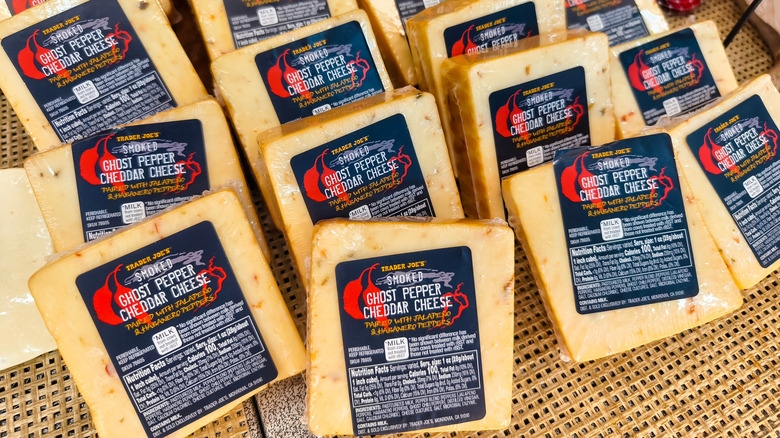
When most people look for the spiciest ingredients in the grocery store, they head straight to the hot sauce or spice row. However, your cheese section might be hiding a sneaky heat bomb that's perfect for burgers. Ghost pepper cheese typically combines mild cheese like Monterey Jack or cheddar with tiny flecks of fiery ghost peppers, which are considered some of the hottest peppers in the world. Melt some of the cheese on your burger and you'll get evenly dispersed heat, along with a touch of creaminess.
Also known as bhut jolokias, ghost peppers are small, pointy chiles that come from India. They can be yellow, orange, red, or brown and can clock in at over 1,000,000 SHUs. To put that in perspective, jalapeños range between 2,000 and 8,000 SHUs. The taste is sweet and fruity at first, but then it gives way to a slow and intense burn. You might not want to put straight-up ghost pepper chiles onto a burger, but mixing with cheese can help temper the heat.
If ghost pepper cheese isn't available at stores in your area, you may be able to order Shullsburg Creamery Ghost Pepper Cheese on Amazon. Or you could look for other cheeses that contain chiles like habanero Jack or jalapeño Cheddar. Alternatively, you can chop some fresh chilies and mix them into cream cheese, whipped feta, or some other type of spreadable cheese that you can smear on your burger.
2. Hot slaw
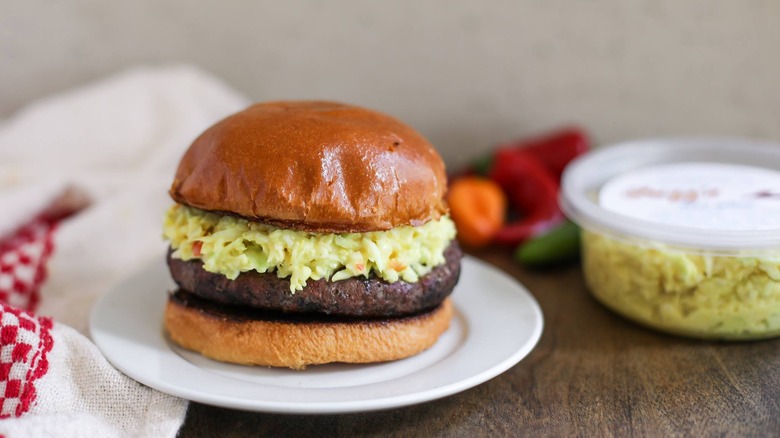
Regular coleslaw makes for a cool and creamy addition to burgers, but if you want to upgrade your coleslaw with a spicy kick, consider making hot slaw. This mouth-tingling condiment typically features cabbage, onions, and jalapeños mixed in a tangy dressing that can include mustard, vinegar, and mayonnaise. It works well on burgers because it adds a touch of heat and acidity to cut through the fattiness of the meat. Plus, you get some nice crunch and a cooling effect from the creamy mayo.
Hot slaw is the official state food of Tennessee, and the city of Cleveland is the hot slaw capital. Cleveland locals will tell you that the dish was invented at the local Star Vue drive-in theater back in the 1950s. Today, many families and restaurants have their own recipes, several of which are showcased at Cleveland's annual Hot Slaw Festival. Some go heavy on the jalapeños to make the slaw extra spicy, while others run on the mild side.
Hot slaw can be used on everything from hot dogs to hamburgers and sandwiches. It's also pretty tasty on its own or as a side dish. It's pretty easy to make at home too, with all the same ingredients you would use to make a mayo-mustard-based slaw, plus the addition of pickled jalapeños. Many say the secret is to mix some of the jalapeño brine into the slaw to give it extra flavor. It also tastes better if it's left to sit for a while so that the flavors can really meld together.
3. Carolina Reaper ranch
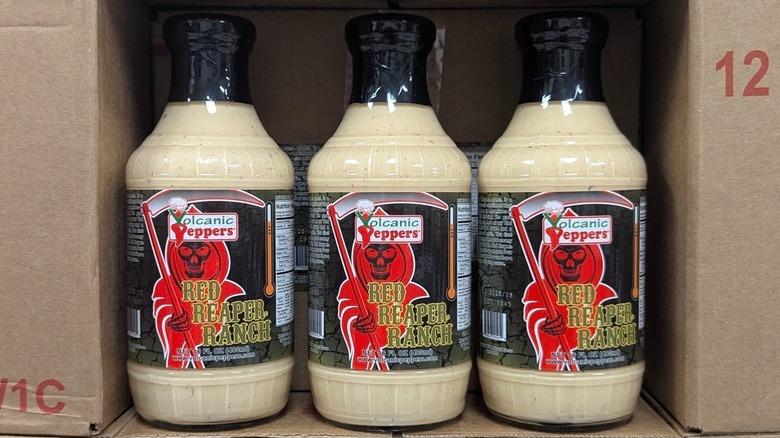
If you're among the many people across the country who love putting ranch dressing on everything but wish it packed a bit of heat, Carolina Reaper ranch dressing is a must. It includes all your typical ranch dressing ingredients like mayonnaise, sour cream, dill, garlic, and lemon juice, but with the addition of absurdly hot Carolina Reaper chilies. Drizzle it on your burger and you'll have an instant flavor bomb that will creep up on you with a long-lasting burn.
The Carolina Reaper pepper was created by farmer and plant geneticist Ed Currie. He crossed Pakistani Naga peppers with habaneros from the Caribbean to create this mouth-searing variety. With an average heat level of about 1.64 million SHUs, it was once the hottest pepper in the world. However, in 2023, it lost that distinction to the Pepper X, which is also an Ed Currie creation. A little bit of the pepper goes a long way, so you might want to go easy on your Reaper-infused ranch to start.
There are a few companies that make Carolina Reaper ranch dressing and seasoning. However, if you can't get your hands on some, you can always add some finely diced Carolina Reapers to your homemade or store-bought ranch dressing. A dash of Carolina Reaper hot sauce will also do the trick. If you're using fresh peppers, be sure to use gloves when you dice them because these babies burn.
4. Roasted hatch chiles
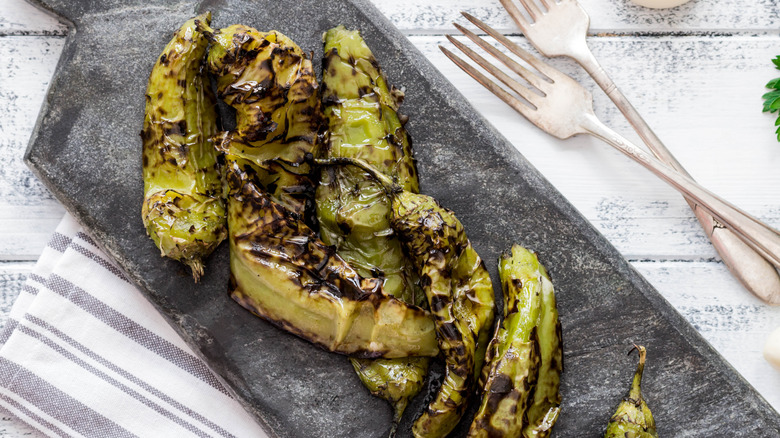
Ask any New Mexican what the best burger topping is, and chances are they'll point you straight to Hatch chiles. The state is affectionately known as the chile capital of the world, although if we're talking about production by volume, that title technically goes to China, followed by Mexico. Technicalities aside, New Mexico is famous for its Hatch chiles, which are used in the state's famous spicy green chile cheeseburgers. When roasted, the chiles add a mix of sweet, smoky, and spicy flavors.
Hatch chile is a broad term to refer to numerous varieties of chiles that grow in New Mexico's Hatch Valley. Most have long, green pods that turn red when they ripen. Some are mild, hovering at around 1,000 SHUs, while others can reach up to 8,000 SHUs. The flavor is slightly grassy and fruity with a bit of residual heat. In New Mexico, they're used not just for burgers, but also enchiladas, chilis, soups, sauces, and more.
Fresh is always best when it comes to any type of produce, but if you can't find fresh Hatch chiles, you may be able to get them frozen or canned at your grocery store. There are a few ways you can incorporate them into your burger, including finely dicing them and adding them directly into your burger patty mix or sprinkling them on top of your burger. You can also blend them with other ingredients like tomatoes, lime juice, and onion to make a Hatch chile salsa or hot sauce.
5. Kimchi with extra gochugaru
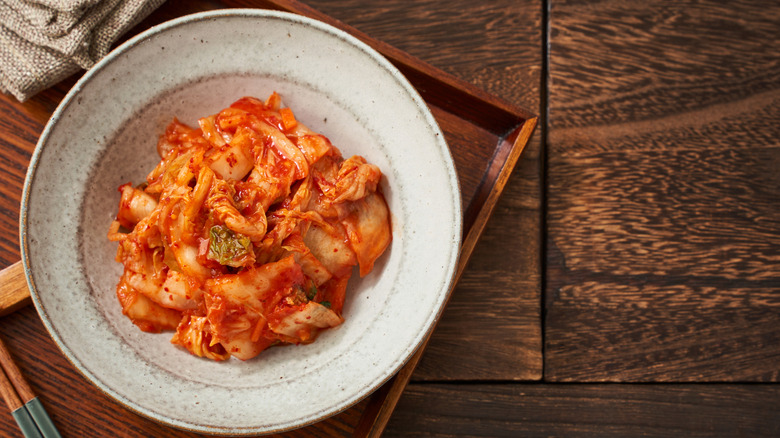
Korean barbecue fans know that kimchi is a great accompaniment to meat, but it doesn't have to be just a side dish. The sour, spicy, and crunchy characteristics can also take burgers to the next level. The tanginess of kimchi does a great job of cutting through the richness of beef and cheese, and the veggies add texture. Plus, kimchi comes in a variety of styles and flavors, including mild versions and ultra-spicy concoctions.
If you're not familiar with kimchi, it's a Korean condiment that typically uses cabbage as a base. The cabbage is salted to draw out water and keep it crisp, then it's rinsed and rubbed in a paste made with ingredients like garlic, ginger, sugar, fish sauce, water, and a dried chili powder called gochugaru. The final step is letting the kimchi ferment for a day or two, which gives the condiment its signature sour, umami flavor.
Korean cuisine is having a major moment in the U.S. right now, so it shouldn't be too hard to find kimchi at your local grocery store or specialty Asian shops. That being said, it's not so difficult to make kimchi at home. All it takes is the right ingredients and a bit of patience, as you'll need to wait for the salt to work its magic and for the kimchi to ferment. If you like your kimchi eye-wateringly fiery, be generous with the gochugaru. You can also sprinkle gochugaru on your kimchi-topped burger for extra spice.
6. Spicy giardiniera
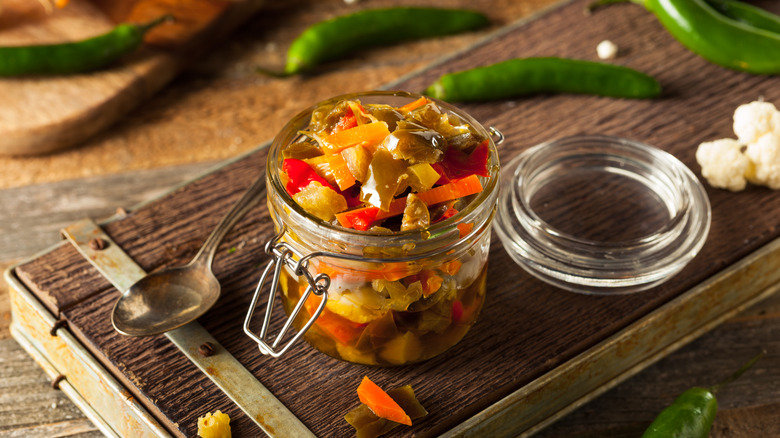
Why settle for sad pickles on your burger when you can top it with a pile of fiery giardiniera instead? This Italian condiment consists of chopped vegetables like cauliflower, carrots, and green beans that are pickled in brine and oil along with spices and aromatics like garlic, bay leaf, and black pepper. Many versions also include chiles, which infuse their fiery goodness into the mix. Like kimchi, spicy giardiniera adds acidity and heat, and plays well against meaty burgers and rich cheeses. It also adds textural contrast to the charred patty and soft bun.
Giardiniera has roots in Italy, where it was a way to preserve vegetables at the end of the growing season. It made its way to America via Italian immigrants around the turn of the 20th century, and then it evolved beyond just pickled veggies. It became particularly popular in Chicago, where hot peppers were often added to give it some zing. Many Chicagoans will tell you that it's an absolute must on the city's iconic Italian beef sandwiches.
The type of peppers used for giardiniera depends on what version you're going for. Traditional Italian giardiniera often features sweet peppers, while Chicago-style giardiniera leans a bit more on the fiery side with additions like sport peppers, serrano chiles, and jalapeños. If you like it spicier, look for the jars labeled hot, or even try something like Enrico Formella Extra Hot Giardiniera. Of course, you can also make your own and experiment with different types of chiles.
7. Chili crisp
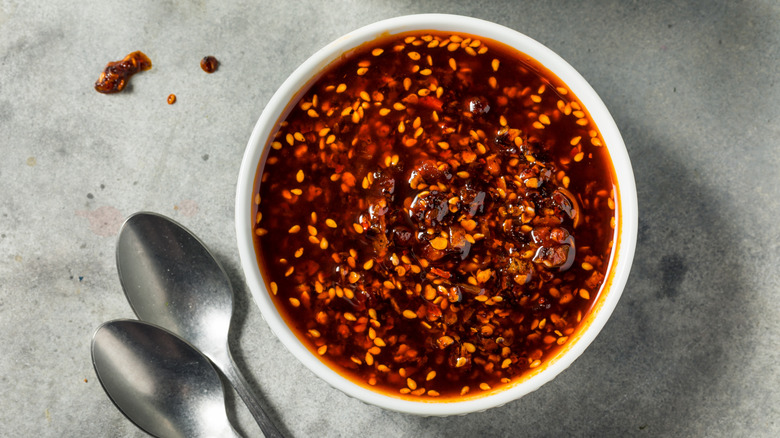
If you've spent any time scrolling through food TikTok or browsing trendy grocery aisles lately, you've probably seen jars of chili crisp everywhere. Originally from China, this crackly-hot condiment really gained traction in North America during the pandemic, and now it's a staple in home kitchens and restaurants alike. People have been coming up with tons of surprising ways to use chili crisp, from drizzling it on pizza to spicing up salads, and even using it as a topping for ice cream. It also makes for a great burger condiment.
While chili crisp varies considerably from maker to maker, it often features a mix of dried chiles, Sichuan peppercorns, crunchy garlic, shallots, and spices in oil. Some versions also amp up the crisp factor with ingredients like sesame seeds or peanuts. It's a no-brainer for burgers because it adds spice, along with a bit of crunch, and extra umami flavors to bring out the meatiness of the burger patty. The oil also adds extra moisture.
The easiest way to jazz up your burger with chili crisp is to slather it directly on the patty or bun. You can also incorporate it into the patties so that it's evenly distributed and you get a hit of heat in each bite. In addition, you can swirl it into condiments like mayo or pimento cheese to offset the crunch with a bit of creaminess.
8. Som tum
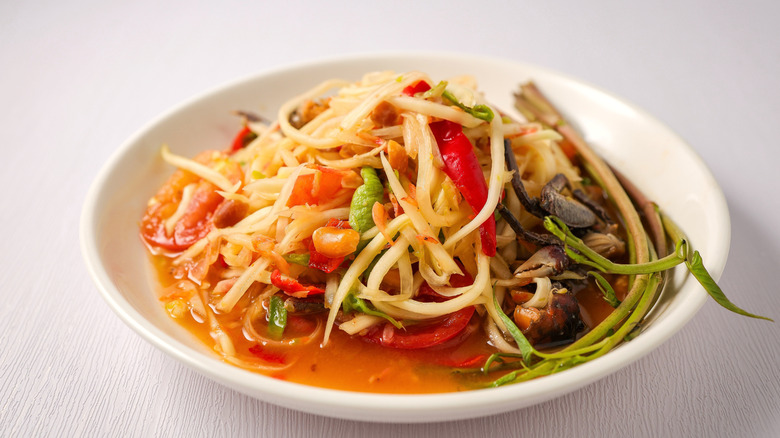
Spicy green papaya salad, or som tum, is a Thai street food staple. It's typically eaten on its own as a salad, but adventurous eaters have discovered it's also a brilliant way to add crunch and heat to burgers. It makes for a great swap for coleslaw because it has a similar texture, with its shredded papaya, but the dressing is a healthier mix of fresh lime juice, fish sauce, and bird's eye chiles. It also gets crunch from peanuts and saltiness from dried shrimp, and some versions include palm sugar to add a touch of sweetness.
Thai food is all about balancing sweet, sour, bitter, salty, and spicy flavors, and that's exactly what you get with som tum. It works well with burgers because the salad's fresh crunch helps balance out the heaviness of the meat, and the tangy dressing cuts through the fat. The chilies add real heat without relying on bottled hot sauce, and the crunchiness and bright flavors give burgers a boost you won't get from plain coleslaw or one-note condiments.
The great thing about som tum is that it's easy to modify to your tastes. You can add more chiles to make it extra fiery or leave out the dried shrimp if you're not a fan of seafood. Some recipes call for cherry tomatoes and green beans, but they can be a bit chunky for a burger topping, so there's no need to include them. Don't be afraid to experiment with different variations until you find one that adds just the right kick to your burgers.
9. Wasabi
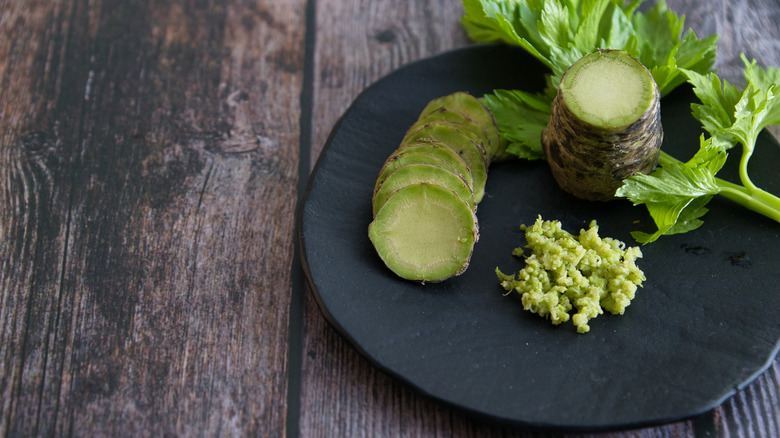
You might recognize wasabi as the bright green paste that's usually served alongside sushi. At first glance, it looks innocent enough, but if you've ever accidentally ingested too much, you know that it can pack a pungent punch. Where it differs from chiles is that the compound that makes it spicy, allyl isothiocyanate, goes to your sinuses instead of your tongue. It also fades fast. That's what makes it great for burgers — you get the instant burn, but it doesn't knock out your taste buds, so you can still savor the flavor of the meat.
True wasabi comes from grating the root of the wasabi plant. What many people don't realize is that the wasabi plant is rather rare, so the real stuff can be pricey. Therefore, many restaurants use imitation wasabi made with a mix of horseradish, mustard, and green dye. You still get the same effect, though, as horseradish and mustard also contain allyl isothiocyanate. Regardless of which version you use, you'll get the same sharp flavor, although the imitation wasabi may burn for a bit longer.
If you're looking to switch up your burger game with wasabi, there are several routes you can take. You can buy store-bought wasabi mayo or whip up a homemade version with wasabi paste or powder and jarred mayonnaise. Wasabi mustard is another option that will give you even more of that sinus-clearing effect. Some grocery stores or specialty stores also sell wasabi-flavored cheese. And, if you're brave, you can also just smear wasabi directly on your burger patty or bun.
10. Mango habanero salsa or chutney
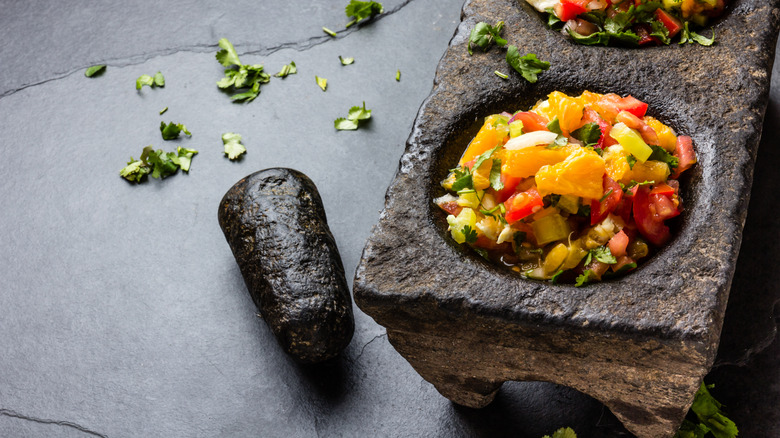
Some of the best spicy condiments balance different flavors so that they're not just a straight-up assault on your tongue. Sweet and acidic elements can balance out the sting of spicy chiles and complement the savory flavors of dishes. A classic sweet-heat pairing that works brilliantly with burgers is mango and habanero peppers. Not only does the mango offset the heat of the chiles, it also adds another level of juiciness to the burgers.
Small, rounded, and typically orange or yellow, habanero peppers pack a wallop of heat. The average habanero ranges between 200,000 to 300,000 SHUs, although they can go much higher. The peppers also have a slightly fruity and floral flavor. With that in mind, it makes sense that habaneros are often paired with sweet ingredients like mango and other tropical fruits in sauces, salsas, and chutneys.
Mango habanero salsa is pretty quick to make and can give your burgers an instant flavor boost. Many people simply toss the mangos and habanero peppers in a food processor along with complementary ingredients like tomatoes, onions, lime juice, and cilantro. You can make it smooth and silky or leave some chunks for extra texture. You can also chop the ingredients instead of whizzing them up for a pico de gallo-style salsa. Chutney is similar to salsa, but involves cooking the ingredients down until they come together into a thick paste. Some people also incorporate sugar and vinegar into their chutney for extra sweet and sour notes.