

What Is Tokyo-Style Pizza And What Makes It Different From Other Kinds?
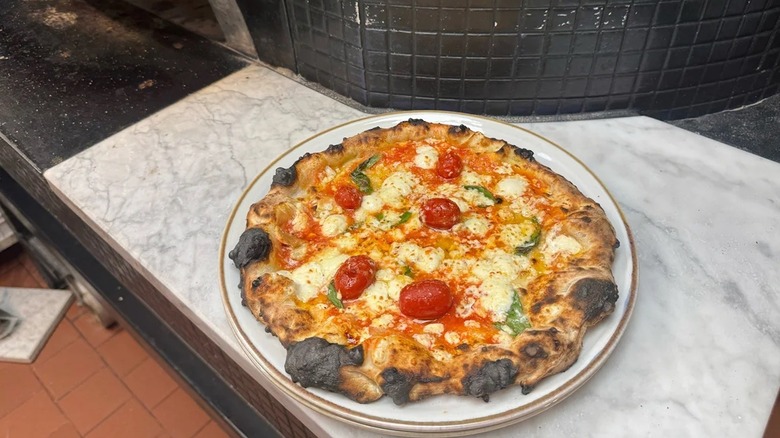
Across the United States, you can find numerous different pizza styles, from classic Neapolitan pies to hefty deep dish pizzas and New York-style slices. But some of the most interesting developments in pizza have been happening thousands of miles away in Japan, where chefs have been putting their own spin on this classic Italian dish. Tokyo-style pizza took root in Japan's capital city 20 years ago, and now it's starting to garner major attention worldwide, including in the U.S. But what exactly is it, and why are foodies suddenly clamoring to get their hands on it?
To better understand what a Tokyo-style pizza is and what makes it unique, we spoke with chef Tsubasa Tamaki, founder of Pizza Studio Tamaki, a renowned Tokyo pizzeria that recently opened a branch in New York City. Tamaki was a pioneer of the new-school pizza movement in Japan, and he coined the term "Tokyo-style pizza." He shared insights into its history, the techniques that set it apart from other pizza styles, and what to expect when you order a pie at PST and other Tokyo-style pizza spots.
The history of Tokyo-style pizza
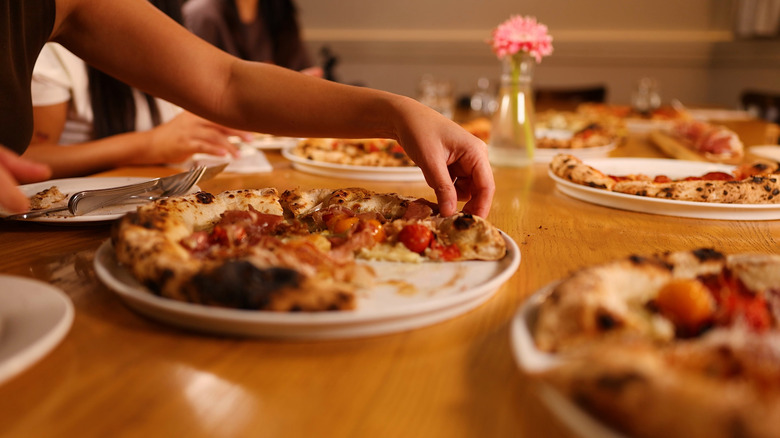
Japan's relationship with pizza goes back much further than the recent interest in Tokyo-style pies. As Tsubasa Tamaki told us, "Pizza has really come in four waves in Japan." The first wave was when Italian and American expats introduced pizza to Japan after World War II. The dish gradually gained a following among post-war generations, and by the 1990s, several chains were operating across the country.
Tamaki told us the second wave began when a pizzaiolo named Susumu Kakinuma opened Savoy in Tokyo in 1995. Kakinuma had previously spent a year eating his way through Naples, and he wanted to bring Neapolitan-style pizza to Japan, but with his own twists. He began experimenting with different dough recipes and cooking techniques. The concept took off, and it wasn't long before Kakinuma was training apprentices at Savoy and his other pizzeria, Seirinkan. One of those apprentices was Tamaki.
Tamaki studied under Kakinuma for about five years, and then left to open Strada in 2011. He started offering pies with a variety of toppings beyond traditional Italian ingredients, ushering in the third wave of pizza in Japan. The fourth wave came in 2018 when CBS News interviewed Tamaki, and he referred to his creations as Tokyo-style pizzas. "And that's when [the name] really started to stick," he said.
How the dough gets its light, airy texture
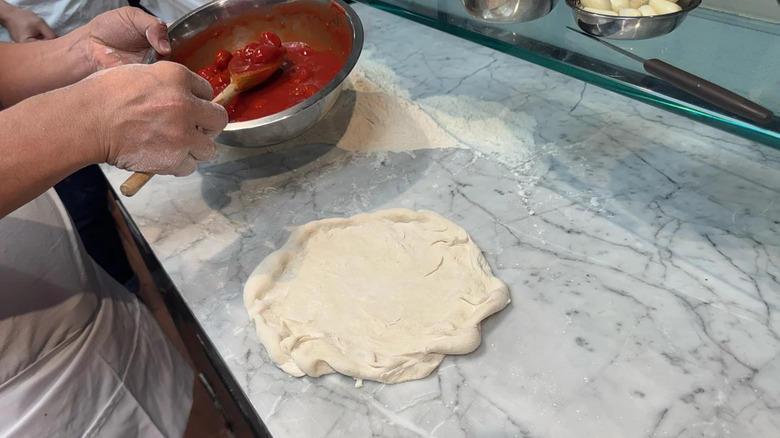
When we asked Tsubasa Tamaki what sets Tokyo-style pizzas apart from other styles, he told us, "The biggest difference is that the crust is a little fluffier, in a way." A typical Tokyo-style pizza features a thick outer rim (also called a cornicione) that bubbles up around the edges, but is thin in the center. It's firm enough to hold the toppings without getting soggy, but also lighter and airier than many other pizzas.
The secret to that pillowy dough is in the flour. As Tamaki told us, "I blend three types of flours. One is a U.S. flour, one is a Canadian flour, and one is a Japanese flour. And I have a special ingredient that I can't really say which brings out the lightness and the smokiness of the flour." He also lets the dough ferment for 30 hours, which adds to the flavor and rise.
Another step many Tokyo-style pizzaiolos take to achieve a potentially great pizza crust is a special kneading technique. Instead of creating a perfectly round base, they often pinch the edges of the dough to create a rippling effect. This allows the outer crust to develop air bubbles, giving the pies puffy rims. The center is left thin enough to crisp up, but thick enough that it doesn't flop when you grab a slice.
The salt technique that sets it apart
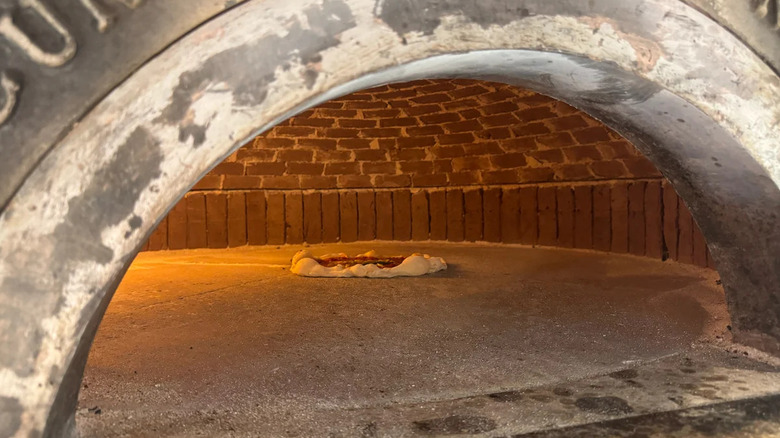
Bite into a slice of Tokyo-style pizza, and you'll notice right off the bat that it has a satisfying saltiness, thanks to salt crystals embedded in the bottom of the crust. That's due to a special technique that Tsubasa Takami calls the "salt punch." He told us, "We don't necessarily put too much salt in the crust or dough, but instead, we put the salt into the oven, so it sticks onto the crust."
The salt punch is a technique that Tamaki learned at Savoy, and it's become a common feature of Tokyo-style pizzas. However, each pizzaiolo has their own way of doing it. Tamaki said, "It will vary depending on the person, and the amount of salt will vary. And the technique as well. We use Okinawan salt because that's where I'm from."
The point of the salt crust is to add extra texture and to make the flavors really pop. The salt plays well with the smoky bitterness of the charring and brings out the natural flavors of the other ingredients, like the sweetness and acidity of tomatoes, the herbal freshness of basil, and the mild milkiness of mozzarella. In Tamaki's case, the Okinawan sea salt also adds a soft salinity to the crust that rounds everything out.
How the crust gets its distinctive char
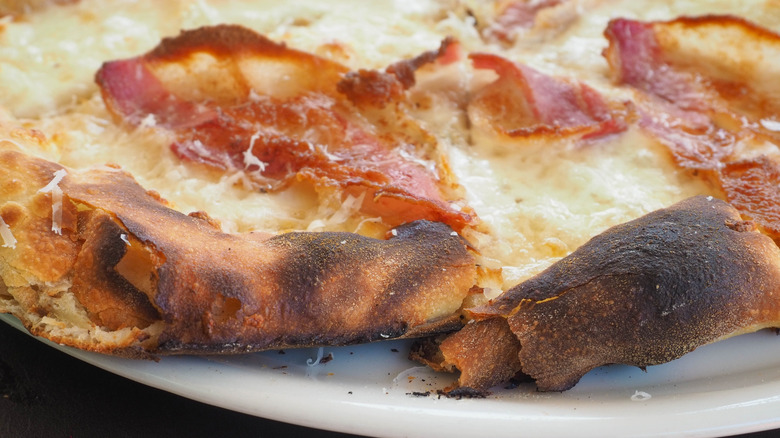
Another key element of a Tokyo-style pizza is the blistered, charred outer crust. Tsubasa Tamaki told us this is intentional. Typically, the pies are cooked in wood-burning ovens that can reach temperatures up to 900 degrees Fahrenheit. As the crust begins to bubble up, the pizzaiolo will turn the pie repeatedly to ensure those bubbles char evenly all the way around. Some chefs, like Tamaki, also like to place the pies close to the flames to maximize the char.
That char is more than just a visual feature. It gives the crust a smoky flavor and adds crispness to its otherwise light, fluffy texture. You might think those burned spots would make the crust bitter, but the unique flour blend prevents that. The high heat caramelizes the sugars in the dough and triggers the Maillard reaction. This creates a flavorful blackened-brown crust, which is a common feature in many foods that taste better when slightly burnt.
The traditional and not-so-traditional toppings
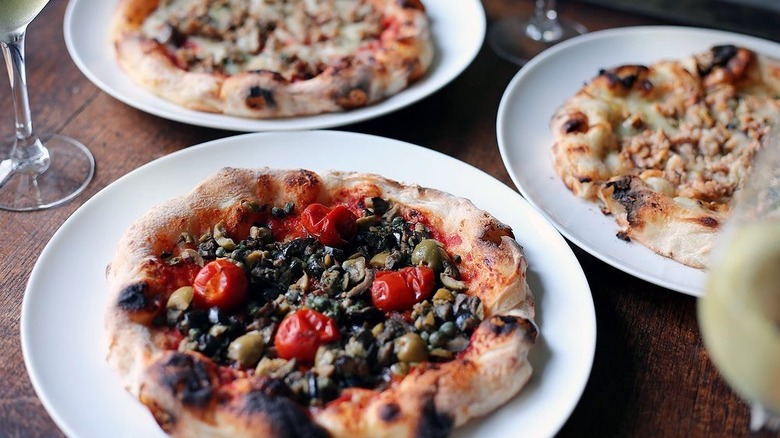
In the early days of Tokyo-style pizza (what Tsubasa Tamaki considers the second wave of pizza in Japan), many chefs stuck to traditional Italian toppings. Think San Marzano tomatoes, fresh mozzarella, and basil. For example, when Susumu Kakinuma opened Seirinkin in 2007, the menu only had two options: a classic Margherita pizza and a marinara pizza (tomato sauce only, with no cheese). That led many to call the style "Tokyo Neapolitan."
Always one to think outside the box, Tamaki began experimenting with different approaches while working under Kakinuma. He said, "I wanted to create something that I would enjoy eating. And so I just kind of naturally started making my own [pizza] while I was there, which eventually led to what it is today." He tested out new toppings at Strada, but his creativity really bloomed when he opened Pizza Studio Tamaki in Tokyo in 2017.
The menu at PST features a variety of pizzas with both traditional and unconventional toppings. For example, the signature Tamaki pizza features San Marzano tomato sauce, cherry tomatoes, smoked mozzarella, Pecorino Romano cheese, and basil. There are also unique creations like the Butter Chicken, inspired by a curry bread called curry pan that's very popular in Japan. Today, many other Tokyo-style pizza chefs are also creating their own unique flavor combos.
How it differs from styles such as Neapolitan
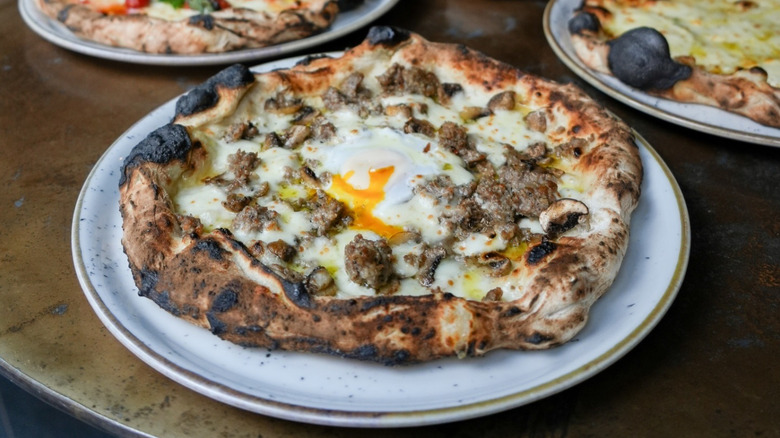
There's no disputing that Tokyo-style pizza takes its inspiration from Neapolitan pizzas. Both have similar puffy crusts and are cooked at temperatures ranging from 800 to 900 degrees Fahrenheit. Even the ingredients can be similar. However, there are some crucial differences between the two and several reasons why a Tokyo-style pizza cannot technically be called a Neapolitan pizza.
The Associazione Verace Pizza Napoletana (a regulatory body that sets and protects the standards for authentic Neapolitan pizza) states that a true Neapolitan pizza must have a cornicione that is "free from burns" and only one to two centimeters (about half an inch) thick. The pizza should be "soft and fragrant," and the toppings should come from Campania. This includes specific types of mozzarella, like fior di latte and buffalo mozzarella, as well as extra virgin olive oil and Italian basil.
Clearly, Tokyo-style chefs have a lot more leeway with presentation and ingredients. For Tsubasa Tamaki, though, it's the crust that really defines Tokyo-style pizza. The smoky char and salt-embedded bottom add plenty of flavor, while the fluffy rim keeps it light. The crisp bottom also holds up better than that of many other thinner pizzas, which can get soupy in the middle.
The spots where you can eat Tokyo-style pizza in the U.S.
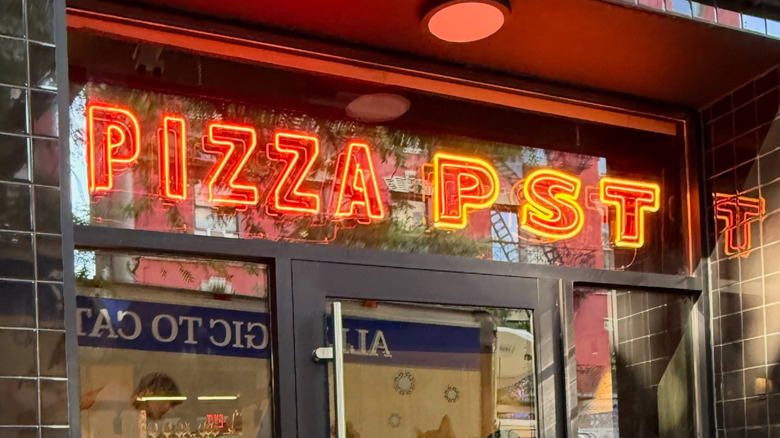
At the time of writing, only a few pizzerias in the United States are dedicated solely to Tokyo-style pizza. In May 2026, Tsubasa Tamaki opened a branch of Pizza Studio Tamaki in New York City's East Village, and it has already generated a lot of hype. In addition to pizzas with fun toppings like nduja, butter chicken, and smoked mozzarella, you can also grab bites like crispy rice and Wagyu meatballs, as well as Japanese citrus beers from Moody Tongue Brewing (the only Michelin-starred brewery).
If you happen to be in Los Angeles, Pizzeria Sei is another spot that focuses on Japanese-style pizzas rooted in Neapolitan tradition. Husband and wife team William Joo and Jennifer So opened the spot in 2022, and it's already earned a mention in the Michelin Guide. The pizzas feature signature Tokyo-style bubbly, charred rims and imaginative toppings like shallot cream, fior de lata, Yukon gold potatoes, and shaved garlic.
Slated to open in November of 2026, Royale Pizza Napoletana will be another spot where you can grab Tokyo-style pies stateside. Chef Bungo Kaneko (who worked at Savoy under Susumu Kakinuku) will helm the kitchen, along with a talented team of pizzaiolos who are well-versed in Tokyo-style pizza-making techniques. Rumor has it that the menu will feature several pies, as well as antipasti and pasta.