

Stovetop Mulled Wine Recipe
We may receive a commission on purchases made from links.
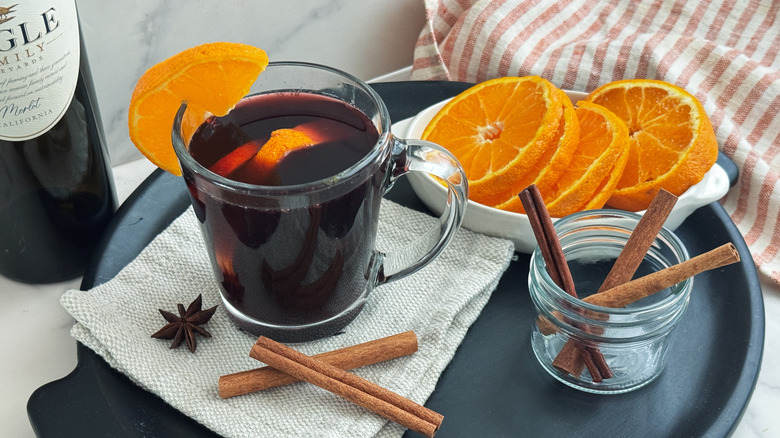
If there is one drink that screams cozy vibes in winter, it's mulled wine. Not only is mulled wine incredibly festive and warming, but it's also a drink that symbolizes celebration and togetherness, which is why it is a common thread among many cultures. Versions of mulled wine date back to ancient times, when Romans and Greeks were sipping on warm wine with honey and spices. Nowadays, Germans enjoy the spiced, red wine-based glühwein (or glow wine), and in certain Scandinavian counties, you might find extra-boozy, raisin-infused versions called glögg.
Mulled wine is beloved for its bold, deep, dry yet fruity flavor from the red wine, a bright citrusy note from infused orange, classic warmth from spices like cinnamon and cloves, and a touch of licorice from star anise. I capture all of these classic flavor notes in this stovetop mulled wine recipe, which also offers a convenient and party-friendly way to serve and enjoy the popular beverage. I love to get a pot of this mulled wine going anytime I'm entertaining over the holidays. You can smell the spiced aroma before you even get through the door, and it sets the tone for a night of joy, laughter, and togetherness.
Gather the ingredients for stovetop mulled wine
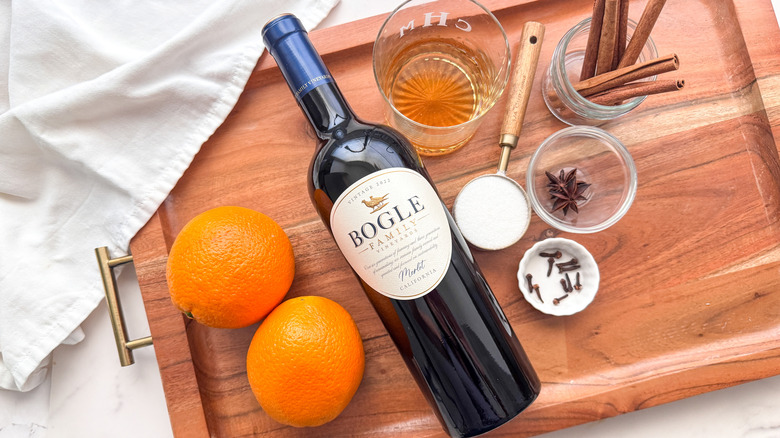
To make this recipe, start by picking up some red wine. There are many good options when it comes to selecting a mulled wine-approved red, but as a general rule, look for a dry red wine that you would enjoy on its own. It can be budget-friendly since the spices and sugar will be a big part of the sipping experience. Along with the wine, you'll also need a little bit of brandy, and again, a budget-friendly option will work just fine.
As for the mix-ins, you'll need an orange for a citrusy touch. Then, check your pantry for granulated sugar, whole cloves, cinnamon sticks, and star anise pods.
Step 1: Peel wide strips from the orange
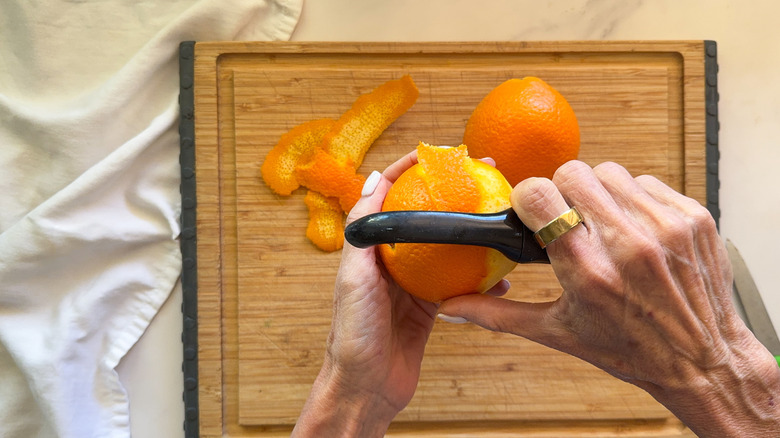
Use a vegetable peeler to remove the peel from the orange in wide strips, leaving the white pith on the orange.
Step 2: Juice the peeled orange
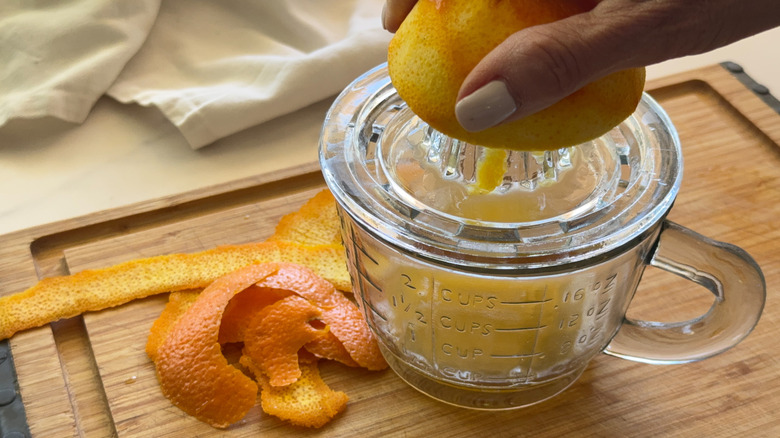
Juice the peeled orange.
Step 3: Add orange juice, sugar, and spices to pan
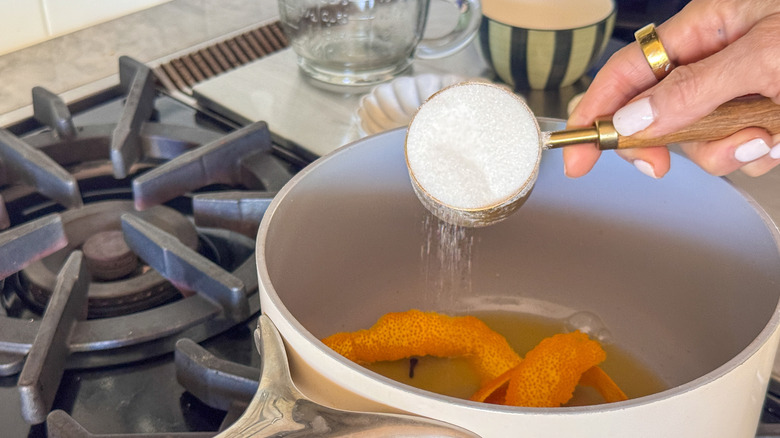
Add the orange juice, peel, sugar, cloves, 2 of the cinnamon sticks, and star anise to the pan.
Step 4: Pour in some wine
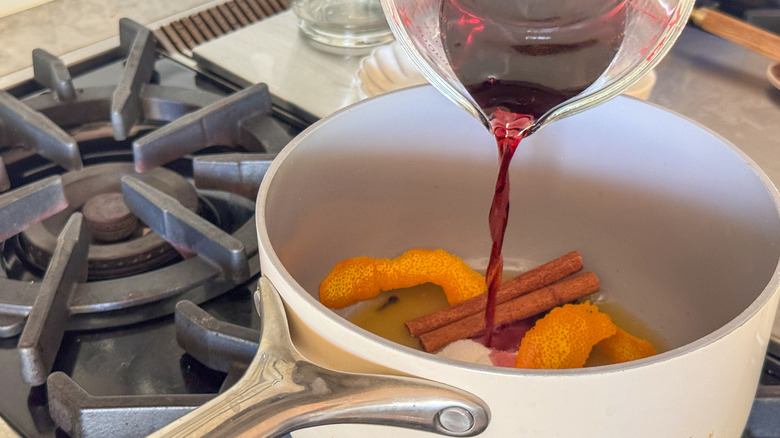
Pour in ½ cup of the wine, just enough to cover the ingredients in the pan. Simmer over medium heat for 5 to 6 minutes, until the sugar dissolves, the liquid reduces slightly, and the mixture smells strongly of spices.
Step 5: Pour in the remaining wine
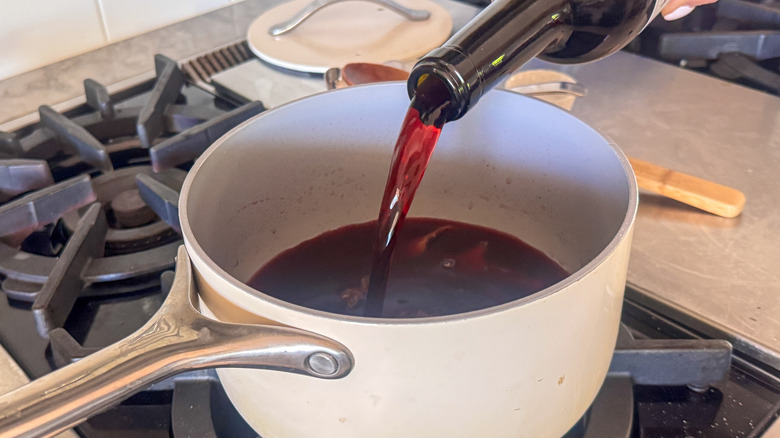
Reduce the heat to low and pour in the remaining wine.
Step 6: Warm and steep the wine
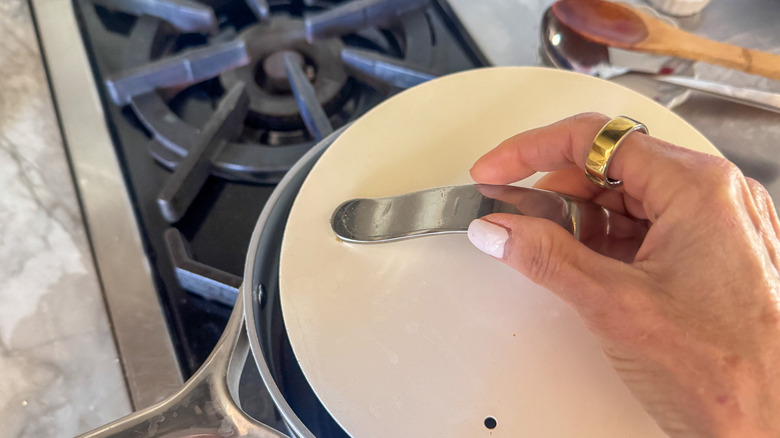
Warm for 8 to 10 minutes, until tiny bubbles form on top. Then, turn off the heat, cover the pan, and let the wine steep for 15 minutes.
Step 7: Stir in the brandy
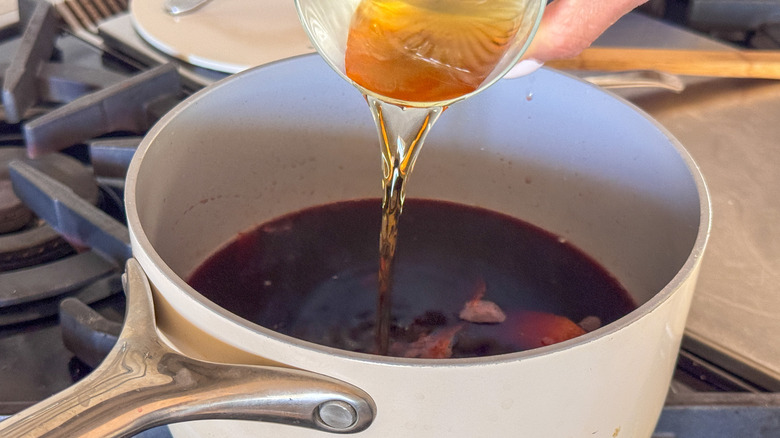
Stir in the brandy.
Step 8: Strain the wine
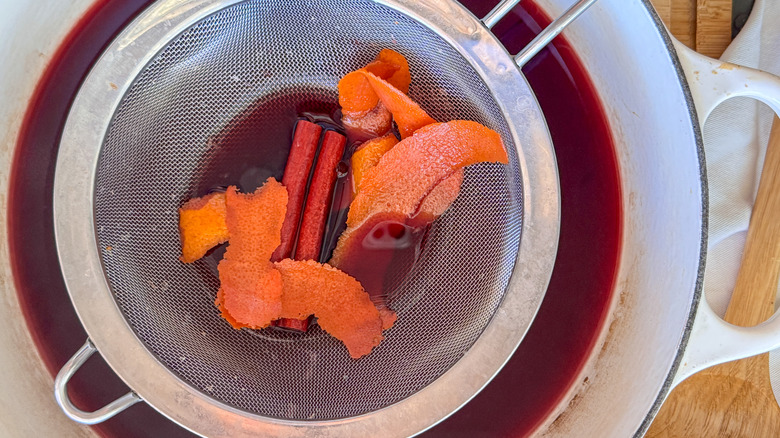
Strain the wine through a fine mesh strainer, or lift out the peel and spices with a slotted spoon.
Step 9: Ladle the mulled wine into mugs
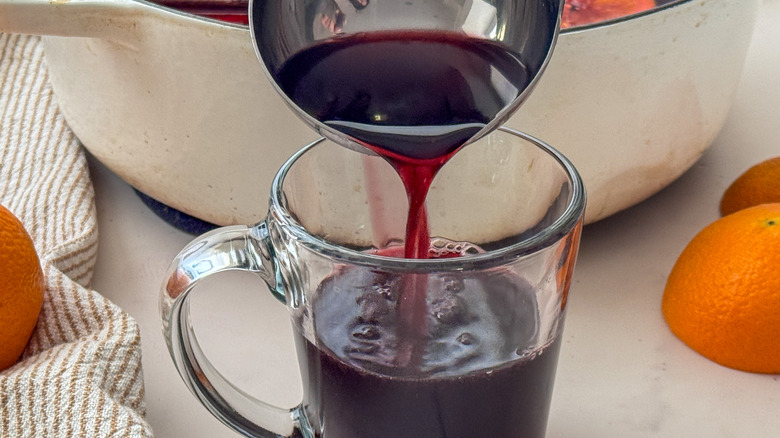
Ladle the mulled wine into heatproof mugs.
Step 10: Garnish and serve the mulled wine
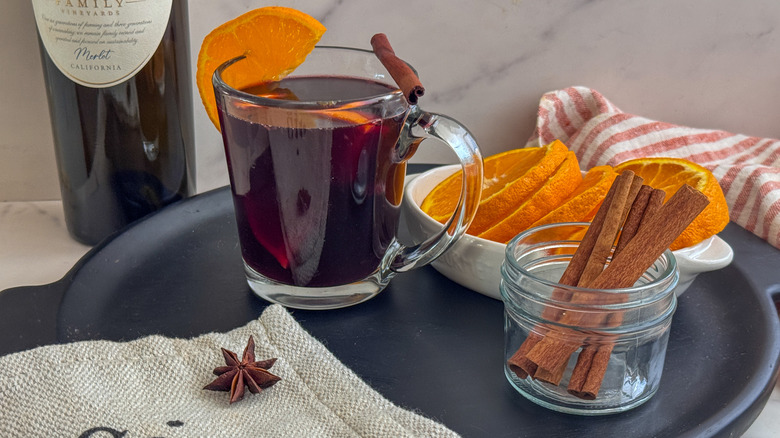
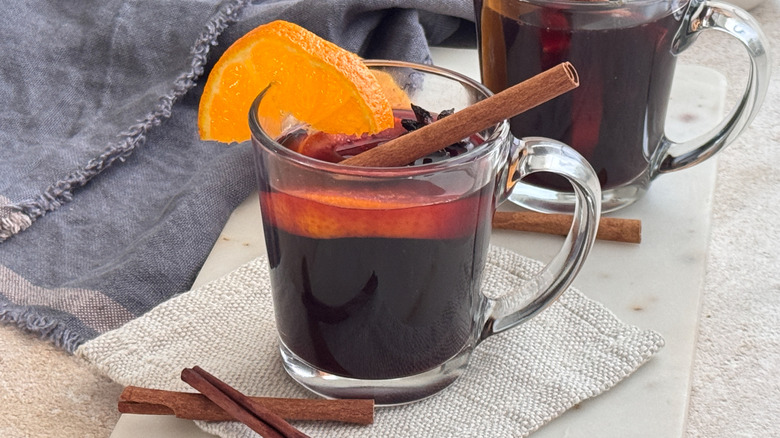
Garnish each mug with extra orange slices and cinnamon sticks, if desired, before serving.
What to serve with stovetop mulled wine
Stovetop Mulled Wine Recipe
Our stovetop mulled wine recipe keeps things simple and classic, featuring dry red wine, brandy, orange juice, and an assortment of festive, warming spices.
Ingredients
- 1 orange
- ¼ cup granulated sugar
- 8 whole cloves
- 2 cinnamon sticks
- 2 star anise pods
- 1 (750-milliliter) bottle dry red wine, such as merlot or zinfandel, divided
- ¼ cup brandy
Optional Ingredients
- Orange slices, to garnish
- Extra cinnamon sticks, to garnish
Directions
- Use a vegetable peeler to remove the peel from the orange in wide strips, leaving the white pith on the orange.
- Juice the peeled orange.
- Add the orange juice, peel, sugar, cloves, 2 of the cinnamon sticks, and star anise to the pan.
- Pour in ½ cup of the wine, just enough to cover the ingredients in the pan. Simmer over medium heat for 5 to 6 minutes, until the sugar dissolves, the liquid reduces slightly, and the mixture smells strongly of spices.
- Reduce the heat to low and pour in the remaining wine.
- Warm for 8 to 10 minutes, until tiny bubbles form on top. Then, turn off the heat, cover the pan, and let the wine steep for 15 minutes.
- Stir in the brandy.
- Strain the wine through a fine mesh strainer, or lift out the peel and spices with a slotted spoon.
- Ladle the mulled wine into heatproof mugs.
- Garnish each mug with extra orange slices and cinnamon sticks, if desired, before serving.
Nutrition
| Calories per Serving | 258 |
| Total Fat | 0.3 g |
| Saturated Fat | 0.0 g |
| Trans Fat | 0.0 g |
| Cholesterol | 0.0 mg |
| Total Carbohydrates | 22.8 g |
| Dietary Fiber | 1.7 g |
| Total Sugars | 16.7 g |
| Sodium | 8.8 mg |
| Protein | 0.7 g |

What other fruits and garnishes can I add to mulled wine?
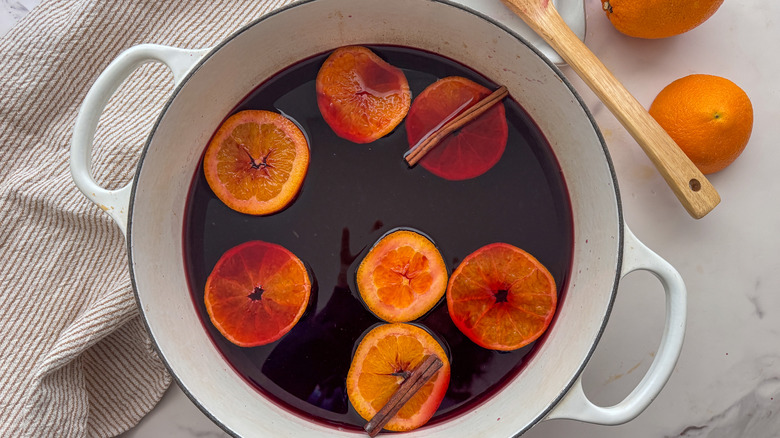
This recipe keeps things simple and classic for mulled wine, but it's fun to get creative and make your batch something all your own. Firm fruits can be added to the pot while the wine simmers, while delicate fruits are better for garnishing. Fresh or frozen cranberries would add a festive red color and a touch of tart flavor. Add ½ to 1 cup and drop them in right after you pour in the remaining wine. Thinly sliced apples and pears would work well too, and you can add them at the same point as the cranberries. They will maintain their shape well and taste delicious down the line, after they soak up the wine and spices. A few thin, coin-shaped slices of fresh ginger would work here as well. Dried fruits like figs, dates, and raisins can go into the pot during the initial sugar dissolving step.
I like to set up a garnish bar when serving the mulled wine, so guests can add whatever they want. Pomegranate seeds add a juicy crunch, fresh rosemary sprigs add a seasonal aroma, and cranberries that have been rolled in sugar are a nice touch. Clove-stuffed oranges look pretty, and they add even more spice when sliced and used for garnish. Extra star anise pods make for a pretty aromatic accent floating on top.
Can I make a non-alcoholic version of mulled wine?
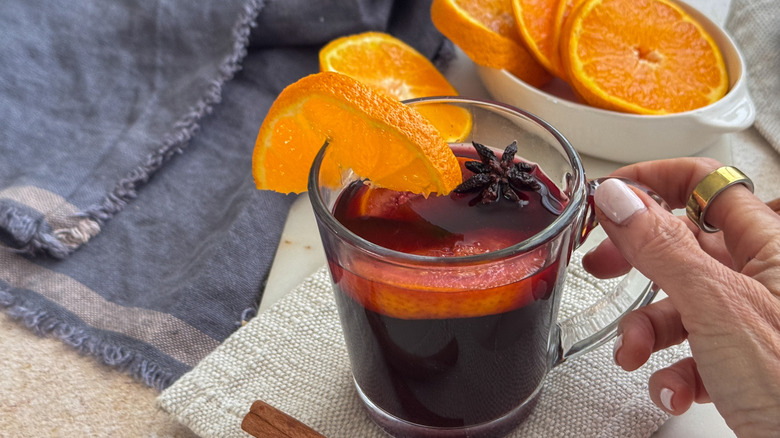
A non-alcoholic version of mulled wine can still be just as festive as the regular boozy version. If you choose to use a non-alcoholic wine, there are a few things to note. There are dealcoholized wines out there, which are real wines that have gone through a process to have the majority of the alcohol removed. But it's worth noting that there will still be trace amounts of alcohol in such wines, so plan accordingly to make sure your wine alternative fits your needs.
If you want to make your mulled wine truly alcohol-free, then your best bet is to use juice. A blend of juices will deliver the best and most complex flavor. Try 2 cups of grape juice with 1 cup of pomegranate juice for a fruity and sweet version. To make it less sweet, add 1 cup of black tea instead of the pomegranate juice. Another sweet combination is 1 ½ cups cranberry juice with 1 ½ cups apple cider. Omit the brandy in this alcohol-free version and add 1 tablespoon of lemon juice to compensate. You'll also need less sugar for the juice blends, so start with 1 tablespoon and go from there.