

14 Of The Best Sauvignon Blancs For Every Budget
We may receive a commission on purchases made from links.
Like Chardonnay, Sauvignon Blanc can be one of those divisive wine grapes. People tend to either love it or hate it, mostly because they assume Sauvignon Blanc falls into one specific flavor profile. But what Sauvvy B haters tend not to realize is that the grape is surprisingly versatile, changing dramatically depending on where it's grown and how it's handled.
At its core, the grape is high in acidity and highly aromatic — there's a reason it's often used as a benchmark grape in blind tastings for wine certifications. In New Zealand's Marlborough region, this shows up as pungent grapefruit, tropical fruit, and green, grassy notes. France's Loire Valley is the grape's best-known Old World home, especially Sancerre and Pouilly-Fumé, where the wine is more restrained and savory. California runs the gamut from lean, stainless-steel bottlings to richer, oak-influenced styles. And then there's the rest of the world.
Consumers seem to be gravitating more and more to lighter, crisper styles, and more white wine in general, which may explain why Sauvignon Blanc has remained a bright spot in an otherwise challenging market. In July 2026, SipSource reported Sauvignon Blanc revenue up 3.2% over the previous three months, even as wine overall fell 4.2%. Sauvignon Blanc, with its distinct aromatics, mouthwatering acidity, and inherent drinkability at every price level, fits that trend perfectly. The bottles below span these different styles at prices from under $10 to splurge-worthy territory.
1. Bogle Sauvignon Blanc
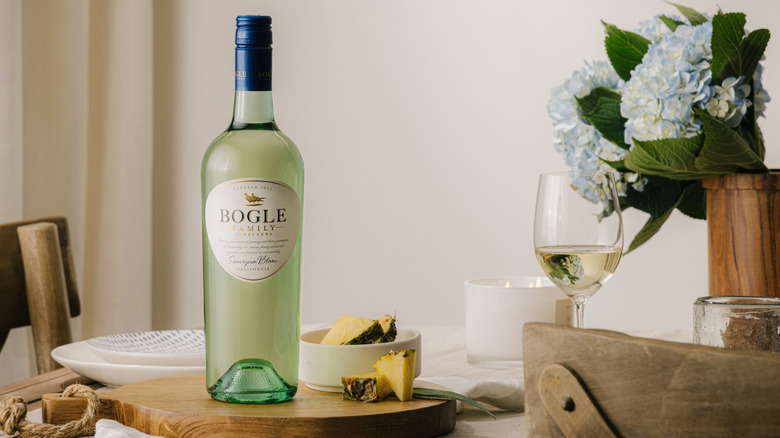
A great, brand-name wine of any kind for under $10 is no easy feat, let alone a crisp, clean Sauvignon Blanc that can't hide behind heavy oak flavor influence. Bogle's Sauvignon Blanc nails the assignment.
The California bottling is cold fermented entirely in stainless steel, with low-oxygen winemaking used to protect fruit and freshness rather than build weight or create buttery notes. This puts it firmly in the bright, juicy, straightforward wine camp, making this the kind of wine that is easy-drinking and a no-brainer, best grabbed straight from the fridge and served with fried fish tacos, shellfish, goat cheese ravioli, or just a stand-around-the-kitchen-counter and yap session.
There are more complex Sauvignon Blancs on this list. But complexity is by no means the point in this price range. What Bogle gets right is that this tastes like an intentionally dry Sauvignon Blanc, rather than something engineered to fit the price.
2. Oyster Bay Sauvignon Blanc
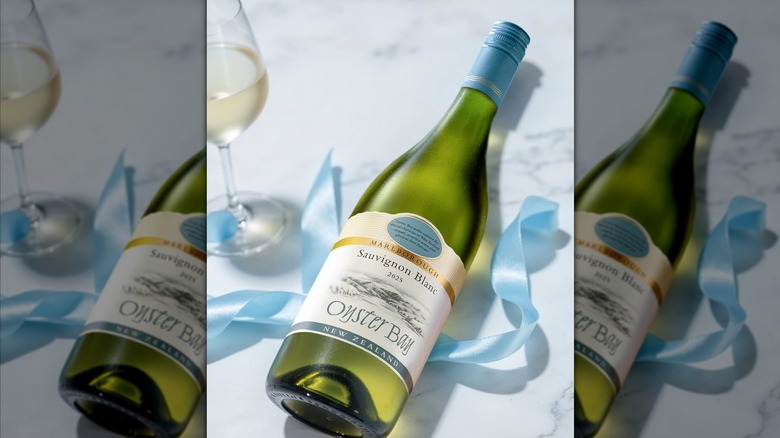
If Bogle is the inexpensive California benchmark, Oyster Bay's Sauvignon Blanc is its New Zealand counterpart. This zingy $12 screw-cap bottle is the easiest entry point to understanding the classic Marlborough style. There's nothing subtle about the wines from this region — they tend to be the extrovert in the room, which, for many, is much of their appeal.
Oyster Bay uses fruit from Marlborough's Wairau and Awatere valleys, where long sunny days and cold nights allow grapes to ripen fully without losing that signature acidity that makes wines from this region so distinct. The wine is fermented slowly at cool temperatures in stainless steel and gets some brief contact with the lees — those dead yeast cells that always sound gross but actually add lovely texture to wine — before being bottled young. Each step is aimed at preserving the aromatics of the grape while keeping the fruit front and center. For a little more than $10, you get a clear regional style that's tropical, citrusy, slightly grassy, and unapologetically aromatic.
3. Coppola Diamond Collection Sauvignon Blanc
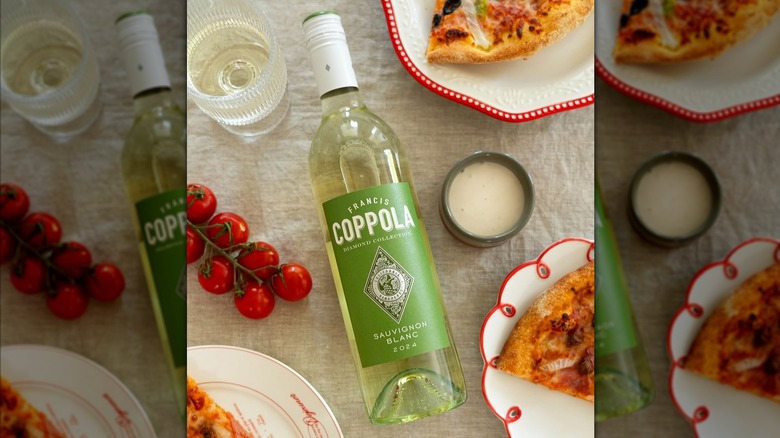
Most frequent wine shoppers should easily recognize Francis Coppola's Diamond Collection thanks to its signature diamond emblem and ubiquitous presence on grocery and retail shelves. The wines have built a reputation for consistency and approachable takes on familiar grape varieties sourced from vineyards across California's diverse growing regions. The Coppola Sauvignon Blanc is a great example, made in an easygoing style that makes it so popular.
I first tasted this wine while working on a story about grocery store bottles that taste better than their price tags suggest, which is a perfect way to describe this wine. Stylistically, it doesn't have Marlborough's pungent grapefruit intensity, but it's not as austere as some European versions either. This is the Sauvignon Blanc for people simply looking for a crisp and tasty glass of white wine with noticeable personality that doesn't break the bank. On that front, Coppola overdelivers at under $15 a bottle.
4. Ferrari-Carano Fumé Blanc
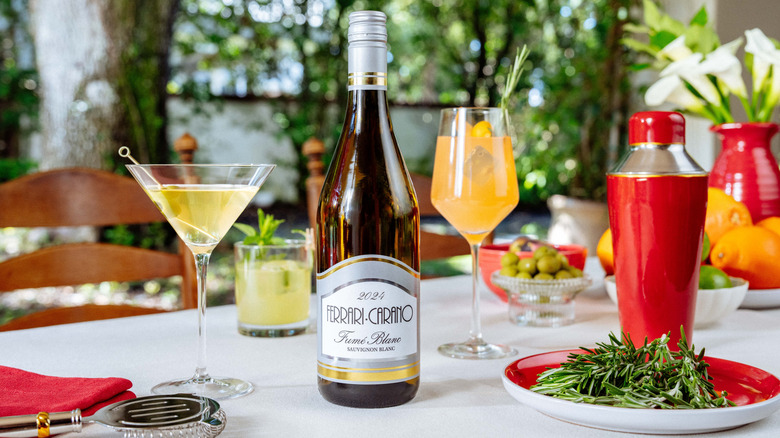
Fumé Blanc may sound like an entirely different wine type, but it's just a specific style of Sauvignon Blanc. Robert Mondavi coined the term in the late 1960s to sort of reinvent California Sauvignon Blanc by giving a nod to France's better-known Pouilly-Fumé. Today, the term generally signals that the wine has a more textured, full-bodied, or oak-influenced flavor profile, though the name itself is not strictly regulated.
About 70% of Ferrari-Carano's Fumé Blanc is fermented in stainless steel, while the remainder ferments in older French oak — which imparts less wood character than new barrels — and spends time on the lees. The result is a Sauvignon with the body and softness of a barrel-aged wine, with noticeable freshness and just a kiss of toasty vanilla.
For around $15, this is a great introduction to a distinct style of wine that straddles the world of round, oak-aged whites and zippy, fresh ones. It's somehow both the Sauvignon Blanc for oaky Chardonnay lovers and a solid choice for the anything-but-Chardonnay crowd. Pour it alongside simple roast chicken and mashed potatoes, a home seafood boil, or as a richer aperitif — it will fit in everywhere. The brand also recommends it as a great base for wine cocktails, with recipes ranging from spritzes to a lower-alcohol take on a dirty martini.
5. Kim Crawford Sauvignon Blanc
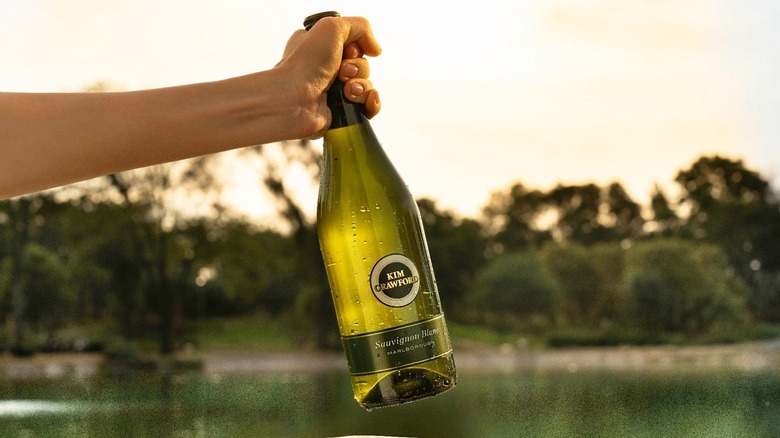
If you're asking why both Oyster Bay and Kim Crawford — two benchmark New Zealand Sauvignon Blancs under $20 — belong in the same guide, it's because no true guide to this grape would be complete without them. These are many wine lovers' go-to whites for a reason: they're excellent for the price.
I've had a renewed appreciation for Kim Crawford Sauvignon Blanc lately, mostly because it's always the standout on an otherwise unimpressive wine list in the kind of place that serves wine in stubby little glasses. It also reminds us that ubiquity and quality aren't mutually exclusive. Yes, you can find Kim Crawford Sauvvy B on most grocery store shelves and many wine lists, and yes, it's still concentrated, expressive, and unmistakably Marlborough.
Where Oyster Bay is the solid entry-level into New Zealand Sauvignon Blanc, Kim Crawford is the step up before veering into potential special occasion territory — not that it doesn't belong there, too. At roughly $15, it's incredibly consistent. For fans of the style, this is a sure crowd-pleaser and a great go-to when you need to show up with a bottle of something chilled and tasty. The screw cap lets you get right to it.
6. J. de Villebois Touraine Sauvignon Blanc
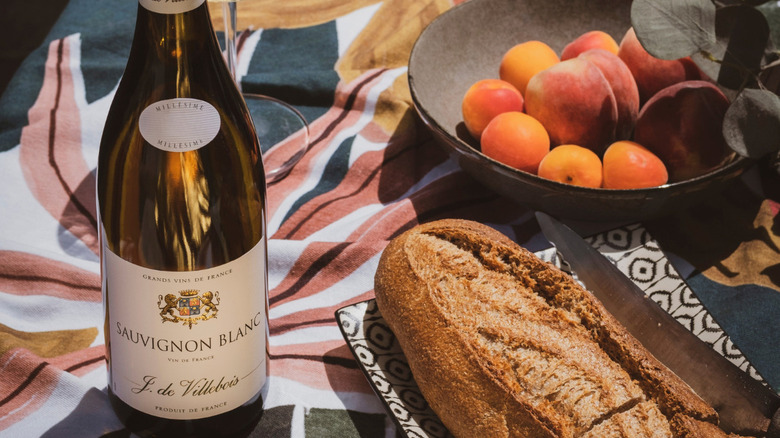
Not all French Sauvignon Blanc is Sancerre. Val de Loire is a broader Loire Valley designation known for Sauvignon Blanc that can deliver a lot of character without the price tag of the region's more prestigious appellations.
At around $15 a bottle, J. de Villebois Sauvignon Blanc is a great example. I've tasted several of this producer's wines and have consistently liked the style, which tends to be bright and mineral-driven without feeling austere. The grapes for this wine come from vineyards along the Loire River on clay-and-flint soils. After a gentle pressing, the wine is fermented in stainless steel tanks and spends six months on its fine lees, adding some texture while keeping the wine fresh and unoaked.
What you get is a wine that is less in-your-face than a Marlborough Sauvignon Blanc, but by no means lacking character. If Sancerre is the master class in Loire Valley Sauvignon Blanc, this Loire Valley bottling is the helpful — and delicious — prerequisite.
7. Three Brothers Wineries and Estates Stony Lonesome Sauvignon Blanc
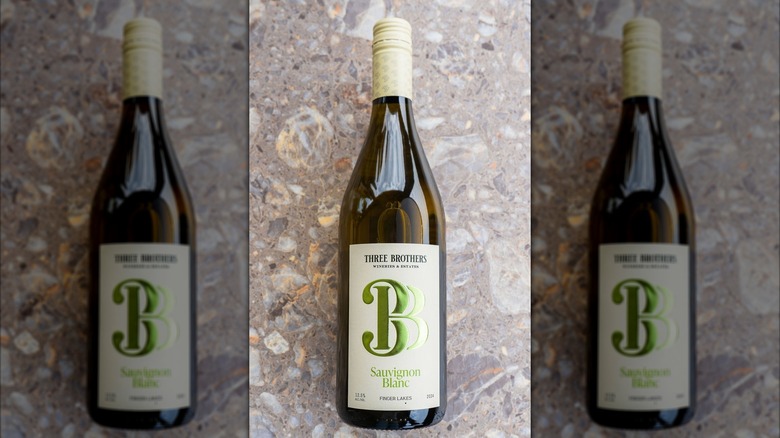
The Finger Lakes are so closely associated with Riesling that it's sometimes easy to forget the same climate conditions can do great things for other wines too. For me, Three Brothers Sauvignon Blanc isn't just a good regional pick; it also happens to be one of my favorites to reach for.
Stony Lonesome is the dry, more classically-styled side of the Three Brothers estate on Seneca Lake, and its wines come from the winery's certified sustainable vineyard. The current Sauvignon Blanc sits around $18. It's affordable enough to put it in everyday rotation, but distinctive enough to make it more meaningful than another massive production selection.
Stylistically, this wine is as crushable as it gets. It's got freshness for days, with bright, juicy fruit and an easy-drinking, low-ABV personality. It's dry and lively without stripping the enamel off your teeth or forcing you to contemplate anything. Pair it with a giant tray of sheet pan nachos, a pile of salty snacks, or an afternoon on the porch.
8. Cresta Blanca Sauvignon Blanc
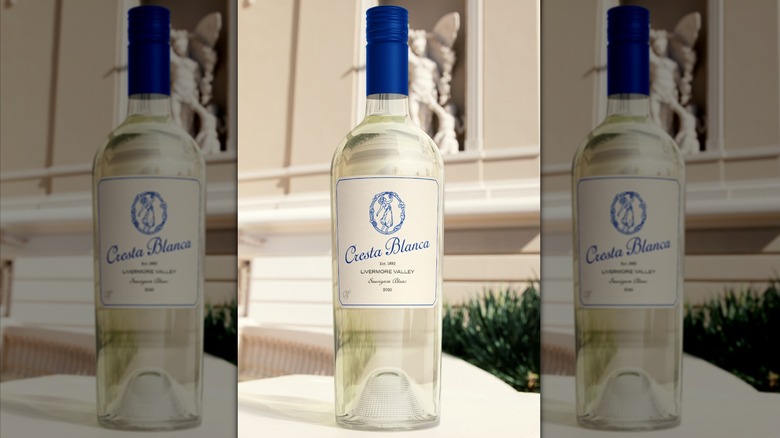
Cresta Blanca Sauvignon Blanc is our cue to nerd out a little bit on wine and history. California's Livermore Valley named Sauvignon Blanc one of its two signature grapes in 2025, but the love affair with the variety goes back much further. Cresta Blanca's history with Sauvignon Blanc dates to 1882, when Charles Wetmore brought vine cuttings from the famous Château d'Yquem in Bordeaux to Livermore and planted both Sauvignon Blanc and Sémillon at his own vineyard. Seven years later, a dry Cresta Blanca white wine won the Grand Prize at the Paris Exposition — a pivotal moment for California wine abroad.
Wente Family Vineyards, which now stewards the historic Livermore property, revived the Cresta Blanca label in 2026. Happily, this isn't a case where the story outshines the drink itself. The wine is delicious.
It's mostly fermented in stainless steel, but a small portion is aged in new acacia barrels, adding body and texture without overwhelming the fruit or the wine's straightforward structure. At around $35, you get a genuinely good Sauvignon Blanc, plus a connection to one of California wine's foundational stories.
9. Massican Sauvignon Blanc
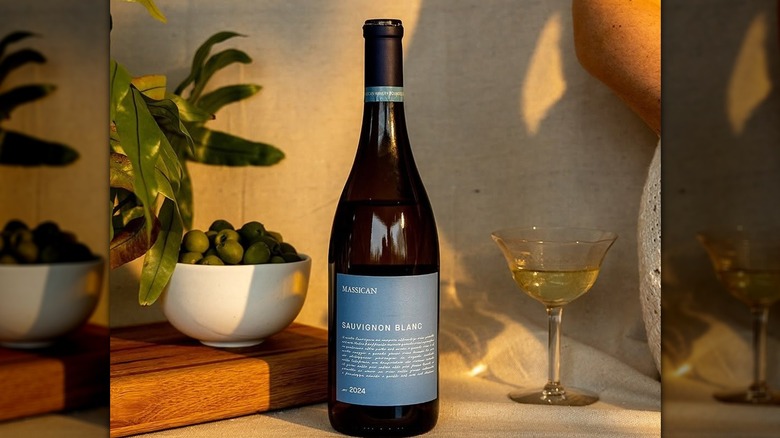
Massican is one of my favorite California white wine producers, full stop. Its Sauvignon Blanc is a big reason why. Dan Petroski built the brand in the spirit of Italian wines — lean, clean, slightly savory, and always food-friendly.
The current Sauvignon Blanc brings together fruit from Napa, Sonoma, Clarksburg, and Lodi, so an identity based on prestige appellation isn't the primary focus here. It is fermented and aged entirely in stainless steel and lands at a refreshingly low 12.5% ABV, which is generally quite a feat in the Golden State, particularly for a wine with this much complexity and body.
The restraint in this wine is what sold me. It's wonderfully saline and linear rather than rich or tropical, with the kind of appetite-inducing drinkability that makes me immediately want a pile of fried calamari or a big ol' plate of comforting Bucatini Cacio e Pepe. This is the Sauvignon Blanc for those who often find Marlborough too loud and California too round. Priced in the high $20s to low $30s depending on location, it's not cheap, but Massican's distinct point of view is worth paying for.
10. San Leonardo Vette Sauvignon Blanc
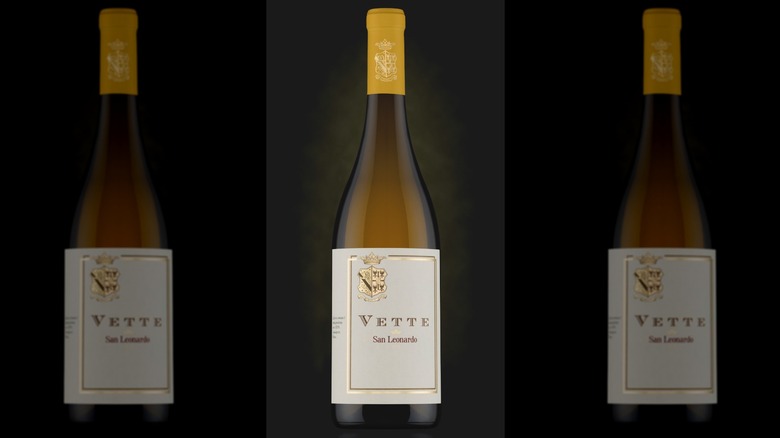
I was so impressed with this wine the first time I tasted it that I went on to write an entire story about Northern Italian Sauvignon Blanc. It remains the bottle I reach for when I need to convince someone who claims they don't like the grape that it isn't all grass and grapefruit.
I wrote the story because Northern Italian Sauvignon Blanc — specifically examples from Alto Adige, Trentino, and Friuli — is a category white wine lovers should absolutely pay attention to. They are lean, mineral-driven, food-friendly, and electric. San Leonardo's Vette is a benchmark example.
Coming from Trentino, this is a cooler, mountain-influenced expression of the grape. The fruit gets a cold maceration and then is fermented slowly at cool temperatures in stainless steel, followed by five months on the lees with regular bâtonnage. It's got enough structure and savoriness to appeal to Loire drinkers, but enough generosity through the middle to keep it from feeling exhausting to drink. Priced like Massican at around $27, it's the perfect introduction to the Sauvignon Blancs of this region, but worthy of exploration as a wine of distinction on its own.
11. Cloudy Bay Sauvignon Blanc
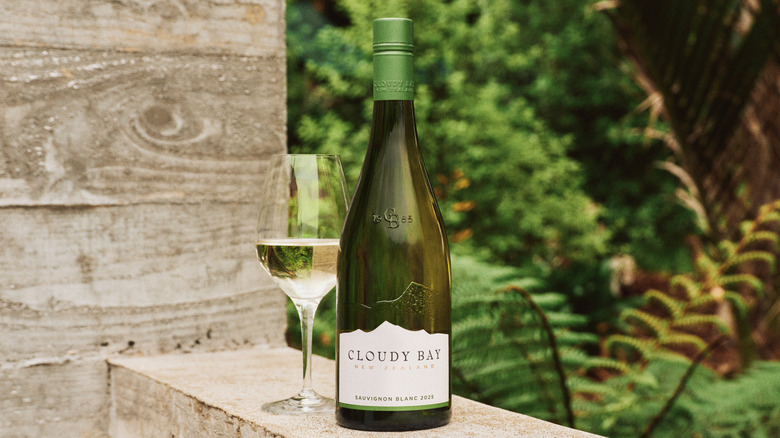
It's pretty tough to talk about Marlborough Sauvignon Blanc without mentioning Cloudy Bay. The winery's first Sauvignon Blanc vintage was made in 1985, at a time when Marlborough was still a relatively young wine region. Little did they know this would help introduce international drinkers to a style that would soon become iconic and unmistakably associated with New Zealand: intensely aromatic, crisp, and energetic.
But we generally don't buy wine just for the history, no matter how important it is. It still has to be good, especially at around $34. The 2025 vintage started with 80 lots in contention; just 61 made the final blend. This careful selection allowed the Cloud Bay team to build the wine with a level of precision you don't really see in entry-level or even many mid-tier bottles. It still delivers that bright, textbook flavor profile that people expect from Marlborough, but with more depth and complexity.
At a higher price point than other Marlborough selections in this list, this may not be your weeknight Sauvignon Blanc — or maybe it is! If you already know and love New Zealand's flavor profile, it's a great way to trade up without sacrificing that signature regional style.
12. Pascal Jolivet Sancerre
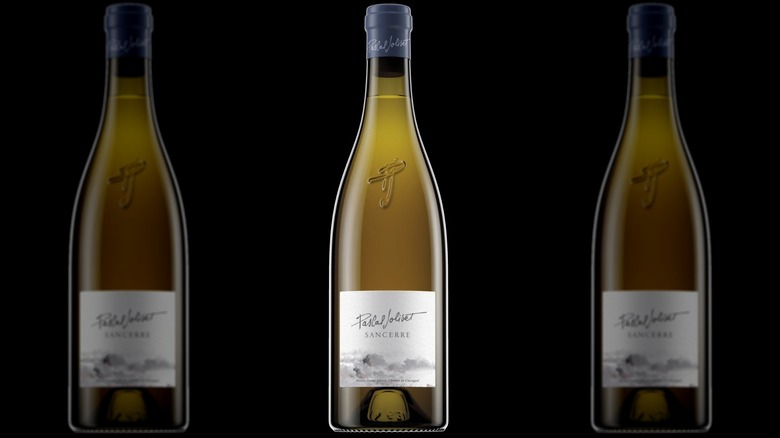
Taylor Swift may have introduced people to Sancerre before they even knew it was Sauvignon Blanc. When a bottle of it appeared in her End of an Era docuseries, Swifties promptly sent demand for the wine soaring. But long before that pop icon's unintentional plug, Sancerre had already become one of the Loire Valley's most recognizable white wines.
Pascal Jolivet's Signature Sancerre bottling is a great introduction to the category. Jolivet builds the cuvée from Sancerre's three key soil types — limestone, clay-limestone, and flint — and ferments each component separately in stainless steel tanks before blending. The result is a wine less centered on big, tropical aromas and more on freshness, texture, and that unmistakable wet-stone quality people tend to associate with Sancerre.
Depending on the retailer, this generally lands around $40 to $50, so it's a big jump from Sauvignon Blanc from other French regions like Touraine, but it also provides a useful comparison. It's a producer I can return to, knowing the wines will be thoughtful, well-made, and true to where they came from.
13. Dutcher Crossing Russian River Valley Sauvignon Blanc
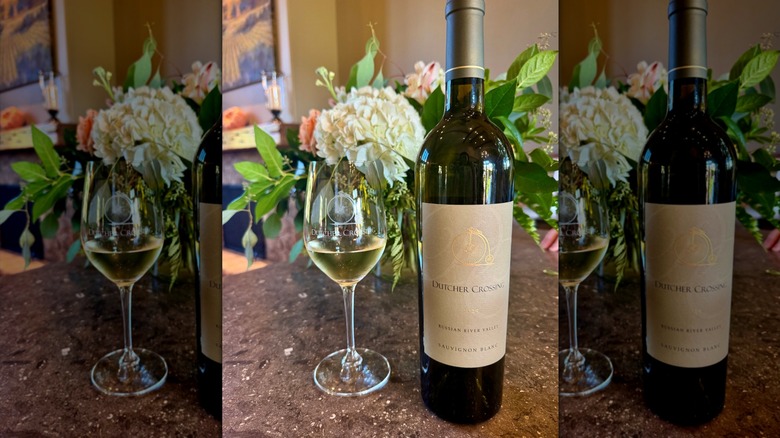
I've tasted a lot of Dutcher Crossing's wines over the years, across a range of grapes and price points, and the consistent quality has earned my trust. At around $46, California Sauvignon Blanc starts to get pretty serious. We're no longer in crisp, quaffable, good-for-the-money territory. Dutcher Crossing's Russian River Valley Sauvignon Blanc has the concentration and length of a premium California white wine, with that mouthwatering acidity that makes it such a great choice for both sipping solo and enjoying with food. Russian River Valley's coastal influence helps preserve the wine's freshness, even as it feels rounder than earlier bargain bottles.
The current 2025 release has also earned several accolades, including 98 points, Double Gold, and Best of Class at the 2026 Press Democrat North Coast Wine Challenge, offering a helpful reference check on a producer I already like. I often dream about this wine paired with a steaming bowl of luxurious lobster bisque.
14. Lail Vineyards Blueprint Sauvignon Blanc
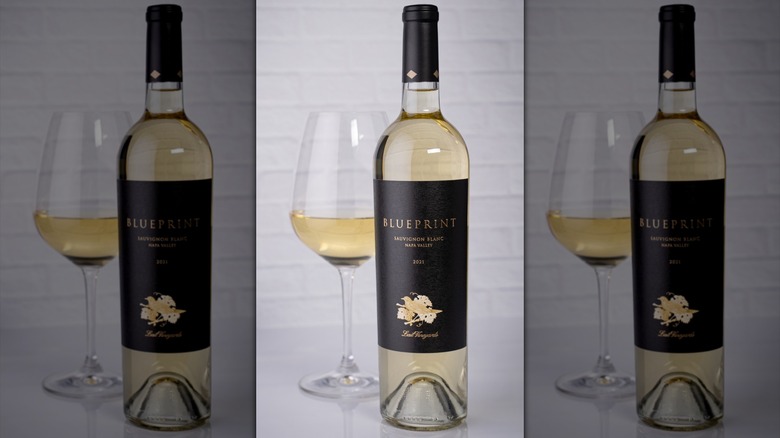
If I'm dropping almost $60 on a bottle of Sauvignon Blanc, my expectations are pretty high. At that price, the wine needs to make a real case for the spend, not just present itself as a bougier version of something I could easily buy for $20. Lail Vineyards' Blueprint manages to overdeliver for this price tag. Founder Robin Daniel Lail comes from one of Napa's most iconic wine families — her great-granduncle, Gustave Niebaum, founded Inglenook — while winemaker Philippe Melka's resume includes Château Haut-Brion, Petrus, and Dominus. His co-winemaker, Maayan Koschitzky, has worked at Screaming Eagle and Dalla Valle, some of Napa Valley's most prestigious names. In other words, there is some serious pedigree powering this bottle.
Unlike many Sauvignon Blancs built around stainless steel freshness, Blueprint is barrel-fermented and typically spends months aging on its lees, giving it substantial weight and texture. This more voluptuous profile lets it stand up to richer food and would be delicious to sip alongside bacon-wrapped scallops, smoked salmon salad, or even something as hearty as roast pork.
Don't feel compelled to pop the cork on this one immediately. Sauvignon Blanc with this kind of acidity and structure is fully capable of evolving over time, trading some of its youthful brightness for more savory, complex character. Give it a few years, and you'll start to see an entirely different side of the grape.
Methodoloy
I compiled this list based on selections I have personally tasted, sometimes across multiple vintages. Each was considered for quality, value at the price point, consistency, regional style representation, and general consumer availability.
Analysis also factored in industry scores and critics' tasting notes where appropriate or for selections I was less familiar with. Prices are estimates based on winery and retailer listings checked in October 2026 and may vary by vintage, availability, retailer, geographic location, taxes, and promotions.