

These Were The Most Popular Beer Brands In The 1960s
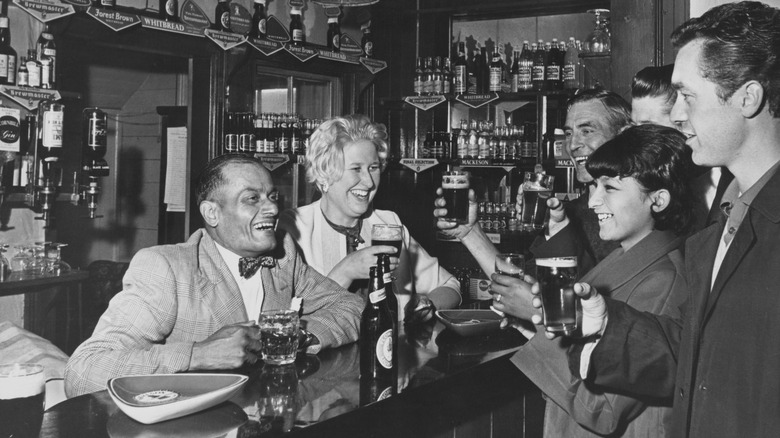
The 1960s were a pivotal era for American suds. As the country settled into the comfort of post-war stability, before being drawn into more conflicts, BBQs and ball games were often a welcome escape while clutching a cold one. Bitter ales and heavy lagers of the pre-Prohibition era were supplanted by crisp, easy-drinking beers that became synonymous with mid-century leisure. You didn't need a refined palate or a specialized glass to enjoy them; they just needed to be ice-cold and freshly plucked from the fridge. Some of the most popular beer brands of the 1960s still exist today, while others, long forgotten, are emblematic of a different era, defined by catchy jingles, aluminum pull-tabs, and backyard leisure.
Perhaps nothing captures this slice of Americana better than the scene in AMC's "Mad Men" where Don Draper, while taking a break from assembling his daughter's playhouse, slams cold beers in the sweltering heat of '60s suburbia. The visual itself almost plays as a vintage beer commercial, with Don representing a customer who values simple refreshment and brand loyalty, driven by the golden age of TV advertising. By the end of the decade, brand consolidation had begun, with national giants swallowing or squashing regional competition, forever changing the assortment in our coolers. The most popular beer in America today represents an entirely different retail market than Don's era. Here is a look back at the most popular beer brands that defined the 1960s.
Budweiser
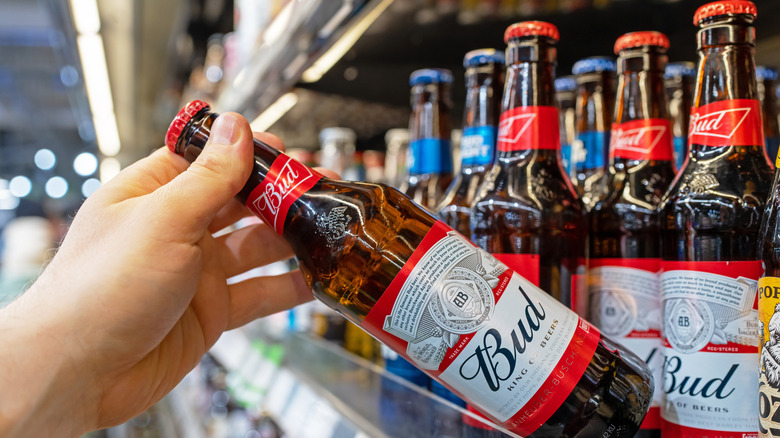
What a shock to see that Budweiser — the self-proclaimed "King of Beers" — would be among the most popular beer brands of the '60s! With a history going back to the early 1860s, there's a lot to know about Bud. Its parent company, Anheuser-Busch, saw explosive growth following WWII, and by 1964, the St. Louis brewery produced its 10,000,000th barrel of beer, comprised of Bud, as well as sister brands Michelob and Busch Bavarian. But while Bud is synonymous with American beer today, the company's dominance wasn't always so. In fact, Anheuser-Busch was locked in a neck-and-neck rivalry with Schlitz to claim the title of America's best-selling suds. However, the market share swung in favor of Anheuser-Busch in 1957 when it finally dethroned Schlitz.
In this mid-century era, Budweiser arguably came into its own as a formidable brand, hitting its stride. The company's iconic Clydesdale mascots certainly didn't hurt the vibe — these gorgeous horses were a gift to the Busch patriarch from his sons August and Adolphus, in celebration of the end of Prohibition — channeling a patriotic Americana energy. From there, the brewing giant never looked back, riding a wave of aggressive marketing (remember all those epic Super Bowl commercials?), vast nationwide distribution, and a consistent recipe that went down easy. This era cemented Bud not just as a beer brand, but as an inescapable fixture of food history and American culture writ large.
Miller High Life
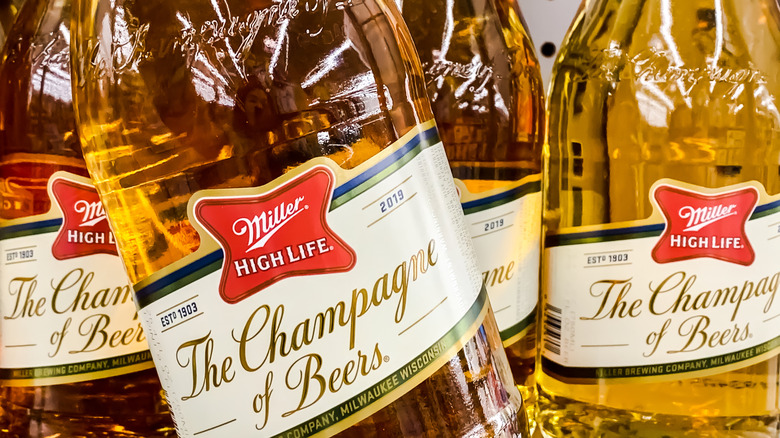
If you're going to call yourself "The champagne of beers," you'd better be sure that your recipe — and brewmaster — are on point. Well, as it stands, High Life is good enough for celeb chef David Chang, who cites it among his faves — this must count for something! As Miller's flagship beer since 1903, the Milwaukee brand is still going strong today, likely stocked in fridges at your local liquor store, as a highly accessible option. Much like Budweiser, it's probably not surprising that Miller was among the most popular beer brands in the 1960s. Mid-century ads for the beer emphasized words like "distinctive," "sparkling," and "flavorful" against the backdrop of cocktail parties attended by necktie-clad guests with perfect teeth.
It gets its high-falutin slogan and image from the Champagne-esque bottles it was originally packaged in. That all changed at the end of the decade, though, when Tobacco giant Philip Morris bought a controlling stake in the company. Then in the early '70s the marketing shifted drastically away from the brand's high-society image, flipping the strategy entirely. They repositioned High Life away from the country club and aimed it directly at the blue-collar "everyman," with ads depicting leisurely boating on lakes, underscored by the new "Miller Time" slogan. While no one — in the 1960s or today — would call Miller High Life a fancy beer despite the silly Champagne reference, it consistently ranks high among cheap beer brands, reflecting its popularity over the past 60-plus years.
Pabst Blue Ribbon
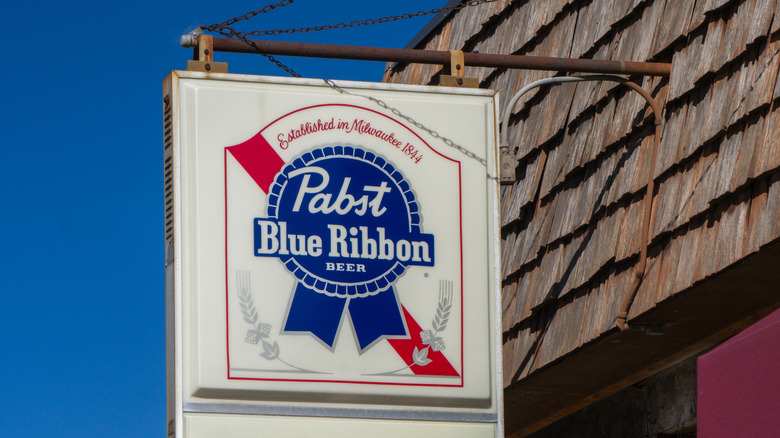
Long before it was adopted as the unofficial ironic accessory of hipsters at great Brooklyn dive bars in the mid-aughts, Pabst Blue Ribbon — better known as PBR — was a pretty formidable mid-century brewery. It was non-ironically enjoyed by Americans throughout the twentieth century, with the 1960s marking a period of explosive growth for the brand. In fact, from the late '50s through the late '70s, the brand experienced a staggering 360% increase in sales. It became one of the most popular beer companies in the 1960s, thanks in part to a shrewd acquisition of the Blatz Brewing Company in 1958.
This merger allowed Pabst to consolidate brewing operations while increasing volume, clawing its way to becoming the third-largest U.S. brewer by 1961, after Anheuser-Busch and Schlitz. However, PBR's success caught the eye of Uncle Sam. In 1969, federal antitrust regulators flagged the brewery for dubious business practices, ruling that the Blatz acquisition gave Pabst anticompetitive power, forcing it to sell Blatz back off. Despite this bump in the road, PBR's dominance throughout the '60s laid the groundwork for a legacy that outlasted many of its original mid-century competitors. It went on to become a brand with real cultural cache, the choice of mustachioed scenesters and dads in the backyard, alike. All these years later, the company is still aggressive in the market, acquiring the little-known Midwestern label Stag in 1999 and keeping that brand afloat, too.
Coors Banquet
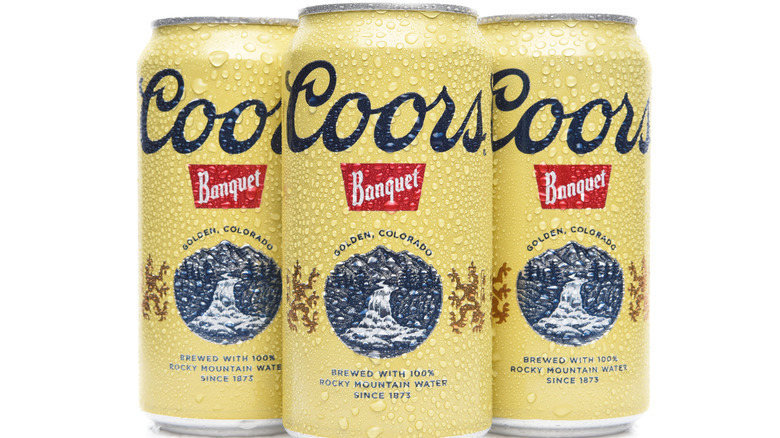
The Golden, Colorado-based brewery known as Coors has a rich history dating back to 1868, yet its Banquet label was only available in a handful of states out West, post-prohibition. Right before the '60s began, the company made a bold innovation in 1959 that would forever change the beer — and global packaged goods — industry: the introduction of the aluminum can. This innovative packaging decision is commendable, as we know aluminum is infinitely recyclable.
By the 1960s, Coors Banquet was still in the shadow of titans like Anheuser-Busch, but had become the country's fifth-most-popular beer by the start of the decade, slightly beating out Miller. Its scarcity out East — fueled by founder Adolf Coors initially not wanting to distribute east of Oklahoma — turned the beer into a rare and coveted prize, with cases famously flown to President Eisenhower's White House.
While other larger competitors sought to expand national distribution or grew through corporate acquisitions, Coors relied on packaging innovation, its Rocky Mountain water supply as a mark of distinction, and the powerful regional exclusivity to drive mid-century demand. All of these elements came together in securing Coors' place among the pantheon of big American beer brands, still selling cases in 2026.
Schlitz
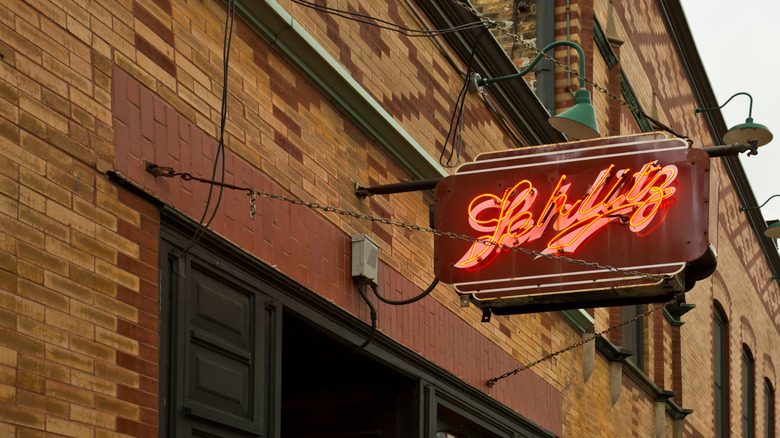
Schlitz hails from the brewing town of Milwaukee and has a history dating back to 1849, when it was founded by August Krug and Joseph Schlitz. It was actually the largest brewery in America after Prohibition, employing a large number of locals in the process. Armed with a bold and captivating slogan — "The Beer That Made Milwaukee Famous" — Schlitz held a spot in the national top two for decades, during the mid-20th century. Throughout the 1960s, it remained a juggernaut, pouring massive budgets into maximizing its TV presence with ad campaigns that equaled, or even surpassed those of giant Anheuser-Busch.
You might be wondering why you don't really see this old-school beer brand on shelves anymore; well, Schlitz made a tragic error. Its 1960s popularity was eventually stymied by a major blunder. Seeking to maximize profits toward the end of the decade, Schlitz executives made a fatal mistake by altering the brewing process, replacing premium barley with cheaper ingredients and cutting the fermentation time from 30 days to 20. This drastically different recipe produced a beer that left many fans out in the cold, and 20-odd years later, Schlitz would shutter its Milwaukee facilities for good.
Carling Black Label
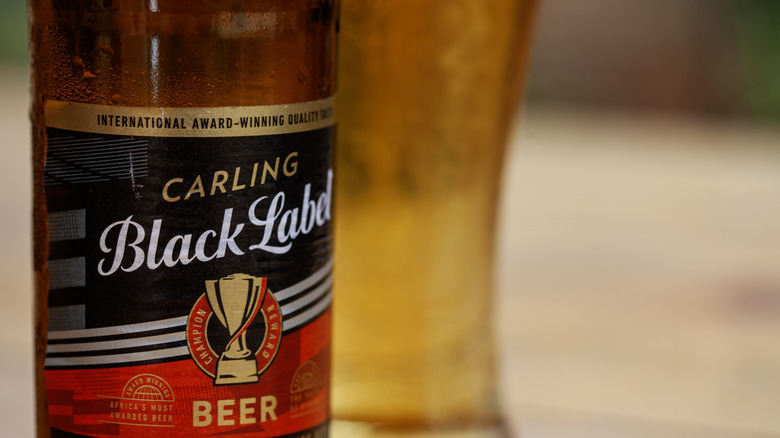
In a lineup of heavy hitters like Bud, Miller, and Coors, a smaller brewery like Carling might not ring a bell. But its Black Label offering was among the more popular beers of the 1960s, and if you turned on a radio or television back then, the brand's cheerful, infectious jingle — "Hey Mabel, Black Label!"— may have caught your attention. The "Mabel" ad campaign also ran in print, too, with one version featuring a very friendly-looking waitress smiling and enthusiastically pouring a bottle of Black Label. The ad almost reads like a humble brag, stating that the brewery had surpassed three million barrels of suds which, at the time, was 10 times the production of the previous decade.
Originally a Canadian brew dating back to 1818, Carling expanded into the United States in 1934, debuting its Black Label and Red Cap Ale for Yankee palates. Years later, in the 1960s, Carling was a mid-level brewery, trailing behind brands like Falstaff and Pabst as the fourth- or fifth-largest producer in the country. While the brand eventually lost its footing against titans like Miller and Anheuser-Busch in the late '70s, that catchy slogan and Canadian roots showed how to successfully penetrate the U.S. market as an outsider.
Ballantine Ale
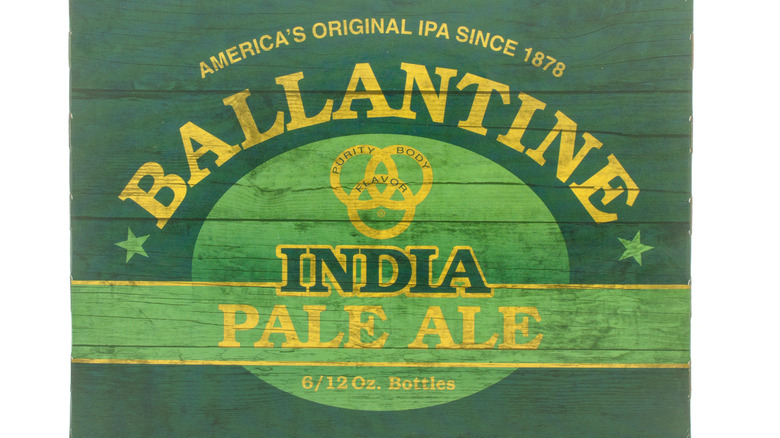
In an era when lagers dominated store shelves, Ballantine IPA held the line for those who preferred an alternative brew with a bit more bite. Boasting a three-ring logo — symbolizing purity, body, and flavor — Ballantine customers preceded mustachioed hipsters in plaid flannel, obsessing over hoppy, floral India Pale Ales. The brand was certainly a bit more niche; with New Jersey roots, it was the largest brewery in the Garden State and one of its largest employers, and would go on to become one of the country's top sellers by the early '60s. It enjoyed the cultural cachet of being the original, legendary beer sponsor of the New York Yankees up until 1966, when the brand ended its involvement with the ball team.
While it's impossible to know how this pale ale tasted, it would certainly have been a very different experience from a mellow beer like Bud. Unfortunately, as the 1960s wore on, consumer tastes shifted from dark and heavy suds, to more easy-sipping and lighter lagers. The brand's sales then began to slip, with the President of P. Ballantine & Sons, Richard Griebel, going on to say that he had a "troubled company" on his hands upon reviewing ad proposals, as reported by The New York Times. The company's growth did indeed slow, and while this IPA was later revived by Pabst, Ballantine remains a relic of a different time in American beer culture.
Hamm's
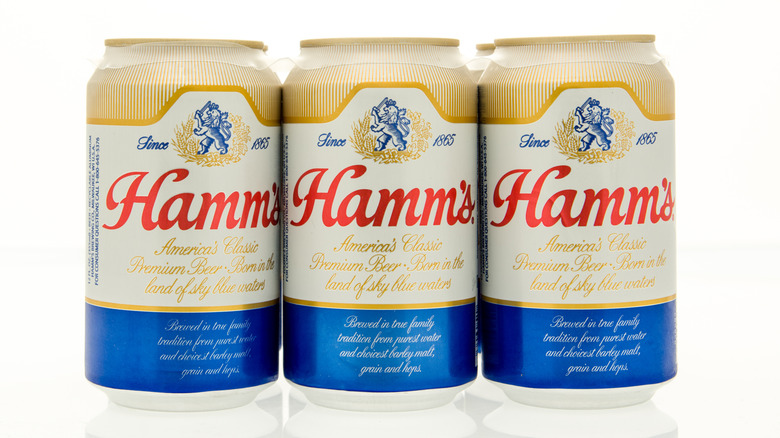
This St. Paul, Minnesota, brewery is among the smaller firms here, first fermenting brews back in 1865. And, like other American beer stories, it has a German connection, as founder Theodore Hamm hailed from Germany — a country that greatly influenced American tastes in the 1800s. The company's "From the land of sky-blue waters" slogan evokes the land of 10,000 lakes, giving it a vibe similar to Coors' outdoorsy feel, and it fittingly features a bear mascot that drove the brand's marketing. Hamm's ranked, on average, as the country's seventh-largest brewer by volume for most of the 60s. It then changed hands a few times during the decade, with a brief ownership by Heublin, Inc., in 1965, and was later sold to Olympia in 1973.
While the beer brand was associated with its midcentury cartoon ads featuring the bear mascot, it shifted to live-action ads as the '60s concluded. In an era defined by the rise of television, the Hamm's Bear made the brand an unforgettable cultural touchstone of lighthearted midcentury marketing. All these years later, Hamm's is still available, owned and operated by the Molson Coors beverage company— yet it still remains a small player nationally.
Schaefer
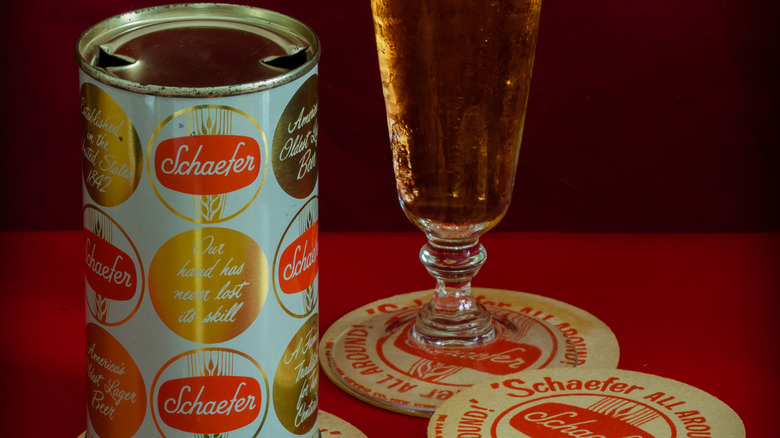
If you lived in or around New York City in the 1960s, you may remember Schaefer beer as a domestic option at your local bar. The company has European roots, as founder Maximilian Schaefer brought the beer recipe over from Germany to his brother in New York, where it was a novel beer style at the time.
By the 1960s, the brand hovered around sixth place in national production volume. While Schaefer did well across the country, its strong Big Apple connotation stemmed from its deep ties to baseball; long before they moved to Los Angeles, the Brooklyn Dodgers were actually sponsored by Schaefer.
But the company's true stroke of marketing genius came with the launch of one of the most hilariously ad campaigns imaginable. The slogan boldly declared: "Schaefer, the one beer to have when you're having more than one." It's hard to imagine an ad like this flying today, since it essentially encourages binge drinking— but it was a different time after all! The brand was eventually swallowed up by Pabst and largely disappeared off shelves and from bars for decades, but it seemed to have left a big enough dent in the Zeitgeist to warrant a comeback in 2020.
Falstaff
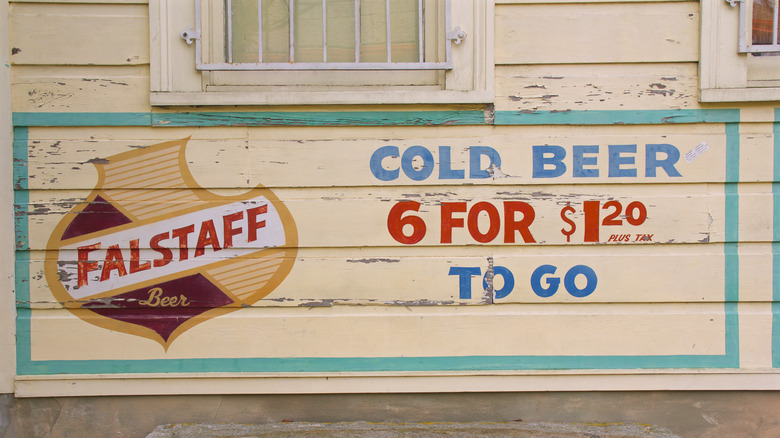
In the swinging '60s, Falstaff was a titan, going toe-to-toe with the biggest names in the beer business. Throughout the decade, it ranked fourth in volume, chasing the big guns Pabst and Schlitz.
Based in St. Louis, the company opened in 1903, conveniently located in the same zone as the top dog competitor Anheuser-Busch. But why St. Louis? Thanks to ultra-affordable refrigeration and a naturally occurring cave system beneath the city, some German-American brewing families were haphazardly set up for success from day one.
In its early years, Falstaff executed a brilliant strategy of acquiring smaller, regional breweries across the U.S., expanding its footprint and helping it become a major player in the '60s. However, the brand lost some traction in Southern and New England states during the mid-part of the decade, and moving into the '70s, competition became even fiercer, with small imprints like Stroh, Latrobe, Heilman, and Genesee all looking for their piece of the pie. Unfortunately, the company's market share began to nosedive in the mid-1970s, with the majority of shares sold to Paul Kalmanovitz, who would later shutter the St. Louis operations for good after moving the headquarters to San Francisco, thus ending the story of a celebrated mid-century Midwest beer.