

10 Forgotten Frozen Foods That Were In Every 1960s Kitchen
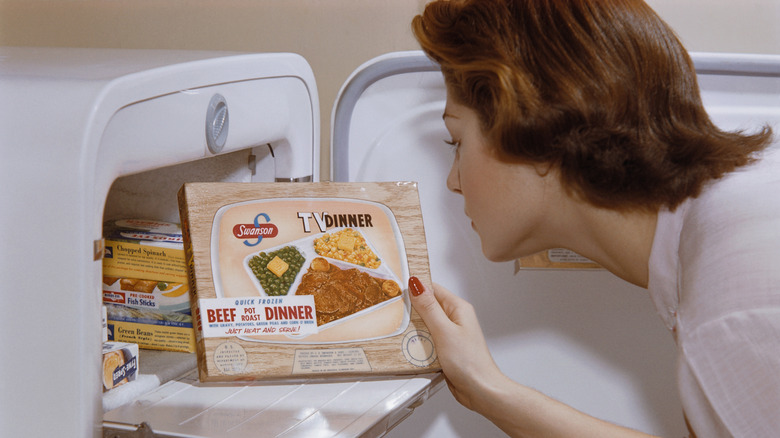
Big changes were taking place in American kitchens during the 1960s. Home cooks were experimenting with new ingredients, embracing modern appliances, and finding faster ways to get meals on the table. One of the biggest culinary trends of the '60s was frozen foods, which offered an easy way to store food for longer and have a quick and easy meal on the table with very little prep. During the decade, numerous frozen products made their way into home freezers, many of which are no longer around today.
The modern frozen food industry has its roots in the 1920s, when Clarence Birdseye developed a technique for flash freezing foods. He got the idea while living in Labrador, Canada, where he realized foods that were frozen quickly tasted better when thawed. Birdseye started out selling frozen fish and later expanded to veggies and other products. He also created freezer cases for grocery stores, furthering the expansion of the frozen food industry.
By the 1960s, frozen foods were all the rage, and food companies were coming up with all sorts of products to meet demand. TV dinners were especially popular, and there were plenty to choose from in an array of dishes and different cuisines. This was also the golden era of frozen desserts and juice concentrate. While some of those products are still around in one form or another, many have disappeared altogether from freezer display cases. Here are 12 forgotten frozen foods that were once staples of 1960s kitchens.
1. Swanson TV dinners
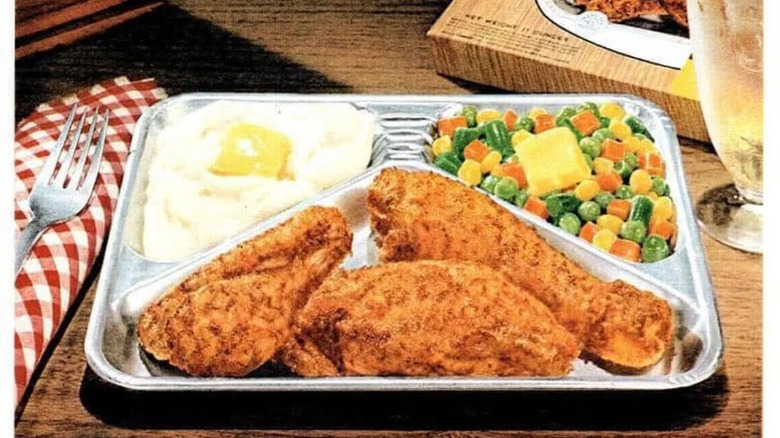
The origin of the TV dinner dates back to the 1940s, when a company called Maxson Food Systems came out with a product called "Strato-Plates." The frozen meals featured meat, potatoes, and vegetables divvied up on a plastic plate with dividers between each section. They were originally designed for airlines, and never sold in grocery stores. A few companies took the idea and came out with home versions over the following years, but it was Swanson that really caused the concept to explode.
In the fall of 1953, Swanson was reeling from a lack of Thanksgiving sales that left the company with 260 pounds of frozen turkeys to deal with. Fortunately, someone (exactly who is disputed) came up with the genius idea to sell the turkey in aluminum trays along with sweet potatoes and cornbread stuffing. The company called it the "TV dinner" and marketed it as a quick and easy meal families could enjoy together while watching television.
Swanson's TV dinners were a huge hit, with over 10 million meals sold in the first year. The company later began offering everything from fried chicken to Salisbury steak and apple cobbler. By the 1960s, Swanson's was a household name, and it remained that way for decades. Sadly, though, it's hard to find Swanson's TV dinners around today. That's because its parent company, Pinnacle Foods, stopped production in the U.S. in the early 2010s. Now you can only find them in Canada.
2. Mrs. Smith's frozen pies
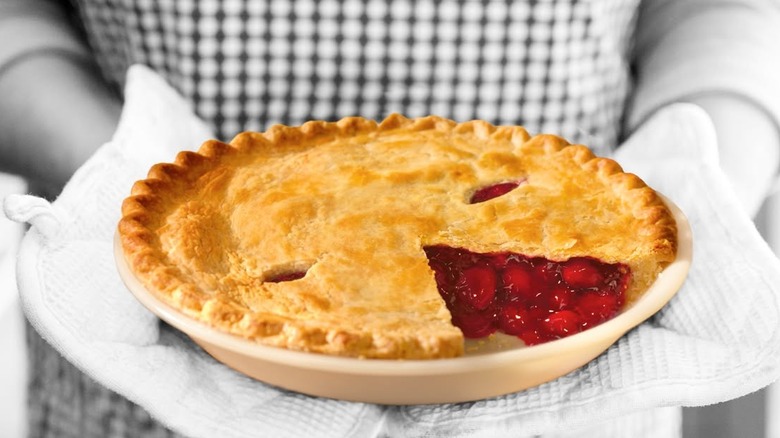
When Amanda Smith began selling pies in 1919, she probably never dreamed that the small operation out of Pottstown, Pennsylvania, would go on to become one of the biggest pie companies in the country or that it would still be going strong over 100 years later. Her son convinced her to start the business, and at first, they sold pies door-to-door and to a few stores. The company grew steadily over the following decades, and in the 1950s, Mrs. Smith's began producing frozen pies.
By the 1960s, Mrs. Smith's fruit, custard, and cream pies could be found in kitchens across America, in no small part due to a series of clever ad campaigns. One advertisement from that time featured the attention-grabbing title, "Is Betty cheating on her husband?" It then went on to explain that baking a Mrs. Smith's pie wasn't cheating because the company took all the steps any home baker would in making its pies.
Mrs. Smith's has changed hands several times over the decades, including stints under Kellogg's and Smucker's. Today, it's owned by Schwan's Company, but the product line has shrunk considerably. Several favorites from the 1960s, like the cream and custard pies and specialty desserts, are no longer available. The current line features only a few flavors, including apple, peach, and pumpkin. That being said, they do get positive reviews. Case in point, Mrs. Smith's Cherry Pie placed second in our ranking of store-bought cherry pies thanks to its buttery, flaky crust and rich cherry flavor.
3. Howard Johnson's frozen foods
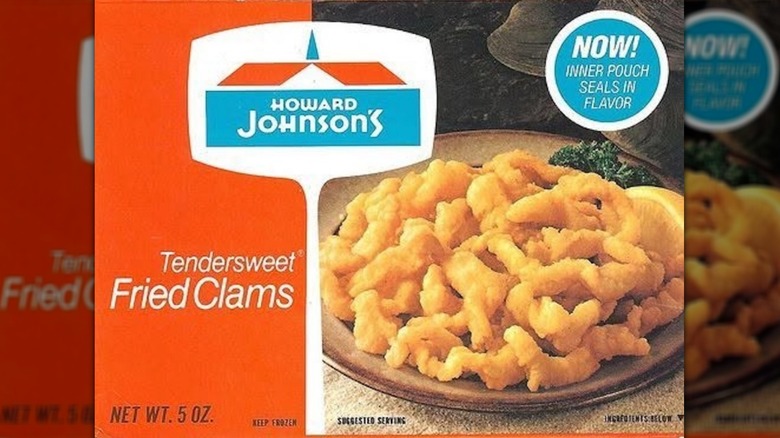
Mention Howard Johnson's today, and many people think of budget motels. But back in the 1960s, HoJo's was the biggest restaurant chain in America. It all began when Howard Johnson bought a drug store and soda fountain in Quincy, Massachusetts, in 1925 and began selling his own ice cream. He was so successful that he was able to buy a full-service restaurant in 1929, and it became famous for its 28 flavors of ice cream and homey hot foods like hamburgers and fried clams. The first franchise was added in 1935, and by the 1960s, there were over 600 restaurants across the country.
Given how popular Howard Johnson's restaurants were in the 1960s and the heyday that frozen foods were having at the time, it makes sense that the company started a frozen food line. It included dishes that the chain was famous for, like its Tendersweet Fried Clams, Chicken Croquettes, and Macaroni and Cheese. The chain also offered toaster muffins called Toastees and pints and quarts of ice cream.
Around the late 1970s, Howard Johnson's began to decline due to mismanagement and increasing competition. The company was sold to the Imperial Group, then to Marriott, and many of the restaurants were shuttered or converted into other brands. Sadly, there are no standalone HoJo restaurants left today. The frozen foods managed to stick around until the early 2000s, but ended when the manufacturing company that made them closed in 2008.
4. Birds Eye Fish Fingers
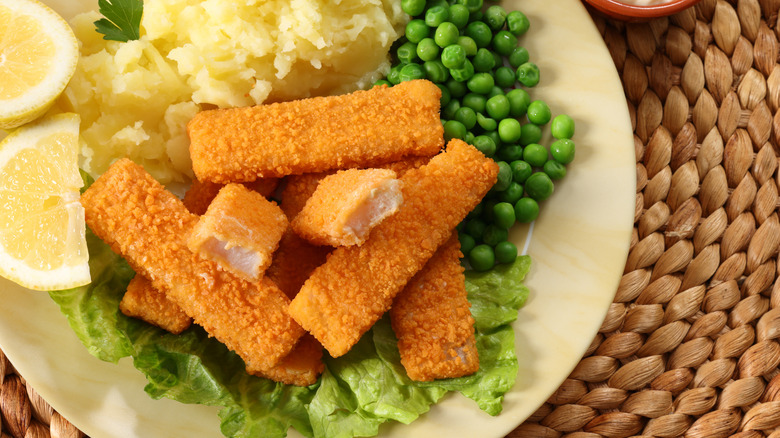
Peruse the frozen foods section of any grocery store today, and it's highly likely you'll find frozen fish sticks. However, prior to the 1950s, frozen fish was a sad state of affairs. Despite the fact that some companies had adopted Clarence Birdseye's method of flash freezing fish, many simply froze filets in large lots together, creating a solid block of fish that home cooks would have to chip away at. That is, until Clarence Birdseye came to the rescue with yet another innovation.
By the early 1950s, the Birds Eye company was owned by General Foods, and it was working on some revolutionary new frozen options. One of those was a fish product consisting of fish filets that were frozen and cut into slices with a bandsaw. The fish sticks were then battered, breaded, fried, and packaged for sale. General Mills applied for a patent in 1952, and a year later, the fish sticks (or fish fingers as they came to be called outside the U.S.) hit the market.
Birds Eye Fish Fingers were a huge success right from the beginning, and they soon became widely adopted around the world. In the 1960s, the company ran numerous ads on television, many of which featured "Captain Birdseye" and emphasized how much kids loved the crispy golden treats. By that time, several companies had also followed suit with their own fish sticks, like Gorton's, which would go on to eclipse Birds Eye in the U.S. and is probably what you would recognize today.
5. Minute Maid frozen concentrated orange juice
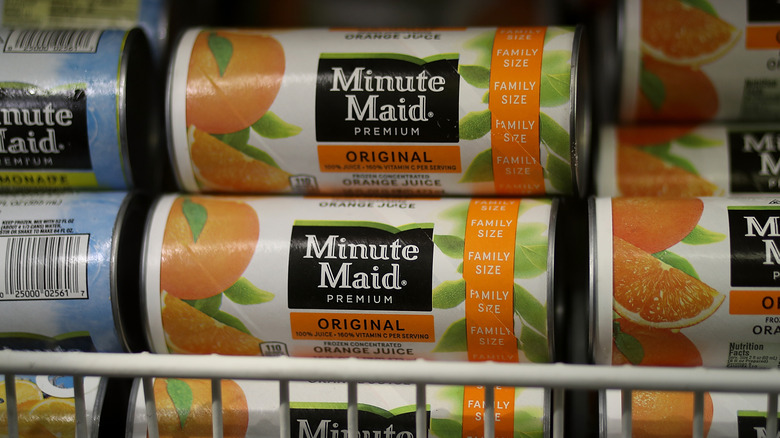
For many 1960s families, breakfast included orange juice, and not just any kind, but rather Minute Maid frozen concentrated orange juice that came in a can. All you had to do was open it, slide the solid orange mass into a container, add water, and voila — you had "fresh" orange juice. It was the epitome of convenience, and miles better than the canned frozen orange juice of previous generations, which tended to have off-putting chemical flavors.
The origin of frozen orange juice concentrate can be traced back to World War II. During that time, adequate vitamin C was a concern for soldiers, so the U.S. government offered a contract to anyone who could create a frozen orange juice that actually tasted good. A group of scientists from the United States Department of Agriculture (USDA) came up with the solution by cooking out the water, adding just a splash of orange juice for flavor, and freezing the product. The war ended before the juice concentrate was ready, but it was launched to the public in 1946.
The Minute Maid frozen concentrated orange juice wasn't a hit right off the bat, but that all changed when singer and actor Bing Crosby came on board as its spokesperson. In 1949, he started touting its benefits on the radio, and that year, sales skyrocketed. By the 1960s, Minute Maid was a household name and a fixture in many fridges and freezers. Minute Maid, which is now owned by The Coca-Cola Co., only stopped producing the frozen orange juice concentrate in 2026.
6. Chun King frozen foods
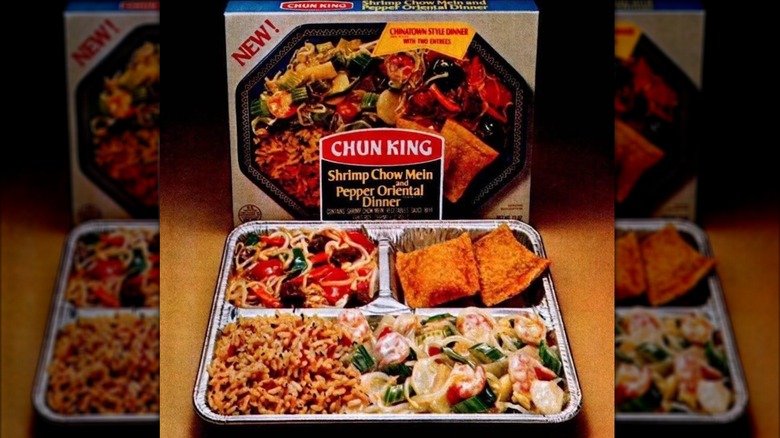
During the 1960s, interest in global cuisines was on the rise thanks to an increase in international travel, exposure to immigrant food cultures, and televised cooking shows that encouraged people to experiment with different flavors. That created the perfect environment for Chun King frozen foods to really explode. The company offered a range of frozen products, including egg rolls, fried rice, and chow mein, and 1960s households were all for it. For many, it was their first introduction to Chinese-American food.
Chun King's founder was Jeno Paulucci, an Italian-American entrepreneur who saw an increased demand for Chinese food in the 1940s. In 1947, he created Chun King and launched its first product — canned chow mein. By the 1950s, the company was also producing frozen foods. The products were wildly successful, so much so that by the 1960s, Chun King owned half the market for ready-made Chinese foods in America.
Paulucci sold Chun King when it was at its peak in 1966 for a reported $63 million. Over the following decades, the company changed ownership several times, from R.J. Reynolds Tobacco Company to Nabisco, ConAgra Inc., and finally Hunt-Wesson Inc. By the 1990s, sales were starting to decline, so Hunt-Wesson's parent company, ConAgra, decided to pull the plug on production. Sadly, Chun King is now among the many old-school TV dinners we'll likely never see again.
7. Sealtest ice cream
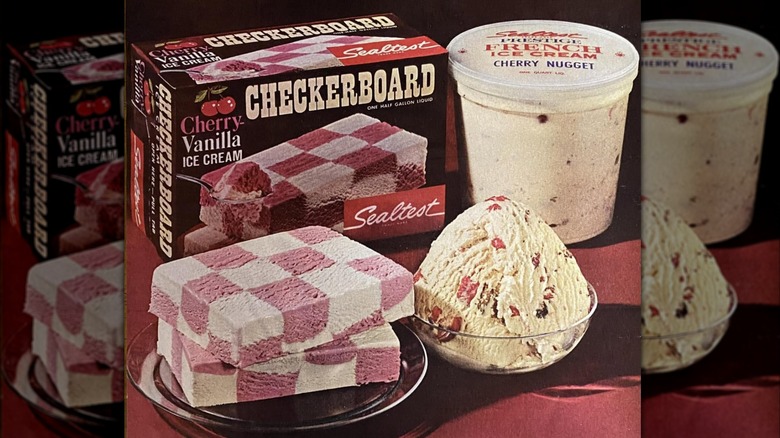
Ice cream certainly wasn't new in the 1960s. Ice cream parlors had been around since the late 1700s, and America's oldest ice cream brand, Bassetts Ice Cream, was established in 1861. By the middle of the 20th century, there were several ice cream brands on offer at grocery stores, but one that really stood out and still brings back fond memories for many boomers to this day is Sealtest.
Sealtest began as a division of the National Dairy Products Corporation in 1934, and it quickly earned a solid reputation for its quality ice cream. As it grew, it introduced a slew of innovative flavors, which it promoted with eye-catching ads. Just a few of the flavors you could get in the 1960s included Orangerine (a mix of orange and tangerine), Cherry Nugget Prestige French, and Crazy Vanilla with rainbow stripes. The Checkerboard ice creams with alternating squares of flavors like cherry and vanilla were also huge hits.
Sealtest remained popular for many decades, even after the National Dairy Products Corporation became KraftCo Corporation (later named Kraft Inc.) in 1969, and was acquired by Philip Morris in 1988, later merging with General Foods. But by the early 1990s, competition was taking its toll, so Kraft General Foods sold the brand to Unilever, which subsequently discontinued Sealtest ice cream products in 1999. However, you can still find Sealtest ice cream in Canada today thanks to a licensing agreement.
8. El Chico frozen dinners
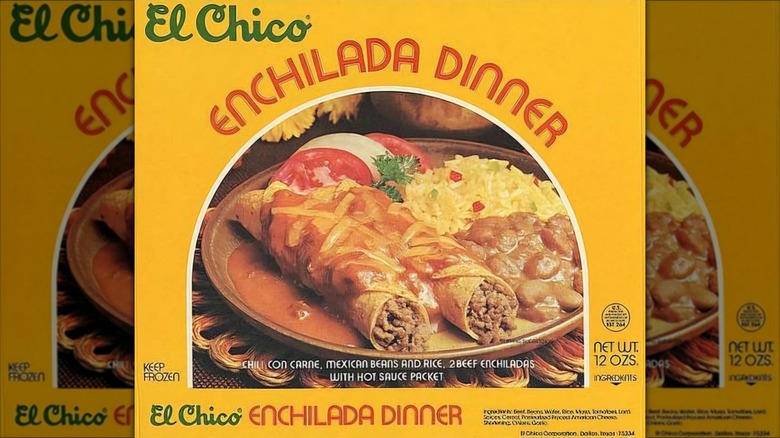
While Mexican food has long had deep roots in many parts of the United States, the cuisine gained broader national attention during the 1960s. Mexican and Tex-Mex restaurants were on the rise, and canned and jarred goods like chiles and salsa were becoming more commonplace in supermarkets. That growing interest created opportunities for companies like El Chico to bring Mexican-inspired frozen meals to supermarket freezers.
The El Chico story starts in the late 1800s, when Adelaida and Macario Cuellar immigrated from Mexico to the United States. They settled in Dallas, Texas, and Adelaida earned fame for her chiles and tamales. In 1940, five of her sons opened a restaurant called El Chico, where they served their family recipes. It was a huge hit, and before long, the brothers had numerous restaurants under their belt, as well as a manufacturing facility where they produced canned and frozen goods destined for grocery stores.
El Chico's frozen foods were full, ready-made meals, like the Saltillo Dinner with a beef enchilada, chili con carne, cheese taco, chili con queso, Mexican beans, and rice. The products were well-received and had a good run, even after rebranding as El Charrito in 1980, but were sadly discontinued in 2018. If you want to sample El Chico's food today, you'll have to make a trip to one of the remaining restaurants in Texas, Tennessee, Oklahoma, Louisiana, or Arkansas.
9. Morton pot pies
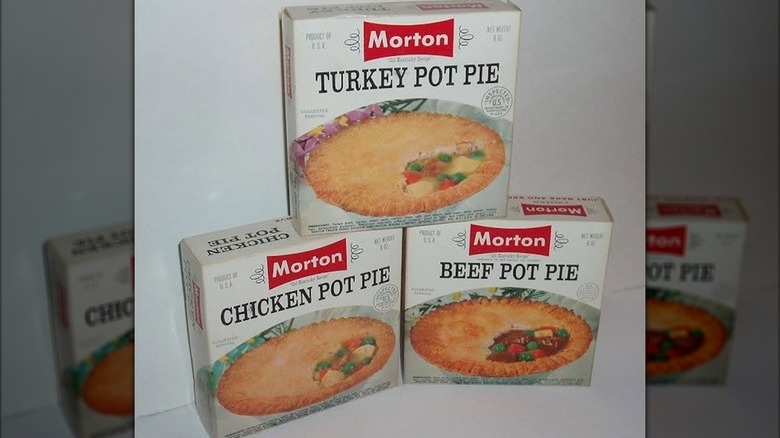
If frozen pot pies are must-haves in your freezer, then you have Morton to thank for bringing them into existence. Founded by Harold M. Morton in 1938, the company started out as a chicken processing and canning firm in Louisville, Kentucky. At first, it sold mainly soups and a signature jarred chicken noodle product, but that changed in 1946 when a food consultant named George Egger suggested Morton develop a frozen pot pie.
Morton's pot pie was so successful that the company pivoted to mainly frozen foods in the 1950s. That's also when the company created ads featuring "Colonel Morton," who explained the pot pie was made with an old Kentucky recipe. By the 1960s, Morton was a big player in the frozen foods game, offering a wide range of pot pies, including vegetable, chicken, turkey, and beef. It also sold TV dinners and baked goods like fruit pies and honey buns.
Unfortunately, the 1970s were challenging for Morton. Other frozen food brands were making gains in the market, and fast food chains were also creating competition. In addition, the company went through several acquisitions, finally ending up with ConAgra in 1986. As sales declined throughout the 1990s, ConAgra decided to phase the brand out, and it was finished by the early 2000s. Although fans have begged ConAgra to bring Morton back, even creating a Facebook fan page for the brand, it appears Morton may be gone for good.
10. Stouffer's Welsh Rarebit & Lobster Newburg
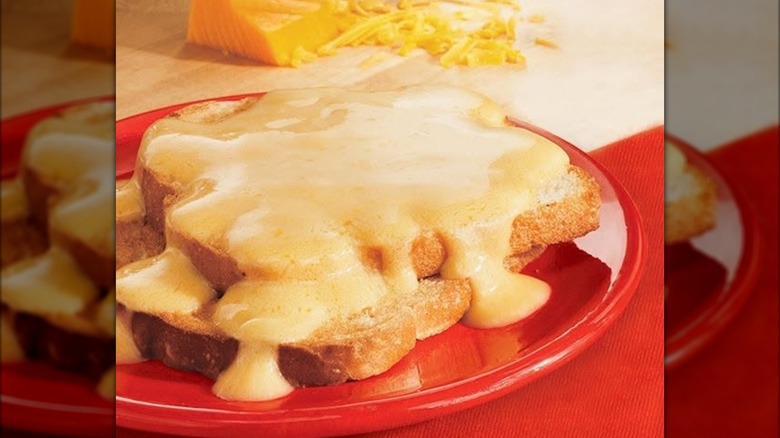
Stouffer's has been a big name in frozen foods for decades, but what many people don't know is that it actually started as a restaurant. Founded by Abraham and Mahala Stouffer in Cleveland, Ohio, in 1924, Stouffer Lunch sold mainly sandwiches. It became so successful that the family opened more restaurants in different cities and expanded the menus to include soups, steaks, and desserts. Around the 1940s, customers began asking the Stouffers for frozen meals they could reheat at home, and that marked the family's entry into the frozen food world.
The Stouffer family business grew exponentially in the 1960s, and a big part of that was its frozen line, simply called Stouffer's. The meals were similar to dishes served in the restaurants, with offerings like the Broccoli au Gratin, Lobster Newburg, and Corn Soufflé. There were also comfort-food dishes like the Macaroni and Beef and Welsh Rarebit.
In 1973, Nestlé acquired Stouffer's, and it's managed to keep it going strong ever since then. Over the decades, there have been several new innovations, like Stouffer's Lean Cuisine meals in the 1980s and HomeStyle Entrees in the 1990s. Today, you can find a wide array of Stouffer's frozen meals on offer at grocery stores, including some that were around in the 1960s, like the Macaroni and Beef. However, some old-school dishes like the Lobster Newburg and Welsh Rarebit have long been discontinued.