

6 Sneaky Ways Steakhouses Are Going Cheap On Us In 2026
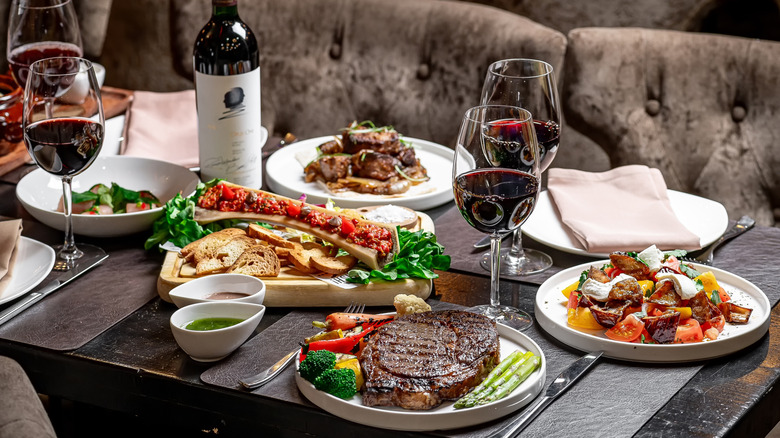
American steakhouses, facing rising costs that are forcing higher prices, are struggling to attract customers. That means The Great American Steakhouse is drowning in red ink. Since losing money is a no-go in the restaurant business, those losses have to be offset somewhere. The solution? Giving customers less for about the same money. Steakhouses are quickly abandoning the customer perks that have long been part of the dining experience.
The economy is strangling restaurants of all types, of course, but steakhouses are particularly vulnerable due to the astronomical price of beef. According to the USDA, beef prices are over 14% higher than at the same time last year, far outpacing price increases in pork and poultry. That indicates steakhouse costs may be rising faster and higher than those of restaurants with more varied menus.
Restaurants are using various strategies to balance their books. While high-end steakhouses are just raising prices, assuming that their clientele can afford it, some mid-tier chains are focusing on strategic pricing to compete not with other steakhouses, but with supermarkets. For instance, Longhorn Steakhouse is keeping its menu prices steady or raising them just slightly. The hope is that as grocery prices also rise, customers will see dining out as a comparable value to cooking at home. Even if that strategy helps get customers in the door, that still means smaller profit margins on steak sales. And that means restaurants are rethinking prices and serving sizes on everything from baked potatoes to drink refills. These are some of the ways that your favorite steakhouses are making up for lost profits.
1. Moving to a la carte pricing for sides
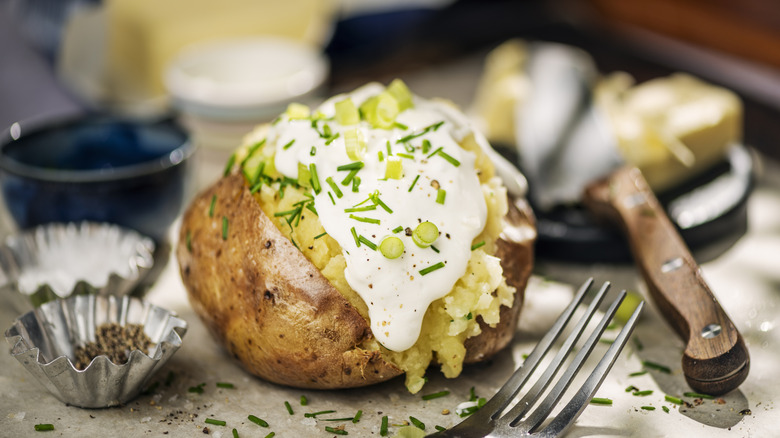
Fine-dining steakhouses figured out this pricing trick years ago, particularly the ones that noticeably overcharge, and mid-tier steakhouses are taking note: Profit margins are much higher with potatoes and veggies than with beef. In other words, steakhouses make more money off of your loaded baked potato and grilled asparagus than from your steak.
Steakhouse customers have options for "premium sides," which have an additional cost. Remember when you could get all the toppings on the baked potato that came with your steak? At chains like Texas Roadhouse and Longhorn, you now have to pay to upgrade. For example, at Longhorn, you can still have Crispy Brussels Sprouts with your T-Bone, but it'll cost you an extra $5.99. Over at Texas Roadhouse, a plain baked potato will add $3.49 to your bill — and if you want your spud loaded, that'll be another $1.29.
2. Leaning into technology to cut labor costs
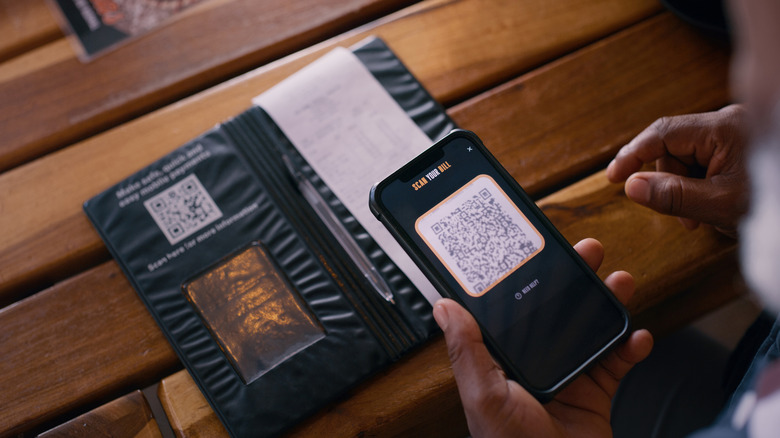
Remember when you paid for your steak dinner by folding your cash or card into a heavy leather wallet, which was then retrieved by a friendly member of the wait staff? Now, you're just as likely to pay through an on-table kiosk. Part of the reason for the change is a sneaky little trick to get you to spend more money, but the main objective is to cut labor costs.
Steakhouses are increasing their reliance on technologies, such as AI-driven "precision purchasing," vendor sourcing, data-driven scheduling, AI reservation systems, and mobile POS. For restaurants, this means spending less on labor. For you, it means fewer staff and less personal service. When used for sourcing food, ingredient quality can also be affected, since AI prioritizes cheap food over good food. Many industry experts have warned against restaurants rushing into all things AI, but that doesn't mean anyone is listening.
3. Not bringing back the salad bar
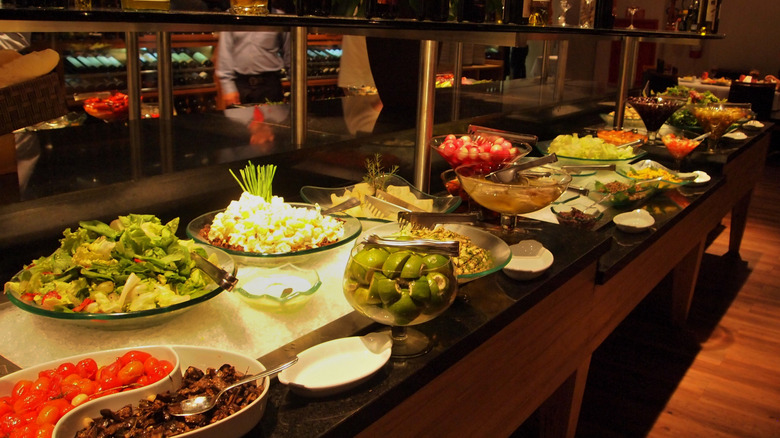
Steakhouses that specialize in salad bars and hot food bars never recovered from the pandemic. However, the first signs of trouble started in the 90s, when market oversaturation and changing consumer tastes took a bite out of business. The pandemic, and the increased attention to hygiene and food safety that came with it, all but finished off the steakhouse salad bar.
Among the many vintage steakhouses we miss, you'll find Exhibit A. The Ponderosa and Bonanza chains, which are owned by the same company, were once famous for their all-you-can-eat salad bars. Due to lingering health concerns and a desire to squeeze more cash from customers, all-you-can-eat salad bars have been replaced by pricier salad entrees and custom side salads. If you really miss the salad bar experience, there's always Golden Corral. Just be safe, wash your hands, and don't make these mistakes.
4. Limiting or eliminating free drink refills
If you like to drink soda with your steak instead of pricier beer or wine, the profit maximizers have you in their sights. Some locations of mid-tier steakhouses like STK and Ruth's Chris make you pay for soda refills. Not only does this pad your bill, but it's also for PR: Charging by the glass makes them seem more upscale than other steakhouse chains, like the kind of place where you have to know the correct way to order or face humiliation.
It's not just mid-tier steakhouses, though. Even steak-burger pioneer Steak N Shake implemented a QR scanning system to limit customers' free refills. Restricting refills is a broader, faster-moving trend in fast food. For example, McDonald's is removing its self-serve fountain drink machines. When fast food finds a way to make a little more money, sit-down restaurants pay attention and follow.
5. Offering less and less free bread
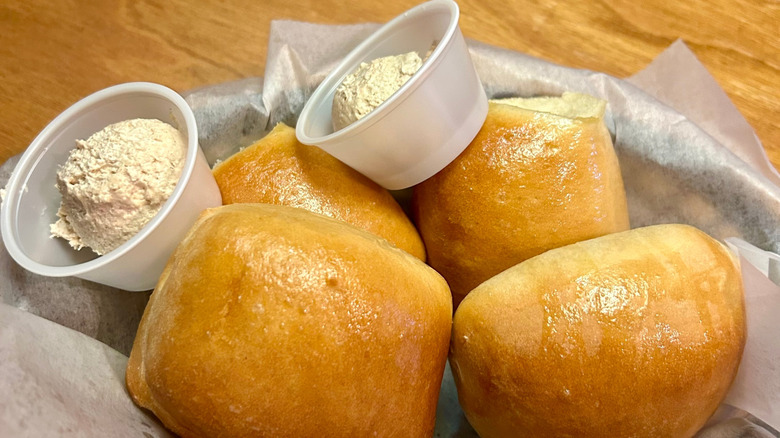
Complimentary bread has a real cost, so it's no surprise it's one of the first steakhouse perks to be shown the door. While many chains like Longhorn still greet you with a free bread basket (even if their complimentary offering isn't high on our list of favorites), upscale steakhouses have largely begun charging for it.
For every Peter Luger Steak House that still offers a basket of free bread, there are many more that charge for the privilege. Baraonda Ristorante and Bar in suburban Atlanta now charges $6 for bread and olive oil that used to be complimentary. And J Michael's Prime's suburban Atlanta location offers "bread service" for $10. It has become a controversial subject in the restaurant business, with those against offering free bread citing added costs for ingredients, labor, and time. The dwindling pro-bread crowd insists there are sneaky benefits to giving it to customers gratis.
6. Replacing familiar steak sauces with pricey, bespoke ones

Texas Roadhouse no longer carries the popular A1 steak sauce or any of the other store-bought steak sauce brands that we recently ranked, except for one: their own. So if you want steak sauce, your options are Roadhouse Gold and Roadhouse Classic. Luckily, they're free with your steak if you're dining in, or available to purchase by the bottle to take home.
More upscale steakhouses have long blanched at customers adding mass-produced sauce to their perfectly cooked beef. Still, many keep popular steak sauces on hand to fulfill customer requests. Recently, though, steak sauce sales to restaurants have declined, indicating a shift toward specialty sauces that limit options and often come with an additional charge. For instance, at the upscale chain Mastro's, there is a sauce menu featuring five gourmet options for $5 each.