

6 '90s Pizza Chains You (Almost) Forgot About
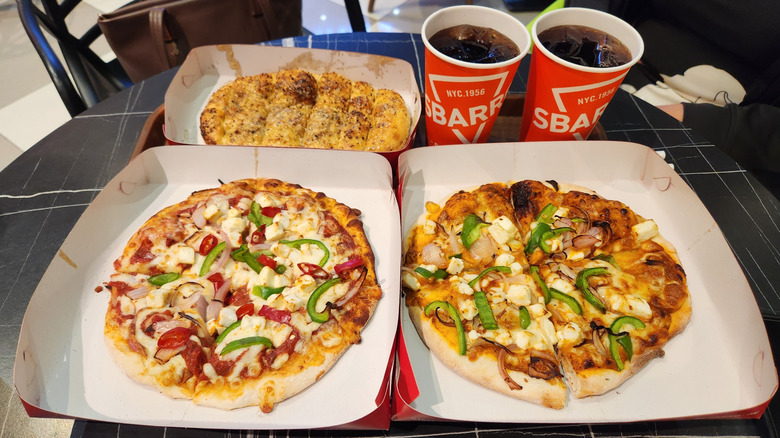
There's nothing like looking back at your youth to fill yourself with foodie nostalgia. The '90s were rich with snacks we'd love to taste again but likely never will, like Kudos bars and Jell-O Pudding Pops. There was also that temple of cheesy, carb-rich goodness: the pizza chain. After a day at the mall with your friends, where you availed yourself of all the newest duds at Gadzooks and Wet Seal (or Hot Topic, you cool thing, you), nothing beat strolling to the food court and grabbing a slice with your friends. If you're a little less vintage than that, maybe your memory of '90s pizza involves animatronic mammals serenading you as you plucked an errant round of pepperoni off your Simpsons T-shirt and put it right into your mouth, where it belonged.
Who could ever forget Domino's, Chuck E. Cheese, and Pizza Hut? The answer, of course, is "nobody." But there were other pizza chains back then, too — ones that perhaps weren't as nationally established as these institutions, or which simply didn't survive the subsequent decades. We're looking back at six chains that once ruled the '90s but which may have tumbled right out of your brain and into the ether — like that pepperoni onto your T-shirt — in the years between then and now.
1. Godfather's Pizza
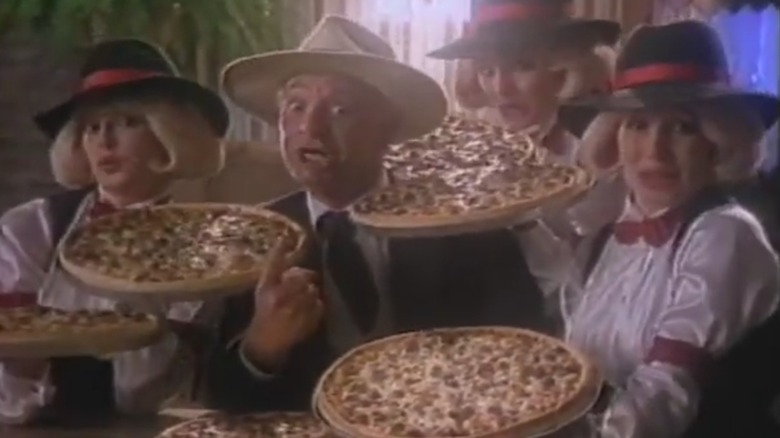
Any memories you've retained of Godfather's Pizza probably involve one of two things. First would be the kitschy commercials from the '80s and '90s featuring the chain's mascot, the Godfather himself. In his snazzy suit and fedora, he told you about the outstanding value for money that you (or the adults in your life) would experience at Godfather's Pizza, such as the jumbo 20-topping pizza that ran for $15.99 in 1993. Your second memory of this nearly forgotten Midwestern pizza chain might be the "Math by the Slice" program launched in 1990.
But "Math by the Slice" appeared at a tumultuous time in Godfather Pizza's history. In the '80s, the restaurant was a serious competitor of massive chains like Domino's and Pizza Hut, with more than 800 stores. But by 1988, Pillsbury (which had previously added the chain to its restaurant group) sold Godfather's Pizza, citing falling sales and profits. In 1996, new President and CEO Ron Gartlan championed a fresh slogan and back-to-roots approach: "Pizza the way pizza was meant to be."
Fast-forward over 30 years, and Godfather's is still hanging in. It's hard to pin down a solid number of locations today, but the brand itself says there are over 2,000 spots across the nation serving its food. This includes all its iterations: dine-in restaurants, college campuses, gas stations, and convenience stores like Love's and Alta, and over 1,500 Godfather's Pizza To Go licensed locations. It's not what it used to be, but it's something.
2. Bertucci's
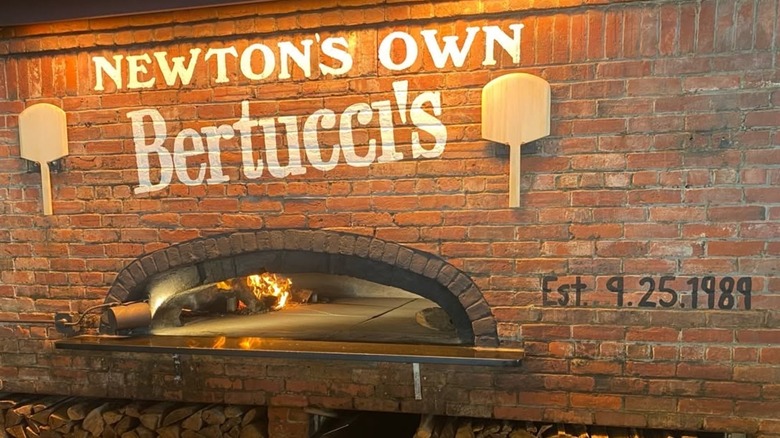
If you were a child in a specific region of the United States during the 1990s, and you were offered a slab of dough and a coloring book at a restaurant, you were probably eating at Bertucci's. Established in 1981, Bertucci's was just over 10 years old by the time '90's youths were enjoying its brick oven pizzas and pastas. The chain had grown throughout the 1980s to 14 locations, all in Massachusetts, and was listed among America's top 10 pizza restaurants by USA Today in 1989. In 1990, Bertucci's finally expanded outside its home state, opening restaurants spanning the East Coast, with Illinois as its westernmost outpost.
Unlike other pizza chains on this nostalgic list, this one isn't doing so well despite earning the title of People's Choice Winner at the Boston Pizza Festival in 2024. In April 2018, Bertucci's filed for bankruptcy, then again in 2022, citing the COVID-19 pandemic and overall lower sales amidst rising operational costs. The restaurant had tried to lure in customers that summer by charging 1980's prices for a dozen or so menu items, amongst other promotions, but to no avail. In spring 2025, Bertucci's went bankrupt for the third time, with only 15 locations remaining. Since then, three more stores have closed. If you want to relive the days of your youth by eating at Bertucci's, your choices are limited to 12 locations throughout Delaware, Massachusetts, Pennsylvania, and Virginia.
3. Sbarro
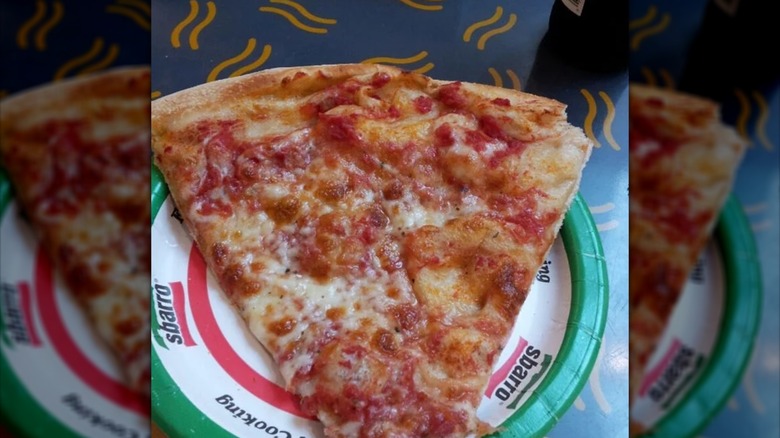
Topping this list of nearly forgotten pizza purveyors is the chain that ruled the food courts of the 1990s. No trip to a shopping mall was complete without at least walking past Sbarro to see if the line was too long to bother with — and oh, how we hoped it wasn't. While far from gourmet, it was exactly what we wanted, and it offered a heck of a variety. Sbarro was craveable not only for its massive slices of New York-style pizza (which you carried off to your table on a way-too-small plate), but also pasta, stromboli, and salad. It's fitting that the world's first shopping mall opened in 1956, and so did Sbarro's first iteration – as an Italian salumeria in Brooklyn. The fate of what would become the quintessential food court pizza was entwined with that of the sprawling, air-conditioned palaces of commerce that made it famous. Because ultimately, what happened to Sbarro isn't surprising if you think about what happened to shopping malls in general: People gradually stopped going.
Sbarro had some tough times. It survived two bankruptcies less than three years apart – one in 2011 and another in 2014. On the heels of multiple closures, it rebranded itself, opening its first freestanding restaurant in 2015. The ensuing years have been good, and it is currently on the upswing, having opened 100 new restaurants worldwide per year from 2021 to 2025. You can now find Sbarro as standalone eateries as well as in airports, convenience stores, and, as always, malls. Don't expect the exact menu of your youth, though: Part of the rebranding involved zhuzhing things up. Think dough made in-house, San Marzano tomato sauce, and an overall more elevated vibe.
4. Peter Piper Pizza
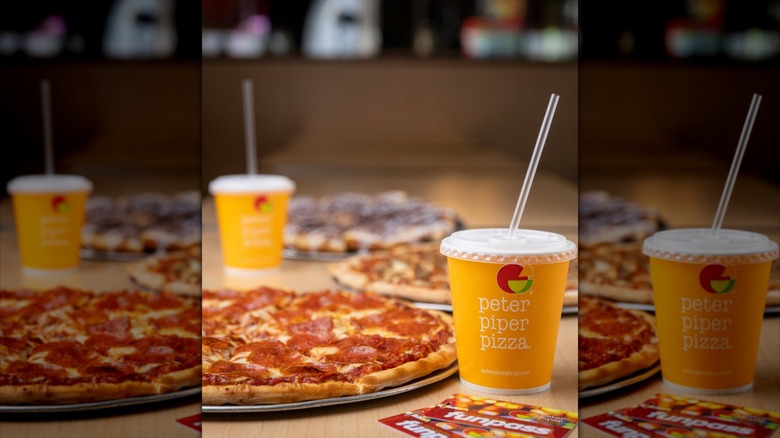
Founded in 1973 in Glendale, Arizona, Peter Piper Pizza was at first your run-of-the-mill pizzeria, focused on good food in a family-friendly environment. It gradually expanded throughout the state, hitting Tucson in 1980 along with a feature that would come to be its calling card — an arcade. The chain was built on games and family fun, and in 1982, the fun arrived in Texas. Nine years later, it even started expanding into Mexico. If you were a Southwestern youngster around this time, you might have had a robust collection of tokens and tickets for games, or even recall the tongue-twister slogan from the chain's '90s TV commercials: "Peter Piper Pizza is the pizza people pick."
In 2014, Peter Piper Pizza was purchased by private equity company CEC Entertainment Inc., the parent company of Chuck E. Cheese. It had grown to 147 units by that point, surviving a period of falling sales around 2008 and 2009 related to the financial crisis. The chain was also a year or so into a modernization/redesign plan called Peter Piper 2.0, which had been seeing positive results in sales.
Today's Peter Piper Pizza experience still includes games, but these have been further upgraded; digital ordering is available as well. There are just under 100 locations, mostly clustered in Texas and Arizona. (There's one Peter Piper in California and five in New Mexico.) If you're in one of these states — or passing through — you still have the chance to relive the '90s by stopping in and seeing what has stayed the same and what has changed.
5. Showbiz Pizza Place
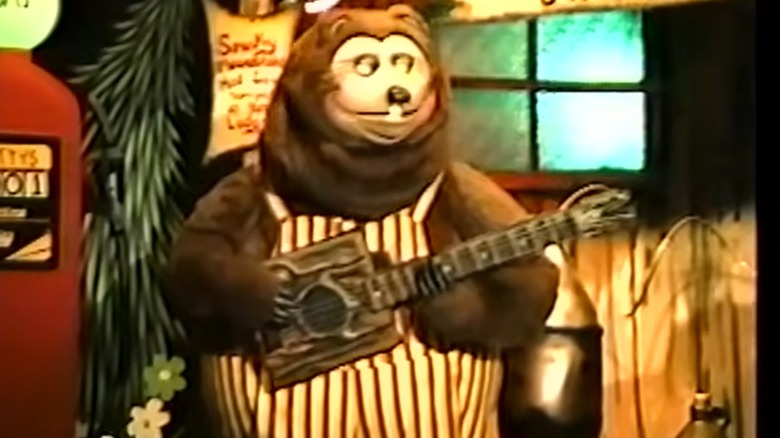
You probably remember Chuck E. Cheese, but Showbiz Pizza Place, established in 1979, may have dropped out of your memory. This pizza chain was huge among kids in the '80s for its gaming arcade and animatronic band, The Rock-afire Explosion. The mechanical music group featured a gorilla on keyboards, a couple of guitar-playing bears, and a singing mouse, among other delightful (or scary — a totally valid take) creatures treating you to oldies. One Redditor, comparing Showbiz's musical offerings to those of Chuck E. Cheese of the time, said, "Rock-afire actually had good music and banter. They didn't sing or talk down to kids. They were well-engineered, endearing, and hip. ... You could tell a lot of love was put into them!"
Showbiz makes it onto this list of nearly forgotten '90s pizza chains by a single year. We youngsters probably didn't know this at the time, but on the corporate side of things, Showbiz was merged with Chuck E. Cheese in 1985. In 1991, though, in what was potentially many Gen X/Xennial children's first brush with concept unification, all Showbiz locations were rebranded as the competitor chain. Suddenly, the place "where a kid can be a kid" was Chuck E. Cheese rather than Showbiz Pizza — a shift that this writer, for one, recalls as a shocking "life will never be quite the same" moment. The Rock-afire Explosion band was also replaced by Munch's Make Believe Band, which some children back then found underwhelming compared to the defunct competitor. In all, the rise and fall of Showbiz Pizza is a sensitive topic for a subset of Americans who still remember the day the (good animatronic) music died.
6. Eatza Pizza
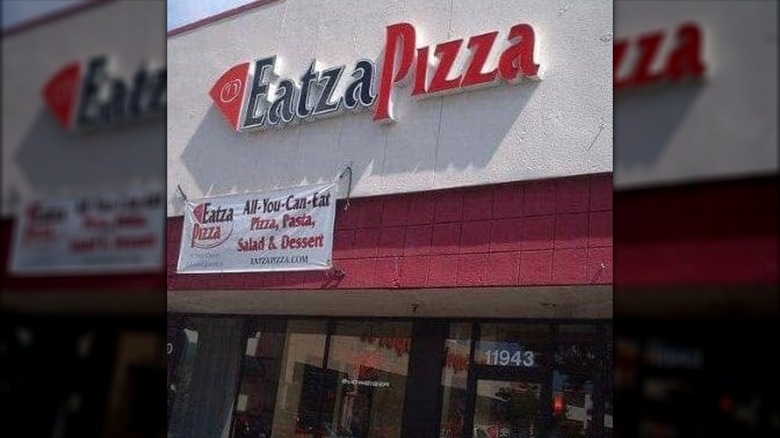
Unlike some of the eateries on this list, Eatza Pizza is one of those '90s pizza buffet chains that disappeared without a trace. Founded in 1997 in Arizona, it offered all-you-can-eat pizza, pasta, salad, and dessert. Eatza had wings, too (these were limited add-ons), and some of its pies were novelties like taco pizza, complete with actual Fritos. By all accounts, kids loved the place. In addition to its smorgasbord of food, it had a game room – separate from a quieter dining area — where players could redeem tickets for prizes. But older customers apparently loved it, too — at least in one Arizona location, where the customer base comprised at least 50% senior citizens, according to a 2004 article on Pizza Marketplace. So, if you recall being taken out for pizza and games by your grandparents or other older folks in your life, it could very well have been Eatza Pizza.
In Oct 2003, the founders sold the chain to investor Barry Smith, who implemented a new look for Eatza the following year. A more inviting atmosphere was the goal: less cafeteria-like, with all new serving stations. In 2005, 77 Eatza Pizza restaurants had opened or were under development in 11 states. The chain was taking a new approach with improved customer service and an expanded buffet, as well as a bigger gaming floor.
Then things went south. In January 2007, an Arizona newspaper reported that the chain was on its way out of Greater Phoenix's East Valley, with multiple closures or evictions; there were also lawsuits from two creditors. In April, a Connecticut firm purchased Eatza Pizza, but any hopes of further expansion fizzled out. By 2008, Eatza was beat-za.