

10 Nostalgic Sandwich Chains That Are Slowly Being Forgotten
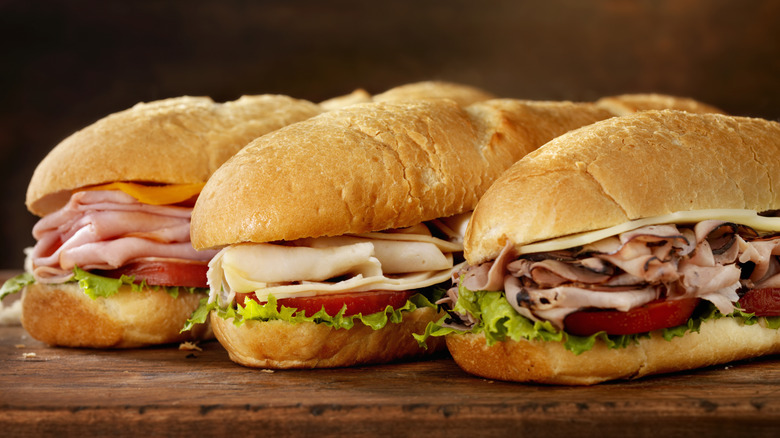
When you're craving something quick and easy to eat that's relatively healthy and doesn't require a knife and fork, a sandwich is the perfect solution. That's one reason sandwich chains became so popular in the first place. They first started appearing in the early decades of the 20th century, and by the second half of the century, sandwich shops had become one of the most competitive segments of the restaurant industry. Today, a few sandwich chains still dominate the market, but many former favorites have faded into the background.
It's no secret that the restaurant industry is volatile, and sandwich chains face the same challenges as other fast-food or fast-casual brands. Competition is fierce, consumer tastes are constantly evolving, and rising costs have made it difficult for many chains to expand or maintain their footprints. They're also competing with non-traditional players, like grocery stores renowned for their prepared foods and deli counters. While some sandwich chains have managed to thrive despite the pressures, others have shrunk dramatically, and some are even at risk of disappearing altogether. These are 10 sandwich chains that were once popular but are now slowly being forgotten.
1. Blimpie
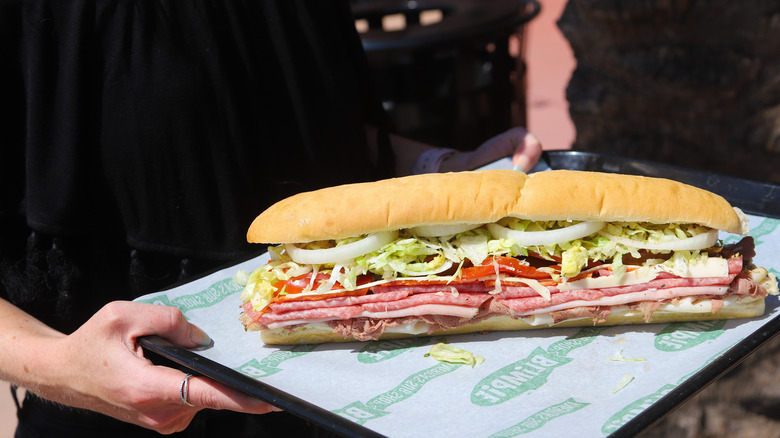
In 1964, three friends from Hoboken, New Jersey, cobbled together $2,000 to follow their dream of opening a sub shop. They knew they had to stand out from other sub shops in the area, so instead of opting for a name that included one of the many common terms used for subs, they decided to call their shop Blimpie, as they reckoned their super–stuffed sandwiches resembled blimps. The concept was a hit, and just a year later, the team was already franchising. The company continued to grow at a rapid pace over the following decades, and by the early 2000s, it had more than 2,000 locations across the United States and abroad.
Despite its decades-long run of success, Blimpie began to decline at the beginning of the 2000s. One major reason for this was an overambitious expansion plan in the 1990s that pushed the chain into non-traditional channels such as kiosks and convenience stores. Unfortunately, many of those ventures performed dismally. In 2002, one of the partners sold his portion of the company to a private investment firm, which caused more fracturing and did little to turn things around. In 2007, Kahala Corporation bought Blimpie, and the chain has continued to struggle ever since. Today, there are just 95 locations left in the U.S.
2. Rax Roast Beef
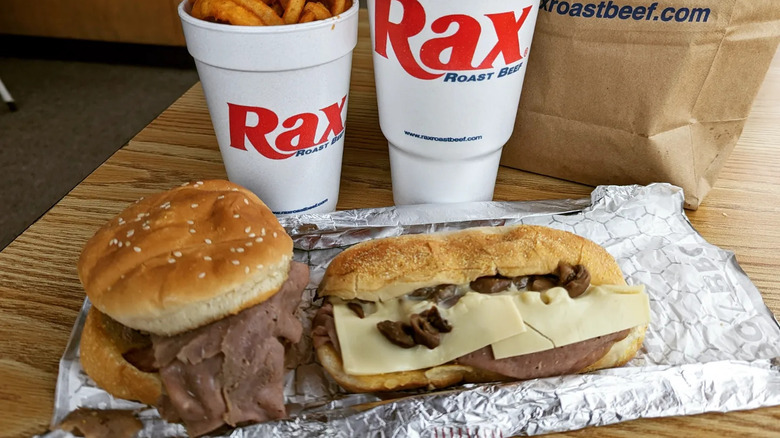
These days, it's hard to find many folks familiar with the Rax Roast Beef chain, but at one point, this roast beef sandwich chain rivaled Arby's. The first location opened in Springfield, Ohio, in 1967 and was originally called Jax Roast Beef after its owner, Jack Roschman. When General Foods bought the brand in 1969, it renamed the chain Rix Roast Beef, and when the Restaurant Administration Corporation (RAC) took over in 1972, it renamed the chain Rax Roast Beef. Under RAC, the newly named Rax flourished, growing to over 500 locations in the 1980s. However, that success didn't last long.
If Rax had just stuck to selling roast beef sandwiches, it may have endured. Unfortunately, the company tried to diversify too much. It began selling odd menu items like taco and meatball "pockets" and remodeling restaurants to make them look fancier. Then, the chain introduced the misguided Mr. Delicious, a cartoon mascot styled like a melancholy middle-aged man who drank heavily, philandered, and had a hostile side. The ads were meant to target a more mature audience, but they went over like a lead balloon, and not long after they aired, Rax filed for bankruptcy. As of 2026, the company is down to just six locations in Ohio, Illinois, and Kentucky.
3. Quiznos
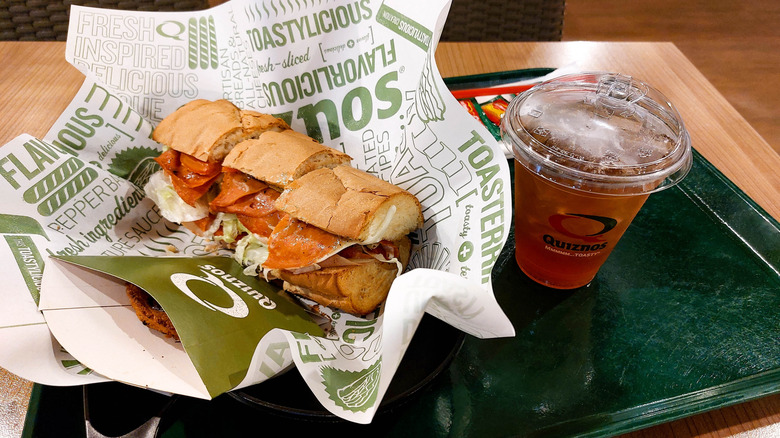
When Quizno's opened in Denver, Colorado, in 1981, it faced some pretty stiff competition. Subway had already been in operation for over 15 years and was dominating the submarine sandwich scene. Yet despite offering a very similar product to Subway (the only real difference being toasted versus cold subs), Quizno's managed to thrive and even give Subway a run for its money. In 2007, the chain reached its peak of roughly 5,000 stores. Unfortunately, the following decade would see a rapid decline from which the chain is still reeling today.
There are a few factors that contributed to the downfall of Quizno's. For one, it expanded too quickly to the point where franchisees found it hard to make sales in the oversaturated areas. In addition, franchisees were forced to purchase products from Quizno's subsidiary company at what they believed were inflated prices. This led to lawsuits and a huge settlement. Then there was a 2006 buyout that further crippled the chain's finances. In 2014, Quizno's filed for bankruptcy and shuttered over 400 restaurants. At the time of writing, the chain has 148 locations. Although the company has recently introduced new concepts like the modular Qube restaurants, it remains to be seen whether it will ever return to its former glory.
4. Così
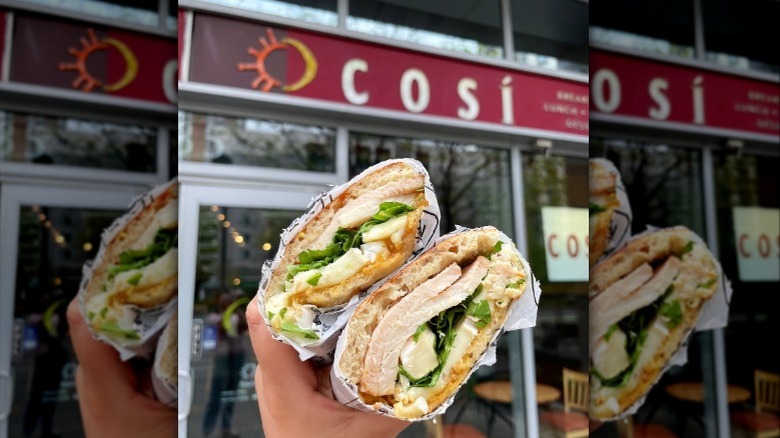
Like many businesses, Così was born of a dream to create something better than anything that came before. For founder Drew Harré, that product was the humble sandwich. The New Zealander based his sandwich concept on Italian flatbread filled with fun ingredients inspired by his trips to different countries. In 1989, he opened his first sandwich shop in Paris, France, and named it after the opera "Così fan Tutte". The concept was a success, and in 1996, the first Così in America opened in New York City. By 2008, there were over 150 locations across the United States.
With its fast expansion in the U.S., it seemed like Così was off to a good start, but sadly, things weren't as they seemed. The truth is, the company never managed to rake in the sales it needed to stay afloat. Even after going public in 2002, the company failed to make a profit year after year for the next decade. That may be because it expanded too fast, because the menu just wasn't designed for efficiency, or because it had a rotating roster of CEOs. In 2016, Così filed for bankruptcy and again in 2020. Multiple stores have closed over the past two decades, leaving the grand total today at just 14.
5. Which Wich
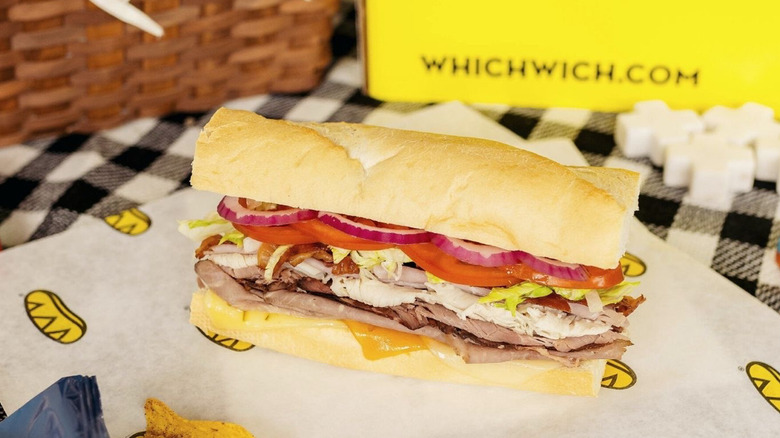
When Jeff Sinelli founded Which Wich in Dallas, Texas, in 2003, he already had years of experience developing restaurant and bar concepts. That expertise paid off because the sandwich chain was an instant hit. Folks loved the unique ordering system of checking off preferred ingredients with a Sharpie on a paper bag, and the "Sandwichfaction Guarantee." The chain expanded steadily to other states, and by 2018, there were over 430 locations across the country and more overseas.
Which Wich never had a problem gaining fans. Case in point, the chain made our list of the best meatball subs in the U.S. according to reviews. However, like many other food industry businesses, the company suffered a heavy blow during the pandemic. Since 2020, the chain has closed more than half of its U.S. locations, leaving only 162 locations left to date. That said, Sinelli remains hopeful about the future and plans to expand into new markets at home and abroad. In 2023, he told QSR magazine, "I think we know who we are and what we're best at, and if we just put those fundamentals and use them to our strength, we're going to have a nice, nice next 20 years."
6. Jerry's Subs & Pizza
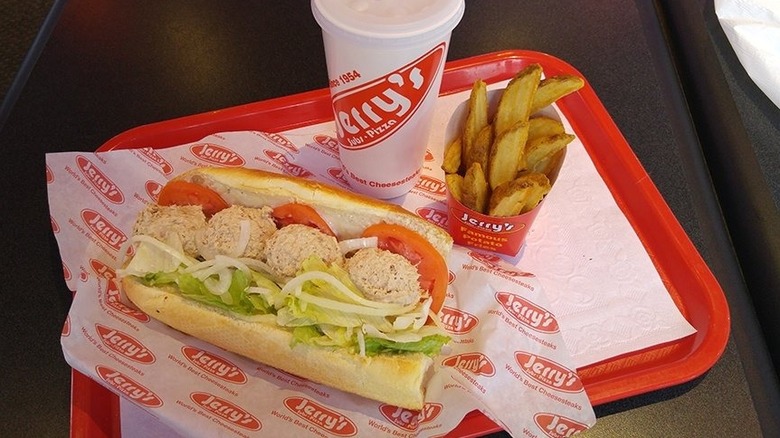
If you grew up in or around Washington, D.C., you may remember Jerry's Subs & Pizza. Founded by Abraham and Leah Suls in Wheaton, Maryland, in 1954, and named after their son, it earned a solid reputation for its hearty subs, cheesesteaks, and New York-style pizza. When Max and Evelyn Levine took over ownership, they created a series of catchy radio ads that brought further attention to the restaurant. However, the business really took off in the 1970s when a group of investors bought it and started franchising. The chain had a great run, peaking in the early 2000s with over 100 locations across multiple states.
Sadly, Jerry's isn't much more than a nostalgic memory these days. The company underwent management changes in the 2010s, and things went downhill from there. Some say the owners weren't willing to reinvest in the brand or support franchisees with marketing efforts. As new competitors entered the market, the brand stagnated and eventually got left behind. Some franchisees rebranded to try and give their restaurants a fresh start, while others shut up shop altogether. As it stands today, the chain has just three locations left, all of which are in Maryland.
7. Even Stevens Sandwiches
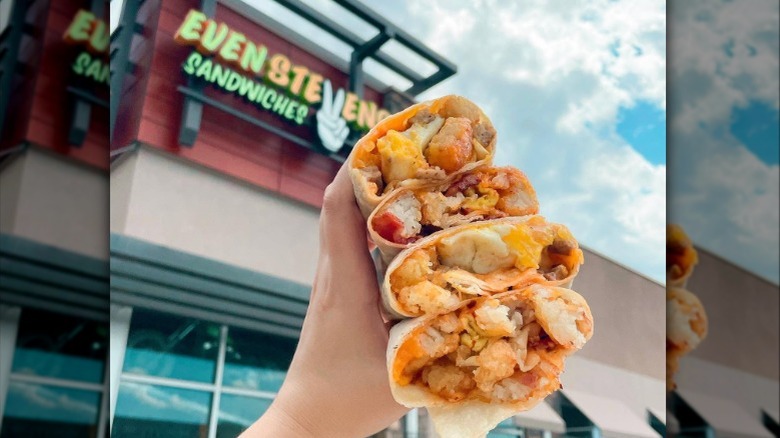
Founded in Salt Lake City, Utah, in 2014, Even Stevens Sandwiches started out with noble intentions. For every sandwich sold, the brand said it would donate one to a charity. The way this actually worked was that the company calculated the average cost of ingredients for the sandwiches, multiplied it by how many sandwiches were sold each month, and then donated the money to various charities. The concept was a success, not only for its feel-good mission, but also for its creative sandwiches with quirky names like the Mihami Vice and Capreezy. The chain also sold items like breakfast burritos, salads, and potato tots.
Even Stevens Sandwiches expanded quickly, growing to over 20 locations in multiple states in just a few years. However, it wasn't long before cracks began to appear. In 2018, the brand ended the donation program and began closing stores. Just a year later, the company filed for bankruptcy, blaming rapid expansion for its issues. In the years that followed, more stores were shuttered, and multiple employees reported missing and bounced paychecks. Founder Steve Downs was also accused of misleading investors about the financial viability of his other businesses. By 2023, nearly all of the restaurants had been sold off or were facing eviction notices for unpaid rent.
8. Taylor Gourmet
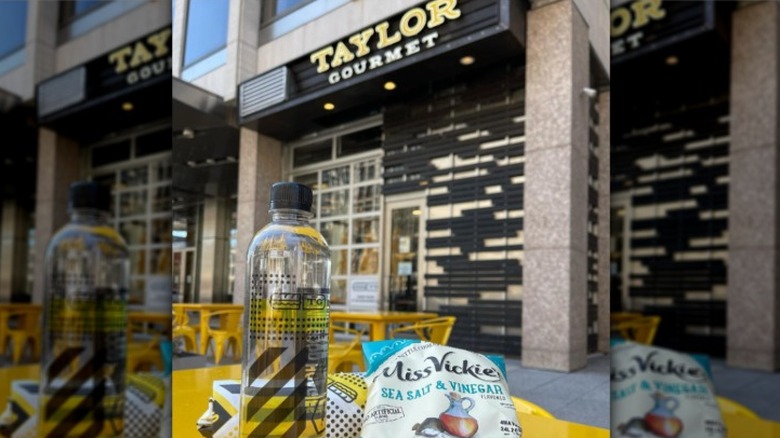
When Philadelphia natives Casey Patten and David Mazza opened the first Taylor Gourmet in Washington, D.C., in 2008, they didn't plan on making it a multi-unit chain. Their only goal was to create top-notch hoagies. Patten told Nation's Restaurant News, "We just opened the first store because we wanted something from home with fresh quality bread, premium meat, nothing cut out of the bag, and veggies sliced for the time period." However, business was good, so they opened more stores. Then, with help from the private equity firm KarpReilly, the business eventually reached a total of 17 locations.
Things seemed to be going great for Taylor Gourmet, but in 2018, shortly after KarpReilly had pulled out, the company filed for bankruptcy and announced it would close all its stores. There were several issues that led to the chain's downfall, including the usual pressures of a fast expansion and competition from other brands. The company also experienced a drop in sales after Patten met with President Trump for a small-business roundtable in 2017. However, all is not lost. In 2019, developer Steve Kalifa bought the chain, and at the time of writing, two locations are currently operating in Washington, D.C.
9. Eegee's
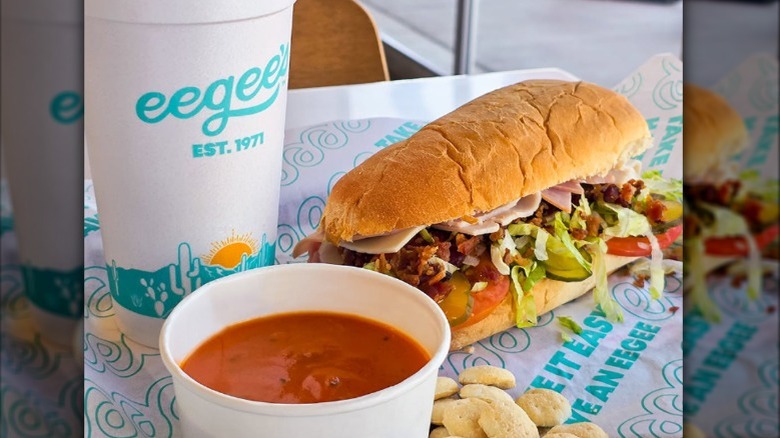
Eegee's began as a vending truck selling frozen lemonade in Tucson, Arizona, back in 1971. Those icy-cold drinks (aka Eegees) were so popular that the business eventually expanded into brick-and-mortar restaurants. Over the years, the company added numerous Eegee flavors to the menu, along with grinders (sub-style sandwiches packed with deli meats), Toastees (toasted subs), salads, chicken tenders, and other snacks. In 2018, private equity firm 39 North bought the chain and fueled further growth, expanding it to over 30 locations in Arizona by 2020. The company had big plans to open even more stores in new markets, but then the pandemic hit.
In 2023, Eegee's closed three restaurants in Tucson, and the following year, it filed for Chapter 11 bankruptcy protection and shut five more locations. The company cited a slew of problems brought on by the pandemic, including a decline in foot traffic, rising costs due to inflation and wage increases, and labor shortages. In 2025, Eegee Acquisition Corp. (an affiliate of Gladstone Capital Corp.) acquired the chain and stated it would keep the remaining locations open. However, it's unclear if there are plans to add more in the future.
10. Au Bon Pain
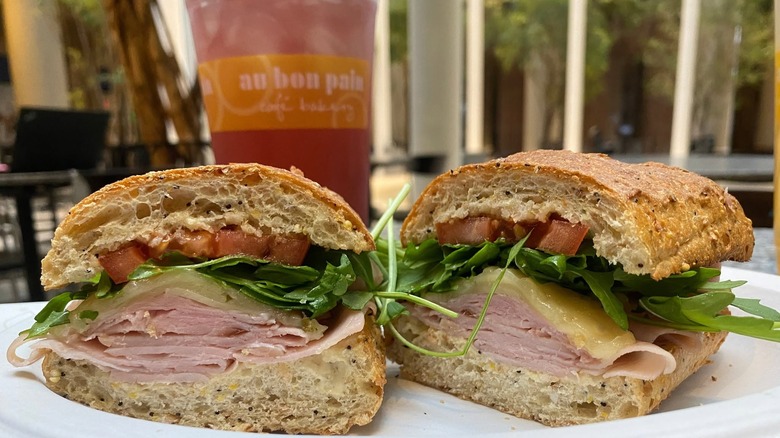
Au Bon Pain, which means "from good bread" in French, started out as a French baking oven business. When the company set up a display at Boston's Faneuil Hall Marketplace in the late 1970s, it caught the attention of Louis I. Kane, who bought the company and transformed it into a bakery concept. The first location opened in 1978 and was a hit for its freshly baked breads and pastries. Kane later added sandwiches, soups, and salads to the menu. When Ron Shaich came on board in the 1980s, he helped grow the brand exponentially, helping it become one of the largest bakery chains in the U.S.
Although Au Bon Pain had a large footprint for a long time, peaking at about 300 locations in the U.S. in the 2010s, the last decade has been rocky for the brand. It was acquired by Panera Bread in 2017, which is ironic, considering Au Bon Pain once owned St. Louis Bread Co., the company that became Panera. Under Panera, the chain shrank significantly, as many locations were converted into Paneras. In 2021, Panera sold the chain to Ampex Brands, which hasn't done much to boost sales or the brand's footprint. Today, there are only 28 Au Bon Pain locations left in the United States.