

6 Ways Celeb Chefs Elevate Classic Pot Roast
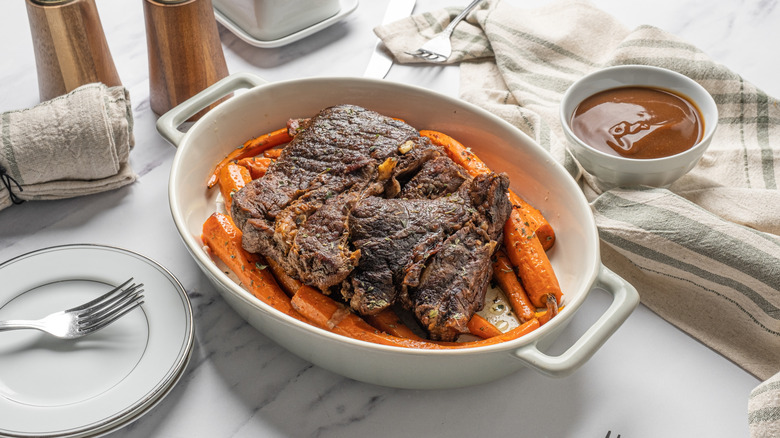
Pot roast may be a classic, but sometimes we're in the mood to jazz it up. There are plenty of simple tips to ensure a pot roast comes out right – from choosing the right cut of meat to not fiddling with it once you've got it browning in the pan. These steps will keep it tender, juicy, and tasty, but they won't necessarily elevate your evening meal into "wow" territory. Who better to look to than the pros when it comes to upgrading one of the most simple meat-and-veggie dishes you can sink your fork into?
We've dug deep to find six ways that celebrity chefs turn the basic (albeit beloved) into the incredible. Alton Brown shows us that other fats can be fantastic and that seasonings don't have to sing the same old parsley-rosemary-thyme song. Michael Symon, Ina Garten, and Ree Drummond prove that the right booze (beyond the classic red wine) can be a beautiful thing in a pot roast. Garten, Brown, and Billy Parisi's versions demonstrate how pulling in an extra culinary technique or two can make a major difference to mouthfeel and flavor. These pros have a few other tricks up their sleeves as well, so prepare to learn.
1. Alton Brown incorporates the nutty, buttery notes of ghee and an overnight rest

A typical pot roast recipe kicks things off by searing your meat in olive oil. The oil has a pleasant – but not too bold – flavor, offers plenty of "good" fats, and has a higher smoke point than its extra virgin counterpart. "Good Eats" host Alton Brown sometimes declines this popular option, instead bringing in ghee as his secret ingredient for a more flavorful pot roast. A form of clarified butter, ghee is made by straining out milk solids and water from butterfat, offering extra-nutty, buttery, almost caramel-like notes that enhance, rather than overwhelm, your beef's flavor. Ghee also has an impressively high smoke point of 485 degrees Fahrenheit (butter's smoke point is 350 degrees for reference). This allows you to get a good sear without worrying about burning your fat before your beef is as brown as you want it.
Then there's the resting period — and we're not talking about the typical 10- to 20- minute post-cook rest you'd usually give this dish before serving it. Once Brown is done cooking a pot roast, he lets it cool before putting it in the fridge overnight. He only tucks in after reheating it in the oven at 350 degrees Fahrenheit the next day. This allows the meat to soak up its own gelatin-rich, umami-steeped juices for hours, which translates to a major boost in flavor.
2. Michael Symon proves bacon and beer can yield a classy pot roast

Food Network's Michael Symon does several interesting things with a pot roast, none of which are unheard of, but when combined, they make for a distinctive and classy take. It starts with the inclusion of pork. To do a roast in Symon's style, you don't have to go full boeuf-à-la-mode (this would have you larding the roast — threading strips of pork fat into the meat to baste it). No, instead, you'd take a pound or so of slab bacon and dice it into lardons, a type of bacon that lends a rich, juicy, smoky foundation to dishes as the fat renders. Symon crisps these up first, browns the meat in the rendered fat, then removes this to make way for the veggies that soak up all this unctuous goodness. After deglazing with apple cider vinegar, he cooks the roast in beer and chicken stock.
When braising pot roast with beer, the alcohol assists in tenderizing the meat while the beer variety itself should offer your dish its flavor. The prevailing wisdom among chefs is to eschew particularly light beers and go with something darker. Symon, however, goes against the grain and uses wheat beer — a lighter brew that complements the beef's umami with a warm, bready flavor and doesn't impart too much bitterness. At the end, Symon cuts through all this richness by garnishing with mint and lemon zest, proving that good old beer and bacon can yield a meal that reads equally as elegant to the taste buds as something fancy and French.
3. Ina Garten elevates flavors with cognac and boosts texture with pureeing

While it's perfectly possible to make a pot roast without incorporating red wine, doing so offers a tantalizingly nuanced sauce with a hint of sweetness. Ina Garten's company pot roast calls for 2 cups of vino (she specifies that it should be a good one), but the Barefoot Contessa doesn't stop there. She adds to her pot 2 tablespoons of cognac or brandy (along with the red wine) after the aromatics have cooked. Garten also uses this boozy duo to ramp up her beef stew, a dish she otherwise finds a bit dull, so you know it's a method she trusts. If you've been feeling blah about a basic pot roast, you might take a leaf out of her cookbook and pick up a bottle of full-bodied red wine and cognac to experiment with.
Cognac, which is a brandy aged in barrels, adds the barest touch of sweetness and warm, oaky notes that you won't get from the wine alone. Deglazing with both this and wine adds a special layer of complexity to a pot roast. She further boosts this with both chicken stock and bouillon for that concentrated goodness. After the roast and vegetables are done cooking in this robust bath, she thickens things up by pureeing half the braising liquid and vegetables toward the end of the cooking process. This goes back into the pot, where it simmers on the stovetop before she tosses in a little combined flour and butter and gives it all a few minutes to thicken. This extra step creates a perfect coating for the meat and a delightful pot roast that anyone will love.
4. Billy Parisi dry-brines the meat and upgrades the root veggie selection
Taking an extra (pretty much hands-off) step at the beginning of the preparation process can also offer major upgrades to the texture and flavor of a pot roast. Before anything else, Billy Parisi's first step is to salt the beef and let it rest in the fridge for 12 to 48 hours on a sheet tray — that is, he dry-brines it. In this process, the salt pulls moisture out from the roast onto its surface. The salt dissolves, then eventually diffuses back into the meat, priming the proteins to hold onto liquid. Not only does it keep the roast moist, but dry-brining also enhances browning and deepens flavor. (Dry-brining is a multi-meat technique — we like to do it with chicken for juicy results.)
Besides optimizing the protein, Parisi also adds pizzazz to the typical selection of veggies. Carrots, celery, and potatoes certainly make their appearance, but Parisi also brings in parsnips and rutabaga. Parsnips are more starchy, nutty, and sweet than potatoes, and rutabagas carry an added sweetness as well. Next to those Yukons in this recipe, this pair adds variety to the palate and mouthfeel.
5. Alton Brown also does fascinating things with non-standard spices and sweet-and-acidic ingredients
If you like the idea of a dish upgrade that makes you see a classic in an entirely new light, Alton Brown's original way of doing pot roast should pique your interest. Before he came out with his other version of the meal — also on this delicious list – Brown's pot roast was a more creative take on the usual recipe. There were some naysayers, folks who didn't like the non-standard flavor profile, but there are also big fans of this warmly seasoned, sweet-and-acidic iteration.
First off, when you think of what seasoning goes in a pot roast, you might not typically think "cumin." But you'll find it as the main seasoning here, which alone already starts this pot roast with verve. Acidic tomato juice and balsamic vinegar contrast with cumin's earthy, pungent notes, keeping the flavor balanced. Alongside this, Brown throws in another contrasting pairing: sweet, dark raisins and briny, savory cocktail olives. The result is a new twist on a meal you might have never expected a surprise from.
6. Ree Drummond keeps things simple while bringing in the booze

Ree Drummond does pot roast in a couple of different ways, both of which are about as standard as you can get: brown your meat in olive oil, add onions and carrots, toss in tomato paste, deglaze, and so on — no dry-brining, pureeing, or other bell-and-whistle steps involved. But the Pioneer Woman sometimes swaps out one common ingredient during the deglazing step. Instead of pouring in 1 cup of red wine to pull up all the good browned bits that stick to the pan after the veggies have cooked, Drummond breaks out 1 cup of whiskey for the job.
If you're familiar with the flavor of whiskey and red wine, you know they're both capable of great depth and complexity — just in different ways. Both undergo their aging process in barrels, but you'd never sip one and mistake it for the other. Whiskey's grain rather than grape foundation gives it a cereal-sweetness that wine lacks, while other differences in production yield fruity notes, spiciness, peat, smoke ... all of which enrich your pot roast gravy in a subtle but unmistakable way. You can use cognac if you don't have whiskey on hand, but it's a whole different flavor profile, with whiskey offering those distinctive smoky, caramel notes.