

12 Tips For Cooking The Best Tomahawk Steak Of Your Life
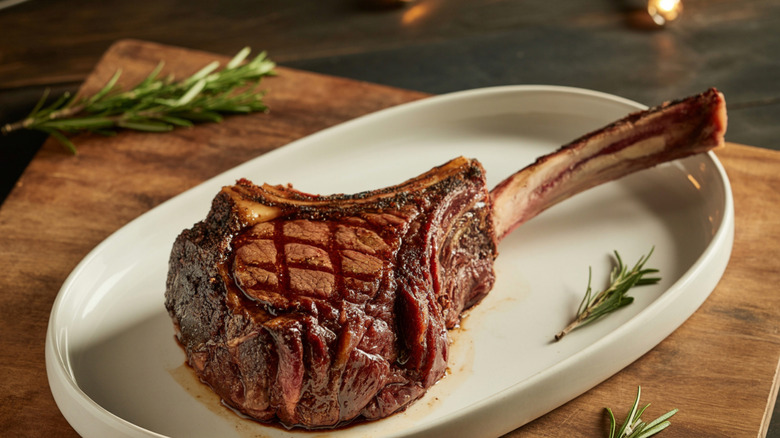
There are a few dishes guaranteed to turn heads when you order them at a restaurant: a plate of sizzling fajitas, a massive prime rib, and, of course, a tomahawk steak. This juicy, succulent cut — sourced from the beef rib and containing the longissimus dorsi (eye of ribeye), spinalis (ribeye cap), and a protruding bone – is so large that it's often served for two on restaurant menus. When properly marbled and cooked, the steak is rich, brimming with buttery and deeply savory notes, and well worth its high price tag.
And like other captivating restaurant dishes, many folks think that its preparation is reserved for trained chefs. However, this couldn't be further from the truth. As long as you have all of the necessary tools, space in your fridge, and room in your grocery budget to splurge on this premium steak, you can make it at home — you just need a little bit of insight from the pros.
That's where we come in. In order to understand the ins and outs of this king cut in a home kitchen, we spoke to several steak experts: restaurateur and chef David Burke; Hervé Malivert, chef-instructor and director of culinary affairs at the Institute of Culinary Education; chef Nicholas Dixon at Dalia in South Boston; and chef and head butcher Aaron Sortman from Red Hog Restaurant and Butcher Shop in Louisville, Kentucky. Here are their tips for cooking the best tomahawk steak.
1. Don't underestimate its size and shape
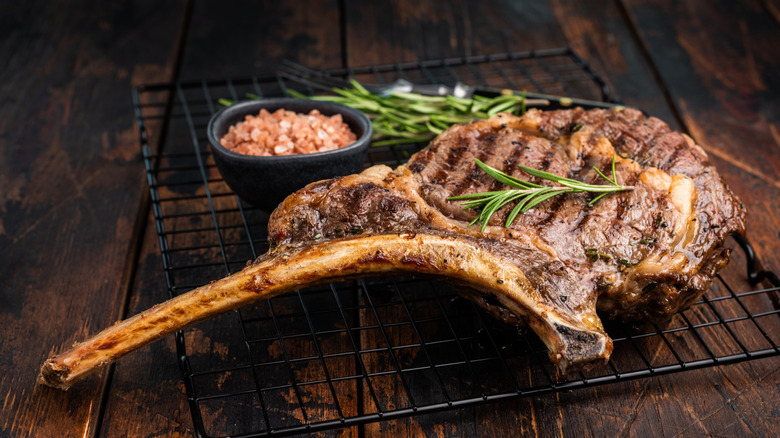
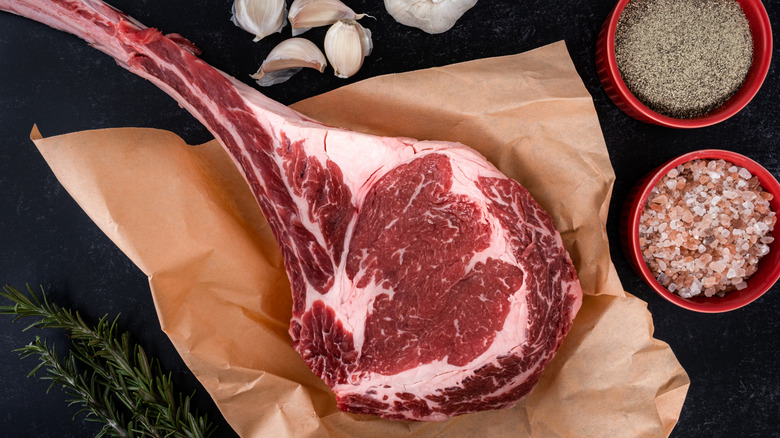
The tomahawk steak is, as the kids would say, "no joke." The bone-in cut can weigh 2 to 3 pounds, and the bone itself extends about 5 inches from the meat. It's not a steak cut that you prepare as an easy breezy weeknight meal, as its size requires attention and careful planning.
Chef David Burke says one of the most common mistakes people make when cooking a tomahawk is underestimating its size. "You have to make sure it fits in your pan, oven, or grill," he says. In other words, that teeny tiny cast-iron skillet you use to cook a filet probably won't work here. Besides the sheer size of this steak, Hervé Malivert from the Institute of Culinary Education also points to the bone as being especially problematic. He explains that the bone needs to be cooked in addition to the meat, which is not an issue you run into with other cuts. "You need multiple types of heat, direct (searing) and indirect (roasting), whereas other cuts can often just be handled in a pan on the stove," he says.
Besides maneuvering, you may also need to adapt your cooking methods to accommodate both its thickness and its bone, per butcher and chef Aaron Sortman. "Because of the size and thickness, it's less about rushing and more about managing heat and giving it the time it needs to cook evenly," he says.
2. Consider fat content when deciding how to cook it
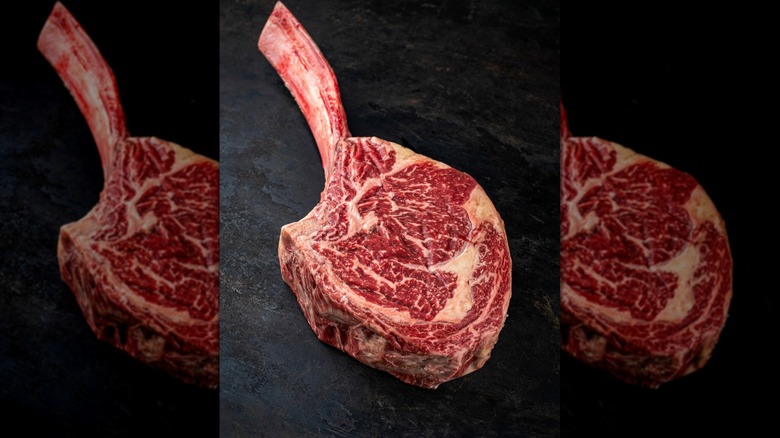
The name "tomahawk" refers to a thick ribeye cut. But there is a ton of variation. For example, you'll find Wagyu tomahawks are like other Wagyu beef with more intramuscular marbling, which is partly why it's so expensive. This extra fat is great for flavor, but it also is something to be aware of both when selecting a tomahawk and deciding how you're going to cook it. "Personally love a Wagyu tomahawk. Texturally it's magical. The higher fat content is packed with flavor, and the texture just brings you to another level," chef Nicholas Dixon says. "As for the cooking process, with the high fat content of Wagyu, we cook very slowly so the fat renders slowly and doesn't burn." David Burke agrees with the latter, suggesting that you be gentler with the heat on a Wagyu tomahawk.
But a Wagyu tomahawk may not be your ideal option, per Hervé Malivert. "For Wagyu, you want to barely cook the meat when it's of such high quality, so I wouldn't think about a tomahawk cut for Japanese Wagyu generally," he says. Instead, he recommends a grass-fed tomahawk. "You're looking for a nice almost burgundy red and bright white fat," he says. Paying attention to these sensory cues when shopping will get you the best cut of beef, and you can direct any questions about quality to your butcher.
3. Keep your seasoning simple
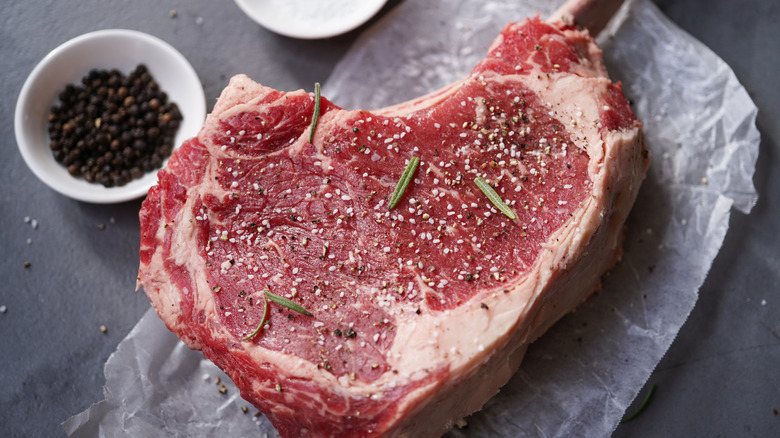
A tomahawk is a beautiful cut that commands attention — and it can do a lot of the talking for itself. Our experts, as a whole, recommended going easy with the seasonings to avoid distracting from the natural beauty of a tomahawk. "Keep it simple: salt and pepper. That's all a great steak needs," David Burke says. Aaron Sortman prefers finishing salt. "So as long as it gets a coating before and some finishing salt after, it's good," he says. Using other, complex seasonings can detract from the meat. "I'm not big on marinades for a cut like this; you want to taste the meat," Hervé Malivert says. Save steak marinades for when you need to tenderize tough cuts of beef.
Equally important as expressing restraint with your seasoning is not seasoning your cut too far ahead of time. As Malivert explains, certain ingredients can tenderize and alter the texture of the meat if they're added too far in advance. "You don't want to start the cooking process with acid (like citrus juice or vinegar), and you don't want the salt to have time to draw out the moisture from the steak," he says. Nicholas Dixon notes that in the restaurant, his team seasons the steaks about five minutes before cooking.
4. Bring your steak to room temperature before cooking it
When it comes to mistakes when cooking New York strip steak, you'd be wise to avoid the same with your tomahawk steak. And that means never cooking it straight from the fridge. There are a lot of food safety concerns floating around about leaving meat out at room temperature, so it's reasonable to assume that you should leave meat in the fridge until the last possible moment. However, doing so may result in a less-than-optimal cook on a thick steak, like a tomahawk. "It may be harder to get the heat to penetrate as deep as you'd like into the meat for nice even cooking if the meat is too cold when you start the cooking process," Hervé Malivert says. Nicholas Dixon notes that his restaurant will pull a tomahawk from the fridge about half an hour before it's cooked — a good proxy for a home cook to follow.
"With a tomahawk being so thick, this helps it cook more evenly and reduces the chance of burning the outside before the inside is ready," Aaron Sortman says. However, David Burke notes that this step is not necessarily mandatory because timing and even cooking are even more important. But for the non-steak pros among us, make sure to set a timer so you know when to pull your tomahawk out of the fridge.
5. Use a basting technique for extra flavor
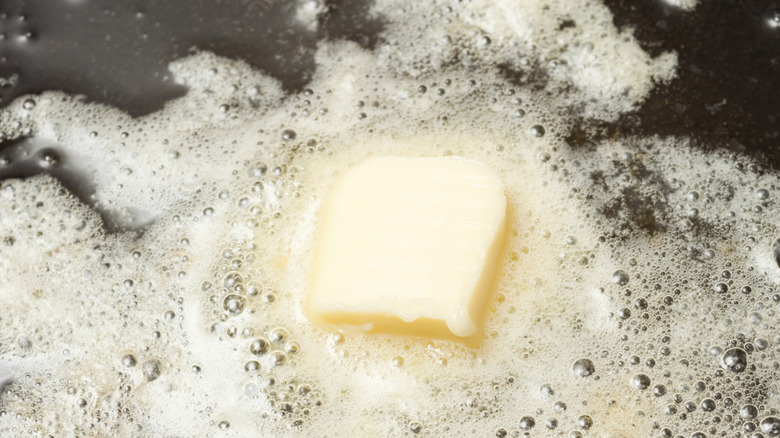
There is something to be said about the presentation of a butter-basted steak. And it can do wonders for the flavor of your tomahawk, too. "Basting helps to distribute the fat and flavor more evenly, so it's a good method to consider, though potentially challenging for the size of many tomahawk steaks," says Hervé Malivert, who recommends using garlic, butter, and thyme when basting this steak. So does Aaron Sortman. This technique — spooning melting butter and aromatics over your cut as it cooks — is by no means necessary, but it may be worth trying if you're after a straight-from-the-steakhouse experience. "It's more about adding an extra layer of flavor than anything required for the cook," Sortman says.
However, not all of our experts were keen on this tip. "I believe butter basting is overrated. The steak doesn't really absorb the butter," says David Burke, who recommends basting the steak in its rendered fat as it cooks instead. If you want the butter's flavor to really shine, take his suggestion and serve your steak with a pat of butter. Nicholas Dixon, on the other hand, opts for bone marrow butter when serving a tomahawk. If you struggle to maintain the temperature of the butter and worry about burning or scalding it, serving it atop the steak once it's cooked may be the way to go.
6. Stay away from certain cooking methods
Tomahawk steak isn't cheap, so the last thing you want to do is ruin it by cooking it with the incorrect method. Although there are some approaches that our experts pointed out as being great for tomahawks, including reverse sears and grilling, there are others that you are better off skipping.
Aaron Sortman points to broiling and pan-frying as less than optimal, largely for logistical reasons. "I wouldn't recommend either, mostly because of the size and thickness of the cut. It's hard to cook evenly with those methods," he says. David Burke cautions against poaching and sous vide. "This cut is all about developing a crust and deep flavor from high heat," he says. Poaching and sous vide simply won't give you that.
7. Understand the importance of managing heat
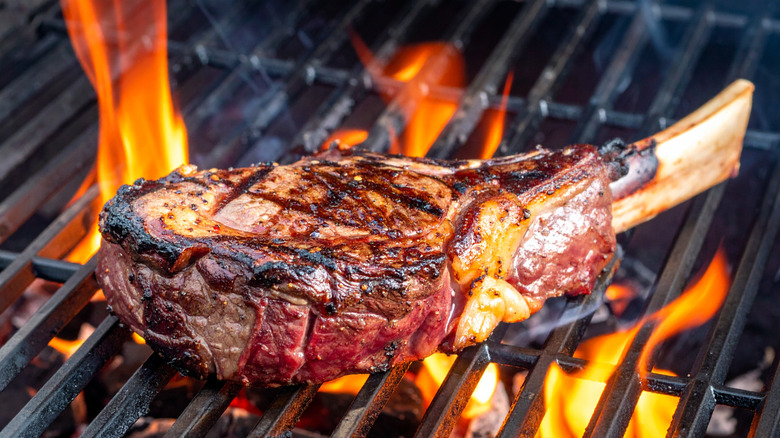
Grilling is not a spectator sport, especially when it comes to cooking very large and very temperamental cuts like a tomahawk. One of the most important skills a home cook can have when cooking a tomahawk is knowing when to increase and lower the temperature of the grill, or move the steak on or off the heat, so that it cooks perfectly.
If you choose to grill this steak, David Burke recommends starting the steak on low and then adjusting it as needed. "Because of the size, consistent heat is more important than extreme heat. Flip frequently and baste in its own fat to build flavor and prevent burning," he says.
Aaron Sortman prefers to use a charcoal grill and alternate between high and low heat. "I'll start on high heat to get a good sear, then move it to a spot where I've purposefully placed fewer coals and flip as needed," he says. Nicholas Dixon cautions against cooking the steak too close to the flame, as it can cause a hard crust to form and result in an uneven cook.
8. Try the reverse sear method
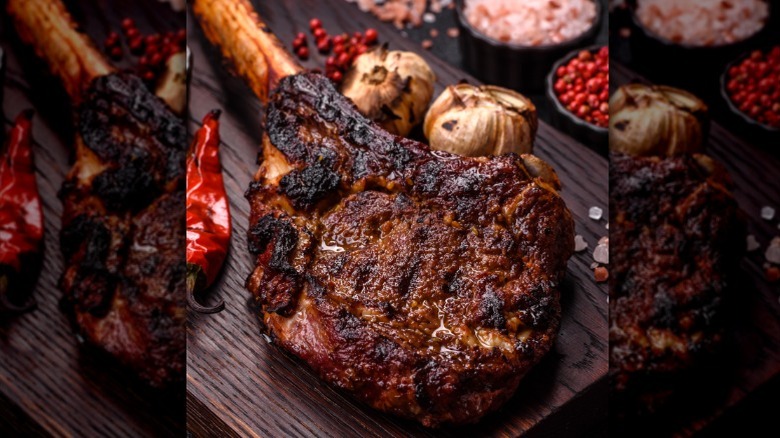
Biting into a tomahawk with a crispy, caramelized crust and juicy interior is an unreal experience. If you want to replicate that at home, you may want to try the reverse sear method. While there are cuts of steak you should skip doing a reverse sear on, a tomahawk is not one of them. The approach preserves the steak's moisture, and the steak's thickness protects it from the heat. The reverse sear method involves starting the steak slowly, then finishing it off with a burst of heat. Nicholas Dixon uses it for his large cuts, noting that the slow cook is what helps the steak cook evenly throughout, while putting it near the coals at the end will form the crust.
"Reverse searing is great and gives you more control over something large format like this," Aaron Sortman says. But is it better than grilling? The answer is complicated. Sortman shares that the reverse sear method allows for better monitoring of the cut's internal temperature. But grilling a steak directly and then indirectly produces that grilled flavor that many people crave from their steak. "Either way, they'll both give you great results if done properly," he says.
Another consideration when deciding whether you want to reverse sear or grill your steak is, of course, your comfort level and how much time you want to dedicate to cooking it. David Burke doesn't recommend a reverse sear because he says it "takes more time and creates additional steps." He opts for a broil or high-heat finish after searing instead.
9. Use a thermometer to determine doneness
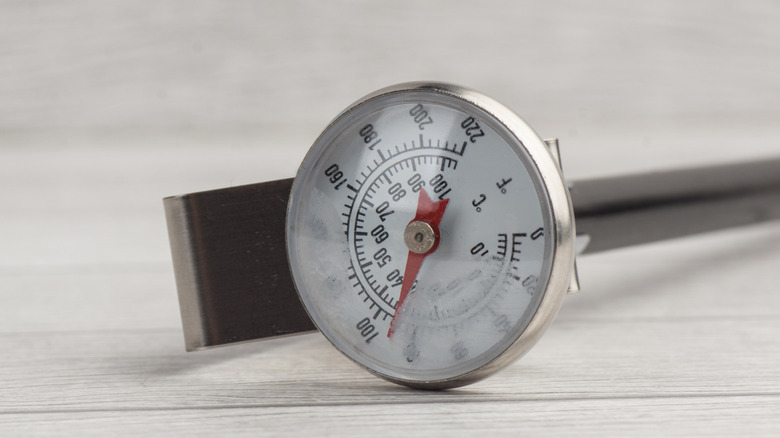
The last thing you want to do with a beautiful cut like a tomahawk is to overcook it. As Hervé Malivert says, "Always aim to cook a steak underdone rather than overdone — you can always cook more, but you can't un-cook it." But how do you know when to pull it?
Luckily, there is one tool that you should always keep on hand (and know how to use) that will give you the answer: a probe thermometer. "I always tell everyone that a probe thermometer is essential," Aaron Sortman says. "With a cut so expensive, I wouldn't take my chances relying on feel alone." He prefers a medium cook and will pull his steak off the heat at 136 degrees Fahrenheit and let the carryover cooking as it rests bring it up to temperature. As David Burke explains, carryover cooking causes the temperature of the steak to continue rising after it's pulled from the heat — which is how it reaches the U.S. Department of Agriculture's safe temperature threshold for steak at 145 degrees Fahrenheit. Malivert recommends not going above the 135 degrees Fahrenheit threshold when deciding when to remove the steak from heat. "If you start to see blood pooling on the meat, it's too hot and needs to come off immediately. Ideally you need to stop cooking before that happens," he says.
Granted, not everyone wants their steaks cooked medium. When it comes to the ideal temperature for rare, medium, and well-done steaks, Nicholas Dixon offers some extra benchmarks: 110 degrees Fahrenheit for rare (120 degrees Fahrenheit is the temperature after resting) and 122 degrees Fahrenheit (130 degrees Fahrenheit is the temperature after resting) for medium-rare. And if you want a well-done steak? Well, perhaps pick a different cut entirely.
10. Don't neglect the rest
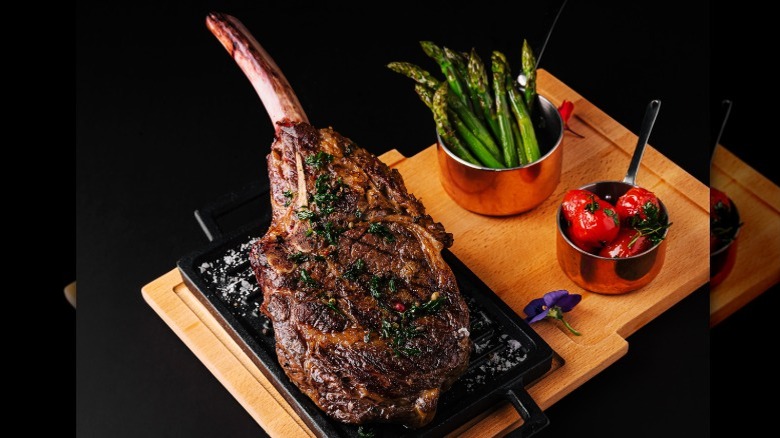
Cutting into your steak immediately after you grill it is a big mistake from a food safety, texture, and quality perspective. All of our experts agree. "Resting is just as important as a proper cook, so I'd say it has a big impact. It allows the juices to redistribute and keeps the steak from drying out when you slice into it," Aaron Sortman says.
So how long should you rest your steak after cooking it on the grill? Hervé Malivert gives us the 411. "For a steak this size you could rest for a full [four to five] minutes on a drying rack to ensure the air circulates all the way around," he says. "With that kind of resting time, you may want to loosely place a piece of aluminum foil over the steak to keep in some of the heat while it's resting." But covering your steak too tightly with foil can trap moisture and ruin the steak crust. Be gentle with your wrapping here. David Burke says that a dry-aged steak doesn't need as much resting time as you may think — just three to four minutes — before it's ready to serve.
11. Slice it properly
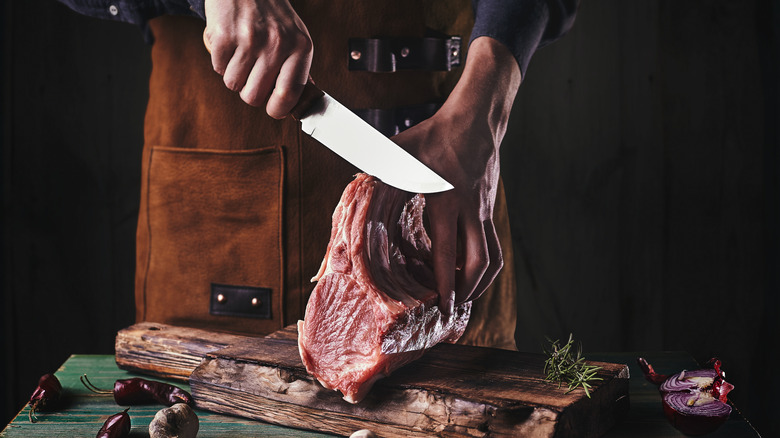
Although slicing a steak is not part of cooking, per se, it's an important step in the process of getting the steak from your kitchen to your plate. First, make sure you have the right tools on hand. "You could cook a steak perfectly, but if you're using the wrong knife or a knife that isn't sharp enough, you may shred the meat instead of slicing it, which won't have the same effect for your presentation," Hervé Malivert says. He explains that if you have to press on the meat because your knife is too dull, you'll risk pressing out all that juice you worked so hard to develop. He recommends investing in a 12-inch, sharpened knife (non-serrated, as a serrated blade will shred rather than cut the meat). "For the size of this cut, you should use a long knife so you can slice in long strokes," he says.
You also want to cut the meat in a way that preserves its unique shape. "I like to slice the beef off the bone, turn the bone arch in so that the bone follows the curve of the rounded plate edge," Nicholas Dixon says. While this method earns an A+ for presentation, you may also want to consider slicing your tomahawk in a way that's conducive to eating. David Burke recommends removing the meat from the bone, separating the rib cap, and slicing up portions before serving. "Then cut the eye of the ribeye into manageable slices. This makes it easier to serve and share," he says.
12. Serve it with care
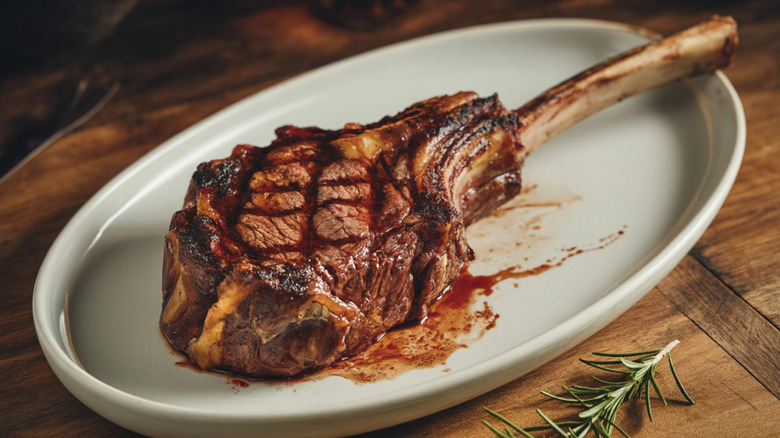
A tomahawk demands your attention, so the last thing you want to do after you've gone to great lengths to cook it correctly is to have it overshadowed by other items on your plate. While you might get away with a fancy steak sauce on a less-than-fancy cut, the tomahawk steak is designed to be complemented, rather than compete with, other components. "Because it's rich, pair it with something acidic to balance the fat like a steak sauce or béarnaise," David Burke says. He recommends pairing the steak with beef-fat potatoes or even a simple piece of buttered toast on the side.
If you're firing up the grill to cook your tomahawk, you may also want to try Aaron Sortman's suggestion: "I'm a big fan of what my family calls 'summer grill,' and that's any produce in season going on the grill if it can fit. If you're going to cook outside, you might as well make the whole meal out there." Some perfectly grilled zucchini or grilled corn on the cob could yield a tasty, veg-forward side dish to go with your main. Hervé Malivert also takes a veg-forward approach to pairing. "I'd say putting your fingerling potatoes on the grill or roasting them would be an excellent option. For tomahawk steak I generally recommend seasonal vegetables — we're coming into spring so asparagus might be a good option," he says.