

10 Cocktail Trends Bartenders Want To Leave Behind In 2026
As any foodie knows, food trends can come and go. In 2026, we can expect to see a whole bunch of new culinary trends emerge — from high-end freezer meals and cabbage to a plethora of functional and high-fiber products taking up every corner of the grocery store. But what can be said about cocktails?
Like the food world, the beverage world has also seen immense change over the past few years — shaped by the wake of the COVID-19 pandemic, emerging technologies, and changing consumer behaviors, among other factors. We wanted to get insight not only on what happened to 2025's trends, but also what bartenders and folks in the beverage space think won't be sticking around in 2026. As such, we spoke to a collective of experts, including Curtis McMillan, creative director of talent and beverage at The Down Low; acclaimed bartender Kate Boushel; and Luke Kingsley, beverage director of Schulson Collective and Double Knot Miami.
1. Kitchen meets bar cocktails
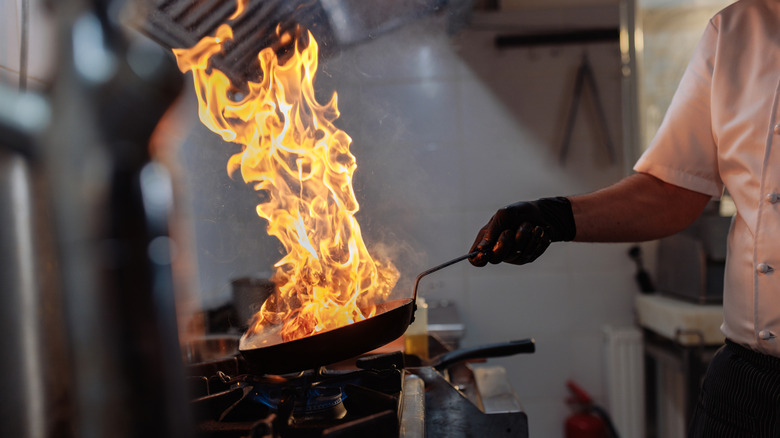
There is an understandable synergy between the kitchen and the bar at many establishments. Although they are considered two separate entities, in that drinks are made behind the bar and food is made in the kitchen, that doesn't mean there can't be some overlap between them. Many restaurants have embraced a "kitchen meets bar" or "kitchen-to-glass" approach, which advocates for ingredients used in the kitchen to make their way onto bar menus and vice versa. While this can cut down on waste and encourage collaboration between bar and kitchen teams, in some cases, it can mean fussy drinks.
"I understand the intention, pushing flavor boundaries and creating more cohesion between the kitchen and bar, but it can go too far," says Curtis McMillan. "Not every kitchen-driven flavor translates well into a cocktail." Surely, there can be some things that do translate well, like adapting cocktail menus seasonally and playing with international ingredients to create unique libations. But there comes a point where these trends become unnecessarily complicated and can shift the vibe of the bar experience.
2. Performative drinks to appease social media followers

Social media and pop culture have influenced everything, and there's an overlap between trendy drinks on TikTok and beverage requests bartenders get. It also works the other way: Bartenders are preparing drinks that drive social media engagement, potentially at the expense of their quality. "I come from a time when the platforms felt more organic, and now there's a lot of pressure to constantly create polished content," says Curtis McMillan.
Kate Boushel has noticed that social media also has a big influence on aesthetics, particularly with garnishes. "Many groups try and find presentations that will set a cocktail apart and help build more appealing and shareable content in a way that can sometimes compromise the bar's culture," she says. If a bar can create great drinks without sacrificing aesthetics, great; but when drinks are created more to look good than taste good, that's not.
This doesn't mean bars will stop leveraging pop culture trends to generate buzz about their offerings. "I think of it as having a marketing platform in the palm of your hands," says Luke Kingsley, who is happy to use the technology. McMillian shares that there is also an opportunity to use social media to leverage connection, rather than just share Instagram-friendly drink photos. "You're not just posting drinks, you're shaping a brand that people want to be part of," he says.
3. Canned cocktails
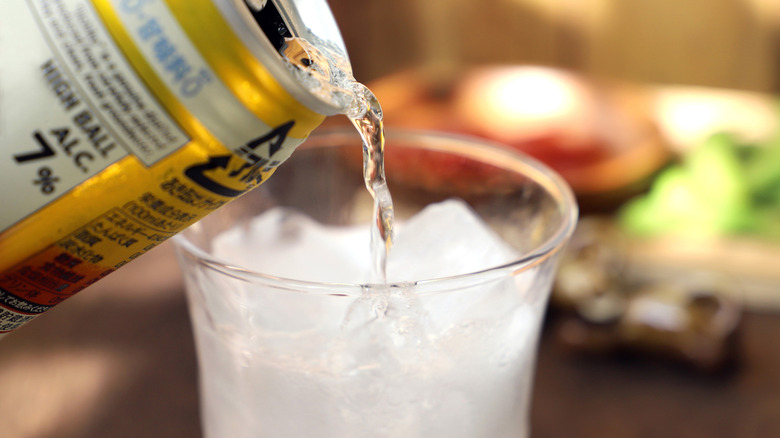
Canned cocktails have a time and a place. These drinks span brands and varieties, from popular brands like Cutwater to canned coffee cocktails that can potentially replace your go-to espresso martini or White Russian. While these drinks have seen popularity in recent years, our experts were split as to whether they still have a place in bars in 2026. "I've noticed a shift away from cocktail culture toward canned seltzers and ready-to-drink options," says Curtis McMillan. "While I understand the convenience and why bars are leaning into them, it does take away from the craft and experience of a well-made cocktail."
The quality of these canned options also varies, per Kate Boushel. "I hope to see better discrimination within the canned cocktail offerings. Many spirit brands have jumped on that bandwagon to expand their [offerings], and are not necessarily doing a great job of it," she says.
Boushel acknowledges these cocktails can expedite the drink-making process, and may be useful for places like movie theaters. They can also be handy for non-alcoholic drinkers, though bars may be keen on transforming their flavors by adding in ingredients. "I have also noticed a great number of excellent nonalcoholic, canned or bottled cocktail options, which can serve as wonderful modifiers or great options for complex highballs," Boushel says. So while canned cocktails may not be a trend that will get the boot from bartenders in 2026, they might be something worth workshopping and elevating.
4. Pretentious drinks
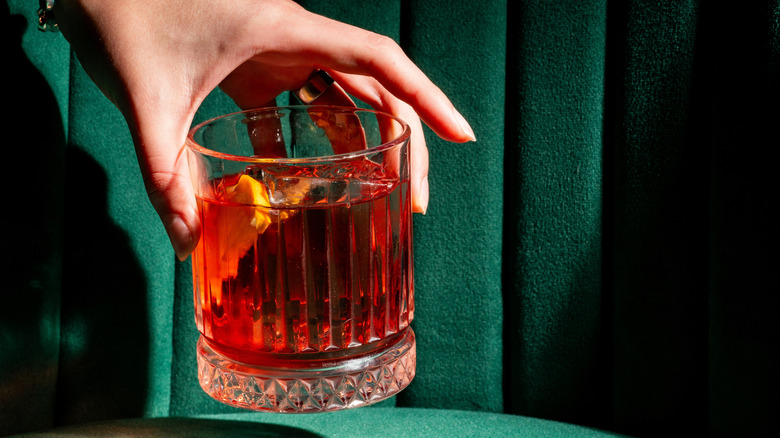
Bars are supposed to be fun, inclusive places where folks can enjoy the company of themselves, their drinking companions, and/or the bartender, and the overall experience. When cocktail bars — and their menus — become stuffy, it can really detract from the experience and make patrons not want to return.
"A bar trend that is overhyped, in my opinion, is stuffy cocktail bars. Places that charge $30+ for a cocktail made by a mixologist who scoffs at a simple request," says Luke Kingsley, who notes that these experiences erase hospitality from the equation. Curtis McMillan agrees. "Personally, I would much rather drink at a bar that wants me to have fun than one that wants to 'educate' me or showcase how 'craft' they are." Bars are supposed to be inclusive and welcoming of customers from a variety of backgrounds and with a variety of cocktail experience levels. This is one that we can agree with our experts on: Make bars more inclusive in 2026!
5. Rotovaps
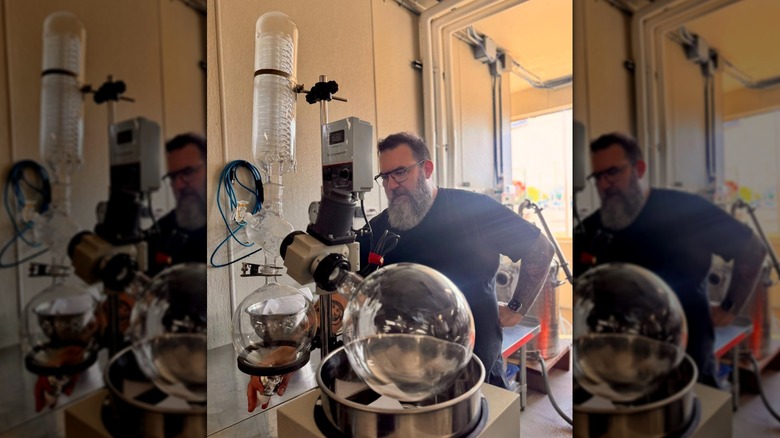
If you are scratching your head wondering what a rotovap is, you wouldn't be the only one. This expensive piece of equipment, also called a rotary evaporator, is indicative of the switch from high-quality spirits and classic cocktail methods to boozy science experiments.
The vacuum distillation technology works by decreasing the pressure and boiling point of a substance contained within a flask, which allows the user to more gently distill or infuse a spirit or a liquid, in turn staving off oxidation and retaining its flavor better. And if your immediate thought is "that looks expensive," you'd be right. A basic system may cost around $3,000, and the higher-end pro models only go up from there.
When we asked Kate Boushel about what the most overrated bar trend was, she had this to say about the rotovap, "There are so many great cooking techniques that can be adapted and don't require [$20,000+] machinery to execute." She explains that many bars are either buying or leasing these expensive pieces of equipment, pressuring other bar pros to do the same, even if they might not have the budgetary means to do so. "In my opinion, any trend that drives an establishment to sacrifice its financial stability in order to remain relevant has forgotten the original purpose of the bar," she says.
6. Putting mezcal in everything
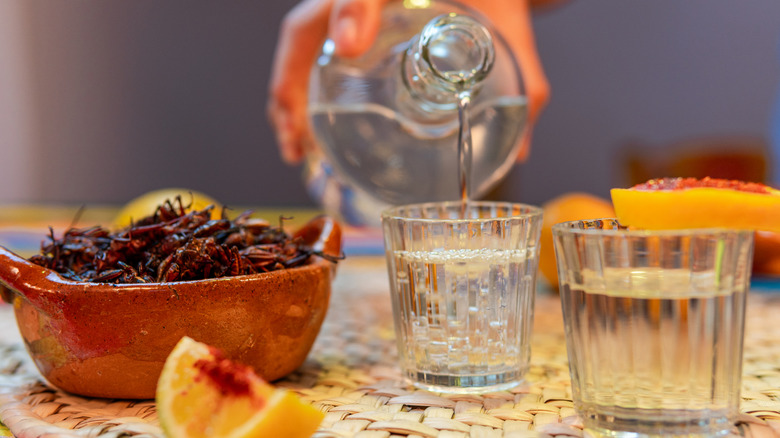
There are just some cocktails and spirits that take hold of our collective psyche and don't want to let go. One of them is the espresso martini, which has spawned ready-to-drink variations and ruffs made with different types of coffee liqueur. Another spirit trend that has exploded in recent years is mezcal, much to the chagrin of Luke Kingsley.
"A cocktail trend I am tired of seeing is everyone's desire to fit mezcal into everything. Don't get me wrong, I love mezcal, but it has a time and place," he says. And he's not wrong; mezcal has weaseled its way into Moscow mules, margaritas, and even old fashioneds. It seems like it's all but replaced tequila, and part of this may be due to wellness trends. Compared to tequila, which can be combined with sugars and sweetness in mixers, mezcal is seen as a purer alternative that's both low in calories and carbs. It can be tactfully used, sure, but adding mezcal to cocktails for mezcal's sake may not be the move in 2026.
7. Bubbled cocktails
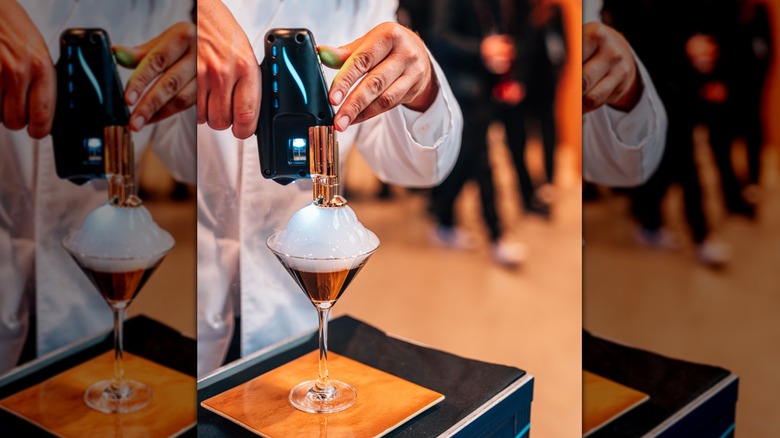
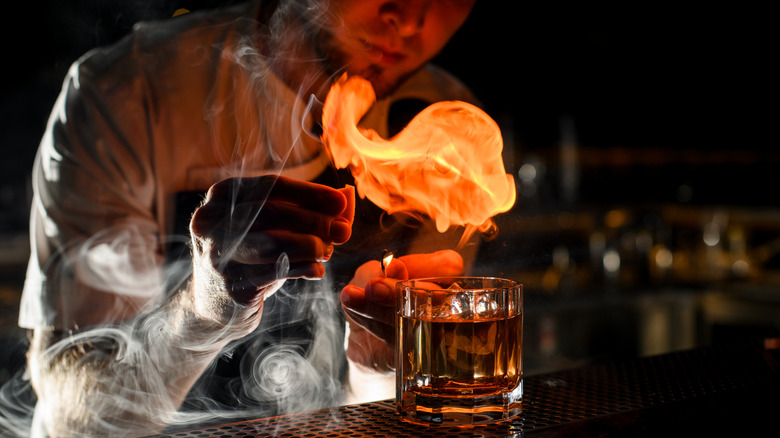
If you've seen a lot more sensory-driven cocktails on bar menus recently, including bubbled and smoked variations, you wouldn't be the only one. While these cocktails may look Instagram-friendly, they are some of our experts' least favorite cocktail trends. "The only cocktail presentation trend that I want to see go away is the bubble. Just smoke the cocktail. It might just be me, but I think [it's] silly," says Luke Kingsley. In theory, the bubble is more theatrical than it is useful, while smoking can contribute to a more complex flavor or aroma. As with many of the trends bartenders are hoping to leave in 2026, it's function over form.
"I think we'll start to see a shift toward more thoughtful presentation, still fun and engaging, but more intentional and less wasteful, with a focus on elements that actually contribute to the overall experience rather than just the visual," says Curtis McMillan. "If a garnish, smoke, or effect doesn't actually enhance the flavor or the way the drink is enjoyed, then it starts to feel unnecessary."
Per Kate Boushel, these grandiose cocktail trends may already be on their way out, noting more and more places are taking on minimalist approaches. "In my opinion, if a presentation serves a purpose, no matter how grandiose, then I stand behind it. The same can be said for establishments that have a full-blown concept that includes and does an excellent job at executing complex, [over-the-top] garnishes. But you can't do it [half-measure]."
8. Old fashioneds
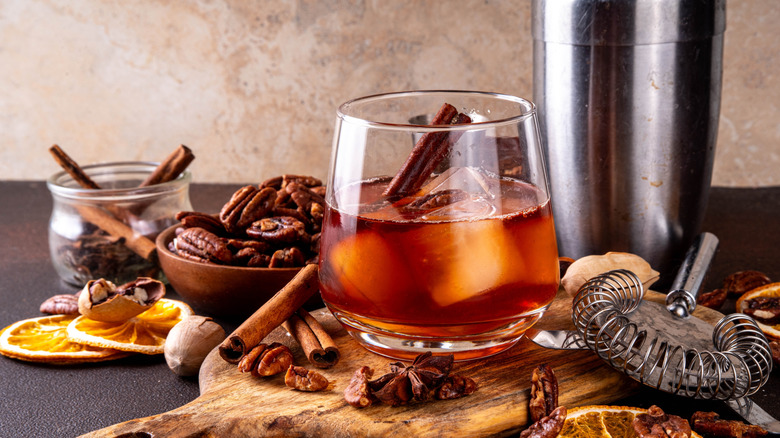
It's worth noting that many of the cocktail trends that bartenders hope to leave behind in 2026 are rooted in personal preference. For one, Luke Kingsley says that old fashioneds are overhyped. "A regular old-fashioned is something you'll never see me drink. Bourbon is sweet on its own," he says, noting that an ice cube is all you need to add to the bourbon to transform it into a cocktail. However, he's not shy about trying a different variation. "When old fashioneds take a step up with a fat wash or an interesting ingredient, I'll give it a shot."
This begs a bigger question: Is it worth abandoning the classics, like the old fashioneds of the world, in favor of their buzzy and reimagined forms? Perhaps that's one of the major themes that bartenders will have to contend with in the coming months. "I am not here to judge [customer's] current preferences, but I am happy to offer alternatives for those who are afraid to expand beyond a small set of classic cocktails. That is why most of our bars have played around with delightful variations on many cult classics, such as the amaretto sour and pornstar martini," Kate Boushel says, noting that anyone in the bartending and mixology space should still have a strong understanding of classic and timeless cocktail recipes.
9. Poor customer etiquette
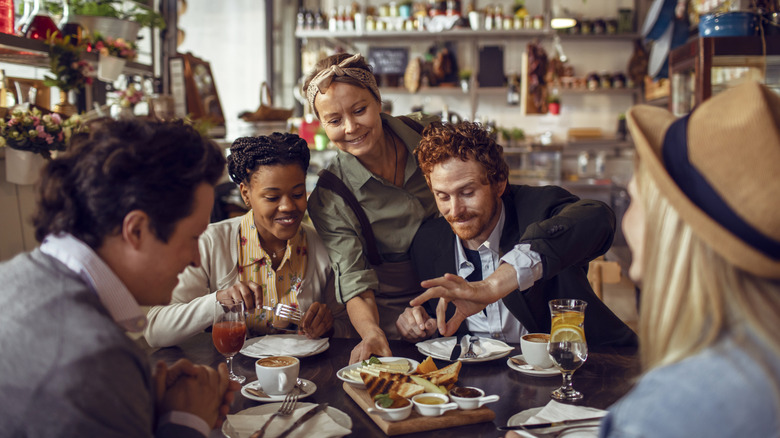
We would be remiss not to mention customer behavior and etiquette when discussing some of the most important changes bartenders would like to see in 2026. Questions around both cost transparency and customer expectations are under this umbrella. "Money is tight, and we are seeing many more customers scrutinizing their bills, not just to ensure accuracy, but to justify the value of the experience," says Curtis McMillan. "I've had several conversations with guests regarding lower drink prices in other areas or a general misunderstanding of automatic gratuities."
Ordering a drink isn't like bartering over a used couch on Facebook Marketplace; if you, the customer, don't like the cost of a drink, it's not appropriate to haggle. Bartenders don't just sell alcohol; they sell experiences — so asking customers to leave their price-related gripes at the door in 2026 isn't an unreasonable ask. Luke Kingsley agrees. "The tip pays for the experience. I'll die on that hill," he says.
Kate Boushel explains that she sees more and more bars not necessarily bending to customers — which can be translated beyond price, as well. "At the end of the day, a bar is a business, and now more than ever, we must make sure that our costs are really well respected in order to ensure our viability as a business," she says. For bartenders' sake, let's keep etiquette top-of-mind in 2026 (and the years to follow).
10. Cocktail clarification
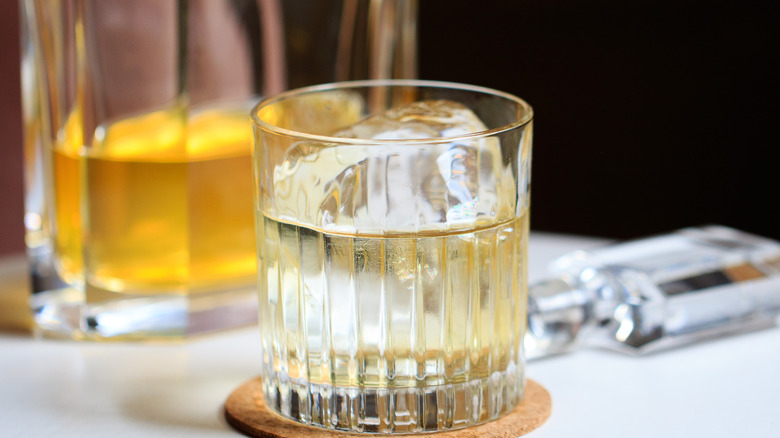
When we asked Kate Boushel which bar trend she was personally tired of seeing, she cut to the chase, "overuse of clarification on menus." Clarification is, as the name suggests, the process of removing the suspended particles in a liquid to turn it transparent, rather than cloudy. This can be done to improve or change a cocktail's flavor — and give it a stunning appearance — but it also requires many tools and a high degree of technical skill to implement effectively.
"As a technique, I love [it]. It serves a great purpose when seeking to unify [flavors] and [calm] certain [high-tone flavors]," she says. "That said, I have seen menus with several clarified cocktails that all end up sharing [flavor] profiles and create a single-toned menu that also lacks in texture." As many of the drinks and trends on this list can attest, clarification is something that has to be done with tact and used in places where it genuinely upgrades the cocktail experience.