

10 Appalachian Foods You Should Try At Least Once

The U.S. boasts an impressive array of regional cuisines, including decadent, seafood-focused New England fare, Southern desserts, and Tex-Mex and Southwestern-inspired dishes. But one region that doesn't get anywhere near the same amount of press is Appalachia.
Appalachia, a region that spans its namesake mountain range and 13 states — running as far north as Pennsylvania, through the foothills of the Great Smoky Mountains, and into the northern parts of Georgia, Mississippi, and Alabama — is widely shaped by its blue-collar identity. It was originally a big settlement area for individuals working in the coal industry, but has since developed a vibrant and diverse landscape rife with regional culture. And with that culture comes food.
In order to get insight into which Appalachian delicacies are most worth trying, we spoke to the experts: Katie Bailey from Visit North Carolina and Sam Jett, executive chef at Audrey in East Nashville. Not only did we gain a roadmap to some of the dishes that the folks of the region hold close to their hearts, but we also got a deeper look into how the history, landscape, and populations shape its regional foodways.
1. Mountain cornbread
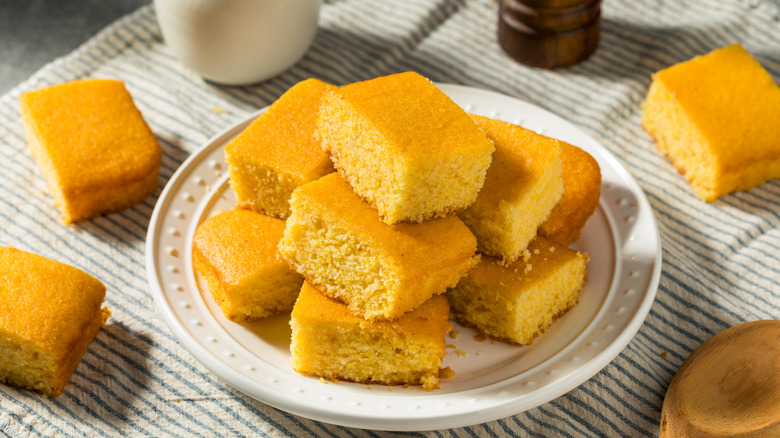
If you make a road trip to the South, you would be remiss not to try its cornbread. But it turns out that traveling through Appalachia will also give you a good idea of how central this popular side dish is to its neighboring region as well.
Katie Bailey explains that Appalachian cornbread, called mountain cornbread, is not the same as other varieties. She notes that it calls for stone-ground cornmeal and fat and is generally savory rather than sweet. Her grandmothers would make the cornbread with lard, which was common prior to the advent of Crisco, but she explains that people now use other types of fat in their contemporary mountain cornbread recipes.
Mountain cornbread has many benefits, as its ingredients are widely available and relatively inexpensive. "The ubiquitous nature of cornbread is due to most everyone in the mountains growing corn, making it a cheap dish," she says, suggesting that the cornbread can be enhanced with ingredients like cracklins, a splash of milk, or paired with beans.
2. Succotash
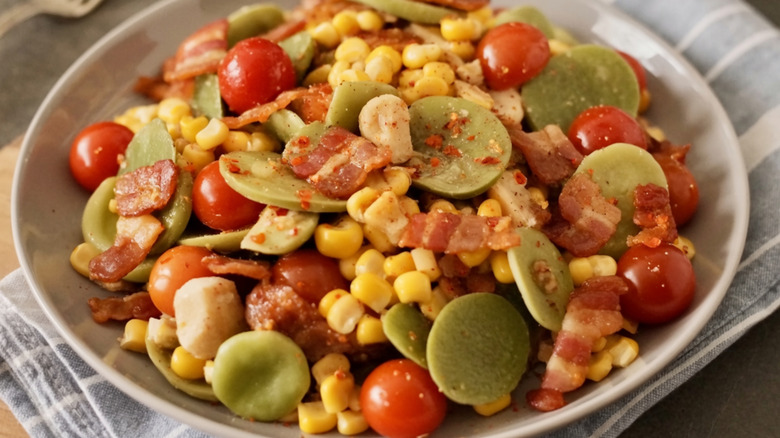
How you feel about succotash will likely depend on how you feel about lima beans. Sam Jett shares that while succotash is often associated with the South, its origins are in Northern Appalachia. "This is a classic dish ... that can be light, bright, and soulful at the same time," he says. The Appalachian dish typically combines butter beans, corn, and tomatoes for a dish that's hearty and filling, yet chock-full of veggies.
You don't have to travel to Appalachia to prepare a great succotash; Jett has offered some of his recommendations for preparing this dish, namely, using fresh corn and fresh butter or lima beans. While this dish is no stranger to flavor, he suggests opting for a lightly flavored tomato to pair with the ingredients, presumably so its flavor doesn't overwhelm the bite. After it's cooked until perfectly tender, per his recommendation, you can add your favorite toppings to serve. Jett prefers raw scallions and lemons, but fresh herbs could be a compelling addition as well.
3. Apple stack cake
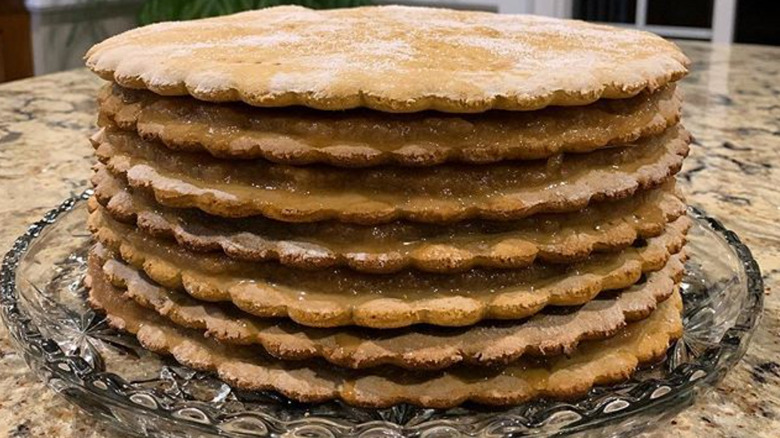
Every region has its own favorite desserts, and in Appalachia, it's apple stack cake that reigns supreme. Katie Bailey calls it "a chore worth the time," noting that it is the exception to the simple foods otherwise noted on this list. While its preparation may be complex, the recipe is simple and notably excludes expensive spices and vanilla extract.
This towering cake is traditionally made with layers of eggs, buttermilk, sorghum syrup, and dried apples. Sorghum may be an ingredient unfamiliar to folks who don't live in Appalachia. The cereal grain (and the syrup made from it) is popular in the region; many folks will pair it with biscuits, though in this dessert, it offers the perfect level of sweetness for the otherwise cookie-ish cake.
That's to say that the thin layers of cake in this dessert aren't meant to rise like a traditional cake. Instead, they sandwich the cooked apple filling, which is often sweetened with brown sugar and boiled cider. The apple component is deeply tied to Appalachia; the fruits were originally planted across the region, from as far north as Pennsylvania to as south as North Carolina. Apples remain an economically important addition to the regional agricultural economy, even today.
4. Peanut butter candy
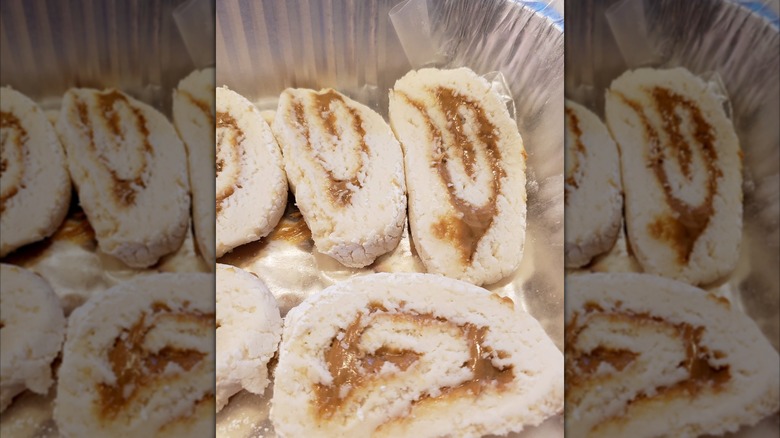
Peanut butter candy is one of those desserts that you may already associate with Appalachia. Like many of the items on this list, it balances simplicity with ingenuity. Also called peanut butter pinwheels or potato candy, these sweets are made easily enough by combining leftover mashed potatoes with powdered sugar until it forms a strong dough, then wrapping a layer of peanut butter like a Yule log. When you slice the dough, you get the signature pinwheel shape that the treat is known for.
This old-school candy is deeply rooted in Appalachia, though it's not entirely clear how it took root in the mountain communities. Some folks think that it was initially brought to the area by immigrants, including those from Germany, Ireland, and/or Russia. The early forms may have just been made with powdered sugar and potatoes; the peanut butter was likely added later. However, this is a recipe that naturally "fits" with Appalachian cuisine and thriftiness. All of the ingredients are easy to work with and inexpensive to source, and when combined, they offer a hearty and flavorful bite — which many Appalachians like to enjoy during Christmastime.
5. Appalachia-style BBQ
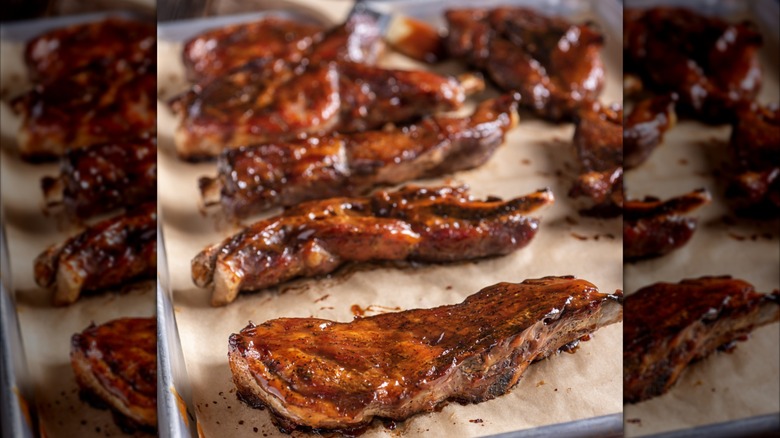
There is no shortage of regional barbecue styles across the U.S., and there is a ton of diversity within the Appalachian region itself. Some have argued that there is no universal "Appalachia-style" barbecue because, historically, there was very little ethnic diversity among the populations who regularly cooked barbecue — including enslaved Africans and Caribbean populations. However, that's not to say that this region is devoid of barbecue. In fact, you will find hyper-localized barbecue hotspots across Appalachia — presumably in places where there is that ethnic diversity.
Chief among them is East Tennessee style, where whole-hog barbecue and pork shoulder reign supreme, topped with a tomato-based barbecue sauce. You can see the influence of North Carolina-style barbecue in it — which makes sense, as it shares a border with Tennessee. North Carolina-style barbecue (both mid-state and Eastern North Carolina) also uses similar cuts and favors a tangier sauce flavored with tons of puckery vinegar.
One dish that you will see pop up in Appalachia, related to barbecue, is country-style ribs. Although the name may suggest otherwise, these "ribs" are sourced from the pork shoulder (or near it), which gives them a succulent flavor. This is an inexpensive cut of meat, playing back into the region's thrifty – yet flavorful — approach to cooking.
6. Chow-chow
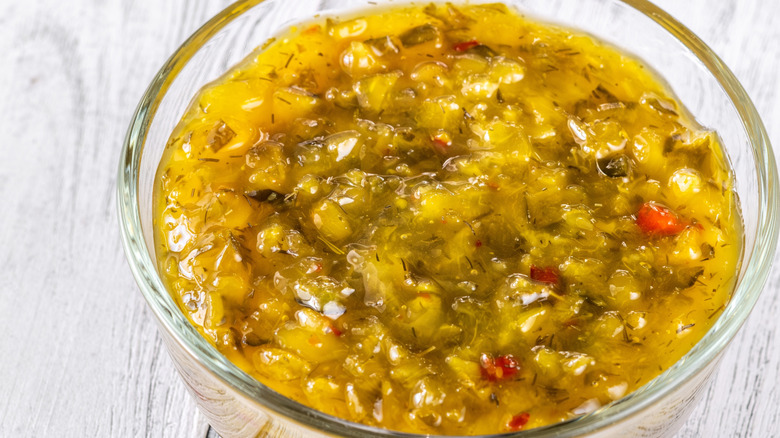
Chow-chow is a Southern and Appalachian condiment made with a myriad of veggies, including onions, peppers, and cabbage. It gets its punchy flavor from a variety of seasonings — kind of like an "everything-under-the-kitchen-sink" deal — including mustard, turmeric, celery salt, allspice, and more. It's bold, bright, and perfect atop sausages, paired with pretzels or crackers, or spooned on barbecue pork.
Appalachians like canning chow-chow at the conclusion of the harvest, as it's a great way to stretch the flavor and ingredients of the warmer months. It's versatile, and the recipes depend on who's making it, though it can include everything from zucchini and summer corn to squash, onions, carrots, and tomatoes. Pair it with soup, beans, and cornbread, and you'll have a great, Appalachian-inspired meal perfect for any time of year.
7. Hush puppies
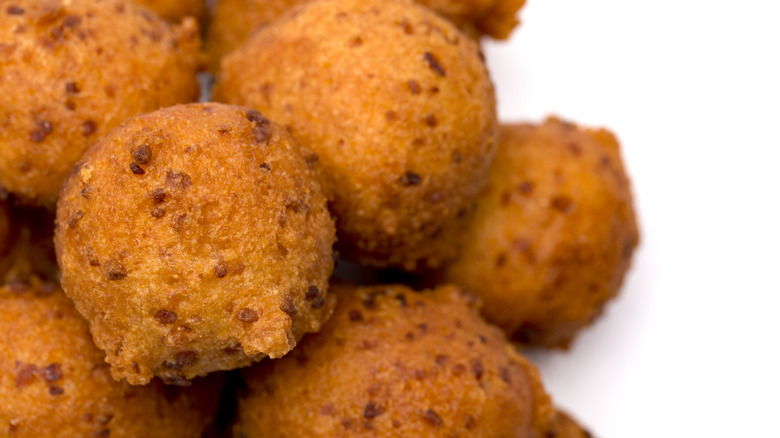
Hush puppies are the delectable, crunchy, fried morsels that you absolutely need to try. They're like a lovechild of a dumpling and a fritter and are usually made with cornmeal batter enriched with ingredients like buttermilk. They're not greasy, nor are they sweet or savory, but that delectably corn-y flavor does come through, making them the perfect match for barbecue or seafood.
You're more likely to see hush puppies along the coastal and Southern regions of Appalachia, namely North Carolina. They're popular at barbecue joints and fish fries and may be served with Brunswick stew (more on that later). As with many dishes on this list, the origin of their name is contested. Some people think it was a nod to the folks who fed them to dogs as a means to pacify them, while others trace it to a man in South Carolina who wanted to use up leftover fish-fry batter. Regardless of where they came from — and the fact that both Appalachian and Southern states claim ownership over them — we can't help but love them.
8. Pawpaws
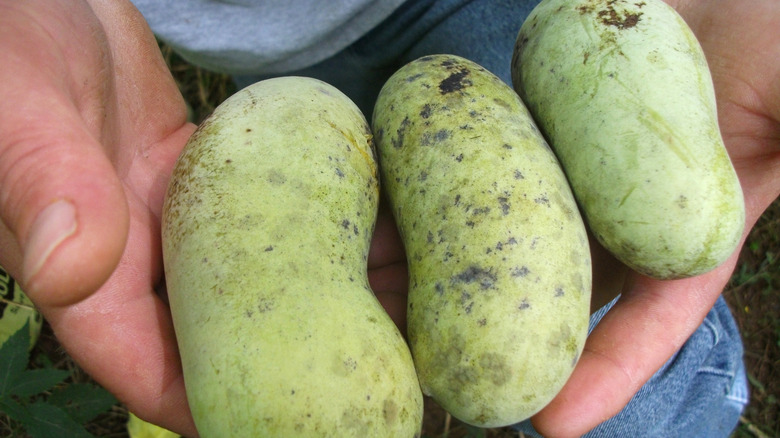
Is it an apple? Is it a pear? No, it's a pawpaw!
These amoeba-shaped fruits aren't easy to find, even though the trees that bear them stand out for their size; they're actually the largest fruit-bearing trees native to the North American continent. Their geographic range is much more limited than that of apples; they only grow between the Great Lakes and the Florida panhandle — in other words, they're Appalachian through and through. The fruits that the trees bear are oddly tropical-tasting, given this geography; some have likened their flavor to mango, banana, and citrus. These fruits can be identified by their greenish-black color, yellow, juicy center, and large black seeds.
The consumption of pawpaws remains relatively underground, as the fruits, despite their excellent flavor, bruise easily and are not conducive to cross-continental shipping. As such, you'll have to visit Appalachia to get your hands on one of these ripe fruits (emphasis on "ripe," as they have a limited eating window). They're best eaten out of hand, as their fruit is too custardy to be made into something like a pie. However, you could turn them into ice cream, sorbet, pudding, or panna cotta. The custardy center can also be baked into quick breads and cakes.
9. Squirrel and game stew
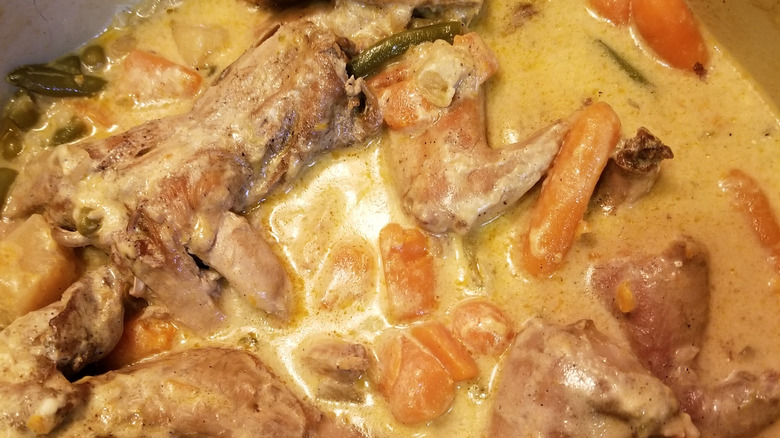
Foraging and living off the land are a big part of Appalachian life, so it should be no surprise that game stews are on this list of must-tries from the region. Brunswick stew is one popular example. Rather than featuring common stew ingredients like slow-cooked pork or beef, it uses opossum or squirrel. Some folks will also add chicken to their stew to round out the gaminess — as squirrel tastes similar to it — and brown the meat ahead of time.
Since squirrel is such a small animal with many bones, deboning it ahead of time is a challenge, which is why many folks will just cook it whole. Also important to note (which happens to be one of our favorite food fun facts) is that trichinosis — the same parasite that is known to hide out in pork – is often spread by squirrels, meaning eating improperly cooked squirrel can make you very, very sick. So if you try a Brunswick stew or any other squirrel-containing dish, be sure to follow instructions very carefully and ensure that you bring it to temperature.
That's not to say that the stews in Appalachia are only made with game meats. Appalachian burgoo is popular in Kentucky and the southern part of the region. It's usually flavored with affordable and accessible ingredients, including tough cuts of beef, sausage, carrots, and potatoes.
10. Grits
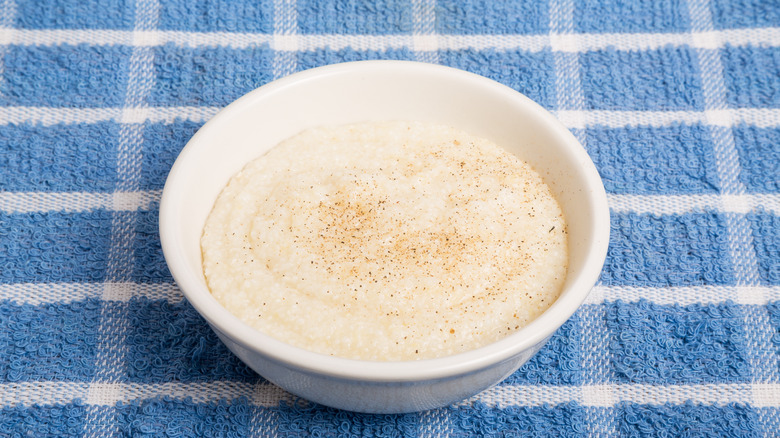
Grits are commonly associated with Southern food, but that doesn't mean that Appalachia doesn't also stake its claim over this beloved side dish. Appalachian blue grits, for one, are derived from a corn variety that got its start in the Appalachian regions of Georgia and North Carolina. Its signature blue hue sets it apart from traditional white- or yellow-colored grits, and it also offers a nuttier, earthier flavor. Classic yellow and white grits also make an appearance in this region; Appalachians serve them with butter or country ham, and frequently debate whether sugar actually belongs in them. While we often think of grits as a breakfast food, in Appalachia, they can be eaten for dinner as a substitute for potatoes.
Grits and other corn-based foods are deeply woven into the geography of Appalachia. Potatoes didn't grow as well as corn due to the soil initially, and many indigenous communities were already making dishes with corn, so it made sense that a crop like corn would take hold so quickly in the region. Combined with the fact that corn could be distilled into moonshine — a popular Appalachian libation — it's no wonder why Appalachians love their grits.