

7 Unexpected Uses For Mayonnaise You Never Saw Coming
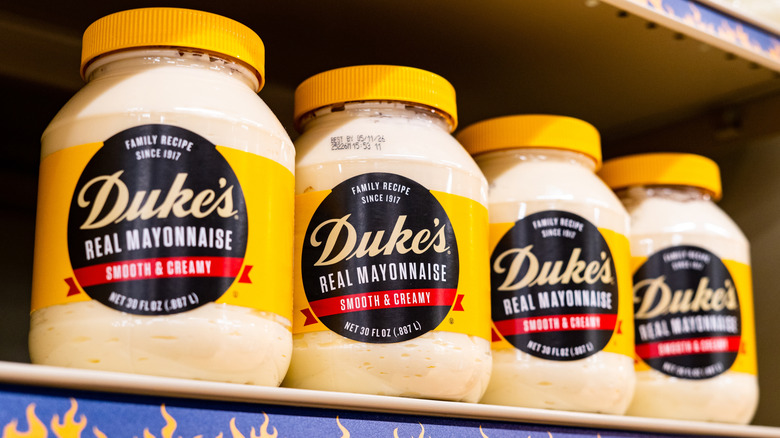
Mayonnaise, arguably America's most controversial condiment — even though it's probably French – is as efficient at carrying flavor as it is cultural connotation. Divisive as this deli dabble may be when it comes to sandwiches, it has some uses that may cause even its most ardent adherents to pause.
This is largely because, even those of us who slather the stuff on every sub tend to think of it as a singular, irreducible entity, rather than the sum of its parts. When it comes down to it, though, mayo is fat, protein, and acid, which also happen to be the basic building blocks of an unfathomable array of dishes. This is why the possibilities for thinking outside the jar with this embroiled emulsion are practically endless — just as soon as you get over the reflexive disgust at the idea of eating it for dessert, or dunking your zucchini in the stuff, of course.
Research has thus far found no reliable method for doing so, but it might well be time to channel your inner Sam-I-Am anyway, and give one or two of these ingenious techniques a try. You never know, you might just like it.
1. Scrambled eggs
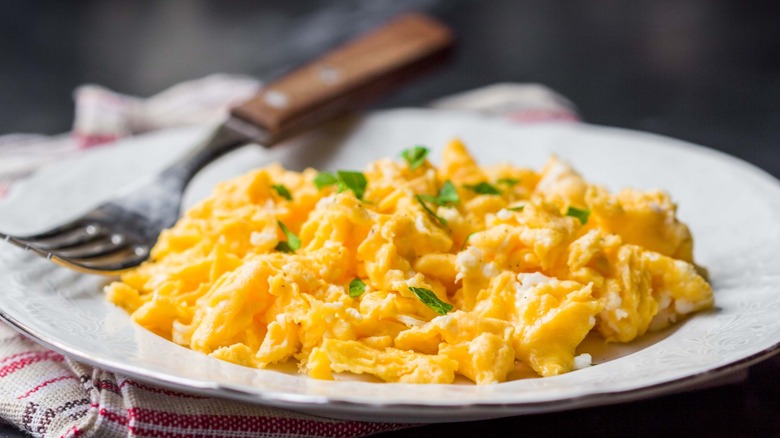
This shouldn't be surprising, but it is. Mayonnaise is made of eggs, and yet there is something about the notion of adding it to eggs that is inexplicably... weird. That said, Alton Brown swears by it (that's it, that's the counter argument). The wisdom here is scientific; incorporating an emulsion of eggs and fat into a bowl of scrambled egg helps to further emulsify them, resulting in a creamier dish. It's almost like the creaminess of mayonnaise is catching. Brown adds one teaspoon of mayo and one teaspoon of water to three eggs, plus salt and pepper to taste, so just lower the quantity down slightly if you're scrambling one or two.
If you're looking to add an extra layer of weird to your mayo huevos (and possibly anger your local Parisian chef, the entire cookware industry, and any brunch-hungry houseguests you may have), Jose Andreas adds mayo to his eggs before microwaving them in order to create the perfect omelette. The most bizarre part? He's right. It's perfect. And it's the easiest egg you'll ever cook.
2. Cake
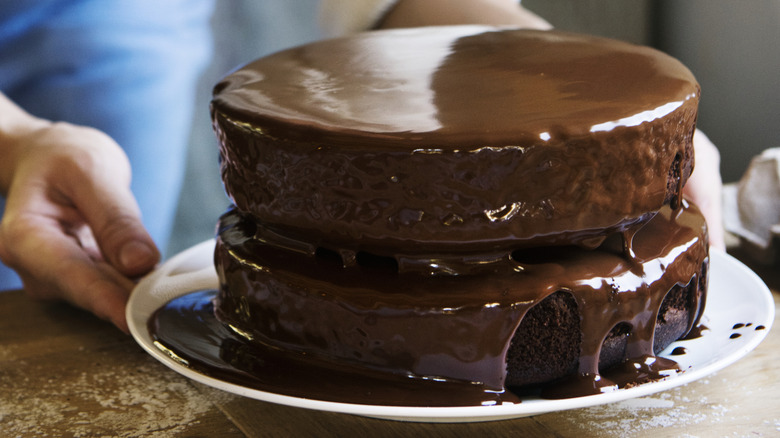
No, this isn't an icing replacement (your standard buttercream is vastly preferable). And it's not just a kitchen hack, either. Mayo cake is a quiet classic, the type of thing that isn't simply easier to bake, but an enduring wartime tradition that survived past D Day because it's just that good.
Credited for adding gourmet flavor to chocolate cake, mayo locks in moisture, sidestepping the dry, crumbly undoing that has seen to the demise of many a cocoa-heavy baker's confectionery. And here's the kicker: this works with boxed mixes as well as grandma's cookbook. Experiment with subbing out part of the eggs and oil or even all of it. It's your cake, after all.
The classic is chocolate, but it doesn't stop there. Vanilla, carrot, and even confetti mayonnaise cake recipes abound. Because the effect is largely textural and no discernible trace of mayo flavor remains after baking, you could theoretically incorporate mayo into any cake that requires oil and eggs. Which is, you know, most of them. If you've been struggling with a dry crumb, this could be just the trick to unlock your very own little triumph.
3. Marinades
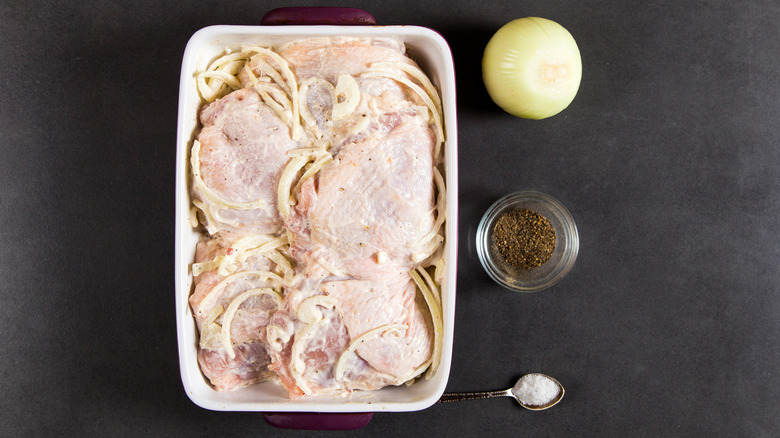
This is more about binding than flavor, but a bit of citric acid has never disagreed with meat. The benefits of using mayo as a vehicle for your marinades is threefold: the seasonings evenly coat the protein, the marinade actually sticks to what you're cooking (hence the word "binding"), and when it's time to grill/sear/bake the dish, you'll be treated to a perfect golden browning. The chances of any lingering mayo flavor at all are slim, but a trace of lemon is possible.
This technique is so reliably beneficial that you may find yourself adapting your arsenal of marinade recipes to it. And you can — it works on virtually any protein and can be mixed with dry seasonings, aromatic herbs, or other sauces. Some barbecue pit-masters even use a small amount as a binder for their dry rubs. Unpalatable as it may sound, it works. And well. Just try not to think too hard about raw meat poking around in a web of shimmering white goo.
4. Mashed potatoes
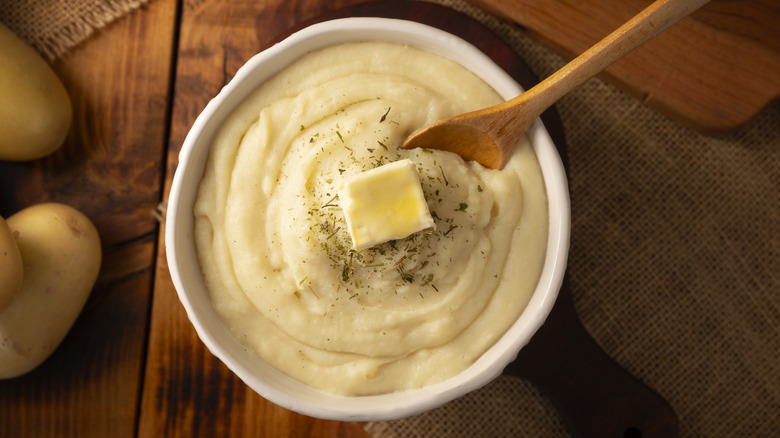
Yeah that's not a typo: this isn't actually about potato salad (where mayo inarguably belongs). And though the concept is perhaps less immediately objectionable than something like mayonnaise cake, for example, it's arguably weirder: rather than using an alternative form of standard ingredients, you're actually adding eggs to an eggless dish.
While the ingredient is unconventional, the purpose is familiar: like butter and cream, you're working in moisture to attain creaminess. This is best done to taste, starting with a tablespoon or so and working your way up. While doing so, it's best to mentally separate the technique from the result. Let's face it: silkier mashed potatoes don't sound particularly objectionable.
You can use this weird little trick in your own recipe, or as a kitchen hack to transform (read: make enjoyable) your store-bought mashed potatoes. And really, if you're eating store-bought mashed potatoes you've relinquished your right to scoff here. At least in the South.
5. Barbecue sauce
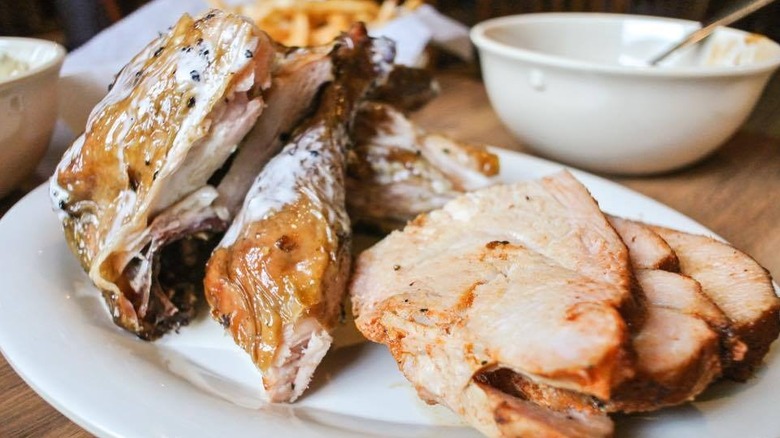
For barbecue aficionados, this isn't surprising at all. For Alabamians from the White Sauce Belt (North Alabama), this is simply default. For the rest of you; yes. It's a real thing.
Originally intended for smoked chicken, the stuff has (some would say inexplicably) caught on, and you can find it dousing all manner of smoked proteins. It's fairly uncommon in the barbecue world to trace a style of sauce back to one specific individual, but there is no denying the provenance of this culinary convention, and the credit goes entirely to Big Bob Gibson Bar-B-Q in Decatur, Alabama.
A savory concoction of mayonnaise, vinegar, hot sauce, lemon juice, and spices, Big Bob himself started "baptizing" his hickory smoked chickens in the stuff after pulling them off the pit (apparently it keeps them moist in addition to being delicious). That was in the 1920s, and it launched Big Bob from a backyard weekend pitmaster to a career restauranteur. Today, his grandchildren have found no shortage of demand for the tradition: so rabid is the fan base that it's been used — unbidden — as a fry dunk, slaw base, and bread dip. Hallelujah.
6. Drop biscuits
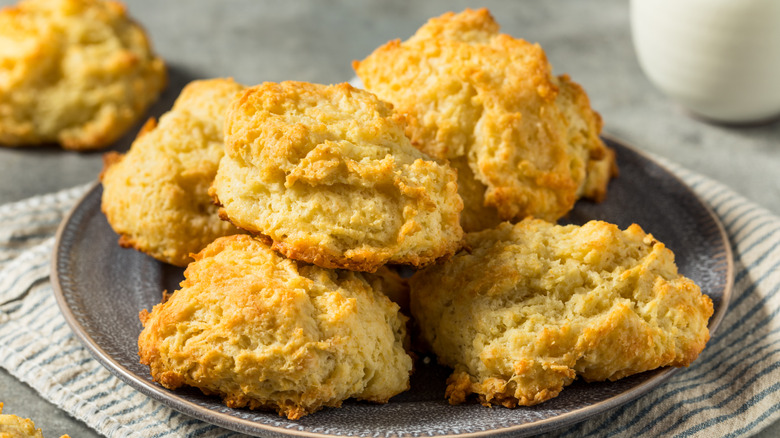
Drop biscuits, if you're unfamiliar, are your flaky rolled biscuits' lazy cousins. Made from a wetter, more batter-like dough that is scooped and (you guessed it) dropped onto a baking sheet rather than cut and worked and formed. The result is a denser and more crumbly species that works perfectly with gravy but is also delectable with just a pad of butter. These are rustic things, and that is part of their charm. Along with being relentlessly binge-worthy. And with mayo, they get even better.
Not only are they delicious, but they're easy: they can be made with as few as three ingredients, and one of them is mayo. You don't even have to knead them. Flour, mayo, milk, and 20 minutes in a 400 degree oven. The results? A perfectly crispy dome encompassing a soft, luxurious interior. If you're a fan of fantastic results from minimal effort, welcome to your new (but decidedly historical) breakfast obsession.
7. Roasted vegetables
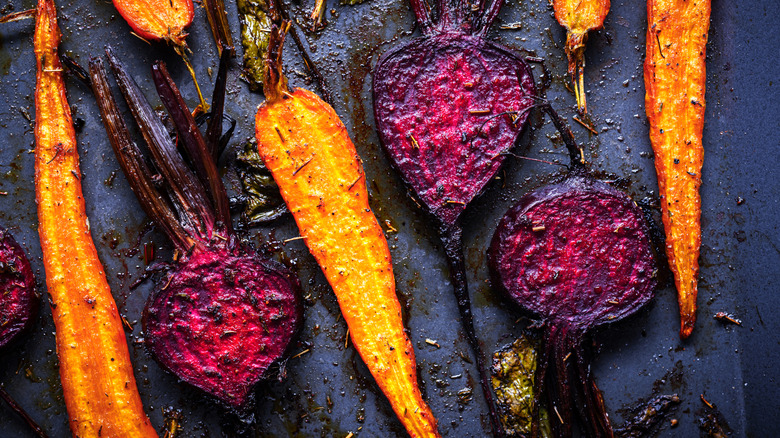
This is not dissimilar in principle to the function of mayonnaise as a meat marinade, but it's not quite the same, either. The concept is simple: mayo sticks to veggies, ensuring your seasonings stay put. But it also helps crisp things up. This is due to the capacity of mayonnaise to enhance the Maillard reaction by binding amino acids to the surface of your vegetables, while locking in moisture. The result? Perfectly browned vegetables that are neither soggy nor burnt. It works particularly well with root vegetables, and, distinct from most marinades, you don't have to set aside hours of soaking time to realize the benefits of the hack.
You can really use any mayo-based dressing (or aioli) for this one, which opens the doors to your wildest salad defecting dreams. Or you could invent your own dressing. Or even make mayonnaise from scratch if you're looking to distinguish yourself as someone who doesn't mind doing things the hard way (it's actually not that hard and totally worth it). Just make sure you're not crowding the pan and you'll be well on your way to perfect, gourmet quality roasted vegetables.