

10 Jack Daniel's Whiskey Facts Very Few People Know
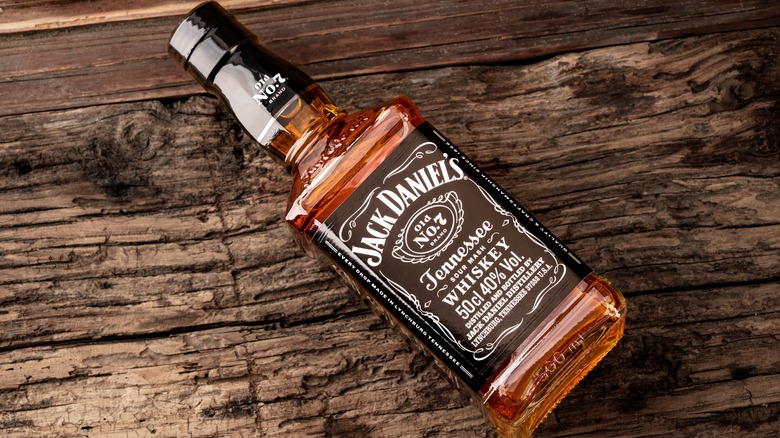
Few whiskey brands are as widely known and loved as Jack Daniel's. The signature square bottle is a familiar sight everywhere, from dive bars to stadium concerts and airport duty-free shops. According to The Brand Champions 2025 report by The Spirits Business, Jack Daniel's was the second best-selling American whiskey in the world, coming in just behind Jim Beam with an impressive 14.1 million cases sold in 2024. But for a whiskey so readily recognized, there are still plenty of facts about Jack Daniel's that not so many people know.
If you're already a Jack Daniel's fan, you probably know some of the basics. You likely know it's made in Lynchburg, Tennessee, that it starts with a mash bill of corn, rye, and malted barley, and that it plays a huge role in the history of American whiskey. In fact, it's often listed as one of the must-know whiskey brands for beginners. But beyond that, the brand's 150-year-plus history is filled with interesting stories and details that aren't talked about as much.
To better understand what makes Jack Daniel's unique, we spoke with Chris Fletcher, the vice president, master distiller, and director of distillery operations at the Jack Daniel Distillery. His connection to the distillery runs deep, as his grandfather was also a master distiller there. Fletcher shared insights into the brand's history, process, and some of the quirks that set it apart. These are some of the more surprising Jack Daniel's facts we learned.
1. Jack Daniels' mentor was a formerly enslaved man
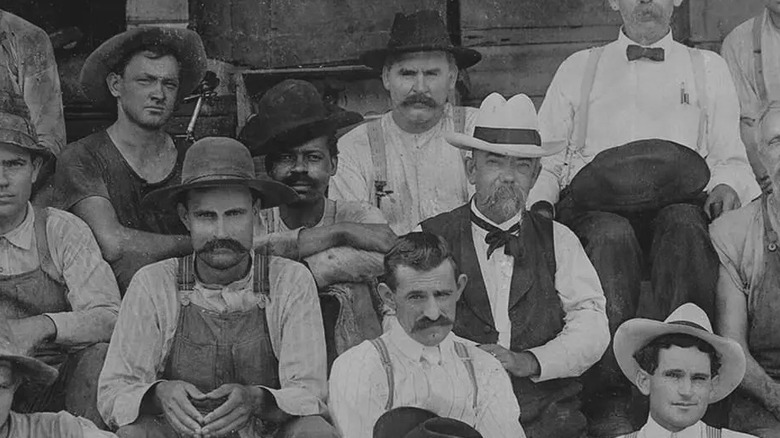
The story of Jack Daniel's began in the late 1850s when an orphaned Jasper Newton "Jack" Daniel was taken in by a reverend named Dan Call. Daniel worked on the Call family farm, and one of his tasks was to help an enslaved man named Nathan "Nearest" Green run the whiskey still. Green taught Daniel everything he needed to know about whiskey-making, and according to Chris Fletcher, he also played a pivotal role in the young boy's life.
"Not only do we know that Mr. Jack learned distilling from Nathan Green, I would say in a lot of ways he was a parent — a father figure for him," said Fletcher. "I don't think I can overstate the influence that Mr. Green had on the young boy." During their time working together, Daniel began to dream of owning his own whiskey brand. By the time he was a teenager, he had bought the still from Reverend Call and hired the newly emancipated Green as his master distiller.
In the early days, Green and Daniel made whiskey on the Call farm, and the business slowly grew. But Daniel had his eyes on something bigger. In the early 1880s, he purchased Cave Spring Hollow and moved the distillery next to the natural spring, where it still is today. Green's sons went with him, and later their sons also worked there. As stated on the company website, "To this day, there has always been a member of the Green family working at the Jack Daniel Distillery."
2. There are several theories about why the whiskey was named Old No. 7
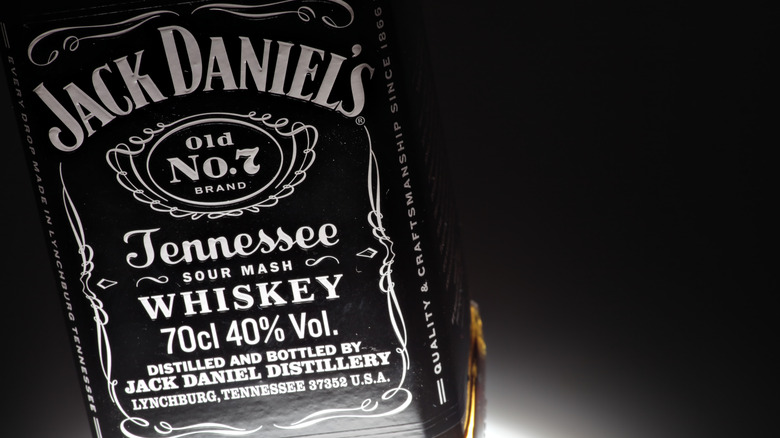
Old No. 7 is Jack Daniel's flagship whiskey, and it's the one that Jack Daniel himself settled on and named. But have you ever wondered why it's called Old No. 7? The truth is nobody knows for sure. Chris Fletcher told us there are many theories, like that it was named after the tax district the distillery was in, or that it was the seventh recipe Daniel found to be the best. But Fletcher's grandfather, who worked at the distillery for many years, was a firm believer in the train story.
Legend has it that Daniel once shipped a barrel of whiskey via train to a bar owner out west, and when it arrived at the St. Louis station, it was supposed to be transferred to the No. 7 train, but it was misplaced. When the bar owner complained, Daniel was quick to replace the barrel. When that barrel made it to St. Louis, the workers realized the previous one was still there, so they labeled the barrels No. 7 "new" and No. 7 "old". Apparently, the bartender wrote Jack to say he wanted another barrel, but from now on, he only wanted "old" No. 7 barrels.
Fletcher told us, "That's my grandfather's story, and he would promise you if he were here that's what the Motlow family told him, which was Jack's nephews and family that inherited the distillery from Jack. So, that's probably as good of a story as I can give you. Exactly how accurate it is, I won't make any promises."
3. A locked safe may have led to Jack Daniel's untimely death
While we don't know exactly what year Jack Daniel was born (his gravestone states 1850, but some believe that Jack's mother passed away in the late 1840s, making that impossible), we do know that he died in 1911. The cause was complications from a toe injury he had suffered years earlier. And according to distillery lore, that injury could have been entirely avoided if Jack had just reigned in his temper.
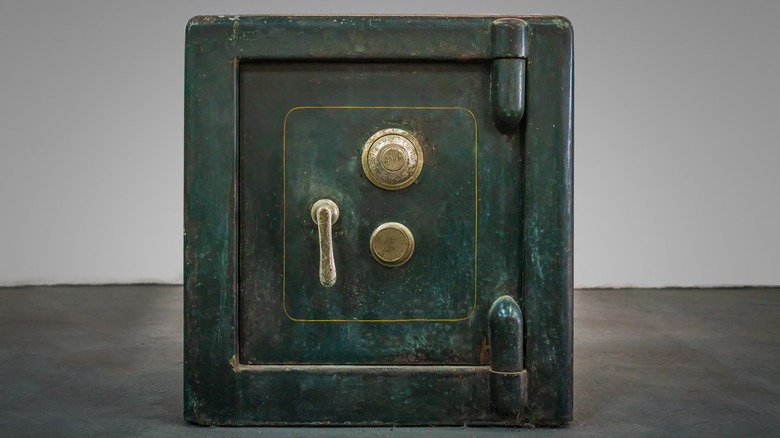
By most accounts, the injury traces back to a single incident involving the safe in Daniel's office. Apparently, his nephew usually opened the safe in the mornings, but one day, Daniel came to work early and decided to open it himself. After repeatedly missing the combination, he kicked the safe in anger and broke his toe. The injury later became infected, and even after amputating the toe and then the whole leg, Daniel died from the infection.
The safe still sits in Daniel's old office at the Jack Daniel distillery today. According to the Jack Daniel's website, there's a running joke that the safe serves as a warning to "never get to work too early." On a more serious note, the site also states that it's a reminder keep your cool even when frustration sets in and to reach out for help if you're faced with a problem you can't solve yourself.
4. Charcoal mellowing is what sets the Tennessee whiskey apart from other spirits
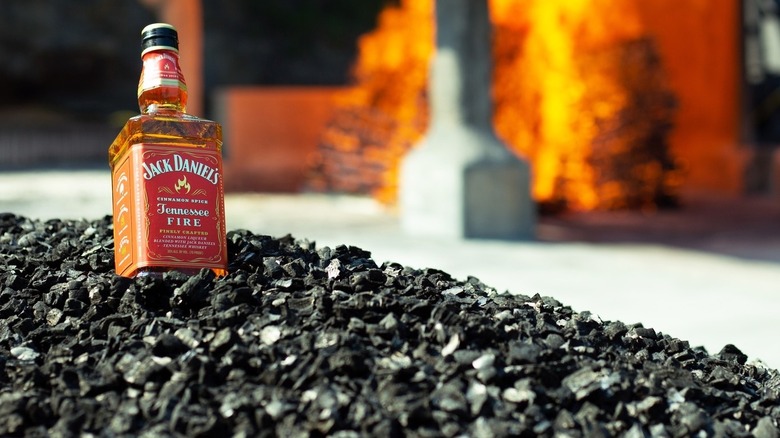
One thing that sets Jack Daniel's apart from other whiskies is its charcoal filtration. Known as the Lincoln County Process, it involves slowly filtering distilled whiskey drop by drop through charcoal made from sugar maple wood. According to Chris Fletcher, the technique was around long before Jack Daniel and Nathan Green started distilling, and its purpose is to make the whiskey less harsh and more mellow.
At Jack Daniel's, the process is still done much the same way it was in the 1800s. The distillery burns local sugar maple into charcoal, stacks it about 10 feet deep in vats, and lets the whiskey drip through slowly — roughly a gallon per minute. It takes about a full day for the spirit to pass through the charcoal. Fletcher notes that Jack Daniel himself was known for being particular about this step, insisting on deep charcoal beds and frequent changes.
The charcoal mellowing step is also one of the reasons Jack Daniel's is labeled as Tennessee whiskey rather than bourbon. Technically, it meets all the requirements to be considered bourbon, including a mash bill of at least 51% corn, an aging period in new oak barrels, and an ABV of 40% (80 proof). But as Fletcher said, "Tennessee whiskey is bourbon, but not all bourbon is Tennessee whiskey." The key difference is the charcoal filtration step and the fact that Tennessee whiskey must be produced in Tennessee (bourbon can be made in all 50 states).
5. Every single bottle is made in Lynchburg with water from Cave Spring Hollow
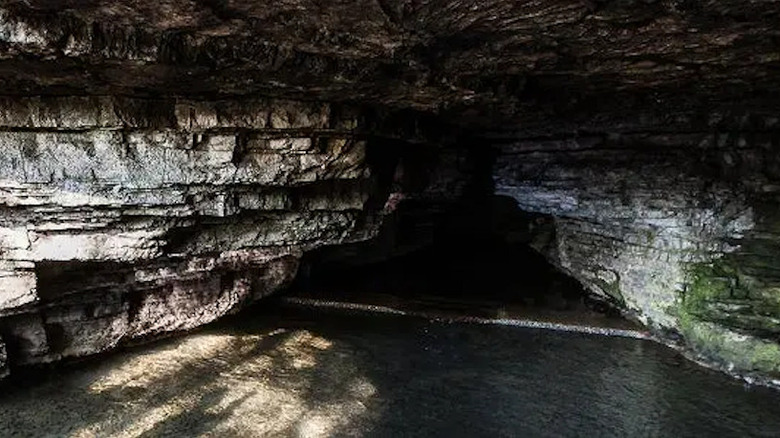
When Jack Daniel paid $2,148 for Cave Spring Hollow in 1884, many people probably thought he was crazy. After all, that was a huge sum back then, and the property didn't have much more than a water-filled cave and some rocky land. But Daniel knew that clean, clear spring water was going to be the key to producing consistently good whiskey. Today, every single bottle of Jack Daniel's is made with water from that cave.
"You can make bad whiskey with good water, but it's hard to make good whiskey with bad water," Chris Fletcher said. He explained that the water at Cave Spring Hollow is simply good, pure water that they don't need to worry much about. "Because it is coming through layers of limestone rock from underground aquifers, it's naturally ready to go and clean and aroma-free." Plus, the spring water is always cool, maintaining a temperature of roughly 56 degrees.
Fletcher explained that back in Jack Daniel's day, the water from Cave Spring Hollow would have been used for everything from whiskey making to cleaning and cooling. However, today the water is only used for mashing and fermenting the grains. In addition, the distillery has several water conservation efforts in place, like protecting areas around the cave and using a reverse osmosis system for pumping the water.
6. The color comes entirely from white oak barrels that are only used once
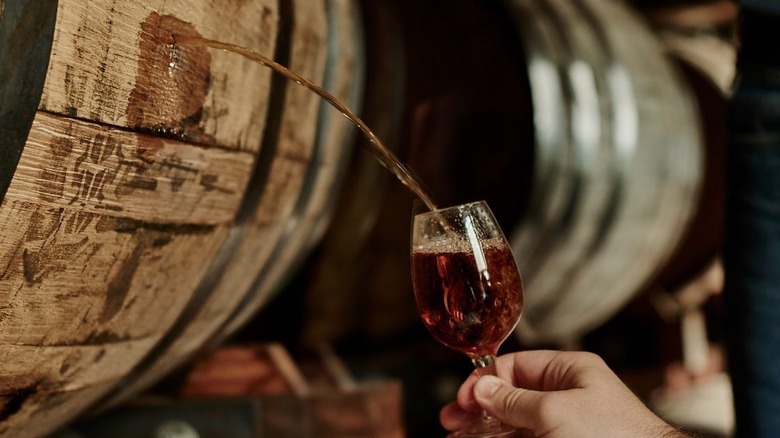
One thing that you can be sure of when you buy a bottle of Old No. 7 is that it won't contain any artificial colors or flavors. As Chris Fletcher told us, "The only thing that adds flavor is the grains, the yeast, and the barrel." The barrels are particularly important because they give the whiskey its rich amber hue and toasty, oaky flavor with just a hint of sweetness. And that's why only brand-new, handcrafted barrels are used at the Jack Daniel Distillery.
Jack Daniel's barrels start with American white oak that's shaped into wooden staves and tightly slotted together so there's no need for nails or glue. Then, the insides are toasted just enough to draw out the sugars and create a nice char. Each barrel is used only once to ensure the whisky develops the maximum flavor. After the first use, the barrels are passed on to other businesses like Scotch distilleries and wineries.
Fletcher explained that the barrels are only used once because they won't impart the same color or flavor in subsequent uses. He said, "If you reuse that barrel, it's sort of like you've made a cup of tea and you reuse the teabag over and over. You get a lighter color and lighter flavor every time you reuse it. The barrel would be the same way." Plus, just like bourbon legally has to be aged in new charred oak barrels, the same goes for Tennessee whisky.
7. The distillery is located in a dry county
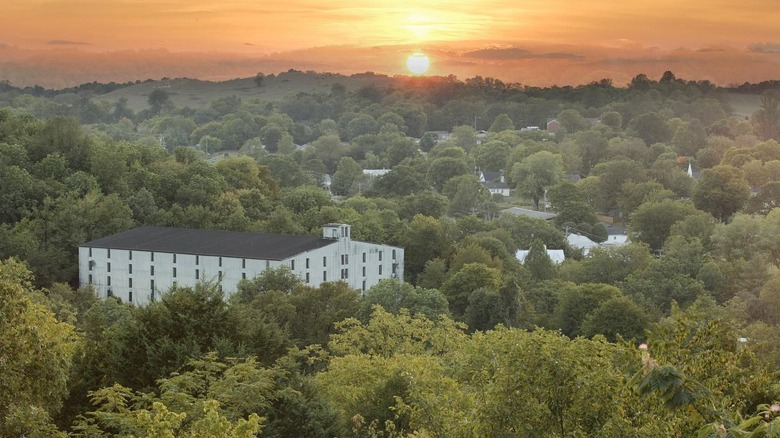
As you can imagine, Prohibition was a pretty big blow for the Jack Daniel Distillery. Tennessee actually banned the production of alcohol in 1909. At that time, Jack Daniel's nephew Lem Motlow was in charge, and his solution was to temporarily move operations to St. Louis. But when the nationwide 18th Amendment went into effect, even that had to end. It wasn't until 1937 that the ban was repealed in Tennessee. Oddly enough, Moore County (where the distillery is located) chose to stay dry, and it remains so to this day.
So how did the distillery manage to get back up and running in a dry county? Well, when the ban was repealed, three counties were granted permission to produce alcohol: Moore County, and neighboring Coffee County and Lincoln County. Despite that, Moore County decided to stay dry, but that didn't affect distillery operations. As Chris Fletcher explained, "Getting the permission to distill and produce spirits here is completely separate from being a dry county, which only prevents the sale of spirits."
So while you won't find any bars or liquor stores in Moore County, the distillery is legally allowed to produce whiskey. And thanks to a clause in the state law, you can buy bottles of Jack Daniel's at the distillery. "What allows us to sell the bottles at our shop here at the distillery is only because we produce it on-site," Fletcher said.
8. There is a dedicated fire department at the distillery
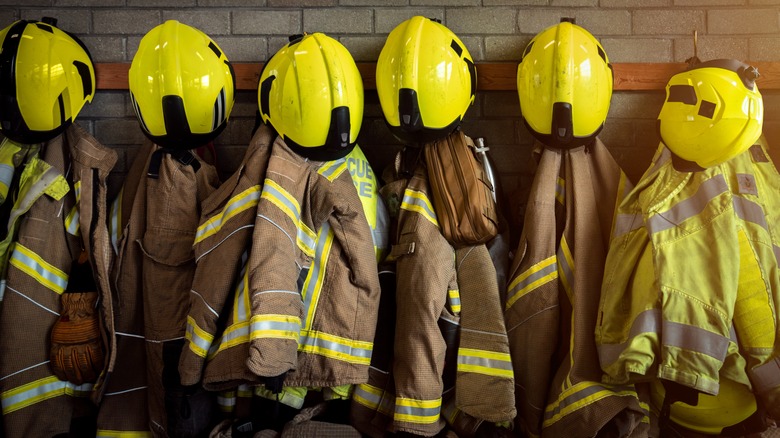
Prohibition wasn't the only tragedy that struck the Jack Daniel Distillery in the 20th century. In 1930, a fire broke out at the distillery, causing major damage. After the alcohol ban was lifted in 1937, Lem Motlow got to work rebuilding the distillery, and part of the new and improved operation included a dedicated on-site fire department. It was officially established in 1938, and is still in operation today.
The Jack Daniel's fire brigade consists of over 30 state-certified volunteer firefighters who also work at the distillery. It's headed by Fire Chief Justin Whelan, who is also the company's risk management manager. The department has its own training center and burn tower, and members undergo several hours of training each week, focusing on hazards specific to distilleries.
In a video posted by Jack Daniel's parent company Brown-Forman, Whelen noted that fires are very rare at the distillery, but if one does break out, the brigade is like a well-oiled machine. "You know, our response time is absolutely phenomenal," he said. "We're under seven minutes. It doesn't matter if it's three in the morning. It doesn't matter if it's during the day." The brigade also does mutual-aid training with surrounding agencies and offers community support in Lynchburg.
9. A famous celebrity was buried with a bottle of Jack Daniels
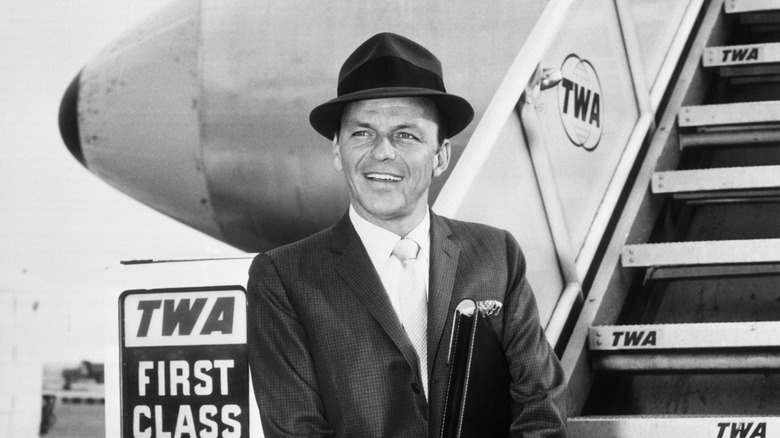
Jack Daniel's has had some pretty famous fans over the years, but few were as closely associated with the brand as Frank Sinatra. Rumor has it that comedian Jackie Gleason introduced Sinatra to the whiskey sometime in the late 1940s, and the singer was instantly enamored. From that point on, he drank it regularly and talked about it often. He was such a huge fan that when he died in 1998, he was buried with a bottle of Jack Daniel's, as well as a pack of cigarettes, a lighter, and a roll of dimes (in case he needed to make a phone call).
It's hard to overstate just how much Sinatra's love of Jack Daniel's did for the brand. According to Tales of the Cocktail, the company was still very small in the 1950s, selling only about 150,000 cases a year. When Sinatra started touting the whiskey, like at one concert where he told the audience it was "the nectar of the gods," demand increased exponentially. In return, the company made sure the singer always had an ample supply of Jack Daniel's on hand.
Jack Daniel's still honors that relationship with its Sinatra Select whiskey. The whiskey is aged in barrels with deeper grooves cut into the wood to increase contact with the oak, a process that's meant to produce a bolder profile. If you happen to try it, we suggest using Frank Sinatra's 3-2-1 method for the perfect glass of whisky: three ice cubes, two fingers of whisky, and a splash of water.
10. You can buy your own barrel of Jack Daniels
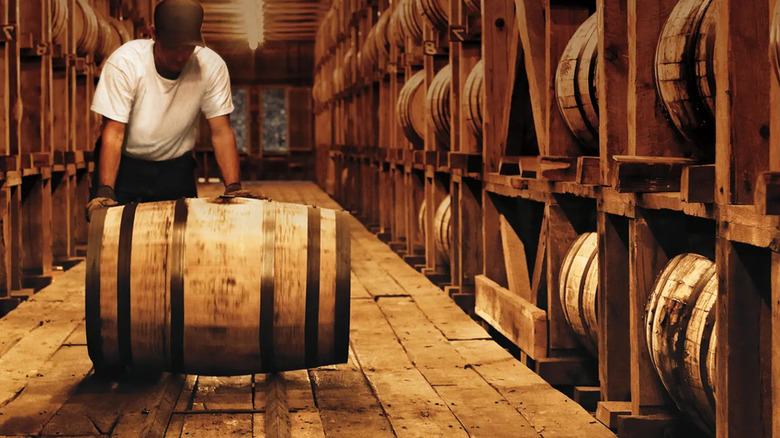
Jack Daniel's offers a wide array of products for all types of whiskey drinkers, from the tried and true Old No. 7 to flavored whiskies, and its age statement bottles recreated from the days when Jack Daniel himself was distilling (one of Chris Fletcher's favorite projects). But if you want something truly special, you may want to consider buying your own barrel. Yes, you read that right — you can buy an entire barrel of Jack, which will make even Jack Daniel's largest three-liter bottle look wimpy by comparison.
To do it, you have to go through the distillery's Single Barrel Personal Collection Program. Rather than buying a barrel off a shelf, the process centers on choosing the whiskey itself. Buyers can visit the Lynchburg distillery and taste through barrels with the help of a brand ambassador, or, if travel isn't an option, work with a local representative who provides tasting samples. There's also the option to let the distillery's team select a barrel on your behalf.
Once a barrel is chosen, the whiskey is bottled individually instead of being shipped in the barrel itself. The bottles come labeled as a single-barrel selection and can include personalized details, along with keepsakes like a customized barrel head, depending on the expression and where it's being shipped. Barrel yields vary, so the total number of bottles differs from purchase to purchase, but the idea is the same: you're getting the full contents of one specific barrel, bottled just for you.