

Avoid These 10 Mistakes When Cooking Lobster
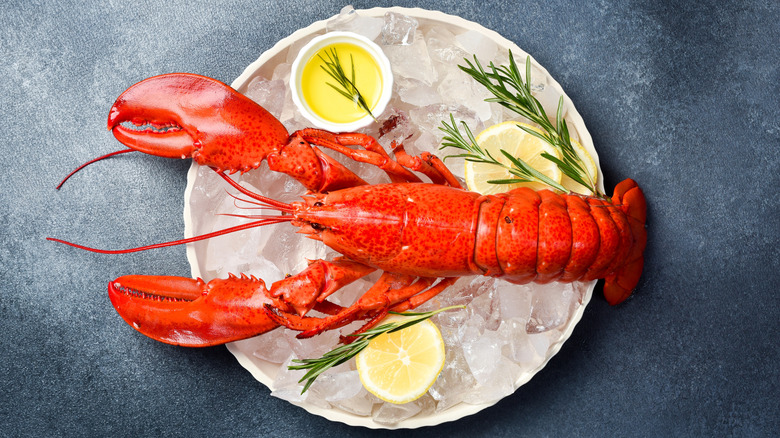
Growing up in Nova Scotia, I was lucky to be surrounded by lobster all the time. It made an appearance at family gatherings, summer dinners, and special occasions. I've eaten it boiled, grilled, butter-poached, served as butterflied lobster tails, and tucked into mouthwatering lobster rolls. Because it was so common, lobster never felt overly intimidating to cook, but that's not to say all my attempts turned out fantastic. As I came to learn, there are several mistakes that can turn a perfectly good lobster into a disappointing meal.
In an effort to step up my lobster game (and hopefully yours, too), I sought out chefs and seafood purveyors to get their advice on the biggest mistakes people make when cooking lobster. I wanted to find out which simple steps most of us miss when buying, prepping, and cooking this delicious crustacean. I also wanted to score some pro tips on the best ways to achieve meat that's sweet and tender, as opposed to tough and bland.
Lobster has a reputation for being fussy or difficult to cook, but as many of the experts pointed out, that's not necessarily the case. In fact, most of their advice came down to a few simple details that are easy to overlook. Small choices, like how you season the water, when you pull it off the heat, or how you handle the meat afterward, can make a big difference in the final dish. These are the lobster mistakes chefs and seafood experts say they see most often and the ones that are easiest to fix.
1. Choosing a lobster based on size alone
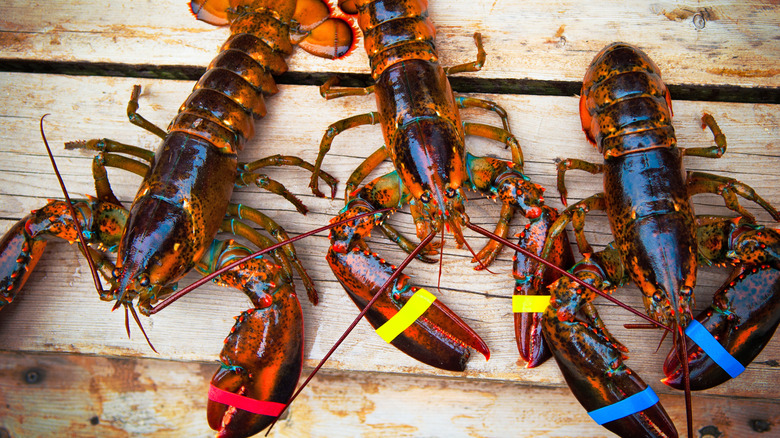
Standing at the seafood counter, it's tempting to scan the tank for the biggest lobster you can find. With many foods, bigger often means better, and considering lobster is a special occasion dish for many people, there's a tendency to want to go all out. But most experts will tell you that the biggest mistake people make when buying lobster is focusing on the size instead of how fresh and lively the lobster is.
Jimmy De Almeida is the U.S. executive chef at Bagatelle, a French hospitality brand with restaurants and beach clubs around the world. One of the first things he looks for when sourcing whole lobsters is healthy crustaceans that are living their best life. He said, "A quality lobster should feel heavy for its size, show natural movement, and smell clean — like the ocean, never fishy. A smaller, lively lobster will always deliver cleaner flavor and firmer meat."
It's also important to keep in mind that smaller, younger lobsters tend to have softer, sweeter meat than their larger counterparts. That's because older, larger lobsters have thicker muscle fibers, so the meat can be tougher. They also take longer to cook all the way through, so you may end up overcooking the meat closest to the shell. So how big should you go? Well, many experts say 1.5-pounders (called halves in lobster lingo) strike that perfect balance of plenty of meat that's also tender and sweet.
2. Waiting too long to cook the lobster
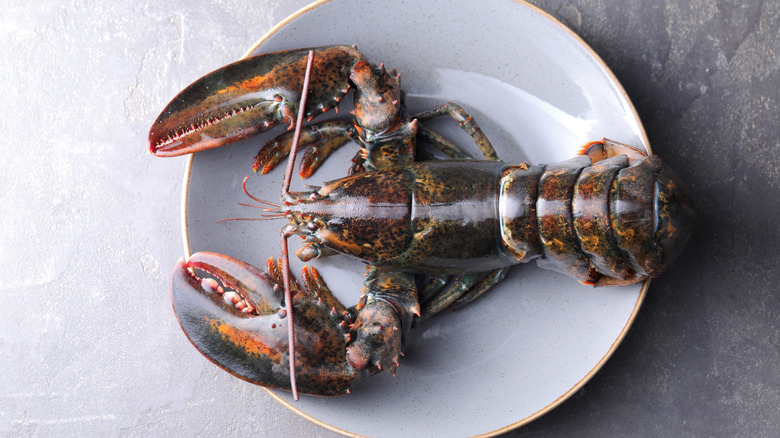
For many people, lobster is one of the few foods they bring home still alive, and that alone can feel intimidating. The good news is it's pretty easy to store. The key is keeping it moist and cool. Rima Kleiner of Dish on Fish told Chowhound, "Once you get your lobster home, treat it like the MVP it is! Place the lobster in the refrigerator immediately, wrapped in wet newspaper or the seaweed they were packed in."
Ideally, you want to cook your lobster as soon after purchasing it as possible. However, there is some leeway. Most of the experts I spoke to said that cooking within 24 hours will give you the freshest taste, although you can store lobster in the refrigerator for up to 48 hours. Just keep in mind that lobsters need to stay damp and have room to breathe. A paper bag or open cardboard box works well for storage. Never place lobster in tap water, as this can kill them.
If you're not sure if your lobster is still good, Richard Fuka, seafood specialist and purveyor for Dune Brothers Seafood, suggested holding it upside down and pinching the back end of the tail. "Any type of knee-jerk reaction shows that the lobster still has life left in it and shouldn't be discarded — whether in a tank or refrigerator," he said. If the lobster is limp with the tail and claws flopped over, it's most likely dead.
3. Neglecting to season the water
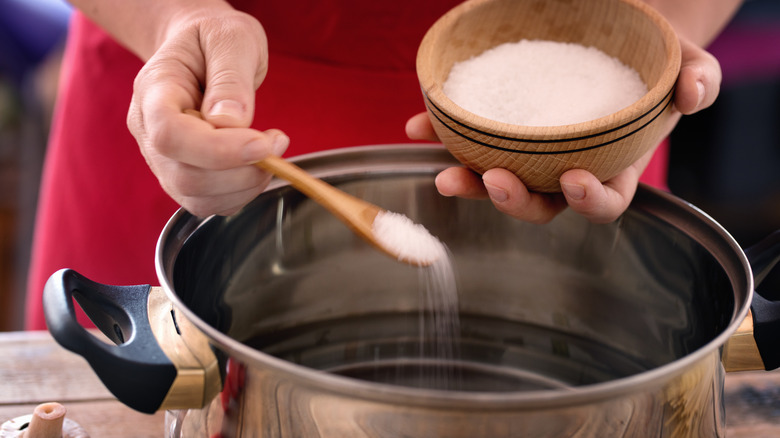
Boiling is one of the easiest ways to cook lobster, but one crucial step that home cooks often neglect is seasoning the cooking water. Salt is the key to infusing the lobster with flavor and enhancing the natural sweetness of the meat. But how much salt to add? Well, Jim Foster, owner of the Pelican Seafood Market & Grill, told us, "Cooking in seawater is the best. Think of that when you are adding salt to your pot."
And you don't have to stop at just salt. Fresh or dried herbs, diced veggies, and aromatics can also elevate the flavor of your lobster. Michael Handal, a chef at the Institute of Culinary Education, suggested adding combinations like white vinegar or lemon, diced carrots, celery, and onions, or spices like whole black peppercorns, bay leaves, thyme, and parsley stems to the cooking water. He said, "This liquid (called a court bouillon or short broth in French cooking) may be simmered for 15 minutes to infuse the ingredients before adding the lobster to the pot."
Another step that can make a difference in the final texture and flavor is purging. This involves placing the lobster in a bucket or vat of salted water to help revive it and encourage it to expel waste. Franklin Becker, chef-owner at Point Seven in New York City, said, "We purge the lobsters in salted ice water (make sure it tastes like the ocean) for 30 minutes before killing them humanely." Becker also cooks the lobster in court bouillon.
4. Buying into the myth that lobsters scream when being cooked
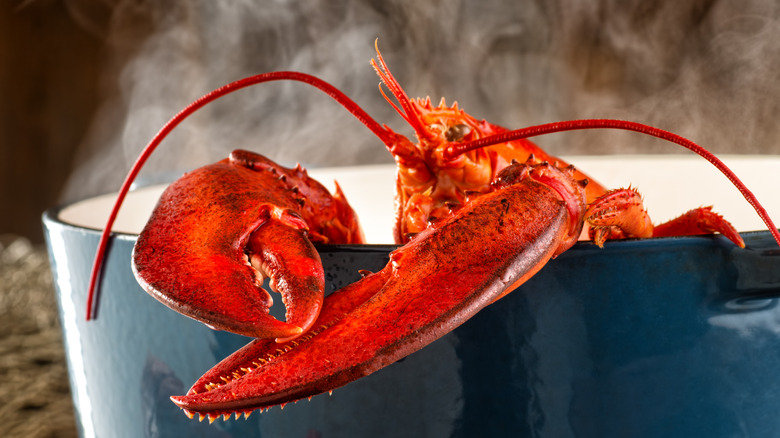
When we asked Jimmy Ulcickas, co-owner and co-founder of Bluewater Grill, if there were any myths about cooking lobster that he wished people would stop believing, the first one he mentioned was the idea that lobsters scream when you add them to the pot. He said, "Not true! The sound you hear is air escaping from the shell that expands when cooked." That being said, the sound can be disconcerting, and it brings up the much-debated question of whether lobsters feel pain.
Many scientists believe that lobsters do, in fact, feel pain, although nothing has been definitively proven as of yet. If that is the case, then it goes without saying that you want your lobster's death to be as quick and painless as possible. Many people recommend stunning the lobster by placing it in salted ice water before boiling it. As an added bonus, this also works to purge the lobster. After about 30 minutes, you can add the lobster to boiling water in one swift motion.
If you're uncomfortable with boiling the lobsters alive, Ulcickas offered another solution. He said, "We suggest humanely euthanizing the lobster by placing the point of a knife between and slightly behind the eyes and penetrating the shell about ½ inch." You can also use a pair of scissors to cut through the shell just in front of where the claws meet the body to sever the connection to the nervous system.
5. Cooking the entire lobster the same way
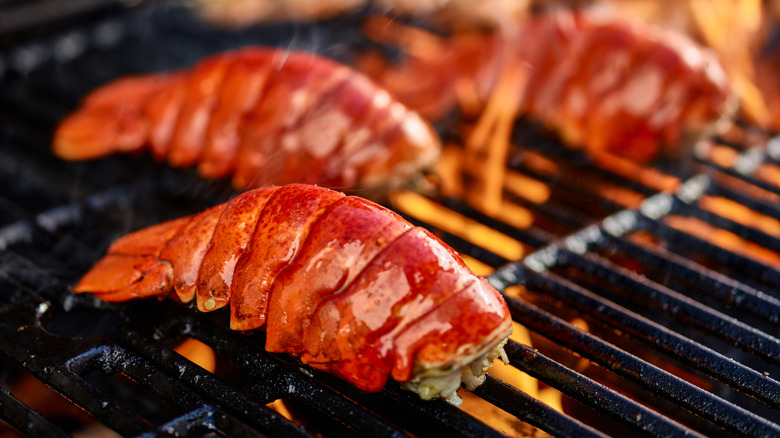
When cooking a whole lobster, it's easy to assume everything inside the shell cooks at the same pace. After all, it all goes into the pot at once. However, different parts of the lobster respond to heat very differently. The claws are dense and heavily insulated by thick shells, which means they take longer to cook through, while the tail meat is more exposed and cooks more quickly. This may not be such a problem with smaller lobsters that cook quickly, but it can be problematic with larger lobsters.
If you're planning on cooking your lobster in hot water, Michael Chavez, kitchen development manager at Angry Crab Shack, offered a few tips for prepping it to ensure even cooking. "Using a cleaver, make a small puncture on the underside of each claw and split the shell of the tail," he said. "Whether you are steaming or boiling, this will allow the heat to circulate into the shell as well as add flavor to the meat."
Some chefs prefer to separate the parts entirely. Franklin Becker, for example, cooks the claws and tails in separate pots. "We time the cook for 10 minutes for the claws and eight minutes for the tails for 1.25-pound lobsters," he said, noting that you can increase the cooking time by two minutes for every additional half pound. Several chefs we spoke to also prefer grilling lobster tails or baking them in the oven with just a brush of garlic butter.
6. Overcrowding the pot
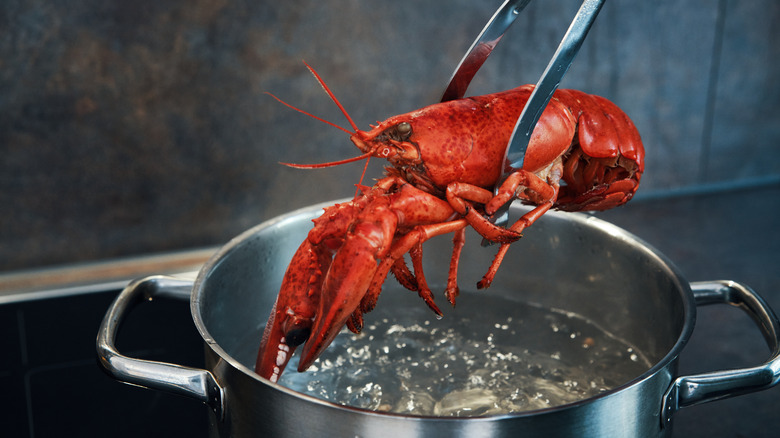
Whether you're cooking lobsters whole or breaking them down into separate pieces, it's important to give them enough space to cook properly. Once the pot gets crowded, it becomes harder to control timing and heat. As Jimmy Ulcickas puts it, "Don't overcrowd the pot, use two if necessary! Lobsters shouldn't be cooked on top of each other." Cramming all your lobsters in may seem like a timesaver, but it can lead to uneven cooking.
When a pot is overcrowded, the water temperature drops significantly as soon as the lobsters are added, and that can throw off your cooking times right from the start. Instead of quickly returning to a steady boil or strong steam, the heat struggles to circulate evenly around each lobster. Plus, some pieces might end up partially submerged or pressed against one another, and those parts will cook more slowly than others that are exposed to higher heat. By the time it's all cooked through, you may find that some of the meat is overcooked and rubbery.
Fortunately, overcrowding is an issue that's pretty easy to avoid. As Ulcickas mentioned, you can opt for two pots. You can also designate the claws for boiling and the tails for grilling or baking to clear up some of that valuable pot space. And if you're serious about cooking lobster at home, you might want to consider investing in a generously-sized pot.
7. Neglecting to consider carryover cooking
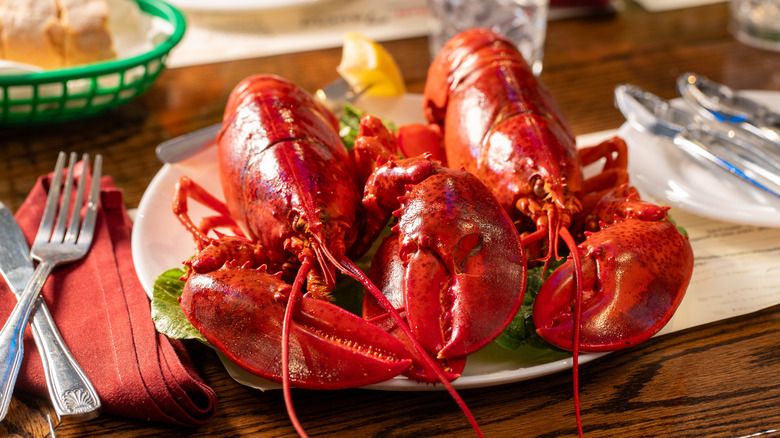
There's nothing worse than cracking into a lobster only to find that the meat is tough, stringy, or rubbery. Lobster cooks quickly and has a narrow window between done and overdone. Plus, what many home cooks don't realize is that it will still keep cooking even after it comes off the heat. This is called carry-over cooking, and it happens to all cooked meats. The key to getting perfectly tender meat is knowing when to pull lobster off the heat and what to do with it immediately after.
There are a few tell-tale signs that your lobster is close to being done. The most obvious is the bright red hue of the shells. Michael Handal added, "Once you begin to see the presence of albumen (a protein that looks like the white of a cooked egg) on the shell of the lobster, you know you are getting close to being cooked." At this point, you can use a thermometer inserted into the thickest part of the tail to test for doneness. Ideally, it should be between 135 and 140 degrees Fahrenheit.
Once your lobster has boiled or steamed to the right temperature, you want to pull it out of the pot and immediately dunk it in an ice bath to prevent carry-over cooking. This also helps the muscle fibers tighten up so that you get that nice snappy texture. If you're grilling or baking lobster tails, you may want to consider taking them off the heat just before they're done and letting them come to temperature while resting off the heat.
8. Improperly extracting the meat
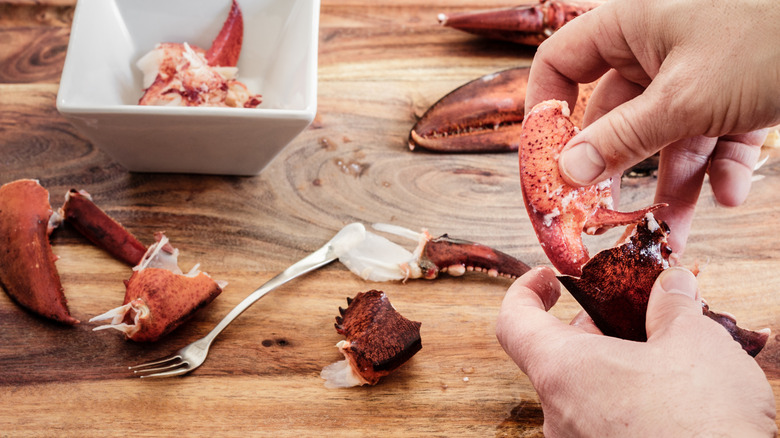
So, you've cooked your lobster to perfection, and it's laid out on a platter ready to go. Now comes the most physically demanding part — getting the meat out without turning your lobster into a mangled mess. Fortunately, this part is more about technique than strength. With a couple of simple tools and a clear idea of how to crack and eat a lobster, you can avoid crushed shells and lost meat.
To start, you'll need something to crack the shells with. Lobster crackers are great, but if you don't have any, simple kitchen shears will do. A small fork or seafood pick can help extract the meat, and you'll also want a bowl to throw the shells into. It's easiest to start by twisting off the claws and the legs. Then, twist the knuckles of the claws to separate them. Use the crackers or shears to gently crack the shells and the fork to pull out the meat.
The tail is a bit trickier. Richard Fuka told us, "The fastest way to extract it is to twist the end of the tail off and then push the meat out towards the body and get a nice big chunky piece of tail meat." If you're having trouble getting the tail meat out, you can also cut the shell lengthwise and peel it back to release the meat. Fuka also recommends peeling the skin off the top side of the tail meat and taking out the black intestinal tract. Finally, you can split the body cavity in half to get the delicate rib meat.
9. Discarding the tomalley
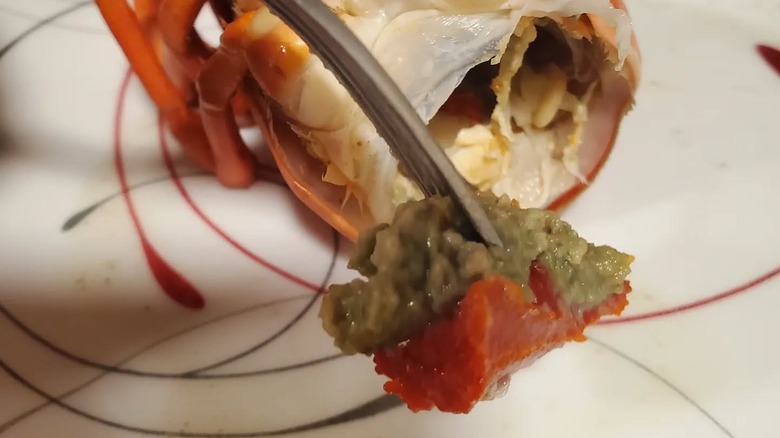
When you crack open your lobster, you'll probably notice a green substance nestled among the meat. That's called tomalley, and it's the hepatopancreas, which functions as both the liver and the pancreas. Many diners toss the tomalley out with the shells, thinking that it's just gunk, but Jimmy Ulcickas thinks that you'd be remiss to pass it up. "This is my favorite taste that brings me back to summers at the shore in New England," he said.
Tomalley is creamy, fatty, and intensely flavored. Some describe it as tasting like concentrated lobster paste. For many, it's a delicacy that tastes great on its own or spread onto crackers or toast points. You can also mix it into soups, like rich lobster bisques or creamy seafood chowder, and stir it into sauces. It should be noted that the FDA has put out warnings in the past to avoid eating tomalley during periods of red tide outbreaks due to increased toxin levels. However, in normal circumstances, it's usually fine to eat tomalley in moderation.
Another substance that you might find in the lobster is pockets of tiny red balls. This is the roe, and it only appears in female lobsters. The roe is usually black, but when fully cooked, it turns a bright reddish-orange color. The roe is also safe to eat, and like the tomalley, many say it's downright delicious. Some describe the taste as slightly salty and packed with lobster flavor. You can eat it the same way you would tomalley.
10. Not planning for leftovers or shells
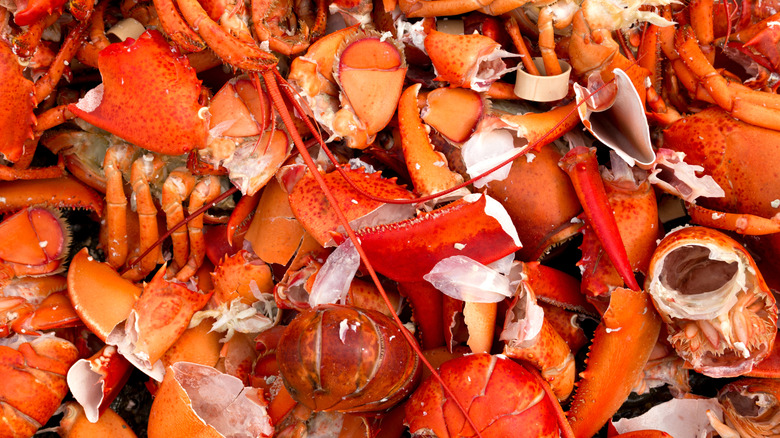
One of the great things about lobster is that it can yield more than one meal if you know how to use every part of it. Of course, it would be criminal to let any of that luscious meat go to waste. Most people save it to eat as-is or in lobster rolls. But one wasteful mistake that many people make with lobster is throwing out the shells, as they can also be used to make some pretty mean meals.
The shells may not look like much once the meat is gone, but they're packed with flavor. Simmering them with aromatics like onions, garlic, celery, and herbs creates a rich lobster stock that can be used as the base for bisque, chowder, or seafood stew. Some cooks like to roast the shells first to deepen the flavor, while others simply toss them straight into a pot. Either way, it's an easy way to turn what would have been scraps into something that's just as satisfying as the lobster meat itself.
There are also tons of creative ways to use leftover lobster that go beyond the usual lobster rolls. It works great in pasta dishes like mac and cheese and lobster fra diavolo. You can also layer it into tacos, top pizzas with it, and fold it into fried rice. If you want to add a luxe touch to brunch, you can make lobster eggs Benedict or a lobster omelet. And for something lighter, you can use the meat in salads or make lobster sushi rolls.