

10 Tips For Making The Best Martini Of Your Life
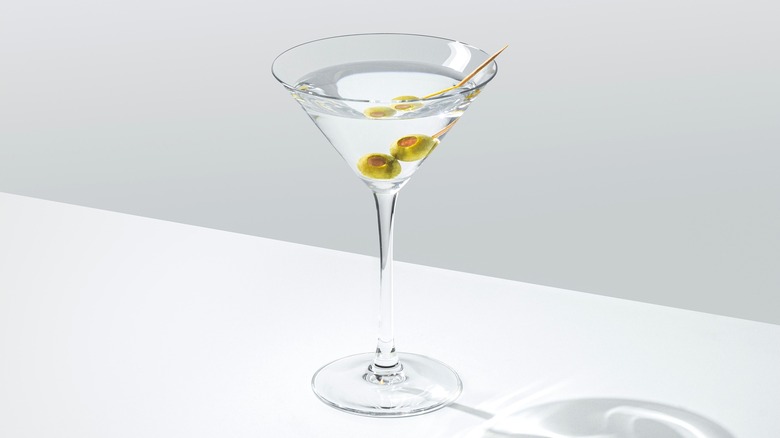
In the pantheon of classic cocktails, there is one that always seems to be included: the martini. From James Bond to "Mad Men," martinis have dominated popular culture throughout the years, and a slew of famous politicians and entertainers from Frank Sinatra to FDR, have been photographed with them to prove the point. While the origins of a martini are a bit mysterious, it likely was first concocted in the late 1800s to early 1900s as a variation on the Martinez.
Whatever the real story may be, someone decided to mix gin, vermouth, and citrus (or olives), and now the cocktail has formidable staying power. As a former bartender, it's one of the first cocktails I learned to make, as it is one of the most requested and customizable, particularly in New York.
Personally, I'm a vodka martini drinker (somewhat controversially, given the overwhelming preference for gin from our experts), but I'm also open to variations and riffs on the classic. We spoke to several bar experts about how they would recommend you make the best martini of your life, and the results may surprise you.
1. Chill the glass
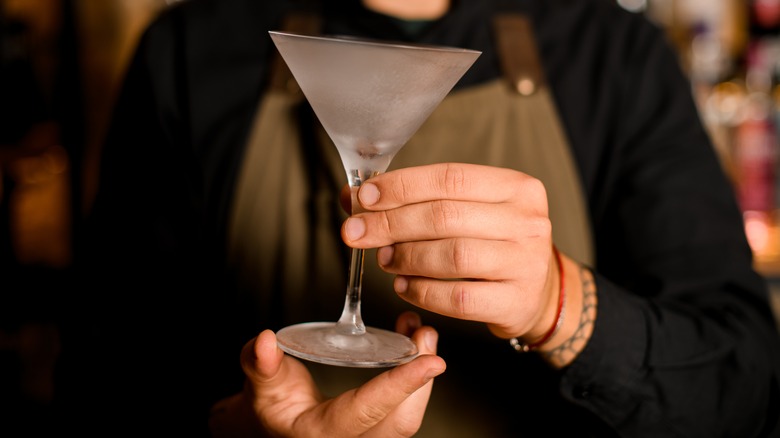
While the words "martini" and "winter" may not seem synonymous, they have two things in common: they are both cold. A martini, to me, is a summer drink — because it is meant to be consumed extremely chilled, which feels refreshing in warmer weather. (We'll talk more about how to cool down the actual liquor below.) No judgements on what time of year you enjoy your martini, however, as long as it's well-made, it can accompany any season.
A good place to start with your martini is chilling the vessel you'll be drinking from. Both Sean Marino, Bar Manager at Bangkok Supper Club in New York, and Jason Lee, Bar Manager at Darling in Los Angeles, agree that freezing a glass is the best way to prepare a martini. Make sure to pop a glass (or several, depending on the circumstances) in the freezer at least thirty to sixty minutes before you intend to serve the drink to get the proper coldness on and in the glass itself.
2. Use delicate glassware
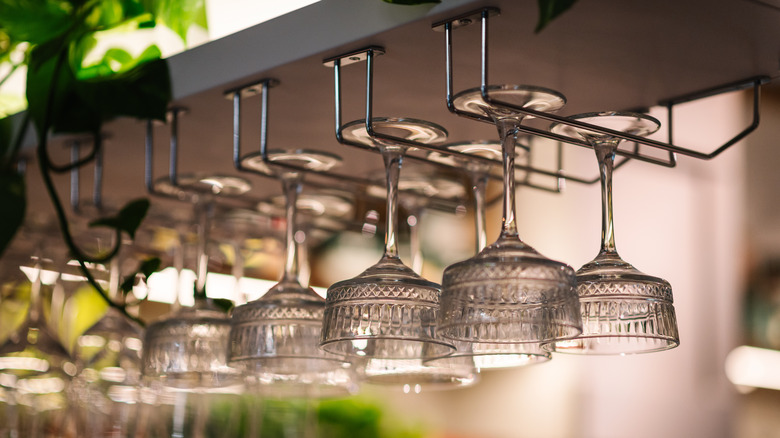
By now, the image of a standard V-shape, triangular martini glass has become synonymous with the drink. However, experts recommend something a bit finer or more delicate if you want to have the best martini of your life. Kenzo Han, Bar Director at Firstborn in Los Angeles and Esquire Magazine's "Bartender of the Year 2025" explains: "The glass just has to have a thin lip. It's kind of like drinking wine. You get flavor better distributed on your tongue if it's a thinner ... nice, delicate glass. The shape isn't as important."
Han also recommends smaller martinis, as they are easier to keep cold through the drinking experience. Jason Lee agrees, saying "the smaller the surface area/tension, the slower the drink will be to warm up to ambient temperature." Several other experts, such as Sean Marino and Jesse-Deville Fleet — General Manager at The Bronze Owl in New York — mentioned Nick and Nora glasses as preferred for the same reason. As Clayton Danielson, Hotaling & Co. Brand Manager pointed out, they're ideal for those prone to spilling their full drinks.
3. Choose premium spirits
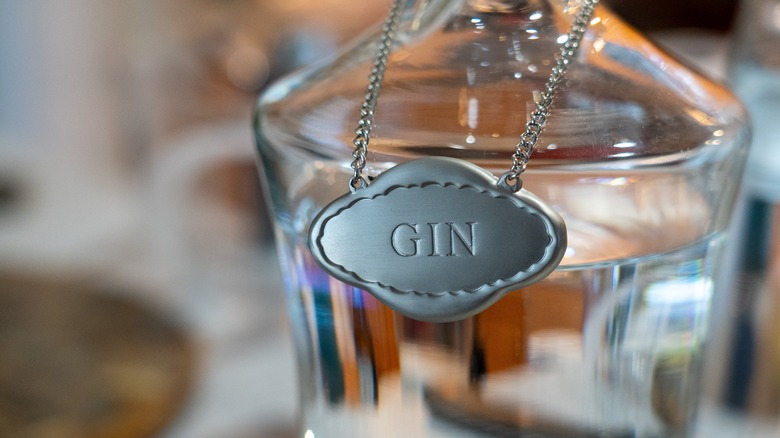
The difference between a good and bad cocktail — and sometimes the best cocktail of your life — starts with the quality of the base liquor. Martini purists will say that a true martini should start with gin (although vodka is also acceptable), then add your vermouth. Both spirits should be as high-quality as possible for the ultimate drinking experience.
For gin, Sean Marino recommends Plymouth or Fords, due to the botanical nature of both. Jason Lee also calls out Plymouth, and adds in Old Raj Blue Label and Tanqueray Ten for different flavor profiles, and Jesse-Deville Fleet mentioned Farmer's Organic. Kenzo Han says that as long as it's a classic London Dry Gin, it meets their standards.
For another option, if you're a vodka drinker like me, you may want to check out Haku Vodka, recommended by Gustavo "Moose" Campos, the Beverage Director at New York's Port Sa'id. He mentions the "bamboo charcoal filtration"and "the citrus and grass-like notes" that pair nicely with a citrus twist. Finally, for vermouth, Marino and Campos both say to reach for the Dolin Dry.
4. Chill your liquor
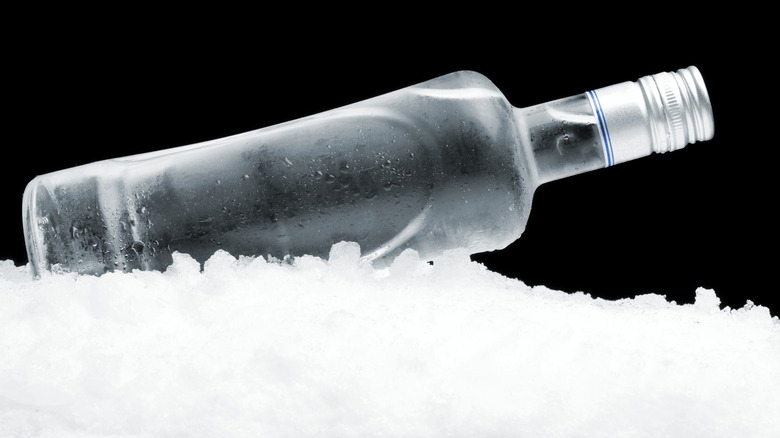
Much like we discussed when talking about chilling the glassware, for an optimal martini, the liquid inside of the vessel should be served super cold, as well. This is one point all of our experts agree on.
Sean Marino says "ice cold," with Moose Campos agreeing, "as chilled as possible." Jason Lee gives a more specific instruction, requesting that the liquid is chilled between from -5 degrees Celsius to -15 degrees Celsius (approximately 5 to 23 degrees Fahrenheit), which can be achieved by putting a pre-mixed martini in the freezer (of course, it's much harder to customize this way). Others recommend just sticking your liquor bottles in the freezer, if that's an option available to you.
Of course, you can also stir ice in with your martini (and more on stirring later), but make sure you're also using quality ice, and not something that has absorbed other smells or tastes from the well.
Why do we want the martini ice cold? Clayton Danielson explains: "Cold is king, as it allows the flavors and texture of the cocktail to really shine. With a cool serving temperature, the delicate flavors and aromas from the gin, vodka, or vermouth shine. The cocktail gets its signature smooth, crisp texture, and the martini becomes more enjoyable."
5. Measure your proportions correctly
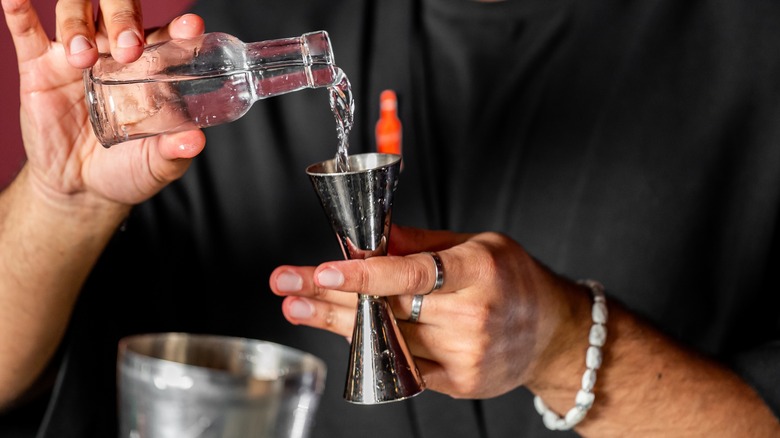
Putting together the wrong proportions is another area where cocktail mixing can go wrong. However, with martini construction, different patrons have different preferences, so you can feel free to play around a bit — within reason. A typical martini ratio is 5:1 for a dry martini (more gin or vodka than vermouth), or 2:1 for a wet martini (a more balanced ratio). You could even go 50/50 for something that won't taste as spirit-forward. Always ask whoever you're serving what they enjoy!
Our experts mention that while proper balance is important, dilution and making sure everything is properly blended may be a more paramount priority. Sean Marino recommends straw tasting throughout to make sure that it's coming together the way both you and the customer want. Jason Lee even suggests considering both the ABVs of the liquor you're using, as well as your barware. Using metal mixing tins with "a lower thermal capacity than glass" helps dilute the drink more slowly, "and offers a greater degree of control."
6. Stir your martini
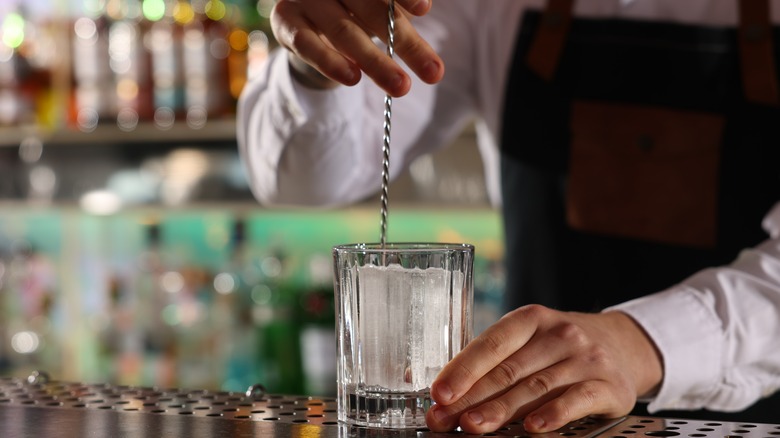
I hate to break it to you, but our experts agree: James Bond was wrong. A good martini should always be stirred, never shaken. But why?
Jason Lee mentions it helps with an "unctuous texture," and Sean Marino agrees, "stir to make sure to let the botanicals shine at the end of the day." Kenzo Han hates flecks of ice and aeration in the drink that often come with shaking.
Clayton Danielson expands further: "Stirring preserves the martini's clarity and silky texture while bringing it to the proper temperature with controlled dilution. Shaking introduces excess air and dilution, disrupting the drink's balance and mouthfeel. For a classic martini, restraint and precision favor the stirring glass."
For one alternate opinion, Moose Campos suggests the only time to consider shaking is when there's juice in the mix. So for your drinkers who want extra olive juice, for example, that might be an excuse to give your dirty martini the Bond experience.
7. Add a sidecar
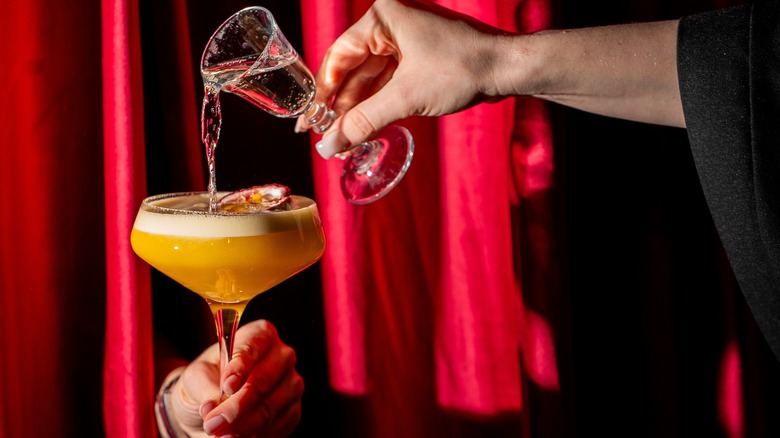
This is one tip that will potentially enhance your visual experience, more than the taste, but if you have the time and materials, it might be worth trying! A "sidecar" served with a martini basically means serving the drink with a side carafe of extra liquid, so you can refill your glass as you drink it down.
While our experts mostly don't default to adding sidecars ("Not my thing," says Jesse-Deville Fleet), Clayton Danielson explains that they can add a fun, interactive element to the drinking experience, as well as the added benefit of keeping drink cold: "I enjoy a sidecar because it's a way to keep the remainder of the drink cold without diluting it. Ideally, it should be strained and served on the side over ice, ready to be poured in when desired."
Kenzo Han likes adding them as a bonus, as well. Han says that while it won't make a "better drink," because the carafe won't be as cold as if someone just made a new martini, a sidecar might also come with an attractive assortment of garnishes like lemon peel and olives, which is fun!
8. Choose an appropriate garnish
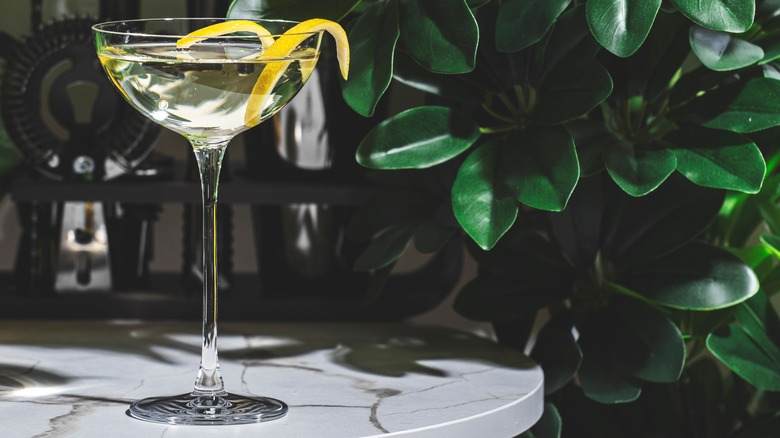
The garnish on a martini is also another area where a customer will express their personal preference, whether it's for olives or a lemon twist (or nothing at all). However, most of our experts default to the lemon when in doubt.
Sean Marino says a fresh lemon twist "brightens everything and just works that much better with gin." Moose Campos agrees, noting "the aromatics from the peel itself elevate the martini from your nose to your taste buds."
Jason Lee suggests using an oil or spritz rather than the peel itself (or even orange or yuzu, to complement different taste profiles in the spirit you're using), which Kenzo Han agrees with. Han likes to express the oil from a lemon rind and discard it. They don't believe in a floating peel, which they say doesn't add anything to the drink and creates more waste.
Finally, Clayton Danielson throws in the example of "a Gibson, where a cocktail onion adds a subtle, savory twist that elevates the drink." Whatever you decide to use, just make sure that it complements the liquors you're blending, as well as the drinker's liking.
9. Experiment with variations
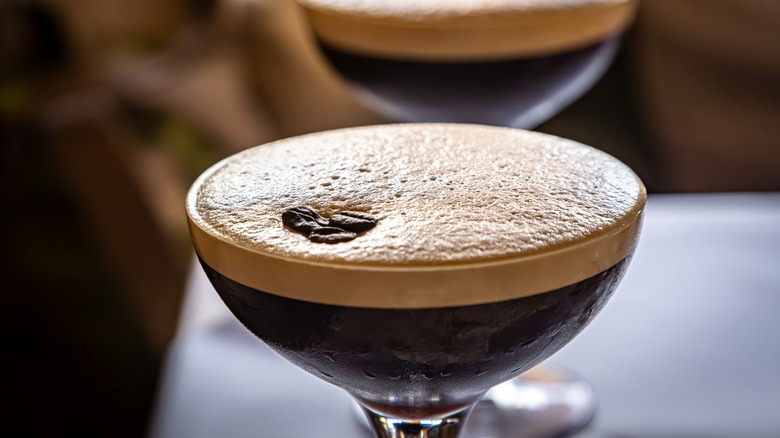
While we've mostly assumed that the "best martini of your life" will likely be a standard gin or vodka martini with vermouth, of course, there are plenty of riffs on that theme, and the only way to truly discover what you like is to play around!
Moose Campos mentioned a favorite customer who swaps out the traditional gin for "Casamigos Reposado extra-dirty martini with extra olives," while Jason Lee says his "all time favorite martini variation is a Poet's Dream — essentially a martini with a bit of Benedictine, which lends it spice and herbs and weight and texture."
Why choose gin OR vodka, when you could have both in a Vesper, preferred by Jesse-Deville Fleet. Or lean into the espresso martini craze, like Clayton Danielson, who likes a Luxardo Espresso Martini.
The point is, as long as you're satisfying either your own tastes or those of whoever you're mixing for, there's really no wrong way to create what we call a martini. Try lots of different styles before settling on one!
10. Remember to enjoy
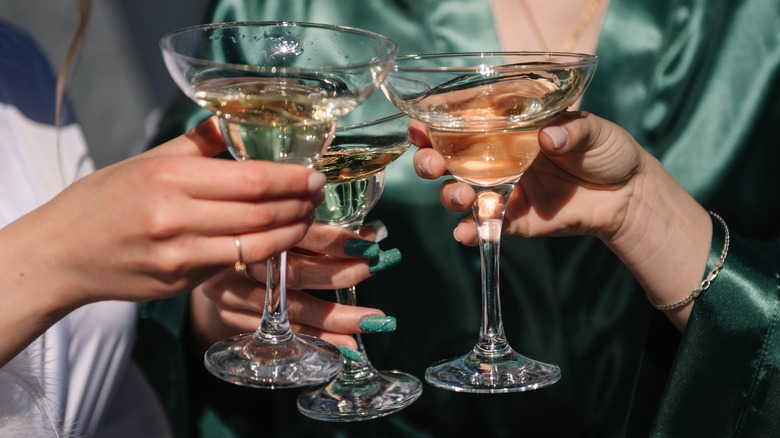
Although we spoke to some of the best bartenders in the business, who all take what they do seriously, they emphasized that when thinking about the "best martini" they've ever had, it conjured memories of great experiences or feelings.
Moose Campos says the best martini should taste "like a summer day," and Clayton Danielson agrees that "It's a moment of pure, refined enjoyment, where every detail, from ice to glassware to garnish, comes together in perfect harmony."
Jason Lee tells a story of his favorite martini that he enjoyed at Connaught Bar in London: "I find that oftentimes if something is really expensive or in a context that feels special, time kind of slows down and you have to focus on what you're having."
Cocktail mixing can be serious business, but at the end of the day, it should be fun — for both the bartender and the consumer. The next time you're working on your own martini, try to take in the experience and environment. It might just end up being the best martini of your life.