

6 Myths About Eating And Drinking On Planes You Need To Stop Believing
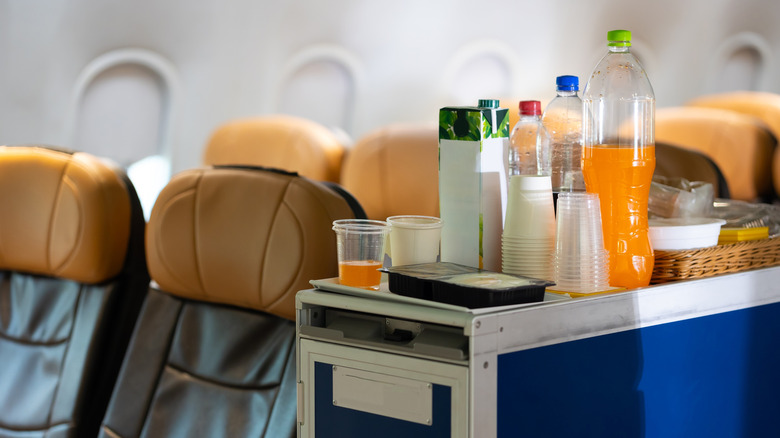
When it comes to long-haul air travel, most frequent flyers have at least some of their key in-flight preferences set in stone well before they board. They know which drinks they prefer during the flight and whether they'll bring their own snacks on board or eat what the airline offers. Some frequent travelers even love in-flight food so much that they have their go-to preferred airplane meals.
But there's also a certain mystique to the food and drink served at cruising altitude. Some opinions are formed from experience, but just as many stem from commonly circulated myths related to eating and drinking on planes. We were curious to know which of these myths are true and which are false — or even widely exaggerated. With this in mind, we checked in with two experts to find out which airplane food and drink myths we can officially let go of, and which are more nuanced.
1. Tea and coffee service isn't the problem you think it is
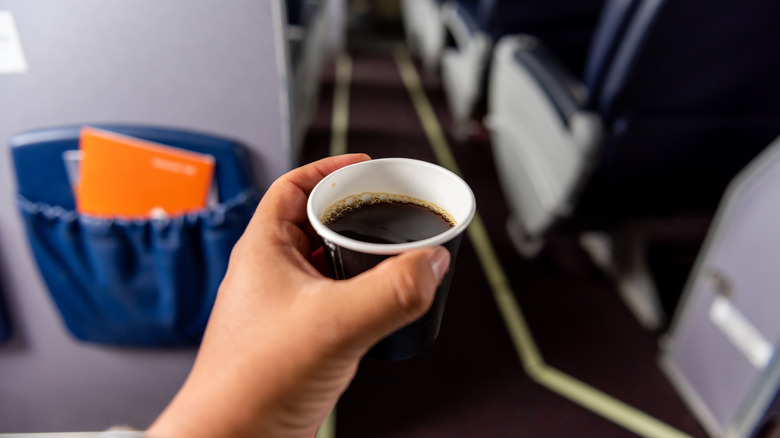
In recent years, you might have heard you should never have coffee or tea on an airplane because the water itself isn't tested properly and may not be potable. But according to Registered Dietician Theresa Link of Virta Health, that's not quite true — airlines are absolutely required to test their water. However, this myth might have some truth to it.
"When ordering coffee or tea on a plane, the main concern is that water tanks and coffee pots may not always be cleaned well enough," says Link. "EPA reports and some flight attendants have noted concern for occasional bacterial contamination."
As an additional concern, Link notes that higher altitudes can make it tricky to fully boil water and kill off bacteria. "Research is limited, so most concerns come from anecdotal reports," says Link. This means your decision might come down to a spot check and gut feeling. If you trust the staff have properly washed their tanks and pots, you can enjoy a coffee, tea, or other hot beverage. If you're not getting the cleanest of vibes, maybe play it safe. "Choose bottled water, canned drinks, or sealed beverages instead," says Link.
2. Airplane food is not worse than fast food
People often wonder if fast food is healthier than airplane food, because airplane food requires more sodium than most of the food we eat on the ground. But as Kimberly Plaskett, Director of Marketing and Communications for the Americas for world-class airline catering company LSG SkyGroup, explains, there are several factors that affect a passenger's taste. "This includes everything from an arid environment, which affects the sense of smell and saliva production, to air pressure, [which] reduces the sensitivity of taste buds to sweet and salty foods by 30%," says Plaskett. "Even the sound of the engine can affect how certain foods taste."
As a result, airplane food requires a different flavor profile than food eaten on the ground, but that doesn't mean just adding a ton of sodium. "Sky Chefs works to source fresh quality ingredients for the meals it designs in partnership with its airline clients," Plaskett says. "Our chefs are specially trained to create meals that are more flavorful in this type of environment, focusing on flavors and spices that are not affected by the changes, or in fact are enhanced, such as umami."
If you do prefer to eat before you board, that's a viable choice, but fast food isn't the only choice. In fact, it might not be the most respectful to your fellow passengers. Instead, if your goal is nutrition, Theresa Link suggests looking for a sit-down restaurant where you'll have more choices. "Healthier options, like vegetables, are typically limited with most fast food options," she notes.
3. Airplane food is not prepared months in advance and frozen until served
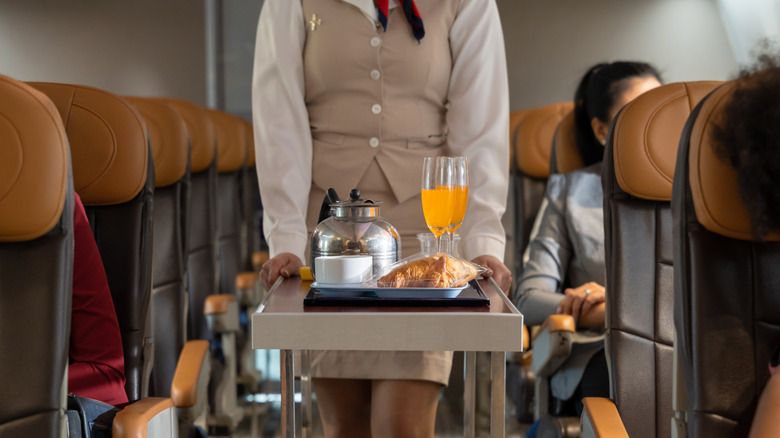
Another common belief is that airplane food is prepared months in advance and frozen until attendants heat it up on board, but Kimberly Plaskett says this is not true at all. In fact, there's a very specific process for airplane food preparation. "Our cooked meals are freshly prepared either the day of or less than a day before each flight and then blast-chilled to an almost frozen state," she says, noting this is for both food safety and to preserve freshness and quality.
Similarly, Plaskett notes that there are plenty of things that are never frozen at all, such as salads, sandwiches, and some desserts — and all of these are prepared closer to the flight time. This is no small feat, as in-flight caterers need to coordinate their meal prep and delivery. "We work with flight tracking software so we know when we need to pull the meals for final flight prep, getting the trays in the cart, which is then loaded with dry ice to keep the meals cold before they're eventually put on the catering truck and delivered to the aircraft," explains Plaskett.
4. Airplane food is not created to make passengers sleepy
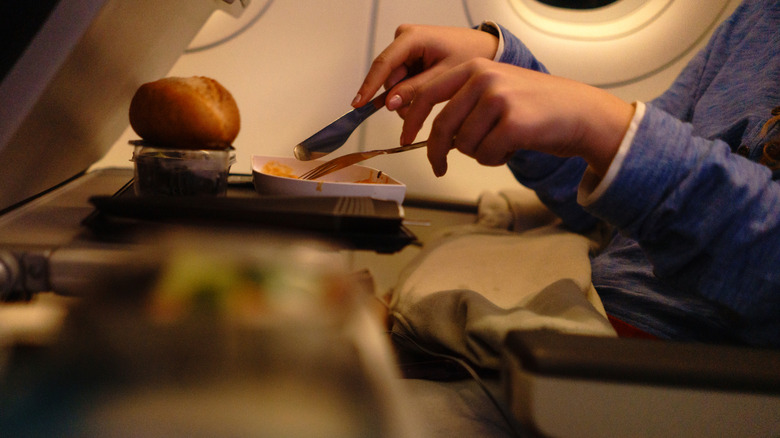
If you've noticed you feel extremely sleepy after eating in-flight, it's not your imagination — but it's also not because your meal was prepared to lull you into a comatose state. This is a myth that can also easily be explained by science, says Kimberly Plaskett. "Feeling sleepy after eating in-flight has more to do with the environment created by flying at 30,000+ feet," she says. "Various factors, including air pressure, humidity, and the hum of the engines, all have physiological effects on the body that can make you feel sleepy."
Plaskett points out that blood oxygen levels also drop at higher altitudes, which can make you drowsy, but none of these facts point to a master plan from the airline food industry. Theresa Link agrees. "There's no evidence that airline food contains anything meant to make passengers sleepy," she says. "Feeling drowsy is much more likely due to the travel itself — early wake-ups, long days, busy trips, and jet lag — as well as the dry cabin air, which can contribute to dehydration and fatigue."
5. In-flight meal times aren't designed to beat jet lag
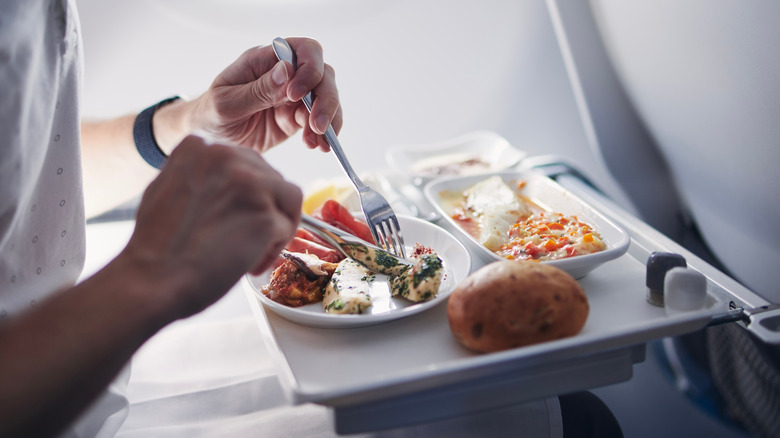
If you've ever gotten on a long-haul flight and immediately settled in for the meal service, hoping it's going to help you beat jet lag on the other side, we have bad news. Eating in-flight has no bearing on how your body will adjust once you're back on the ground. In fact, according to Theresa Link, it might have the opposite effect.
"Skipping meals or fasting during long-haul flights may actually help reduce jet lag," she says. "The idea is to reset your body by timing your next meal (usually breakfast) to match the time zone of your destination." As Link explains, this often means fasting for at least 12 hours before you arrive — but if you take medications or have any chronic health conditions, be sure to check in with your doctor before choosing this jet lag-busting method. "Regardless of eating, staying well-hydrated is essential," adds Link.
6. Choosing the meat option doesn't put you at risk of food poisoning
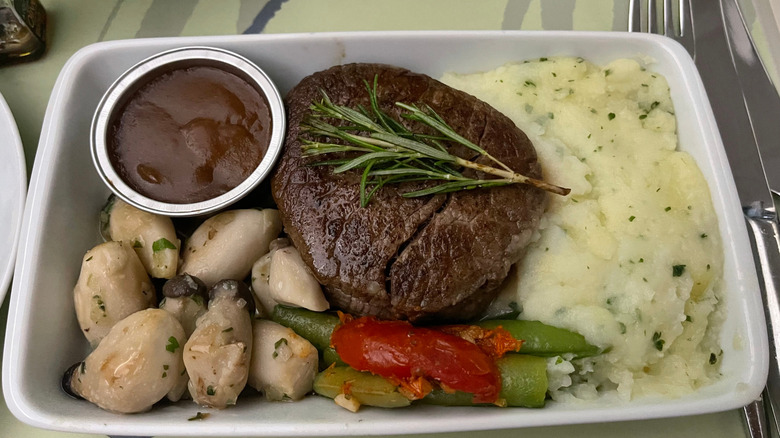
Food poisoning is an understandable concern in-flight, but as Kimberley Plaskett notes, the risk really isn't any higher on a plane than it is in any other professional kitchen. This is true even if you get the meat option, which, for some reason, has become the target of another airplane food myth — that the meat or fish option is far likelier to make you sick on a plane.
"Sky Chefs has very strict food safety standards, not just through our own processes and requirements, but also including those that are required under federal regulations," says Plaskett. These standards, according to Plaskett, include regular cleaning and sanitization of workspaces and utensils, and the proper use of employee protective equipment, such as gloves, hair and beard nets, and lab coats.
"Every Sky Chefs kitchen has food quality and safety managers on site to check everything from freshness to food temperature," Plaskett adds. "Nothing leaves our kitchens for a flight without being inspected." In fact, Sky Chefs is seeking its FSSC 22000 certification, the highest level a professional kitchen can achieve.