

9 Worst Gins You Should Leave On The Shelf, According To Reviews
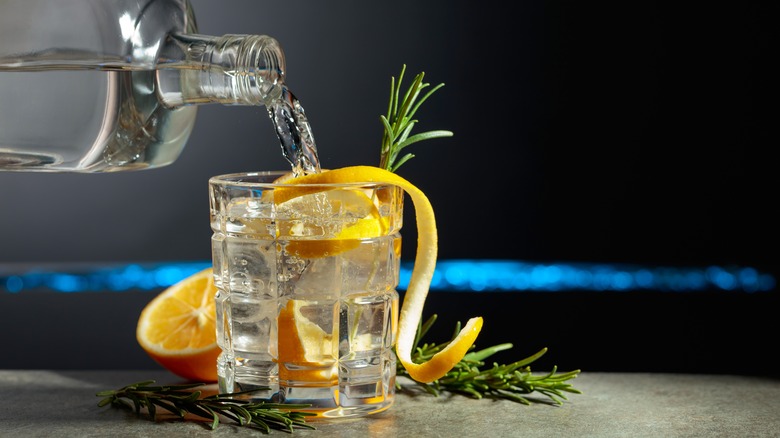
When it comes to gin, the space between top-shelf brands and the bottom rung is a massive one. A great gin will overwhelm and delight casual sippers with intoxicating botanicals and complex notes of spice and citrus. A bad gin will blast your taste buds with muddled and soapy flavors, lingering on the palate like a barfly past closing time, who refuses to go home. Gin is often misunderstood by some drinkers, who may wonder what it's made from to hit those high notes with such a refreshing kick. The spirit also has a connotation of sophistication due to its inclusion in the original martini recipe, as a vodka alternative.
If you splurge on a nice bottle of gin, you should be able to enjoy it neat without adding much, for a full flavour experience. But this, of course, usually costs more money because, as the adage goes, you do indeed get what you pay for. Cheaper bottles are most likely not going to be best enjoyed straight up, but rather in gin-based cocktails where those harsh edges get rounded off by additives. There can be a happy medium that doesn't break the bank while pleasing a wide range of palates. But the market is crowded with so many options. To help readers avoid the worst gin brands out there, we've compiled this list to ensure your bar is stocked with only the best. Cheers!
1. Seagram's Extra Dry Gin
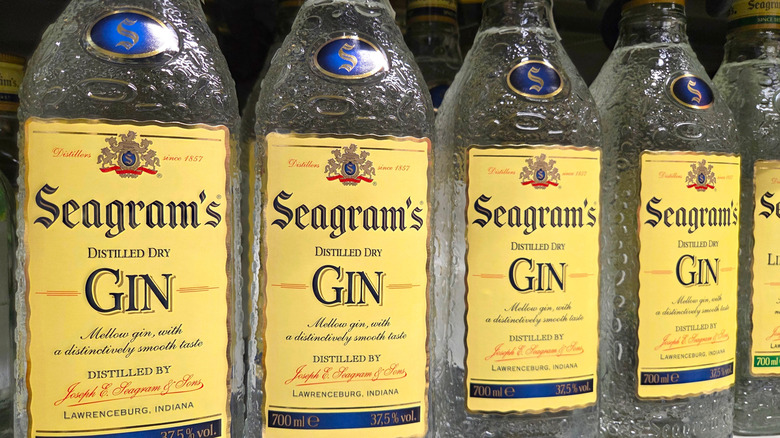
You could call the Seagram's brand "Big Gin," falling into a category of mass-produced gins that are affordably priced. It's the kind of gin lurking in the deep recesses of airport bars and places where the word "mixology" is hardly uttered, and without any judgment, it's not the type of alcohol people brag about drinking. Will it work in a pinch, for an ingredient-heavy cocktail? Sure, but it's really considered a bottom-barrel booze, and the type of gin that real connoisseurs and mixologists wouldn't be caught dead with. You don't want to sip on Seagram's Extra Dry Gin straight up, lest you end up burning your nostrils and napalming your taste buds with pungent ethanol notes.
On the Distiller website, this spirit has a spate of brutally low ratings, with one reviewer giving a one-star rating last year, calling it "the worst, most obscenely peppery taste that you could ever imagine." Ouch. Another reviewer characterized it as college student gin, which might seem disparaging to kids in school who can't afford a better brand, but frat houses aren't usually known for sophisticated and refined drinking culture! The bottom line is that if you're looking for a quality and tasty gin, Seagram's won't do — leave this one on the shelf.
2. Indoggo Gin

Celebrities have been infiltrating the food and beverage space for years now, whether it's coffee for a pick-me-up or booze to bring you down. Here, Snoop Dogg — the famous Gen-X rapper and pop-culture personality — brings us Indoggo Gin. Seeing him branch out from the world of marijuana is nice; however, his foray into gin is half-baked at best. The first violation is that, rather than trying to make an artisanal, quality product, he sought to cut corners by developing a flavored gin here. The kicker: Indoggo is infused with a strawberry flavor. Of all the fruits to pair with gin, strawberry isn't the worst; after all, it's found in "pink gin" cocktails where strawberries are muddled to release their juices. But let's be honest, most flavored alcohols — and drinks like LaCroix, for that matter — are flavored with those weird, fake chemical agents that never quite hit the right notes.
On the r/Gin subreddit, poor Snoop Dogg — famous for the 1994 hit song, "Gin and Juice," — gets no love for his bright blue bottles of Indoggo, as evidenced by a recent post tearing it apart, with lines like "This gin.... Is so bad, it's like they tried to be bad." Yikes! Another commenter says that his gin does indeed taste horrible and artificial, surely thanks to those fake strawberry substances used to flavor it. Yuck! Sorry, folks, but Snoop's attempt at making alcohol doesn't end on a high note. We say skip this one, too.
3. New Amsterdam Gin (Original)
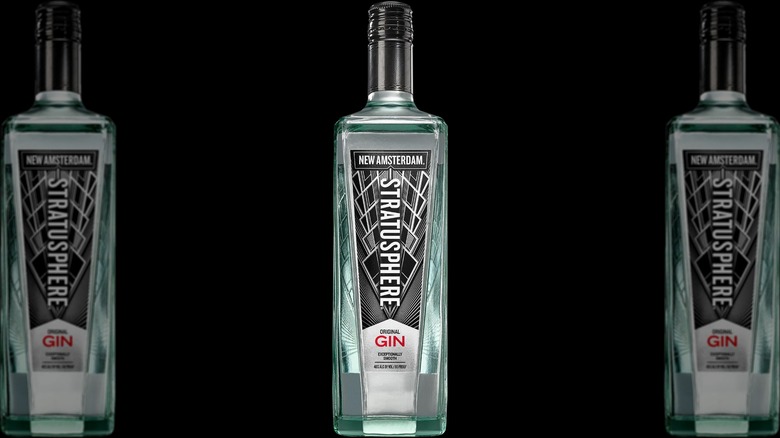
Sure, New Amsterdam bottles look nice and new, and fancy — a departure from the typical stuffy, old-timey aesthetics of British gin bottles — and it even sounds promising with "new" in its name. However, despite being easy on the wallet, this spirit leaves much to be desired. The gin is sort of a wolf in sheep's clothing, offering a not-so-luxurious tasting experience while trying to come off as a premium brand. New Amsterdam gin was introduced to the market back in 2007, and all these years later, its reputation has only gotten worse. It has a 1.5-star rating on the gin review website The Gin Is In, which notes that it is unbalanced with way too much citrus and not enough juniper berry notes.
A recent review on the Distiller website from this year reads, "Not much going, pretty tasteless, closer to a vodka with a hint of juniper," which matches the one-star rating the reviewer left. Most people who like gin are actually after that intoxicating aroma and taste of juniper, which is so distinctive and, at the end of the day, is gin's calling card. But it needs to be balanced — too strong and the spirit ends up overrun by the piney and resinous notes; too mellow and you end up with a forgettable gin with an identity crisis on its hands.
4. Gilbey's London Dry Gin
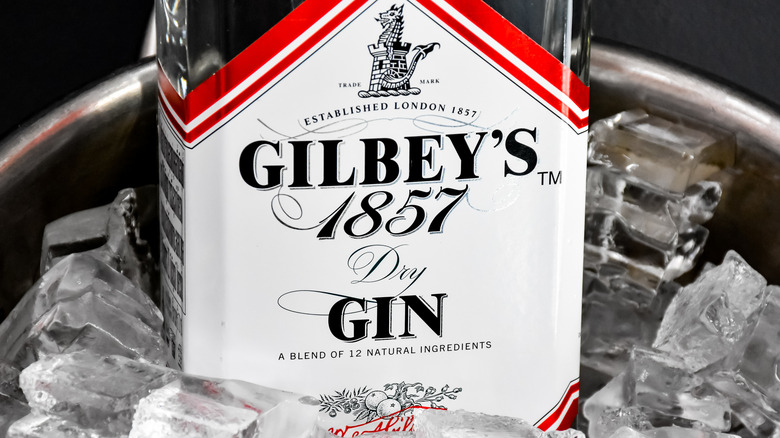
Gilbey's London Dry is a quintessential well gin, that stuff that shoots out of those beverage dispensing guns at low-brow bars. While there's nothing wrong with having a gin and tonic at your local watering hole, most bars with distressed barstools and walls that show cigarette smoke patina from the '90s won't have quality gins. These places are for a cheap and cheerful cocktail, and they don't usually stock artisanal, craft-made spirits. Furthermore, if you're looking to keep your home bar stocked up with only premium gins, sadly, Gilbey's won't cut it.
To this end, if you search The Gin Is In website for Gilbey's London Dry, you'll see it has a meager 2.5-star rating, where they characterize it as having a citrus and juniper-forward flavor. It is also noted for having a sharp and astringent finish, leaving the tongue hot from a lingering assault. This experience is the exact opposite of what a well-balanced and refined gin should taste like, as even the aftertaste should be pleasant and not harsh, keeping you coming back for more, as well-made, refreshing gins do.
5. Banker's Club Gin
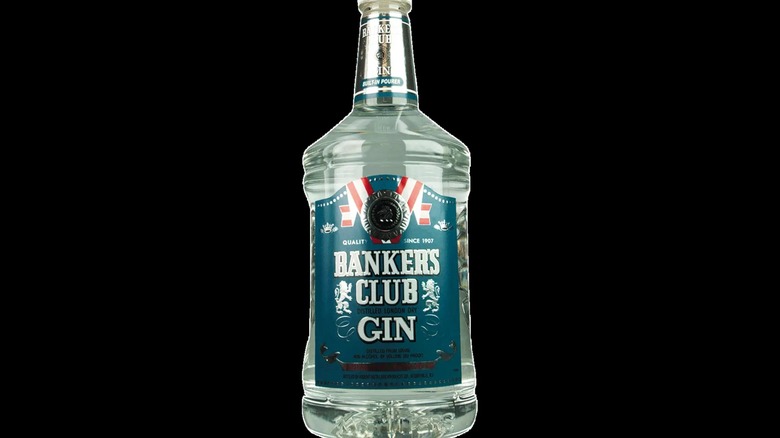
If you looked up "lowest-denominator gin" in the dictionary, you'd probably land on a page with a picture of Banker's Club. This stuff isn't great, and if the plastic bottle doesn't scare you away, the taste surely will. It is the type of spirit that should be avoided, not out of snobbery or some highfalutin idea of classiness; it's just simply a low-quality gin, full stop. It's the type of gin you would find at discount liquor stores and maybe even gas stations, and despite its namesake, we're going to bet it's probably not drunk by suit-and-tie-adorned bankers.
Per the distiller's notes, it boasts a fruit-forward aroma, with mild herbals and more fruit on the palate. They claim that it is best suited for mixing, which really tells you all you need to know: It's awful on its own. On the gin subreddit, one commenter chimed in with, "Just don't do Banker's Club Gin like my friends do, ugh, makes drinks taste like crap." Beyond throwing their friends under the bus, this doesn't bode well for aspiring home mixologists to want to try Banker's — straight or in a cocktail! We say leave this one on the shelf.
6. Burnett's London Dry Gin
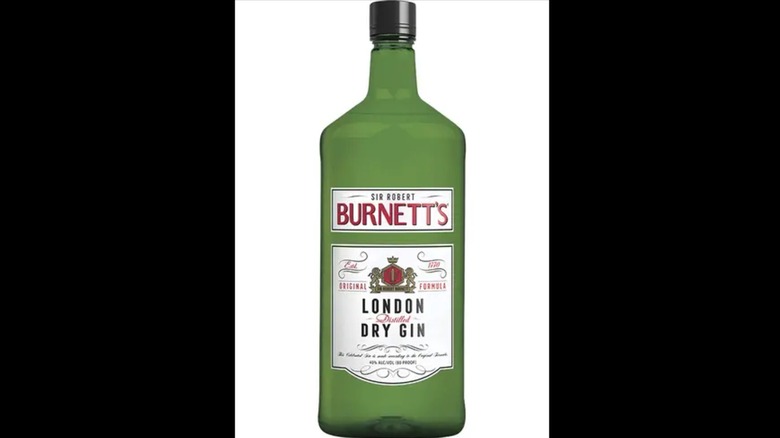
If some of you aren't aware, there are indeed many styles of gin, just like the world of whiskey, which spans Bourbon, Rye, and stuff distilled in places like Japan and Ireland — it's a big world of brown booze. While gin may not have as much variation as the world of whiskies, we have London Dry, Old Tom, and Plymouth styles to consider. Additionally, Jenever gins from the Netherlands and bordering Belgium, barrel-aged ones, and Sloe Gin (made with sloe berries) are also in the mix. Here, Burnett's tries to nail the classic and most common London Dry style, and comes up short. While superficially a London Dry — which should be refreshing and crisp, showcasing classic juniper notes and, to state the obvious, be slightly dry — Burnett's doesn't do the style justice.
Reviewers complained of a predominant sweetness, which should ideally never show in a London Dry gin, completely lacking a pleasant dry finish. What's more, the cardinal sin — lacking balance — was also a sticking point, which means that Burnett's is relegated to mixed drinks only. We say save your money and refrain from reaching for a bottle of Burnett's if you're looking to add to your gin collection.
7. Nolet's Silver Gin
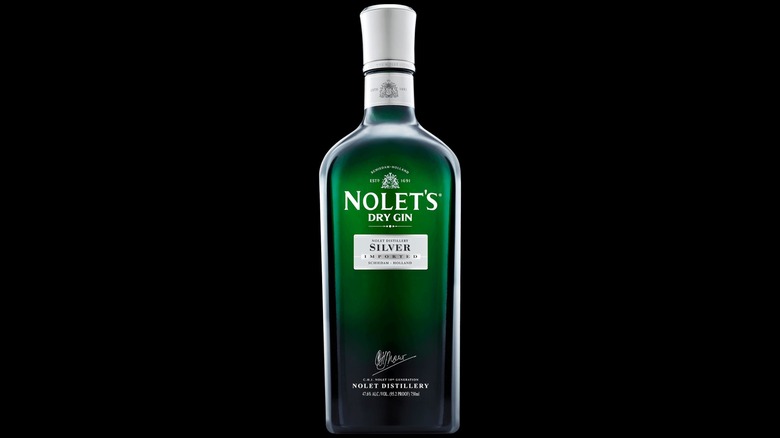
This gin is another example of what presents as a refined and upstanding spirit in a nice bottle, reminiscent of Tanqueray, yet it fails to impress. However, unlike some of the more budget-friendly gins in our list, this doesn't come in a cheap plastic bottle and is marketed as a premium product. Coming in at 95.2 proof, Nolet's claims to offer drinkers a floral and fruity profile, with a proprietary combination of botanicals that, according to the website, have "never been used before in gin." Perhaps for good reason? This recipe for Nolet's gin apparently results in notes of rose, peach, and raspberry, which could come off as cloying if out of balance. Sadly, this is the case.
One reviewer on the r/Gin subreddit mentioned that, among over 18 different bottles of gin in their collection, Nolet's was the worst. On the Distiller website, it also has some poor reviews, including one harsh comment that ends with, "This gin makes me wish I were born without a mouth." Ouch! The main complaints focus on a lack of balance, with too much florality and sweetness on the palate that overpowers, making it essentially a cocktail-only gin. Given the premium price point of Nolet's, we say leave this on the shelf and opt for a more well-balanced gin — you can always ask for recommendations at your local boutique liquor store.
8. Hendrick's Flora Adora
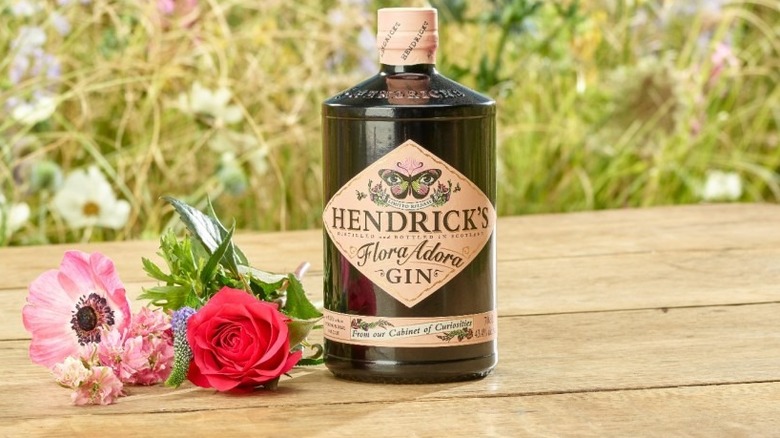
Hendrick's burst on the North American scene in 2000 with its New York debut, slowly crawling up the ladder of higher-end gins on offer. Its chic and stout brown bottles always looked artisanal, standing out amongst the more common form factor of tall, clear glass or tinted bottles like Bombay. The brand's standard gin is actually not bad at all, and it's a staple at many respectable speakeasy-type bars with mustache-adorned mixologists flipping shakers in the wee hours. However, here we must take into account that the brand has made a major misstep, introducing a special release called Flora Adora in 2023, which, if you haven't guessed, is its floral-forward gin. It's comprised of a "secret blend" of botanical ingredients to bring out intense florals and heavy herbal notes.
But it doesn't come together like the distillers imagined, turning off many casual sippers due to those over-the-top florals. No one wants to sip on a gin that reminds you of a grandmother's potpourri-perfumed bathroom, or worse, air freshener. A reviewer on the Distiller website actually compared Hendrick's Flora Adora to air freshener smells in their assessment, leaving it a measly 2-star rating. While some people enjoy in-your-face floral notes, it runs counter to how a good mixologist crafts a cocktail: balance, always in balance. We say this one needs to stay on liquor store shelves, or grab the regular Hendrick's instead.
9. Gordon's London Dry (Plastic Bottle / Domestic)
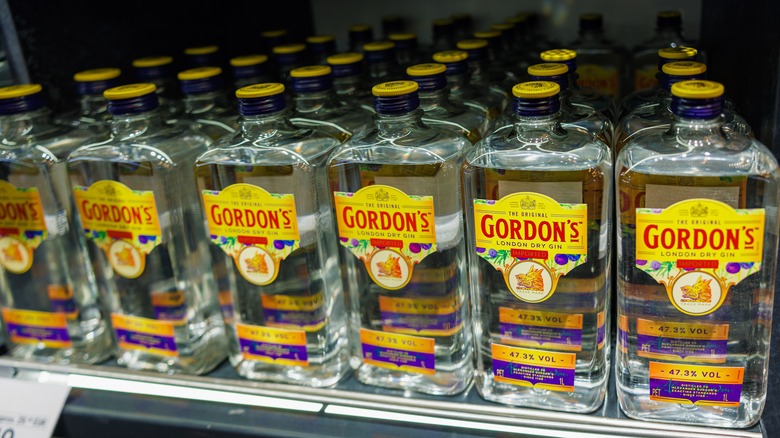
Gordon's take on the classic London Dry style was once a gold standard offering, but has lost its allure in recent times. With a history going back to London circa 1769, the company now distills the spirit outside of the UK in different countries at varying strengths. This makes it difficult for consumers looking for the best version, as those living in Canada, for example, will have a Canadian-distilled version that differs from the original UK recipe. Some drinkers have shared their discontent over this company's strategy to outsource distilling, claiming that it has negatively impacted the flavor. And while Gordon's was never known to be a sought-after or super-elegant gin to begin with, it seems to have fallen through the cracks.
Boasting an average rating of 2.8 stars out of five, per over 300 reviews on the Distiller website, many reviewers have left very indifferent reviews, sitting in that 2.5 out of five zone of utter mediocrity. One reviewer from 2024 states that Gordon's London Dry is "very dry, [with] juniper [notes], and an ethanol burn, same price as the competition so leave this one in the shop." Given the variability in distilling and alcohol strength, combined with a very unimpressive and uninspired litany of reviews, we say don't go home with Gordon's.
Methodology
To compile this list, we sought a strong consensus of online reviews, which, per the article's conceit, were negative. Any gin with ratings of 2.8 stars and under, where reviewers chimed in with qualitative assessments that made you feel bad for their tongues, was considered. We looked at trusted sources like the Distiller website, in addition to communities like Reddit where real-world enthusiasts comment on the good — and decidedly bad — gins out there. We only considered reviews from the year prior to writing, as citing old reviews runs the risk of irrelevance. Though many liquors have had the same recipes for dozens, and sometimes even hundreds of years, things can change, with many consumables declining in quality as a result of various world events. This was evident in Gordon's London Dry gin, which altered its approach to distilling by outsourcing production, lowering the spirit quality in some markets. Lastly, we weighed all of this against years of drinking at rated bars with talented mixologists who've shared what to look for in both spirits and well-made drinks.