

How People In 15 Countries Drink Their Coffee

Food traditions, ingredients, and habits may vary across cultures, but coffee is a custom that almost anyone, no matter their background, can relate to. We may prepare it in different ways and call it by different names, but at the end (or beginning) of the day, people around the world value the energizing buzz and rich aroma of coffee.
The legend of the first discovery of coffee's effects goes something like this — a goat herder in 9th century Ethiopia observed that his herd was unusually active at night after eating from a particular bush. This led to the first coffee being brewed into a consumable drink, and as you can imagine, word spread quickly after that. It took several centuries for coffee to develop into a widespread industry as we know it, with the first crops being grown in Yemen and sold in Iran, Egypt, Syria, and Türkiye.
As coffee slowly spread throughout the world different traditions, preparations, and trends developed around the historic drink. Some may like a quick instant cup as they run out the door, others require their barista-prepared oat milk latte to get the day started. In U.S. culture, we've grown accustomed to drinking coffee on the go, a tool to help us get through long work days. But in some countries, coffee is a social act shared amongst families or groups of friends to fuel intellectual discussion. The customs may change but one thing remains true — you can relate to just about anyone over a cup of coffee.
1. Bunna (Ethiopia)
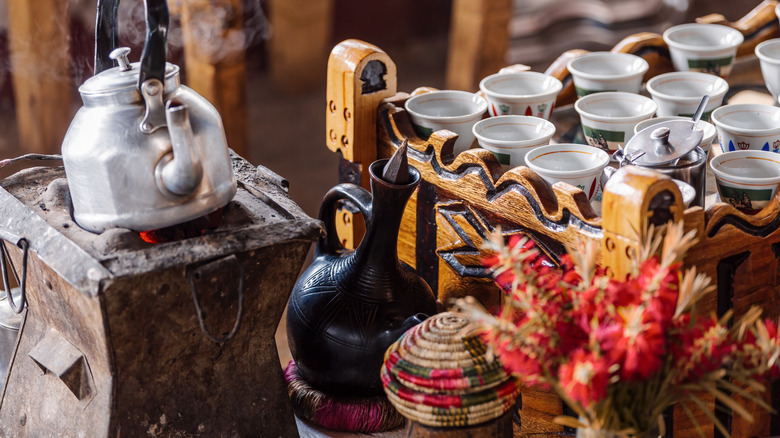
There is no better place to start the discussion of coffee around the world than its place of origin: Ethiopia. Although coffee as we know it is not believed to have been roasted and brewed into a hot drink until several centuries later in Yemen, its effects were still enjoyed by chewing on the berries or grinding them and mixing with animal fat, an excellent snack to energize yourself for longer periods of time.
The incredibly long history of coffee in Ethiopia, one of the only countries in Africa that wasn't colonized, has led to the bunna ceremony being what it is today. It's meant to be shared. Typically, the beans are freshly roasted in a pan for all the guests to smell before being ground with spices and poured into a jebena, or large ornate pot. The jebena is designed to withhold the grounds as the freshly brewed coffee is poured into small cups for patient guests to enjoy.
2. Qahwa (Arabian Peninsula)
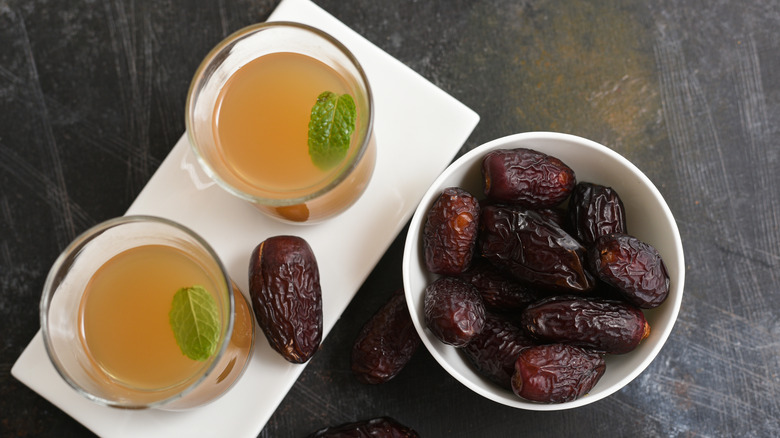
Although the coffee plant is native to and was first discovered in Ethiopia, it was in Yemen that the beans were roasted and brewed into the drink we know it as today, most likely by Sufi monks who appreciated the drink for its ability to keep them alert through long prayers.
The drink, served in a large pot with an elegant handle and spout called a dallah, is an ancient part of Arabic culture with an incredibly long history. Throughout the Arabian Peninsula, there may be different standards for roasting, and unique spice blends used to individualize the drink, but in each country it represents community and ceremony.
In Yemen, the traditional drink is dahwa ahmar, or red coffee. The beans are lightly roasted and the coffee is spiced with ginger or cinnamon along with sugar. In Saudi Arabia the common drink is qahwa safra, whose pale color could easily be confused for an herbal tea. The beans, which are sometimes green, are very lightly roasted and blended with cardamom and saffron — thus, the yellow tinge.
3. Kaapi (India)
While India is a lot more well known for chai (the Hindi word for tea), the demand for coffee, and specialty coffee in particular, is growing quickly. The country's middle class is rapidly expanding , and with more disposable income there's a higher demand especially among young people to enjoy high-quality coffees and the cafés they're served in.
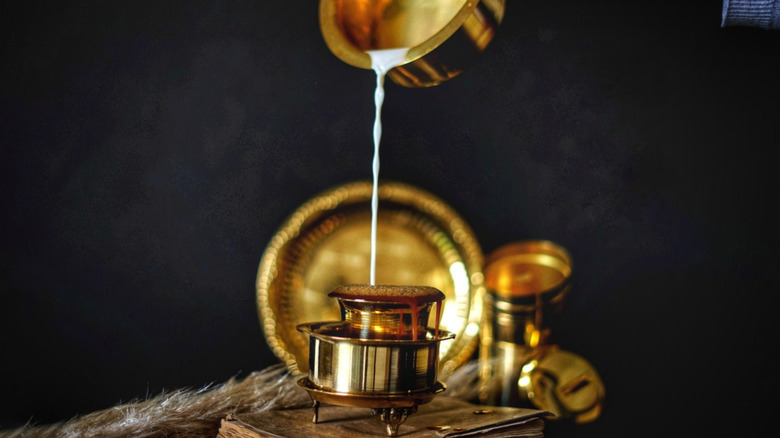
In South India in particular, kaapi is the drink of choice. It's a filtered coffee often combined with chicory root, an ingredient and taste you may be familiar with if you've had the chance to partake in a hot cup of joe in New Orleans.
Kaapi is typically brewed in a unique brass filter that resembles a large beer can with a nozzle coming out of the top, although you can also use faster methods like a stovetop espresso maker or pour-over. Before serving, kaapi is poured back and forth between two containers, almost as if you were mixing a cocktail, creating a unique frothy coffee drink that's the perfect temperature for drinking by the time it reaches your mug.
4. Cà phê sua dá (Vietnam)
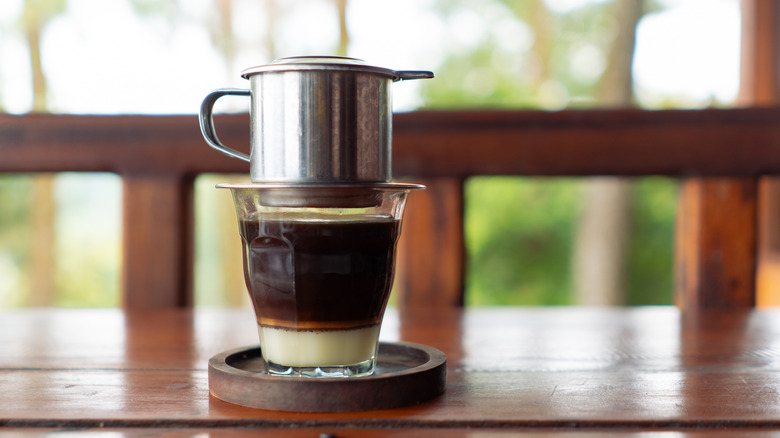
The reputation of Vietnamese coffee really speaks for itself. The beans and drinks coming out of the Southeast Asian country have gained more and more popularity, with many coffee lovers flocking to the country itself to enjoy the café culture. The variety of popular drinks is abundant, and tends to vary in popularity by region, but without a doubt the most common way to drink coffee is called cà phê sua dá, which translates to "iced coffee."
The drink consists of phin-filtered coffee, condensed milk, and ice, and is pretty easy to make at home if you have the Vietnamese filter. It's common enough that if you ask just for a coffee at a café or restaurant, this is what you'll get. In fact, you may find it challenging to find a coffee that doesn't have condensed milk already mixed in.
The café and coffee culture in Vietnam is vibrant, with many cafés being open late into the night and sometimes even 24 hours. You'll find friends, couples, families, and tourists alike sitting on small chairs that line busy streets and socializing over a cup of cà phê sua dá.
5. Café de Olla (Mexico)
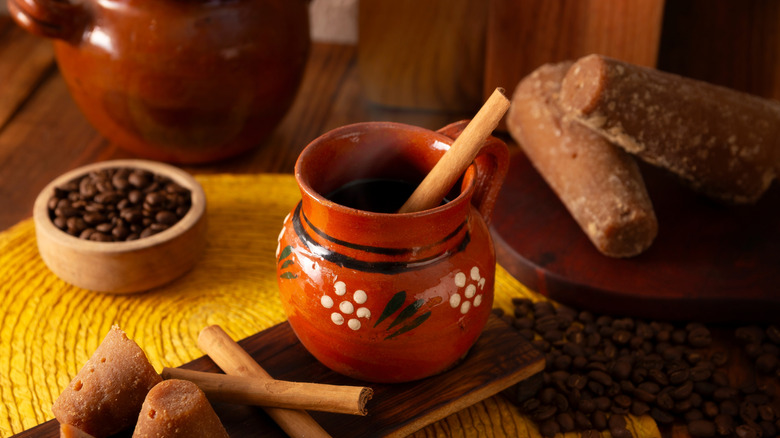
As is the case in many countries, the influence of the European espresso machine and drinks like cappuccinos and lattes is abundantly noticeable. But Mexico, the world's 10th largest producer of coffee, has a drink of its own that's rooted in tradition and is still widely enjoyed today, although in a more modern rendition.
Café de olla (olla meaning pot) is a drink crafted during the Mexican Revolution for the same reason coffee has become so popular around the world — energy, and nourishment. Cinnamon, coffee, cloves, and piloncillo (unrefined cane sugar) are combined and cooked in a traditional clay pot, the resulting drink spiced, rich, roasted, and sweet; an incredible ode to the resilience and vibrancy of Mexican culture.
In modern times, the drink in its "proper," traditionally prepared sense can be found in particularly dedicated households as well as Mexican coffee shops in those cities lucky enough to have them, but more common is the instant version. There are a few brands available, but café de olla Nescafé is most common, and the spiced, caramelized sugar flavor really sets it apart from your average instant coffee.
6. Cafezinho (Brazil)
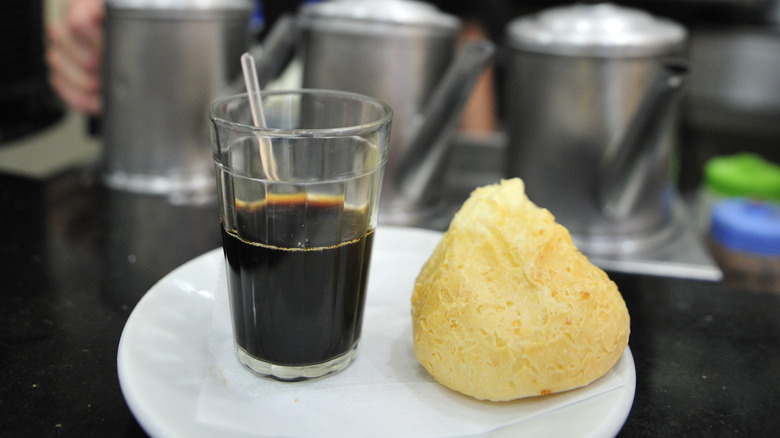
Brazilians run on small, intense cups of coffee that are served to guests in homes, in bakeries, and from carts on the street. They signify community, conversation, and culture, and are enjoyed at frequent intervals throughout the day. Typically made in a saucepan, the traditional recipe is to combine an appropriate portion of espresso ground coffee (a much finer grind) with water and sugar to taste.
While this is the baseline, variations are common especially amongst families and neighborhoods. Being such a social drink, if your neighbor comes up with a delicious new recipe it's likely to stick amongst the community. Some more common variations include café com leite, which finishes the cup with a splash of milk. Others may include the additions of liqueurs like Cointreau or use condensed milk as a sweetener instead of sugar, additions that are especially nice at the end of a long day.
7. Convenience coffees (Japan)
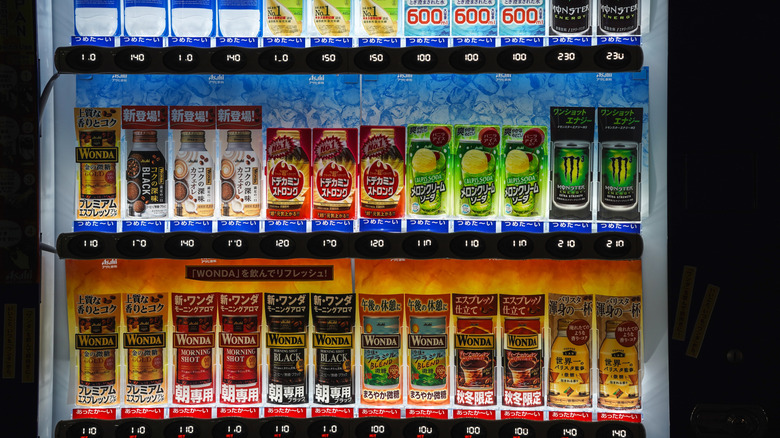
Tokyo is a city that moves fast. Now ranked as the third most populous city in the world, things move quickly, and this hustle and bustle requires easy access to caffeine that you can quickly grab on the go.
Coffee shops are definitely still a thing in Japan, although traditionally tea is more so the drink of choice. In this modern age, though, coffee is quite popular. Starbucks, Tully's, as well as Japanese coffee houses like Sarutahiko and Hoshino abound, offering a place for students to bust out their laptops and for friends to connect over a hot drink. But the most popular way to consume coffee comes when you're on the go — convenience stores and vending machines.
Japan has over 5 million vending machines, with Tokyo alone boasting 4 million of them. The fact that they're not hard to find and offer hot, canned coffee that's quick and affordable to grab make this version of coffee exceptionally popular. If you're looking for more variety, at the populous convenience stores like Family Mart you can find a broad selection of pre-made coffee drinks to choose from or enjoy the speed of the cappuccino machine.
8. Kahvi (Finland)
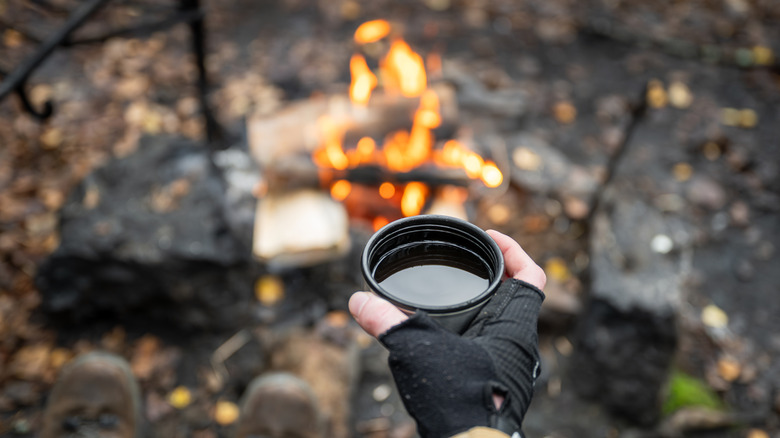
Ethiopia may be the country of origin, Brazil the largest exporter, but Finland is touted as one of the world's greatest consumers of hot coffee. Who would have thought? Since coffee arrived in the Nordic nation in the 18th century it has been beloved, even being mimicked with similar brews made from grains during wartime shortages. Kahvi is the Finnish word for coffee, although they most often take the drink as a filtered coffee, or suodatinkahvi, in a lighter roast.
There are so many traditions revolving around the multiple coffee breaks enjoyed throughout the day that there are several words just for each particular occasion. Pullakahvit refers to the consumption of coffee along with a sweet roll, kakkukahvit to the occasion when coffee is consumed with a special cake. If you are enjoying the outdoors and cooking your coffee over an open fire, there's a word for that, too — nokipannukahvit. The list goes on, highlighting the cultural moment in which Finns love to partake in a hot cup of kahvi throughout their days, weeks, and special occasions.
9. Flat White (Australia and New Zealand)
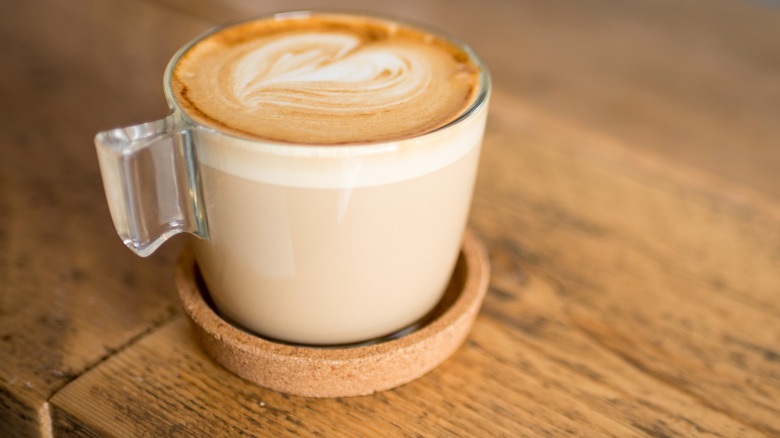
The flat white isn't just iconic in Australia — from the U.K. to the U.S., this espresso drink has become immensely popular amongst the coffee shop frequenters and barista crowd. It's revered for being a drink that highlights the flavor of the coffee without distracting quantities of frothy foam. The history is contested, with Australia and New Zealand both trying to lay claim to its invention, but all that aside one thing remains — people love to order it.
It's all about the mouthfeel of that expertly-steamed milk with this drink. It may leave you cutting ties with your local coffee shop if they haven't mastered the art, or buying a milk steamer at home so you can achieve that perfect balance. The cappuccino and latte have been historically popular and are still at the top of the charts, but the flat white has rapidly risen in popularity as one of Australia's most common coffee shop orders. Perhaps this is due to the sense of pride around the perceived creation of the drink, or how deliciously silky the micro foam of a flat white can be. Nonetheless, it's a new fan favorite.
10. Tinto (Colombia)

Tinto means red in Spanish, which you may be familiar with if you enjoy a vino tinto from time to time. Referring to Colombia's traditional coffee drink as "tinto" may be an inside joke amongst the working class who would have rather indulged in a nice bottle of red wine but could only afford the coffee.
No matter the case, the drink is a huge part of Colombian culture and history. It's typically made with cheap beans, those that were available to the working class of the country, which are boiled in a pot rather aggressively to help diffuse the low-grade taste. The grounds are allowed to settle to the bottom before a glass is poured, a process made easier if you have a filter. Similar to the Mexican café de olla, spices like cinnamon and cloves are often used to add more flavor to the drink, in addition to panela (not to be confused with the Mexican cheese), which is the same unrefined cane sugar, or piloncillo, that's used in Mexico but called by the South American name.
Given that Colombia is the third largest exporter of coffee in the world, it says a lot about the history of The Gateway to South America that their most popular coffee drink is based in working class roots, utilizing the worst of the product they export to find energy and create community.
11. Turkish coffee (Türkiye)
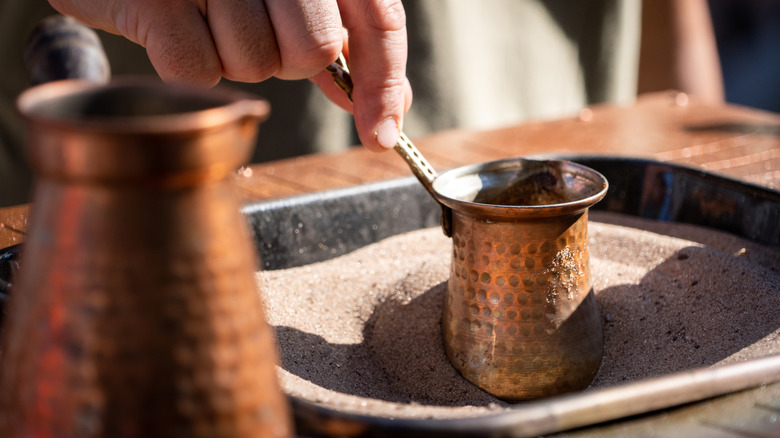
Ahh, the Turkish coffee. An unmistakably rich aroma, bitter, yet delightfully smooth taste. It pairs oh-so perfectly with a nutty, syrupy baklava perfectly aromatized with orange blossom water, the sweetness and bitterness a match made in heaven. The drink is made in a cezve, a copper pot with a pour spout and handle designed to be used in hot sand. The sand allows for a more even cook as you can bury the cezve up to the sides with hot sand instead of cooking just from the bottom. The result: a creamy, rich coffee served in a demitasse cup with grounds neatly settled to the bottom.
Despite the fact that U.S.-based coffee chains have expanded into Türkiye (Starbucks has over 720 locations there), Turkish coffee prepared the traditional way is still abundantly popular. There's simply no replacing tradition, especially when its frothy consistency and strong taste pairs so perfectly with the local food.
12. Café Touba (Senegal)
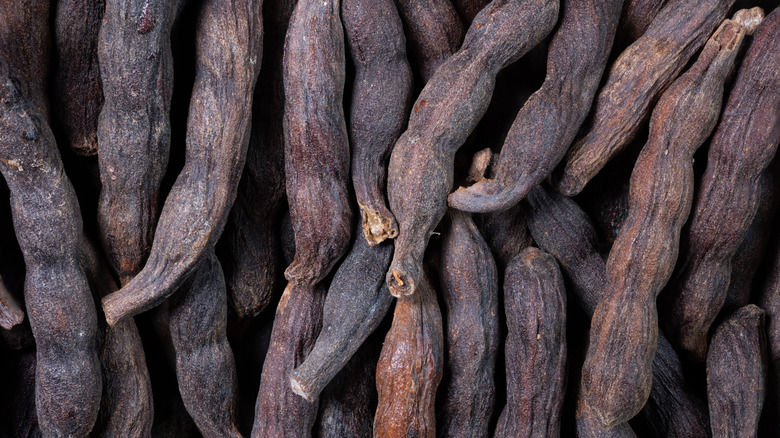
Just as the history of the first coffee drink was begun by a monk, so the story of café Touba started in Senegal in 1902, when a religious leader introduced it to the West African nation. The name Touba also refers to a larger city in Senegal east of Dakar, and the name being given to this drink makes it distinctly Senegalese.
It's not just the name that makes this drink unique — it's spiced with ground grains of Selim, also called djar in Wolof, an aromatic seed pod that grows from a West African tree. They could be compared to a peppercorn, to which they look quite similar, although the flavor is less peppery and more bitter and smoky. Blending perfectly with the flavor of roasted coffee, they were originally added to the drink for the seed's health benefits, and sometimes combined with sugar and other spices to make the drink even more delicious.
13. Raf Coffee (Russia)

Russia has historically been a tea-drinking country, with multiple cups of black tea (typically consumed without milk) being by far the most popular hot beverage of choice. But in recent years coffee has risen in popularity, surpassing tea in pounds consumed. Popular, as well as local coffee chains become easier to find in Moscow and St. Petersburg, and with them came the birth of a coffee drink that's uniquely Russian.
The Raf is said to be named after a regular at a local coffee shop. Rafael requested a "good cup of coffee with milk" to which the barista took the direction and ran with it. The uniqueness of the drink lies less in the ingredients than the method of preparation: espresso, cream, and vanilla-flavored sugar or sugar syrup are all combined into a milk pitcher and steamed together. The result is a creamy, homogenous, and sweet drink topped with a bit of froth. It rose in popularity as the regular consistently ordered it and others caught on.
Nowadays, the drink is a staple on the menus of local Russian coffee house chains like Double B, which has popularized a lavender version of the drink. One wonders if having a sense of national pride in a drink that's distinctly Russian may have influenced the shift in popularity from tea to coffee.
14. Guayoyo (Venezuela)
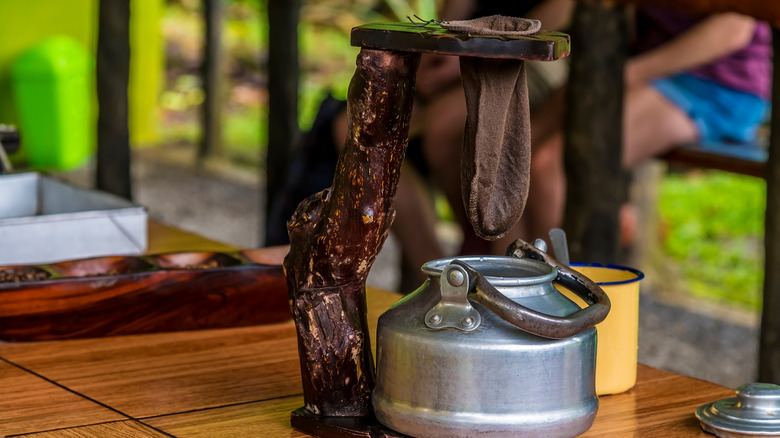
In the early 2000s, Venezuela was one of the world's leading coffee exporters, but as economic difficulties and political irresponsibility took hold, the industry rapidly crumbled. Still, as with much of South America, the influence of Italian immigrants has made the consumption of coffee very popular, and the culture of drinking coffee lives on in the form of Venezuelan coffee drinks. Negritos (shots of black espresso) are commonly enjoyed, as well as the more traditional guayoyo.
This drink is near-identical to a coffee pour over in technique, although it's typically made with a much higher water-to-coffee ratio, making the final product light and easy to drink. It utilizes a coarse grind of coffee and a special shaped filter to hold the ground coffee over a cup. Hot water, which is heated to a precise temperature to maximize the smooth flavor of the coffee, is poured over the coffee and through the filter into a mug waiting below. Sugar and cream can be added, but this drink has a higher water content than an americano, making it light and easy to drink.
15. Kopi Tubruk (Indonesia)
Indonesia is the fourth leading exporter of coffee in the world, trailing just behind Colombia in pounds produced. Its humid climate is perfectly suited to coffee production, with the first plantations being located on the island of Java (yes, that is where the term came from). As is the case with much of the history surrounding the expansion and cultivation of coffee around the world, the profits were controlled by colonizers (in this case the Dutch), while the locals were left penniless.
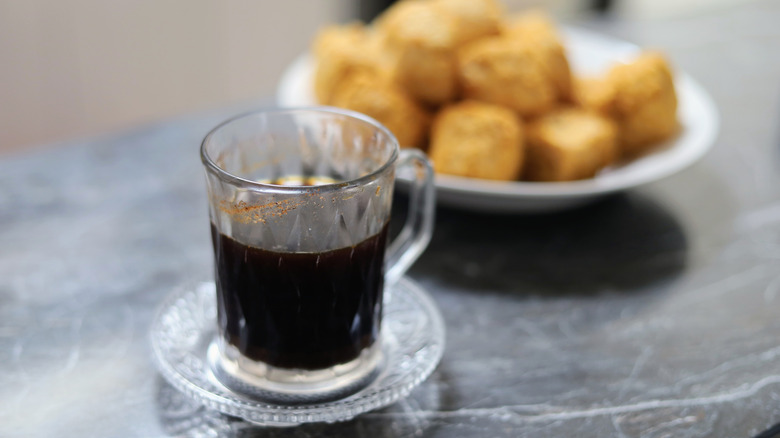
Kopi tubruk is pretty straightforward — coffee grounds and cane sugar are placed in a cup, and hot water is poured over top. After sitting for a few minutes, you simply drink the coffee. Typically the drink is enjoyed as is, with no milk added, although some areas of Indonesia will lean towards specialty drinks where they jazz up their java with durian, spices, or charcoal.