

The Underrated Old-School Casserole My Grandma Made On Repeat
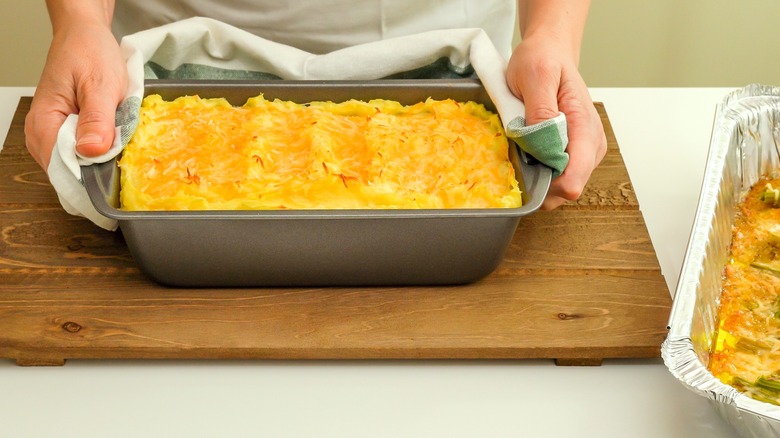
Every grandma has a recipe that instantly makes you feel at home, no matter how unusual it might seem. She could, for example, have an old-school cheeseburger pie that makes you feel all warm and cozy the moment you get a whiff of it. If you were to ask me what dish defined "home cooking" for my family, it'd be the corned beef casserole we had almost every Sunday — which isn't quite the norm here in the Philippines. The casserole, however, has been a part of my family's tradition for decades, just as much as it and its many iterations have been a part of some American families.
Most versions you see online almost always include the same four ingredients: corned beef, canned soup, noodles, and cheese. Some families like to mix in vegetables, others add texture with bread, and some like to make it extra-hearty and load it with potatoes. Whichever recipe you end up making, the result is always the kind of dish that springs to mind whenever you hear the phrase "comfort food" — warm, rich, creamy, and loaded with salt and umami.
Whenever I talk about it with someone new, I'm often met with the same skepticism some of you might be feeling now, especially since my family's take involves adding actual corn kernels to add contrast to the corned beef. But, as with a lot of similarly old-school American-style casseroles — including the messy, cheesy cowboy casserole invented by John Wayne himself — it really only takes a few bites to convert people into believers.
A brief history of American casseroles
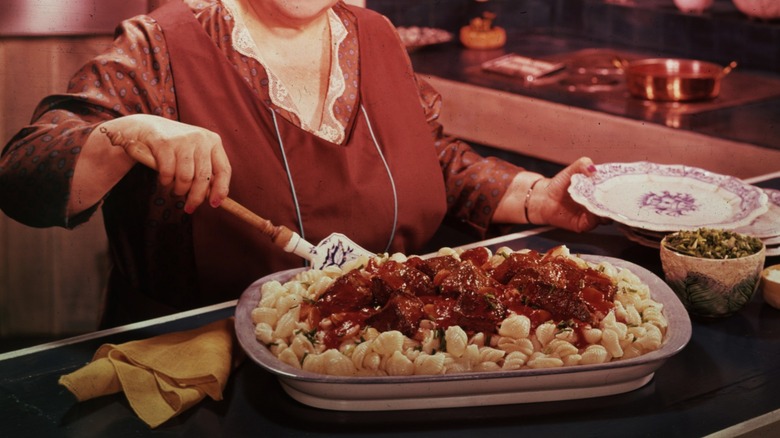
One aspect that usually makes people balk at the casserole is that nearly nothing in it is made from scratch. However, that's part of the tradition for American-style casseroles. By its strictest definition, a casserole is a mixture of food baked inside a vessel. That's a broad description of what qualifies as a casserole; going by this, shepherd's pie could be categorized as one, as could lasagna. One of the earliest-known casserole recipes published in English was essentially a macaroni and cheese found in a 14th century cookbook called "The Forme of Cury."
The old-school casseroles we associate with the word today, where canned soup is a common ingredient, are actually a relatively modern American invention. In 1897, chemist Dr. John T. Dorrence came up with a method for making condensed soups for his employer, Campbell's, which ended up becoming the company's defining product. In 1916, Campbell's published the promotional cookbook "Helps for the Hostess," which played a role in popularizing the use of canned condensed soup as an ingredient for other dishes.
This came in handy when, during the Great Depression just a few years later, casseroles became a common meal in American households because of how economical they were. Instead of working for hours in the kitchen to make them from scratch, homemakers could skip a few steps and ingredients using the low-cost soup as a ready-made sauce for many dishes, such as the delightfully named retro meal, shipwreck casserole. By the 1950s, easy-to-prepare meals had become household favorites as people navigated the post-war economic boom that made tuna casserole an American staple.
How it ended up becoming a part of my Filipino family
During World War II, American soldiers brought an abundance of canned food as rations wherever they were stationed, and locals developed a taste for it — Spam, especially, became a comfort favorite in my part of the world. My family, in particular, was exposed to a lot of American food; my grandpa fought on the United States' side during the war, and his rise through the ranks later on put him in regular contact with the U.S. Army, including in Vietnam. Our tastes were directly influenced by all this proximity to the American palate, so much so that corned beef casserole was always on the menu.
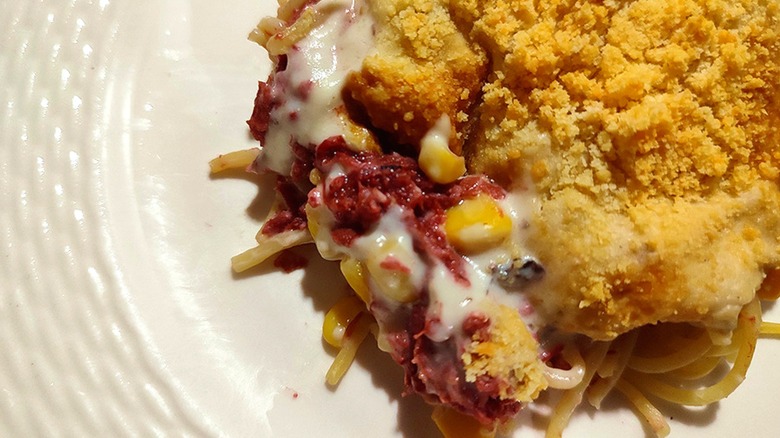
If you want to give my grandma's old-school casserole a try, it's ridiculously easy to make. From the bottom-up, layer cooked spaghetti, corned beef, corn kernels, undiluted Campbell's Cream of Mushroom soup, and grated Parmesan cheese — we've found it's the best way to layer casseroles so they're structurally sound. We're not picky about what we cook it in, but it definitely helps to avoid using the wrong kind of dish for casseroles. From there, bake it until the cheese browns and any bits of corn that pop through are lightly toasted.
It's a little different from some of the other recipes out there, but what casserole isn't a reflection of the family that makes it, and of their history? Casseroles are meant to be made, tweaked, and shared until the recipe becomes part of your own tradition, regardless of how old-school or unconventional they might be. What matters most is that they feel like you're being welcomed home, no matter where else the ingredients may come from.