

10 Old-School Buffet Foods Boomers Miss Most From Their Glory Days
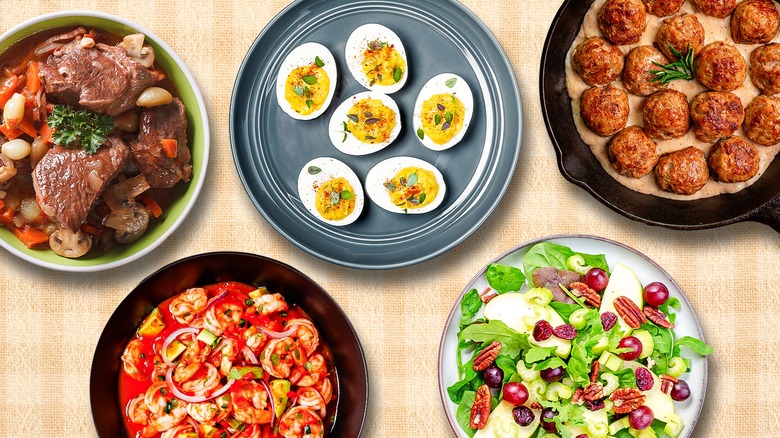
From shrimp cocktail to Waldorf salad, in the '60s and '70s, diners enjoyed a variety of dishes you'd be hard-pressed to find at a buffet, or "smörgåsbord," today. Though the American version of the smorgasbord peaked during those glory days, Boomers themselves did not invent all-you-can-eat bliss — it was actually Renaissance era Swedes. That's right, the buffet was en vogue long before there was such a thing as ice beds, buffet warmers, and sneeze guards.
Though upper-class people in Sweden have been hosting smorgasbord parties for literal centuries, they didn't officially arrive in America until the Swedish delegation brought it to the 1939 World's Fair in New York. After that, the idea spread across the country, eventually evolving into a beloved dining out activity and a favorite format for dinner parties, luncheons, and company picnics.
American all-you-can-eat buffets look very different today than they did 50 years ago. You won't usually find a lot of herring or ambrosia salad at popular Chinese or Las Vegas-style buffets. Boomers still look back on these foods with a wistful sigh, and you might even find a few of them on grandma's Thanksgiving table.
1. Deviled eggs
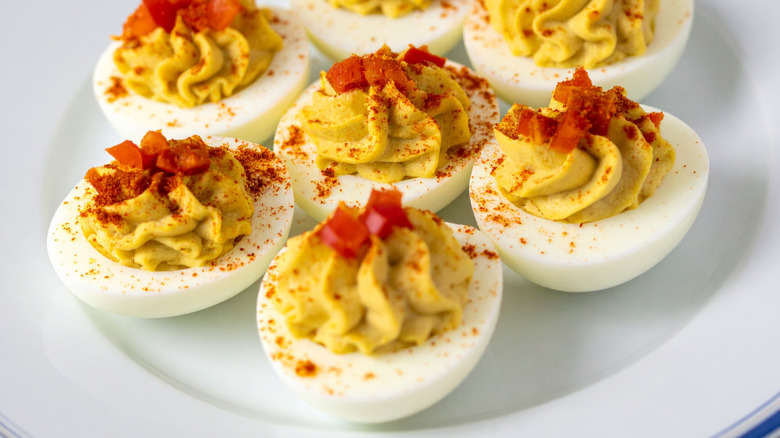
Besides not inventing the smorgasbord, Boomers also did not invent the deviled egg. Deviled eggs have been a popular buffet food for decades and a popular food in general since 13th-century Spain, although granted, they were just called "stuffed eggs" at the time; they wouldn't gain the moniker "deviled" until the addition of mustard and pepper in the late 19th century. Deviled eggs really got their wings and horns when bottled mayonnaise became a thing in the mid-1910s, and by the '60s and '70s, their bite-sized nature combined with the American obsession for literally anything containing mayonnaise catapulted deviled eggs to party food fame.
Classic 1960s and 1970s recipes for deviled eggs typically included mayo, mustard, and paprika, though regional variations often included extras like vinegar, sweet pickle relish, and/or a topping of chives or green onions. To be fair, the deviled egg is kind of still in its heyday. Every living generation from Gen Alpha to the Greatest Generation maintains general feelings of affection for deviled eggs, so you might not see them in the appetizer section of your local Chinese buffet, but there's a very good chance they'll be on your next Easter buffet table. Gourmet versions like "bloody mary deviled eggs" and truffle deviled eggs are still mainstays at Las Vegas style buffets.
2. Shrimp cocktail
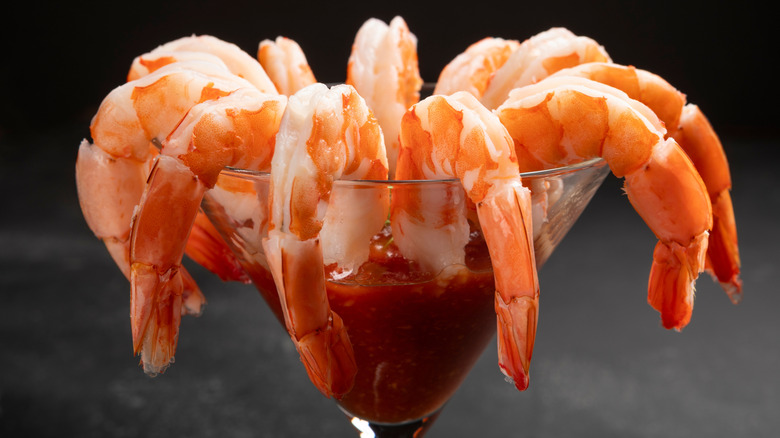
They say you eat with your eyes first, and then with your mouth, but certain buffet foods kind of took that idea to an extreme. Shrimp cocktail, after all, looks really pretty, but hey, you can put just about anything in a wine glass and it's going to seem fancy.
Shrimp cocktail is basically just boiled or steamed shrimp hooked over the edge of a ketchup-filled wine glass. The ketchup usually has other ingredients in it, like lemon juice, Worcestershire sauce, garlic, and horseradish.
According to myth, shrimp cocktail dates back to the recovery of Henry VIII's sunken warship the Mary Rose in the 1960s, but alas, this is indeed a myth — none of the dive teams involved in that expedition could recall ever eating shrimp cocktail. "Mary Rose cocktail sauce" did rise to fame around the same time as the Mary Rose, but the shrimp cocktail was mostly popularized by British TV cook Fanny Cradock's 1967 recipe for a mayonnaise-based cocktail sauce.
Las Vegas buffets still serve a version of the shrimp cocktail, so it's not just Boomers who appreciate boiled shrimp served with a wine glass full of ketchup; it's also people drowning their sorrows after a long, fruitless night in the casino.
3. Waldorf salad
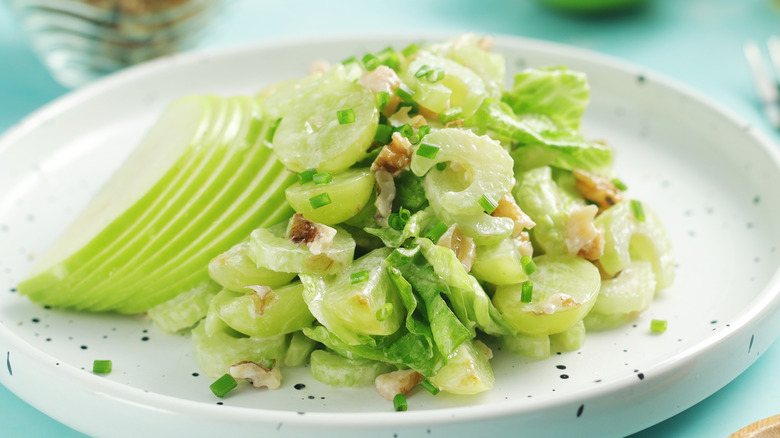
Another mayonnaise-based delight (depending on your perspective), the Waldorf salad was a natural addition to any '60s or '70s buffet. For the uninitiated, a traditional Waldorf salad is made with walnuts, apple slices, celery, and (of course) a mayonnaise-based dressing.
Unlike many of the era's popular buffet foods, the origins of the Waldorf salad are well known. It was first served at New York's Waldorf Astoria hotel in the 1890s, and in those days, it was just apples, celery, and mayonnaise. Over the years, it evolved to include walnuts — the gourmet version is still served at Waldorf Astoria hotels today. It has been updated with fancier ingredients like celery leaves and julienned celeriac. The mayo has been nixed altogether and replaced with a dressing made from crème fraiche, yogurt, walnut oil, and lemon seasoned with salt and white pepper and minced black truffles. You probably won't find that version at a country buffet.
Even so, the Waldorf salad can't escape its mayonnaise roots, and most of the versions that appeared on buffet lines during the Boomer years stuck close to the original recipe. Today, you can get an old-fashioned Waldorf salad at a Las Vegas buffet, or you can go to the Waldorf Astoria's Las Vegas location and get the updated version.
4. Beef Burgundy
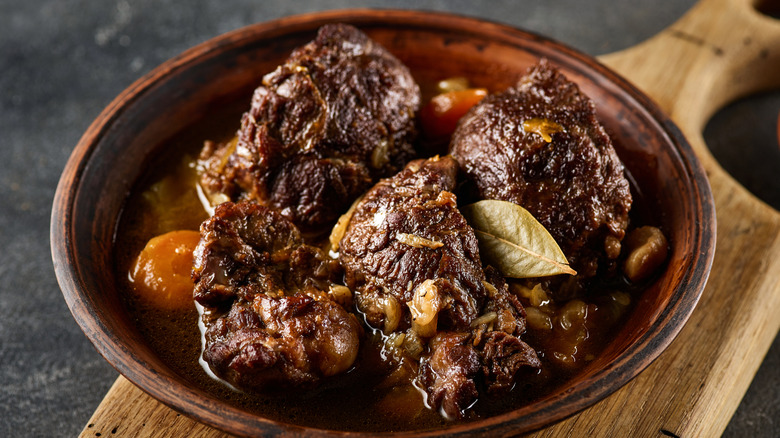
Beef Burgundy or boeuf bourguignon is much older than the American buffet or even the Swedish smorgasbord. It probably dates all the way back to medieval France, and despite the pretentiousness of its name, it was originally a peasant dish — it was created to make good use of Burgundy wine and its Charolais cattle. Though boeuf bourguignon eventually garnered a reputation as a gourmet dish, its ancestor was basically a way to slow-cook poor cuts of meat.
In the U.S., beef Burgundy remained largely unknown until Julia Child popularized it in 1961 in her book, "Mastering the Art of French Cooking." Julia Child's recipe is made with bacon, pearl onions, and mushrooms and is slow-cooked for three hours. Other versions include carrots, potatoes, or whatever — the thing that makes it a beef Burgundy isn't really the extras, it's the wine and the long cooking time.
Beef Burgundy was a bit of a fad in the Boomer glory days, partly because it was portable, relatively easy to make (compared to other types of French food), and it was French — when you showed up at the potluck with your casserole dish full of beef Burgundy, you automatically got props for being worldly.
5. Buttered vegetables
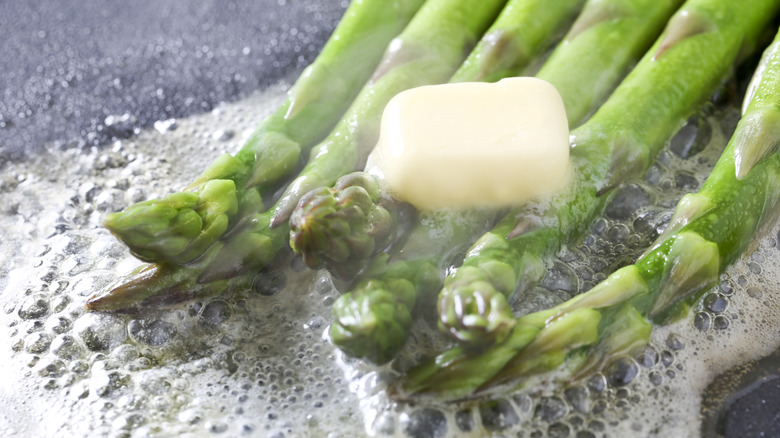
Historians have long sought the answer to one of the greatest mysteries of the 1960s and 1970s: why did people like buttered vegetables? Butter is nice on just about anything, and it belongs on some vegetables — like corn on the cob — but on every vegetable? In 1956, Betty Crocker's Picture Cook Book promised that buttered vegetables (canned or frozen) could give your meal "special interest and glamour," and it looks like people maybe just run with that.
In the Boomer era, home cooks put butter on corn but also on carrots, peas, squash, and asparagus, which is admittedly better than putting mayonnaise on them. Furthermore, it's easier to drown something in butter than it is to saute it or roast it and toss it with seasoning, but not that much easier — and nothing says "I'm not trying" like literally not trying.
Boomers got used to eating vegetables swimming in artery-stopping goodness. As the years went on, buttered vegetables became a great option for anyone who woke up on Sunday morning and went, "I forgot about that buffet luncheon, good thing I have a can of peas and some butter in my pantry."
6. Swedish meatballs
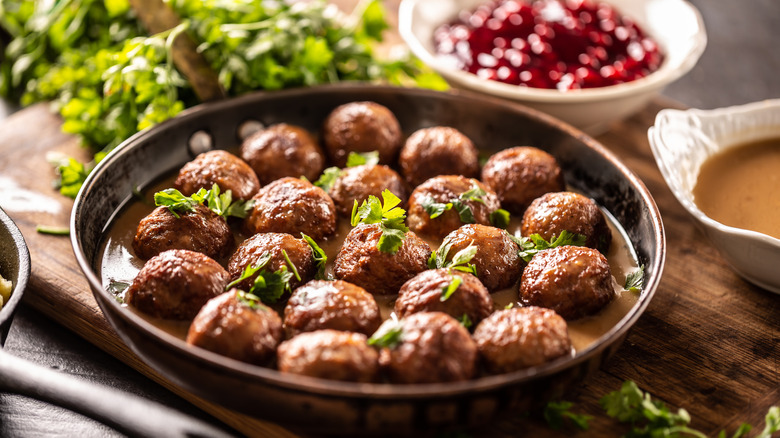
Swedish meatballs are a classic smorgasbord food because, obviously, they're Swedish and so is the smorgasbord itself. In fact, when the smorgasbord was imported to America in 1939, the traditional Swedish menu was imported along with it, which included Sweden's version of the humble meatball, known locally as Svenska Köttbullar. In a traditional Swedish smorgasbord, you wouldn't get to eat any meatballs until the fourth round of food, and probably only then if you didn't overdo it on cheese, fish, cold cuts, and salad, which are served way before the stuff that's actually been warmed up in an oven. This is obviously Sweden's own buffet trick of making sure no one overeats the expensive food.
Traditional Swedish meatballs are made with pork and beef and served in a cream sauce. If you've ever been to an IKEA Swedish Bistro, you also know about the lingonberry thing—yes, that's not just a giant furniture store invention, lingonberry jam is, in fact, a traditional accompaniment for Swedish meatballs.
Swedish meatballs became popular with home cooks at around the same time as the smorgasbord became popular in America — served with mashed potatoes, the Swedish version was a nice change from meatballs and spaghetti, another recipe that was popularized in the 1900s and has been a family tradition ever since.
7. Pickled herring
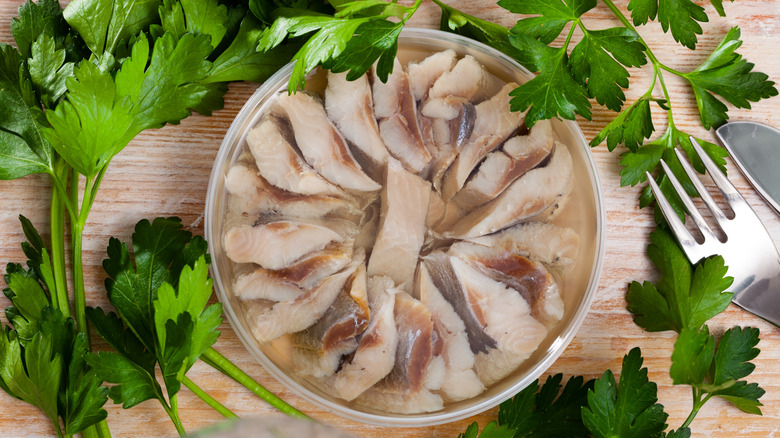
Pickled herring is another import from the traditional smorgasbord. For Swedes, a smorgasbord without herring is like a salad bar without lettuce or pizza without crust.
Today, it's a safe bet that most Millennials and Zoomers have not tried pickled herring (and probably wouldn't be compelled to try pickled herring), but many of the earliest American buffets stuck with the Swedish formula. In a traditional smorgasbord, you'd eat herring and cheese before anything else. This would be before you dove into all the other cold seafood dishes, which typically included shrimp, crawfish, fish pate, and gravlax.
In the U.S., Scandinavian food à la the smorgasbord buffet remained in vogue into the 1960s — not only for dining out but for dinner parties, too. Party hosts also liked to stick to tradition, and the menu usually included some form of the fishy favorite, whether pickled herring or herring salad. Anchovies and fish rolls were often on the menu as well. Later, when buffets evolved from being purely Scandinavian affairs to potluck parties and free-for-alls, pickled herring fell out of favor. If you suddenly find yourself keen to throw a traditional-style smorgasbord party, never fear — most supermarkets will still sell you a jar of pickled herring.
8. Crème de menthe desserts
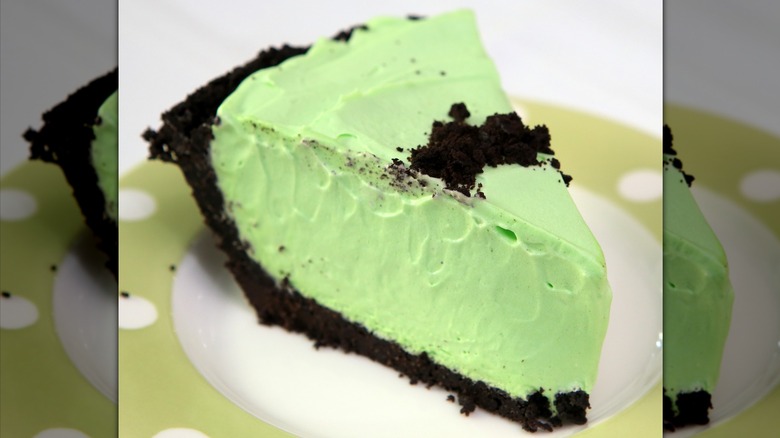
In the 1960s and 1970s, people liked colorful food, hence pickled beets, orange delight, and pink bon bons. Desserts were particularly prone to becoming primary colored ocular insults.
Green desserts were a favorite at potlucks and buffets. They promised minty pleasure and looked nice on a buffet table. If there was enough crème de menthe in them, at least a few dinner guests probably also hoped they'd catch a little buzz if they helped themselves to a second slice.
Grasshopper pie first showed up in American culinary tradition around 1960 or so. It's named for the grasshopper cocktail (also made with crème de menthe), which gets its name from the common grasshopper, which has similar bright, green coloring. Early publications were fond of running disclaimers with their grasshopper pie recipes along the lines of, "Grasshopper Pie, a New Dessert Flavor, Takes Name From Color, Not Ingredients."
Traditional grasshopper pie is made with a layer of chocolate cookies soaked in (what else?) butter, topped with a mixture of marshmallows, milk, and crème de menthe and crème de cacao-laced whipped cream.
9. Ambrosia salad
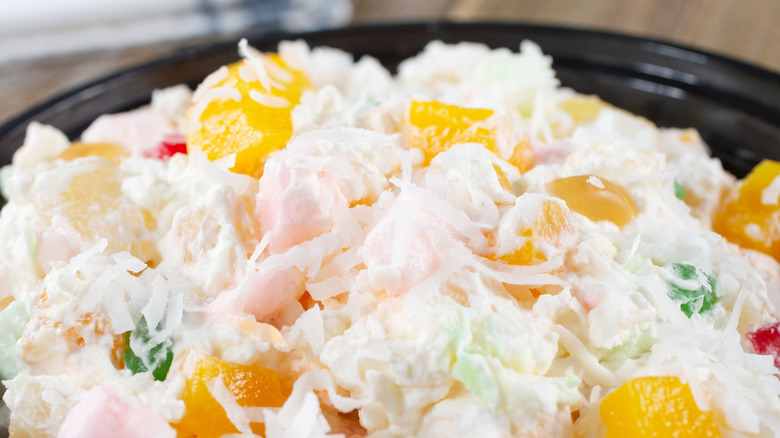
"Ambrosia" in Greek mythology was the literal "food of the gods." When the gods ate it, it imbued them with immortality. It was so awesome, mortals were not permitted to partake of it. If they did, they would suffer eternal punishment involving fruit they could never eat and water they could never drink.
On the other hand, modern ambrosia of the salad variety is basically canned fruit with whipped cream and marshmallows. It's delicious if you're okay with making fruit into something unapologetically junky, but not likely to bestow immortality. In fact, you'd probably be a little annoyed if you stole some and were doomed to eternal torture as punishment.
Ambrosia salad has gone through a number of iterations over the years. An early recipe called for pineapple, maraschino cherries, and a sugar syrup with marshmallows and egg white served over lettuce. Ambrosia salad is still popular in the South, and though it's never quite reached nectar of the gods proportions, it is versatile and easy to make. This is probably one of the reasons why it became popular at buffets and potlucks (And to be fair, almost no one serves it on top of lettuce anymore).
10. Jell-O salad
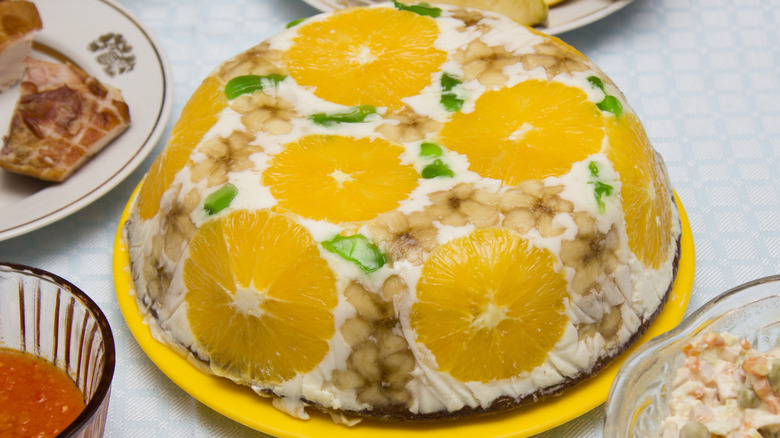
People used to be a little — let's say, creative — when it came to Jell-O and all of the things they liked to put in it. Tomato juice, carrots, seafood, and tuna with cucumber and pimento-stuffed olives are just to name a few. The mystery of why people did this may never be solved, as many of the grandmas who insisted on putting savory things in gelatin have taken the secret to their graves.
For most of its history, Jell-O was the foundation for desserts like Jell-O fruit salads, Jell-O poke cake (cake with Jell-O stripes), and Jell-O topped cheesecake. Jell-O is kind of like an edible medium for encapsulation art, so perhaps people couldn't resist showcasing little pieces of salad shrimp like flowers in resin.
People jumped on the "put everything in Jell-O and bring it to the potluck buffet" bandwagon sometime around 1968 (that's when Jell-O sales were at their peak). After that, however, sales of Jell-O started to fall off by 1987 the company was only selling about half as much as they used to. While you may still see Jell-O fruit salads and other colorful gelatinous delights at the occasional potluck party, it doesn't still have the same wow factor that it used to.