

9 Canned Wines, Ranked Worst To Best
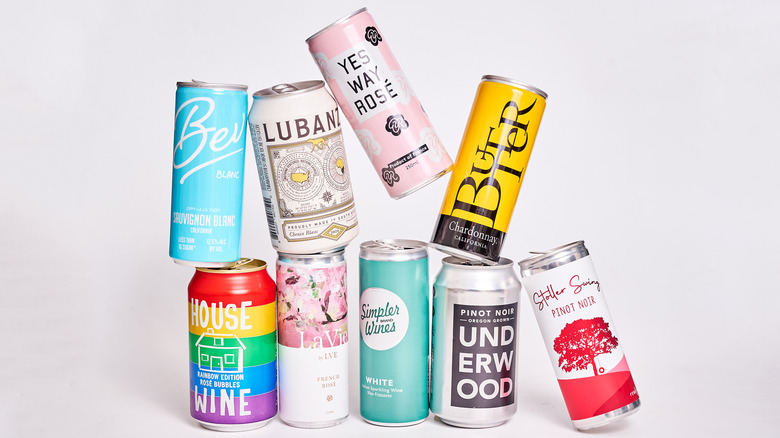
Wine wasn't always bottled in glass. In the early days of wine making, wine was stored in ceramic vessels, then later in wooden oak barrels. And as popularity grew and wine needed to be more widely transported, the cork-topped bottle was invented. Glass was chosen as a non-porous and recyclable material that could transport the wine without affecting the quality, meaning it could be stored and aged without risk of oxidation or altering the taste. Knowing wine's history, then, allows us to be a little more open-minded about its vessels, especially in our increasingly on-the-go world.
Though excellent for shipping, storing, and pouring, the problem with glass is that it can't be brought everywhere, like onto a beach or inside of concerts and sporting events. Canned wine offers a transportable solution for wine lovers to sip safely away from home, the small aluminum pop-tops an easy way to grab-and-go without needing wine keys or glasses. With technological advancements that better preserve the quality of the canned wine, what used to be a niche, somewhat frowned-upon method of drinking wine is now a popular option in most stores. With so many choices to pick from, it can be hard to know where to start. To make things easier, I rounded up nine of the most popular canned wines of the moment and ranked them from worst to best, evaluating their taste, quality, value, and drinkability. For casual wine enjoyers, any of these cans will suffice. But for those who want a really excellent sip, read on for the best of the best.
9. Stoller Swing Pinot Noir
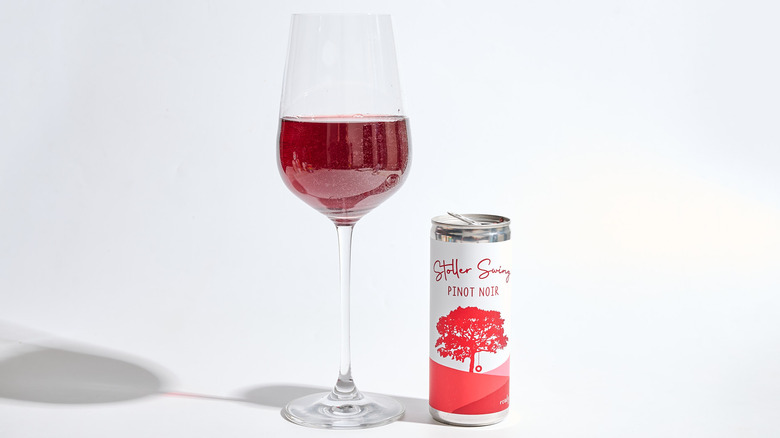
While there are wines that are better suited to being canned, this list proves that any wine can be canned well. Initially, I assumed pinot noirs were simply a variety of wine that should stay far away from aluminum, the full body too susceptible to being influenced by the tinny taste. Part of me would still prefer any bottled pinot to even the best canned one, but in truth, there were some that were admittedly perfectly fine pours. The Stoller Swing Pinot Noir, however, was not quite there.
As always, in a list of ranked products, something has to take last place. While many of the wines on the list were — at the very least – passable, the Stoller Swing pinot noir was hard to enjoy. High in acidity and overly fruity, what is normally a smooth and full-bodied red became a light and tinny spritzer. Worse, the carbonation (something I found many canned wines possess, wanted or not) was too subtle to call bubbly but too present to be qualified as a regular pinot. This wine was one I felt suffered from being enclosed in aluminum, the tinny flavor affecting the normally smooth flavor of the wine. This is one I'd pass on, opting for the bottle instead.
8. Bev Blanc Sauvignon Blanc
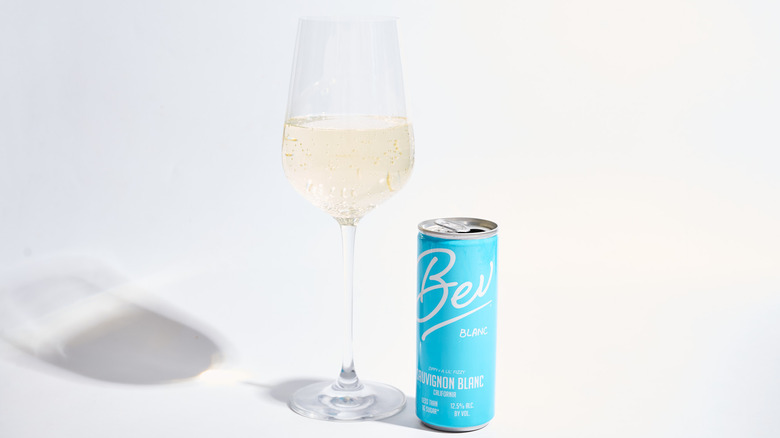
Bev Blanc isn't definitively bad. In fact, the brand's bubbly varieties are spot on and a great way to enjoy wine by the can. The branding is fun, and the wine leans sweet, with light, slightly bubbly carbonation in every sip. These qualities are exactly why this wine ranks lower than others on the list — a sauvignon blanc is rarely sweet and not one I expect to be bubbly. The wine is as described, being zippy, citrusy, and light, and would make a suitable option if looking for something like a Prosecco or sparkling white. If you're looking for a sauvignon blanc, though, you'd be a little misguided with this one.
A sauvignon blanc is a wine that originates from France and is best known as being made in the Loire Valley. The wine is typically known for being grassy and herbaceous, which are qualities that make it dry but more democratic than oaky chardonnay. A wine known for pairing well with white-sauced pizzas because of that zippy but dry flavor, you'd be safe in expecting a sauvignon blanc to be a bit tart but generally not overly sweet. The Bev Blanc didn't strike me as a sauvignon blanc, and with carbonation that fell flat quickly, it ended up being generally less pleasant than either a still sauvignon blanc or a bubbly Prosecco. Stuck in carbonation purgatory, I ranked this lower than the rest, wishing it had made a statement one way or another.
7. Butter Chardonnay
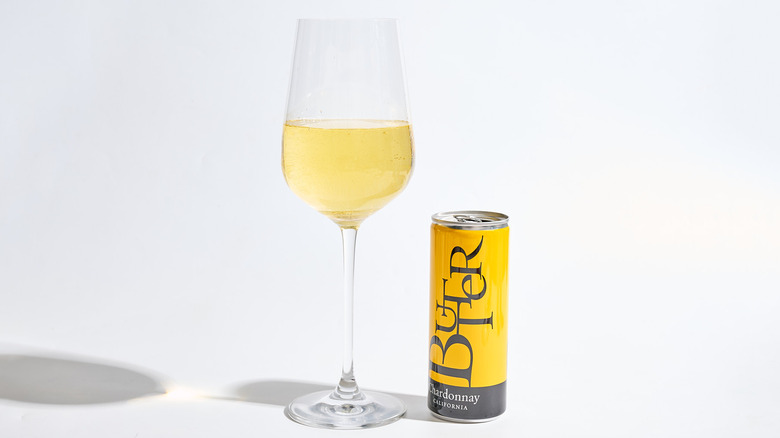
Though there are varieties that are crisp and fruity, chardonnay is generally known for its buttery, mineral flavor. This profile is achieved through oak barrel aging, which sets it apart from most other whites. But not all chardonnay is aged in oak, and the region in which the grapes are grown and aged can further determine the flavor of the wine. Butter Chardonnay, made by JaM Cellars in California, cold ferments the grapes in oak, which should cause the wine to be full-bodied, warm, and buttery (as the name suggests). Canning, though, has a way of changing things.
Perhaps due to the aluminum or because of the nature of canning, Butter Chardonnay begins as a fruit-forward, acidic wine with a slight, barely-there carbonation. It's surprisingly light-bodied for a chardonnay, with a citrus-forward flavor that is crisp instead of baked, as the JaM Cellars description suggests it should be. Because the taste of canned wine is improved when it's poured out, I decided to give it a moment to open up, and in doing so, found that the wine changed flavor. Given a few minutes in a glass, the wine mellows to a more expected buttery chardonnay flavor, with a slightly oaky finish. Because I'm likely to drink canned wines directly from the can, I ranked this a bit lower than others, as the slight carbonation and acidity were a bit too forward for my chardonnay preference.
6. Yes Way Rosé
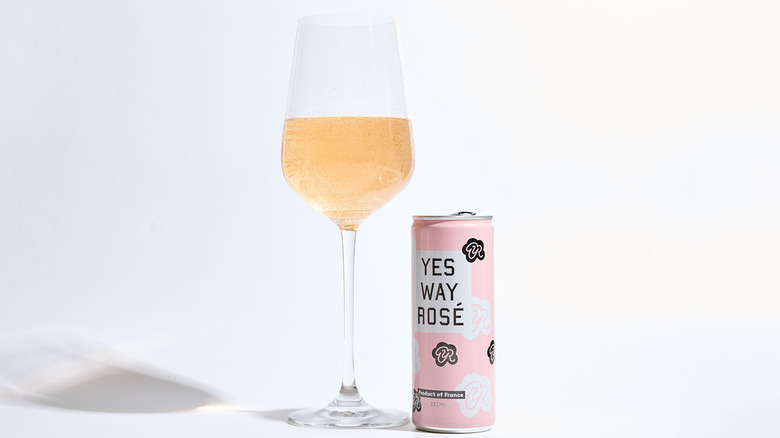
When wine is bottled, it continues to age within the glass walls of the sealed container, safe from oxidation or degradation. Wine is not aged in a can and therefore has a short shelf life. Because of this, canned wine is designed to be drunk quickly while the wine is at peak freshness. This doesn't mean that the wine is cheap or poorly made, as many wines don't need to be aged and are actually better drunk as younger wines. Rosé and sparkling wine in particular benefit from being canned, being that rosés are generally not aged and are better enjoyed within a year of release.
That being said, Yes Way Rosé is a good can to pick up for a light, refreshing wine in a can. It isn't complicated in flavor and, in general, has a subtle fruitiness compared to other rosé varieties. It leans sweet rather than dry, which can be nice in a rosé and neither wins nor docks it points on my scale. Where I think Yes Way Rosé falls short is the carbonation. It's hard to determine if the wine is meant to be sparkling or still, as the bubbles are light and fade quickly, leaving a flattened mouthfeel behind. For a wine that should be perfect for being canned, it leaves a little to be desired, leading to its ranking nearer the bottom of the list.
5. Underwood Pinot Noir
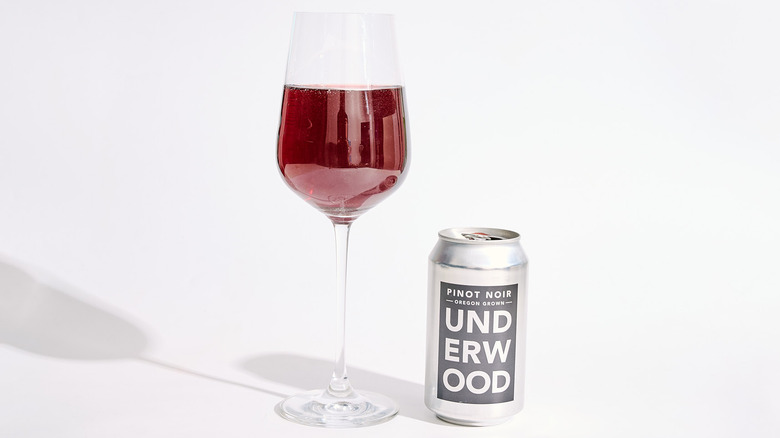
I'm quite partial to pinot noir and enjoy the easy versatility of the medium-bodied, complex, often-juicy red. You wouldn't think it, but it's actually a wine that is well-suited for canning, especially when done well. Underwood is a recognizable brand and a giant in the canned wine world, known for its catchy label and particularly dry wines. Depending on your palate, you may love or hate Underwood wines. The pinot, especially, is a dry wine with high acidity, which can be considered too bold for some.
If you enjoy pinot noir, you'll find this can delightfully unexpected. It's fruity on the nose, with a pleasant aroma of cherries and wood. It's dry, and the high acidity can be almost metallic, but after opening up for a few minutes, the acidity mellows out. What's most impressive is that the wine is completely still, and save for the stray bubbles climbing up the sides of the glass, tastes as though it came from a bottle. That being said, it isn't a wine I'd want to sip directly from the can, and I would save it for events that I am able to pour the wine into cups and allow to breathe. It's good for an on-the-go pinot but likely isn't the first can I'd reach for with better, more refreshing options available.
4. Simpler Wines White
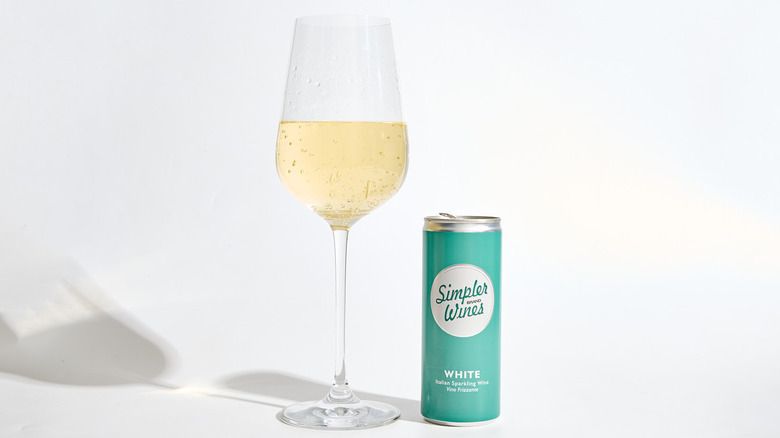
Trader Joe's has been offering canned wines for some time now — since 2017, to be exact, when the product launch was a sweeping success. For years, the colorful, absurdly affordable cans have stood firm on being bubbly, sweet, flavored wine options, which is something that can easily make a brand look cheap and unimportant. The truth is, though, that Trader Joe's figured out what works well long before any other brand did. The wines are uncomplicated, fun, and extra bubbly, making them perfect options for imbibing on the go. Simpler Wines is what it says it is: simple, which for canned wine, can mean better.
While the brand offers fun flavors like peach and mango, the standard sparkling white is the best choice for wine lovers. Crisp, dry, and zippy, the white is straightforward without being overly sweet and sugary. The wine isn't labeled as being a specific variety, but interestingly, is noted to be made in Italy, making it one of the only cans on the list to be imported internationally. It's uncomplicated and perfectly bubbly, making it a great sparkling option. And like everything else at Trader Joe's, it's also mysteriously affordable, making it a great value on top of its great flavor.
3. House Wine Rosé Bubbles
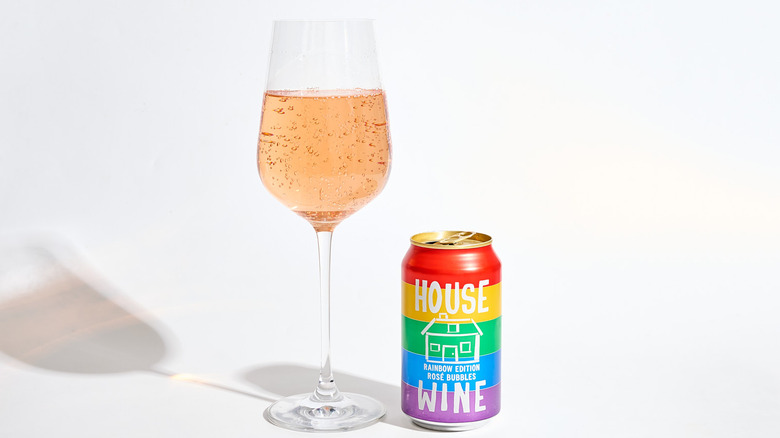
Another rosé on the list, this one is undoubtedly bubbly and stays that way long after you open the can. Sweeter than the other rosé options but also fruitier and more flavorful, this can could easily rank higher for those who prefer sweeter wines, though it holds firm at third place for my dry-preference palate. Regardless of palate, the House Wine is also a good value, packing over two full glasses of wine into one can at a retail price under $7. This means that if you are buying cans for a picnic, beach outing, or hiking trip, one can will be plenty for one person, meaning less you have to carry.
As for the flavor, it's straightforward and inoffensive, being fruity on the nose with a sweet finish. The effervescence is present but not overwhelming, and the overall flavor and mouthfeel make it feel expensive, even for a canned wine. I wouldn't be embarrassed bringing this to a function (and even sharing it), which ranks it highly among other canned wines — because even if the market has come a long way, there's still a good deal of animosity towards the drinks.
2. La Vie by LVE
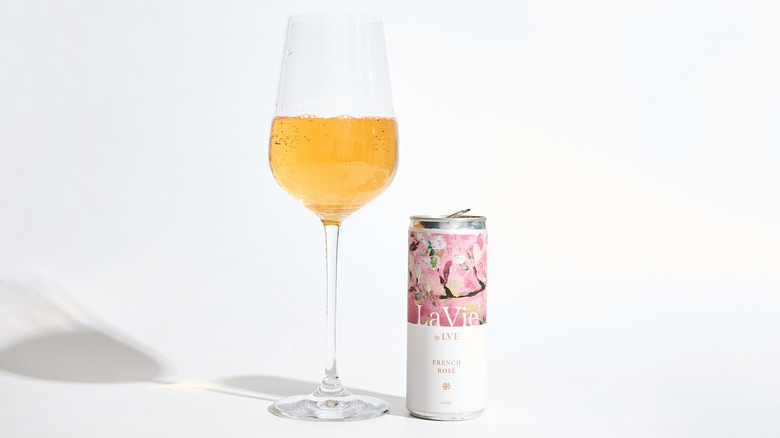
This is the rosé I'd recommend for those who prefer a dry, expensive-tasting still wine. It's very smooth, and though dry, has a fruity flavor and opens up nicely to a floral rosé. The color is uniquely orange, less pink or red than many rosé varieties tend to be, almost nearing the color of a skin-contact white wine. Because of the color, I was initially wary of the wine's flavor, thinking it may be a skin-contact white in disguise (which for some, may not be a negative at all). Skin contact whites (also known as orange wine) tend to have a more tannic flavor I dislike, especially when expecting a rosé. The good news: La Vie is not tannic and is low acidity, landing it high in my rankings.
Why La Vie wins as the best rosé on the list has to do with its lack of carbonation and its complex, dry flavor. While bubbly wines fare well in cans, it's impressive for a still wine to hold up just as well — especially because as a regular wine drinker, I often choose wine over seltzer or cider because of its lack of effervescence. Having an option that truly tastes like a good dry wine wins La Vie points in my ranking, so much so that I gave it second place.
1. Lubanzi Chenin Blanc
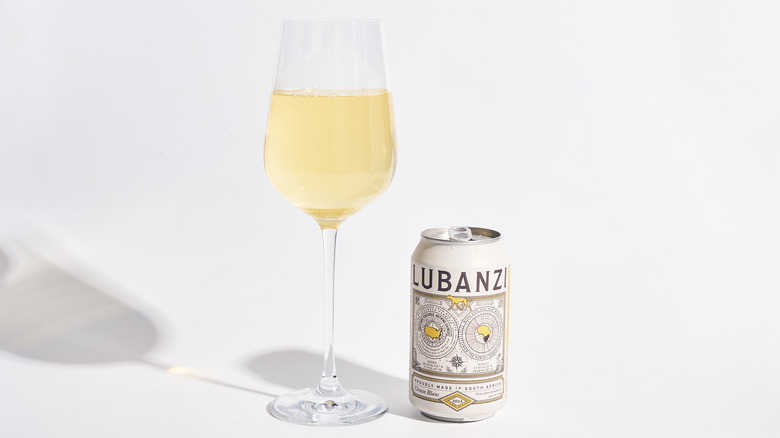
Lubanzi is a fairly new brand produced out of South Africa, a region known for chenin blanc and pinotage. Lubanzi is incredibly transparent about its processes; from wine-making to sustainability and profit share, you know exactly where the wine has been, how it was bottled (or canned), and where the profits are going. Beyond this, the wine also tastes good — so much so, you'd think it was bottled.
Chenin blanc is a unique wine that Wine Folly likens to a "Riesling's acidity meet[ing] chardonnay's body and texture." A spot-on description for a complex-tasting wine, the chenin in Lubanzi's can is smooth and light-bodied but slightly oaky on the back end, much like an aged chardonnay. Spunkier than an oaky chardonnay, the chenin offers something complex that can't be found in other cans. Better, there is no carbonation, which each wine on the list had at least a hint of, often altering the taste slightly. The Lubanzi chenin blanc pours smoothly and opens up nicely to a floral and fruity white, with impressive complexity that is hard to find in canned varieties. Having had the bottled version in the past, I can attest to it being similar, making it my first choice when reaching for a more on-the-go option.
Methodology
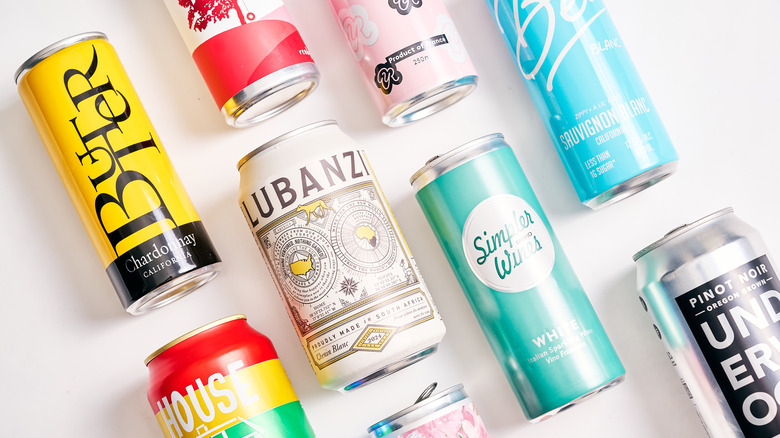
The world of canned wines has broadened greatly in the last five to 10 years, opening up possibilities for many small wineries to sell small batches of unique varieties in local markets. To keep the ranking as accessible as possible, I collected the cans that were most widely available at national chains like Target and Whole Foods. From there, I taste-tested each wine in the can, poured into a glass, and after opening up, observed the change in flavors with each step.
I noted the flavor profiles, carbonation, and mouthfeels, giving higher rankings to wines that were smooth, balanced, complex, and drinkable. Sugary, flat, sour, or overly tannic wines fell towards the bottom of the list, and anything with unpleasant carbonation or metallic flavor was docked points for being affected by the cans. While many canned wines are supposed to be lined to avoid contact with the aluminum, it was hard to tell when that was true — and more importantly, if the lining still affected the flavor anyway. The best wines were those that tasted just as good as bottled varieties, whether sparkling or not, and were the cans I'd most likely share with a friend.