

10 Tips You Need When Cooking Pasta, According To Alton Brown

Alton Brown has built his culinary career on asking one question: How can this be done better? Over the years, the television host, author, and food scientist has experimented with different ways to cook foods quicker and more efficiently as well as in ways that result in the absolute best flavors. Along the way, he's doled out a plethora of helpful cooking tips for everything from steak to scrambled eggs and salmon. Pasta is an area that he's delved into often, and he's uncovered several small adjustments that can make a big difference.
Pasta might seem simple, but Brown approaches it with the same precision he brings to more complex recipes. He's known for questioning long-standing kitchen habits, and there are plenty of those when it comes to pasta. Take, for example, using gallons of water or waiting for the water to come to a rolling boil before adding the noodles. By rethinking some of those steps, he's proved that you can save time and whip up pasta that tastes better and holds sauce more effectively.
To compile our list of Brown's top tips for cooking pasta, we revisited some of his memorable television moments on "Good Eats," perused pasta recipes on his website, and took note of the advice he's shared on social media. What we discovered was a ton of useful information on everything from salting your pasta water to adding final finishing touches. If you're looking to level up your pasta game, consider trying some of these Brown-approved cooking techniques.
1. Salt your pasta water with kosher salt
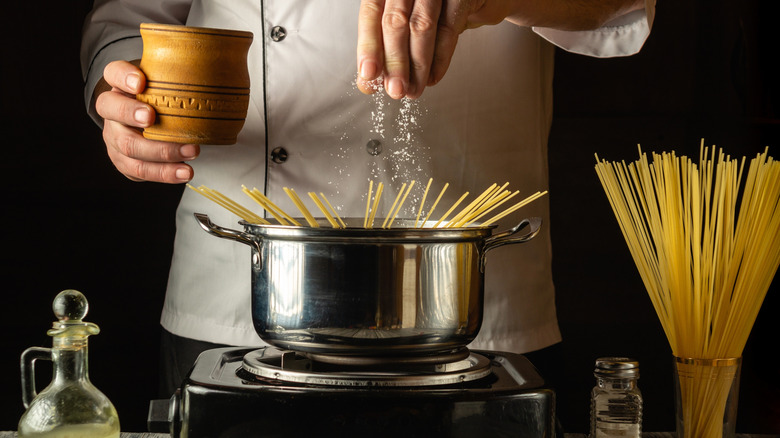
Many chefs agree that one of the biggest mistakes people make with pasta is not salting the pasta water. It may seem like a small, insignificant step, but those tiny flakes impart big flavor to your noodles as they cook. Like many chefs, Alton Brown is a big proponent of generously salting pasta water, and he's pretty particular about the salt he uses. For him, it's kosher salt all the way.
Kosher salt is mostly mined from underground salt deposits, although it can also be procured by evaporating sea water. It's a pure form of salt that doesn't contain additives like iodine, and it typically consists of coarse, uneven flakes. In a recent video Brown shared, he said he couldn't live without kosher salt, explaining that it's easy to pinch and sprinkle. He also said, "These flakes cling nicely to a wide range of edible surfaces and dissolve, well, for a pleasing release on the palate."
Of course, knowing which salt to use is only half the battle. You also need to know the correct amount of salt to add to pasta water so that it adds flavor but doesn't turn your pasta dish into a total salt bomb. Brown has been known to suggest salting the water to sea water flavor, but a good rule of thumb is to start with about a tablespoon of salt for every gallon of water and adjust from there. Ideally, you want to be able to taste the salt without feeling like you've been punched in the mouth with sodium.
2. Start cooking your dry pasta in cold water
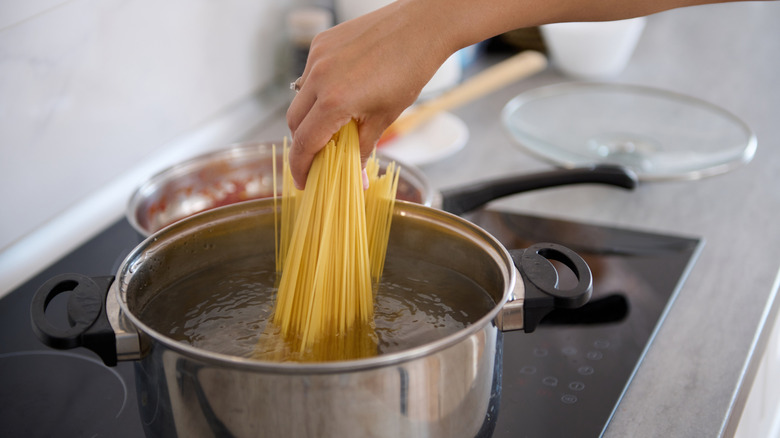
Alton Brown is all about questioning long-held cooking "truths," including some that he used to teach himself. When "Good Eats" first aired in 1999, he preached the same rule most of us learned: always cook your pasta in a large pot of boiling water. However, he now realizes that method doesn't hold up. As he says on his website, "In the years since, I've learned that the big-pots-of-boiling-water paradigm is quite simply a myth." His updated technique for cooking pasta involves starting with cold water.
It may sound counterintuitive to start cooking your pasta in cold water, but there are a few reasons Brown and many other chefs swear by it. For one, it cuts back on your total cooking time because the noodles start softening as the water warms. It also uses less energy and less water overall. Plus, many say the end result tastes better and gives the pasta a better texture.
Brown suggests combining your dry pasta, salt, and cold water in a pot, covering it, and bringing it to a boil. Once the water is boiling, you can take the lid off and bring it down to a simmer. Keep checking on your pasta and take it out once it's al dente or your preferred texture. All up, the entire process should take anywhere from 10 to 15 minutes depending on the type of pasta you're using. It should be noted that many chefs say the method works great with dried pasta, but it may make fresh pasta too soft.
3. Use just enough water to fully cover your pasta
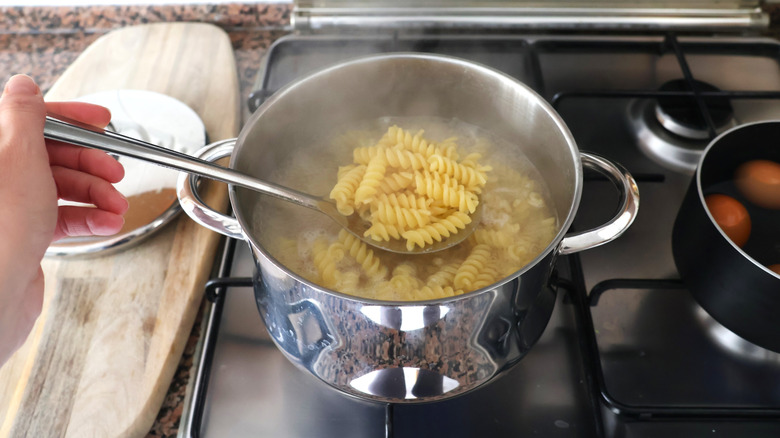
At the same time that Alton Brown discovered that cooking pasta in cold water was more efficient and effective than dumping your pasta in a pot of already boiling water, he also came to realize that you don't need a ton of water to cook your pasta. As he said in a Facebook post, "Sure, large amounts of water may be necessary for long strands of dry pasta like spaghetti and bucatini, but when it comes to short shapes like farfalle, macaroni, and rigatoni, less is definitely more."
Brown often recommends placing your dry pasta in a pot or a skillet and adding just enough water to cover the pasta. About a quarter inch of water above the pasta is sufficient to cook the pasta thoroughly and quickly, especially if you're using the cold-water method where the noodles start cooking before the water comes to a boil. Once again, this can save you time, as the less water you use, the faster it will come to a boil. And, of course, it also saves water and energy.
Another advantage to using less water is that the water will become more concentrated with starches from the pasta. You might think that would make your noodles gummy and cause them to stick together, but numerous testers have said that's not actually true. Provided you stir your noodles to disperse the starches, there's no reason they should become a gluey mess. Instead, that starchy water will add flavor to the noodles and help sauces bind better to them.
4. Remove your pasta with a spider strainer or tongs
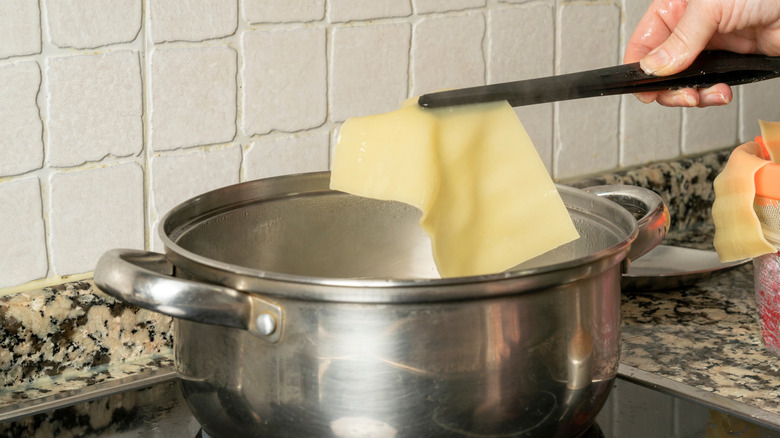
Speaking of that starchy pasta water, many home cooks instinctively dump it down the drain when straining pasta in a colander. However, Alton Brown believes that's a huge mistake. In several recipes on his website, he recommends removing the pasta directly from the pot with a spider strainer or tongs rather than pouring everything into a colander. This simple step gives you better control over timing and texture, and it allows you to save the pasta water for other uses (more on that next).
A spider strainer is a handy kitchen tool with a long handle and a mesh basket that somewhat resembles a spiderweb, hence the name. You simply scoop your pasta into the basket, and when you lift it up, all the hot water will drain back into the pot. A spider strainer is far superior to a colander for delicate pastas like ravioli because it allows you to gently lift the pasta out of the water without breaking the shells. For longer pastas like spaghetti or fettuccine, tongs may be a better choice, as they make it easier to grab the slippery noodles.
Beyond saving the pasta water, using a spider strainer or tongs makes cooking pasta smoother, safer, and more precise. You can lift noodles out at the perfect moment without letting them overcook. Transferring them to a sauce or serving dish is easier than wrestling with a colander. Plus, you won't have to worry about accidentally sloshing steaming hot water on yourself while carrying a heavy pot to the sink.
5. Reincorporate the pasta water into toppings and sauces
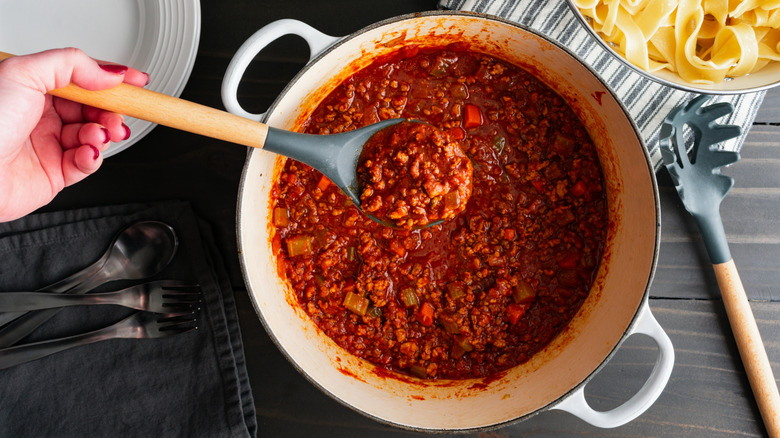
So, why do you want to save that pasta water anyway? Well, Alton Brown summed it up pretty succinctly on his website when he said, "Starchy pasta water is the perfect liquid for adjusting pasta sauces at the last minute. I don't know a single chef who throws this magical elixir down the drain until the night is over." It might look like just cloudy water, but that starchy liquid is full of flavor, and it can rescue a sauce that's too thick or too thin or one that just needs a little extra silkiness.
When pasta cooks in hot water, it releases starches, which is what makes the water look hazy. Pour a bit of that water into a pasta sauce, and the starch can add instant body. It also helps the sauce stick better to the noodles so that you get a more even coating. In addition, the starch can help emulsify oil-based sauces, making the sauce more creamy. And if you find that your sauce is too thick, an extra splash of pasta water can help thin it out.
One great example of how pasta water can instantly elevate a sauce is cacio e pepe. This classic Italian pasta dish consists of just a few ingredients: pasta, Pecorino Romano and parmesan cheeses, olive oil, and black pepper. But what really binds it all together is the pasta water. On his website, Brown recommends mixing the olive oil, cheese, and pepper into a paste, then adding your pasta and some splashes of pasta water and tossing vigorously until it all comes together into luscious sauce.
6. Add canned evaporated milk for extra creaminess
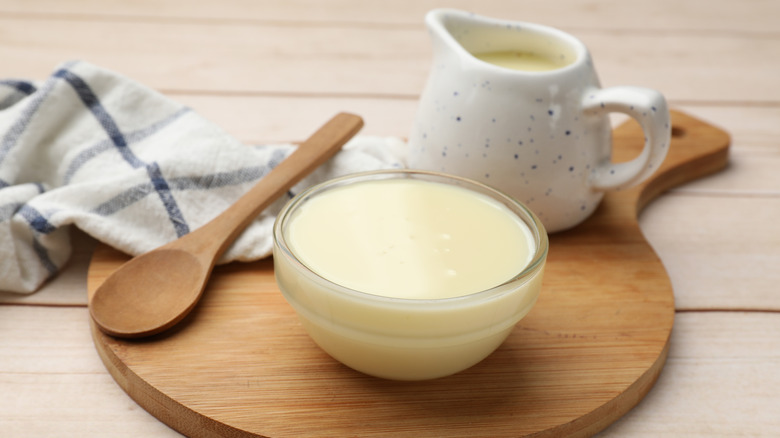
If there's one thing that Alton Brown has taught us, it's that thinking outside the box can lead to some delicious results in the kitchen. He's never been afraid to try unconventional ingredients if they make a dish better. One such ingredient that he discovered works well in a variety of pasta dishes is canned evaporated milk (not to be confused with sweetened condensed milk). It may sound odd, but it's actually pretty genius.
Evaporated milk is simply milk that's been simmered until about 60% of the water is gone. Heating it eliminates bacteria, and the canning process allows it to stay shelf-stable for about 18 to 24 months. Unlike sweetened condensed milk, evaporated milk has no sugar added, so it tastes just like regular milk with a slightly richer texture. It's a great staple to have in your pantry because you can use it in a variety of dishes, including meat marinades, queso dips, and pasta sauces.
In an episode of "Good Eats," Brown revealed that he likes to use evaporated milk in his spaghetti and meat sauce because "it has considerable flavor and body, and it won't curdle when it meets up with the acid in the wine." He's also been known to use evaporated milk in mac and cheese instead of regular milk, which makes sense because it adds a touch more richness and concentrated milk flavor. It can also be a great substitute for cream because you still get the velvety texture without as much heaviness.
7. Make your own garlic and herb oil to give your sauce a major flavor boost
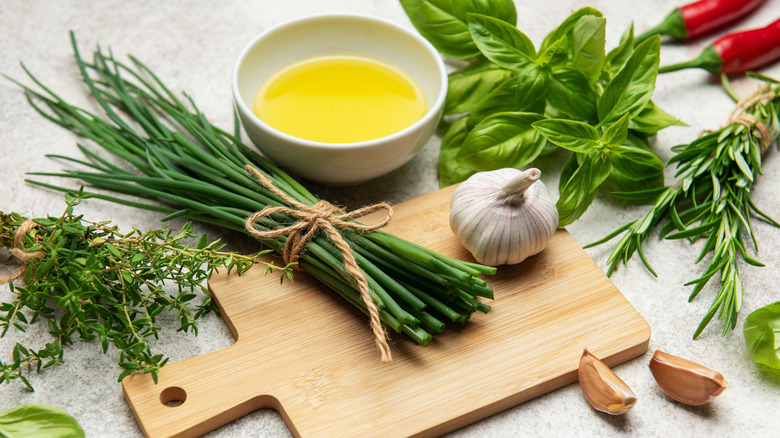
Even the best jarred or homemade pasta sauce can be a bit bland sometimes, which is why Alton Brown likes to start building flavor before the sauce even hits the pan. One of his go-to ingredients to upgrade boring spaghetti sauce is homemade garlic and herb oil. And while that may sound complicated, it's actually pretty easy to make on your stovetop with just a few ingredients, and it comes together in just a few minutes.
Brown has several recipes for flavored oils with varying ingredients, but the basic concept is the same. You just heat up some oil in a pan and add fresh herbs like basil, rosemary, thyme, and oregano. Garlic also goes in, along with other aromatics like peppercorns, lemon zest, and dried chiles. Then, you wait for the water to stop bubbling out of the ingredients and take it off the heat. Alternatively, you can place all your ingredients in a jar and pour the hot oil over top.
Once your flavored oil has cooled down, there are several ways you can use it to level up your pasta sauce. You can heat a few tablespoons in a pan and stir in some tomatoes to create a flavorful spaghetti sauce, or drizzle it over finished pasta for an instant richness boost. You can also toss the oil with cooked noodles, a bit of grated cheese, and reserved pasta water for a quick meal that tastes sophisticated.
8. Don't be afraid to sneak some veggies in
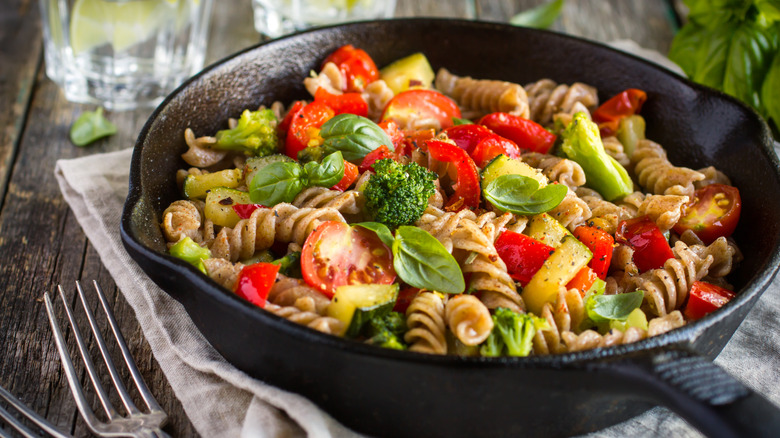
Pasta dishes have a reputation for being cheesy, carb-laden, and meat-centric, which makes it easy to forget that they're also a great vehicle for vegetables. Alton Brown loves finding ways to incorporate vegetables into pasta dishes, including those that don't typically call for them. In fact, in a YouTube video, he revealed that he and the "Good Eats" team updated their most popular recipe of all time — mac and cheese — by adding what he called "vegetation" (i.e. spinach).
If you peruse the pasta recipes on Brown's website, you'll find that many of them contain vegetables, sometimes in surprising ways. For example, one recipe calls for roasted cauliflower and tomatoes in a cheesy penne dish with breadcrumbs to add extra crisp. Another recipe for pasta salad combines artichokes, tomatoes, and fresh herbs with bowtie pasta, roasted chicken, and goat cheese. Even his macaroni salad gets brightened up with bell pepper, peas, and celery.
Another genius way that Brown sneaks vegetation into his pasta is by making the veggies the actual noodles. But, of course, he doesn't go the usual route of turning zucchini into zoodles. Instead, he slices eggplant into long strips with a mandoline. To improve the texture and get rid of the bitter taste, he sprinkles salt on both sides of the strips and lets them sit for a bit, then rinses them and squeezes the water out. On his website, he explained that the method offers "better flavor and a meaty, toothsome texture that won't remind you of biting off a chunk of cooler."
9. Cold pasta dishes can benefit from a bit of oil or a quick rinse
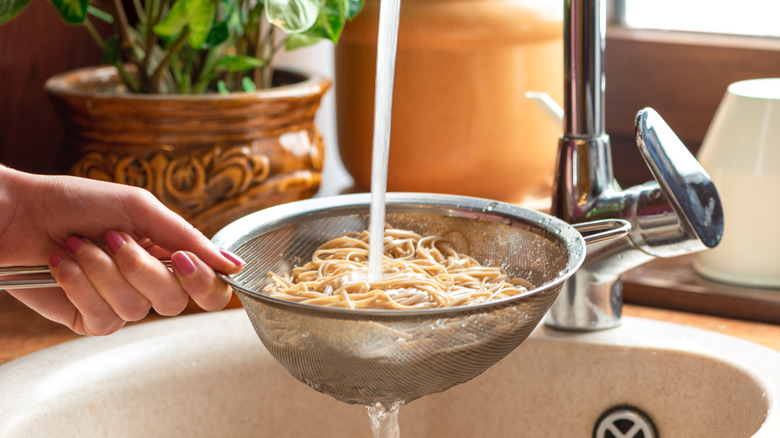
For hot pasta dishes, Alton Brown prefers to skip the colander entirely, but cold noodle dishes are a different story. Cold pasta dishes can be tricky because once the noodles cool, they have a tendency to clump together. For dishes like macaroni salad or sesame noodles, Brown uses a few different techniques to ensure the noodles stay loose and glossy, both of which involve draining the noodles in a colander first.
Once the noodles are drained, the next step depends on the dish. For oil-based cold noodles like Brown's sesame noodles, he gives them a quick rinse to stop the cooking right away and wash away some of the starch that can make the noodles stick together. As he stated on his website, "The key is to cook the noodle al dente, then immediately rinse with cold water, drain, then lube with toasted sesame oil. Skip that and the noodles will be gummy no matter what."
When it comes to macaroni salad, Brown drains the noodles, but instead of rinsing them, he simply adds a splash of oil to stop the noodles from clumping. The oil keeps the pasta separated, and leaving a bit of starch on the noodles helps the mayo-based dressing stick better. It also helps the finished salad hold together, so each bite has a good balance of pasta and dressing.
10. There's nothing wrong with pasta for breakfast
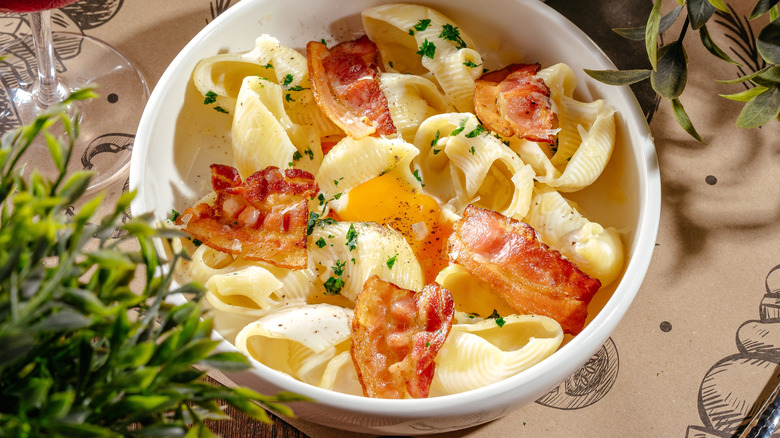
Who says pasta is only for lunch or dinner? Certainly not Alton Brown, who has no problem turning noodles into a breakfast-worthy dish. As he reasoned on his website, "If you're going to eat pasta on a regular basis, you should start with breakfast so you've got the whole day to work it off." He does have a point, considering a plate of pasta packs plenty of carbs to fuel you up, and you can easily add proteins like bacon, eggs, or sausage along with vegetables to make it a balanced meal.
If you need some inspiration for your breakfast pasta, Brown has a few different takes on the dish. One of his more adventurous ones combines spaghetti with eggs, anchovy, cheese, black pepper, chili crisp, and even a touch of coffee whisked together. He's also a fan of breakfast carbonara featuring linguine and crumbled breakfast sausage instead of the traditional pancetta, along with orange zest, green onions, eggs, cheese, black pepper, and breadcrumbs.
The great thing about breakfast pasta (or any pasta for that matter) is that it's flexible. You can use leftover pasta and raid your fridge for different proteins and vegetables. You can also hit up your pantry to experiment with different spices and sauces. Just remember the basics: cook your pasta al dente, temper your eggs carefully so they stay creamy, or add the hot pasta to the eggs and stir quickly, and try to balance your textures and flavors so that no one element overpowers the others.