

10 Red Flags At An Ice Cream Shop That Should Send You Running

There is something very euphoric and whimsical about visiting an ice cream shop. While beloved, we're not talking about your local Dairy Queen or some other fast food establishment — we're referring to the mom-and-pop creameries where you can smell the aroma of freshly baked waffle cones wafting from the kitchen and mixing with the equally saccharine scent of ice cream. These shops are a favorite among families and a must-visit when the craving for a sweet treat hits.
But not all ice cream shops are created equal. While we all have the idea in our heads of the picture-perfect ice cream shop, with cheerful staff members, sundaes piled high with toppings and syrups, and a pristine seating area, this isn't the case at every spot. The reality is that not all ice cream shops are up to snuff. Not only can you have a bad experience that makes you wish you had just taken your cone to go, but you could also end up getting an ice cream that had you wishing you had just bought a pint of Ben & Jerry's instead. Here are the red flags you should look for if you're gauging whether to visit that new scoop shack.
There are crystals on the top of ice cream
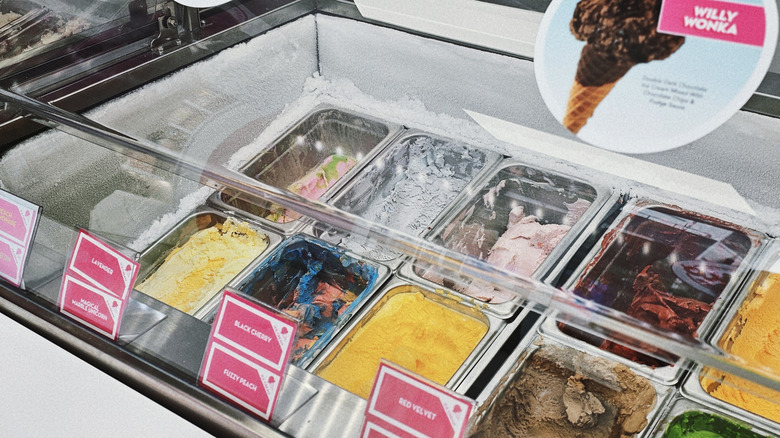
There are many visual indicators that the ice cream you're getting from a shop may not be top quality. When you walk into the shop, you're going to want to do a walkthrough of the flavor options — not just to find one you like, but to look for one big red flag: ice crystals.
Ice cream is frozen, so duh, why wouldn't there be ice crystals? Ice crystals are crucial for the mouthfeel of any frozen dessert, and they initially form when the cream is mixed inside a machine or cold vessel. The ice cream can recrystallize if its temperature increases, and it never really goes back to the same texture it once had. Besides constant freezing and thawing, other factors that impact the crystal structure of ice cream include exposure to cold air — which could feasibly happen if the ice cream drum is allowed to sit open in the display case for too long.
Ice crystals don't necessarily mean an ice cream is unsafe to eat. However, if you notice the ice creams have a layer of ice on top of them, you may want to either opt for the soft serve or select a new ice cream shop entirely, as you could be setting yourself up for a crunchy and icy bite.
Staff doesn't rinse the scoop in between flavors
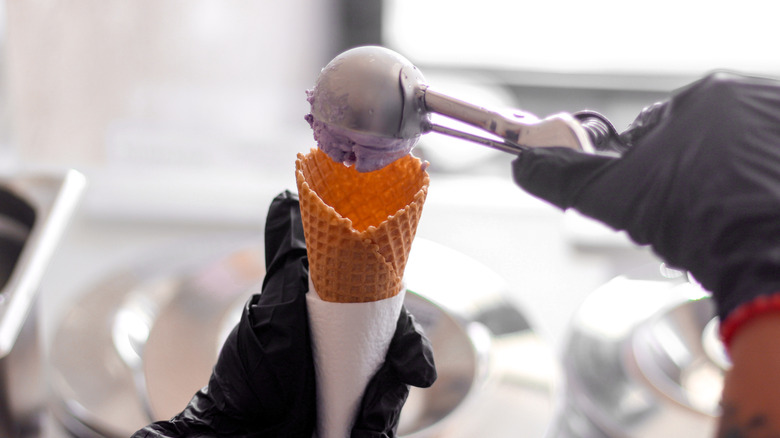
One of the most common pieces of equipment you'll find in an ice cream shop is an ice cream scoop. The scoop typically sits in a container of water (often warm) — called a dipper well — in between uses. The heat makes the ice cream easier to scoop, and it can also prevent flecks of peanut butter ice cream from getting into the carton of strawberry. Many of these wells have an automatic supply of water going to them, so staff don't have to switch out the water in between dunks.
If you don't see a dipper well around, or don't see employees changing their spades or scoops out in between flavors, you may want to find another scoop shop. Not only could you be setting yourself up for a menagerie of flavors on your cone, but it can also indicate that the staff doesn't care about using clean utensils or mitigating potential cross-contamination.
Employees aren't wearing gloves or taking hygiene seriously

Have you ever wondered why some ice cream cones have paper on the ends of them? As painstaking as it may be to carefully tear off the paper before diving into your birthday cake cone, the paper has an important sanitary function: Acting as a buffer between the employee's hands and yours. If you visit an ice cream shop that doesn't have papers on its cones — or you have to watch staff touch right above the paper with their exposed hands– you may want to consider visiting another shop, as there is no telling where the employee's hands have been. Sure, there can be signs posted reminding employees to wash their hands after they use the restroom, or policies in place that dictate how often employees should wash their hands while they're working on the line, but when a busy rush comes by, adhering to protocol can be difficult.
When visiting a scoop shack, check and see if employees are wearing gloves (and changing them frequently, especially after handling allergens). That being said, wearing gloves and purchasing cones with a safety paper on the bottom aren't the only two hygiene components that scoop shacks should abide by. Regardless of the type of restaurant or food-serving establishment, employees should have long hair neatly tied back or covered to prevent dropping any into food and should keep their fingernails short to limit bacteria buildup. If you don't see these practices in place, you may want to order your hot fudge sundae from somewhere else, as it indicates a lack of concern for food safety.
The shop doesn't make its own ice cream
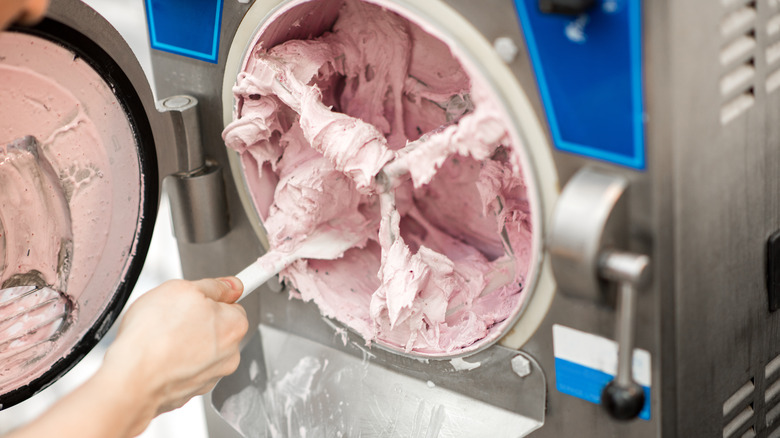
Listen, we're not going to say that mass-produced ice cream doesn't have a place in this world. But if you're visiting an ice cream shop because you want to have a taste of quality, made-in-house ice cream, you're going to want to make sure the establishment isn't just pawning off another brand as its own. Running an ice cream shop is expensive, sure, and buying all of the equipment to produce your own flavors in-house certainly doesn't help the bottom line. Combine that with having to nail the right ingredient ratio and produce the right quantity of ice cream, and it can be nothing short of a headache. When you can just duck into a walk-in and grab another drum of a pre-made flavor, it makes things a whole lot easier.
But an ice cream shop making its own flavors in-house just adds to its authenticity. If you are in search of a quality ice cream shop and notice that its flavors are "proudly made" by some regional brand or producer, you may want to rethink your dessert choice. Some brands will even print their logo on the drums, so you may need to do some sleuthing to decide if those "homemade" claims are bogus or not.
There is not a dedicated scoop for dairy-free ice cream

Dairy-free ice creams are becoming more and more popular at ice cream shops. Folks with dairy intolerances are no longer relegated to only raspberry sorbet; they can now find ice creams made from oat, almond, coconut milk, and more available at their local scoop shop. While it's nice that ice cream shops carry these flavor options, it can sometimes turn into a veggie-burger-cooked-on-a-shared-grill situation. Whether you have a dairy intolerance or allergy, or adhere to a plant-based lifestyle voluntarily, you should rest assured that your ice cream is being scooped with a separate tool from what's being used for every other dairy-containing flavor. Otherwise, you could be setting yourself up for an upset tummy or full-blown anaphylaxis.
While there are rinse bins for scoops, it's very hard for folks to properly clean and sanitize every nook and cranny with just a couple of dunks. If you are ordering a dairy-free scoop, the shop should be able to use a clean or separate scoop for your ice cream to prevent cross-contamination. If you can't verify this beforehand, it's always good to ask the staff if they can use a separate utensil.
Allergens go unlabeled
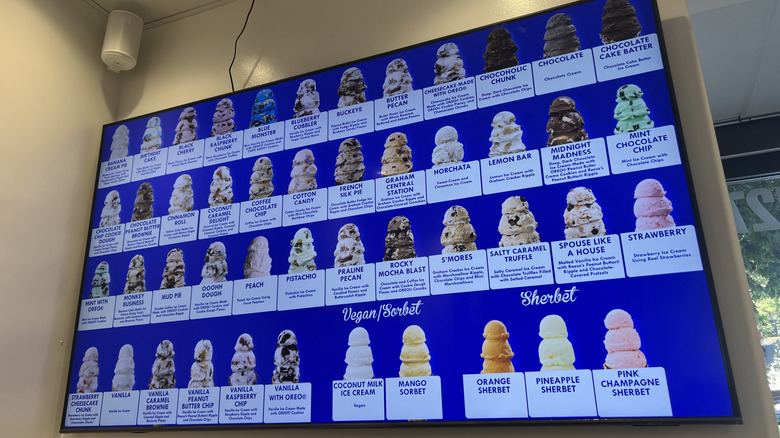
Ice cream shops are like a theme park for allergens. Not only do you have dairy in the ice cream, but the flavors may also contain some of the other major allergens, like peanuts, soy, and wheat. You also have toppings, including syrups, crumbled cookies, and candies, which may cause issues for some eaters.
If you are someone with an allergy, you may already be very well-versed at identifying some of the major allergens in popular candy toppings and obvious ice cream flavors (like peanut butter cup). But some of these allergens, including soy-derived additives and wheat-based cookies, may be more difficult to pinpoint. As such, visiting an ice cream shop that has its flavor ingredients and their respective allergens listed may be a green flag for you. You should also be able to ask staff about which flavors contain which allergens, and what policies are in place to prevent cross-contamination. If they shrug their shoulders and offer only a confused look, you'll want to take your business elsewhere.
Clear labeling benefits everyone. Sure, someone living without an allergy may not care whether a flavor contains peanuts or not, but clearly labeling every flavor also shows that the shop wants to be upfront with its customers about what's in their Moose Tracks or some other proprietary flavor. This can both reduce questions in line and prevent customers from ordering flavors they don't like.
Cleaning is neglected

Restaurants, including ice cream shops, are about more than just the food. People go to an ice cream shop, rather than eat their own pints at home, because of the atmosphere. If you visit a shop that doesn't pay attention to this part of the customer experience, you might not want to go back. One simple way that shops can make their customers feel welcome is by cleaning their seating area regularly. As anyone who has eaten an ice cream cone on a hot day knows, the stuff can get very messy, very quickly. So, imagine how much grime builds up as patron after patron dribbles their cotton-candy-Oreo-dreamsicle-surprise on the table.
There's no "right number" of times that staff should pass by and spray down the seating area. However, it's important that it's done regularly enough. It's not a restaurant, so there's usually no one bussing and wiping tables down in between customers. But if you notice the seating area is caked in sticky goop, you may want to take your cone to go.
The ice cream and topping selection is limited
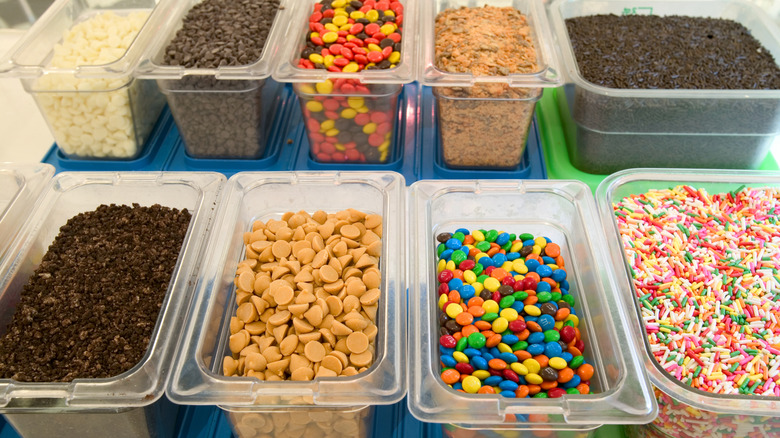
Let's make one thing clear: Not every ice cream shop can be like Baskin-Robbins and have what seems like a million flavors to choose from (it's actually around 31 flavors, but who's counting?). It takes a lot of freezer space and staff to have so many different offerings. But there should be a reliable enough selection of flavors and toppings that you can build your own sundae without having to 86 anything. A few staple flavors, like vanilla, chocolate, strawberry, and cookie-centric offerings, should do. As far as toppings go, you want to have all of your bases covered: Whipped cream, fudge, sprinkles, and a couple of candies are a good place to start.
Having a narrow selection isn't inherently a bad thing — and it can mean that the shop is focused more on quality over quantity. But it can signify poor planning if an ice cream shop is out of chocolate ice cream ... and vanilla ... and M&Ms during a busy service. If this continues to be a trend for the shop, you may be better off visiting a spot with more reliable offerings.
Staff aren't willing to help you

Anyone who has worked in food service for any length of time knows about "the stare." It's the one given to customers who file in at 9:59 p.m. when the restaurant closes at 10. Of course, there are some customer faux pas, including overstaying your welcome and being downright obnoxious, but your ice cream shop owners shouldn't be giving you this look in the middle of a shift. Part of being a good employee is creating a welcoming environment for customers; rolling your eyes when a patron asks what's in a flavor or audibly sighing when they ask for a sample of your newest specialty flavor certainly doesn't cultivate a happy vibe.
Usually, you can get a feel for a restaurant as soon as you walk in. If you see employees clear out and do other menial tasks when you try to place an order or act genuinely rude, you may be better off taking your business elsewhere.
The store doesn't attract a huge crowd

We all have a restaurant, coffee shop, or some other spot in our town that we've seen an open sign but never any customers. There are tons of variables influencing customer popularity, including location, hours, and the like, but it can also come down to product quality and overall customer experience. If you are wondering whether a shop is worth trying, looking at its customer flow — especially during what should be busy times — can be a good barometer.
It's important to note that a lack of flow can also cause a poor customer experience. Ice cream cones, for example, should always be fresh and snappy. If no one has ordered a cone in a while, you may be getting a stale one if you pay the shop a visit. The same can be said about toppings, which can sit on the counter for a long time, just waiting to be sprinkled over a sundae. Read customer reviews, scout out the area, and then decide whether you're better off getting store-bought ice cream or paying that shop a visit.