

10 Things You Should Never Clean With Vinegar
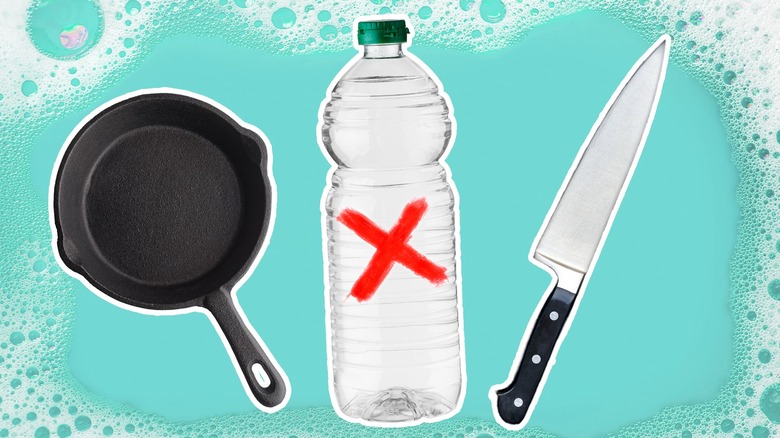
No cleaner receives quite the same amount of positive press as the poster child for the non-toxic movement: vinegar. People use it many different ways to keep their kitchens sparkling, from cleaning and sanitizing cutting boards to capturing pesky fruit flies. Not only has this ingredient received praise for its efficacy, but also because it doesn't come with many of the same negative health risks as chemical cleaners, including skin burns, respiratory distress, and the like. Cleaning vinegar, which has a higher acidity than standard distilled white vinegar, is not made for human consumption — so you shouldn't drink or ingest it. But it's still much gentler than chemical cleaners and is easy to find in a grocery store.
Despite all of vinegar's pros, there are some products that you're better off not cleaning with it. Vinegar is made of acetic acid, which has a low pH of around 2.5. This acidity can damage certain metals, stones, and materials, so you have to be careful where and when you use it. The next time you're planning your deep clean, be sure to skip vinegar on the following things.
1. Natural stone countertops

Vinegar is often thought to be a catch-all cleaning product for the kitchen. But one surface that should never come into contact with this acidic product is natural stone countertops. Marble, granite, limestone, and travertine are a few that can become degraded if they come into contact with vinegar. It can lead to dullness, pitting (tiny spaces forming between the crystals of the rock), and an overall loss of shine on the surface of your counters. Anyone who has installed a natural stone countertop knows that they aren't cheap, so the last thing you want to happen is for its quality to diminish.
The right way to clean a natural stone countertop is dependent on the type of stone. Generally speaking, you can wipe down marble, granite, and concrete countertops with a damp towel and dish detergent. Besides vinegar, you should also avoid any abrasive surfaces, like scouring pads, on these types of countertops as they can cause damage and scratches.
2. Anything with bleach
Mixing vinegar and bleach isn't just dangerous to the surface that you're working on; it can also generate fumes that can make you sick. When combined, bleach and vinegar generate chlorine gas, which can cause coughing, sneezing, watery eyes, and more. The reaction is caused when sodium hypochlorite, the primary ingredient in household bleach, interacts with the acetic acid in the vinegar.
Data gathered by the American Association of Poison Control Centers in 2016 reported that 35% of exposures to chlorine gas were the result of mixing household chemicals — like bleach and vinegar. It doesn't even take a lot of this gas to cause a reaction, and breathing in too much can even be deadly. Not only should you avoid mixing bleach directly from the bottle with vinegar, but you should also read the labels of other cleaning products that you intend to use to prevent inadvertently generating noxious fumes. Bleach can be found in everything from disinfectants to detergents, so reading the label before wiping a surface down with vinegar could potentially save your life.
It's pretty easy to tell when you've accidentally made chlorine gas, as the odor is very pungent and noticeable. If you don't feel well while wiping down surfaces with vinegar and another cleaner, you'll want to air out the area and leave so that the gases can dissipate. You may also need to seek medical attention. Besides vinegar, you should also avoid mixing ammonia with bleach, as it can also release chlorine gas.
3. Washing machines
We all know the smell of a musty washing machine, and if you don't clean your appliance enough, your clothes might start to smell a little funky, too. But vinegar is one ingredient that you shouldn't use to clean your laundry machine. While you may be able to use vinegar to help lift a stain from your clothing or dish towels, adding it to the appliance directly is a whole different story. Vinegar is highly acidic, so pouring it into the machine can cause damage to the seals, hoses, and inner workings of the machine. However, you may be able to get away with using vinegar to clean the outside of the machine, as well as the dispensers. A mixture of equal parts water and vinegar can help clean up any fabric softener residue; you'll just want to keep the acidic cleaner away from anything rubber in your machine.
Instead of using vinegar inside the drum of your machine, you may want to try using bleach or an approved washing machine cleaner. Since machines all operate differently (and thus require different cleaning instructions), it's advised that you look at your manual first. Regardless, cleaning your machine regularly can help cut back on gunk and prevent you from seeking drastic measures — like pouring a whole bottle of vinegar into the drum.
In the same vein, you should also avoid using vinegar inside your dishwasher. While some methods might be safe, like descaling it with vinegar and baking soda, the acidic nature of vinegar can do long-term damage to rubber seals and gaskets.
4. Knives
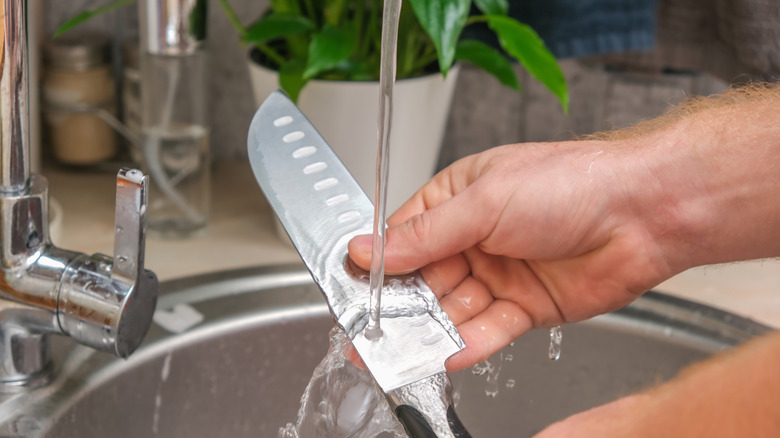
Like many home cooks, we take kitchen knives very seriously. Not cleaning knives correctly is one of the biggest mistakes that you can make with them. One of the biggest no-nos, besides putting them in the dishwasher, is cleaning them with vinegar. Vinegar not only damages the finish of the knife, but it can also cause pitting. The only occasion where it might be okay to use vinegar to clean your kitchen knives is if you notice big, rusty splotches on the blade. You can submerge the blade in a glass filled with vinegar, let it sit for a few minutes, then remove the rust using a standard kitchen sponge.
To keep your knives in tip-top shape, always clean them by hand with a little bit of dish soap and water. This should be done right after you use the knife, as it can prevent build-up and keep the material at its best. Equally important as washing your knives is drying them; high-carbon knives are prone to rusting, so removing any excess water before storing or covering them can help keep rust at bay.
5. Small appliances
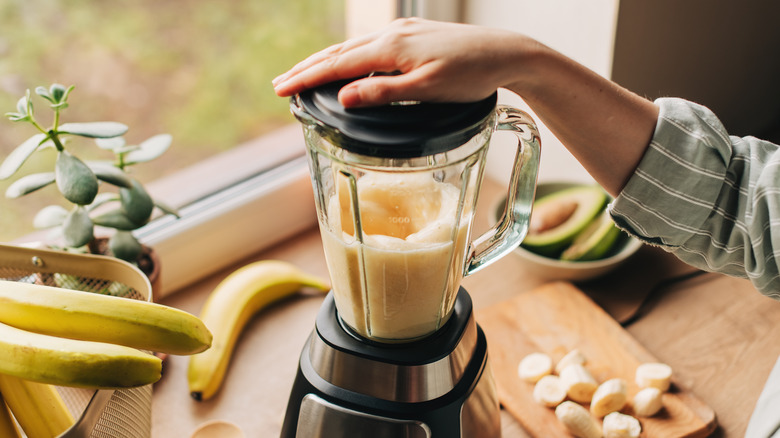
Small appliances can get really gunky, really fast, especially if you use them every day. Your blender can take a beating from your daily smoothies, and your microwave is like a treasure trove of stuck-on food and grime. However, you'll need to resist the temptation to clean your small appliances with vinegar. While using a mixture of vinegar and water might be okay for removing built-up grime on the outside of the appliance, you'll want to avoid using it on anything rubber (like gaskets) or where that vinegar could break down the materials.
It's also important to avoid using vinegar on stainless steel. The occasional wipe with a vinegar-coated cloth is fine, but cleaning your appliances (or any stainless steel surface, for that matter) repeatedly with vinegar can cause the stainless steel to break down. Most stainless steel surfaces are protected with a layer of chromium oxide, which can stave off corrosion, but only to a point. Leaving vinegar on a stainless steel microwave or the outside of a toaster for 10 minutes can cause discoloration and make the surface more prone to smudges, streaks, and pitting. A gentle cloth and some soapy water will do the trick for most appliances, though you can consult the manufacturer's guide for more precise instructions.
6. Ranges

You shouldn't use vinegar to clean many of the items and appliances on this list because its acidity can cause damage. But when it comes to cleaning ranges and stoves, you should avoid using vinegar just because it doesn't work as well as other cleaners. Stoves and ranges are the workhorses of the kitchen, and they can take a pretty heavy beating. The metals are often coated in enamel or some sort of protective coating, and vinegar is totally safe to use on glass. However, vinegar just isn't capable of tackling grease like other cleaning solutions are.
The exact cleaning instructions to use to clean your cooktop will depend on what kind of surface you're working with. To clean a glass stove top, you'll want to first remove any built-on food residue with a razor before adding your stovetop-specific cleaner, letting it dry, and then wiping it off with a cloth. Cleaning the surface regularly will prevent grime and build up — and those horrible smells emanating from your stovetop as you watch last night's dinner splatter burn away. Ceramic stovetops require some care as well; just avoid any abrasive chemicals or solutions like bleach, baking soda, or vinegar to prevent scratching your cooktop.
7. Tile grout
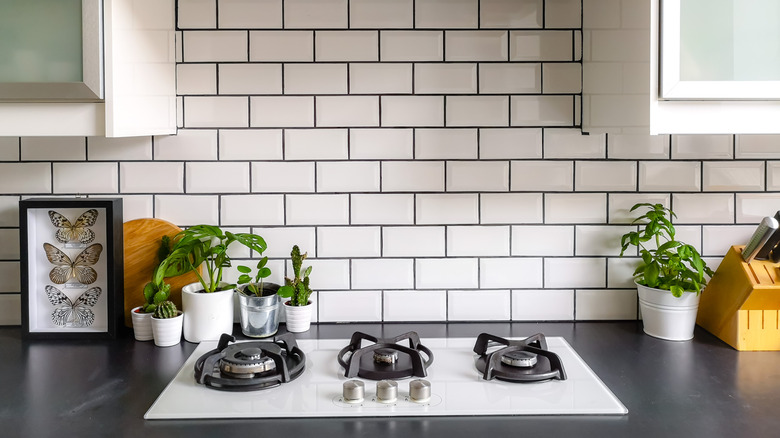
Grout is an interesting material, seeing as it's kind of made to look "dirty." You'll find it wedged between backsplashes and tiles, and there are some days where you may have the urge to scrub the living daylights out of it until it looks decidedly less dirty. However, you'll want to avoid doing this with vinegar, as the acid can do damage to the material. If applied frequently, the vinegar can degrade the grout, which can allow the things you don't want in your grout — like mold and mildew — to thrive.
Even if you let a little bit of vinegar and water sit on the grout, it likely won't make a difference. Specifically made grout cleaners are your best option, though some people also report favorable results by mixing together hydrogen peroxide and baking soda (some DIY recipes also use dish soap) and putting in some elbow grease. You can use an old toothbrush to get in between the lines; this can be helpful for grimy kitchen floors or backsplashes. Just make sure to vent the area well if you're using a chemical cleaner and rinse to remove any residual chemicals.
8. Hardwood floors
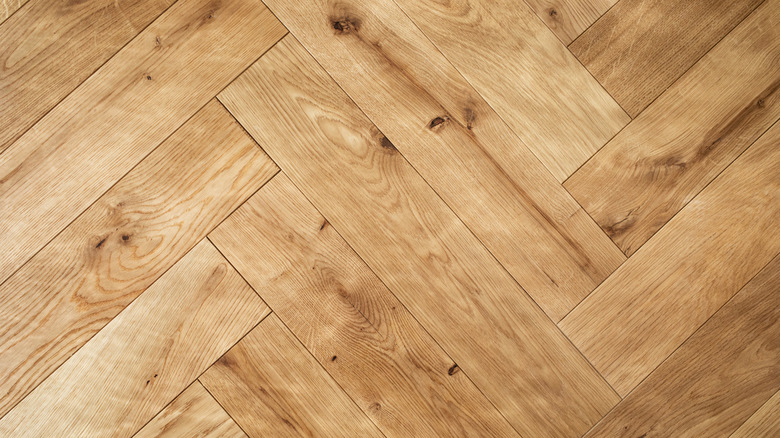
Hardwood floors are a beautiful thing to have in your home, though keeping them looking their best is a tough job. Harsh chemicals and cleaners, including vinegar and lemon juice, can damage wood, which is why experts recommend using a different type of cleaner for them. It can cause discoloration, make the wood lose its shine, and damage the protective coating on its exterior. The only type of hardwood floors you may be able to get away with using vinegar on are sealed hardwoods — though you should always use a diluted vinegar and water solution on your surfaces.
Before you start cleaning, be sure to remove any dirt, debris, or pet hair using a vacuum. That way, when you go to clean it with a mop or a rag, you won't have to worry about scratching the surface. Mop using a damp head; too much water can do damage to the floors. To avoid streaks, mop with the direction of the grain and follow it up with a dry mop to soak up any residual moisture.
9. Screens
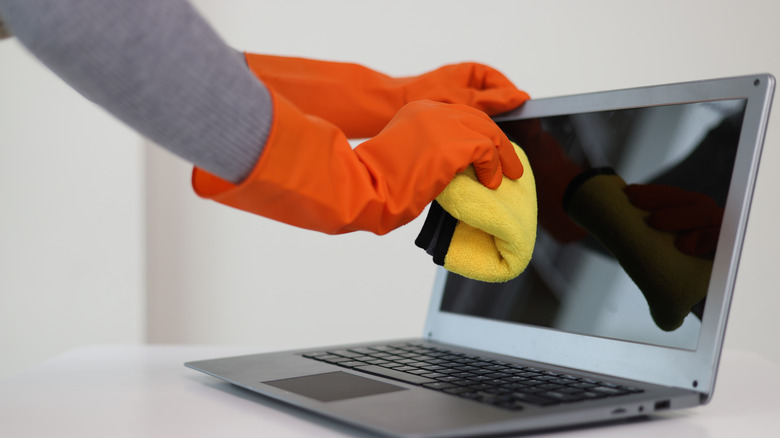
If you're a member of the greasy fingers club, you know how easy it is for your laptop, tablets, and phone to develop a greasy and grimy coating on the top that not only looks gross, but also can make it feel weird to type and operate the appliance. Don't reach for vinegar if you need to wipe up your mess, though, as the acid can cause damage to the anti-glare coating on the screen and can cause issues with the touchscreen. Plus, if the liquid seeps deeper into the appliance, it can cause damage to the operating system or cause short-circuiting. While some folks report favorable results with a mixture of water and vinegar, there are many other, better alternatives out there for cleaning your screens.
A soft sponge or cloth can get most of the grime off, while a little bit of dish soap and distilled water can help break down particularly sticky spots. Distilled water is recommended over tap water, as the minerals in hard water can damage the surface. Technology and water don't mix (as anyone who has been thrown in a pool with a phone in their pocket would know), so you should always apply any cleaning solution to a microfiber cloth (which is lint-free and won't damage the surface), rather than spraying or soaking the screen with it. You also may want to invest in a specific screen cleaner to avoid any potential damage.
10. Cast iron
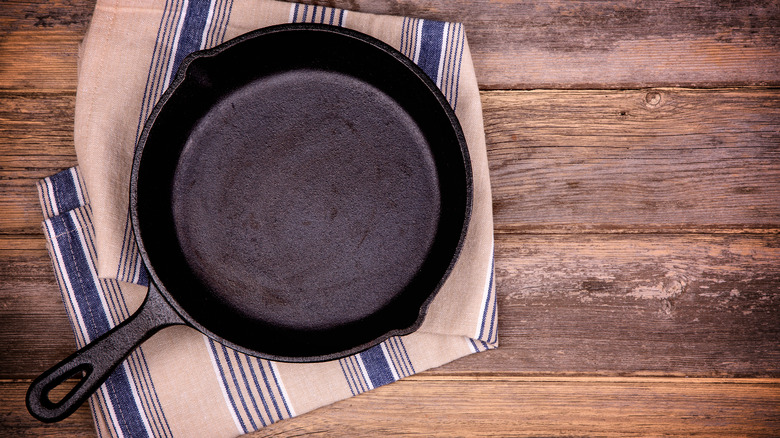
Cast iron pans are an investment. Not only are they not cheap, but you need to maintain their surface by cleaning them, seasoning them, and storing them correctly. The best way to clean a cast iron skillet is to avoid picking up a bottle of vinegar (or worse, committing the cardinal sin of cast iron and putting your skillet in the dishwasher). Some cooking experts go so far as to recommend not cooking acidic foods in your cast iron pan, like tomato sauce, because the acid degrades the iron, which causes your food to taste metallic. It can also cause that seasoning that you spent so much time and effort building to go to waste. So, imagine what adding straight vinegar could do to your beloved cast iron skillet.
The only time where using vinegar could be helpful is if your pan is riddled with rust. And we're not just talking a small, little blip on the bottom of the pan, which can be attended to by rubbing kosher salt on the spot with a towel. Rather, this is a five-alarm, I'm-going-to-throw-the-pan-out-if-this-doesn't-work situation. You can mix together distilled white vinegar and water, letting the mixture sit in it until the rust literally flakes off. Once the rust is gone, you'll want to remove the pan from the solution, as the vinegar will continue eating into the iron if it's left on.