

10 Delicious Drinks That Were Invented In NYC

We may receive a commission on purchases made from links.
New York City's culinary scene — from sizzling pies to the best French restaurants — would be nothing without a stiff drink. Thanks to the confluence of glitz, glam, and legendary nightlife, the metropolis harbors a long tradition of tending bar at the top of its game. Whether it were the illicit speakeasies of the past, or the happy hour watering holes today, the Big Apple's cultivated an identity based on craftsmanship, a willingness to torch the rule book in favor of permanent playing.
To appreciate the city's drink culture, starting with the creations that took flight at home is a great place to start. Think of the cocktails as alcoholic experiments — the cunning minds of bartenders, ripe with an idea, or matters of circumstance in the eras where an ingenious concoction first took root. For the origin stories we know, they were spawned in world-renowned lounges and neighborhood spots, by faceless tavern operators and mixologists known by name.
As you'll soon discover, there are a lot more than dirty martinis up the city's sleeves (though they're classic, and non-negotiable). These 10 delicious drinks invented in New York City changed its landscape forever.
1. Manhattan
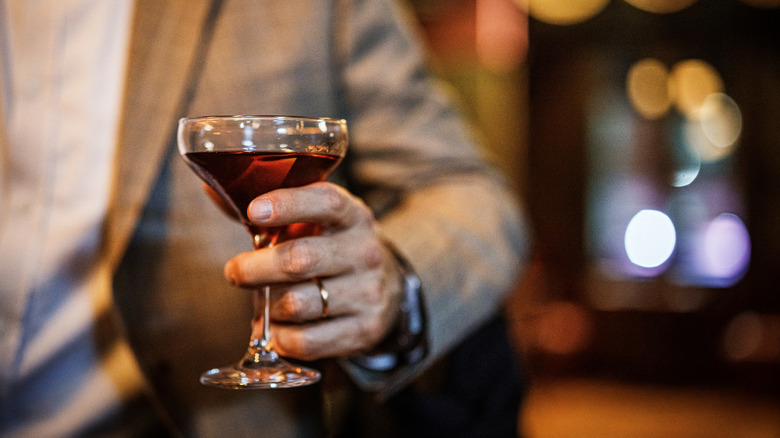
One of the oldest cocktails you can still drink today is the Manhattan. For such a simple recipe — a trifecta of sweet vermouth, whiskey, and aromatic bitters to finish — the Manhattan is steeped in some intriguing lore. Thumbing through its history, the drink's background is a little shaky although there's no disputing the formula came about in the late-19th century in New York City. The most popular theory credits a diplomatic supper for the cocktail's birth, which took place after Christmas at the luxurious Manhattan Club. Experts, however, have uncovered a likelier possibility: a bar owner allegedly named George Black may have been the one who pioneered the recipe. The mysterious figure was said to have operated a lounge of his own called the Manhattan Inn during that period.
Aside from the on-the-nose name, the Manhattan exemplifies everything about the borough as an epicenter of culture and nightlife. Each aspect, from the smoke of the whiskey to the caramel undertones of the vermouth and aromatics, leverages depth and simplicity over flash and spectacle. A rye whiskey is typical in the traditional recipe, but it's common for bartenders to riff with other spirits. Bourbon is next in line for its warming array of contrasting characteristics — the woodsy, vanilla notes lend a smooth touch to round out its profile.
2. Red Snapper
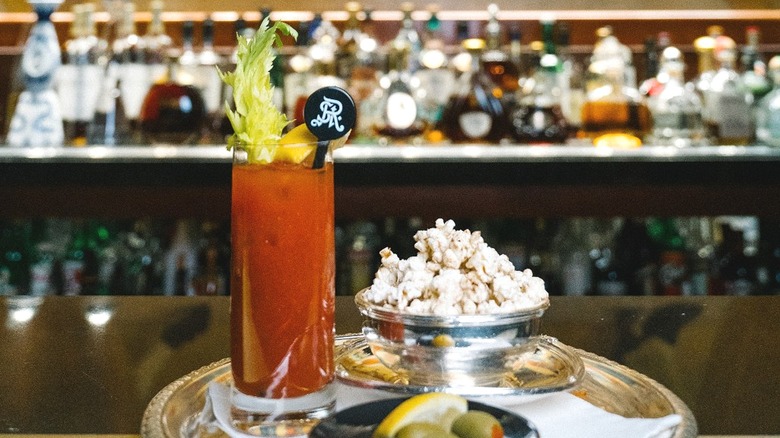
We've all partaken in a Bloody Mary (or two) when brunching with our friends, but did you know about this other variant, the Red Snapper? Not only did it emerge from the metropolis that eight million people call home, but it was actually engineered by the exact same person. French bartender Fernand Petiot crafted the tomato-based drink in Paris at the famous Harry's New York Bar. Its name was quite ironic, given that, in the 1920s, he ended up across the pond. He moved to the city's St. Regis Hotel, debuting an improved recipe at the King Cole Bar.
The difference between a Red Snapper and a Bloody Mary is minuscule, but distinct. It's a matter of spirits, mostly. Gin is subbed in for vodka, a swap that descends from the limitations Prohibition wrought during that period. Even though the beverage emerged after its repeal, Americans allegedly struggled to get their hands on the clear liquor. This made it a suitable replacement.
The recipe relies on tomato juice, along with Worcestershire sauce, a squeeze of lemon, and spicier enhancements like cayenne and Tabasco. Some resorts go bonkers on garnishes, but at minimum, olives or a celery stalk will suffice. It might take a back seat at breakfast joints today, but locally, the drink still gets its due. In 2024, it rolled out for a spell for its 90th anniversary.
3. Martini
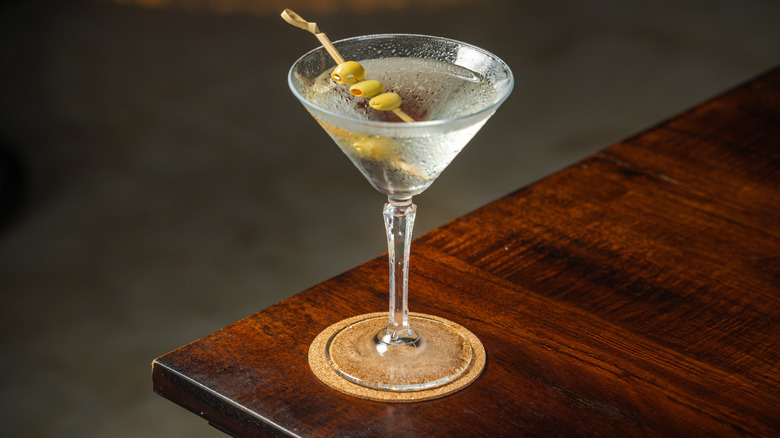
We all know the martini, the sleekest of late-hour indulgences. A swanky porterhouse dinner at Delmonico's wouldn't be complete without its austere mix of gin and sweet vermouth. "The City That Never Sleeps" claims the drink as an original, although crediting a particular person to its creation is still a difficult task. Sources claim it first hit the printing press in 1884 — published in "The Modern Bartender" by O.H. Byron — and undergoing various aliases and recipes alike.
It was the "dry" martini that came in vogue around the early 20th century. This version was popularized by The Knickerbocker Hotel in Times Square, pioneering the iconic glass emphasizing a heavier pour of the base spirit (vodka or gin) with a vermouth far less sweet from initial versions. In this case, the name was attributed to the bartender associated with this variation, Martini de Arma di Taggia.
The martini's taken on many shapes and forms over time, that much we can see. Whether spiked with olive brine for a "dirty" twist or a buzzy espresso shot, the canvas is receptive to endless tinkering. It crystallizes the celebratory, festive mood New York banks on as a worldwide destination.
4. Cosmopolitan
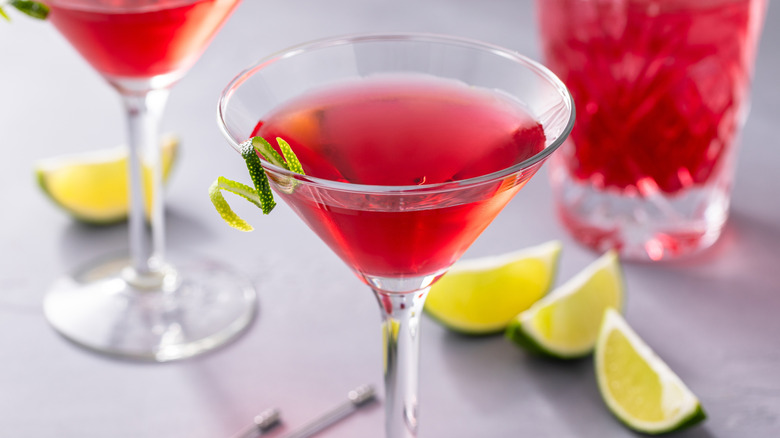
Flashy clubs where the music is blasting calls for something light and effervescent to ride out the night. The Cosmopolitan is defined by its tart flavor, consisting of cranberry juice with vodka and lime. It was already a mainstay in San Francisco and South Beach, Florida, but the tipsy sip has seen multiple iterations — the most famous of which originated from Lower Manhattan in the 1980s.
The roots of the Cosmopolitan are still up for debate, but in terms of the stylish glass Carrie Bradshaw nursed on screen, we have The Odeon to thank for that. Toby Cecchini, who tended bar at the Tribeca bistro, spiked the cranberry mix with a little lime juice and Cointreau, an orange liqueur. Prior to Cecchini's game-changing spin, the Cosmo wasn't commended for its craftsmanship. Bartenders would commonly sling drinks with bottom-shelf booze and saccharine syrups intended to go down sugary and quick. Juicing real fruit wasn't just for show — it was a flavorful revelation.
Biting, zingy, and stunningly sip-able, few cocktails fuse chicness and refreshment quite like the Cosmo. It's normalized seeing numerous cocktail variations at cocktail lounges around the city, and for good reason: it's pure NYC in a glass.
5. Penicillin
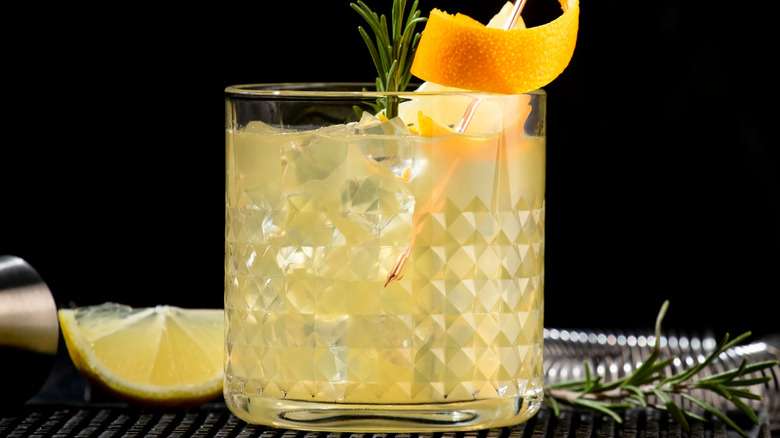
Sick with a cold, you've likely indulged in a cup of hot tea with honey and a lemon wedge. As it turns out, these medicinal properties are a mixologist's gold mine: look to one of the more notable concoctions, the Penicillin, that unleashed New York's cocktail scene as a global powerhouse. It's citrusy, sweet, and transcendently complex, undoubtedly the result of two types of scotch added to it. A blended variety lays down the liquor's mellower undertones, while a peaty style acts as a finishing (or "float").
The Penicillin emerged from a bar in the Lower East Side called Milk and Honey. Sam Ross, who worked there, happened upon the mixture after tinkering with an existing recipe the establishment already had on the roster. Later, the drink spread across the West Coast, its upsurge the result of Ross's involvement with another watering hole.
Upping the ante on the whiskey sour, the Penicillin has segued into the happy hour scene fairly recently. Infusing the syrup with honey glosses over the booze's bitterness, but the potency of the scotch and ginger still peek through, tingling the palate. While the speakeasy where it first made waves is no longer in business, it doesn't have to be: lounges in all corners of the country have carried on its legacy.
6. Trinidad Sour
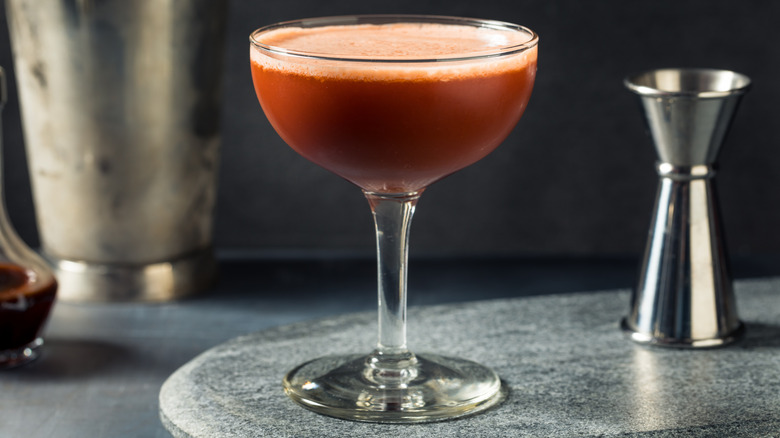
New Yorkers thrive on libations with resolute, whiskey-forward dispositions. So how does one square the Trinidad Sour? Canonized at the Clover Club in Brooklyn, this beverage is a magnificent example of experimentation paying off. Giuseppe Giovanni took an extreme move unheard of in bar circles by centering bitters. Normally acting as an accent to classic cocktails, the bartender in this case splashed in 1.5-ounces (a whopping amount), and shook it with lemon juice and rye whiskey to ground the spiciness anchoring the profile. Almond orgeat (like this bottle from Liber & Co.) leaves a pleasant nuttiness.
Naturally, the unorthodox approach did not register with the city's imbibers at that time; the beverage tanked a local contest, per Giovanni's admission to Chilled. Still, it's not hard to appreciate the daring vision that went into this newfangled concoction; it takes the script and flips it right on its head. Shaken, it turns frothy and lush, letting the robust flavors take the palate by surprise with one sip. The tropical character is clearly undisputed, but the drink's name alludes specifically to its signature flavoring agent (House of Angostura, the company, is based in the Caribbean region). The Trinidad Sour blazed a trail, now on the books for good.
7. The Bronx
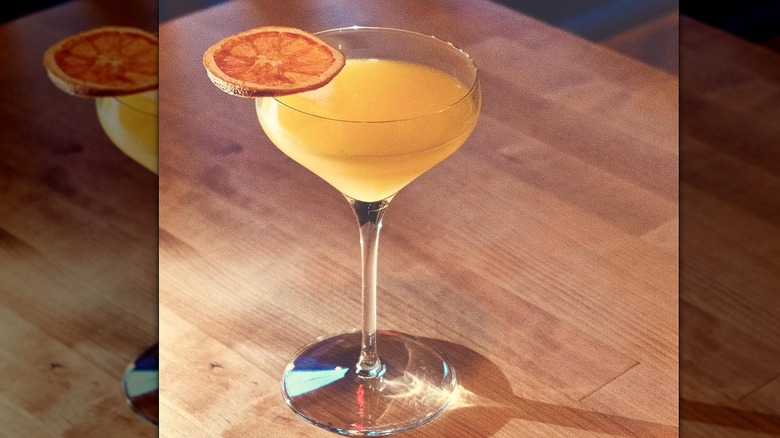
Another relic from NYC's Prohibition days is the Bronx cocktail. That might explain why some readers won't recognize it. For those not in the know, it's a gin specialty, marrying vermouth with orange juice in a sophisticated coupe glass. Less showy than other alcoholic creations from NYC, drinkers regardless have a friend in the Bronx for its purist character. The sweet and dry vermouth, poured in equal portions, lends a dimension and depth that balances the sugary character of the citrus fruit.
Conflicting testimonies cite multiple people behind the beverage who resided in other cities on the East Coast (Pittsburgh and Philadelphia). At the end of the day, though, the libation is traced back to the Waldorf-Astoria Hotel. The theory on the books positions John E. O'Connor with whipping up the concoction just at the turn of the 20th century. In terms of the name, the borough itself is just one part of the story. Supposedly the bartender ventured out to the Bronx Zoo (opened in 1899) and was so taken by the exotic creatures, he dedicated the beverage in their name.
Obscurity aside, the beverage remains integral to the city's cocktail traditions. It might get a bad rap, but it's a necessary element to a far bigger chapter in New York's drinking scene.
8. Gin-Gin Mule
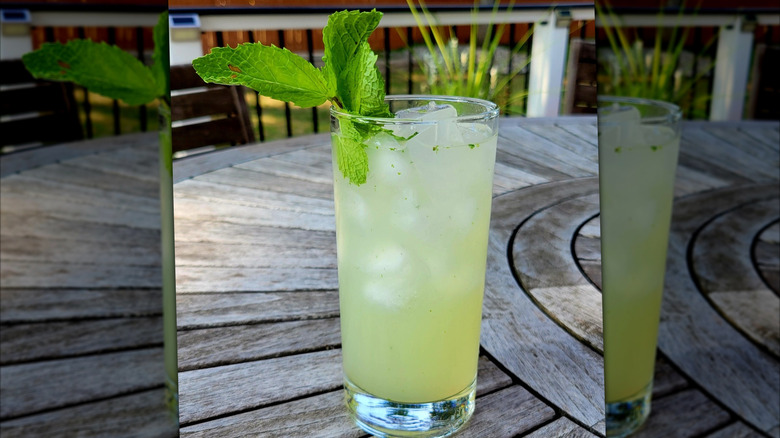
If the mojito and the Moscow Mule had a baby, it would look something like the Gin-Gin Mule. Originating in Greenwich Village a quarter-century ago, the bartender Audrey Saunders — who pioneered the highball riff at the Pegu Club — had the idea of subbing in gin (not vodka) as the prominent spirit. To prepare it, bartenders will start by muddling mint leaves with simple sugar and lime juice. Then, they're rattled in a cocktail shaker with ginger beer — poured, of course, over ice in the iconic highball glass. Marrying spicy heat with an herbal tinge, the beverage is keen on refreshing while harboring a subtle bite.
The beverage was ground-breaking, revitalizing gin from an outdated relic to a booze bartenders can't live without. Unfortunately, the Pegu Club isn't around anymore, but the perks of its notoriety means it isn't hard to grab one. Alternatively, with a set of your own Godinger Highball Drinking Glasses, you can recreate the fizzy elixir when a trip to the big city isn't in the cards. Saunders' version used a homemade soda which could be shaken with the remaining ingredients, but a bottle soda works, too — just make sure to avoid mixing it in and use it as a top-off.
9. Oaxaca Old-Fashioned
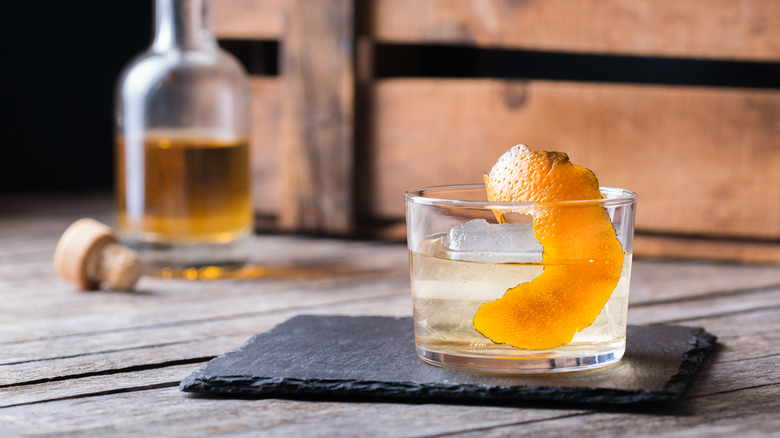
Death & Company, hands down one of the Big Apple's must-visit cocktail bars, is a den of dazzling innovation. It shouldn't phase even the most jaded of residents that delicious drinks would come to fruition within its darkened doors. Concocted in 2007, the Oaxaca Old-Fashioned was a variation one of its bartenders, Phil Ward, spearheaded at the lounge. This rendition gave the Old-Fashioned a smoky makeover, incorporating a double-punch of mezcal and reposado tequila, and stirring it together with agave simple syrup and Angostura bitters. To level up presentation, an orange peel is broiled to add a flame-licked flourish.
Authorities on the subject credit Ward's innovation with boosting mezcal, figuratively, to the top of the shelf. Indeed, the cocktail's ratios gave mixologists a lot to talk about. Standard procedure calls for a half-ounce of mezcal, while an ounce-and-a-half of the tequila, tips the mix into boozy territory. With the sweeteners on deck, you appreciate the warming potency that makes the regular version a salve during the city's harsh winters.
10. Pickleback
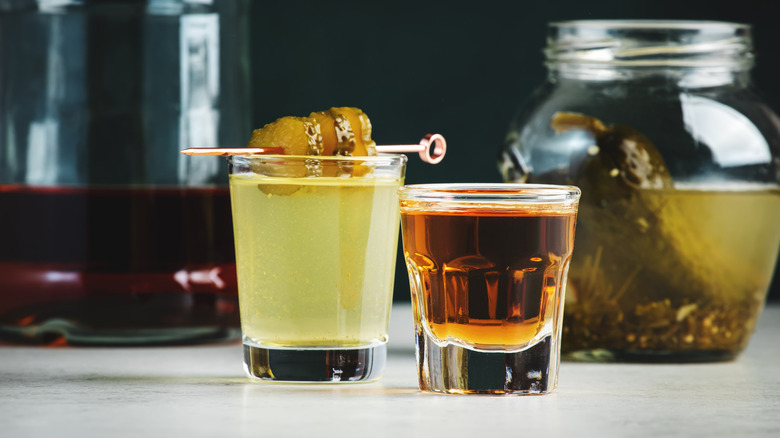
"Invented" is doing some heavy lifting to describe the Pickleback. With one shot of bottom-barrel whiskey and another shot of acidic pickle brine, it feels like a cobbled-together late-night snack more than a recipe. The Bushwick Country Club, a dive bar in Brooklyn, encountered a patron request the pairing after Reggie Cunningham, one of the bartenders, was absently munching on pickles behind the counter. For context, the business had jars of pickles from McClure's, which at that time was active out of an apartment in the same building. Because they lacked the space to store their product, the bar obliged stashing extra stock. Meaning, they could indulge this bizarre idea that's now as common as the regulars who walk in.
Folks have likely savored this forever, but after 2006 when it first took off, it spread like wildfire. The contrast of flavors, as well as the absence of spectacle, made it a sensation in the Empire State — and the rest of the globe. The original Pickleback shot used Old Crow Whiskey, but as long as the bottle is bargain-level, then it fits into its no-frills spirit. The boozy heat, with the instantaneous relief of pickle juice, is still a reward for the drunken and daring.