

Not All Sourdough Bread Is Vegan: What To Know Before You Order
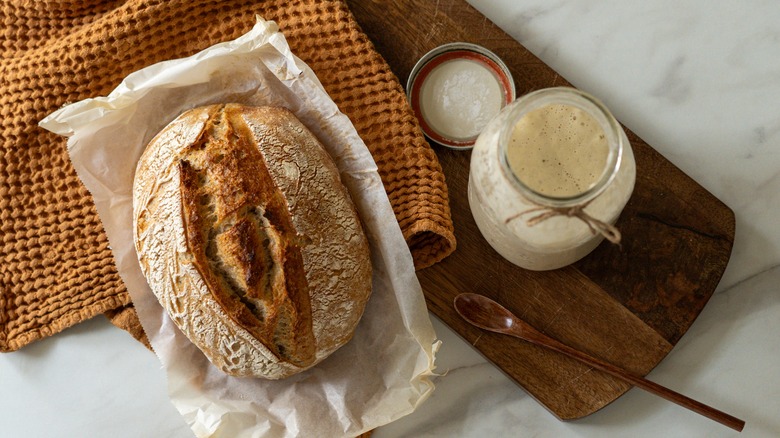
Sourdough bread is beloved for many reasons. An obvious inclusion in the list of best bread choices for an elite sandwich, sourdough's signature tangy flavor makes for a delightful complement to your choice of sweet and/or savory fillings. Its rustic crust offers a satisfying crunch to the fluffy interior; what's not to like? It's one of the oldest forms of bread ever made, and over time, it has evolved into a mainstay in the world of bread-making.
Sourdough bread's characteristic tang comes from a process of fermentation that is instigated by the components of a sourdough starter, which ultimately impacts the final flavors and aromas of the bread. Usually, sourdough bread is a mixture of vegan-friendly ingredients and requires no animal-derived components. This includes that starter, which contains microbes like wild yeast, which produces carbon dioxide to help the dough rise, and lactic acid-producing bacteria, which creates the "sour" in sourdough. So, in most scenarios, sourdough is suitable for vegans and plant-based eaters.
However, there are some instances when the sourdough may contain animal-derived ingredients. Sometimes, bakers may use dairy-based yogurt in the sourdough starter, and some commercial brands may include sneaky ingredients that may have originated from an animal source. Though rare, you may also come across egg as a listed ingredient, and some sweet sourdough breads include animal-based dairy like milk and butter. Whole-wheat sourdoughs often contain honey for sweetness, so make sure to peruse the ingredients list when shopping at the store, or check with your local baker when purchasing a loaf of bread from them directly. Better yet, consider making your own loaf of sourdough and infuse your kitchen with the mouthwatering aromas of an artisanal bakery.
Vegan-friendly sourdough bread from around the world
The visual of sourdough bread is often that of a sizable, batard-shaped loaf that is fresh out of the oven, waiting to be sliced and savored in an open-faced sandwich at a quaint neighborhood café. But given the diversity of bread varieties, which includes the category of sourdough bread, let's delve into how different countries around the world that tap into the science of fermentation to deliver their own iteration of sourdough, some of which happen to be vegan-friendly.
For starters, the history of sourdough can be traced back to an apparent fortuitous mistake that dates back centuries to Ancient Egypt. The lore is that some bread dough was accidentally left out, which allowed wild yeast to enter the mixture, causing the dough to rise. The result was a better-tasting bread with a lighter texture. Whether or not Ancient Egyptians are truly the ones to be credited for this gastronomic invention, there's no denying that different cultural cuisines have tapped into fermentation to deliver flavorsome results.
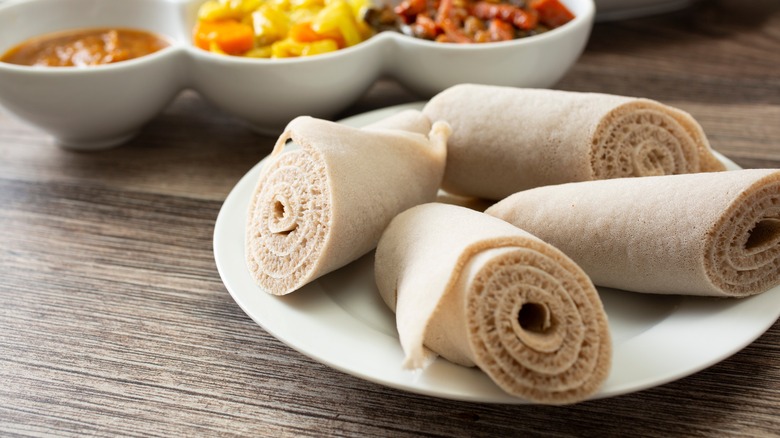
Take Ethiopian injera, for instance, which, unlike the conventional breads and wraps we are familiar with, is made by fermenting teff flour for several days, after which it is cooked into crepe-like shapes and served with hearty, aromatic stews. In Indian cuisine, former Vice President Kamala Harris' favorite breakfast food, dosai, is like a fermented crepe made with a fermented batter of rice and lentils instead of white flour, making it a naturally gluten-free dish as well. Other grain-based breads include Borodinsky, a popular Russian sourdough made with rye and slightly sweetened with molasses. In contrast, the more popular Pumpernickel bread is made with a mixture of rye and wheat flour.