

9 Sodas That Were Popular In The '60s
We may receive a commission on purchases made from links.
Call it coke, call it pop, call it soda. Whatever you call it, soft drinks are a staple of the American diet that are here to stay. Though the first American soda brand was an invigorating ginger ale from the Vernor's brand, which made its way into our hearts and our bellies in 1866, many different varieties of pop have come and gone throughout the years.
One period that was particularly prolific for soda production was the 1960s. A number of distinctive soda flavors were introduced by various brands during this somewhat tumultuous decade, which was punctuated by political uncertainty and counterculture movements. These sodas included recreations of old favorites, as well as new flavors representing the unique flavors and quirky trends of this era of rapid change. From iconic diet pop to chocolate-flavored fizzy drinks, here are some of the sodas that were popular in the '60s but have since disappeared from the market.
1. Teem
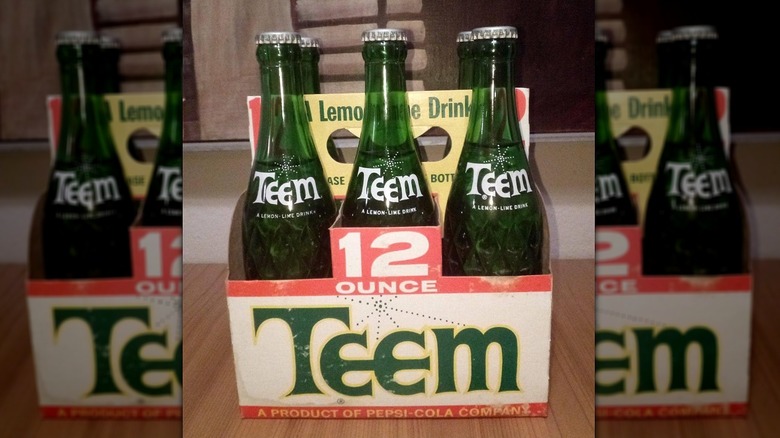
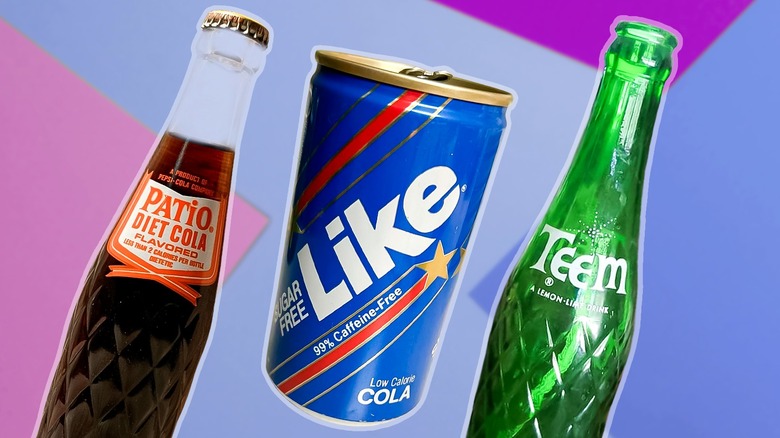
Before Sierra Mist evolved into Starry, there was Teem. Introduced on April 10, 1959, this lemon-lime soda was the first of its kind produced by the Pepsi-Cola Company. The beverage, which was originally named Duet until a margarine by the same name was introduced by a competitor, had been developed to challenge rising superstar 7Up. The clear, light, effervescent libation packaged in a vibrant, emerald-hued bottle was an almost instant smash, hitting markets across the country.
Despite initial success, the popularity of Teem was relatively short-lived. By 1984, sales in the United States were halted and Teem was superseded by a new kid in town known as Slice, which was launched by the Pepsi-Cola Company that same year. That said, Teem continued to be popular abroad in countries across Africa, Asia, Latin America, and the Middle East through the 1990s. Today, Teem is largely a relic of a bygone era, only found in select markets that seem frozen in time.
2. Like Lemon-Lime Diet Soda
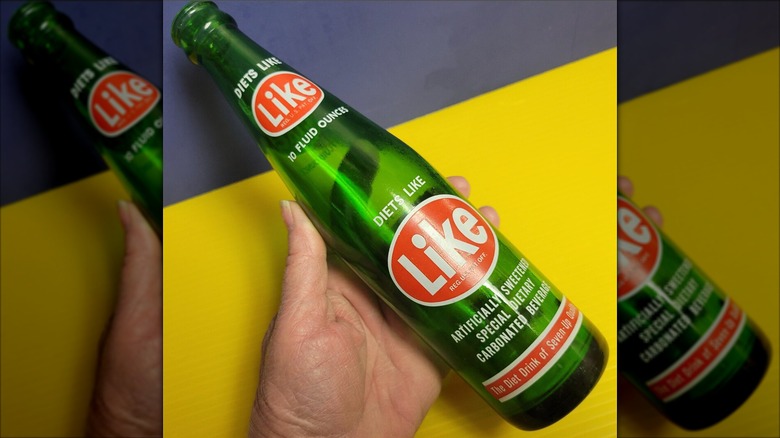
While there are a number of popular diet sodas on the market today, back in the 1960s, these were few and far between. At the time, the 7Up Company saw an opportunity to enter an untapped market and began exploring its options. It landed on what became known as Like Lemon-Lime Diet Soda. This fizzy drink, which premiered in 1963, was a sugar-free version of 7Up widely marketed to women.
It was made using a sweetener known as cyclamate, a non-caloric, sugar substitute that emerged in the 1950s. It was 30 to 40 times sweeter than sugar, water soluble, and more palatable than other sugar substitutes when paired with saccharin, making it ideal for use in a variety of food and beverage products. Unfortunately, in 1969, the substance was banned by the U.S. Food and Drug Administration due to concerns over tests in animals indicating it may be potentially carcinogenic. With this ban came the end of Like Lemon-Lime Diet Soda.
The Like name was not revived until 1982, when new owners of the 7Up Company — namely Phillip Morris — set its sights on developing a caffeine-free soda drink to compete with heavy hitters like Pepsi. The drink was dubbed Like Cola and its distribution began in 1983. While it had some modest success, including a NASCAR sponsorship and ad campaigns by celebrities like Tim Conway, Like Cola couldn't keep up with Coke and Pepsi. By 1992, it had virtually disappeared from store shelves nationwide.
3. TaB
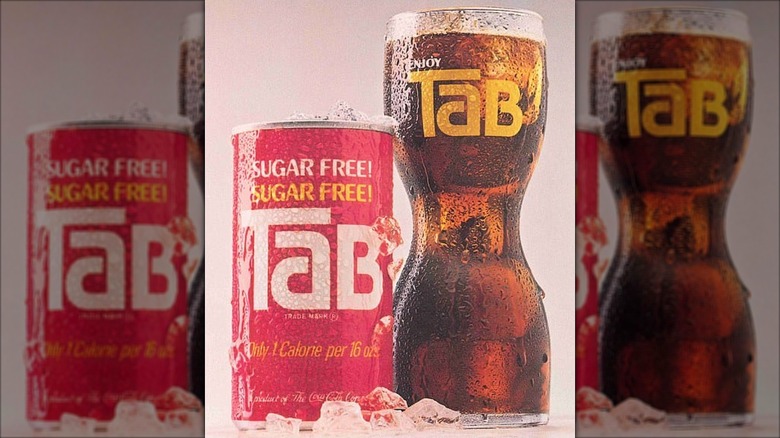
Among the more recognizable forgotten vintage sodas that emerged in the 1960s is TaB. It was the Coca-Cola company's first foray into diet sodas in an era when options for this type of beverage were limited. Though the first diet soda was No-Cal, which debuted in 1952, these didn't become popular until Diet-Rite Cola came on the scene in 1958. Coca-Cola found itself scrambling to keep up with the trend and began researching formulas that could not only compete with traditional cola in flavor, but would have a similar viscosity. It finally landed on the winning recipe in 1963 and TaB was born.
From the get-go, TaB was faced with uphill battles. Initially, it struggled to gain its fair share of the market. This was followed by concerns over its use of cyclamate in the formula for the beverage, which was subsequently deemed unsafe and banned. This led the Coca-Cola company to revamp its recipe, relying on saccharin as its primary sweetener. Unfortunately, further concerns over artificial sweeteners resulted in the FDA requiring a warning label to be placed on TaB soda.
Despite these hurdles, TaB managed to become the leading diet soda on the market by the 1970s until Diet Coke premiered in 1982. TaB enjoyed something of a cult following until its eventual demise, which was announced in October 2020. Though superfans fought to save it, sparking the viral #SaveTabSoda campaign, the Coca-Cola company has not announced any plans to revive the brand.
4. Patio Diet Cola
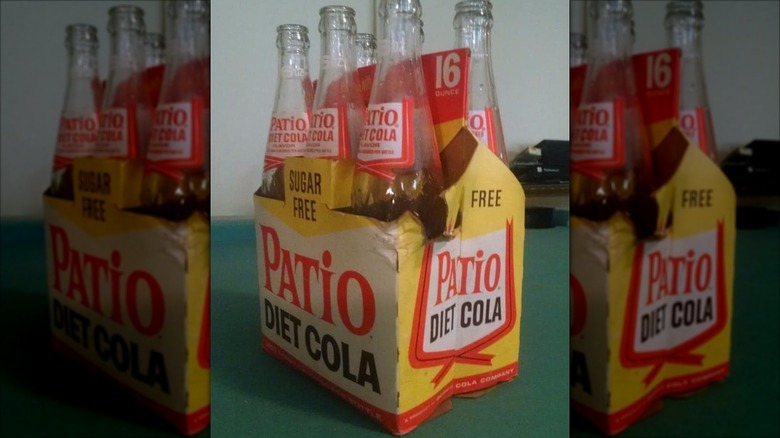
In 1963, at about the same time that the Coca-Cola company began working on TaB, Pepsi was making its own moves to navigate the burgeoning diet soda fad. Building on the success of No-Cal, which was invented in 1952 by Hyman Kirsch as a sweet treat for diabetics who were hospitalized at the Jewish Sanitarium for Chronic Disease in Brooklyn, and Diet Rite Cola, which premiered in 1962, Pepsi realized that diet sodas were potentially lucrative.
Worried about tying the success of a calorie-conscious beverage to its primary brand, it was decided that this new diet soda would be dubbed Patio Diet Cola. Pepsi targeted its marketing toward women who were increasingly concerned with maintaining their waistlines, but weren't willing to sacrifice flavor. For its earliest advertising campaigns, it hired none other than "America's First Female TV Fitness Guru," Debbie Drake. She had recently published her successful book "Debbie Drake's Easy Way to a Perfect Figure and Glowing Health," making her endorsement something of a coup.
Though initial sales of Patio Diet Cola were not met with as much enthusiasm as Pepsi might have hoped for, they were successful enough for then-CEO, Donald Kendall, to make the decision to rename the drink in 1963 to Diet Pepsi. This was the first time a major soda brand hitched the term to its flagship drink, indicating a marketplace shift toward more concentrated marketing of diet foods and beverages — a revolution that continues to this day.
5. Kayo Chocolate Flavored Drink
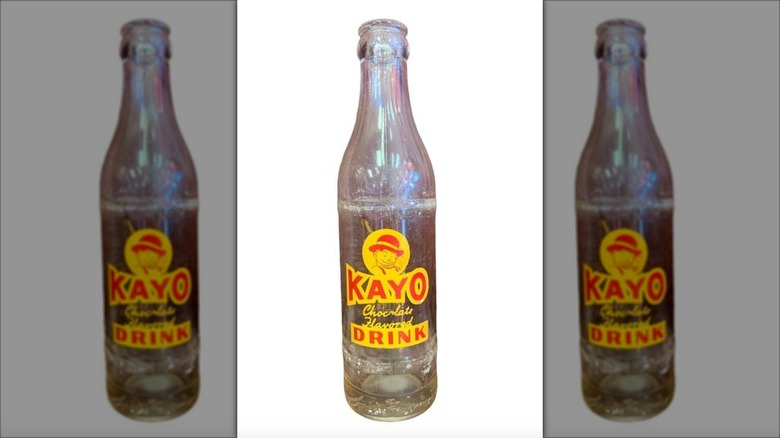
Kayo Chocolate Drink was another popular soda during the 1960s. It was made using a syrup that was invented by Russian immigrant Aaron D. Pashkow in 1929. Pashkow, who studied technology at the Armour Institute of Chicago, landed his first post-graduate job working for a food-flavoring company. It was here that he learned the ins and outs of syrup manufacturing. At the time, chocolate beverages could only be made using whole milk blended with a chocolate mix in. The industrious Russian figured out the secret to producing a chocolate syrup that could be blended with any number of liquids, from skim milk to soda water.
Kayo was named after a popular comic strip that was featured in the Chicago Tribune, "Moon Mullins." The brother of the title character was named Kayo, which was a spin on the shorthand for a knockout punch in boxing. The Kayo Chocolate soda was sold in cans and bottles and was considered a popular after school drink for children until it disappeared sometime in the 1980s. Though Kayo Chocolate soda can no longer be found, a powdered hot chocolate mix by the same name is still sold by Superior Coffee and Tea and Smucker Foodservice Canada for use in large food service establishments.
6. 50/50 Soda
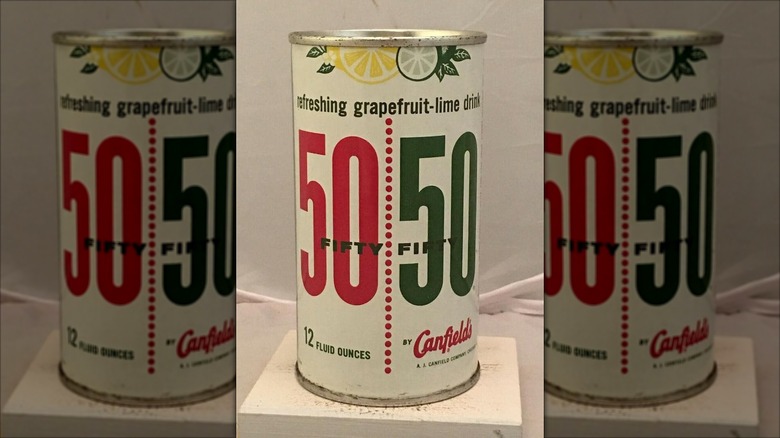
Among the many discontinued sodas that are probably never coming back to store shelves is 50/50 Soda. This grapefruit and lime-flavored libation was the product of the legendary Graf's Beverages of Milwaukee, Wisconsin. In the 1870s, John Graf began producing a host of naturally-flavored carbonated beverages that quickly garnered national attention. Graf's became so well-known, in fact, that it was considered one of the largest producers of fizzy drinks in the mid-20th century. Not only did it produce its own line of beverages, including 50/50, but it also bottled products for brands like Dr Pepper, RC Cola, and Schweppes.
By 1968, when Graf's Beverages was sold first to P & V Atlas and then to Canada Dry, 50/50 Soda was among the top 10 drinks produced by the brand. The brand changes hands a number of times over the course of the next several decades, from the A.J. Canfield Company to Select Beverages to the Dr. Pepper Snapple Group, which was eventually acquired by Keurig Green Mountain in 2018. During this period it evolved in many ways, including reformulations, the addition of a diet variety, and the introduction of the 2-liter bottle. This became its primary mode of distribution until the brand began to disappear sometime around 2021.
7. Hires Root Beer
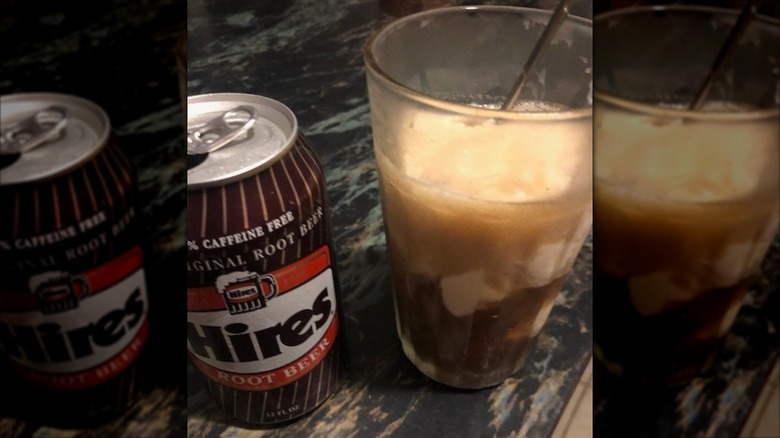
When it comes to root beer, every brand owes a debt of gratitude to the one that started it all — Hires. Though Charles E. Hires wasn't the first person to invent the concoction that would become root beer, he is the one who eventually gave this beverage its misleading name. The pharmacist discovered this mixture of roots, berries, and herbs while on his honeymoon in 1875. He perfected his own recipe for the concoction, which he began selling in 25-cent powder packs in 1876 after introducing the beverage at the Philadelphia Centennial Exposition that year. Originally marketed as a root tea, Hires decided the term "beer" would be easier to market — particularly to men — and the moniker was born.
Hires Root Beer became wildly popular in the early 20th century. This was despite boycotts during the Prohibition era by some religious organizations over fears that it contained alcohol. In the 1960s, the brand enjoyed something of a renaissance owing to a successful marketing campaign, starring famed jazz singer, Blossom Dearie.
During the latter half of the 20th century, the brand changed hands a number of times before landing with the Dr Pepper Snapple Group. Though fountain syrup extract can still be purchased, cans and bottles of Hires Root Beer are no longer available on the market.
8. Upper 10
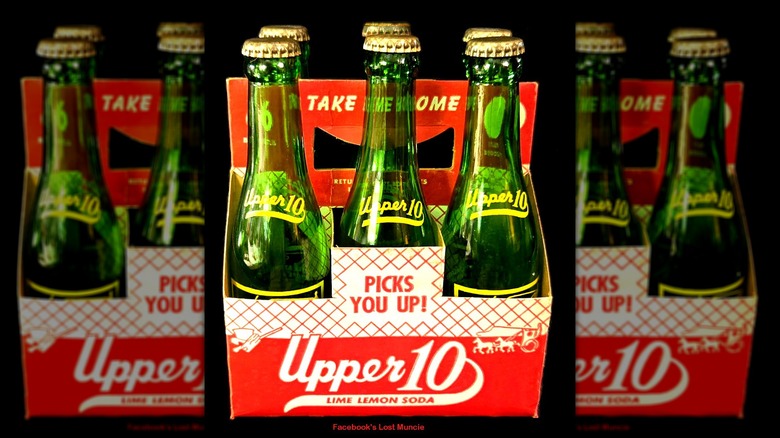
Another caffeine-free, lemon-lime soft drink that was beloved in the 1960s was Upper 10. It was introduced in 1933 by the Nehi Corporation, which would eventually become the Royal Crown Company in 1959. Nehi soda emerged in 1924 at Union Bottle Works in Georgia. It was a competitor of Coca-Cola, producing sodas in unique 12-inch tall bottles that towered over their competitors, which led to its clever moniker. The Nehi Corporation was established in 1928, after which it began branching out into other soda varieties, like Upper 10 and its eventual superstar, RC Cola.
Upper 10 was eventually manufactured in a host of different flavors, including Cherry Splash, Orange Squeeze, Cranberry Twist, and Tropical Breeze. When the brand was acquired by Cadbury Schweppes in 2000, Upper 10 was gradually removed from the United States market in favor of its more popular lemon-lime competition, 7Up — a brand that was also under the Cadbury Schweppes umbrella. Though you can occasionally find Upper 10 in foreign countries, it has largely disappeared from store shelves here in the U.S.
9. Simba Soda
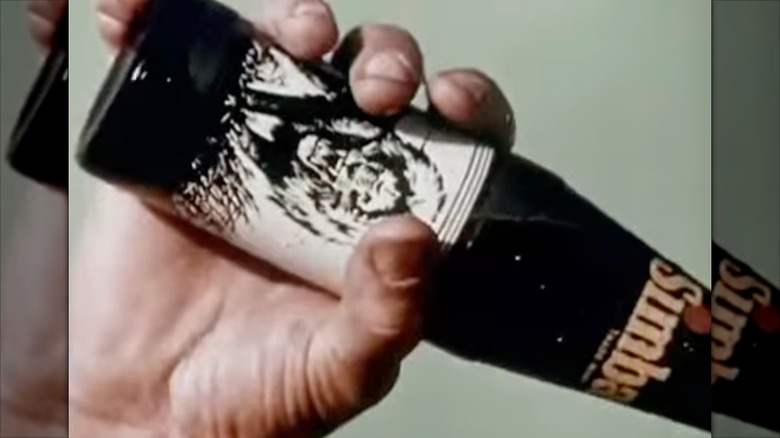
In the late 1960s, citrus-flavored soft drinks were becoming all the rage. Brands like Mountain Dew and Squirt were increasingly dominating the market, and companies like Coca-Cola took notice. In an attempt to go head-to-head with these powerhouses, Coca-Cola developed a soda that would "conquer the African thirst," namely Simba Soda. Simba Soda was a sugar-based, citrus-flavored soda that some have likened to a cross between Mountain Dew and Mello Yello.
It was released in 1969 after enjoying modest success in test markets across the country. Though the Coca-Cola company spent a small fortune in marketing and advertising efforts to promote the soda brand nationwide, it never really caught on. Some blame the racially-insensitive commercials for the brand's downfall. These were deemed inappropriate in an era when the Civil Rights Movement was at its peak. The brand only survived until 1972, after which Simba Soda was removed from store shelves, never to make a return.